Lawrence Wright is a staff writer for The New Yorker magazine. He is a prolific writer who has turned his journalist’s gaze on a variety of subjects including Scientology, terrorism and in his 1993 book Remembering Satan, the Satanic panic which swept America in the 1980s.
Paul and Sandy Ingram were raising their family of four (two sons and to daughters) in Olympia, Washington. Paul was the chief civil deputy for the sheriff’s office and an active member of both the Republican party and the Church of Living Water, a Protestant fundamentalist church. On November 28, 1988, Paul was called into his boss’s office and asked if he was aware that his daughters, Erika, 22, and Julie, 18 had filed against him. They allege that their father had sexually molested them over a period of several years. Paul’s strange response was “I can’t see myself doing this.”
This is the beginning of a long, complicated investigation that makes zero sense from the outside looking in…especially for anyone reading this book now in 2024 and who has watched hours of crime dramas on television. The girls’ stories get increasingly more convoluted. Pretty soon, it wasn’t just their father, but their older brother, their mother and the police officers who often played poker with their father in the family home. And why were all these people involved? Because they were part of some sort of satanic cult. There is not a single shred of physical evidence, though, despite the girls’ claims that they were tortured, covered in scars, and that there were the bodies of dozens of babies buried on the Ingram property.
Satanic panic originated in 1980 with the publication of the book Michelle Remembers. “Michelle Remembers, written by Canadians Michelle Smith and her husband, psychiatrist Lawrence Pazder, was published in 1980. Now discredited, the book was written in the form of an autobiography, presenting the first modern claim that child abuse was linked to Satanic rituals. According to the “memoir”, at the age of five Michelle was tortured by her mother for days in “elaborate satanic rituals”. As the torture reached a climax, a portal to hell opened and Satan himself appeared, only to be driven away by the Virgin Mary and the archangel Michael. Explanations for a lack of any evidence of abuse on Michelle’s body were that it had been miraculously removed by St. Mary. Not explained was testimony from Michelle’s father and two sisters, contradicting the memoir, as well as a 1955/56 St. Margaret’s School yearbook. The yearbook includes a photo taken in November 1955 showing Michelle attending school and appearing healthy, when according to Pazder’s book Michelle spent that month imprisoned in a basement. (Wiki)
Over the next decade, there were -according to Wikipedia – over 12,000 cases of unsubstantiated abuse in America. It is fascinating watching how this seemingly normal family (or at least, not Satanists) got caught up in this conspiracy and how the investigators, against their better judgement and expertise, came to believe the girls despite the numerous red flags and inconsistencies in their statements.
The fact that I sprung for a hardcover copy of Amy Engel’s (The Roanoke Girls, The Familiar Dark) latest novel I Did It For You should tell you that I am a fan. I am so sad that it wasn’t as good as her previous novels – which I LOVED.
Fourteen years after Eliza and her boyfriend Travis were shot in a local park, Eliza’s younger sister Greer comes home to Ludlow, Kansas. Bad things happen in Kansas, apparently. (It’s the place where the Clutter family - made famous in Truman Capote’s iconic book In Cold Blood – were killed in 1959.)
Greer has a love-hate relationship with Ludlow. On the one hand, her childhood besties Ryan and Cassie are there (Ryan has recently returned home following his divorce; Cassie had never left). On the other hand, she has a strained relationship with her parents. Her father is an alcoholic and her mother buried her grief in relentless cleaning. Why come home now, when she has made a life for herself in Chicago? Well, that’s because two more kids are dead. Greer is convinced that these deaths are connected to her sister’s murder even though the person responsible for Eliza and Travis’s deaths, Roy Mathews, was caught and executed.
In an effort to uncover the truth, Greer teams up with an unlikely person: Dean Mathews, Roy’s older brother. Together, they try to figure out Roy’s motive for killing Eliza and Travis because while Roy admitted to killing them, he also said he didn’t really know them and so the crime doesn’t make sense to either Greer or Dean.
Maybe if I hadn’t read The Roanoke Girls or The Familiar Dark first, I would have liked I Did It For You more than I did. I read a lot of thrillers, and this one stacks up just fine against many of them. But I was really hoping for the sucker punch The Familiar Dark offered or the dark family secret hidden in the depths of The Roanoke Girls. For me, this just didn’t have the same emotional depth as those two books. That said, the last third of the book definitely outpaced the first two thirds and while I suspected one thing, I was surprised by another revelation. So, not a total miss – really not a miss at all, just not as good as I’d hoped.
Alix E. Harrow’s novel Starling House wouldn’t necessarily be a book I would choose to read, even with Reese Witherspoon’s (annoying) endorsement on the cover. (I don’t mind the endorsement, but couldn’t it be a easily removed decal?) I needed to choose a book for my book club, and I needed it to be readily available and even though we have a huge Indigo where I live, its selection of awesome backlist titles seems to be shrinking. Whatever. I read some reviews about this book and I thought, sure. Let’s give it a whirl.
Twenty-something Opal lives in Eden, Kentucky with her sixteen-year-old brother Jasper. Opal works at Tractor Supply, a job she hates but does because her whole raison d’etre is to get Jasper out of Eden and into a Stonewood Academy where he can be afforded the opportunity to make something more of his talents.
The siblings live at the Garden of Eden motel where, Bev, the owner is “obligated to let [them] live in room 12 rent-free because of some shady deal she cut with [their] Mom.” Opal and Jasper’s mother died in a car accident over a decade ago; Opal survived that same crash. Life hasn’t been especially good since then, and it certainly doesn’t get any better when Opal takes a job at Starling House, a creepy mansion on the outskirts of town.
Starling House has a long, mysterious history in Eden. It’s connected to E. Starling, author of the children’s book The Underland, a woman who never wrote another book, or gave a single interview. “the only thing she left behind other than The Underland was that house, hidden in the trees.
The house is inhabited by Arthur Starling, “a Boo Radley-ish creature who was damned first by his pretentious name (Alistair or Alfred, no one can ever agree which), second by his haircut (unkempt enough to imply unfortunate politics, when last seen), and third by the dark rumor that his parents died strangely, and strangely young.”
These two are drawn to each other, despite the strangeness of their first meeting. As Arthur admits, “The house wants her, and the House is stubborn.”
I think Starling House is what as known as urban fantasy, a story that takes place in the modern world with fantastical elements. And that is certainly the case here. Starling House is sentient, there are magical beasts and a rich and complicated history connected to E. Starling’s book. It wasn’t really my cup of tea and even with all that going on, it took me a long time to read it. The writing was good, the secondary characters were interesting, Opal was a likeable protagonist…but at the end of the day, I just never felt all that invested in the story. At our book club discussion last night we all agreed that there was just too much going on, and that we would have been just as happy if there had been no beasts at all.
When Eliza Clark’s novel Penance opens, readers are told that the book is “an examination of the 2016 murder of teenager Joan Wilson by three girls attending the same high school. It was written by journalist Alec Z. Carelli and first published in March 2022.” Wait? Is this non-fiction?
Nope. This is fiction, but it is cleverly masquerading as an examination of a crime that feels as though it could have been ripped from the headlines.
When the novel opens, Carelli describes the lurid details of Joan’s murder, telling us that she “was doused in petrol and set on fire after enduring several hours of torture in a small beach chalet.” Afterwards, her assailants, fellow students Violet, Angelica and Dolly, drove off to the 24-hour McDonalds where they scarfed down fries, McNuggets and hamburgers. The trio are arrested almost immediately, so this isn’t a whodunnit; it’s a whydunnit?
The why is revealed via interviews with family members, including Joan’s mother, Amanda, who finally agrees to talk to Carelli despite her initial skepticism.
She said she hadn’t spoken to anyone in the press about her daughter’s death, even though she’d had offers […]She didn’t know what to make of it. Four years on, she was still in shock – she probably always would be.
Carelli convinces Amanda to talk to him by revealing that his own daughter had committed suicide and that he, in some ways – real or fabricated, because such is the nature of this story – knows exactly how Amanda feels.
But, ultimately, this isn’t a story about Joan; this is a story about the people who killed her. Just like all the true-crime documentaries on Netflix, the bad guys soak up all the oxygen in the room. The lens focuses on bullying (is that the reason these girls snapped? had they been bullied to the brink and then toppled over into the abyss?) on the male gaze (at least one of the girls has been sexually assaulted and there is a character in the novel, mentioned really only in passing, who could be the abhorrent Jimmy Savile‘s twin), social class, the occult (their small seaside town Crow-on-Sea is crowded with ghosts) and most problematic of all – social media. The story takes place at the height of the Tumblr craze and dives into the girls’ fascination and involvement in fandoms that included writing fanfiction about serial killers.
Clark is young herself and it certainly did feel as though she had her finger on the pulse of what makes being a young woman so difficult. The personal attacks, comments about others’ appearance, slights and insults felt authentic and decidedly toxic. Although I found the book slow moving, I also found it fascinating.
These girls “were playing pretend. And then they were not.”
One of my favourite things to do at this time of year is to reflect on the reading year that was, and Jamie aka The Perpetual Page-Turner makes this very easy to do by providing this list of questions.
Number Of Books I Read: 80 (My Goodreads challenge goal was 75) Number of Re-Reads: 2 The Great Gatsby and The Secret History Genre I Read The Most From: literary fiction/YA (not really genres, I know – but in those categories I read a lot of thrillers, mysteries, realistic fic)
1. Best Book You Read In 2023?
Hands down my favourite book of the year was Emma Straub’s novel This Time Tomorrow. On her 40th birthday, a woman wakes up in her bed on the morning of her 16th birthday. I chose this for book club last year and I loved every single thing about it. I never tab things when I read, but I had so many tabs in this book…so many lines that just hit me and then when I read her acknowledgments (where she specifically speaks about her father, the acclaimed literary horror novelist Peter Straub – who just happens to be one of my favourite writers) it just added a whole new layer to this book. Loved it.
2. Book You Were Excited About & Thought You Were Going To Love More But Didn’t?
There were definitely a few duds this year, but if I had to pick one book that really disappointed me, it’s probably The Song of Achilles. Lots of people raved about this book. One student in my class openly sobbed as they read it. It read like fanfiction to me. I couldn’t muster up any feelings for these characters or their fates.
3. Most surprising (in a good way or bad way) book you read?
I was surprised that You Have Made A Fool of Death With Your Beauty was so…trope-y. I think maybe I had different expectations for the book, but this really just ended up being a romance that was often cringey.
4. Book You “Pushed” The Most People To Read (And They Did)?
I always recommend The Secret History to students, even though I haven’t read that book since it came out in 1992. I decided to re-read it in the summer of 2023, just to see if it stood up to my memories. I did not have the same reading experience as I did the first time, but it is objectively a great book and we wouldn’t have dark academia as we know it today without it.
5. Favorite new author you discovered in 2023?
There are a few authors I discovered this year that I will definitely be reading more from including Shelley Read (Go as a River) and Ania Ahlborn (Brother).
6. Best book from a genre you don’t typically read/was out of your comfort zone?
I don’t really have books that are “out of my comfort zone.” I would probably avoid straight up sci fi, but this year I don’t read anything that fits this category.
8. Most action-packed/thrilling/unputdownable book of the year?
I read Lisa Jewell’s latest book None of This Is True in one sitting when I had Covid (for the first time) back in November. I generally find Jewell pretty dependable, although I did not enjoy The Family Remains, the sequel to the vastly superior The Family Upstairs, at all. None of This Is True had a lot of elements I really like packed into one book: unreliable narrators, true crime, and a plot that kept me guessing.
Another book that I could not put down was S.A. Cosby’s thriller All the Sinners Bleed. Although I have at least one other book by Cosby on my tbr shelf, I bought this one and read it almost immediately. It was fast-paced and twisty and well-written.
9. Book You Read In 2023 That You Would Be MOST Likely To Re-Read Next Year?
Hmmm. As my TBR pile grows, the likelihood that I will do much re-reading diminishes.
10. Favorite cover of a book you read in 2023?
I was drawn to the cover of Quiet Time when I saw it at the book store and I bought the book without knowing anything about it based on the blurb and the fact that it was written by a young Atlantic Canadian author. Sadly, I didn’t enjoy the book all that much, although I might have if I’d read it when I was 40 years younger.
11. Most memorable character of 2023?
I encountered a few memorable characters this year including Chrissie from Nancy Tucker’s fabulous novel The First Day of Spring, Torie from Go As A River and Ted from The Last House on Needless Street. However, my favourite character is definitely Michael from Ania Ahlborn’s novel Brother. Despite the horrific things that he does, I can’t recall ever meeting a character more sympathetic than he is. I just wanted to pull him out of his life and hug him.
12. Most beautifully written book read in 2023?
Beautiful writing is so subjective, isn’t it? The books that earn five stars from me have some perfect combination of plot, characters and writing. This year, those books include: The Last Housewife by Ashley Winstead, This Time Tomorrow by Emma Straub, Brother by Ania Ahlborn, When We Were Infinite by Kelly Loy Gilbert, Romantic Comedy by Curtis Sittenfeld, Go as a River by Shelley Read and Tom Lake by Ann Patchett. If I was going to choose a book just based on writing alone I would probably choose Patchett’s because, well, she’s amazing and this book is brilliant. But Straub’s book just hit me hard with all. the. feels.
13. Most Thought-Provoking/ Life-Changing Book of 2023?
I mean Tender is the Flesh was pretty thought-provoking and also all kinds of icky. It wasn’t really my cup of literary tea, but that doesn’t mean it didn’t give me lots of food (ahem) for thought.
14. Book you can’t believe you waited UNTIL 2023 to finally read?
Of the books I read this year, the one that had probably been on my tbr shelf the longest was Lisa Reardon’s novel Blameless. I was likely holding on to it because having read it, there is no more Reardon to read.
15. Favorite Passage/Quote From A Book You Read In 2023?
Here’s where all those tabbed pages from This Time Tomorrow would have come in handy. Oh well.
16.Shortest & Longest Book You Read In 2023?
Longest: Crank by Ellen Hopkins, 576 pages – but does it really count as this is a book written in verse.
The Secret History, 559 pages (and it’s Tartt so those are some densely written pages!)
Shortest: The Great Gatsby by F. Scott Fitzgerald, 180 pages – but it was a re-read.
17. Book That Shocked You The Most
Brother because it 100% goes there. I don’t know if this book counts as extreme horror, but this book is pretty extreme…so it’s horrific, but also heartbreaking and I was shocked not only by the graphic story elements, but also by how much I loved the main character.
18. OTP OF THE YEAR (you will go down with this ship!) (OTP = one true pairing if you aren’t familiar)
22. Newest fictional crush from a book you read in 2023?
I kinda loved Noah from Romantic Comedy.
23. Best 2023 debut you read?
The First Day of Spring by Nancy Tucker is a pretty remarkable debut.
24. Best Worldbuilding/Most Vivid Setting You Read This Year?
I think Tom Lake, Go as a River and Kristin Hannah’s The Four Winds all do a wonderful job of capturing the natural world. In particular, The Four Winds absolutely puts you right in the middle of the dust bowl.
25. Book That Put A Smile On Your Face/Was The Most FUN To Read?
Lump in the throat awards go to: Zennor in Darkness by one of my all-time favourite writers Helen Dunmore and Tom Lake by Ann Patchett
27. Hidden Gem Of The Year?
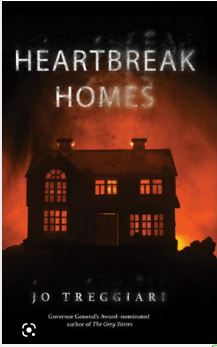
I am going to shout out Heartbreak Homes by Nova Scotia-based writer Jo Teggiari. Here is what I said in my review: “While Heartbreak Homes is definitely a mystery, complete with the requisite red herrings and plot twists, it is also an interesting commentary on homelessness, family, responsibility and loyalty. I loved spending time with these characters and if the mystery itself unraveled just a little too neatly, it hardly matters. This is a great book.”
28. Book That Crushed Your Soul?
I have to say Brother yet again. This book is dark and bleak and freaking awesome. But also bleak. And dark.
29. Most Unique Book You Read In 2023?
I am not sure, formatting wise, I read any “unique” books this year, but I did read a lot of books with very unique narrators. Sally, from Liz Nugent’s novel Strange Sally Diamond springs immediately to mind. (I only wish I had ended up loving the book as much I thought I would when I started reading it.
30. Book That Made You The Most Mad (doesn’t necessarily mean you didn’t like it)?
Books that I finished but which made me cross include Just Like Mother (started off with so much promise, but then just got cartoonishly ridiculous); The Rose Petal Beach which was such a huge disappointment because I loved Koomson’s novel The Ice Cream Girls, and both Hello Beautiful and Lessons in Chemistry (beloved by many!) for reasons too numerous to mention.
1. New favorite book blog/Bookstagram/Youtube channel you discovered in 2023?
I added Ashley’s Little Library to my YouTube rotation this year. We have similar reading tastes and I enjoy her reviews.
2. Favorite post you wrote in 2023?
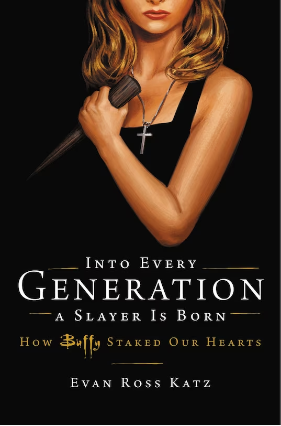
I enjoyed writing my review of Evan Katz’s book Into Every Generation: How Buffy Slayed Our Hearts because it allowed me to think about a very important and meaningful and creative time in my life. I also really enjoyed writing my review of The Secret History because my first reading of the book predates this blog by a couple of decades.
3. Favorite bookish related photo you took in 2023?
One of my favourite places on earth and one of me with my favourite reading companion, Lily.
4. Best bookish event that you participated in (author signings, festivals, virtual events, etc.)?
I love it when WordPress tells me my stats are booming – although what does that really mean when you don’t have a lot of followers? LOL
Here are my blog stats for 2023.
I had 57, 155 views and 46, 367 visitors to The Ludic Reader. I think that’s pretty impressive. However, I only had 27 likes and 20 comments all year. Not sure what to do about that, but I am sure there is something I can do to up engagement. Thoughts?
6. Most challenging thing about blogging or your reading life this year?
When I get into a groove, there’s not really too much I find challenging about blogging. I like to stay on top of my reviews and schedule them so I post about once every four days. Sometimes that schedule works, sometimes not so much. I wish I could do a better job of leveraging my Instagram account. Maybe that’s a task for this year. (I am The Ludic Reader there as well.)
7. Most Popular Post This Year On Your Blog (whether it be by comments or views)?
The most popular review (with a whopping 24, 940 views) is for Corrupt, which I hate-wrote in 2021. The next closest number of views goes to my home page with 4,857 views. Crazy.
8. Post You Wished Got A Little More Love?
Based on the stats above, it appears that a lot more people are reading my reviews than the likes and comments would indicate. If you are someone who visits regularly, I would love it if you subscribed and or commented or even hit the like button. Thanks!
9. Best bookish discovery (book related sites, book stores, etc.)?
Eleven NB, a local company, makes all sorts of fun bookish merch.
10. Did you complete any reading challenges or goals that you had set for yourself at the beginning of this year?
1. One Book You Didn’t Get To In 2023 But Will Be Your Number 1 Priority in 2024?
Yeah…um…meet my tbr shelves
2. Book You Are Most Anticipating For 2024 (non-debut)?
See above.
3. 2024 Debut You Are Most Anticipating?
Don’t really keep track.
4. Series Ending/A Sequel You Are Most Anticipating in 2021?
Same as it ever was: Not a series reader, really.
5. One Thing You Hope To Accomplish Or Do In Your Reading/Blogging Life In 2021?
Here’s a carry over from previous years: I would like to hit 100 books – so less time on social media and more time with a book in my hand. Perhaps make better use of my Instagram.
6. A 2024 Release You’ve Already Read & Recommend To Everyone (if applicable):
Dathan Auerbach’s novel Penpal began life as a series of interconnected stories on an online horror forum, which probably accounts for some of the repetitiveness, wonky timeline issues, and disjointedness.
In the novel, a young boy starts to receive a series of blurry polaroid photos in the mail after his kindergarten class participates in a balloon activity. Each student writes a letter, ties it to a balloon and sets them free. The hope is that whoever finds the balloon will write back and include a photo of where they live. These photos will then be pinned to a map.
The unnamed narrator doesn’t think much of the first photo, but over the coming weeks he receives dozens more and upon closer inspection he discovers that he is in every single one of them. Creepy, right? Well, sure…if it had actually led somewhere.
In many ways, Penpal is a coming-of-age story. The narrator and his best friend Josh spend a lot of time in the woods, a place that is both magical and menacing. Once, the boy wakes up and finds him in the middle of the woods, lost. Once, he and Josh go looking for the narrator’s missing cat and that leads to a heart-pounding segment under a house. Then there’s the crazy denouement, which seems to come out of nowhere. And that was one of my issues with this book. It skips around and twists back on itself and although the narrator tells the reader that “the story I am about to tell you is the product of my own mental archaeology [and] like all great digs, how the artifacts fit together in a timeline is about as immediately clear as which things are important and which are not” I kept waiting for some sort of satisfying resolution.
I think Penpal had a lot of potential. There was a lot of hype surrounding this book – perhaps too much for a self-published debut. Lots of people put it in the extreme horror category. Can’t see that, really. Was I wowed by this book? No. Were there some bits that I enjoyed. Yes. Would I read something else by this author? Probably not.
Cassie Hanwell, the 26-year-old protagonist of Katherine Center’s novel Things You Save in a Fire is the only female firefighter at her Texas firehouse. She’s a fierce and dedicated firefighter, and when the novel opens, she is about to receive the valor award. Her career, it seems, is on an upward trajectory…until the night of the awards ceremony when the person presenting her the award turns out to be Heath Thompson and
…his beefy, self-satisfied face, his pompous grin, his self-serving posture, and then, finally, the recognition in his eyes…Let’s just say it altered my emotional landscape. In a flash, my insides shifted from cold shock to burning rage.
Cassie’s life pivots at that point. Not only is her upward mobility with the department derailed, but around the same time she gets a phone call from her estranged mother asking Cassie if she would be willing to move to Massachusetts to provide some support while she deals with a medical issue. Rock. Meet hard place.
Cassie takes a transfer to a small fire station in Lillian, where the captain thinks that “women in the fire service will be the downfall of human civilization” and where she meets the rookie, another newbie who comes from a long line of firefighters. The rookie poses another threat to Cassie because as soon as she sees him for the first time, Cassie’s first thought is “Oh no.” She has guarded her heart from all potential threats since she was sixteen and then this man lifts his “stunning, heartbreakingly appealing face.”
There’s lots to like about Things You Save in a Fire. Cassie is an appealing character and the rookie (Owen) is, as romantic leads often are, perfect. There’s some other stuff in here, too, about forgiveness and family and opening yourself up to love in all its forms. Not really my cup of tea, overall, but I am sure it would be appealing to lots of readers.
Maeve is a book editor in NYC. She’s got a pretty good life, including a friends with benefits arrangement with Ryan. What Maeve doesn’t have is family. She grew up in a matriarchal cult, Mother Collective, a situation from which she escaped/was rescued when she was just a child. The only thing she really misses from that time in her life is her cousin, Andrea. They lost touch and Maeve hasn’t looked for her in years. Then, on a whim, she takes a DNA test and suddenly Andrea is back in her life…and things get, well, complicated.
This is the premise of Anne Heltzel’s first novel for adults Just Like Mother. And it started out really well. I love cult stories, and although this once doesn’t spend too much time in the cult, there is certainly enough information for readers to know that it’s whackadoodle (although, really, are there any cults out there that aren’t?) This is a cult of women, the one male child mentioned is referred to as ‘Boy’. There’s a locked room and strange sounds come from behind the door, a puppy Maeve thinks.
When Maeve and Andrea are reunited, Maeve is both elated and wary. After all, their shared childhoods weren’t idyllic. Andrea seems to have landed on her feet though. She’s made millions as the “CEO of a start-up that had been making the news for its groundbreaking contributions to the lifestyle market.” But almost as soon as Andrea re-enters her life, Maeve’s life starts to implode. She loses her job and then, a personal tragedy catapults Maeve to upstate New York, where Andrea lives in a fabulous mansion with her husband, Rob.
That’s when things get weird. Just Like Mother is one of those books that you keep reading because it is so ridiculous that you can’t stop. Some readers called it “terrifying” and “deeply disturbing” but it was neither of those things for me.
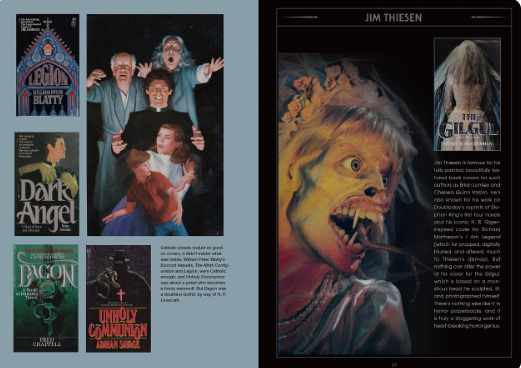
Grady Hendrix (The Southern Book Club’s Guide to Slaying Vampires, My Best Friend’s Exorcism) digs through the horror vault in Paperbacks from Hell. Subtitled The Twisted History of ’70s and ’80s Horror Fiction, Hendrix, no slouch himself when it comes to things that go bump in the night, traces the history of mainstream horror fiction and his observations are both astute and often comical.
For anyone who grew up in the 1970s, lots of these authors will be familiar. Personally I was reading a lot of Stephen King back then, and there’s not really a lot about him in this book. Instead, Paperbacks from Hell (mostly) looks at the seedier side of horror, tracing the resurrection of the genre to Ira Levin’s Rosemary’s Baby, Thomas Tyron’s The Other and William Peter Blatty’s The Exorcist.
As Hendrix explains “All three spawned movies and, most importantly, set the tone for the next two decades of horror publishing.
Hendrix catalogues the specific sub-genres of horror, everything from satanic cults, haunted houses, explicit sex, creepy kids, possessed animals, zombies and vampires. The book is filled with lots of amusing turns of phrase and enough specifics to make a horror aficionado happy.
Then there’s the cover art. If you have any interest in pulp horror from this period – you should just go right ahead and order the book. It’s a whole lot of creepy fun.
This would make a great gift for any horror reader on your list. And while you’re at it – pick up one of Hendrix’s novels, too. He clearly loves the genre and he’s a great writer.
It’s 2020, the scary beginning of Covid, when Ann Patchett’s latest novel Tom Lake opens. Lara and her husband, Joe, and their three adult daughters Emily, Maisie, and Nell are hunkered down on the family’s Michigan cherry farm. The girls have asked Lara to tell them the story of how she came to date Peter Duke, a famous actor. Emily, the eldest and the child who intends to stay on the farm, has long believed that Peter Duke is her father and it has caused quite a bit of friction between her and her mother over the years.
Lara’s story really begins when, in high school, she and her best friend, Veronica, are roped into helping at a community theatre casting call for a production of Thornton Wilder’s Pulitzer Prize winning play Our Town. Although she was really only there to take the names of those who’d come to audition, Lara ends up auditioning herself and lands the part of Emily, a role which is to change her life. Later, at college, she plays the part again and as she remarks “Luck was everything.” A Hollywood producer, there to see his niece in the role of Mrs. Gibbs, is enamoured with Lara’s portrayal of Emily and thinks she’d be perfect for a movie he’s casting. That opportunity leads her to Tom Lake, a summer stock theatre in Michigan where she will reprise the role of Emily for a third time. This is also where she meets Peter Duke, or, as everyone calls him: Duke. He’s playing Mr. Webb, Emily’s father, even though he is only four years older. Everyone could see that he was destined for greater things, though.
This is a story about falling in love with Peter Duke who wasn’t famous at all. It’s about falling so wildly in love with him – the way one will at twenty-four – that it felt like jumping off a roof at midnight. There was no way to foresee the mess it would become in the end, nor did it occur to me to care.
Almost from the moment that they meet, Lara and Duke are a couple and their summer together is one that changes the course of Lara’s life. Lara’s daughters think they know (most of) the story, but she parcels out the narrative, editing and obfuscating because “There was always going to be a part of the story that [she] didn’t tell Joe or the girls.”
Honestly, I will read anything Patchett writes. Even if I didn’t know anything about Our Town, I would have loved this story of a mother and her daughters, of first love and the devastation it can leave in its wake, of friendships and marriage, of family. But because I am very familiar with Wilder’s play, which is really about some of the very same things Patchett writes about, I found this book extra meaningful. Wilder once said that his play was about finding “a value above all price for the smallest events in our daily life.” Much of the action of Patchett’s novel takes place on the family cherry farm where mother and daughters spend their days picking fruit. In the evenings, they share dinner, conversation, and movies. Covid made the circumstances perfect for this sort of thing because where were you going to go and what else were you going to do?
Tom Lake is a quiet novel but that is not to say that you won’t be swept along by these characters and their story. Like Lara’s daughters, I wanted to know what became of Peter Duke and there were some other surprises in this novel, too.






 The Ludic Reader