Listen here.
So, a new year means a new year of reading and there’s nothing I like more than flipping my calendar over and anticipating all the great new books that might cross my path. A lot of my reading friends sign up for reading challenges and there are lots of them out there if you’re looking to expand your reading horizons.
Pop Sugar offers up a great list of suggestions for its reading challenge – everything from “a book set in a hotel” (The Shining, anyone?) and “a book with pictures” – here’s your opportunity to read a graphic novel. There’s also an advanced challenge which includes “a book over 800 pages” or “a book recommended by a librarian.”
Book Riot offers up the Read Harder Challenge for people who want to challenge themselves to up their reading game.
Goodreads also offers a reading challenge. If you are already a member of GoodReads, you’ll know this one. There’s no list to follow, you just set a reading goal – I’ll read 50 books this year- and then track them. 50 Book Pledge offers the same sort of thing, if you’re just interested in tracking books read. It’s kind of cool to see them all on a shelf and you can give yourself a part on the back when you reach your reading goal. I didn’t actually set a goal last year – I didn’t want the pressure, but I managed to read 60 books in 2016. Yay me.
If you are at all interested in directing your reading a little bit, or try reading new genres, just Google Reading Challenges 2017 and everything from reading Austen to reading the alphabet will pop up.
Another thing I like about the new year is the buzz around new books…not that I need any new books, mind you, but I still enjoy the potential for new books.
Some particularly intriguing book titles include:
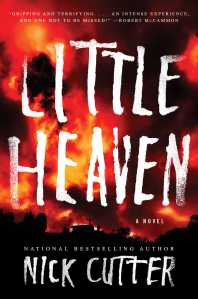 Canadian Nick Cutter aka Craig Davidson is the author of the very disturbing novels The Deep and one I read a couple years ago called The Troop. His latest horror novel Little Heaven is getting a lot of buzz. It’s about three hired guns who go to rescue a woman’s nephew from a remote New Mexico settlement called Little Heaven. Stephen King said it scared the hell out of him and that he couldn’t put it down. I almost chose this book for my book club, but I didn’t want to freak my reading friends out. I can definitely vouch for Cutter, though. The Troop is total squicky fun and I will definitely be adding this one to my tbr list.
Fans of Paula Hawkins novel The Girl on the Train will be delighted to know that her second novel Into the Water will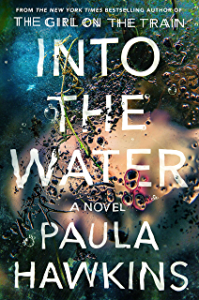 be hitting the shelves in May. All I can tell you about it is that it features a single mother and her daughter whose bodies are discovered at the bottom of a lake. I’m not sure that The Girl on the Train was the best of the bunch of thrillers that came out over the past couple years. If I were you, I’d add Claire Macintosh’s killer I Let You Go to my list…but since I’ve already read it, I’m looking forward to her second novel I See You.
Non fiction readers should be on the look-out for Sherman Alexie’s collection of essays and poems about his mother, with whom he had an emotionally fraught relationship. It’s called You Don’t Have To Say You Love Me and it’s due out in June. Before you read that, though, I encourage you to read Alexie’s amazing YA novel The Absolutely True Story of a Part Time Indian. Not only has it win lots of praise, it also has the distinction of being one of the most challenged books. It’s so good.
And most exciting of all, Celeste Ng’s follow up to Everything I Never Told You – my absolute favourite novel of 2016 – will be out at some point this year. There’s very little information about it other than the title, Little Fires Everywhere, but when it comes out it’s going straight to the top of my reading pile.
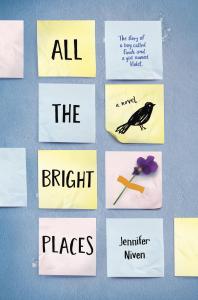 As for YA – because you know I am always on the lookout for the next YA book I can gush about to my students…I am going to cheat a little and suggest you add a book to your reading list that I have already read. That book is Jennifer Niven’s novel All the Bright Places. It is the story of high school seniors Finch and Violet who meet at the top of the school’s bell tower. They are both at dark places in their lives, but Finch manages to talk Violet down. The thing, though, is that Violet is beautiful and “cheerleader popular” and Finch is, well, kinda odd. Nevertheless, this shared experience and a school project throw them together and they become friends and then more than friends and OMG, this book will give you all. the. feels. It deals with mental health, grief, bullying, family dynamics…and it is so beautifully written. And it’s going to be a movie. So excited.
Niven started out writing general fiction and All the Bright Places was her first YA novel. Her second YA novel Holding Up The Universe also sounds terrific.
Finally, one more YA book you should add to your TBR list: A Step Toward Falling by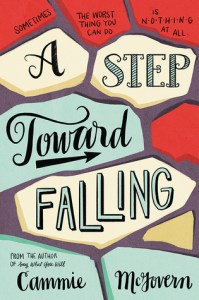 Cammie McGovern. It’s the story of what happens after super smart Emily and a football player called Lucas fail to stop an attack on Belinda – a young adult with developmental delays – at a high school football game. Emily and Belinda take turns telling their story and the voices are pretty awesome. It’s a ‘message’ novel without being preachy and would certainly be a welcome novel in any classroom library.
Good luck with your reading list. I’d love to hear how you make out.

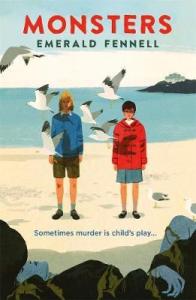 What would you get if you mixed Enid Blyton with Stephen King? I think you’d probably get Monsters by Emerald Fennell.
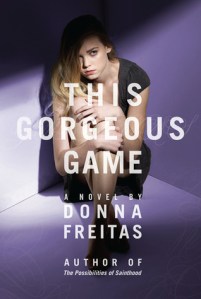 Olivia is beautiful and outgoing, but she’s one of those girls who doesn’t really know it – or, if she knows it, she doesn’t flaunt it. She’s a good girl. She’s obedient. All she wants- all she can ever remember wanting – is to be a writer. When she wins the first annual Emerging Writers High School Fiction Prize she admits “I’ve always loved writing but I didn’t really think it would amount to anything.” The prize is substantial: a ten thousand dollar scholarship towards the college of Olivia’s choice, publication of her story and a spot in Father Mark Brendan’s prestigious summer fiction seminar.
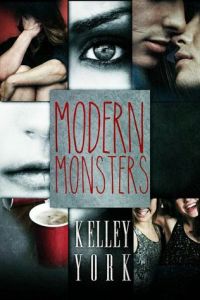 aftermath of a sexual assault. This is my second novel by York and while there is certainly nothing wrong with it, I preferred
  I have been in a bit of a reading slump this year – which seems like a ridiculous thing to say considering we are only two months in. The first couple of books I read at the start of 2017 were lackluster at best, and I just haven’t been able to find my reading groove. Peter Swanson’s The Kind Worth Killing may have actually changed all that.
 seek to speak with loved ones they have lost. Dressed in a simple white dress, she sits in Room 12 and once in possession of an item belonging to the deceased, she swallows a lotus – a pill that summons the spirits of the deceased – and the living communes with the dead. That’s the general principle of Sara Flannery Murphy’s debut novel The Possessions.
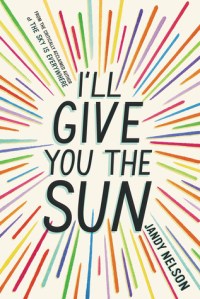 That’s almost-fourteen-year-old Noah, one of the twins who narrates Jandy Nelson’s remarkable YA novel I’ll Give You the Sun. Alternating between Noah and his sister, Jude, who tells her part of the story at age sixteen, the novel traces the siblings’ journey from innocence to experience.
 didn’t like it, I would normally just donate it to goodwill. Zoe Whittall’s The Best Kind of People comes with Heather Reisman’s money back guarantee, though. Reisman is the CEO of Indigo, Canada’s largest book retailer. If she endorses a book with her Heather’s Pick sticker and you don’t like it, you can return the book – no questions asked – for a full refund. So, that’s where The Best Kind of People is going.
 I’ve had a slow start to the 2017 reading year. Usually I power though a handful of books over the Christmas break, but this year I tended to binge-watch Netflix (The Fall – check it out if you haven’t already seen it) and sleep. I have about a half-dozen novels started, but none of them really grabbed me. Although it rarely happens to me, I’ve been in the book doldrums. I needed something to grab me by the throat and swing me back into reading gear. I chose what I was sure was going to be a winner, but I was disappointed. I did finish though.
