26/365 – bad reviews

Apparently there was a bit of a kerfluffle on GoodReads a few days back. The gist of the whole thing was that someone took offence to a negative review. The Guardian posted a tidy little summary about whole thing here.

I’ve certainly written my share of negative reviews. So what? Who am I? I am just one voice in a million and I have no special expertise…just my own subjective point of view. I’m a reader; I know what I like.  I can’t imagine my negative feelings will have any impact on an author’s popularity – if I had that much power Dan Brown wouldn’t have sold a bazillion copies of The DaVinci Code and Stephanie Meyer would have called it a day after Twilight. Sadly, I don’t have that much power.

Poor reviews don’t hurt sales, anyway. Check this best seller list out!

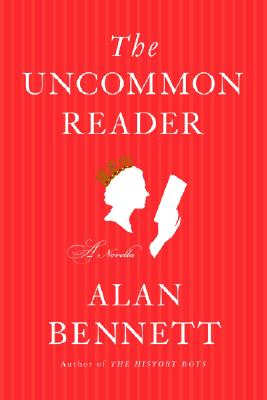
The Uncommon Reader – Alan Bennett

Imagine if the Queen had only discovered reading later in life? That’s the premise of Alan Bennett’s lovely novella, The Uncommon Reader. While taking her corgis for a walk, the Queen happens upon a mobile library parked near Buckingham Palace. Intrigued, she boards the bus and meets Mr. Hutchings, the library’s driver and  Norman, a young man who works in her kitchen.  She feels duty-bound to select a book, but when asked what kind of book she likes her response is, essentially, that she doesn’t know.

She’d never taken much interest in reading. She read, of course, as one did, but liking books was something she left to other people. It was a hobby  and it was in the nature of her job that she didn’t have hobbies.

The Queen casts about, looking for something to borrow and discovers a name she recognizes.

“Ivy Compton-Burnett! I can read that.’ She took the book out and gave it to Mr.  Hutchings to stamp.

“What a treat!” she hugged it unconvincingly before opening it. “Oh. The last time it was taken out was 1989.”

“She’s not a popular author, ma’am.”

“Why, I wonder? I made her a dame.”

The Uncommon Reader is full of laugh out loud moments like this one and is, in fact, an utterly charming book. The Queen, despite a rather rocky beginning, turns into a voracious reader. She promotes Norman from the kitchen to a new position, a sort of personal assistant, and that causes all sorts of problems with other staff members.

For a while nothing comes between the Queen and her books. Like all devoted readers, she’s never without one and dinner party conversations invariably turn to the topic of what people are reading. Instead of being told about the books of authors she  meets, the Queen now wants to read their work.

“But ma’am must have been briefed, surely?”

“Of course, ” said the Queen, “but briefing is not reading. In fact it is the antithesis of reading. Briefing is terse, factual and to the point. Reading is untidy, discursive and perpetually inviting. Briefing closes down a subject, reading opens it up.”

The Uncommon Reader is a love letter to reading.

“Books are not about passing the time,” she admonishes Sir Kevin. “They’re about other lives. Other worlds.”

The Queen proves to be, at the end of the day, just like the rest of us who couldn’t imagine a life without books.

25/365
23/365 – publishing…your tweets

I am new to Twitter and I have to say, I really like it. I don’t have a Facebook account because FB is the devil, but Twitter is awesome sauce.  People from all over have pointed me to amazing resources for teaching and reading and writing.

Twitter isn’t a personal space for me; it’s not a venue to shout out to the world I love my cat or how awesome my kids are, although people certainly do use it that way. I really just wanted to draw attention to this blog and connect with other readers.

But say I thought my tweets were pithy? I’d have no choice but to go to Ether Press and publish them! Ether Press is a print-on-demand service that allows you to publish your tweets in book form. Okay, yes, borderline narcissistic – but doesn’t social media indulge that side of all our personalities just a teensy bit?

Check out Ether Press.


22/365 – Sunday Salon

Where do you buy your books? Are you an electronic device reader or do you prefer the weight of a book in your hand? I’d love to hear about your book-buying habits.

I am a book-buyer. Book being the operative word – I don’t have an eReader of any description and I have no interest in them (although I can certainly see their appeal, particularly if you travel a lot.)

I buy my books from independent book stores, second hand stores, big box stores, on-line stores, the annual library used book sale, the Scholastic flyer at school…if there’s a pile of books somewhere, I’m stopping and I’m probably buying. This obsession is probably the reason for my huge tbr pile.

So, tell me about your book-buying habits!

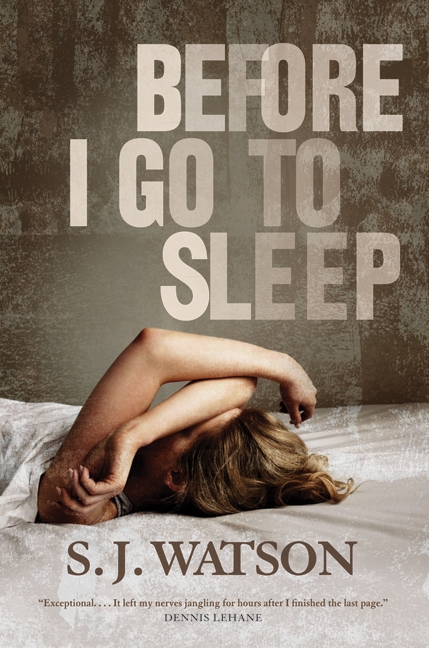
Before I Go To Sleep – SJ Watson

What are we, if not an accumulation of our memories?

Memories are a bit of a problem for the protagonist of SJ Watson’s debut novel Before I Go To Sleep. Twenty years ago, Christine was in a serious accident that left her without the ability to retain memories. That means every morning she wakes up in a room she doesn’t recognize, with a husband she doesn’t remember and in a body she’s troubled to discover is twenty years older than it should be. She muddles through the day, trying to piece her fractured life back together – with the knowledge that she’s going to have to do it all over again the next day. That’s right: she goes to sleep and her brain erases all the memories of the day.

Before I Go To Sleep was my book club’s first read for 2012 and was also my pick. We had a lively discussion about the book’s merits and I am happy to say that with a few minor caveats, the women in my group (except for one) generally enjoyed the book.

The general concensus was that Watson did an admirable job of writing a convincing female – not an easy task, I don’t think. We had a little bit of a debate about the novel’s structure. At least one person was put off by constantly having to re-read the story, rediscovering memories as Christine did. I actually think that it was deftly handled. If I am feeling frustrated by having to hear stuff over and over, imagine how trapped by her circumstances Christine must be feeling. 🙂

I alo think Watson was striving to write something more than just a thriller – although he did that quite handily. I think he was trying to say something about memory and how our memories shape us. It’s a fear of mine, really, to be old and not know my children or the other people who have been important to me. Christine’s situation means that she is forced to learn painful information over and over again – and it’s heartbreaking.

The book had me in its iron grip until the last 50 or so pages- when I have to say that it fell apart for me. It wasn’t that I didn’t buy a certain part of it (and, really, it’s  almost impossible to talk about without giving anything away), let me just say this: too much convenient exposition. Too neat.

That said, Before I Go To Sleep was a great way to kick off our 12th reading year.

SJ Watson talks about the book and his writing here.

21/365


18/365 – Sir Isaac Newton

Okay, I am not going to even pretend to know anything about Newton…or science for that matter; I really am a one trick pony. I mean, I understand that he made many important contributions to science – the telescope, for instance – but his discoveries, while amazing and world changing, aren’t really on my radar. (He didn’t invent that, did he?)

However, this is really cool if you’re a science person. Or, potentially, even if you’re not.

Cambridge University, Newton’s alma mater, has digitized Newton’s work and it’s available for public perusal.  Considering Newton’s dates (1642-1727), I find this remarkable.

Check it out here.


17/365 – reading aloud

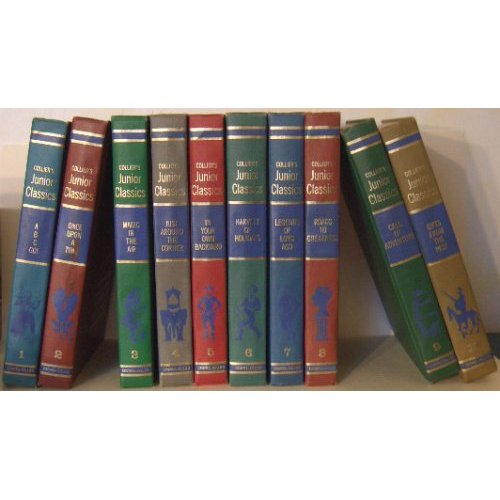
I remember my mom reading to my brothers and I when I was a kid. We had this beautiful set of junior reader books. The books were divided into categories: Fairy Tales, Myths and Legends, Growing Up – things like that. I think they might still be in the basement of my brother’s house.

One particular story she read a lot was O Henry’s The Ransom of Red Chief. She couldn’t actually make it through the whole story without laughing hysterically – although as a kid I never really never understood why. As a parent, I totally get it now. Mom also used to read Robert Louis Stevenson’s poems to us. I remember “The Swing” vividly. His collection was one of the first I bought for my daughter after she was born.

I read to my kids when they were little. They loved Dr. Suess. My son loved the David books.  They loved Winnie the Pooh and when they were small, they referred to an area near our house as the 100 acre wood. Books have always been a part of their lives and so has reading aloud. I read aloud to my students. Three quarters of the way through Paul Zindel’s classic, The Pigman, my grade nine students were begging me to finish. I believe that reading aloud is important -as a reader and as an audience, even if you are just an audience of one.

Michael Scotto shares his recollections of first audience in his lovely essay Two Scenes of Reading over at NerdyBookClub, an exceptional blog if you are interested in books for children and young adults.