The importance of a classroom library

Kelly Gallagher is one of my teaching heroes. Gallagher teaches high school English and works with teachers across North America to help them help their students improve reading and writing skills. I’m a big fan of his.

In his book Reading Reasons Gallagher says:

Far and away the most important factor [to students reading more] was the establishment of a classroom library. I brought interesting books to my students. I surrounded them with a variety  of high-interest reading materials. I now have 2,500 books in my classroom, and I am convinced that developing this “book flood”…is the single most important thing I have done in my teaching career.

I started building my classroom library last year and in August I took advantage of Bookcloseouts.com’s amazing YA sale and my 20 or so books grew to this:

I buy books from Scholastic, second-hand shops, yard sales and take donations from whomever has books to give away. (A student I don’t teach but who hangs out in my classroom sometimes, offered me a whole raft of Goosebumps books, which I gladly took and which were practically brand new!)

I believe that the most important job I have as an English teacher is to create a culture where talking about books is commonplace. I don’t think my job is to tell students what books mean – like they’re baby birds with their mouths open and I am the mama bird who drops the worm of knowledge into their waiting beaks. I do think I have to give my students the vocabulary necessary to articulate their feelings and I do think I have to give them the opportunity to read widely from texts that are entertaining and challenging in equal measure.

 I think high school kills a love of reading for many students. Let’s face it, a non-reader isn’t going to make it past the first 50 pages of To Kill a Mockingbird.  I love Lee’s book, but even I have difficulty slogging through them. Mr. Gallagher suggests that “all students like to read, they just don’t know it yet.” I think most students did like to read, then we get them and we start acting like there is one right answer to be coaxed from a text, and we start testing them all the time about the one or two texts we do cover. (And it would be naive to think that students are reading those texts – the same ones I actually did read 30-odd years ago.)

Building life-long readers is the most important thing I can do in the classroom and one way to start is by putting books into the hands of students. Mr. Gallagher believes we can build readers, too. He suggests the following building blocks:

1. Access to high – interest reading material.

2. Time and a place to read

3.  Teachers model reading

4. Teachers stop grading everything.

5. Teachers provide a structure to their reading program

and finally

6. Students must want to read – they must see what is in it for them.

I think Mr. Gallagher is on the right track or, at least, he’s preaching to the converted. My upper level students read for 30 minutes twice a week.  I read when they do – no hardship for me. I wish they could read more, but lessons are only an hour long. My Writing students are required to log their reading and should be aiming for 100 pages a week. I want them to read a lot because I believe the cornerstone of improving their writing is to read, read, read. The only ‘assignment’ they have to do based on that reading is a book review – not report, review. Otherwise, we spend a few minutes each week talking about the books we’re reading, sharing excellent writing and one day we even did Book Speed Dating – which was a lot of fun.
I love my small, but mighty – and certainly growing – classroom library because it’s, well, in my classroom. There’s never an excuse for a kid to not have a book (or graphic novel, or newspaper or magazine or comic book…) Better still, when I see them deliberating I can actually help them select  something to read and if I do a good job, one book will almost always lead to another.

In a perfect world, all students will have been exposed to books from a very early age. I was. My kids were. But I have students who haven’t grown up in a house where people read, where there haven’t even been any books to read. These are the students who must be taught how to hold a book so the brand new spine isn’t broken, the cover torn, the pages folded. These are also the students who, with luck, will discover the delights hidden between the covers.

According to Scholastic, survey results indicate that classroom libraries increase reading by 60%. The paper goes on to say that “teachers can promote better reading performance by reading to children daily and by having them interact with booksthrough the extensive use of classroom libraries.”

We can’t just tell them reading is important. We can’t just talk the talk, we have to walk the walk.

One book at a time. One kid at a time.
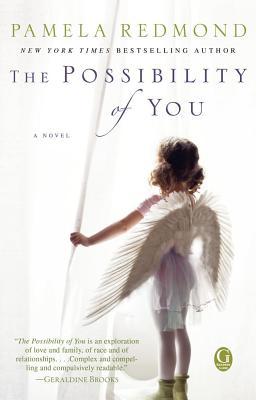
The Possibility of You – Pamela Redmond

Pamela Redmond admits in the  introduction to her novel The Possibility of You that she “had bookclubs in mind” when she wrote the book. And that’s exactly how this novel reads – like a book written to get women talking.

The novel tells the story of three women: Bridget, Billie and Cait and spans several decades. Cait’s present-day  story begins when she falls into bed with another journalist while they are on assignment to cover the story of a missing boy. Later, Cait discovers that she is pregnant and she decides she needs to locate her birth mother.

Bille’s story takes place in the 1970s. Orphaned after the death of her drug-addicted father, she heads to New York City with her best friend, Jupe. There she meets, for the first time, her eccentric and wealthy grandmother, Maude.

Going back even further is the story of Bridget, an Irish immigrant who works in Maude’s house caring for Maude’s young son, Floyd.

That these three women’s stories should be intertwined will come as no surprise to the reader. There isn’t actually anything surprising about that – or even all that original about their stories at all, actually. And I understand that that makes me sound sort of heartless. I think Redmond’s intent was that women of all stripes should find at least one of these women, and their stories of birth and death, to be compelling and relateable. The idea that women make sacrifices and mistakes isn’t riveting in and of itself, unless the characters are somehow sympathetic.

Maude was the most modern of the characters, a famous singer in her day, she married a much older man, had affairs which she openly bragged about and sent her maid, Bridget, to get birth control so she could sleep with her boyfriend without the complications of getting pregnant or having to get married. While she seems thoroughly forward thinking in 1915, at the end of the day, she is reprehensible and selfish.

The Possibility of You seemed like it should have added up to a lot more than the sum of its parts, but for me it just seemed like a cobbled-together story with all the talking points necessary for a good book club evening over a glass of wine.

My book club discussed the book last night and none of us were all that enamoured with it. In fact once we dispensed with the book’s central idea – how do women cope with giving up a child – we veered into a much more lively discussion of local politics. Despite the book’s positive reviews, we just weren’t moved by the novel or its characters.

Teach the books, touch the heart

On Friday, the teacher’s association to which I belong hosted its  AGM and  subject council days. Last year we were treated to a keynote by Rick Wormeli and this year Los Angeles teacher Rafe Esquith spoke. Both last year and this I was inspired to do better in the classroom.

My personal feeling has always been that we should be exposing children to more literature, not less. That instead of having them read and then answer a bunch of comprehension questions designed to catch them up because they haven’t read, we should be giving them opportunities to talk and write about what they think. In real life, when faced with a problem, we’re not given multiple choices in order to make the best decisions. We must weigh the options and choose.

Mr. Esquith’s fifth graders do a full length Shakespearean production every year. Esquith himself loves Shakespeare and his passion for the Bard spills over into the lives of his students, mostly impoverished, mostly not native English speakers. You can’t tell me that an experience like that doesn’t make a difference in their lives, a difference far more important than a score on a multiple choice test.

Every year at about this time I start to think about how I can improve my teaching in the classroom. I don’t think about how I can improve my test results – I think about how I can do my job better; how to introduce kids to great books, turn them into life-long readers, get them to think about how they connect to the material we read, show them how to write.  It’s not PC to say – but I don’t care about the tests as much as I care about their engagement. I want them to discover themselves in what they read, to experience the feeling of kinship with a character, to understand themselves and this world a little bit better.

At least, that’s the goal.

Teacher Claire Needell Hollander’s  opinion piece in the April 20th edition of the New York Times, Teach the Books, Touch the Heart, talks about this focus on testing  and what is lost because of it.  Teaching to the test is not teaching.

Twenty years ago, when I began as a teacher, I had this romantic notion that the classroom – my classroom – would be this amazing space with books and conversation. Yes, we’d do books together as a group, but we’d also read independently. We’d write, not just essays, but lots of different things because unless you go off to do a degree in English, you’ll probably never write an academic essay about theme again in your life after high school. Kids still need to know how to write well, though.

I didn’t stay in teaching very long. I just never settled into it; I felt like I was always playing catch up. My ego kept bashing up against these kids who just didn’t seem to like me. (Probably because I clearly didn’t know what I was doing.) Fast forward 15 years and here I am, back in the classroom…and I love every single day with those kids. My notion of what my English class should be like hasn’t changed and I try every day to balance that notion with the prescribed curriculum. Some days are more successful than others.

I have the experts on my side though. My gurus, Penny Kittle and Kelly Gallagher, talk the talk and walk the walk. And every day I get a little bit closer, I think, to teaching the books and touching the hearts.

Fifty Shades of Grey – E L James

E L James’s novel Fifty Shades of Grey has caused something of a stir in the literary world. First published as fanfiction called “Master of the Universe” under James’s pseudonym Snowqueen’s Icedragon (and, really, fanfiction writers need to give their pen names a lot more consideration before they choose them!), the original story was set in Stephenie Meyer’s Twilight universe. Yeah – there’s your first problem.

For those of you  unfamiliar with fanfiction, writers (of varying degrees of proficiency) pen stories based on characters and situations created by other writers.  Wikipedia has a competent explanation of its origins here. Really good fanfic writers can make their stories seem almost like canon. And really good fanfic is out there; but so is really, really bad fanfic. Back in the day I read (and wrote) a lot of it – so I can actually say this with some degree of authority.

Anyway, E L James publishes this wicked long Twilight-based fic – which I suspect is long gone from places where it was originally posted…although fans of the series can still be found gushing about it online. Someone (many someones, probably) suggest that she change the names of the characters and publish it – which James did, in eBook format and print on demand in June 2011 using  The Writers’ Coffee Shop. Word of mouth (ahem) fanned the flames and the rights to the book were purchased by Vintage. Suddenly, everyone was talking about Fifty Shades of Grey and weighing in on its subject matter. I talked a little bit about that here.

If you are a fic reader, I suspect that you’ll find Fifty Shades of Grey relatively tame.  Seriously. I’ve never read Twilight fic, but I’ve read the first two and a half books (and could barely manage that) and I’ve seen the movies (I have a 14- year-old daughter, although her literary tastes are, thankfully, more advanced than Twilight). Despite the name changes, there’s enough of Bella/Edward in Anastasia/Christian that even a casual reader will recognize them. They are, at the very least, completely derivative characters: she the winsome, beautiful-but-doesn’t-know-it, feisty yet innocent virgin and he is the over-the-top rich, fantastically beautiful (and like Meyer’s Edward, the reader has to be reminded of his beauty virtually every time he appears) control freak with a sad/complicated – or, as Christian himself says “fifty shades of fucked up” past.

Bella Ana does her roommate a favour by going to interview the reclusive Christian for the university paper. She  literally falls into his office – she’s kinda klutzy – and we are to believe that Christian is instantly smitten. He tries to stay away- unsuccessfully. But does he really like her, or does he just recognize in her a submissive personality?  Because one of Edward’s Christian’s dark secrets is that he likes to tie women up. And other stuff. Stuff that requires a contract and a safe word.

If you’ve read fanfic, you’ve read this scenario a bazillion times. If you’re going to pay for it, it wants to be good. So, is Fifty Shades of Grey good? For me, it was okay. The writing is okay. The sex is okay. The characters are okay. It didn’t particularly shock me, nor did it, you know, rev my engine.

Ana is prone to saying: Holy fuck! and Holy shit! and Holy crap! a whole lot. A whole lot! She also channels her inner goddess in what I suspect is her way of trying to decide whether or not the amazingly mind-blowing orgasms make up for the occasional spanking. Ana and Christian say, “laters, baby” to each other.  It’s weird. Noticing this stuff is always a sign that I am not really invested in the story. Oh come on, who reads a book like this for the story anyway?

I suspect that lots of people will find Fifty Shades of Grey shocking. But, truly, it’s pretty tame. If you want the really good stuff, you can read it online. For free.

Nevermore – Linda Newbery

This is the kind of book I would have loved as a young reader. Plucky heroine, manor house in the English countryside, an intriguing mystery. The problem for me, of course, was that I solved the mystery early on – but that doesn’t mean the book wasn’t fun to read.

Twelve-year-old Tizzie and her mother, Morag,  have moved to Roven Mere, where Morag has taken a job as a cook. The huge estate is a constant source of intrigue, especially for Tizzie, who hopes that for once Morag will give up the wanderlust that has driven them from town-to-town most of her life.

Owned by Sir Rupert Evershall, but run by the crusty Finnigan, Roven Mere is always at the ready for the return of Sir Rupert and his young daughter, Greta.

“Is he very grand, Lord Rupert?” Tizzie asks Mrs. Crump, the housekeeper.

“Oh, I’ve never actually met him,” said Mrs. Crump. None of us have. Only Finnigan. We’re expecting him home in a week or two. Him and his family. Very exciting it’ll be, meeting them at last.”

Tizzie spends her early days exploring the house – which does seem to be in a constant state of readiness for Sir Rupert and Greta’s homecoming – making friends with Davy, Mrs. Crump’s grandson, and trying to manage her mother’s moodiness.

The book is intended for younger readers whom I am sure would be charmed by Tizzie, the novel’s mystery and Roven Mere itself. I certainly was.

Raising a life-long reader

I have been a reader for as long as I can remember.  Back in February, I talked a little bit about the books of my childhood. There were always books in my house. My mom read to us all the time and I still remember the excitement of the Scholastic book order. Truthfully, I still love the Scholastic flyer. I could have frequent flyer points at our library; I would have chosen a book over new bell bottoms any day of the week – still would. (Okay, perhaps I would no longer purchase bell bottoms under any circumstances!)

There was no question when my daughter was born that she would be surrounded by books. On Christmas and  at birthdays she received books: Dr. Seuss and fairy tales, Winnie the Pooh and Junie B. Jones. We read to her until she could read to herself. And then we still read to her. We did the same with her younger brother. Then they read to each other and to kids who were younger.  I never denied them a book. Never would. They love to read – and they are excellent readers. No surprise: they are excellent writers, too.  My daughter once remarked that she didn’t understand people who didn’t like to read. I once took her and a school friend to Indigo and bought them both a book. It was the first book the friend had ever read. She was 12.

Sara Ralph over at the Nerdy Book Club has some wonderful suggestions for raising a reader.

A love of reading is a gift that keeps on giving.