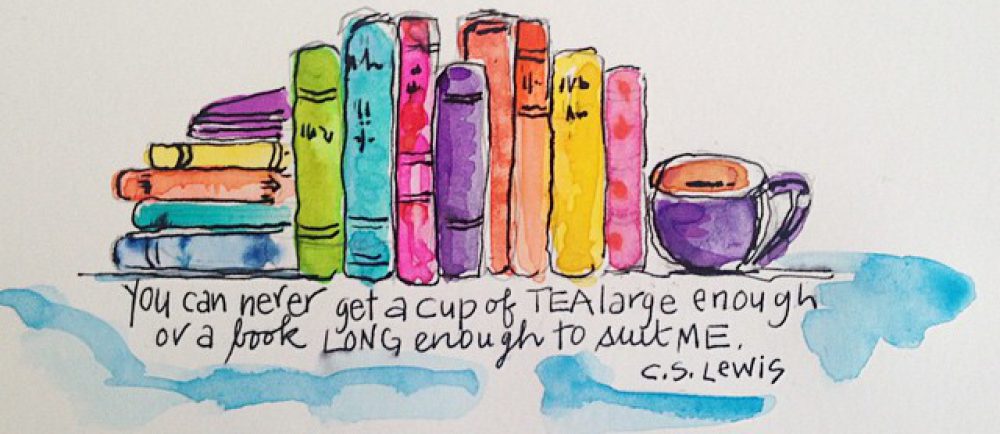
My ideal bookshelf – the 2015 edition

So last year, I invited my grade ten students to contemplate their reading lives in essays and bookshelves inspired by My Ideal Bookshelf. The project was such a huge success that I decided to do it again this year, and once more the results were terrific.

My colleague, Jenn, and I made a display in the main hall at school.

DSC_0345

I’d like to share some of the art and excerpts from some of the essays my students wrote. Thanks again to Thessaly and Jane for inspiring this project.

Paige A

Paige: My top three novels (Anne of Green Gables, A Monster Calls, Charlotte’s Web) may never have been considered anybody’s favourite, even though two are classics. To me, these books have meaning and memories attached to them. Some memories are happy and some sad. No matter what, though, I would never want to forget these books and certainly don’t regret reading them.

Destiny

Destiny: As my reading expanded, so did my desire for more of a challenge. I would ask around for new books, but the ones my mother suggested didn’t spark any interest and my sister Dominique, three years older than me, scared me away with her grumpiness and nobody else I knew liked reading. I suppose Dominique must have been in a pretty good mood one day to give me her favourite book, Once Upon a Marigold by Jean Ferris and I have always been grateful. This one book that she loved so much was like a glimpse inside the head of a stranger I called my sister. It was then, as I was reading, that I realized maybe we weren’t so different after all.

Adara

Adara: I can remember when I was little, perhaps seven, I used to rush to get ready for bed just because if I did it quickly enough my mom would read to me and my brother. I would get some pjs on, grab my blue, fuzzy penguin blanket and pillow and settle in to hear her read a few chapters of Pawn of Prophecy. I used to get so disappointed when I didn’t get ready in time, but when I did it was some of the best times of my life. My mom has the perfect reading voice and I would get lost in the book and the sound of her voice. Every once and a while I ask my mom to read, just so I can hear that voice again.

Tatum

Tatum: Grade seven was my first taste of reading for enjoyment. Teachers practically shoved sappy novels down my throat: unrequited love, boy meets girl, the whole lot. But I hated the thought of romance; I liked gore and cussing. I thought I could only get that thrill from games played in the dark, but a fellow student taught me better. My first whiff was The Maze Runner by James Dashner. Sure, I’ve read many other books, but only because I was forced. But this time it was legit. I could not put this book down. This was my first taste of what was soon to be have an addiction because, as you know, one book is not enough.

Ben

Ben: The Green Mile was one of the saddest books I have ever read. I never knew Stephen King could write something other than a scary story. I really grew attached to some of the characters and finding out they died not long after the book ends was really heartbreaking. I often get really attached to characters in stories and if they die, it hurts a little.

Pierrette

Pierrette: My bookshelf is a collection of stories that represent who I am. From childhood stories to books I read on repeat like The Bone Season by Samantha Shannon, each book means something different to me and represents a unique part of my reading adventure. As someone who dreams of being an author I hope that, even if my writing never reaches these great heights, my work will make someone pick up another book, fall in love with reading, and truly think about things in their lives.

Parker

Parker: A very important book to me is The Hunger Games by Suzanne Collins because it is the first book I bought with my own money. Everyone told me that it was an amazing series and I knew I had to buy it. That was the first time I wanted a book so badly that I bought it myself and it was worth every penny. After finishing it, I loved it so much that I bought the other two books in the series.
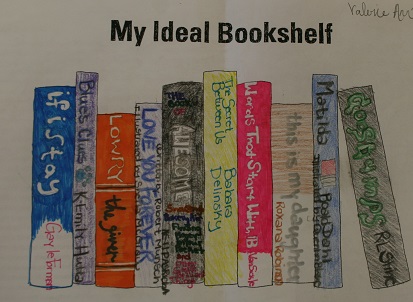
Valerie

Valerie: My mother was my gateway to the world of books. I remember the nights she would arrive home exhausted after working all day and finishing classes in the evenings. Somehow she always managed to read to me and my brother before bedtime. I never questioned this time because I adored it far too much; however I did wonder why those moments were so important to my mother. I no longer ask myself that question as I am fully aware of the gift reading is in and of itself.

Chloie

Chloie: Every year I reread The Art of Racing in the Rain just to remind myself of how impactful reading can be, and to refresh my memory on this more beautiful way of seeing the world. I don’t think I will ever be able to pinpoint exactly why this book is so lovely, but it is the only book on my shelf I love enough to destroy. All my other novels are perfectly kept, no bends or scratches; that’s how I like it. But The Art of Racing in the Rain has pages folded down from my favourite parts, notes written in it and all my favourite quotes highlighted.

Ceilidh

Ceilidh: Teddy Bear Picnic was the first book that came to mind when I thought of an ideal bookshelf. I selected this book because when I was younger it was the one book I picked every time. My mother would use one of my stuffed bears to read it with and I loved listening to her use a fake voice.

Selda

Selda: I actually didn’t like reading books, but my brother loves reading. He gave me a few books when I was nine years old. He said if I read them, he would give me chocolate for each book I finished. That was a good idea. After a while, I loved reading books and he didn’t give me chocolate anymore. All kinds of books should be on my bookshelf: horror, drama, history, liberal education, love, comedy, tragedy. Books are amazing for me because I can live in my own world when I read. They are valuable like gold or silver.
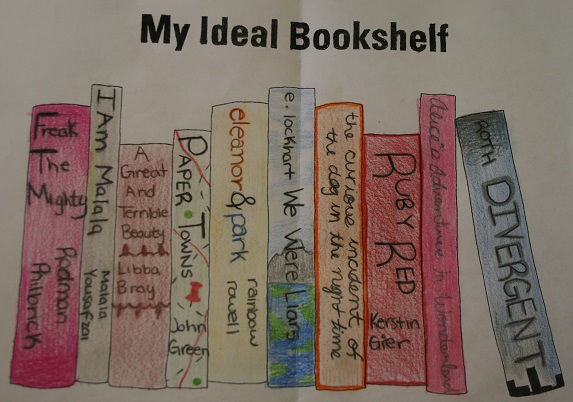
Makenzie

Makenzie: Being a teenager isn’t easy and books have become a great way for me to relieve stress and broaden my perspective and understanding on a lot of things. The Curious Incident of the Dog in the Night Time  changed a lot of my views on mental illness and other disabilities. I’ve learned more from this book about happiness and self-worth than I ever would from a therapist. I suppose that is what books are – my therapists. I know no matter what I’m feeling or questioning, there is a book to help me find the answer. Whether it be through some magic time portal, someone’s true-life story or a cheesy young adult novel, I know there is something out there for me.
Jacob Have I Loved – Katherine Paterson

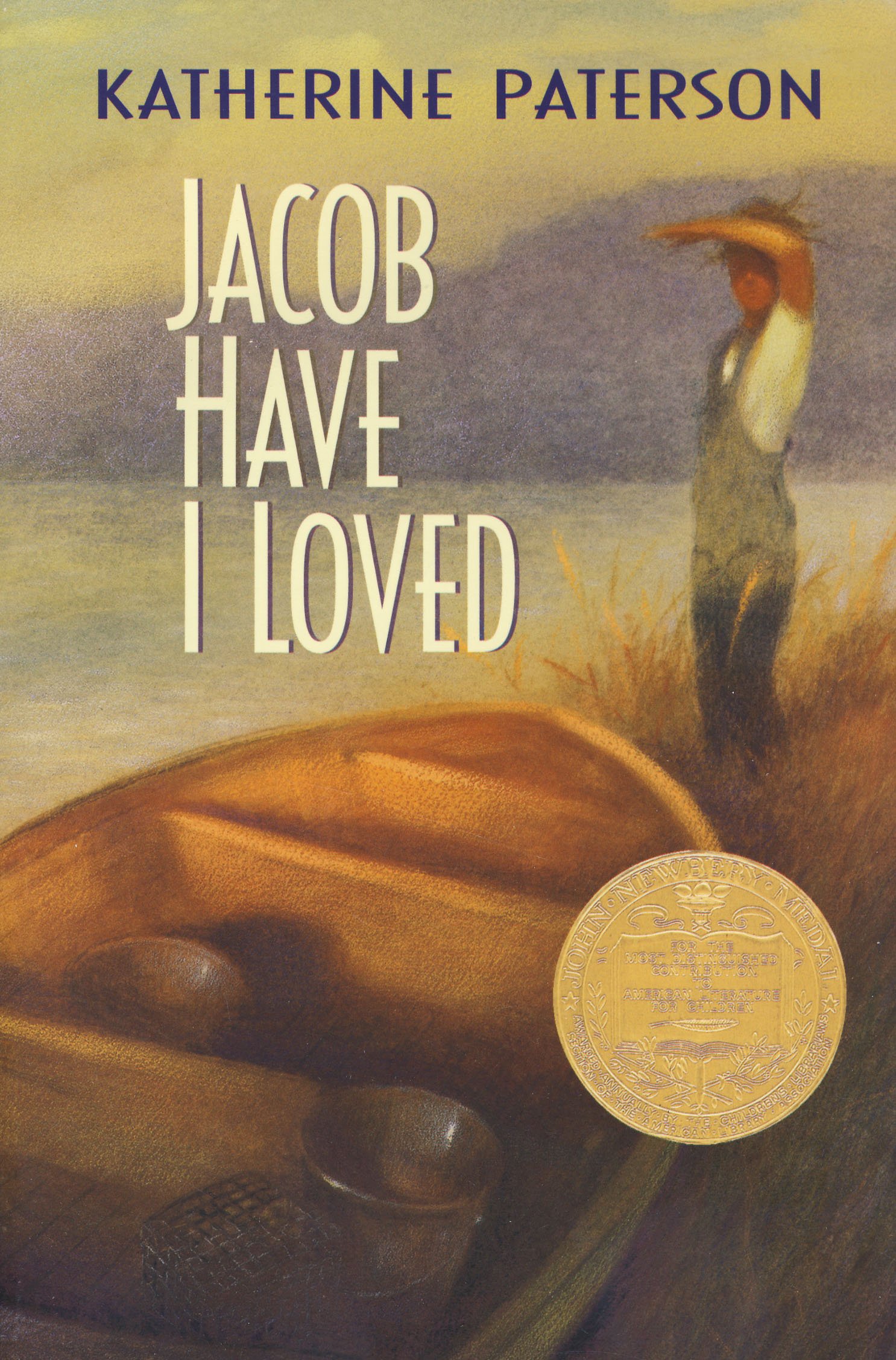
jacobKatherine Peterson’s novel Jacob Have I Loved was a Newberry Medal winner in 1981. Although this book has been on my radar for many years, I was perhaps just a teensy bit too old for it when it was published in 1980, so I didn’t read it then. It is a pretty famous book though, and I figured I should read it. So I did.

The title of the book comes from the bible, Romans 9:13: “As it is written, Jacob have I loved, but Esau have I hated.” The quote refers to the story of siblings Jacob and Esau and the novel tells the story of siblings Sara Louise and her twin sister, Caroline. The girls live on Rass Island, off the coast of Maryland. Their father is a fisherman; their mother a former school teacher. Their crotchety paternal grandmother also lives with them.

Sara Louise, or Wheeze, is the narrator. She is an adult when the novel opens, returning to Rass Island where her mother still lives. “…it is a pure sorrow to me,” she says, “that, once my mother leaves there will be no one left with the name of Bradshaw. But there were only the two of us, my sister, Caroline, and me, and neither of us could stay.”

The bulk of the story takes place in 1941 and the years that follow. Wheeze, 13, and her best friend, Call, 14, spend their days hunting for crabs. Their little island is isolated and days there are marked by routine – fisherman out on the water early and home late, school and church, the occasional ferry trip to the mainland. Paterson deftly creates a world that will be – for most of its young readers –  a place long ago and far away.

While readers may not recognize the time or place, they will most definitely recognize the friction between Wheeze and her sister, the beautiful and musically talented, Caroline. A sickly baby, Wheeze feels that Caroline has been coddled all her life and that in “the story of my sister’s life…I… was allowed a very minor role.”

There is a rare snapshot of the two of us sitting on the front stoop the summer we were a year and a half old. Caroline is tiny and exquisite, her blonde curls framing a face that is glowing with laughter, her arms outstretched to whoever is taking the picture. I am hunched there like a fat dark shadow, my eyes cut sideways toward Caroline, thumb in my mouth…

Wheeze is resentful and jealous, even though Caroline never really seems to give her any reason to be. It’s one of the lovely things about this book, which is remarkable in its stillness. Wheeze isn’t particularly likable, but you grow to love her just the same.

Jacob Have I Loved is without the bells and whistles that marks much of the YA fiction out there today. I would suggest that this is a book better suited to middle school readers, but I think anyone who has ever shared close quarters with a sibling would enjoy this story.

White Crow – Marcus Sedgwick

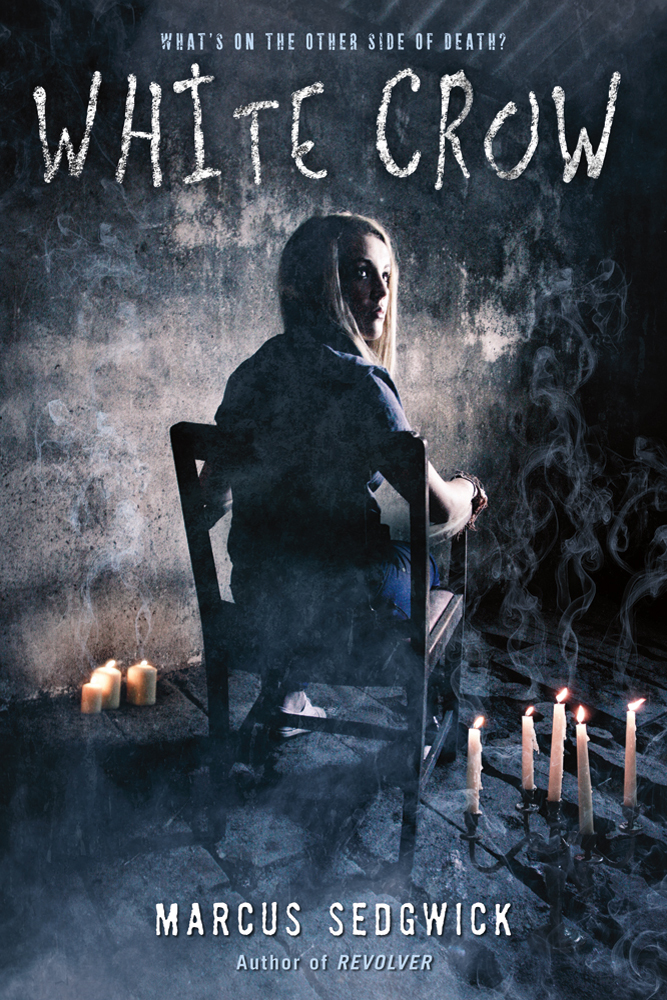
whitecrowMarcus Sedgwick’s YA novel White Crow is not for the faint of heart, but careful readers will certainly be rewarded by this atmospheric tale. It’s a creepy story of science and obsession, of ghosts both real and imagined.

Rebecca and her policeman father move to Winterfold, a seacoast town in England. Like many other villages along Britain’s coast, Winterfold is slowly being eroded by the sea and what was once a bustling village of thousands of people is now “storm by storm, year by year” crumbling into the sea  and all that remains is “a triangle of three streets, a dozen houses, an inn, a church.”

Rebecca is none too happy about having to leave her more urban life for the much quieter Winterfold. She doesn’t quite know what to do with herself besides harbor resentment towards her father (who is, essentially, hiding out after some mishap at work) and pine for Adam, the boy who she left behind.

Then she meets Ferelith, a local girl who is, frankly, pretty strange. In fact, Rebecca notes she’s “the strangest-looking girl she’s ever seen.”

There’s something elfin about her. Everything ends in points: her nose, her eyes, her chin, her lips, her fingers, the spikes of her long tresses of black hair….her teeth, not quite a vampire’s, but not far short.

Rebecca and Ferelith don’t immediately gel, although it’s clear that Ferelith is smitten. Eventually, though, with nothing better to do, Rebecca starts to hang out with her a bit and Ferelith starts to reveal Winterfold’s somewhat sinister past.

That’s where the third narrator comes in.  Entries in a diary dated 1798, reveal the strange relationship between the writer, a Reverend, and a French doctor. The two men are fascinated with the prospect of discovering if there is life after death and their methods turn out to be – well – horrifying. He writes:

And so this young man has become our first subject, and though my hopes were high, the results were low.

I scorn myself to record it herein, but we learned nothing.

Not a single thing.

But, oh!

The blood! The blood!

White Crow is like one of those old fashioned horror movies I used to watch when I was a kid. I could almost hear the menacing music as Ferelith tours Rebecca around Winterfold, through old, decaying ruins and to the one remaining church with the missing wall. When the novel reaches its climax, it’s creepy, page-turning fun. Young readers will have to pay attention; I know I did. But the book pays off in spades.

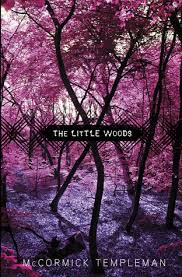
The Little Woods – McCormick Templeman

littlewoodsTen years after the death of her older sister, Clare,  Cally Woods gets accepted at St. Bede’s Academy, a boarding school in the Sierra region of California. It’s a big deal for Cally: her father is dead, her mother is a mostly absent drunk and Cally’s been offered a full-ride scholarship to St. Bede’s because of what happened to her sister. Seems that as a kid, Clare had visited St. Bede’s with a friend whose mother taught there and “on the third night of her visit, she and her friend had vanished from their beds. Their bodies were never found.” That’s pretty much the premise of  McCormick Templeman’s debut novel, The Little Woods.

There’s a lot going on in this novel, making it difficult to decide whether or not it’s a straight up mystery.  (There are definitely some mystery elements; Cally is there, after all, to figure out exactly what happened to her sister. Although as the police never have it’s ridiculous to think she’ll be able to solve the whodunit on her own. Still.) Is it a coming of age stor? (It’s certainly got all the bells and whistles: mean girls and first love.) It’s peopled with a wide variety of teenage characters: the beautiful jock (“he was black with vaguely Asian features, bright eyes and the most incredible body I’d ever seen); the student body president (whom Cally catches going through her underwear drawer) and Jack (“one of those boys who make you dizzy when you look at them). You’ll recognize all the players well enough.

Cally finds it relatively easy to infiltrate the inner-circle and soon enough learns that St. Bede’s is a hot-bed of rumours and disappearances. In fact, she’s moved into the room of a girl who disappeared only a few months ago. There’s also talk about the “little woods.” Hunky Alex explains at a party:

“All due respect, but everyone knows these woods are straight-up haunted. We do this walk all the time, and there’s always some scary fucking noise that can’t be explained. Ask anyone.

I’ll tell you what we’re hearing…We’re hearing the lost girls.”

It is at this party that Cally discovers that her sister’s death is legend: “The woods are haunted. These two little girls were murdered out there….Seriously, you guys. They wandered off into the woods or whatever, but they were totally murdered.”

Although Cally doesn’t expose her connection to Clare, she watches and listens for any clue that will help her uncover the truth.

As far as mysteries go, The Little Woods is decent enough. The problem I had with it is that the story is bogged down by so many other things – side-plots and intrigues, that it was hard to keep the whole convoluted story straight. Doesn’t mean avid YA readers won’t eat it up, though.

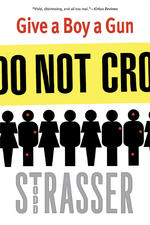
Give a Boy a Gun – Todd Strasser

gun

Todd Strasser’s topical novel Give a Boy a Gun  tackles a difficult and potentially divisive topic with a great deal of care and concern for all parties involved. As both a mother and a teacher, I found the book horrifying and troubling. Canada doesn’t have a gun culture per se. Sure, we own guns, but rifles for hunting mostly. In fact, “there are just two categories of individuals who are allowed an authorization to carry [handguns]: those who require one because of their occupations and those who need one for the “protection of life.” They need to get an authorization from the chief firearms officer for their province or territory. (http://www.cbc.ca/news/canada/who-may-carry-handguns-in-canada-1.1135084)

Strasser’s story is framed as an investigation by Journalism student, Denise Shipley. She hears about the death of Gary Searle in the gymnasium of Middletown High, her alma mater, and she heads home to investigate. She says, “I spoke to everyone who would speak to me. In addition I studied everything I could find on the many similar incidents that occurred in other schools around our country in the past thirty years.” The story of Middletown is fiction, but the notes found at the bottom of many of the pages, are not. The facts and figures lend an air of authenticity to the story Denise discovers about Gary.

As classmates, teachers, parents and bystanders weigh in, a horrible picture begins to emerge of a student who is bullied and who finds a friend in another outsider, Brendan Lawlor. Brendan’s best friend Brett describes him as “smart and funny and a pretty good athlete.” While Brendan lived in Springfield he was ” a really cool kid. Popular too.” But things change when he moves with his parents to Middletown and he starts high school.

I am not so naïve as to think that there isn’t a pecking order in high school. I would like to believe that at the high school where I teach (on the East coast of Canada) it is not quite so pronounced as the school Brendan and Gary attend. There, they are openly picked on and the teachers and administration ignore it.

Brendan and Gary got picked on. That’s a fact. We all did. Little guys; fat guys; skinny, gangly, zit-riddled guys like me. Anyone who wasn’t big and strong and on a team got it. You’d even see big guys on the football team push around some of the smaller players. Middletown High is big and crowded, and you’ve got ten dillion kids in the hall at once. Maybe if it’s an all-out, knock-down-drag-out fight, some teacher will notice and try to stop it. But if it’s just some big jerk shoving you into a locker, who’s gonna see?

I believe we work very hard (with more success than failure) to cultivate an atmosphere of acceptance here, but it doesn’t take very long for the reader to see how the daily abuse that comes from being perceived as “different” affects Brendan and Gary. The novel clips along to its inevitable conclusion and although it makes for grim reading, I also think it’s an important topic and one that would certainly generate lively discussion.

The Gargoyle – Andrew Davidson

gargoyleI bought my copy of Andrew Davidson’s book, The Gargoyle when it was first published in 2008. I was working at Indigo at the time and this book had a lot of buzz. It actually sounded like a book I would be interested in, too – the story of lovers separated by hundreds of years. I started reading and about fifty pages in I just put the book down and never picked it up again…until last month when it was chosen for my book club.

We’ve all had the experience, I’m sure. A book doesn’t appeal to you, but a few weeks/months/years later you dive in again only to be swept away. Yeah, not so much. The impetus for finishing this book was definitely because it was a book club selection and as I said when we met a few nights ago, I can’t really decide what it was about the book that just didn’t work for me, but the sum of its parts just didn’t add up somehow.

The unnamed narrator is driving on a twisty mountain road, a bottle of bourbon wedged between his legs, when he loses control of the car, smashes through a guard rail and the car lands on its roof at the bottom of a steep embankment.

“A car crash seems to take forever, and there is always a moment in which you believe that you can correct the error,” our narrator thinks as he flies, weightless, through the air. He does survive, but he and his life are changed forever.

Our narrator is burned so badly that he “plumped up like a freshly roasted wiener, [his] skin crackling to accommodate the expanding meat.”  What follows is a graphic description of his burn injuries, perhaps too much information for the squeamish. I read a lot of horror/serial killer fiction, but even I found the catalogue of his injuries TMI at times. There’s a reason why he’s burned, though, and I get that.

Prior to his injury our narrator was a porn star. Yep – you read that right. By the time he graduated from high school, he had two skills: smoking drugs  and screwing his counselor. He didn’t figure he could make any money smoking dope, but he discovered he could earn some cash posing naked and “from there it was a short jump to $150 for photos involving sexual activity and – since you’re already for posing for stills, anyway- it makes a lot of sense to double or triple your income by acting in videos.”  Is this guy a likable character? Not particularly.

While recovering in the hospital, our narrator is visited by Marianne Engel who tells him that this is the third time he’s been burned. Thus begins their strange relationship. She visits him the hospital and tells him stories of lovers who have made great sacrifices for each other while also revealing to him, bit by bit,  how they first met – seven hundred years ago when she was a nun and he was a mercenary.

There’s a lot going on in Davidson’s book – perhaps too much. Whether you believe in Marianne’s tale or not, the book is overstuffed and could do with, I think, some judicious editing. I am all about  love that crosses time and space, but I just didn’t believe it here.

Charm & Strange – Stephanie Kuehn

charmWow. This William C. Morris Debut Award winner has it all. Charm & Strange, the first novel by Stephanie Kuehn, is amazing. I read a lot of YA fiction and this book is just a cut above. Way above.

Win has attended a boarding school in New England since he was twelve. A top-ranked tennis player, Win once hit an opponent across the face with his tennis racket.

He’s a lot of things. He is prone to motion sickness. He’s cold. Dangerous. Broken.

Into his life comes Jordan. She’s the new girl and she doesn’t know anything about Win and that’s pretty much the way he wants to keep it. They meet in the woods. Win has just been attacked by a couple of school bullies and Jordan has witnessed the whole thing. She asks why he didn’t fight back. Win never fights back because “That wouldn’t be fair.”

Their relationship is tentative because Win tends to stay away from people. His only other ‘friend’  is Lex, his former roommate, but even their relationship is strained.

Charm & Strange is a compelling story about dark secrets and how they can twist lives. Kuehn skillfully pulls the reader along a path that is almost too painful to read about, but she does it so well that you just can’t stop turning the pages. The novel is layered: Sixteen-year-old Win at school is told in first person sections called ‘matter’ and ten-year-old  Drew at home with his family (first person narrative in sections called ‘antimatter’). Win and Drew are the same person, and the reason for the name change will be revealed in due course. Win’s family: professor father, depressed shadow of a mother, older brother, Keith, and younger sister, Siobhan, are important characters is Win’s story.

This novel is so cleverly constructed; every page offers just a little more of Win’s story. Win is convinced he is about to change and not in a good way.

Change is imminent.

It has to be.

“Yeah, well, have fun with that,” Lex says. “Moon or no moon, I don’t plan on being anywhere near you.”

“Good,” I snarl, and he laughs even harder than before. My hands curl into fists. I want to shut him up.

Lex notices and skitters toward the door.

“Hey, Win,” he says as he leaves, “maybe it’s your head that’s broken, not your body. Ever think about that?”

Charm & Strange is a terrific book. I am having a hard time articulating how amazing it is. It is almost relentlessly bleak and yet as I closed the final pages I felt confident that despite Win’s dark past, the beast within would be tamed. For mature YA readers, Charm & Strange is one of the best of the bunch.

Highly recommended.

Kept in the Dark – Penny Hancock

keptinthedarkI read Penny Hancock’s debut novel Kept in the Dark in one breathless gulp. I absolutely couldn’t put it down. I love it when that happens.

Sonia lives in a house next to the Thames. Her husband, Greg, is a lecturing neurosurgeon; her daughter, Kit, is a student at university and Sonia herself is a vocal coach. From the outside looking in, it would appear that Sonia has it all. It’s pretty obvious, though, that Sonia isn’t entirely sane. When the nephew of a friend drops by to pick up an album, Sonia plies him with wine, then drugs him and locks him upstairs in the sound proof music studio.

Jez is just fifteen. He’s in London visiting his Aunt Helen and Uncle Mick and applying to colleges. His mother, Maria, lives in Paris. Sonia is taken with Jez immediately.

His dark fringe has fallen across one eye. He flicks I back, and looks at me from under long, perfectly formed black eyebrows. I notice his sinuous neck with its smooth Adam’s apple. There’s a triangular dip where his throat descends towards his sternum. His skin has a sheen on it that I’d like to touch. He’s of adult proportions yet everything about him is glossy and new.

The novel’s first person narrative is so creepy and claustrophobic.  We get to watch as Sonia justifies her behavior and work through the endless complications of keeping a fifteen-year-old boy captive. First of all, what happens when her husband arrives home from his business trip? What will she do when her daughter and her boyfriend come home from university. And then there’s Seb. He’s clearly someone from her past and Jez obviously reminds her of him, but who is he? Sonia says he was “the most beautiful creature that ever walked upon the earth.” Hancock seamlessly weaves Sonia’s present with her past and the mystery of Seb is equally as compelling as Jez’s fate.

There is a second narrator: Helen. Jez’s aunt is a bit of a mess in her own way. Jez’s disappearance while under her care has thrown Helen’s life into turmoil. When her sister arrives from Paris and the police get involved, Helen feels more like a suspect than a relative.

This book was so good. S.J. Watson, author of Before I Go to Sleep, sang its praises and I have to say I agree with Mr. Watson. Sonia’s midlife crisis – a rather strained relationship with her daughter; a sexless marriage; a difficult mother; and the house she grew up in that she vows never to leave despite the fact that her husband wants to sell and move to Geneva all seem to be conspiring against her. But none of it is convoluted or silly. The plot unravels like a dream that is both terrifying and strangely erotic.

Highly recommended.

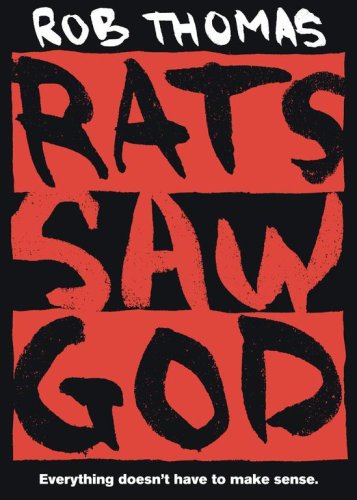
Rats Saw God – Rob Thomas

ratsRob Thomas shares his name with the lead singer of Matchbox 20, and although they are both writers, this Rob Thomas is better known for his television show Veronica Mars than his hit songs.

Rats Saw God is a Catcher in the Rye-esque coming of age novel about Steve York, a high school senior who ends up in his guidance counselor’s office trying to explain why he’s flunking out when his SAT scores are through the roof. The fact that he’s regularly stoned might also be a contributing factor, but in any case, Steve finds himself sitting with Mr. DeMouy being offered a cup of tea. DeMouy tells him that at the end of the semester he’ll be one English credit short.  DeMouy makes him an offer: write 100 typed pages – about anything. If he does that, DeMouy will make sure Steve graduates.

When Mom and the astronaut called Sarah and me into our Cocoa Beach, Florida (see I Dream of Jeanie) dining room to tell us they were getting a divorce, I admit I was shocked. I suppose I should have seen it coming, but the warning signs had been such a part of the status quo.

Thus begins Steve’s paper. It’s the story of his junior year. After the divorce, he moves with his dad, “that barely animate statue,” to Houston and his sister, Sarah, twelve at the time, moves to San Diego with her mom. In the summer, they swapped. Steve and his father have an estranged relationship:

He would leave for work before I woke but would provide a list of chores by the sink, paper clipped to a ten-dollar bill, which was to provide me both lunch and dinner.

At school, Steve befriends Doug, a skateboarder, and that friendship leads him to Dub, and the people who eventually become GOD, the Grace Order of Dadaists.  Dadaists, Steve explains ” were painters, writers, sculptors in the twenties who believed in art without coherent meaning. Nothing they did had to be justified. The more abstract, the weirder something was, the better.”

Rats Saw God is funny and smart  and it is a delight to watch Steve try to figure out the world, even when he has to face the truth that sometimes people will disappoint you. Of course, sometimes they’ll surprise you, too.

The Storied Life of A. J. Fikry – Gabrielle Zevin

zevin_firky_hcThere are  winks and nudges galore in Gabrielle Zevin’s novel The Storied Life of A. J. Fikry. This was my book club’s first read in 2015 and we gathered last night to discuss its merits. Okay, mostly everyone discussed its merits; I acted like Mr. Fikry himself before the magical arrival of Maya: grouchy.  I didn’t like the book. It was easy to read and I wanted to like it and I should have liked it, given the subject matter – bookstores and the importance of reading…but, nope, just fell flat for me.

A. J. owns a bookstore on the fictional island of Alice which is located somewhere off the coast of Hyannis. He’s a cranky guy, but I guess it’s understandable because his wife, Nic, was killed in a car accident just under two years ago and A.J. hasn’t recovered. The book store was a joint venture, dreamed up when he and Nic were in grad school. They took her trust fund money and opened Island Books, but A.J. is sort of the antithesis of everything you’d expect in a book store owner.

In fact, we meet first meet him when Amelia Loman arrives at his store to discuss Knightley Press’s winter catalogue. A.J. tells her:

I do not like postmodernism, postapocalyptic settings, postmortem narrators, or magical realism. I rarely respond to supposedly clever formal devices, multiple fonts, pictures where there shouldn’t be – basically, gimmicks of any kind. I find literary fiction about the Holocaust or any other major world tragedy to be distasteful  – non-fiction only please. I do not like genre mash-ups a la the literary detective novel or the literary fantasy. Literary should be literary and genre should be genre, and crossbreeding rarely results in anything satisfying. I do not like children’s books, especially ones with orphans, and I prefer not to clutter my shelves with young adult. I do not like anything over four hundred pages or under one hundred fifty pages. I am repulsed by ghostwritten novels by reality television stars, celebrity picture books, sports memoirs, movie tie-in editions, novelty items, and – I imagine this goes without saying – vampires. I rarely stock debuts, chick lit, poetry or translations.

Island Books sounds like an inviting place, eh? Luckily for A.J. it’s the only game in town and Alice Island is a popular summer destination, so he makes a decent living off the tourists. He’s not popular with the locals, but no wonder; he has the personality of a prickly pear.

Then, someone leaves a baby in the bookstore and A.J.’s paternal instincts kick in. In short order, much like the Grinch, A.J.’s heart grows in size and everything in his life changes. Of course it does.

The Storied Life of A.J. Fikry should have been right up my alley. Island Books inhabit a purple Victorian cottage. Be still my heart. A.J. has my dream job in my dream building. The novel is peppered with references to short stories and plays and novels, most of which I am intimately familiar (thus the nudging and winking). It celebrates the value and power of books.

Yet.

I just didn’t believe it. There was something hokey and almost to-good-to-be-true about the book, about the characters and their journeys. I won’t go so far as to say that it was a waste of time, but I have to admit to being disappointed when I finished.