The World More Full of Weeping – Robert J. Wiersema

worldCanadian writer Robert J. Wiersema packs a punch with his novella, The World More Full of Weeping. On the day before going to spend a week with his mother in the city, eleven-year-old Brian disappears in the woods behind his father’s house. Wiersema manages to capture both the frantic search, and Brian’s journey in the forest in 77 short pages.

Part of the novella’s success can be attributed to Wiersema’s split narrative. Beginning in present day, Brian shares breakfast with his father who explains to him that his mother will be picking him up at four. Brian clearly doesn’t want to go, but lacks the ability, it seems, to articulate his feelings. Instead, he tells his father, Jeff, that “Carly said you wouldn’t understand.”

Carly’s true identity is just one of the mysteries of The World More Full of Weeping. Who is  Carly? At first she just seems like a girl Brian meets in the woods. But after Brian goes missing  and Jeff calls over to his neighbour John’s to see if he’s seen him, the mention of her name causes John to encourage Jeff to call “Chuck Minette at the Search and Recuse…call him right now.”

Many years ago, Jeff also went missing in the woods only to turn up the next day. When men from the community come to help look for Brian, it’s clear everyone thinks his disappearance might be a case of “like father, like son,” with the same happy outcome.

While the search for Brian continues, we see him in the woods with Carly, who is always in the same thin dress despite the uncertain March weather, her cheeks “pink and rosy.” Carly knows secret places in the woods, places Brian has not ever seen.  She asks him if he wants to “see more hidden things” and promises she can show him “a whole hidden world in the forest.”

There are no concrete answers in The World More Full of Weeping. The only certainty is that when given the opportunity Jeff and Brian made different choices. Perhaps some readers will take comfort in Brian’s decision, but for me I can’t quite get the picture of Jeff on his knees, crying for what is lost,  out of my head.

A magical and profoundly moving story.

The White Devil – Justin Evans

whitedevil

SHE WALKS IN BEAUTY

SHE walks in beauty, like the night

Of cloudless climes and starry skies;

And all that’s best of dark and bright

Meet in her aspect and her eyes:

Thus mellow’d to that tender light

Which heaven to gaudy day denies.

One shade the more, one ray the less,

Had half impair’d the nameless grace

Which waves in every raven tress,

Or softly lightens o’er her face;

Where thoughts serenely sweet express

How pure, how dear their dwelling-place.

And on that cheek, and o’er that brow,

So soft, so calm, yet eloquent,

The smiles that win, the tints that glow,

But tell of days in goodness spent,

A mind at peace with all below,

A heart whose love is innocent!

Justin Evans has written an intriguing and creepy novel inspired partly, I’m sure, by the year he spent at Harrow School. That’s right, the Harrow school in The White Devil  is a real place situated about 40  minutes from London’s West End. From the look of its website, it’s  prestigious and slightly stuffy.

The White Devil cashes in on verisimilitude of another sort: Lord Byron was once a pupil at Harrow. Byron (George Gordon Byron 1788-1824) was quite notorious, even in his own life time and not just for his Romantic poetry. He was sexually voracious and had several lovers including his half-sister. It has long been speculated, although likely not by Byron’s peers, that he was bisexual.

header-overview-11

Andrew Taylor, the novel’s 17-year-old protagonist, has been sent to Harrow in a last ditch effort to make him agreeable to American universities. He’s been turfed from his own school back home for drug-related crimes and this is his last chance to get his shit together – so to speak. From the moment he arrives at Harrow, though, Andrew feels out of place. He doesn’t understand the humour or the customs or how he’s going to survive a year in this place that is “dank, cramped and old.”

header-overview-03

When Andrew’s first friend at Harrow is found dead under somewhat suspicious circumstances, things start to go a little hairy at Harrow.  For one thing, Andrew is the person who found the dead boy. For another, he thinks he saw the person who did it. And he’s been having these dreams. Because there’s apparently a ghost at Harrow. And for some reason the ghost seems focused on Andrew. By lucky or rather unlucky (as it turns out) coincidence, Andrew is a dead ringer for the dead poet.

As the ghost at Harrow becomes more menacing, Andrew tries to figure out who it is and what it wants. He’s not alone. Helping him are Piers Fawkes, the school’s tortured poet-in-residence; Judith Kahn, a crisp librarian and Persephone, the headmaster’s daughter and the only female student at Harrow.

The White Devil is delightfully twisty and I’ll tell you one thing, it made me very curious about Byron’s life. I have read other novels featuring Byron: the YA novel  AngelMonster by Veronica Bennett and Tom Holland’s excellent Lord of the Dead, but The White Devil really brought its A game: it’s well-written, smart and a lot of gothic fun.

Evans talks about the book here.

Claws – Will Weaver

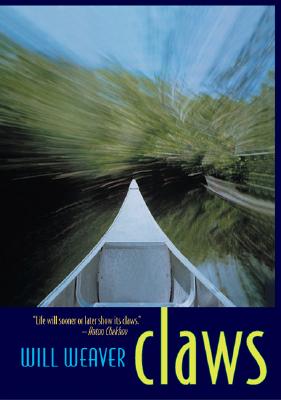
Claws-9780060094751There’s something for everyone in Will Weaver’s YA novel, Claws, but that might have been part of the reason I didn’t love this book. Is Claws a family drama, a suspense thriller, an adventure novel?

Jed Berg is sixteen. He lives with his parents, Gary and Andrea, who are successful (a freelance house designer and lawyer respectively) and according to Jed, “the most successful couple [he] can think of.” Sometimes Gary even lets Jed drive his mint 1969 Camaro. Jed is a good student, a better- than – average tennis player and goes out with Cassie, a popular and pretty senior. Life is good. Until it’s not.

Weaver admits that he “set out to write an unremittingly sad novel.” Partial to a quote by Chekhov which states that “life will sooner or later show its claws,” Weaver endeavors to unravel Jed’s surprisingly uncomplicated teenage life. He says: “I essentially wrote the novel around that idea (of life tipping upside-down).”  (from the author’s website)

And Weaver isn’t lying. Crap starts heading towards Jed at a rapid rate starting with Gertrude, a surly pink-haired girl who has evidence that Jed’s father is having an affair with her mother. Unsure of how to handle this new information, Jed tries to figure out whether or not he has a clear picture of his parent’s marriage. But then, Weaver throws the reader another twist: Gertrude isn’t being exactly honest about her identity. And then when all the infidelity cards have been played, Jed finds his own life going off the rails in ways that are both realistic and, perhaps, slightly melodramatic.

I have to give Weaver props; I kept turning the pages. Jed was likeable and intelligent. His parents and older sisters were sketched in, though,  and so it wasn’t easy to see things from a perspective other than his, but I suppose that’s the point. When you’re a kid, you want to believe that your parents will always be together. I still remember sitting at the top of the stairs with my brother, Tom,  listening to my parents talk about divorce. I was twelve. That’s 40 years ago and I have the clearest memory of it.

I wish Weaver had found another way to show his claws at the end of the book, though. It felt slightly contrived to me, but I suspect that the climax will elicit the desired result from teenage readers. It’s certainly well-written and deserving of its place in my classroom library.

It’s World Book Day!

Well, every day is World Book Day for me…because I sure love books. And I always have. I can’t remember a time when I didn’t. Given a choice between buying new shoes or new books, the books would win hands down. Every. Time.

Just a little over a year ago, I wrote about my early reading days in a post called My shelves, my life. I think that post pretty much sums up my feelings about books and the important place they have in my life. Reading is a gift that keeps on giving.

I wish every single person could find that one book that speaks to them. I try to help my students do that because I know…I know what a profound impact reading will have on their lives.

So, yeah, Happy World Book Day!


Wonder – R. J. Palacio

wonder

R. J. Palacio’s debut novel Wonder is wonderful. It tells the story of ten-year-old August (Auggie) Pullman who was born with “a previously unknown type of mandibulofacial dysostosis caused by a autosomal recessive mutation in the TCOF1 gene,” or, in other words, he’s not “normal” looking.  Auggie has already had twenty-seven surgeries in an effort to correct some of the problems, but he has  come to terms with the way he looks. He doesn’t like it, but he accepts it.

August lives with his parents and 14-year-old sister Olivia (Via) in North River Heights, which is located at the very top of Manhattan. His parents have decided to take the very brave step of enrolling August in school for the first time. Until now his mom has been home schooling him. They are all hyper-aware of August’s stare-inducing face, but  his mom and dad also understand that they can’t protect him forever.

Wonder follows August through fifth grade, not only from his point of view, but from the perspective of some of his classmates and his sister, too. One of his new friends, Summer, says:

I sat with him that first day because I felt sorry for him. That’s all. Here he was, this strange-looking kid in a brand-new school. No one was talking to him. Everyone was staring at him. All the girls at my table were whispering about him. He wasn’t the only new kid at Beecher Prep, but he was the only one everyone was talking about. Julian had nicknamed him the Zombie Kid, and that’s what everyone was calling him.

August’s favourite day of the whole year is, you guessed it, Hallowe’en.  He says it’s “the best holiday in the world. It even beats Christmas. I get to dress up in a costume. I get to wear a mask. I get to go around like every other kid with a mask and no one thinks I look weird. Nobody takes a second look. Nobody notices me.” If that doesn’t break your heart, I don’t know what will.

Olivia is also spreading her wings and her fierce love for her brother is  tinged, realistically, with some adolescent id. For example, she doesn’t want her parents to attend a school play because they’ll bring August and she doesn’t want her new high school friends to see him.  Despite understanding the extreme nature of Auggie’s problem  – she would never call it deformity, but there you have it – she is starting to want some of her mother’s very  August – focused attention for herself. Still, she is a good sister.

August is  smart and funny and well-supported by parents who love him and understand that they cannot shield him from life’s cruelty forever. He is beginning to make his way in a world that may not always show him kindness and yet he is so buoyed by the love of his family and the support of friends, one can only imagine that he will be just fine.

If  the ending is perhaps just the teensiest bit instructional, the proffered lesson is one I can get behind. We must be kind to each other. Cynical readers might also argue that Wonder‘s ending is a bit saccharine. I disagree. Instead, I agree with Auggie’s mother when she  tells him: “You really are a wonder.” And so is this book.

A must read.

Girl in Translation – Jean Kwok

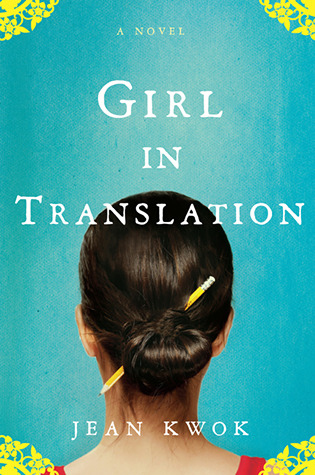
girlintranslation“I was born with a talent. Not for dance, or comedy, or anything so delightful. I’ve always had a knack for school.”

Kimberly is just eleven when she and her ‘Ma’ emigrate to the States from Hong Kong. It has long been a dream of theirs to live in America and chase that American dream. They arrive in New York with little more than the clothes on their backs and the promise of a new life.

Ma’s older sister, Paula, has been living in New York with Uncle Bob for several years and it is because of her sponsorship that Kimberly and Ma are able to come. But don’t get the idea that Paula is a benevolent soul; she’s not. She puts Ma to work in the clothing factory Bob manages – a sweat shop – and sets her sister and niece up in an apartment so filthy, cold,  and vermin infested that the building has all but been condemned. In fact, every other tenant has moved out in anticipation of the building’s eventual demolition.

Girl in Translation is the story of Kimberly’s adolescence. It’s about her tenacity. If she weren’t so intelligent, her story might have had a different conclusion, but she’s really smart and it’s those smarts that propel her past many of the obstacles poverty throws in her way.

Those of us who live a comfortable existence likely have very little notion of how incredibly difficult it must be for people who come to, let’s say, North America and try to start a new life. Immigrants often don’t speak the language. They don’t understand how anything works. They have no way of advocating for themselves. Kimberly and her mother also have to contend with Aunt Paula who is petty and stingy and jealous of Kimberly’s smarts.

There are moments of kindness in Kimberly’s story. She makes a true friend early on. She finds success academically. She makes her way. But there are significant sacrifices, too.

Like Kimberly, Kwok was born in Hong Kong and immigrated to New York City. She, too, worked at a sweat shop. She, too, was smart. At about the two third mark in the novel I started to feel a bit…I don’t know…disappointed. Kimberly’s story remained interesting, but I really felt as though this was a memoir dressed in a novel’s cloak. I can’t quite explain why, but I didn’t feel like I was living the story anymore, I felt like I was being told the story. And then…that thing I HATE. Flash forward twelve years and let’s see where all the characters are. Nothing about that epilogue – over-wrought and schmaltzy as it was – seemed to fit the rest of the novel.

That’s my own personal niggle, though. The novel has been praised all over the place and I suspect the vast majority of readers will really enjoy it.

Our Town – Thornton Wilder

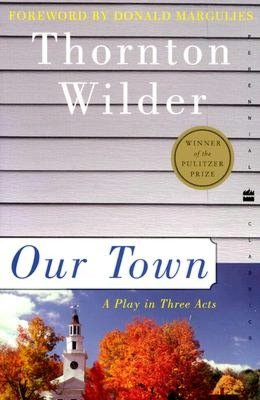
ourtownI have loved Thornton Wilder’s Pulitzer Prize winning play, Our Town, since I was fourteen or fifteen. I was trying to figure out how I would have come into contact with it, as I certainly didn’t read it while in school. My best guess is that it was because of Robby Benson, who starred in an adaptation of the play which must have aired on television. If you are a regular visitor to this blog, then you know that Robby and I go way (way) back.

I probably purchased my copy of the play around then – it’s an Avon paperback which, according to the cover, cost $1.75. (I know, eh?) It’s dog-eared and highlighted and marked up and the words contained within still, after all these years, move me.

In the Foreward of the HarperPerennial edition of the play Donald Marguiles, an American playwright and professor, calls Wilder “the first American playwright.” Marguiles further posits that Wilder paved the way for many of the playwrights who came after, and are perhaps better known: Albee, Williams, Miller.

First produced for the stage in 1938, Wilder’s play takes place in Grover’s Corner, New Hampshire. The play is performed on a bare stage. The actors mime their stage business. For theatre goers attending that first production, Wilder’s play must have seemed wildly modern.

“Stripping the stage of fancy artifice, Wilder set himself a formidable challenge,” says Marguiles. “With two ladders, a few pieces of furniture, and a minimum of props, he attempted to “find a value above all price for the smallest events in our daily life.””

Our Town could be any town. That’s the point. The characters on the stage are us. The three act structure of the play mirrors the circle of life: birth, love and marriage, death. One might easily argue that nothing happens. Yet the exact opposite is true: everything happens.

The Stage Manager guides us through the play.  Our Town is a fine example of metadrama; that is a play which draws attention to the fact that it is a play. The Stage Manager acts both as a sort of Greek chorus and bit player. He has the power to alert the audience to events in the future and to allow characters to revisit the past, as he does – famously –  for Emily in Act Three.

The language of the play is simple. Characters speak colloquially. They are just average citizens, concerned with the weather, town gossip, and their children. Even my class of grade ten students were able to see themselves in George and Emily. It is a tribute to the timeless quality of the play that despite the intervening years – from the play’s debut until now –  not much has changed.

DR. GIBBS: Well, George, while I was in my office today I heard a funny sound…and what do you think it was? It was your mother chopping wood. There you see your mother – getting up early; cooking meals all day; washing and ironing  – and still she has to go out in the backyard and chop wood. I suppose she just got tired of asking you. And you eat her meals, and put on the clothes she keeps nice for you., and you run off and play baseball, – like she’s some hired girl we keep around the house but that we don’t like very much.

As a teenager I would have certainly seen myself in that passage. Now, I see my own children.

We are all the same: we are born, we live and we die. The Stage Manager remarks  that even in Babylon “all those families sat down to supper, and the father came home from his work, and the smoke went up the chimney, – same as here.”  It underscores one of the play’s motifs: time and its passing. What do we know of those people? “…all we know about the real life of the people is what we can piece together out of the joking poems and the comedies they wrote for the theatre back then,” remarks the Stage Manager.

In the Joss Whedon’s landmark television show Angel, the title character says “If there’s no great glorious end to all this, if nothing we do matters… , then all that matters is what we do. ‘Cause that’s all there is. What we do. Now. Today.” (Epiphany, 2001)

In Our Town‘s final act Emily comes to the same realization, albeit too late. “Do human beings ever realize life while they live it? – every, every minute?” she cries.

The Stage Manager replies: “No. (pause) The saints and poets, maybe – they do some.”

Perhaps my students aren’t quite ready to acknowledge life’s brevity. I know, for sure, they don’t live “every, every minute.” Why should they? I didn’t. I don’t.

Wilder’s play is a powerful reminder, though, that we should. And that message is as meaningful now in 2013 as it was in 1938.
The Guardians – @andrewpyper

guardiansAndrew Pyper’s been on my literary radar for a few years now – ever since I read his first novel, Lost Girls. (This was well before I blogged, or even knew what blogging was, so I have no review. I do remember that I thought it was smart, well-written and creepy.) A couple years ago I read Pyper’s novel. The Trade Mission, a book I had some trouble with. Not because of the writing, more because I felt like I was in way over my head.  The Guardians was a much easier read, well, perhaps not easier, but more accessible.

Carl, Ben, Randy and Trevor, the novel’s narrator, grow up in Grimshaw, Ontario. It’s a one-horse town, a place they can’t wait to leave. They are solid friends and have been since they were kids. They play hockey for the Grimshaw Guardians, smoke up in Carl’s car before class and fantasize about Ms. Langham, their young and beautiful music teacher. On one level, The Guardians is about this friendship. But there’s more to this story than four boys making out with their girls and smoking dope.

Because there’s this house which just happens to be across the street from Ben’s house and as Trevor recalls: “it alone is waiting for us. Ready to see us stand on the presumed safety of weed-cracked sidewalk as we had as schoolchildren, daring each other to see who could look longest through its windows without blinking or running away.”

The Guardians opens with Ben’s suicide in the present. Trevor must return to his old stomping grounds to attend the funeral. He’s at a bit of a crossroads, Trevor. He’s recently been diagnosed with Parkinson’s and he’s a man of a certain age (40) and he’s feeling the full force of death’s lingering gaze. Pretty much the last place he wants to be is back in Grimshaw, where he’ll have no choice but to remember certain events from his youth that he has sworn a pact with his buddies to never talk about.

I hope Mr. Pyper will consider it a compliment when I say that The Guardians reminded me a little bit of Stephen King’s brilliant novel, It. I loved that book, not just because it scared the bejeesus out of me  (which, frankly, seems silly now given that the monster was a giant girl spider that lived in a cave) but because of the friendships between the characters – which King always handles so deftly. Pyper does a fine job, too, of giving us characters to care about even when they make bad decisions. And they do; they’re kids.

The house has a part to play, too. It’s long abandoned and creepy as hell and bad things happen there, both real and imagined. Their relationship with the house drives the narrative both in the past and now, present day.

The strength of the story, though, is that it taps into that very human feeling of helplessness, and frailty. Trevor’s feeling it as his body begins to betray him. There’s also this notion of “you can’t go home again.” I’m not a 40 year-old-man, but I understand perfectly that idea of returning to the place of your youth but no longer being young. Trevor feels it when he is reunited with Randy. “That’s what we see in each other’s eyes, what we silently share in the pause between recognition and brotherly embrace.”  Their youth is gone, but they are haunted by it nonetheless.

The Guardians is a sad tale, well told.


Perfect Chemistry – @SimoneElkeles

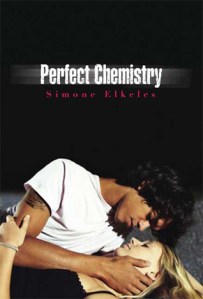
perfect chemistryI admit it: I have a type. I like bad boys with kind hearts. Stories that feature these guys (and I’ve read a lot of them) fill in those ticky boxes faster than you can say smoldering eyes and tattoos. You’d think by now I’d be over it, but clearly not. I devoured Simone Elkeles YA novel Perfect Chemistry in one sitting.

Brittany Ellis is eighteen and just beginning her senior year of high school in a Chicago suburb. She’s pretty and popular, captain of the cheerleading team, dating the hunky high school quarterback.  She lives in a huge house on the right side of town.

Everyone knows I’m perfect. My life is perfect. My clothes are perfect. Even my family is perfect. And although it’s a complete lie, I’ve worked my butt off to keep up the appearance that I have it all. The truth, if it were to come out, would destroy my entire picture-perfect image.

Alejandro “Alex” Fuentes is also eighteen and also in his senior year, but his life is vastly different from Brittany’s. For one thing, he comes from the wrong side of the tracks. For another, he’s a gang banger.

Senior year. I should be proud I’ll be the first family member in the Fuentes household to graduate high school. But after graduation, real life will start. College is just a dream. Senior year for me is like a retirement party for a sixty-five-year-old. You know you can do more, but everyone expects you to quit.

The interesting thing about both of these characters is that what the reader sees on the surface is only part of their story. The alternating first person points of view allows us a glimpse into lives which are much more than what they initially appear. Brittany and Alex would have no reason to ever interact. In fact on the first morning of school, Brittany’s reaction at almost hitting Alex while trying to nab a parking spot pretty much says it all:

Alex takes a step toward my car. My instincts tell me to abandon my car and flee, as if I was stuck on railroad tracks with a train heading straight for me….

But Brittany is no shrinking violet and when, later that day, she’s paired with Alex for a year-long chemistry project, she gives as good as she gets. So, naturally, sparks fly.

Perfect Chemistry is a love story, true, but it is also a story about making choices, standing up for what you believe in,  and breaking down those stereotypes which often hold us prisoner.  Brittany and Alex are well-written characters, believable and relateable. I really wanted things to work out for them.

Back in the 70s there was a movie very similar to this book. It’s cheesy now because frankly, blue-eyed Robby Benson was never going to make a very convincing “Chicano”. Still, it has similar themes. In case you have some time to kill, check out Walk Proud.

I love me some lists

The end of a year always inspires listmakers to reflect on the days gone by. I love all the ‘Best of’ book lists – more titles to add to my notebook. Here are some great Best of 2012 lists from bloggers and others to help you decide what to read next:

A Guy’s Moleskin Notebook

Bart’s Bookshelf

Book Addiction

You’ve Gotta Read This

Dot Scribbles

Savidge Reads, Part One

Savidge Reads, Part Two

SCC English

What’s Not Wrong

If you’ve done a list, let me know and I’ll add it here.