Bad Girls Don’t Die – Katie Alender

So, there’s nothing wrong with Katie Alender’s novel Bad Girls Don’t Die. It’s the story of Alexis, a high school student who takes photos, thinks her doll-loving twelve year old sister, Kasey, is kind of annoying and goes out of her way to distance herself from just about everyone at her school. Alexis is smart and Alender does a terrific job of capturing her voice from the very beginning of the novel. Although like many teens, Alexis takes herself a tad too seriously sometimes, she’s also self-deprecating and intelligent.

Alexis has a lot on her plate. Her parents are generally absent from her life and she is often left in charge of the household and her sister, who starts acting weirder and weirder. Added to all this, Alexis finds herself drawn to a new student at her school.

Bad Girls Don’t Die is a ghost story (think Jane-Emily rather than Stephen King).  It’s not particularly scary, although there’s enough of a  creep-factor to get younger teens huddling together with the lights on. 

I think my reading of it suffered from having recently finished The Hunger Games – which is a kick-ass book. Bad Girls Don’t Die pales by comparison.

A new year begins…

I have been a horrible blogger in the last few months. Worse, I have been a horrible reader. I didn’t quite make my 50 Book challenge, either – topping out at 46. What I did manage to do – effortlessly – was add to my already heaving tbr pile. I mean, really, did I actually need  anymore books? I have over 300 books now, waiting to be read.

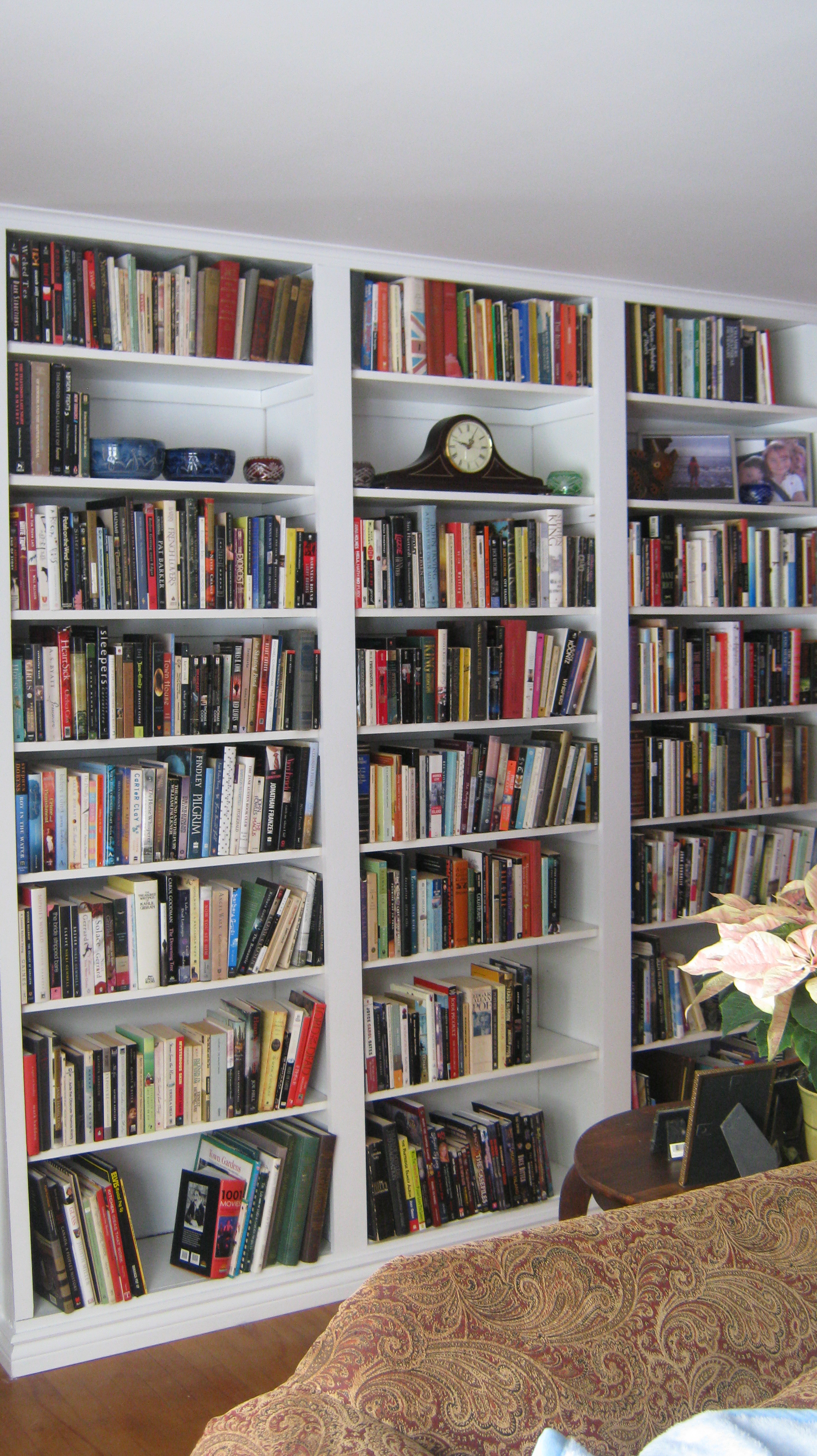
One extremely exciting thing happened to me in December. I decided to paint my living room and my brother built me beautiful bookshelves to house my already-read books. When the project was over (after a few weeks of chaos and dust because of the painting/building) I sat in a chair admiring these shelves and even announced to my 11 year-old son, that I thought I might actually love the shelves more than I loved him. *g*

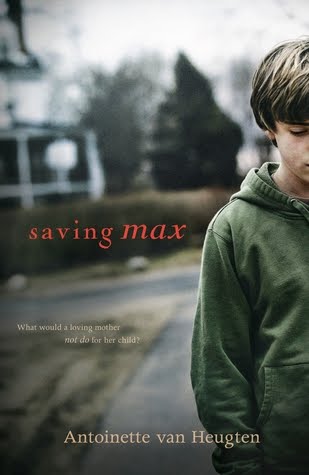
Saving Max by Antoinette van Heugten

Van Heugten’s debut novel, Saving Max, is the story of single mother, Danielle, whose son, Max, is accused of murder while in a psychiatric facility for evaluation. Danielle has taken Max from Manhattan, where she works as a lawyer, to the renowned Maitland clinic in Plano, Iowa, where Max can be assessed. Although he’s already been diagnosed with Aspergers (a mild form of autism), Max’s behaviour has become increasingly more troublesome (so we’re told) and Danielle is out of options.

Once at Maitland, Danielle meets Marianne, another mother whose son, Jonas, is there to be assessed. Jonas has several severe problems including being non-verbal. Danielle admires Marianne’s devotion to her son and constantly questions her own abilities as a mother. When Jonas turns up dead and Max is found holding the smoking gun (figuratively speaking), her mother lion instinct kicks in and she stops at nothing to get to the bottom of what really happened.

Saving Max isa  rather pedestrian whodunit. The characters are stock figures: Doaks, for example, is the hard-boiled ex-cop who now works  as a private investigator. It’s almost impossible to believe he’s never used a computer yet he claims not to know what “googled” means. He says  “ain’t” and calls Danielle “cookie”. Then there’s  the guy she slept with once after meeting him at a bar. Theirs is a love connection – which we’re supposed to buy. In a completely contrived twist of fate, he end up being the lawyer hired by Danielle’s NYC law firm to represent her.  Danielle herself is resourceful and smart, but I never connected with her – not even as a mother. And this is 2010, am I really expected to believe that she’d get a poodle perm and wear pant suits?

Then there are some problems with the story – little things a reader shouldn’t notice if they are wholly invested in the book. van Heugten has Danielle on a flight back from  Phoenix where she has gone to retrieve some evidence. In one chapter Danielle is buckling in as the plane begins its descent. A couple paragraphs later, she’s asking for a coffee and settling in to continue reading the evidence she’s found. A couple chapters later, she’s working her way through the traffic in Des Moines; two chapters after that, she’s on the plane again.  The author also compensates for showing, by telling the reader things when it suits the story. Danielle knows, for example, the nursing schedule at 11pm. How?  I hate when I notice stuff like that.

The story itself is written in present tense, perhaps to give the reader a sense of immediacy and urgency – but the story just isn’t propulsive. I understand how desperate Danielle must be to clear her son, but the pieces of this puzzle just fit together too neatly. And the ending is trite.

All that said, I had no trouble reading the book. I think van Heugten might have the goods. Her background as a lawyer showed in the court scenes. The writing was strightforward, although not particularly original. The story had legs. What this book lacked, for me, was any really connection to the people who inhabited its pages. Ultimately, if you don’t care about the characters, you’re not going to care about their fate.
Purging…

 We’ve spent the day getting ready to paint my daughter’s bedroom. She already has a lifetime of keepsakes, most of which we packed away for her. She had a hard time parting with half-written stories and scraps of paper with a meaningful doodle on it, but when we stood in front of her bookcase, she was ruthless. The books she’s loved – The Little House on the Prairies series, Little Women, Miss Happiness and Miss Flower, (which was my book and is definitely worse for the wear but I am thrilled that Mallory loves it as much as I did!), A Little Princess,  get pride of place, but many others were kicked to the curb without a second thought. How can she be my kid?

I am much more precious about my books and have always hated parting with them – even the books I’ve hated and wouldn’t recommend to anyone. I’ve gotten a little bit better in the past couple of years because I don’t have the luxury of limitless space. Oprah’s site recommends these tips for culling books from your shelves.  I guess she’s sort of applying the same rules we use to strip the dead wool from our wardrobes: if we haven’t worn/read it in the last season/year we should probably say bye-bye.

When I do relent and make some wiggle room for new books on my shelves (this is my already-read shelf) I generally remove:

books I hated and wouldn’t pass on

mysteries I would never read again (aka Harlen Coben but not Thomas H. Cook)

books I have made several attempts to read, but just couldn’t get through

Books on my tbr shelf will remain there (I’m nothing if not stubborn) until I have read them.

How about you –  do you keep all your books? If not, how do you decide what stays and what goes?

Along Comes A Stranger by Dorie McCullough Lawson

Okay – so another book that sounded so promising and ended up being mediocre. What’s up!?

Kate Colter has lived in small-town Wyoming for 15 years. Her husband, George, is a paleontologist; her daughter, Clara, is just seven and suffers from MCADD, a disease that requires her to eat regularly or else her body runs out of glucose and starts to shut down.

What we’re expected to believe – because the author tells us , is that Kate is somehow dissatisfied with her beautiful family and lovely life, that she’s  an East Coast girl at heart and has never really settled into life in the West. That’s why when she meets her mother-in-law’s new boyfriend, Tom Baxter, she’s immediately smitten. He’s from away and as far as Kate’s concerned, he’s exciting and intelligent and they have things to talk about.

About 50 pages in, Kate mentions her aunt Joanie. She’s clearly a plot device, so the author can tell us about Kate’s fascination with criminals.

I can’t say Joanie’s and my interest in the underworld arises from a concern for something greater, like justice, nor does it come from something emotional or psychological within either one of us, like a deep-seated fear of evil, for instance. No, Joanie and I just like to talk about all these crimes and criminals because they make for good, fast-moving stories.

So, life ticks on. George goes off on a dig and Kate is required to fill her days – which she does. Maybe this is the reason why she doesn’t notice, at first, the huge red flags that something is not 100% square with Mr. Baxter. Oh no! Then, even the tiniest things start alarm bells ringing until the novel’s wholly ridiculous conclusion.

Look, I’ve read dozens of these stories – you have, too – lots of them are terrific. This one is not. The characters, every last one of them, are one-dimensional and the  whole thing is contrived and lacks any sort of suspenseful momentum.

The Bronte Project by Jennifer Vandever

I am starting to get annoyed with the recommendations slapped on book covers. For example, Karen Quinn called The Bronte Project “a brilliant first novel of love. ” On the back  there’s more praise: “So original, so enchanting, so poignantly true that it defies you to put it down.” But wait- that’s also by Quinn. Was there only one author willing to give this book their seal of approval? After reading The Bronte Project, I’m not surprised.

The blurb makes this sound like a great read, especially for someone as enamored of Brontes as I am.

Shy young scholar Sara Frost’s unsuccessful search for the lost love letters of Charlotte Bronte hasn’t won her any favours at her university, particularly now the glamorous new Head of Princess Diana Studies has introduced her media-savvy exploits to the staid halls of academia. But it’s not until Sara’s fiance suddenly leaves her that she begins to question her life’s vocation.

I thought the book sounded like it had promise…but not so much. By about half way through I was totally exasperated with the expository nature of the writing, the mini-lessons on the Brontes, the ridiculous decisions Sara made and the even more outlandish denouement. Then I realized that Vandever is a Film School graduate. Like Sara, maybe she hoped her work would somehow make the perfect fodder for a film.

Let’s face it – I don’t have anything intelligent to say about this book…except perhaps – don’t waste your time reading it. Even if, like me, you love Jane Eyre and Wuthering Heights.

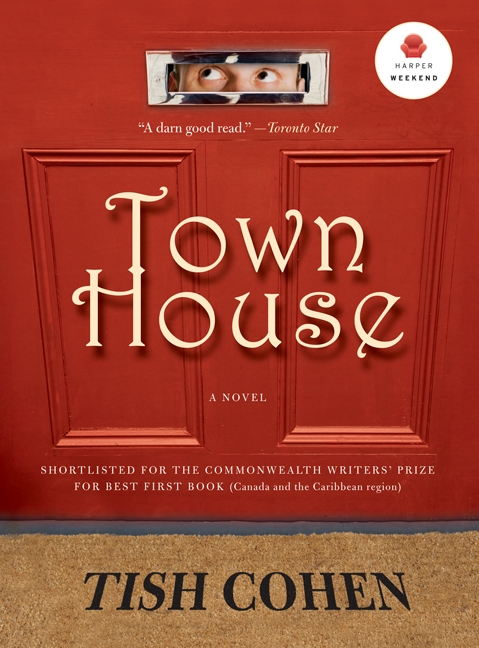
Town House by Tish Cohen

You can’t help but think that Tish Cohen is going for Hollywood with her novel Town House. There’s the wacky ensemble cast: Jack Madigan, son of deceased rock legend Baz Madigan; Jack’s son, the eccentric stuck-in-the-70’s teen, Harlan;  Jack’s ex-wife, Penelope, and her soon- to- be new husband, Yale; the strangely mature girl-next-door, Lucinda and Dorrie, the real estate agent so inept and adorable you just know she and Jack will end up together. (It will come as no surprise that Town House is, in fact, destined for the big screen.

As for the plot, well, Jack’s agoraphobic; he can’t leave the house without having a meltdown – so he doesn’t leave.  He rigs up a ‘groper’ to retrieve the paper and the mail; Harlan looks after the groceries and Jack lives quite happily in the huge (albeit, slightly decrepit) Boston town house his father left for him. The hilarity starts when the money stops and the bank decides that the house must be sold.

Town House isn’t all that funny, though. Sure, it ticks along, but the characters didn’t really interest me. And some of the plot twists just seemed contrived and unrealistic. I absolutely hated the ending. Cue music, already.

Sometimes the plot seems to be pointing in one direction – for example Jack is apparently a master paint mixer. He has discovered (and understands) the perfect white. A subplot involving that goes nowhere.  Also, I thought his love-interest was spineless. And, despite his illness, of which, I admit, I know nothing, Jack isn’t all that likable. How is he, after all, able to bust free of his illness when Lucinda needs him, but can’t do the same for his own son?

So – I didn’t love this book. It was moderately entertaining, and might make an amusing film, but it wasn’t my cup of tea.

The Night Climbers by Ivo Stourton

A couple weeks ago I mentioned Donna Tartt’s novel The Secret History, a book I read almost 20 years ago. If you haven’t already read it, I can highly recommend it as a compelling novel about art and literature, particularly from the Greek period. But even if this isn’t your thing, The Secret History tells an intriguing tale of friendships made and destroyed on a college campus. It’s a book that has stayed with me all these years and one I should really re-read.

Ivo Stourton’s novel The Night Climbers mirrors Tartt’s novel in some respects. When James Walker arrives at Tudor College, Cambridge, he is careful about the friendships he forms.

My father and Evelyn Waugh had warned me against the dangers of making early friends, so I deliberately avoided contact with my fellow freshers in my first weeks, hoping to cultivate a vague air of mystery that would bring me to the notice of the social elite.

Pure chance brings Michael Findlay into his room and then, shortly thereafter,  into a secret circle known as The Night Climbers.  James is smitten with The Night Climbers, particularly Francis, the son of a Lord.  Francis is beautiful and irreverent, blithely spending his substantial allowance on alcohol, drugs and dinners out. Soon James is a part of this group and the novel follows their escapades from their delirious (both literally and figuratively) highs to their rock-bottom lows.

Stourton’s novel is well written. The story begins some years after James has left university and is paid a visit by one of his former friends who hints at some trouble that might be coming their way. The story then artfully backtracks, introducing us to this interesting group of characters. James is not altogether unsympathetic, either, which is helpful because despite Stourton’s skill, the book lacked any emotional resonance for me.

Revenge by Mary Morris

Revenge is the story of Andrea Geller,  an artist who teaches at a small college in Hartwood. Andrea has gained some notoriety for a collection of art she once showed at a gallery in New York, but now her work has stalled.  She’s also struggling with the recent accidental death of her father. She’s having an affair with a married man.  All in all, Andrea’s a bit of a mess.

She happens to live across the street from Loretta Partlow, a highly successful novelist. Although Partlow had been required reading in high school, Andrea isn’t much of a fan until her stepmother mentions loving Partlow’s novel  What If? So Andrea revisits her work, the novels and essays on gardening and the poems. She becomes sort of obsessed with Partlow and contrives ways to bump into her.

Revenge is the rather odd story of the friendship which develops between Andrea and Loretta. Andrea enters into the relationship thinking Loretta might use her writing skills to exact a sort of revenge on her stepmother, but her scheme is only incidental to the story. Revenge is not a thriller, exactly, but you do race along its bizarre trajectory hoping for answers which never come.

That’s not to say that I didn’t like Revenge. Morris is a fine writer and I look forward to reading more of her work (and, in fact, I have Acts of God on my tbr shelf). This is, however, one of those books that seems to be promising one thing and then delivers something entirely different.

Ultimately, Morris has written a story about two rather quirky and self-centered women who need each other… until they don’t.

A Gathering Light by Jennifer Donnelly

So, while my copy of Donnelly’s novel is called A Gathering Light, apparently the novel is called A Northern Light in the USA. I don’t understand why they have to change book titles. Does anyone know the rationale?

Whatever the book is called – I loved it. I didn’t even realize it fell into the category of teen fiction until I finished it and started reading about Donnelly.

A Gathering Light is the story of 16 year old Mattie who lives with her widowed father and three younger sisters on a farm in Adirondacks in 1906. Her older brother, Lawton, has left home after a fight with their father and the family doesn’t even know where he is. Life on the farm isn’t easy. Mattie’s family doesn’t have much money and Mattie isn’t the homemaker her mother was. Her father – since the loss of his wife – is stern and angry. Mattie has to juggle her responsibilities at home with her secret desire to go off to college and study to be a writer.

Donnelly’s novel does a number of things remarkably well. First of all, it captures a time and place beautifully. After a particularly disastrous start to her day Mattie recalls that her mother could “make breakfast for seven people, hear our lessons, patch Pa’s trousers, pack our dinner pails, start the milk to clabbering and roll out a piecrust. All at the same time and without ever raising her voice.”

Mattie is a wonderful character. I fell in love with her from the start – her kindness (when she feeds a couple kids from down the road, even though there’s barely enough food for her own siblings and father)  and her determination and even her dreams – to leave her home and go off to New York City.

During the summer, Mattie goes off to work at the Glenmore, the finest hotel on Big Moose Lake.  While there she meets a guest, a young woman, who hands her a bundle of letters and tells Mattie to burn them. Later that day, the woman is found drowned; her companion, a young man, is missing. It is these letters and the fact of the woman’s death that propel Mattie on her journey towards freedom and adulthood. Of course, it’s all much more complicated than that. The most handsome boy around, Royal, has his eye on Mattie. She can’t forget the promise she made to her dying mother that she’d look after her sisters and father and her teacher, the outrageously independent Miss Wilcox, is hell-bent on getting Mattie off the farm.

A Gathering Light draws some of its inspiration from a real life murder, but ultimately this is Mattie’s story. It’s impossible not to root for her.