An unexpected gift…

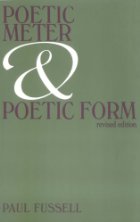
A colleague presented me with a gift the other day. While digging through the books at The Salvation Army, she came across the book Poetic Meter and Poetic Form. As English teachers, we’re always looking for books to add to our collections and she thought this might be a good one for me (I’ve only just returned to teaching after many years doing other things.) She bought the book and then, while flipping through it, discovered that the book had been mine!
No joke – my name and student number and dorm name and room number were printed on the inside front page.  That younger version of myself is 25 years ago…at least! And I’ve lived all over in the interim. What a strange and wonderful  thing to have the book back.

Have you ever had a book reunion?

Here’s a novel idea…

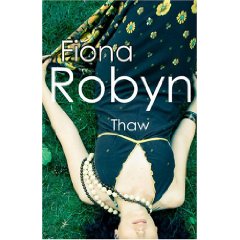
Novelist Fiona Robyn is releasing her new novel Thaw via the blogsphere and I’m thrilled to be able to offer the first part here. You’ll be able to continue to read the novel by following the link at the end of the first entry.

*

These hands are ninety-three years old. They belong to Charlotte Marie Bradley Miller. She was so frail that her grand-daughter had to carry her onto the set to take this photo. It’s a close-up. Her emaciated arms emerge from the top corners of the photo and the background is black, maybe velvet, as if we’re being protected from seeing the strings. One wrist rests on the other, and her fingers hang loose, close together, a pair of folded wings. And you can see her insides.

The bones of her knuckles bulge out of the skin, which sags like plastic that has melted in the sun and is dripping off her, wrinkling and folding. Her veins look as though they’re stuck to the outside of her hands. They’re a colour that’s difficult to describe: blue, but also silver, green; her blood runs through them, close to the surface. The book says she died shortly after they took this picture. Did she even get to see it? Maybe it was the last beautiful thing she left in the world.

I’m trying to decide whether or not I want to carry on living. I’m giving myself three months of this journal to decide. You might think that sounds melodramatic, but I don’t think I’m alone in wondering whether it’s all worth it. I’ve seen the look in people’s eyes. Stiff suits travelling to work, morning after morning, on the cramped and humid tube. Tarted-up girls and gangs of boys reeking of aftershave, reeling on the pavements on a Friday night, trying to mop up the dreariness of their week with one desperate, fake-happy night. I’ve heard the weary grief in my dad’s voice.

So where do I start with all this? What do you want to know about me? I’m Ruth White, thirty-two years old, going on a hundred. I live alone with no boyfriend and no cat in a tiny flat in central London. In fact, I had a non-relationship with a man at work, Dan, for seven years. I’m sitting in my bedroom-cum-living room right now, looking up every so often at the thin rain slanting across a flat grey sky. I work in a city hospital lab as a microbiologist. My dad is an accountant and lives with his sensible second wife Julie, in a sensible second home. Mother finished dying when I was fourteen, three years after her first diagnosis. What else? What else is there?

Charlotte Marie Bradley Miller. I looked at her hands for twelve minutes. It was odd describing what I was seeing in words. Usually the picture just sits inside my head and I swish it around like tasting wine. I have huge books all over my flat; books you have to take in both hands to lift. I’ve had the photo habit for years. Mother bought me my first book, black and white landscapes by Ansel Adams. When she got really ill, I used to take it to bed with me and look at it for hours, concentrating on the huge trees, the still water, the never-ending skies. I suppose it helped me think about something other than what was happening. I learned to focus on one photo at a time rather than flicking from scene to scene in search of something to hold me. If I concentrate, then everything stands still. Although I use them to escape the world, I also think they bring me closer to it. I’ve still got that book. When I take it out, I handle the pages as though they might flake into dust.

Mother used to write a journal. When I was small, I sat by her bed in the early mornings on a hard chair and looked at her face as her pen spat out sentences in short bursts. I imagined what she might have been writing about; princesses dressed in star-patterned silk, talking horses, adventures with pirates. More likely she was writing about what she was going to cook for dinner and how irritating Dad’s snoring was.

I’ve always wanted to write my own journal, and this is my chance. Maybe my last chance. The idea is that every night for three months, I’ll take one of these heavy sheets of pure white paper, rough under my fingertips, and fill it up on both sides. If my suicide note is nearly a hundred pages long, then no-one can accuse me of not thinking it through. No-one can say; ‘It makes no sense; she was a polite, cheerful girl, had everything to live for’, before adding that I did keep myself to myself. It’ll all be here. I’m using a silver fountain pen with purple ink. A bit flamboyant for me, I know. I need these idiosyncratic rituals; they hold things in place. Like the way I make tea, squeezing the tea-bag three times, the exact amount of milk, seven stirs. My writing is small and neat; I’m striping the paper. I’m near the bottom of the page now. Only ninety-one more days to go before I’m allowed to make my decision. That’s it for today. It’s begun.

Continue reading tomorrow here…
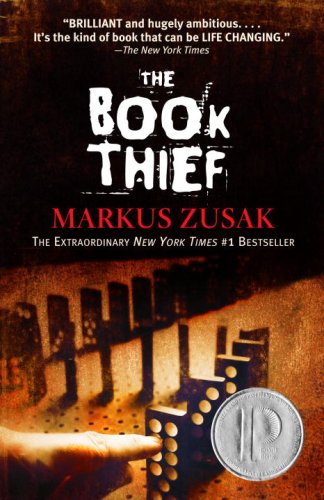
The Book Thief by Markus Zusak

I still remember the feeling I had the first time I read The Diary of Anne Frank. I was probably about 11 or 12. No teacher could have explained the horrors of Nazi Germany to me as well as Anne did. She was speaking to me. Many years later, I visited her attic annex and it was a profound experience.

Reading The Book Thief was also a profound experience for me.

I don’t even know how to begin to talk about The Book Thief. The New York Times said it was “the kind of book that can be life changing.” I mean, you start a book like that with a little trepidation: can it really live up to all the hype? For the first 30 pages or so I thought, “no.” Last night, as I closed the book and wiped the tears away I thought, “every person alive should read this book. I want to teach this book.”

The Book Thief has so many things going for it, I’m not sure where to start singing its praises.

The Book Thief is the story of Liesel Meminger.  Liesel is almost ten when she ends up in Molching with Hans and Rosa Hubermann, her new foster parents. It is 1939. In Nazi Germany.

Readers are either going to be totally enchanted or annoyed by the story’s central conceit: the novel is narrated by Death. “Here is a small fact, ” Death tells us. “You are going to die.” For the next 500-plus pages, Death is our constant companion. Sometimes the action unfolds without commentary, other times he weighs in.  Although I found the first 30 pages or so a bit of a slog, I soon settled into the book’s rhythms.

Then I fell in love with Liesel. And Hans. And Rudy. And Rosa.

Liesel is extraordinary. She and Hans bond late at night, when Liesel’s nightmares wake her, and Hans teaches her to read. Books and words are central to Liesel’s story. So is her friendship with Rudy, the boy next door. Through their eyes we see Hitler and Nazi Germany; we experience the atrocities and the small kindnesses. Zusak’s story is mostly about everyday things: hunger, pettiness, laughter, hope, cruelty and kindness.

Liesel is sustained by the books she steals and anyone who loves words will appreciate and understand their ability to comfort Liesel. But she is also intelligent enough to understand how words can be used to hurt and coerce.

Where is Death in all this? He carts the souls of the dead off and is, in this story at least, a loving and benign figure.

Death gets the last word. He always does.

Books and movies…

I finally bit the bullet and rented The Time Traveler’s Wife a few nights ago. I didn’t go see it in the theatre despite my deep and abiding love for the book. Mostly I was afraid that the film wouldn’t do the book justice…and I was right. I really like Rachel McAdams and although Eric Bana might not have been my first choice for Henry, I don’t mind him either…but the movie just wasn’t good. Maybe it’s impossible to create a faithful adaptation of a novel like TTTW, I don’t know. That said, Peter Jackson did a pretty impressive job with Tolkien.

In any case, it got me thinking about other book – to – film adaptations. What works and what doesn’t?

An example of one that  works which immediately springs to mind is Ordinary People. The book, by Judith Guest, was published in the 1976. The film, directed by Robert Redford, came out in 1980. I’d read the novel and I went to the movie. You’d be hard pressed to say which is better. The film stars Donald Sutherland, Mary Tyler Moore (I know!), Timothy Hutton and Judd Hirsch. I can highly recommend the film because it’s so faithful to the novel and the performances are so rich. The book’s excellent, of course. Back in the day, Mary Tyler Moore’s performance garnered all sorts of praise as the character she played was so different from the one we were used to seeing on the Mary Tyler Moore Show. Really, rent the film. (It won  four Oscars: Best Director, Best Picture, Best Supporting Actor and Best Screenplay)

I also think Clint Eastwood’s adaptation of Robert James Waller’s The Bridges of Madison County is terrific. The book is actually on my Reader’s table, but not because I think it’s great literature. Nevertheless, that novel made me cry so hard. And so did the movie. I loved that they didn’t try to pretty it up. Meryl Streep and Clint Eastwood played the title characters, two people who fall in love — deeply and unexpectedly– later in life. Clint Eastwood is a terrific director anyway and this movie was simple and beautiful and hey, is there any character Streep can’t play?

Speaking of Streep, I was first introduced to her back in the 70s through a film called Sophie’s Choice. That film was based on a novel by William Styron, which I read after I saw the film. The film is a doozy. The book, although excellent, is slightly drier.

One author whose work has often been adapted successfully is Stephen King. The Shawshank Redemption based on King’s short story “Rita Hayworth and Shawshank Redemption” is fantastic.

So is Brian De Palma’s adaptation of King’s novel Carrie. I saw this movie when it came out in the theatre back in the 1970s and it scared the living crap out of me.

[youtube=http://www.youtube.com/watch?v=yJe0iVo8y3A&hl=en_US&fs=1&]

One thing I’ve realized doing this is how much movie trailers have changed!

What about you? Do you have any favourite film adaptations? Any movies you felt really didn’t capture the essence of the book? I’d love to hear about them.

Freedom to Read…

Freedom to Read Week is an annual event that encourages Canadians to think about and reaffirm their commitment to intellectual freedom, which is guaranteed them under the Charter of Rights and Freedoms. – from the Freedom to Read site

I personally don’t believe in censorship; I’m a pro-choice chick all the way. I agree – there’s a lot of abhorrent crap out there, but my problem with censorship is who gets to decide whether it is or isn’t abhorrent crap. The closest I’ve come to questioning the merit of a book was reading about Karla Homolka and Paul Bernardo, a married couple responsible for the death of three young girls including Homolka’s sister.

Freedom to Read has a wonderful list of writing that has been banned over the ages including:

“George Eliot’s novel Adam Bede was attacked as the “vile outpourings of a lewd woman’s mind,” and the book was withdrawn from circulation libraries in Britain.

Walt Whitman’s Leaves of Grass (published in 1833) was threatened with banning by Boston’s district attorney unless the book was expurgated. The public uproar brought such sales of his books that Whitman was able to buy a house with the proceeds.

Alice in Wonderland by Lewis Carroll was banned by the governor of Hunan province in China because, he said, animals should not use human language and it was disastrous to put animals and humans on the same level.

D.H. Lawrence’s novel Lady Chatterley’s Lover was the subject of a trial in England, in which Penguin Books was prosecuted for publishing an obscene book. During the proceedings, the prosecutor asked: “Is it a book you would wish your wife or servant to read?” Penguin won the case, and the book was allowed to be sold in England. A year earlier, the U.S. Post Office had declared the novel obscene and non-mailable. But a federal judge overturned the Post Office’s decision and questioned the right of the postmaster general to decide what was or was not obscene.”

And here’s a real shocker…”The U.S.A. PATRIOT Act, 2001,  passed by the American Congress in response to terrorist attacks on New York and Washington on September 11, gave the FBI power to collect information about the library borrowings of any U.S. citizen. The act also empowered the federal agency to gain access to library patrons’ log-ons to Internet Web sites—and protected the FBI from disclosing the identities of individuals being investigated.”

Read more about censored books here.

Here in Canada, the following books have been challenged at one point or another:

  • Margaret Laurence, The Diviners
  • J.D. Salinger, Catcher in the Rye
  • Rosamund Elwin, Asha’s Mums
  • Alice Munro, Lives of Girls and Women
  • Elizabeth Laird, A Little Piece of Ground
  • Mordecai Richler, The Apprenticeship of Duddy Kravitz
  • John Steinbeck, Of Mice and Men
  • Harper Lee, To Kill a Mockingbird
  • J.K. Rowling, Harry Potter
  • Mark Twain, Huckleberry Finn
  • Margaret Atwood, The Handmaid’s Tale

A full list of  material challenged in Canada can be found here.

Do you have personal feelings about censorship?

Cleave by Nikki Gemmell

I am not a Nikki Gemmell newbie. I first discovered her a few years ago when I stumbled across her book The Bride Stripped Bare. I liked that book enough to track down more of Gemmell’s work. Cleave is the third novel I’ve read by her.

Cleave is the story of Snip Freeman, a 30 year old Australian artist. The novel opens with Snip making a long journey from Sydney to Alice Springs in Central Australia.  Snip’s  grandmother has died and left Snip enough money to buy a ute (which I gather is the Australian version of a pick up truck), but she has one request: Snip has to return to Alice and find Bud. Bud, as it turns out, is Snip’s father. Finding him isn’t a problem: Snip knows where he is.

Alice (and Bud) have an emotional hold on Snip. Well, lots of things have an emotional hold on Snip. She’s prickly and needy and in desperate need of the answers to some of the big questions of her life.

The distance between Sydney and Alice Springs is roughly 2700km and Snip doesn’t want to make the journey alone so she puts an ad in the paper: Girl plans ute, Sydney to Alice, share the lot, now. Dave is intrigued by the ad and ends up sharing the journey with Snip. Dave becomes a major player in Snip’s life. She’s always reckoned herself a free spirit, bouncing between friends, setting up makeshift studios wherever she lands. Although he’s slightly younger, Dave is settled and he wants Snip to settle, too.

Cleave means to break or come apart. Cleave is a story about fathers and daughters, mothers and daughters, husbands and wives, lovers. Although that might be familiar territory, Gemmell’s story is made new by her original and fresh prose and, for this Canadian at least, the unfamiliar terrain. Gemmell’s characters are intriguing, particularly Snip and her father. I think Gemmell’s a brave writer, too. She takes chances with her words and pushes the reader along ground that is often uncomfortable, but all the more rewarding because of it.

I am happy to say that I have now completed the first book in the Aussie Author Challenge.

A Reading Challenge

I see a lot of reading challenges when I am reading other book blogs. People sign up like mad for these things and they often seem onerous to me.  I like to keep my reading schedule more flexible. I belong to a reading group and I have to read those books. Beyond that, I like to peruse my tbr shelf and pick what I feel like reading at that moment.

That said, I did sign up for The Memorable Memoir Reading Challenge because it only required me to read four memoirs and I have (at least) four on my tbr shelf.

This morning I stumbled across the Aussie Author Challenge over at Booklover Book Reviews. I can be a ‘tourist’ and read just three novels. Interestingly, I am part way through Cleave by Nikki Gemmell and next up is The Book Thief by Marcus Zusak. (I didn’t even know he was Australian, so bonus!) I also have a couple Tim Winton’s on my tbr shelf…so signing up for this challenge seemed like a no-brainer!

Over to you…great books for teens

“When I only begin to read, I forget I’m on this world. It lifts me on wings with high thoughts.” – Anzia Yezierska

So, we’re in a deep freeze here in Eastern Canada. That’s what happens when you get complacent about winter, I guess. Until the last few days we’ve had a perfectly respectable winter…but minus 30 with the wind chill, come on!

In the real world I teach high school. I don’t have a long career behind me because I started teaching, got frustrated, abandoned it and did other stuff and have only recently returned. It’s shocking how many kids today don’t read. Shocking. What I would like to do is compile a list of great books for teens and I am looking for suggestions. I would also like to make a list of books/poems/plays that every teen should read before they leave high school. Yes, we have a curriculum, but I am shocked at the gaps in their reading.

Great books for teens.

A comprehensive reading list for teens.

Any thoughts?

Before the Knife by Carolyn Slaughter

The Betty and Boo Chronicles is hosting a Memorable Memoir Reading Challenge and as I actually have a few memoirs on my tbr pile, I thought I could manage to fulfill the challenge’s requirements: read four memoirs in one year. That’s doable.

I just finished my first memoir, Before the Knife by Carolyn Slaughter.

Before I talk about the book, let me say a few words about the author. I discovered Carolyn Slaughter 20 odd years ago, purely by accident. I came across her novel, The Banquet in a book store and its tag line “a taut and powerful story of obsessive love” caught my attention.  Well of course it did. At the time I was madly (and a little obsessively) in love myself. I devoured the book and then went looking for more. In a second hand store I came across her novel Relations (which is also known as The Story of the Weasel in that weird way books have their name changed between the UK and North America). That book was stunning. That book caused me to write a letter to Ms. Slaughter, the first and only fan letter I have ever written to an author. A letter to which she replied. In total I have read six novels by Ms. Slaughter (I highly recommend Magdalene as well as the two I have already mentioned) and I count myself a huge fan. She is an immensely talented writer.

Her memoir wasn’t what I expected, however, and I can’t say I loved it. Born in India, her parents moved to Africa when Slaughter was very young. Her father had some sort of government job; her mother was mostly emotionally unavailable and Carolyn, her older sister, Angela and her younger sister, Susan had a weird and unhappy childhood.

Carolyn prefaces her story by telling the reader of a horrific incident that happened to her when she was six. Then she goes on to say that Before the Knife isn’t a memoir about that. Except it is —  because Carolyn was clearly shaped by what happened to her. She does her best to survive her cruel mother and horrible father and much of her survival depends on her affinity with the land. She clearly loves Africa, its wild and exotic landscape a place of  refuge for her.

The story covers Slaughter’s life from her arrival in Africa to her return to England when she’s 16 or so. The pages in between are filled with striking images of the land, the people (Black and white) who occupied it, and Slaughter’s complicated and strained relationship with her siblings and parents. She’s not entirely likable — prone to violence against others and herself.

It’s not until years later, when she herself remembers what had transpired when she was just a little girl, that her story comes into focus. By then, though, I felt disconnected from her — the strange little bits of revealed life never really coming together. And I really wish she’d talked about writing.

Nevertheless, I have no regrets about reading her story. There was certainly nothing ordinary about it!

Jane-Emily by Patricia Clapp

Well, Mallory and I have read another book – this time a story I remember reading (and loving) when I was about Mal’s age. I stumbled across Jane-Emily when I was ‘shopping’ at Book Closeouts and couldn’t resist. It’s a story about a little girl, Jane, who goes to visit her paternal grandmother after her parents are killed in a buggy accident. She’s accompanied by her 18 year old aunt, Louisa. Her grandmother is kind but stern. She’s had some tragedies in her life — the recent loss of Jane’s father, of course, but also the death of her beloved husband and young daughter, Emily. Emily appears to have some unfinished business at the house.

I remember this book as being really creepy, but let’s face it, that was 35 years ago. I wonder how it compares to some of the books Mal’s read. What did you think, Mallory, did you find Jane-Emily scary?

Mallory: No. Not at all. It wasn’t scary, but I loved the way the story took place in 1912. I love books that take place in the past. What about you?

Christie: Well, I have to agree with you, Mal. Not scary at all. In fact, I have to admit to finding the book a little slow-moving. It’s just a novella, only 140 pages, but it moved fairly slowly. I think I remember it as being slightly more action-packed. I did like how atmospheric it was, though. Do you know what I mean by that?

Mallory: Umm… I think you might be talking about the feeling each day brought as it passed in the book. If I’m right, then yes, I did. I liked the way each moment seemed a little care-free or relaxed. It is summer vacation, remember.

Christie: You’re close. Atmosphere is the way the story makes you feel…so, for example, Clapp took her time making you feel the heat of each summer day – when it was hot, you knew it was. Remember how they were always going to sit in the shade of the tulip tree? And when they went up into the attic, there was this sense of foreboding, like they might discover something awful and they did – remember?

Mallory: Yeah, I do remember what poor little Jane found. That wax doll with the melted face. Emily sure seemed like a nice little girl, right?

Christie: Well, I guess that’s the difference of 35 years. This isn’t a splashy book. There wasn’t any violence or anything graphic, but as  a ghost story I think it was okay. How does it compare with other creepy stories you’ve read?

Mallory: I think the romance in this book overshadowed any ‘creepy’ parts. As for a comparison- the book The Enchanted Attic by M.D Spenser forced me to read it only in daylight. Literally. And truthfully, (and I’ll only admit to doing this once) I read nearly all of Jane-Emily at night with a little reading light. I didn’t even shiver.

Christie: Busted.

Mallory: I’m going to deny anything you accuse me of. ;). I recommend Jane-Emily to  readers who can’t handle a huge scare,  and who prefer more ‘mild’ creepy books. But I must say, this novella paints a gorgeous picture of summertime in your head. And I think every ludic reader loves a book that does that!