The Little Italian Hotel – Phaedra Patrick

Although on the surface Phaedra Patrick’s novel The Little Italian Hotel might seem like the perfect book for me — someone who adores everything about Italy — I doubt I would have picked this book up on my own. It’s only because it was chosen as this month’s book club pick that I read it.

Ginny Splinter, 49, is the host of well-known radio show called Just Ask Ginny. She offers people advice on a wide variety of problems and “Throughout her fifteen years on the air, there wasn’t a problem Ginny hadn’t tried to fix….”

It’s easy for her to look at the messy lives of other people because her life is, well, perfect. She’s soon to be celebrating her 25th wedding anniversary with her husband, Adrian. Her daughter, Phoebe, is out of the house and planning her own wedding. As a surprise, Ginny has splurged and purchased a three week stay at a fancy hotel in Bologna where she and Adrian can “renew their vows…reaffirm their love and commitment to each other and…have some fun, too.”

But things don’t quite work out that way. Adrian tells her that he can’t take three weeks off and then, worse, he tells her that he needs a break from her and their marriage.

Ginny isn’t able to cancel the trip. The best she can manage is to use the credit to move to a smaller hotel and take other people. She makes a spur of the moment decision to talk about what’s happened on the air and that’s how she ends up at Hotel Splendido with Heather, 43, a school teacher; Eric, 28, a carpenter; 80-year-old Edna; and Curtis, 38, a property developer. What do these five people have in common? Heartache.

Nico and his 18-year-old daughter, Loretta, run Hotel Splendido and the arrival of five guests for three weeks is a minor miracle. “His little Italian hotel had been struggling since the pandemic, but now his five guest rooms were going to be fully occupied for three weeks in June.” Nico is the heart and soul of Splendido and while it may not be as flashy as his friend Gianfranco’s Grand Hotel Castello Bella Vista (Ginny’s original destination), it is charming and comfortable.

As the five strangers get to know each other, they start to reveal their personal struggles to each other and form a sort of de facto family, offering each other support, encouragement and solace. I mean, it sounds awesome, right?

A little too awesome, really, which I guess is my main issue with the story. Look, there is nothing wrong with this book if you like fairy tales. Like the self-help book about repairing relationships Ginny buys at the airport, The Little Italian Hotel offers trite remedies for its characters. Even Ginny realizes those easy soundbites are hokum in the end.

If I Forget You – Thomas Christopher Greene

Coming on the heels of You Made a Fool of Death With Your Beauty, Thomas Christopher Greene’s 2016 novel If I Forget You confirmed what I already knew: I like my romance novels to be a little less fantastical. If I Forget You is my fourth novel by this author (The Perfect Liar, The Headmaster’s Wife and Envious Moon) and I think it is fair to say that he is one of my favourite writers.

This novel introduces us to Henry and Margot. Margot is as WASPish as can be (her father is a soft-drink kingpin; her mother lunches) and Henry is the son of Jewish immigrants. Their paths first cross in 1991at Bannister College, where they are both students. Margot’s father is a college benefactor; there is a building named after him. Henry arrives on a scholarship. The two meet after a poetry reading (Henry is the poet and a talented one) and are immediately smitten. More than smitten.

…she knows that tonight she will kiss him and that soon she will sleep with him and she also knows, more broadly, that if she doesn’t want to fall in love with him, she needs to decide that now.

The novel opens in 2012. Henry, a poet and lecturer at NYU, sees Margot – for the first time in 20 years – on the street in Manhattan. When their eyes meet, “the face Henry sees travels to him from a lifetime ago.” Instead of speaking to him, though, she runs away. It is from this point that their story unspools – toggling between their college days and this point in the present. Lives lived and all that.

Greene’s novel is filled with tenderness. The choices these characters make or, in some instances, are forced to make, inform their lives. Despite how young they are when they first meet, it is clear that Henry and Margot’s feelings for each other are sincere and deep, but as Henry remarks “The more you love someone, the more that person will eventually break your heart.”

Margot is also introspective. She is married to the bland but kind Chad, and has two almost adult children. Her son, Alex, causes her to get “nostalgic for the time of life he is occupying” although “part of her hates herself for this, the always looking back.”

If I Forget You is a quiet novel filled with joy and melancholy and hope. I loved both main characters and how, while their lives were filled with missteps, they managed to find each other again.

Highly recommended.

You Made a Fool of Death with Your Beauty – Akwaeke Emezi

Akwaeke Emezi’s novel You Made a Fool of Death with Your Beauty is not the book I thought it was going to be. What did I think it was going to be? Hmmm. Good question. Given the accolades (NYT Notable Book, NCAACP Image Award for Outstanding Literary Work) and positive reviews, I thought I was going to get a relatively serious story about overcoming grief…with a side of romance. What I got was a straight-up romance novel ripped from the Erotica 101 handbook. And there’s nothing wrong with that, if that’s your thing…but it’s not really the sort of book I am interested in reading anymore. That’s on me, not on Emezi.

Twenty-nine year old Brooklyn-based visual artist Feyi Adekola is still grieving the tragic death of her husband, Jonah. It’s not something she likes to talk about; it was “an easy secret for Feyi to keep,” but she’s been stuck in this endless cycle of grief for the last five years. Her BFF Joy thinks it’s time she got back out there, and that’s how she meets Milan and then his friend, Nasir.

There’s an immediate connection between between Feyi and Nasir, and Feyi “felt like she was in the path of something, but she wasn’t sure what.” Still, she’s reluctant to move too quickly, and Nasir suggests that they be friends first, which suits her fine. A few weeks into the relationship, Nasir invites Feyi to fly to his family home in the Caribbean. Through his connections, he’s secured her a spot in a gallery show and besides, his father and sister live there and she could get to know them. It isn’t until they are on the plane that Nasir reveals that his father is Alim Blake, a celebrity chef with two Michelin stars.

As soon as Feyi sees Alim she feels, “a twinge of attraction unfurling in her stomach.” She can barely meet his eyes, let alone be in the same room with him. She and Nasir are not sleeping together, and it’s clear once she meets Alim that they never will.

You Made a Fool of Death with Your Beauty leans into familiar romance conventions. Releasing breaths characters didn’t know they were holding and men commenting on how tight the women are — that sort of thing. There was one scene that actually made me burst out laughing. Feyi apparently didn’t know what julienning meant and…this is where my 24-year-old son said, “No, tell me he didn’t stand behind her and put his hands over hers to guide them!” He’s definitely not a romance reader, but he saw that one coming a mile away. So, yeah, this book is filled with the requisite romance writing quirks. Beautiful people in a beautiful setting eventually having beautiful, mind-blowing sex.

Perhaps I am cynical about romance now, but I am not sure that’s it. Alim and Feyi have a connection because Alim is also widowed, although his wife died 20 years ago. And sure, they talk about their loss and the impact it’s had on their lives, but mostly this is a book about Feyi wondering whether this thing she feels is real. Nasir soon becomes a bit player in the story because the heart wants what it wants.

I guess I like my romances to be a little less ripped from the Romance 101 playbook. More The Paper Palace than well….most of the spicy romance book on BookTok these days. That said, I suspect that loads of people will love this book. It wasn’t my cup of romantic tea, but I doubt I’m the book’s intended audience.

Notes on a Silencing – Lacy Crawford

At just 15, Lacy Crawford is sexually assaulted by two older boys at the New England boarding school that she attends. Notes on a Silencing is Crawford’s memoir of how this event impacted her life in the short term, but also how this event was part of a much more insidious instance of coverups at the prestigious school.

…it took a very long time to find the right name for what happened to me. I was too stunned to think rape when I pleaded with them not to have sex with me, though rape, in the traditional sense, was precisely what I meant to avoid. I had been raised to believe that by every metric, the most serious thing a girl could do was have a penis in her vagina. Not even Mary the mother of Jesus had done that. Certainly I had not. It had not occurred to me what else these two boys might do.

The memoir begins with the heinous assault and then invites the reader into Crawford’s life at St. Paul’s before this event. In many ways, Crawford was a typical teenager: studious, athletic, awkward and graceful in equal measure. Like many teenagers, Crawford is looking for a way to belong and longs to be both appealing and invisible to the opposite sex. After the assault, though, an event which she keeps to herself, Crawford is overcome with anxiety. She believes that what happened to her is her fault and many of the decisions she made in the following months lead to more emotional damage.

As much as Notes on a Silencing is about this one event and its aftermath, this is also the story of one girl’s journey through the land-mined path from adolescence to adulthood. It is about the casual cruelty girls often sling at each other, and the small kindnesses people can extend especially when you least expect them to. It is also very much about institutional abuse, even more appalling in this case because St. Paul’s is a well-respected religious school that prides itself on turning out graduates headed for the Ivy League. Crawford was failed over and over.

Twenty-five years after Crawford’s graduation from St. Paul’s, she reads about another assault on campus. There is a plea for information and Crawford tells her story. She is contacted by detectives and her case is added to what turns out to be many cases of sexual assault which were covered up on the campus. I’d love to say that Crawford gets her day in court, but that’s not what happens.

It’s so simple, what happened at St. Paul’s. It happens all the time.

First, they refused to believe me. Then they shamed me. Then they silenced me. On balance, if this is a girl’s trajectory from dignity to disappearance, I say it is better to be a slut than to be silent.

Notes on a Silencing is a powerful, frustrating, devastating and beautifully written story about one girl’s experience which will speak to every single woman out there.

Highly recommended.

The Secret History – Donna Tartt

Published in 1992, Donna Tartt’s debut novel The Secret History is an astounding accomplishment. I read it for the first time shortly after it was published and I remember it making such a huge impression on me. It was a book that sort of stuck in my brain even though, over the years, I forgot the details of what it was about. I often recommend it to students and this summer my son Connor – who read the book, at my urging, when he was 13 or 14 – suggested we do a re-read. I did; he did not.

The book’s narrator, Richard Papen, recalls his time at Hampden College, a small liberal arts college in rural Vermont. (Many critics say it’s based off Tartt’s alma mater, Bennington.) The novel opens dramatically

The snow in the mountains was melting and Bunny had been dead for several weeks before we came to understand the gravity of our situation. He’d been dead for ten days before they found him, you know.

Richard has come to Hampden from Plano, California a place which has “created for [him] an expendable past, disposable as a plastic cup.” After beginning college in California, a fight with his parents leads him to Hampden where he hopes to study Greek, a subject for which he has an affinity. The only Greek tutor, Julian Morrow, is reluctant to accept Richard into his class. Julian tells him, “I have limited myself to five students and I cannot even think of adding another.”

Those five students soon become central to Richard’s life. There’s Edmund “Bunny” Corcoran, the twins, Charles and Camilla Macauley, Francis Abernathy and Henry Winter.

All of them, to me, seemed highly unapproachable. But I watched them with interest whenever I happened to see them: Francis, stooping to talk to a cat on a doorstep; Henry dashing past at the wheel of a little white car, with Julian in the passenger’s seat; Bunny leaning out of an upstairs window to yell something at the twins on the lawn below.

A chance encounter in the library offers Richard an invitation to this insular group and from there a front row seat to their complicated dynamics. The novel traces the shifting alliances, the pretentious ponderings and the copious drinking of this group of young academics. Oh, and there’s a murder and other dark deeds.

The Secret History is considered the grand dame of dark academia, although it wasn’t even really a thing when the book was published. Dark academia became a thing on Tumblr in 2015 and “is a genre of literature that literally revolves around academia or learning. Therefore, you will see that it is mostly set in educational institutions and follows the lives of students.” (Medium) TikTok has a trend for the aesthetic subculture of dark academia. (NY Times) For me, dark academia is a story that takes place on a college campus or at a boarding school, where students are concerned with the study of literature but there are also dark forces (not of the supernatural variety) at play. Wikipedia has a pretty good overview here.

When I read The Secret History the first time, dark academia didn’t exist, so it was interesting to read it this time and see all the qualities that I recognize now as being hallmarks of the category: an isolated, insular campus setting, a preoccupation with academia, toxic relationships, corrupted morality. I think inherent in dark academia is bildungsroman. It is certainly true that Richard is changed by the novel’s end – and not necessarily for the better.

My memory of my first reading of Tartt’s book is that it was exceptional. This is a literary novel which I would now describe as overwritten, but that is a stylistic choice. Tartt has penned two other novels, The Little Friend and The Goldfinch, which won the Pulitzer in 2014 and they all have this in common: Tartt loves language and she is a master of her craft.

This reading of The Secret History was a little bit more of a slog than the first time around considering I was waiting for the “big” things to happen. I also found the characters just a little bit precious and not of this world. For a book that is set in the 1980s – granted a lot more years ago now than it was when first written – Richard and company seem just a tad foolish. They dress in “starchy shirts with French cuffs” and Richard sometimes observes to his delight, Francis wearing pince-nez. I mean, really. Sometimes they speak as though they are from another planet. But perhaps all the pretention is the point. These are students in their early 20s, trying to make sense of their world but they are, perhaps, too clever for their own good.

If you haven’t yet read The Secret History, I highly recommend it. And if you are already a fan of dark academia, check out these titles:

If We Were Villains – M.O. Rio

Bunny by Mona Awad

The Girls Are All So Nice Here – Laurie Elizabeth Flynn

Babel – R.F. Kuang

Never Let Me Go – Kazuo Ishiguro

One of Us Is Lying – Karen M. McManus

The Broken Girls – Simone St. James

Vladimir – Julia May Jonas

See What I Have Done – Sarah Schmidt

“Lizzie Borden took an ax and gave her mother forty whacks. And when she saw what she had done she gave her father forty-one.”

I have been fascinated with the story of Lizzie Borden since I was a kid and saw a movie where the rhyme about Lizzie was sung by schoolchildren. (Unfortunately, I can’t remember the name of the film.) Years later, I read Evan Hunter’s novel Lizzie. I can’t imagine there’s anyone out there with zero knowledge of this famous true crime case from 1892, but you can easily go down the rabbit hole by searching her name on YouTube.

Sarah Schmidt’s 2017 novel See What I Have Done reimagines the infamous case through the eyes of four characters: Lizzie; her sister, Emma; the Borden’s maid, Bridget; Benjamin, a mysterious man hired by the sisters’ Uncle John. 

The novel opens with the discovery of Mr. Borden.

I looked at father. I touched his bleeding hand, how long does it take for a body to become cold? and leaned closer to his face, tried to make eye contact, waited to see if he might blink, might recognize me. I wiped my hand across my mouth, tasted blood.

It is clear early on that things are not “normal” in the Borden household. Lizzie has a prickly relationship with her stepmother, Abby, whom she often calls Mrs. Borden. Emma is away from home so she is not there to act as a buffer between Lizzie and the senior Bordens. There seems to be a love/hate relationship between the sisters; both of their dreams have been thwarted by their overbearing father and their own petty jealousies. Bridget wants desperately to return to Ireland and has been squirreling money away, planning her escape. Schmidt lets us see into the interior lives of these characters, and the stifling house they inhabit.

As for the fourth character, Benjamin — he comes into the picture after a chance encounter with Uncle John. As far as theories are concerned, having another suspect in the mix isn’t necessarily a bad thing.

What I admired most about this version of Lizzie Borden’s story was the writing and Schmidt’s ability to make all these characters sympathetic. None of them are particularly reliable and whether or not you believe everything they have to say, is up to you.

Borden was acquitted of the actual crimes and See What I Have Done doesn’t offer any definitive resolution in terms of her guilt or innocence. That said, I think Miss Borden might have gotten away with murder.

A great read.

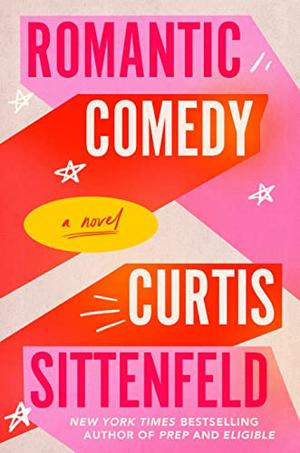
Romantic Comedy – Curtis Sittenfeld

Someone once told me that I was the most romantic person they’d ever met. That was a long time ago; life has chipped away at my notion of “romance”. Not that I ever consumed a lot of romance in literature, but I really don’t read that much straight-up romance at all now. If I do read it, I prefer a little angst (or, a lot of angst, tbh) and I like my main characters to be a little scuffed up by life. Still, the hype for Curtis Sittenfeld’s Romantic Comedy was irresistible and so I picked up a copy.

Sally Milz, 36, writes sketches for a late-night comedy show The Night Owls (picture Saturday Night Live). When the novel opens, Sally is getting ready for the crazy week ahead which includes writing sketch outlines, pitching them, fine-tuning them, taking them to rehearsal and then the live show. This week’s guest is Noah Brewster, “a cheesily handsome, extremely successful singer-songwriter who specialized in cloying pop music and was known for dating models in their early twenties.”

Noah is doing double duty this week acting as musical guest and host, a gig he claims “has been a lifelong dream, ever since [he] was a middle school misfit sneaking down to the basement to watch [the show] after [his] parents went to bed.” When he asks Sally for some help with a sketch he wants to pitch, Sally obliges and in doing so discovers that there is more to Noah than his piercing blue eyes, surfer hair and chiseled body. This is the meet cute.

While not necessarily a romantic cynic, Sally is also aware of how these things go – romantic relationships in an industry filled with beautiful people. She has written a sketch called “The Danny Horst Rule”. Danny is another writer on the show and even though he is “like a little brother” to Sally, the fact that he recently started dating Annabel Lily, “a gorgeous, talented, world-famous movie star” has sent Sally into a bit tizzy. Danny is, according to Sally, a “schlub.”

He was pasty skinned and sleep-deprived and sarcastic. And, perhaps because he was male or perhaps because he was a decade younger than I was, he was a lot less self-consciously people-pleasing and a lot more recklessly crass.

How come a guy like that ends up with a woman like Annabelle? This “was the essence of [her] fury: that such couples would never exist with the genders switched, that a gorgeous male celebrity would never fall in love with an ordinary, dorky, unkempt woman. Never. No matter how clever she was.”

There seems to be chemistry between Sally and Noah – or is he just turning on the high-wattage charisma big stars seem to have? Sally can’t tell. They definitely have banter, but it’s not vacuous banter. Then, at the after-after party there is a moment when – and Sally knows exactly when it happens – that things change.

The Covid lock-down two years later puts Noah back in Sally’s orbit and their email exchange is one of my favourite parts of the book – and that’s saying something considering I loved all the parts of the book.

Romantic Comedy is often laugh-out-loud funny, but it is also a book that examines notions of celebrity, beauty, gender and the perils of social media. I loved Sally’s insecurities and interior monologue – at one point she tells Noah that she “feel[s] like [she’s] writing dialogue for the character of [her]self.” And I loved Noah. He was self-aware and smart and patient with Sally. They are kind of perfect together.

Even if, like me, you wouldn’t necessarily consider yourself a romance reader, I can whole-heartedly recommend this book.

The Whistling – Rebecca Netley

Rebecca Netley’s debut novel The Whistling has all the necessary ingredients for an old-fashioned ghost story: an isolated location, a crumbling manor, unexplained occurrences, and plenty of things that go bump in the night.

It is 1860 and 24-year-old Elspeth Swansome arrives on the remote Scottish island of Skelthsea. She has been hired by Miss Gillies to look after her niece, Mary.

Iskar, Miss Gillies’ home, sits on the top of a hill. It is “a house larger than the others” remote and casting “a long shadow beneath which gorse and scrub shivered in the autumn chill.” Iskar was once beautiful, but is now showing signs of age and disrepair. It feels, to the reader and surely to Elspeth, dark and claustrophobic.

Elspeth’s young charge, Mary, has not spoken in months – not since the death of her twin brother William. There was also some scandal with the last nanny, Hettie, who ran off in the night with her lover. In addition, Mary’s mother – Miss Gillies’ sister – has recently died. All these tragedies strike a chord with Elspeth as she has also had some personal tragedy in her own life.

It doesn’t take long for things to get going. There are the requisite menacing characters, including Greer, a maid in the house who seems to hate Elspeth on sight and Ailsa, a woman from town who tells her that “All is not well at Iskar.” She’s got that right.

Elspeth hears humming in the halls, finds weird stones wrapped in human hair, sees shadows. Sometimes she finds Mary staring off into space and muttering to herself in a language no one can understand – even though she doesn’t speak to anyone else. Things get so creepy for Elspeth that she decides she is going to go back to the mainland, but in the end she can’t do it because of her growing affection for Mary.

Things get creepy for Mary, but unfortunately things didn’t get creepy for me. I mean – I guess I like my “horror” a little more horrific. This is an atmospheric book and might actually make a good movie, but it’s not scary.

There is a mystery at the centre of The Whistling. Although it’s not really my type of book, it was easy to read and entertaining enough for the kind of book it was. I suspect people who like their horror a little on the “lite” side, will likely really enjoy this book.

My version of the book, published by Harper Collins, has 377 pages…but the margins are wide and the font is huge – not sure what that was about. In addition, Netley had a writing quirk that drove me a little batty: “As I studied her features”; “As we walked”; “As I explained in my correspondence”. This is, I understand, a 100% personal pet peeve, but it did drive me a little batty. Otherwise, the writing is fine.

Easy to read, but nothing new.

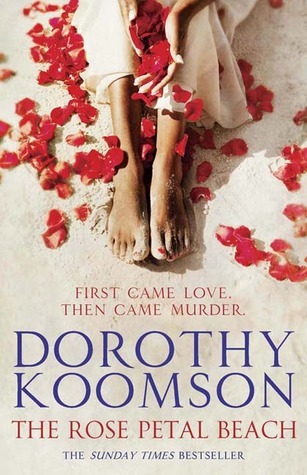
The Rose Petal Beach – Dorothy Koomson

I was a big fan of Dorothy Koomson’s novel The Ice Cream Girls, but The Rose Petal Beach? Not so much.

Told from multiple perspectives and bouncing from the present back to different points in the past, this is mainly the story of Tami and Scott, a married couple with two young daughters, who live in Brighton. Tami, who is Black, and Scott, who is white, have known each other since they were children. Scott is a Challey and “everyone knew the Challey family.”

Whenever Mum or Dad saw one of the Challeys in the street they’d talk about them quietly afterwards but not so quietly we didn’t hear. We knew they were people you crossed over the road to avoid. But you had to pretend that wasn’t why you crossed the road – they’d do you over if they thought you’d done that.

A chance encounter between Scott and Tami when they are eleven changes their lives. Tami tells Scott he can be whoever he wants — wise words from an eleven-year-old. Fast forward to present day and the couple are — at least from the outside — happily married and living the dream. Until the police arrive and arrest Scott. From that point on, Tami’s life spirals out of control.

The other two women in this story are Beatrix and Mirabelle, two women who live on the same street at the Challeys, and both of whom are friends with Tami. Mirabelle also works with Scott. Although Mirabelle isn’t one of the novel’s narrators, we do get to know quite a lot about her life. Later on in the story — and it’s a long one, clocking in at over 600 pages — we also meet Fleur.

The main problem with The Rose Petal Beach is that these people were ridiculous. The characterization was all over the place, especially with Scott. Is he a good guy? Is he an asshole? Is he a criminal? Well, yes and he can be all of those things in a single paragraph. The reveals seemed to come out of nowhere and felt less like legitimate twists and more like wtf?!

Although this novel is well reviewed – some even calling it a “masterpiece”, I found it kind of ridiculous. I know that we have to be willing to suspend disbelief a little bit when we read this kind of domestic thriller, but I at least want to care about the characters and I didn’t — not even a little bit.

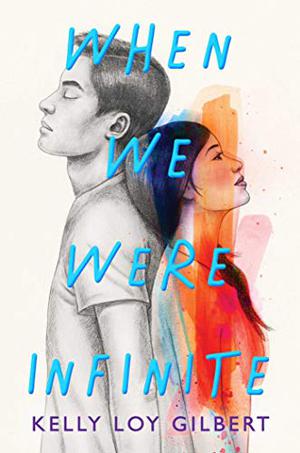
When We Were Infinite – Kelly Loy Gilbert

I read a lot of YA – especially during the school year. I started Kelly Loy Gilbert’s novel When We Were Infinite some time in May, but didn’t get around to finishing it because of all the craziness that happens at the end of the school year. I brought it home and finally got around to reading the second half of the book and I am so glad that I did because this is a superior YA book.

Beth, a talented violinist, lives in the Bay area with her Chinese-American mother. Her white father has moved out and Beth blames her mother. Her besties – Grace, Brandon, Sunny and Jason – are all Asian-American and also musicians. The five of them are part of the Bay Area Youth Symphony and are making plans to attend the same college after graduation.

There was so much the five of us had lived through together, so much we’d seen each other through. But in the whole long span of our history together, this was the most important thing my friends had done for me: erased that silence in my life. In the music and outside it, too, we could take all our discordant parts and raise them into a greater whole so that together, and only together, we were transcendent.

Beth is secretly in love with Jason and has been “for nearly as long as [she’d] known him.” That’s why, when she and Brandon witness an act of violence at Jason’s house, which ultimately needs to an even more shocking act, it sends Beth into a tailspin of worry.

Beth is telling this story from some point in the future, and the care with which she treats her younger self and her friends is lovely. It’s easy to look back at our younger selves and view the mistakes and missteps harshly, but Beth doesn’t do that. This book is really a love story: friendship and family and even our ability to love ourselves as much as anything else.

As an only child, and as a child of mixed ethnicity, Beth struggles with feeling as though she doesn’t really belong. She’s not white enough and she’s not Asian enough. Musically, perhaps she’s not good enough. Her conductor thinks she is and encourages her to apply to Julliard. Jason is first chair and clearly talented and he applies too, and when they both get auditions, they sneak off to NYC together.

This book is so beautifully written and so heartfelt and would speak to anyone who has ever felt ‘other’. Beth has a hard time articulating her feelings. I think she constantly feels as though she has to work harder than anyone else to be accepted and loved and perfect because if she’s not – maybe her friends will leave her just like her father did.

When We Were Infinite tackles some tough topics with sensitivity and I highly recommend it.