Ellice Littlejohn works in the legal department of Houghton Transportation Company. Her lover, Michael, is the executive vice president of the same company. When he asks her to meet him at the office early one morning, Ellice doesn’t find the request unusual. When she arrives though, she finds “a bright crimson spray of blood” and a “star-shaped hole in Michael’s right temple”.
This is how Wanda M. Morris’s debut novel All Her Little Secrets begins. And this is also the beginning of the issues that kept me from thoroughly enjoying the novel – although I certainly found it easy to read.
Ellice is a 50-something, Ivy-league educated lawyer, so clearly not an idiot. But what does she do when she discovers Michael’s body? Does she call the cops? Security? An ambulance? No. She “prayed to God for forgiveness, turned off the lights, and quietly closed the office door…”. Say, what?
We come to understand that Ellice has a complicated past and Michael is just one of those complications. First of all, he’s married and has children. Secondly, he’s a WASP and she’s Black and their relationship is a secret, one of many secrets Ellice has had to keep over the course of her life. And it’s these secrets – revealed slowly over the course of the novel – that prevent Ellice from making sensible decisions from the the moment she discovers Michael’s body until the end of the book.
Lots of writers gushed about this book. And I think, for a debut, it has lots to recommend it, but I also think the story itself – the part that was supposed to be ‘thrilling’ – was just sort of pedestrian. There are a lot of things going on in this book; perhaps too many to manage with real finesse. I wanted to really like Ellice because it was awesome to read about a smart, mature woman – except that she makes all sorts of ridiculous decisions. Honey, your life is in danger; you need to call the cops.
And it turns out the danger is a bunch of white supremacist asshats, which, yeah, awful, but it felt like a sort of convenient way to up the ante. I am white; let’s just get that out of the way. It feels uncomfortable for me to criticize a book because it plays the race card, but if there wasn’t rampant racism (and misogyny) in Morris’s novel, the mystery/thriller part of it would be sort of not-that-thrilling in my opinion. It has the requisite duplicitous characters, red herrings, car chases and covert meetings but it also has family drama and trauma (which is used to explain some of Ellice’s questionable decisions) and which felt vastly more authentic. We never get to see Ellice doing any lawyering, really (and Morris is a lawyer herself, so it would have been easy to include). Mostly she’s chasing after answers, but I just felt like the book was 100 pages too long.
When Elise’s best friend from college, Julie, disappears, Elise clings to the belief that she’s not really gone. Molly and Mae, their other besties, are not as optimistic as Elise. Neither is her husband, Tristan. And then “Two years to the day after she went missing, Tristan found her sitting on the porch swing. She was wearing the same clothes she’d had on when she disappeared. She did not seem confused or disoriented, but she had no memory of where she’d been for the past twenty-four months.”
Thus begins Rachel Harris’s debut novel The Return which is a weird hybrid: part horror novel and part novel about female friendships. Elise hasn’t been as successful as her friends post college. She dropped out of her Masters program and followed her married prof to Buffalo where she has a crap job and lives in a crap apartment. Mae is a fashion stylist in NYC; Molly lives on the West Coast and before she went missing, Julie and her husband were converting a farm house in Maine into a B & B.
Now that Julie is back, Mae plans a girls’ weekend in the Catskills at the Red Honey Inn – the kind of swanky spot that is totally out of Elise’s snack bracket, but how can she say no.
When they arrive, though, the Inn seems more sinister than swanky and Julie isn’t quite the girl they remember either.
She’s emaciated. She smiles and her skin pools like melted wax. Her teeth are chipped and discolored. Her eyes are bloodshot, and the green or her irises skews yellow. Her hair is string, simultaneously greasy and dry.
[…]
Her breath is awful. So awful I gag. I play it off like a sob but have to turn my head away.
Cue rooms that don’t heat up, labyrinthine halls, strange hotel staff and shadowy figures and a formerly vegetarian bestie who now loves meat. Um. I would not be sticking around. Like, at all. But Elise is nothing if not loyal. And her need to support her friend’s return to normal keeps her and Mae and Molly in the creepy hotel with their creepy friend way, way too long.
Sara Nisha Adams’s debut The Reading Listwill probably appeal to booklovers everywhere, and although I would certainly consider myself one of those, this book didn’t really work for me.
Mukesh is a widower with three adult daughters. Aleisha is seventeen. Her parents are divorced and she lives with her older brother Aiden and her mother, a graphic designer, who spends most of her time curled up in a ball of misery. Aleisha works at a local branch library – a job she hates because she doesn’t really like to read. It is there that Mukesh and Aleisha first meet. It doesn’t exactly go well.
Mukesh is desperate to alleviate the sorrow he feels over his wife’s death. He’s lonely and has basically given up on life. He is hoping to find another book to help him as much as he feels that The Time Traveler’s Wife helped him, but he doesn’t know what to pick. His wife was the reader, not him. He is horrified when he visits the library and Aleisha tells him “I don’t read novels.”
Call it serendipity if you like (I call it contrived), but after Aleisha is reprimanded by her boss for being rude, she discovers a reading list entitled Just in case you need it which another library patron has apparently left behind. The lists consists of eight titles: To Kill a Mockingbird, Rebecca, The Kite Runner, Life of Pi, Pride and Prejudice, Little Women, Beloved, A Suitable Boy. Aleisha doesn’t really have anything better to do, (no friends/boyfriend) so she decides to start to read from the list and then she will have books to recommend to Mukesh when he returns to the library. This is, of course, the beginning of a beautiful friendship.
And all of that would be just fine with me, if it had been handled more deftly. I think Adams had a great idea. Book lovers pretty much universally love books about books and reading. Although I mostly enjoyed the two main characters, the inclusion of other random characters who also come across this reading list just felt convenient. You know from the outset that the library is in jeopardy of closing, and so you can also guess that all these people will band together to save it – and thus save themselves from the loneliness which it seems is part of the 21st century human experience. We have more and more ways to connect, and yet we are also more and more isolated. Yeah, so we get the whole idea that reading is one way to have a meaningful relationship with another person, which could potentially lead to something more.
In addition to the people, the discussion of the books felt cursory. For example, you wouldn’t even have ever had to read To Kill a Mockingbird to know that it’s important to see things from someone else’s point of view. The book discussions felt like Cliff’s notes, and as the novel went along, any talk of the books felt like an afterthought.
So, while many people will likely feel satisfied and heart-warmed by Adam’s book, I felt frustrated that it didn’t live up to its potential.
Angeline Boulley’s debut Fire Keeper’s Daughter was my first read in 2022 and it’s a cracker. It’s almost 500 pages long, but it was so good I had a hard time putting it down. It’s nice to start a new reading year with a great book!
Eighteen-year-old Daunis Fontaine lives in Sault Ste. Marie, Michigan. Her white mother comes from a wealthy, important family – a building at the local college is named after her grandfather. Her Ojibwe father, who died when she was seven, lived on the Sugar Island reservation, the place Daunis calls her “favorite place in the universe.” Daunis has a brother, Levi, who is just three months younger than her. There’s complicated family history, but Levi and Daunis are close; they are both talented hockey players, and they both idolized their father, who himself was a superstar on the ice, destined for great things until he was injured in a car accident. Daunis is meant to be headed to the University of Michigan for pre-med, but when her uncle David dies and her maternal grandmother ends up in a nursing home, Daunis makes the decision to start her post-secondary education closer to home.
Then she meets Jamie. He’s a new recruit to the Supes, the local elite junior A team her brother captains. There’s an immediate spark between the two. Soon they are running together in the morning and Daunis finds herself sharing things with him that she’s never shared before.
There is so much to love about this book I don’t even know where to start. First of all, Daunis is a fabulous character: smart, resilient, capable, loyal. She aligns herself with her Ojibwe heritage even though she is an unenrolled member because her father isn’t listed on her birth certificate. Her best friend Lily is in the same boat and “We still regard the tribe as ours, even though our faces are pressed against the glass, looking in from outside.”
Boulley captures all the hardships of being a biracial teen, the casual racism Daunis experiences, the sexism; it’s all here, but none of it is didactic. The novel also weaves traditional beliefs as well as stories and language throughout the narrative, which as a white person with very little knowledge of these things, I found fascinating.
Something else that is encroaching on her life is the proliferation of meth, which seems to be coming from Sugar Island and which is starting to impact people she cares about. Her childhood friend, Travis, who has become a shadow of his previously charming, handsome and goofy self now has ” hollows under his cheekbones [that] are concave to the point of sickly. Any softness is gone.” Travis’s addiction is just the tip of the iceberg, though and when Daunis witnesses a murder and discovers that Jamie is not quite who he seems, she finds herself helping the FBI investigate the meth and the novel kicks into high gear.
It would be one thing if Fire Keeper’s Daughter was just a story about a girl trying to figure out how she fits into two very different worlds, but this ambitious novel is so much more than that. It’s a mystery, it’s a coming-of-age story; it’s a story about culture and family. It’s so good.
Number Of Books You Read: 77 Number of Re-Reads: 2 Genre You Read The Most From: Fiction
1. Best Book You Read In 2021?
My favourite book of 2021 was The Paper Palace by Miranda Cowley Heller. It ticked ALL my boxes. It is a is a beautifully-written, page-turner about a woman who has to make a decision at a point in her life where she’s actually lived a life and has some real skin in the game. I loved it.
2. Book You Were Excited About & Thought You Were Going To Love More But Didn’t?
I had a handful of disappointing reads this year, but these were the ones I was especially looking forward to for a variety of reasons, but were then disappointing – also for a variety of reasons:
3. Most surprising (in a good way or bad way) book you read?
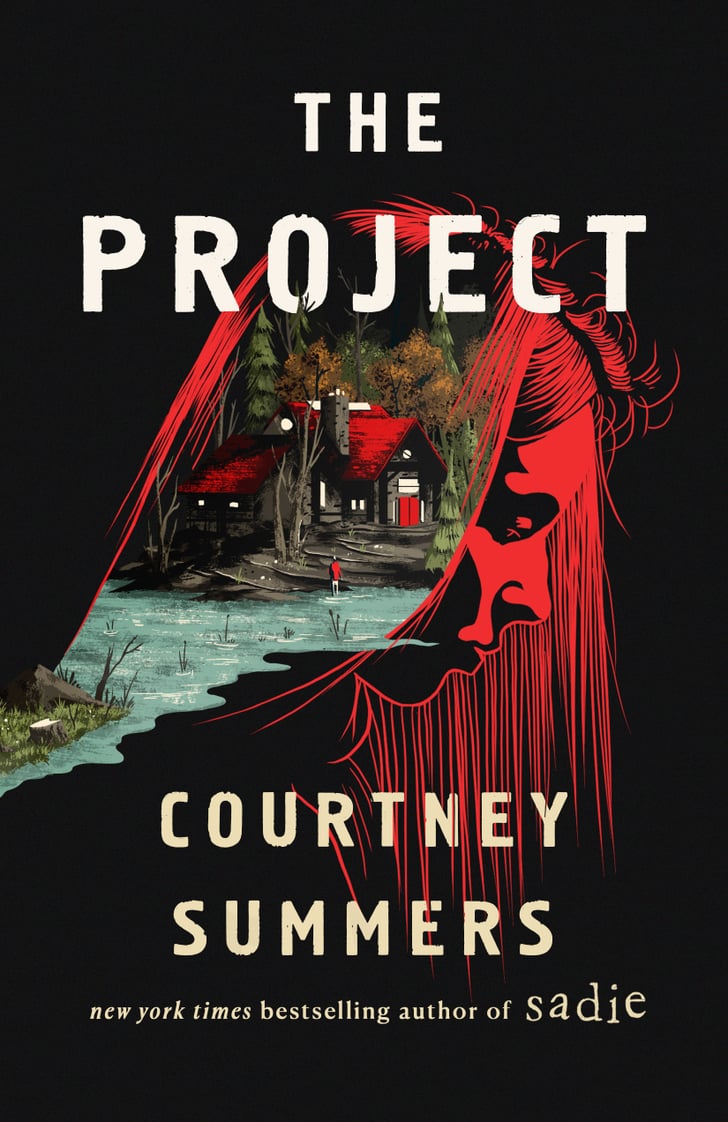
I was surprised that I didn’t love love Courtney Summers’ The Project because I have loved loved everything else she’s written and this book seemed right up my alley: a prickly heroine, a cult. It wasn’t awful; I still enjoyed it. I just thought I would like it a lot more than I did.
I listened to The Secret Garden – my first audiobook – and it was kinda surprising that I enjoyed the experience. I’ve read the book before, ages ago, and it was nice to revisit the garden this way.
The Lesser Dead surprised me, too. A fresh take on vampires that was creepy, and heartbreaking. I’d never heard of the author before and I will definitely be looking to read more of his work.
4. Book You “Pushed” The Most People To Read (And They Did)?
I do the most “pushing” in my classroom and this year I was a big fan of Concrete Rose, Odd One Out, and It Sounded Better in My Head. I’ve also encouraged people to read The Paper Palace and given it as gifts.
5. Favorite new author you discovered in 2021?
Chris Whitaker and Miranda Cowley Heller will be autobuy authors for me.
6. Best book from a genre you don’t typically read/was out of your comfort zone?
Nothing is out of my comfort zone, and I rarely pick books in genres that don’t interest me.
7. Most action-packed/thrilling/unputdownable book of the year?
8. Book You Read In 2021 That You Would Be MOST Likely To Re-Read Next Year?
Maybe The Paper Palace, but honestly with a TBR pile as big as mine, I don’t do as much re-reading as I would like.
9. Favorite cover of a book you read in 2021?
Loved the title and the cover, the story didn’t quite hold together for me, though.
10. Most memorable character of 2021?
100% Duchess from We Begin at the End. So much love for that girl.
Honourable mention to Maverick from Concrete Rose. I loved him when I first met him in The Hate U Give and I loved him even more in his origin story, and Zelda MacLeish from When We Were Vikings
11. Most beautifully written book read in 2021?
Hamnet and Judith was gorgeous to read. It’s really a book you want to savour.
12. Most Thought-Provoking/ Life-Changing Book of 2021?
13. Book you can’t believe you waited UNTIL 2021 to finally read?
I Capture the Castle by Dodie Smith has been on my TBR shelf forever. Finally read it and I loved it.
14. Shortest & Longest Book You Read In 2021?
The Heart’s Invisible Furies by John Boyne clocked in at 582 pages but was a sheer delight to read from beginning to end. How Reading Changed My Life was just 96 pages long. I read a total of 25,243 pages this year.
15. Book That Shocked You The Most
(Because of a plot twist, character death, left you hanging with your mouth wide open, etc.)
19. Best Book You Read In 2021 That You Read Based SOLELY On A Recommendation From Somebody Else/Peer Pressure/Bookstagram, Etc.:
#BlameItOnLitsy The Heart’s Invisible Furies was a book that lots of people were talking about on Litsy I gave in to the pressure and have zero regrets. I discovered We Begin At the End on Twitter. Lots of well-deserved chat about that one.
20. Newest fictional crush from a book you read in 2021?
No one, really.
21. Best 2021 debut you read?
The Paper Palace, obviously, but also Shuggie Bain which not only won the Booker but which was just an incredible book. I also really enjoyed Mirrorland.
22. Best Worldbuilding/Most Vivid Setting You Read This Year?
The Paper Palace had such a sense of time and place. Honourable mention to The Lesser Dead: NYC in the 70s and Crooked River a book about a father and his daughters living off the grid in Oregon.
23. Book That Put A Smile On Your Face/Was The Most FUN To Read?
I Capture the Castle is a delight and made me very happy.
24. Book That Made You Cry Or Nearly Cry in 2021?
Tin Man by Sarah Winman got me close, but Hamnet and Judith got me all the way there.
25. Hidden Gem Of The Year?
I don’t know how hidden it is, but I choose When We Were Vikings. That book was just such a gem. Honourable mention: Crooked River by Valerie Geary. Everyone should give these books a go.
26. Book That Crushed Your Soul?
I had a few soul crushing reads this year…as if 2021 wasn’t tough enough.
Forbidden – Tabitha Suzuma, We Begin at the End, The Paper Palace, Hamnet and Judith all hit me in the feels.
27. Most Unique Book You Read In 2021?
Fight Night by Miriam Toews had an unusual narrator in nine-year-old Swiv.
28. Book That Made You The Most Mad (doesn’t necessarily mean you didn’t like it)?
100% Corrupt by Penelope Douglas and by “most mad” I do mean I HATED it. Gawd-awful garbage.
1. New favorite book blog/Bookstagram/Youtube channel you discovered in 2021?
I love Jordy’s Book Club on Instagram. I haven’t really figured out how to get the most from Instagram yet, but I do really enjoy his content. I also like BooksbytheBay – also new to me and local.
2. Favorite post you wrote in 2021?
I had a lot of fun writing my review for Corrupt. Way more fun than I had reading the book.
3. Favorite bookish related photo you took in 2021?
Yeah, not my thing. Maybe this one.
4. Best bookish event that you participated in (author signings, festivals, virtual events, etc.)?
I was very excited to participate in Shelf Absorption‘s “everything you wanted to know about other people’s bookshelves project” which you can read about here.
5. Best moment of bookish/blogging life in 2021?
I hit 10,000 #Litfluence points on Litsy, which was kind of exciting.
6. Most challenging thing about blogging or your reading life this year?
Being distracted by Covid and my iPad.
7. Most Popular Post This Year On Your Blog (whether it be by comments or views)?
Strangely, my review of Corrupt got over 12,000 views.
8. Post You Wished Got A Little More Love?
I am happy to interact with anyone who wants to chat. 🙂
9. Did you complete any reading challenges or goals that you had set for yourself at the beginning of this year?
I always do the Good Reads Reading challenge. I set my goal for 75 books and I read 77. You can see a summary of my stats here.
1. One Book You Didn’t Get To In 2021 But Will Be Your Number 1 Priority in 2022?
Where do I even start?
2. Book You Are Most Anticipating For 2022 (non-debut)?
Take your pick.
My TBR shelf…and that’s not all of them.
3. One Thing You Hope To Accomplish Or Do In Your Reading/Blogging Life In 2022?
Maybe start a podcast. Maybe make better use of Instagram. Maybe neither of those things.
Although I do not know this for sure, Dean Atta’s novel-in-verse The Black Flamingo feels like a very personal story. Atta tells the story of Michael, born in London to a Greek Cypriot mom and a Jamaican dad who exits the family shortly after Michael is born.
“…six days before the millennium,/ she burned their Christmas dinner/ and he shouted, “You’re useless!”/ before throwing his plate down, turkey/ stuck to the kitchen floor. and I cried,/ startled by early indoor fireworks./ That was the end for them. The beginning/ for Mummy and me.”
Atta unspools Michael’s story, which is the story of someone who isn’t quite Greek enough or Jamaican enough, and definitely not straight enough, a fact he seems to realize relatively early on. When he is just six he tells his mother “If you only get me one present/ this year, please can it be/ a Barbie?”
I can relate to that. My son was totally enamoured with Bratz dolls when he was a kid. And long hair; he desperately wanted long hair, so eventually we got him a hat with all these long braids sewn along the edges. He wore that thing constantly.
The next year Michael tells his mother he wants to change his last name to hers, a request that earns him “the longest hug I’ve ever had.” (Nineteen seconds!)
The novel traces Michael’s adolescence, his friendship with Daisy, and finally his journey to attend university in Brighton. It is here that he finds his people at Drag Society, and ultimately himself.
“I’m just a man and I want/ to wear a dress and makeup on stage./ I want to know how it feels to publicly/ express a side of me I’ve only felt privately/ when playing with my Barbie as a boy.”
The Black Flamingo is a coming-of-age story, a story about identity and family, and it is lovely and lyrical and hopeful, too.
This year in my grade ten English class we’ve decided to try something new: podcasts. I have never made one and have only recently started to listen to them, but one of my colleagues and I thought it might be a great, non-traditional way for students to show their learning. We hooked up with a local organization called Brilliant Labs for the tech-y stuff and paired students up to read books that dealt with the topic of coming of age, which is this term’s big idea. Then, my colleague and I decided that we should give it a go, too.
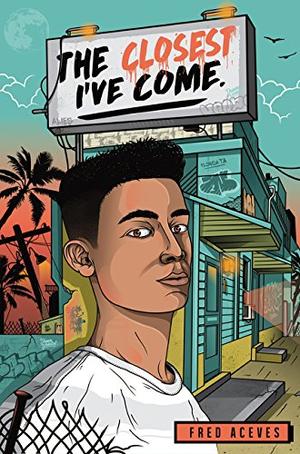
We read Fred Aceves debut novel The Closest I’ve Come which tells the story of fifteen-year-old Marcos Rivas who lives in Tampa, but not in the part of Tampa tourists see. His mother seems sort of checked out and her boyfriend, Brian, is a bully. Marcos notes “With every step home my bones are getting shakier.”
He moved in last summer, just before the worst heatwave in a decade, but the strangling humidity didn’t faze him none. The douche sat in the armchair (my armchair when my mom’s between boyfriends) with the fan pointed at himself. Even with me and my mom also watching TV, even though the fan has an oscillating setting, it forever pointed his way.
Things are pretty grim for Marcos. They’re poor, he struggles in school, some of his friends are borderline criminals and although he dreams of getting out of the hood, he doesn’t really know how he’s going to accomplish this. Then an opportunity lands in his lap.
Congratulations! You’ve been selected to take part in a new, exciting program.
The exciting program is an after-school group which is meant to provide enrichment to students with potential. One of those students is a take-no-prisoners girl named Amy who Marcos has admired from afar for many months. Marcos muses: “Me and Amy got something in common, even if it’s only this. Us together ain’t crazy. It might be fate.”
Marcos’s experiences in the class and interacting with students he might not normally interact with helps Marcos realize his potential. He learns that while it might be nice to figure out how to fit in, it’s also important to remain true to one’s self. Watching him struggle to play the crappy hand he’s been dealt is inspiring, especially because nothing comes easy for him.
I really enjoyed The Closest I’ve Come. I will post a link to our podcast here when it’s finished.
Although I was much older than the show’s target audience, I fell madly in love with the J.J. Abrams/Matt Reeves coming-of-age drama Felicity (1998-2002). In the show, Felicity Porter gets the boy she’s loved from afar, Ben Covington, to sign her yearbook on graduation day, and what he writes causes her to abandon her post-secondary plans and enroll at NYU, which is where Ben is going to university. The series’ four years follow Felicity through her friendships and relationships and decisions, both good and bad, and it is all must-watch television. I still love the show and rewatch it start to finish every couple of years.
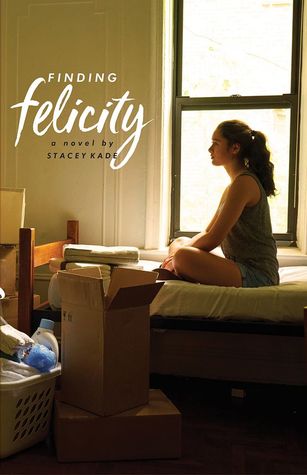
In Stacey Kade’s YA novel Finding Felicity, eighteen-year-old Caroline Sands has just graduated from high school, meaning she’s leaving the mess of the last few years behind and hoping for a fresh start when she starts Ashmore, a small liberal arts college in Iowa, in the fall.
After her parents’ divorce, Caroline and her mom moved to Arizona, and she just never really found her people. Instead, she found Felicity, so when her mom asked her about school and her friends, she just told them about the characters from the show. What could go wrong with that?
Ashmore is supposed to be Caroline’s new beginning, a chance to reinvent herself and make new friends. She neglects to tell her mother that part of the reason she wants, no needs, to go to this school is because Liam Fanshaw – her Ben-equivalent – is going there, too. What could go wrong with that?
Finding Felicity will speak to anyone who has ever felt uncomfortable in their own skin and desperately just wants to fit in. Caroline is awkward, for sure, but mostly she lacks confidence. That’s relatable, I think. Common wisdom would suggest that a new place doesn’t equal a new you and sometimes figuring it out is hard, but not impossible. Caroline makes a few missteps, but ultimately starts to craft the life she has wished for, and many teens will enjoy the journey.
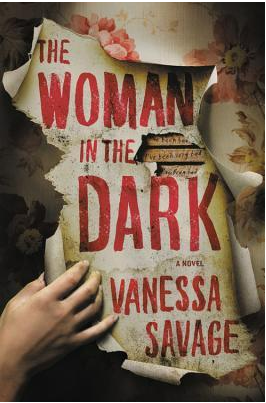
Sarah and Patrick are “happily” married and have two teenage children, Mia and Joe. Sarah is just starting to emerge from a long depression, brought on by her mother’s death. She’s still fragile. Patrick thinks what they need is a fresh start and he announces that the house where he grew up is available for sale and they should buy it and move. Just one tiny problem: fifteen years ago, the family who was living in that house — all but one survivor — was stabbed to death by a crazy person. What could go wrong?
Turns out, quite a lot does go wrong in Vanessa Savage’s debut The Woman in the Dark. And, unfortunately, that’s part of the problem with the book. It’s too bad because the book had a lot of promise. If you were playing a drinking game and had to take a drink for every trope, you’d be sloshed by the novel’s halfway mark.
I don’t want to step inside that house, but Patrick doesn’t see what I see when I look at the picture. He sees the beautiful Victorian house he grew up in, with its pitched roof and gabled ends – a fairy-tale house before it became a country House of Horrors. He sees happy memories of a childhood lived by the sea. He doesn’t imagine blood on the walls or whispering ghosts. He doesn’t see the Murder House, but I do.
Unfortunately for Sarah, that early intuitive insight doesn’t sustain her. She’s an unreliable narrator surrounded by people who keep secrets. And instead of a classic haunted house story, which might have been a more successful route, Savage chucks everything she could think of at the story, hoping that some of it would stick. It’s too much and not all of it lands successfully.
There’s Sarah’s mental health issues, gaslighting, isolation, creepy gifts left on the doorstep of their new home, people who are not who they seem, people who are who they seem, and you should have known it, secrets galore — some of them which inform the story’s narrative, but should have been spilled long ago, teen angst, writing on the walls (literally), domestic violence, a creepy basement…the list goes on. I kind of felt like the book didn’t really know what it wanted to be, which was too bad because I think the writing was pretty decent, and I was certainly hopeful when I started reading, especially because the book garnered copious praise.
It was a miss for me, but I would certainly be opening to reading more from this author.
Nanette O’Hare is trying to figure stuff out in Matthew Quick’s (Forgive Me, Leonard Peacock) YA novel Every Exquisite Thing. She’s a straight-A senior, and a super-star soccer player from an affluent family, so on the surface one might assume that Nanette has got it all going on. But it’s not true. Since mid-way through her junior year she’s been eating lunch with her English teacher, Mr. Graves, and avoiding her bestie, Shannon, whose questionable sexual escapades had started bothering Nanette back in middle school.
One day Mr. Graves hands her a tattered copy of Nigel Booker’s novel The Bubblegum Reaper, a book that Mr. Graves claims changed his life.
It’s maybe not the most literary work in the world. Probably a bit dated. But it’s a cult classic and I have a feeling that it might be the perfect read for you. Maybe even a rite of passage for people like us.
The Bubblegum Reaper does, in fact, have a tremendous impact on Nanette’s life. The book’s author lives in her home town, and Mr. Graves arranges for the two to meet.
Spending time with Booker was becoming an addiction, mostly because it was the only part of my day when I felt like I could be myself – or maybe like there was one person in the world who didn’t want me to be something I didn’t want to be or to act a certain way or to go along with everything that others pushed into my life.
Through Mr. Booker she meets Alex, a boy her age who writes poetry. The bond between the two teens is cemented as they talk about the book and share their own feelings of isolation and disenfranchisement.
It is through these relationships that Nanette is able to shake off some of the personas she’s adopted over the years. She starts to say no when she might have just said yes and, ultimately, though certainly not without some heartache, Nanette is able to forge her own path and become the person she really wants to be.
Every Exquisite Thing is a philosophical, quirky and thoughtful coming-of-age story.





 The Ludic Reader