You Were Never Here – Kathleen Peacock

There are so many things to admire about Kathleen Peacock’s YA novel You Were Never Here, but let’s just start with the fact that it’s set in New Brunswick. I can’t tell you how much fun it was to read a book that takes place in my home province. Okay – now that that minor squee is out of the way, let’s talk about Mary Catherine Montgomery aka Cat.

Cat has been exiled from New York City, where she lives with her screenplay-writing father, to her Aunt Jet’s in small-town New Brunswick. (The town is called Montgomery Falls, but I pictured Fredericton, for those of you to whom that means something.) Aunt Jet is the caretaker of the family’s now crumbling ancestral home, which she operates – out of necessity – as a boarding house. The reason for Cat’s exile and her subsequent banishment creates just one of You Were Never Here‘s mysteries. Another is the disappearance of Cat’s childhood friend Riley Fraser.

The boy in the picture is handsome. Chiseled jaw and wavy hair kind of handsome. The kind of handsome that gets crowned prom king or maybe class president. Even though the smile on the boy’s face looks forced around the edges, it’s wide enough to bring out the dimple in his left cheek.

There are a thousand Riley Frasers in the world, and the boy in the poster is mine.

Riley Fraser has been missing for months. The two had been friends the summer they were twelve (five years ago, and the last time Cat had been to Montgomery Falls), but something happened between them (another mystery) and even though Cat knows “I don’t owe Riley Fraser anything – not after the last thing he said to me”, knowing that he has disappeared is deeply unsettling.

Cat has no intention of doing anything other keeping to herself while she’s in Montgomery Falls, but then she meets gorgeous Aidan Porter, one of Montgomery House’s boarders. He proves to be a welcome distraction as Cat tries to process not only what happened back home, but also her complicated feelings about Riley, their truncated friendship, and his disappearance.

Those feelings become even more complicated when she bumps into Riley’s older brother, Noah. At first, Noah seems disinterested in his brother’s whereabouts, but soon he and Cat team up to try to solve the mystery of what happened to Riley.

And there’s yet another mystery in You Were Never Here which has to do with Cat herself. She seems very reluctant to touch people. There’s an incident on the bus from NYC to New Brunswick, when Cat hesitates before letting a woman sit beside her.

…there’s only so much you can do when you’re big. You can twist and contort all you want, but volume is volume, and with both of us “fat” – “overweight,” my dad always corrects, as if that somehow sounds better – a trickle of sweat forms where our hips press against each other.

Cat’s size is only part of the issue, though. (And how awesome to encounter a protagonist who is not a ‘perfect’ size zero; neither is her weight a punchline or flaw.) The other reason for Cat’s reluctance to touch people is germane to who Cat is, but I’ll let you discover that secret on your own.

I flew through You Were Never Here because it was all the things I love in YA: well-written, suspenseful, peopled with realistic characters, and loads of fun. The last third of the book was so tense, I couldn’t turn the pages fast enough. The fact that I was in a somewhat familiar setting was just the icing on the cake.

Highly recommended.
The Guest List – Lucy Foley

Lucy Foley’s thriller The Guest List is the perfect book to pick up if you’ve got a couple hours and you want to be distracted. Although I didn’t find the writing to be spectacular (do people not care about comma splices anymore?) and the twists weren’t necessarily twisty (once you see one, the house of cards starts to crumble), I still thoroughly enjoyed my time on Innis an Amplora or Cormorant Island.

Jules and Will (a digital magazine editor and a reality tv star) are getting married and they’ve decided to hold the exclusive event on Cormorant Island, located in the Atlantic, off the coast of Ireland. There’s nothing much on the island now, except for the Folly (aptly named as it turns out), a few crumbling buildings, a graveyard and a peat bog. To this event they’ve invited 150 or so of their closest friends, but the people who really matter come the day before.

There’s Hannah, wife of Charlie, who’s Jules’s best friend. Hannah’s quite aware that she and Jules are “the two most important people in [her] husband’s life.” There’s Johnno, Will’s best friend and best man. The two men went to an exclusive boarding school called Trevellyan. There’s Olivia, maid-of-honour and Jules’s half sister. Finally there’s Aiofe, wedding planner and owner of the Folly with her husband Freddy. Each of these people, and Jules, reveal their feelings about the event and the people in attendance in first person narratives. The book jacket tells us that one of these people is a murderer, although we don’t find out until the very end who has actually been killed.

Years ago, I read Agatha Christie’s magnificent “locked room” mystery (although at the time, I’m not sure I knew that’s what it was called) And Then There Were None. The “locked-room” or “impossible crime” mystery is a subgenre of detective fiction in which a crime (almost always murder) is committed in circumstances under which it was seemingly impossible for the perpetrator to commit the crime or evade detection in the course of getting in and out of the crime scene.[1] The crime in question typically involves a crime scene with no indication as to how the intruder could have entered or left, for example: a locked room. Following other conventions of classic detective fiction, the reader is normally presented with the puzzle and all of the clues, and is encouraged to solve the mystery before the solution is revealed in a dramatic climax. (From: https://en.wikipedia.org/wiki/Locked-room_mystery).

The Guest List isn’t totally a “locked room” mystery, but I think Foley does owe a debt of gratitude to Christie. And to every unreliable narrator on the planet. Every one one of the guests who arrive early on the island have something to hide. Secrets are alluded to. Friendships fray. Relationships strain. And it’s all enormous, mindless fun.

Rabbit Foot Bill – Helen Humphreys

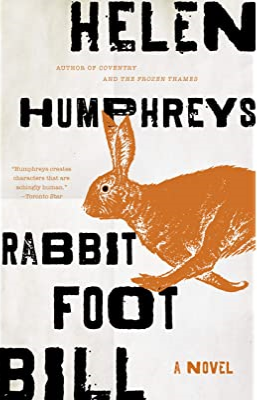
When asked how we (the ladies in my book club) would rate Canadian writer Helen Humphreys’ new book Rabbit Foot Bill on a scale of one to ten, the average score was about six. It’s a shockingly low number for an author whose book The Lost Garden we almost all universally loved. (I have also read her novels Afterimage and Coventry.) I have come to expect a certain degree of poetry in Humphreys’ prose, and while Rabbit Foot Bill is certainly easy to read, it lacked something. Usually after a book club meeting, especially if I am ambivalent about a book, I come away with a deeper appreciation of it. Honestly, I still don’t know how I really feel about this book.

Leonard Flint lives in small-town Saskatchewan with his parents. He’s a solitary kid and his only friend is Bill, a quiet man who lives in Sugar Hill, “right inside the hill.”

We have been friends for a year, Bill and I, and although people don’t approve, we are friends anyway. I like that Bill isn’t bothered by what people say.

The reasons why people don’t like my being friends with Bill are these: first, because he is a man and I am a twelve-year-old boy; and second, because he is a man who is not like other men. He doesn’t talk much. He doesn’t live in a house. He doesn’t have a real job. He doesn’t have a family.

One day, Leonard witnesses a shocking act of violence that lands Bill in prison. It’s fifteen years before he sees his friend again, and when he does it’s at the Weymouth Mental Hospital. Leonard has just accepted his first job as a psychiatrist, a job that he doesn’t really understand how to do. He really is out of sorts and then one night, crossing the yard back to the cottage where he lives he sees a man “moving along the outside of the building. He’s far enough away to be in the shadows and he has his back to me, but I recognize the way he moves as though it was myself moving in my own skin.”

It is indeed Bill, and although Leonard is warned against making contact with him, he can’t help himself. Bill and Leonard’s pasts are so closely linked that it is impossible for him to resist, even though it means that he is derelict in his duties to his own patients.

Rabbit Foot Bill is based a a true story but the real-life relationship between Bill and Leonard is peripheral at best. In Humphreys’ imagination their relationship is far more complex, which is of course the stock and trade of a writer. There were times when I wondered if there wasn’t some sort of homoerotic connection between the men, and the reveal, when it comes, is certainly plausible.

So, I am not sure why I didn’t love this book. Thinking about it now, as I write this, I guess I can see its merits, but I just felt it was somehow superficial. True, as my fellow book club member Karen said, Humphreys doesn’t get in the way of the story. In some ways, though, I wish she had spent just a teensy bit more time making these characters more substantial.

It’s not a total miss for me, but I didn’t love it.

Sunburn – Laura Lippman

Sunburn is my second outing with Laura Lippman. I just re-read my review of The Most Dangerous Thing from 2014 and the issues I have with Sunburn are pretty much the same issues I had with that book.

Sunburn concerns the fates of Polly and Adam. Polly (who has several other names) walks away from her husband, Gregg, and daughter, Jani, while the three are on a beach holiday. She lands in a little backwoods town (Belleville, Delaware), and that’s where Adam finds her. Adam has been hired to find her, actually. He couldn’t have known that he would be so attracted to her. “It’s the sunburned shoulders that get him.”

Adam and Polly end up taking jobs at High-Ho, a dump of a bar, where Polly waits tables and Adam, who happens to be a trained cook, revamps the menu. At first they keep their distance from each other.

He doesn’t go in hard. He’s not that way. Doesn’t have to be, if that doesn’t sound too vain. It’s just a fact: he’s a Ken doll kind of guy, if Ken had a great year-round tan. Tall and muscular with even features, pale eyes, dark hair. Women always assume that Ken wants a Barbie, but he prefers his women thin and a little skittish.

Skittish is certainly one way to describe Polly. Secretive and calculating would also be apt. Polly’s complicated past stretches beyond leaving her family on the beach. “If anyone knew her whole story, that might be the truly shocking part, the way she ruined her own second chance. But no one knows her whole story.”

For a while, the dance between Adam and Polly is interesting. They each have secrets and they are keeping their true feelings and motives close to their chests. Is Polly a player, a maneater? How does a mother walk away from her kid? It’s a question worth asking. And Adam? Who is the mysterious man who has asked him to keep tabs on Polly? What is he really after?

Ultimately, though, in the same way that the climax of The Most Dangerous Thing was anticlimactic, Sunburn doesn’t really get anywhere….and it certainly doesn’t get anywhere quickly. The first third of the novel is far more page-turning than the last third. By the time I got to the end, I didn’t even believe in Adam anymore. He seemed sort of neutered.

I’ll say the same thing about Lippman as I did the first time around: she can write. And maybe some readers won’t mind a meandering journey like this one, but it was just so-so for me.

Born a Crime – Trevor Noah

Although I knew that U.S. based comedian Trevor Noah was from South Africa, I knew nothing other than that about him. Noah’s 2016 memoir, Born a Crime was named one of the best books of the year by just about everyone including The New York Times, CBC and NPR. The accolades don’t stop there, and nor should they, because Born a Crime is the immensely readable, inspirational, and funny story of Noah’s extremely humble beginnings.

Noah was raised mostly by his mother, Patricia Nombuyiselo Noah. His father, a white man, is of Swiss/German descent. “During apartheid, one of the worst crimes you could commit was having sexual relations with a person of another race. Needless to say, my parents committed that crime,” Noah explains. The book’s title refers to Noah’s birth.

…on February 20, 1984, my mother checked into Hillbrow hospital for a scheduled C-section delivery. Estranged from her family, pregnant by a man she could not be seen with in public, she was alone. The doctors took her up to the delivery room, cut open her belly, and reached in and pulled out a half-white, half-black child who violated any number of laws, statutes, and regulations – I was born a crime.

Noah guides us through the early years of his life, years that were marked by trips to church, “at least four nights a week”, poverty, and his mother’s no-nonsense but loving approach to parenting. From her, Noah learned that language is power (and because of this Noah learned to speak several languages.) “It became a tool that served me my whole life,” he explains. Once, when he was being followed by a group of Zulu guys, he heard them say in their own language that they were going to mug him. He was able to diffuse the situation when he spoke to them in Zulu.

That, and so many other smaller incidents in my life, made me realize that language, even more than color, defines who you are to people.

No surprise, then, that Noah goes on to make his living with words.

Noah hustles his way through his adolescence — making money by getting people what they want, everything from treats from the school canteen to bootlegged CDs to DJ services for events. He tells these stories with charming self-deprecation. I can only imagine that the audio book would be so much fun to listen to.

Although this memoir doesn’t tell us how Noah got his big break, I think it’s clear how, out of necessity, determined and resourceful he was. The book is dedicated to his mother, and it’s easy to see why: her faith in her son is unwavering and fierce.

This is a really excellent book.

Here’s a bit of Noah from a stand up show in 2015.

Our Little Secret – Roz Nay

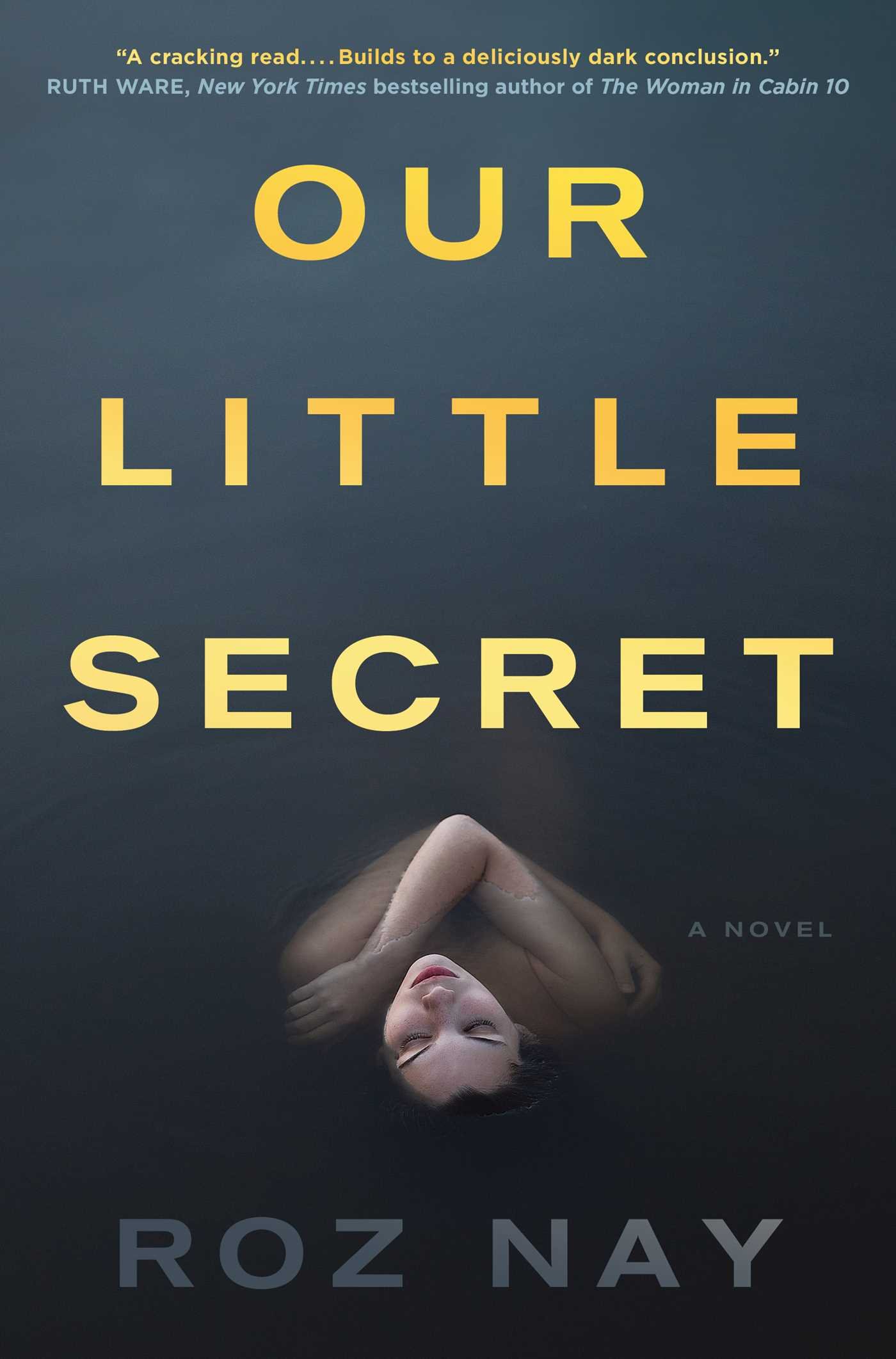
New-to-me Canadian writer Roz Nay’s debut, Our Little Secret, delivers the goods. I couldn’t put this book down.

Our Little Secret is Angela Petitjean’s story, and it unfurls in an interrogation room at the local police station. Detective Novak is asking questions about a missing woman, Saskia Parker.

That’s the thing: they sound like they’re asking about Saskia, but all roads lead to Mr. Parker and me. The police want to know if I’m in love with him, and they ask it like it’s the simplest explanation rather than the most complicated. My definition is nothing like theirs, though.

Angela meets HP, (the Mr. Parker in question) when they are in Grade 10. This is a new school for Angela and she tells the detective that “Moving when you’re fifteen is terrifying.” Angela is immediately targeted by the mean, cool girls until HP comes to her rescue. That moment forges a bond between the two teens. Over the course of the next two years, Angela (or “Little John” as he calls her) and HP are inseparable, but not romantically linked.

I never understood why HP had chosen me as his friend, or how I’d gotten an all-access pass to him. It was like having a key to the White House. He told me everything he thought and felt and wanted, and I don’t think he told anyone else in the world…

By the end of high school, though, their relationship shifts gears. And then, Angela gets an opportunity to spend a year at Oxford, but HP stays behind. The distance complicates their new status. Enter Saskia, an effusive Australian HP meets while visiting Angela in England..

Our Little Secret garnered a lot of praise when it was published in 2017. I find thrillers are hit and miss. They sound good, but they ultimately disappoint. Not this one.

I felt terrific sympathy for Angela, who claims and maintains her innocence after Saskia goes missing. Her friendship and then romantic relationship with HP is believable and complicated. There’s angst here and I love me some angst. It’s only as her story unravels, that we start to see that her version of events might be just a tad unreliable. But we all revise our histories to a certain degree, don’t we?

If you’re looking for an addictive, well-written, smart thriller, look no further.

Highly recommended.

Verity – Colleen Hoover

Verity is one of those books that sucked me in with its hype. In fact Colleen Hoover herself has legions of fans and her name seems to be synonymous with romance of the sexy kind, but the only other book of hers I’ve ever attempted I DNF, and have no idea what it was called. It was just…meh.

So along comes Verity, and it seemed as though everyone in the bookish circles I hang out in was talking about it. I am nothing if not a lemming. People were saying things like “It is a dark, addicting, and compelling psychological thriller” and “Creepy, unsettling, hard to read in parts” and “Five stars”. I mean, c’mon, what’s a girl to do? So, I ordered it.

People, I am here to tell you: Do NOT believe the hype.

Lowen Ashleigh is a struggling writer who, while published, is broke and desperate when she meets Jeremy Crawford. (Their meet cute is more ick cute, but whatever.) Turns out Jeremy is married to Verity Crawford, author of the best-selling Chronics series. The series is incomplete because Verity has been in a horrific car accident and can’t finish because she’s a vegetable, so her publisher is looking for a ghost writer. Jeremy wants Lowen. For reasons.

This opportunity couldn’t come at a better time. Lowen’s mother has just died, her personal life is a bit of a mess, and she needs the cash. It’s problematic that Jeremy is so hawt, but necessity is a great motivator, so Lowen moves to the Crawford mansion. The plan is to go through Verity’s office and look for the meticulous notes she’s made about the next three novels so that Lowen can start writing them.

Lowen finds something a lot more than Verity’s notes, though; she finds her autobiography and shocker! Verity is not a nice person (which is how Lowen justifies getting nekkid with Jeremy).

What you will read will taste so bad at times, you’ll want to spit it out, but you’ll swallow these words and they will become part of you, part of your gut, and you will hurt because of them.

Hoover might have been talking about this book, really. It’s a train wreck peopled with one dimensional characters who are handed backstories as character development. Lowen is a sleepwalker; Jeremy grew up on an alpaca farm. Say what? That’s not character development, it’s just ridiculous.

The “hard to read” stuff fans were talking about might be some of the info Verity reveals in her autobiography, like SPOILER!!!!!!!!!!!!!!!!!!!!!!!!!!!!!!!!!!!SPOILER!!!!!!!!!!!!!!!!!!!!!!!!!!!!!!!!!!!!how she tries to abort her twin girls (whom Jeremy loves more than her) with a coat hanger or maybe how Verity uses sex (not even kinky sex) to manipulate Jeremy. None of this sex is titillating or even very well-written. END SPOILER!!!!!!!!!!!!!!!!!!!!!!!!!!!!!!!!!!!!!ENDSPOILER!!!!!!!!!!!!!!!!!!!!!

Almost immediately after Lowen arrives, strange things start to happen. Think Rebecca if it had been written by a teenager. Verity seems to be looking at Lowen, even though she’s not supposed to be cognizant . One day she catches Crew (Jeremy’s son) waving up at his mother’s bedroom window? Why?! Verity can’t possibly be standing at the bedroom window. She can’t walk. Then there’s the time that she and Jeremy are making out on the couch and Lowen spots Verity standing at the top of the stairs. But WHO CARES? Aren’t we supposed to root for these two crazy kids? I mean, Verity is a monster, right?

Not so fast. There’s a twist NO ONE SEES COMING. But you’ll have to wade through all the other nonsense (not to mention the clunky exposition and dialogue) to get to it, and by then it will feel more like a bait and switch than a twist.

Hoover says in her acknowledgments that Verity “is a personal indie project.” (I suspected as much when my copy arrived and it has clearly been self-published. That should have been my first clue.) Although Hoover is traditionally published by Atria (a division of Simon & Schuster), for some reason she wanted to do this on her own. Apparently it was originally only available online. Like fanfiction. No, wait, that’s giving fanfiction a bad rap. I have read loads of fanfic that is a billion times better than this.

The best thing about my physical copy of this book is the paper it was printed on. It was really nice. The book was a waste of my precious reading time.

I Remember You – Yrsa Sigurðardóttir

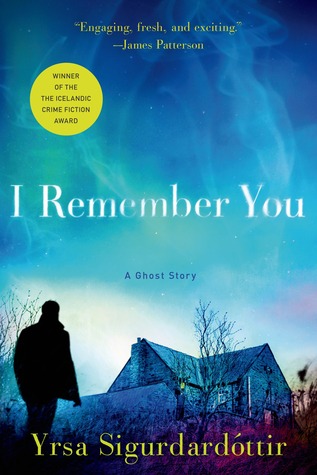
Yrsa Sigurðardóttir is a big deal in Iceland and I Remember You is the winner of the Icelandic Crime Fiction Award. It sounded like a book that I would really enjoy and I am always game to try new-to-me authors. The thing that I keep forgetting is that nine times out of ten translations are often disappointing, and this was no exception.

I Remember You is two stories, really. In one, three friends Garðar, his wife Katrín  and their widowed friend, Líf, have decided to travel to Hesteyri, a deserted village “way up north in the middle of nowhere.” The reason for this journey? It’s really Líf’s dead husband Einar’s fault.

He had spun them the story of a village at the end of the world, beauty and peace, and endless hiking trails in an unforgettable setting. Garðar had been inspired – not by the lure of nature, but by the fact that Einar hadn’t been able to rent a room in Hesteyri, since the only guesthouse there had been full. Katrín  couldn’t remember which of them had gone on to suggest they see if any of the other houses there were for sale and transform one into a guesthouse, but it didn’t matter: once the idea had been mooted there was no going back.

So, these three crazy kids head out to this remote place, in the winter, to begin refurbishing the house that is without electricity, running water, heat and, oh, yeah, there’s no one else around for miles. The captain of the boat who takes them to Hesteyri tells them they can return with him, free of charge, but they’re keen on this adventure. Lord knows why.

In the parallel story, Freyr, a psychiatrist, is helping Dagný, a police detective, discover who had broken into a primary school and caused a lot of damage. Freyr still isn’t over the loss of his son, Benni, who disappeared three years ago. His marriage is done, and he has thrown himself into his work. At first it appears that Freyr’s story has nothing to do with what’s happening on Hesteyri, but the more digging Freyr does the more coincidences start to reveal themselves.

I wish I could tell you that all of this is super creepy, but it’s not.  It takes f-o-r-e-v-e-r to get anywhere until the very end, when things seem to unravel super quickly. And, of course, the dialogue – especially near the end – is as clunky as hell. I understand this is a translation, but I always think it would be better to have someone go over dialogue after the translation is done to try and make people sound more natural. Given the circumstances these people find themselves in, you’d think they’d spend less time explaining and more time reacting.

There were a couple of creepy moments, but overall, it was a lot of fuss and bother for nothing.

The Lies They Tell – Gillian French

Pearl Haskins lives with her alcoholic father on the wrong side of the tracks in Tenney’s Harbor, Maine. (For the record, I am spelling harbour that way because, USA.) Pearl works at the local country club, where the wealthy summer folk flaunt their, well, wealth. It was here, at Christmas, that Pearl last saw the Garrisons: David, the patriarch; Sloan, his beautiful wife and two of their children, seventeen-year-old Cassidy and ten-year-old Joseph. Tristan, the oldest Garrison child, is not present. Later that night, while Pearl’s dad sleeps in the Garrison’s gatehouse, someone broke into the house and shot the Garrisons in their sleep, then set their mansion on fire.

Gillian French’s impossible-to-put-down YA mystery The Lies They Tell picks up the story the following summer. Pearl has graduated from high school and she’s still working at the country club, still impossibly in love with her best friend, Reese, and still trying to manage her father’s drinking, which hasn’t really improved because most of the summer elite blame him for what happened at the Garrison’s – even though he is clearly not to blame. In fact, the culprit was never caught and the main suspect, Tristan, has an ironclad alibi.

And now here he was “with his entourage, the boys of summer, owning the place.” For reasons Pearl can’t quite understand, she is drawn to Tristan, “gripped by the physical and emotional recoil she – and almost everyone else – felt in his presence.” She feels a kinship to him because she senses he is “so alone, even in a room full of people….”

When one of Tristan’s friends, Bridges, takes a romantic interest in Pearl, she suddenly finds herself drawn into a world which she has only ever watched from the outside. Bridges seems nice and seems to genuinely like Pearl, but is he to be trusted? The third boy in the group, Akil, seems to openly disapprove of her. And Tristan, he doesn’t seem to know she exists, until he turns his laser focus on her.

I really enjoyed this novel. For one thing, it’s very well-written and the characters are believable. You know how characters in mysteries and thrillers sometimes do stupid things? Not here. Pearl is smart. She wants to figure out what happened to Tristan’s family, on the surface so that the blame can be shifted away from her father, but also because Tristan just seems like a whipped puppy to her. As she sifts through the gossip and tries to make sense of Tristan himself, she comes closer and closer to danger.

Like Pearl, I kept changing my mind about whodunnit and by the time I got to the book’s final pages my palms were sweating.

Highly recommended.

Homegoing – Yaa Gyasi

I am not sure I would have ever come to Yaa Gyasi’s debut novel Homegoing on my own. A former student (now colleague – yes, I am that old) brought it to my classroom a week ago and announced that it was one of the best books she’d ever read and I had to read it. Under normal circumstances, I don’t take books from people because my tbr pile is out of control and I like to read what I want when I want, but how could I say no to that impassioned recommendation?

Homegoing is a sweeping story which begins in the late 1700s with two half sisters, Effia and Esi. Born in different villages in Ghana, neither knows the other exists; they are joined only by a black stone pendant.

Effia, the beloved daughter of Cobbe Otcher, is married to James Collins, newly appointed governor of the Cape Coast Castle, a place where many captured Africans are held captive until they can be sold. Despite the business he’s in, James seems to care for Effia, and she comes to care for him, I guess. Esi, on the other hand, meets a worse fate. She is captured and eventually sold to a plantation owner in America, going through the very castle where her half-sister lives a privileged existence.

Gyasi’s novel, however, isn’t content to follow these women through their whole lives though. Instead, each chapter introduces readers to a new character, a descendant of Effia or Esi, tracking the family lines all the way to modern day. It’s a confusing trip, trying to keep track of the names and their relationships (and I somehow missed the handy family tree provided at the beginning of the book until I got about half way through and started grumbling to myself because I didn’t know who these people were.)

These brief glimpses into so many lives lived is both frustrating and illuminating. Personally, I like to spend time with characters in books, take the whole journey with them, but aren’t we all just drops in the big bucket? Maybe we don’t think about it, but we are part of all the women and men, who came before us. Truthfully, I can’t go much further back than my great-grandparents. Their struggles become a part of our destiny and I think I should know a little bit more about them than I do. At my age, I am running out of relatives to ask, too.

One character, Yaw, is a history teacher. In delivering a lesson to his students he says “We cannot know that which we were not there to see and hear and experience for ourselves. We must rely upon the word of others. Those who were there in the olden days. They told stories to the children so that the children would know, so that the children could tell stories to their children. And so on, and so on.”

We are our stories, and not just the stories we are living, but all the stories that came before. I think we live in a transient world; we care little about the past, and that’s a shame. Gyasi’s novel is elliptical in nature, but the accumulation of all these lives does pack a considerable punch even if, like me, you find the novel’s ending a tad contrived.