The History of Love – Nicole Krauss

historyWhen Nicole Krauss’s novel The History of Love was published in 2005 it took the literary world by storm (though not like the storm that is raging outside as I write this, cozy in bed with my cat and my tea.) Everyone loved this book: The New York Times, The Guardian, The Globe and Mail. It was also the winner of the Edward Lewis Wallant Award for Jewish fiction and BMOC’s Best Literary Fiction. The book has been on my tbr shelf forever (emphasis on the ‘ever’) and so I chose it as my pick for book club.

The History of Love is the title of the book Leo Gursky wrote for the love of his life, Alma. Alma flees Poland just before the invasion of the Nazis and when Leo finally makes his way to America, he discovers that not only does he have a son, but that Alma has married someone else.

…he stood in her living room listening to all this. He was twenty-five years old. He had changed so much since he last saw her and now part of him wanted to laugh a hard, cold laugh….She said: You stopped writing. I thought you were dead. …At last he managed three words: Come with me….Three times he asked her. She shook her head. I can’t, she said. And so he did the hardest thing he had ever done in his life: he picked up his hat and walked away.

Now Leo is at the end of his life. “When they write my obituary,” he says, “it will say LEO GURSKY IS SURVIVED BY AN APARTMENT FULL OF SHIT.” Leo just wants to be seen. “Sometimes when I’m out, I’ll buy a juice even though I’m not thirsty. If the store is crowded I’ll even go so far as dropping my change all over the floor,” he says. His voice, one part resigned, one part hopeful is one of the novel’s greatest charms.

The other charming voice belongs to fifteen-year-old Alma – not the love of Leo’s life, but that of a teenager who lives in Brooklyn, with her widowed mother (who works as a translator) and younger brother, Bird. Her name is no coincidence: she was actually named after the character in Leo’s book The History of Love. This is where things get a bit complicated and I’m not going to bother drawing the chart required to understand it all – trust me, it’ll all sort itself out.

Alma is on a mission to find her mother a boyfriend. Her father died of pancreatic cancer when Alma was just seven and Alma feels as though her mother has been sad ever since. Alma is trying to navigate adolescence, her mother’s sadness, the fact that her brother thinks he’s the Messiah and her first love, too. Then (and I’m going to say it, girls!) by a weird twist of fate, The History of Love arrives for Alma’s mother to translate and the threads of Alma and Leo’s stories start to reach towards each other.

I really enjoyed The History of Love. There were some moments in the book that literally stopped me in my tracks. For example, Leo says: “All the times I have suddenly realized that my parents are dead, even now, it still surprises me, to exist in the world while that which made me has ceased to exist.” Those of us who have lost our parents will recognize that feeling (although perhaps never articulated) all too well.

This is one of those books, I think, which needs some time to sit in your belly. It is a book about connection – lovers, siblings, friends, parent and child. Leo, at the end of his life (which some might argue he wasted by loving someone he couldn’t have and not pursuing a relationship with his son) has all the insights of a person who has made errors in judgment, but is somehow still open to the world. Ultimately, The History of Love is about the desire we all have to be seen and understood and often the smallest gesture can have the biggest impact.

Highly recommended.

Charm & Strange – Stephanie Kuehn

charmWow. This William C. Morris Debut Award winner has it all. Charm & Strange, the first novel by Stephanie Kuehn, is amazing. I read a lot of YA fiction and this book is just a cut above. Way above.

Win has attended a boarding school in New England since he was twelve. A top-ranked tennis player, Win once hit an opponent across the face with his tennis racket.

He’s a lot of things. He is prone to motion sickness. He’s cold. Dangerous. Broken.

Into his life comes Jordan. She’s the new girl and she doesn’t know anything about Win and that’s pretty much the way he wants to keep it. They meet in the woods. Win has just been attacked by a couple of school bullies and Jordan has witnessed the whole thing. She asks why he didn’t fight back. Win never fights back because “That wouldn’t be fair.”

Their relationship is tentative because Win tends to stay away from people. His only other ‘friend’  is Lex, his former roommate, but even their relationship is strained.

Charm & Strange is a compelling story about dark secrets and how they can twist lives. Kuehn skillfully pulls the reader along a path that is almost too painful to read about, but she does it so well that you just can’t stop turning the pages. The novel is layered: Sixteen-year-old Win at school is told in first person sections called ‘matter’ and ten-year-old  Drew at home with his family (first person narrative in sections called ‘antimatter’). Win and Drew are the same person, and the reason for the name change will be revealed in due course. Win’s family: professor father, depressed shadow of a mother, older brother, Keith, and younger sister, Siobhan, are important characters is Win’s story.

This novel is so cleverly constructed; every page offers just a little more of Win’s story. Win is convinced he is about to change and not in a good way.

Change is imminent.

It has to be.

“Yeah, well, have fun with that,” Lex says. “Moon or no moon, I don’t plan on being anywhere near you.”

“Good,” I snarl, and he laughs even harder than before. My hands curl into fists. I want to shut him up.

Lex notices and skitters toward the door.

“Hey, Win,” he says as he leaves, “maybe it’s your head that’s broken, not your body. Ever think about that?”

Charm & Strange is a terrific book. I am having a hard time articulating how amazing it is. It is almost relentlessly bleak and yet as I closed the final pages I felt confident that despite Win’s dark past, the beast within would be tamed. For mature YA readers, Charm & Strange is one of the best of the bunch.

Highly recommended.

Kept in the Dark – Penny Hancock

keptinthedarkI read Penny Hancock’s debut novel Kept in the Dark in one breathless gulp. I absolutely couldn’t put it down. I love it when that happens.

Sonia lives in a house next to the Thames. Her husband, Greg, is a lecturing neurosurgeon; her daughter, Kit, is a student at university and Sonia herself is a vocal coach. From the outside looking in, it would appear that Sonia has it all. It’s pretty obvious, though, that Sonia isn’t entirely sane. When the nephew of a friend drops by to pick up an album, Sonia plies him with wine, then drugs him and locks him upstairs in the sound proof music studio.

Jez is just fifteen. He’s in London visiting his Aunt Helen and Uncle Mick and applying to colleges. His mother, Maria, lives in Paris. Sonia is taken with Jez immediately.

His dark fringe has fallen across one eye. He flicks I back, and looks at me from under long, perfectly formed black eyebrows. I notice his sinuous neck with its smooth Adam’s apple. There’s a triangular dip where his throat descends towards his sternum. His skin has a sheen on it that I’d like to touch. He’s of adult proportions yet everything about him is glossy and new.

The novel’s first person narrative is so creepy and claustrophobic.  We get to watch as Sonia justifies her behavior and work through the endless complications of keeping a fifteen-year-old boy captive. First of all, what happens when her husband arrives home from his business trip? What will she do when her daughter and her boyfriend come home from university. And then there’s Seb. He’s clearly someone from her past and Jez obviously reminds her of him, but who is he? Sonia says he was “the most beautiful creature that ever walked upon the earth.” Hancock seamlessly weaves Sonia’s present with her past and the mystery of Seb is equally as compelling as Jez’s fate.

There is a second narrator: Helen. Jez’s aunt is a bit of a mess in her own way. Jez’s disappearance while under her care has thrown Helen’s life into turmoil. When her sister arrives from Paris and the police get involved, Helen feels more like a suspect than a relative.

This book was so good. S.J. Watson, author of Before I Go to Sleep, sang its praises and I have to say I agree with Mr. Watson. Sonia’s midlife crisis – a rather strained relationship with her daughter; a sexless marriage; a difficult mother; and the house she grew up in that she vows never to leave despite the fact that her husband wants to sell and move to Geneva all seem to be conspiring against her. But none of it is convoluted or silly. The plot unravels like a dream that is both terrifying and strangely erotic.

Highly recommended.

The Girl in the Park – Mariah Fredericks

parkRain, the compelling narrator if Mariah Fredericks’ YA mystery, The Girl in the Park, attends the prestigious Alcott School in Manhattan’s Upper West Side. “At our school,” she says. “everybody is the child of a somebody.” Rain’s somebody is her mom, an opera singer and “if you’re into opera, you probably know her.”

Rain is a watcher, a listener. Mostly it’s because she was born with a cleft palate, and although speech therapy has smoothed out some of the T’s and S’s, Rain’s still self-conscious. She hates how she sounds, “mushmouthed and nasal.”  That is, until Wendy starts school and tells her “Big deal. Okay, maybe you sound a little funny. But you need to forget about that and speak up girl.”

Wendy is larger than life. Although she’s rich, she comes from Long Island and doesn’t have the right kind of money or pedigree. The students at Alcott are snobbish and clique-ish, but that doesn’t stop Wendy from trying to make inroads. It’s when Rain tells her that she’s approaching it all wrong that the two girls become friends.

We only ever really see Wendy through Rain’s eyes because when the novel begins, Rain discovers that her friend has been found dead in Central Park. At this point, Rain and Wendy were friendly but no longer really friends. Wendy’s blatant disregard for the prep school rules and her reputation as a “skank” have caused Rain to distance herself from the girl who once told her that “You. Other the other hand. Listen. And you think. So when you do speak? You’re brilliant. So, give up the silence, okay”

Rain can’t stand the thought that something so horrible has happened to Wendy. Worse, the night it happened Rain was at the same party as Wendy and she feels she may have seen something that could help the police — she just doesn’t know what it is.

The Girl in the Park is a fast-paced mystery with enough suspects to keep readers engaged and guessing whodunit. It’s also a story that peers into the nasty, and sometimes heartbreaking, world of teenagers. I couldn’t put it down.

Try Not to Breathe – Jennifer R. Hubbard

breatheI think I am starting to suffer from YA fatigue. Or maybe it’s just that, despite its accolades, Jennifer Hubbard’s novel Try Not to Breathe, didn’t quite work for me. I don’t mean to imply that the novel isn’t decent or that it isn’t well-written, either. I can’t say for sure why it was that when  I got to the novel’s tidy ending,  I just felt sort of meh.

Ryan is 16 and has recently returned home from a stint at Patterson, a psychiatric hospital. Ryan attempted suicide and now “everyone snuck looks at me in the halls…Sometimes I was tempted to foam at the mouth and babble to invisible people, because the other kids seemed so disappointed that I didn’t. But I couldn’t be sure they would realize it was a joke. The few times I’d tried to make anyone laugh, all I got were nervous glances and squirming.”

Ryan’s circle is pretty small. He’s an only child; his father travels a lot and his mother works from home – to keep an eye on him. Everyone is pretty much on tenterhooks. His only freedom comes at the waterfall, where he stands under the punishing water “because [he] needed it.”

Into his world comes Nicki. She’s the younger sister of a guy he sort of knows from school. She shows up at the waterfall and the two form a friendship that soon becomes necessary to them both. Nicki isn’t afraid to ask Ryan questions, and soon Ryan discovers that he isn’t afraid to answer them. She has an agenda, as it turns out; her father committed suicide and she thinks, given the circumstances, Ryan might have some insider information.

The other important people in Ryan’s life are Val and Jake, two other teens he met during his stay at Patterson. He thinks he has feelings for Val, but a road trip orchestrated by Nicki (who is too young to drive, but does it anyway) delivers the heart-crushing news that Val is not as willing to take a chance on Ryan. It’s just one of the post-suicide-attempt blows Ryan is dealt, but he manages to rally.

Try Not to Breathe does a good job describing a teenager’s depression. Ryan had “lived behind what felt like a pane of glass, separated from the world.” Ryan is a likeable character, too, and so is Nicki. I found his parents less successful, sort of hovering non-entities. Despite my own reservations, I think the book will likely speak to teenagers who have ever considered suicide because, ultimately, Ryan’s is a story of survival.

Off the Shelf – January 26, 2015

Listen to Off the Shelf here.

I was recently invited to submit a column to The Nerdy Book Club, a well-known book blog moderated by four teachers, so I thought it would be a great opportunity to talk about classics – because that’s sort of what I wrote about.

The impetus for the discussion was actually a discussion I had with my tenth grade English class after we finished reading Harper Lee’s To Kill a Mockingbird. I love the book, of course, and while the majority of my students could see its merits they also wondered why we were reading something so – as they put it – old. So that lead us to a great discussion of what makes a book a classic.

What makes a book a classic?

First off we had to decide on the criteria we’d use to determine whether or not a book is a classic. In the end, we liked the list of qualities Laura Miller listed in her Salon article “What makes a book a classic?” She actually compiled her list from a Goodreads discussion. So, according to Miller via Goodreads a classic

  • Must have stood the test of time
  • Be filled with eternal verities
  • Capture the essence and flavor of its own age
  • Have had a significant effect on that age
  • Have something important to say
  • Achieve some form of aesthetic near-perfection
  • Be challenging or innovative in some respect
  • Scholars and other experts must endorse it and study it (I guess that leave out 50 Shades of Grey)
  • It has been included in some prestigious series like Penguin Classics or Modern Library
  • It appears on lists of great books

Ultimately, though, our idea of a classic is probably defined by our own personal and highly subjective criteria…meaning, I guess, 50 Shades is back on the list.

So what happened to To Kill a Mockingbird based on this criteria. Well, of course, TKaM totally meets most of that criteria and my students could see that, for sure. Will this list make the book any more palatable for students who don’t necessarily want to read it? Like, is there anything worse than someone telling you you MUST read a book and write an essay? Unless you’re totally geeky like me, probably not, right?

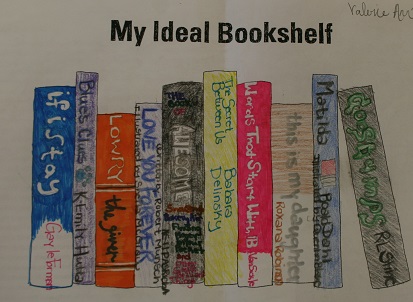
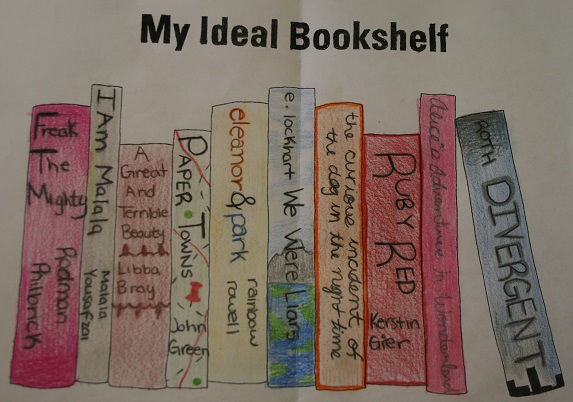
My students wanted a crack at compiling their own list of classics. So, they had to pick a book – any book they’d read – and pitch it to the class. These are books that they really felt should be available for them to read in the classroom. Studied even. I’ve got 25 students in that class, so I’m not going to share all their titles, and truthfully I didn’t agree with all of them, but I will share three.

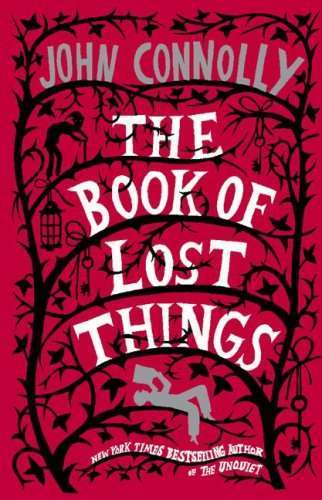
The Book of Lost Things – John Connolly

So some people might know John Connolly as the author of Charlie Parker mysteries. If you’re already a fan, you can’t go wrong with this book. It’s the story of 12-year-old David who goes on a magical quest to save his mother after she dies. And that’s the simple version. I read this book a couple years ago and I heartily recommend it.

The Art of Racing in the Rain – Garth Stein

Now this is a book I haven’t read, but the student who pitched it, Chloie, totally sold it. Kirkus says the novel “uses a dog as narrator to clever effect in this tear-jerker about an aspiring race-car driver who suffers more woes than Job but never mistreats his dog.” Chloie said she’s read it several times and never gets sick of it, always sees something new in it. I think a book the bears up under repeat readings is pretty solid.

13 Reasons Why – Jay Asher

Now this one I have read and this one I do have some issues with, but what I like about the selection is that it demonstrated how impactful the book was for this student and there was a lot of agreement in the class about the books merits. Will it stand the test of time – or will other books eclipse it. I think probably, but what Asher did do is find a unique and original way to tackle a really difficult subject – teen suicide.

Other titles the students suggested included:

Harry Potter and the Philosopher’s Stone – J.K. Rowling

I Am Malala – Malala Yousafzai, Christina Lamb

Perfect Chemistry – Simone Elkeles

The Book Thief – Marcus Zusak

The Perks of Being a Wallflower – Stephen Chbosky

Freak the Mighty – Rodman Philbrick

The Hobbit – J.R.R. Tolkien

City of Bones – Cassandra Clare

Pawn of Prophecy – David Eddings

Ruby Red – Kerstin Gier

Playing with Fire – Theoren Fleury,  Kirstie McLellan Day

I Hunt Killers – Barry Lyga

The Green Mile – Stephen King

The interesting thing was the some of these books, by their advocate’s admission, did not stand up to Miller’s criteria – but they loved the book anyway. And that’s good enough for me.

Speaking of classics, Huffington Post recently posted a list of the 20 new classics every child should own. These are picture books geared for younger readers.

When You Reach Me – Rebecca Stead

book-whenyoureachmeRebecca Stead’s Newberry Award winning novel, When You Reach Me, is a puzzle of a book. And I should note that the Newberry isn’t the only prize this book received – there’s a list of twenty other prizes and distinctions this book has received. This book has some serious pedigree. It’s a middle grade book, but I’m telling you – those middle grade kids better be on their toes because this book is a puzzle.

Twelve-year-old Miranda lives in a New York City apartment with her legal secretary mom. Sometimes her mom’s boyfriend, Richard, is there. That’s okay because “Richard looks the way I picture guys on sailboats – tall, blonde and very tucked-in, even on weekends.”

Miranda’s best friend, Sal, lives one floor below Miranda. For as long as Miranda can remember it’s been Sal and Miranda, Miranda and Sal. Until it wasn’t.

It happened in the fall, when Sal and I still walked home from school together every single day: one block from West End Avenue to Broadway, one block from Broadway to Amsterdam, past the laughing man on our corner, and then half a block to our lobby door.

Miranda has been receiving mysterious notes, notes that seem to predict the future. The notes seem to know an awful lot about Miranda and her life. And then the spare key to the apartment goes missing. And while all this is happening Miranda has to manage her estranged relationship with Sal and all the other pre-teen drama a twelve-year-old must face.

When You Reach Me is a delightful hybrid. It’s one part coming-of-age novel, one part science fiction, one part homage to Madeline L’Engle’s A Wrinkle in Time and all parts fabulous.

This is What I Did: by Ann Dee Ellis

whatI didLast week Bruce kicked me in the balls at Scouts and all his buddies were there laughing and I started crying.

That’s Logan, the thirteen-year-old narrator of Ann Dee Ellis’s compelling and unusual YA novel This is What I Did:. Logan is a target for bullies for a variety of reasons: he’s the new kid and he’s mostly silent. There’s a reason, of course. His family has recently moved to the new school because of something horrific that happened concerning Logan and his best friend Zyler. Logan doesn’t want to talk about it, so the details of the event is unspooled in the kind of painful way that makes you read faster.

I also loved the way Logan shared his story.

A year ago I was fine. That’s when there was nothing wrong.

A year ago, in seventh grade, I was fine.

We were living on Mulholand with the hills and the lake and the freeway and the Minute Man Gas Stop and my best friend, Zyler, ate Twinkies and coke and hated girls, except one.

Dialogue looks like this:

Ryan: Why do you sit down here all the time?

Me: Where’s Mack?

Ryan: Helping Dad with something.

Me:

Ryan:

Me:

Ryan: Okay, I think I’m going to go back upstairs.

And then he left.

Logan has parents who desperately want to help him, but aren’t sure how. Given that we see them only through Logan’s eyes, they are believable and sympathetic, but by no means perfect.

It is only when Logan meets Laurel that he starts opening up. One day she hands him a note that says “Nascar=Racecar, Racecar=Palindrome.”  Soon, he and Laurel are sending each other palindromes regularly and before he knows it, Logan has made a friend.

I really liked This is What I Did:. It tackles some weighty issues without shying away from them and allows the reader to share Logan’s journey from broken to healing in  way that was both satisfying and hopeful.

Highly recommended.

Who’s with me?

26 books in 2015

There are all sorts of reading challenges out there aimed at motivating you to stand down from the TV/computer and read a little bit more. Check out this Pinterest page, which lists LOTS to consider. I aim to read 60 books this year. I didn’t meet my goal of 65 last year and the number really doesn’t matter all that much…so long as I am reading. What are your goals for the 2015 reading year?

Off the Shelf – So you want to start a book club…

Off the Shelf – CBC’s Information Morning

This morning I talked about the benefits of belonging to a book club. If you can’t find one, you can start one of your own. If you are looking for some advice, check out what I had to say about book clubs here.

If you are looking for some reading suggestions, I have a list of the books my book club has read here. Many are linked to my reviews.

The books I specifically mentioned this morning were:

ourdailybreadOur Daily Bread – Lauren B. Davis

Eat, Pray, Love – Elizabeth Gilbert

Mister Pip – Lloyd Jones

Small Island – Andrea Levy (predates this blog)

The Book Thief – Marcus Zusak

Fingersmith – Sarah Waters finger

If you have questions, by all means, I am happy to help out! Ask away.