Off the Shelf – CBC November 10, 2014

This morning on Information Morning I talked about books…about other books.

Here’s what I prepared in advance.

I am a tsundoku. That’s the Japanese word for a person who buys books and leaves them unread. Some women buy shoes, I wear my Birks and buy books. Apparently it’s hereditary because when I tell my 15-year-old son, Connor, that there’s no point in him buying any more books when he has at least a half dozen that he hasn’t read yet, he just shoots me this incredulous look, You’re kidding, right? I have over 500 books on my ‘to- be- read’ shelf at home, to say nothing of the books on my shelves at school.

Think I’m kidding? This is my TBR shelf at home:

IMG_0211

I’m a life-long bibliophile and I do a lot of thinking about what it is about books that I love so much. So today I thought I’d talk about some books that are also about the love of books. These are books in which people talk about their own reading lives.

bookchangedThe Book That Changed My Life – Roxanne J. Cody and Joy Johannessen, editors

This books consists of 71 essays by writers who share with readers the story of the book that cracked open the world of reading for them. For example, Wally Lamb’s (author of She’s Come Undone and I Know this Much is True) wrote about To Kill a Mockingbird, which has been a staple in high school English classes for ever. (I am, in fact, currently sharing it with my grade ten class). Mr. Lamb says that “Until Mockingbird, I’d had no idea literature could exert so stong a power.”


shelfsiscoverylittler_thumb[2]Shelf Discovery – Lizzie Skurnick

This is a reading memoir, where Skurnick, who’s been a columnist for the New York Times and NPR and several other publications, revisits the books that shaped her growing up. Skurnick describes herself as “ravenous toward each book, like a vampire”. Voracious readers will know that exact feeling – like you can’t put the book down and carry it everywhere in case you find yourself with five idle minutes. For some people, Skurnick’s book will be a trip down memory lane; for teens, especially girls, this would be a great primer for all that fiction produced from 1960 on. It also answers that question: why do we re-read a book? Who has time for that? This a great memoir for people who have been profoundly influenced by their adolescent reading lists.


the-ultimate-teen-book-guideThe Ultimate Teen Book Guide – Daniel Hahn & Leonie Flynn, editors

This is a fantastic primer listing over 700 books – there’s something for everyone in this one. Authors and young readers offer up their picks for most amazing books. It offers, among other things, Top Ten lists in a variety of categories, a list of what to read next, so for example if you loved To Kill a Mockingbird it suggests you try John Knowles’ A Separate Peace or In Cold Blood by Truman Capote (Capote was reportedly the inspiration for the character if Dill in Lee’s book.) Terrific resource and really user-friendly.
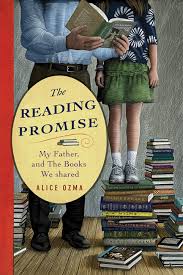
 

readingpromiseThe Reading Promise – Alice Ozma

I love books where people talk about their own relationship with reading and Ozma’s memoir is very YA friendly. It’s the story of an agreement that she made with her dad that he would read to her every single night for 1000 nights. So that’s a lot of reading. When they hit that goal they decided to extend it – and in the end Alice’s dad read to her every single night for nine years – until she finally went off to college. Clearly books mattered to both of them, her dad was a teacher/librarian, and this book has a lot to say about the power that stories have to create conversation, develop empathy…all that good stuff.
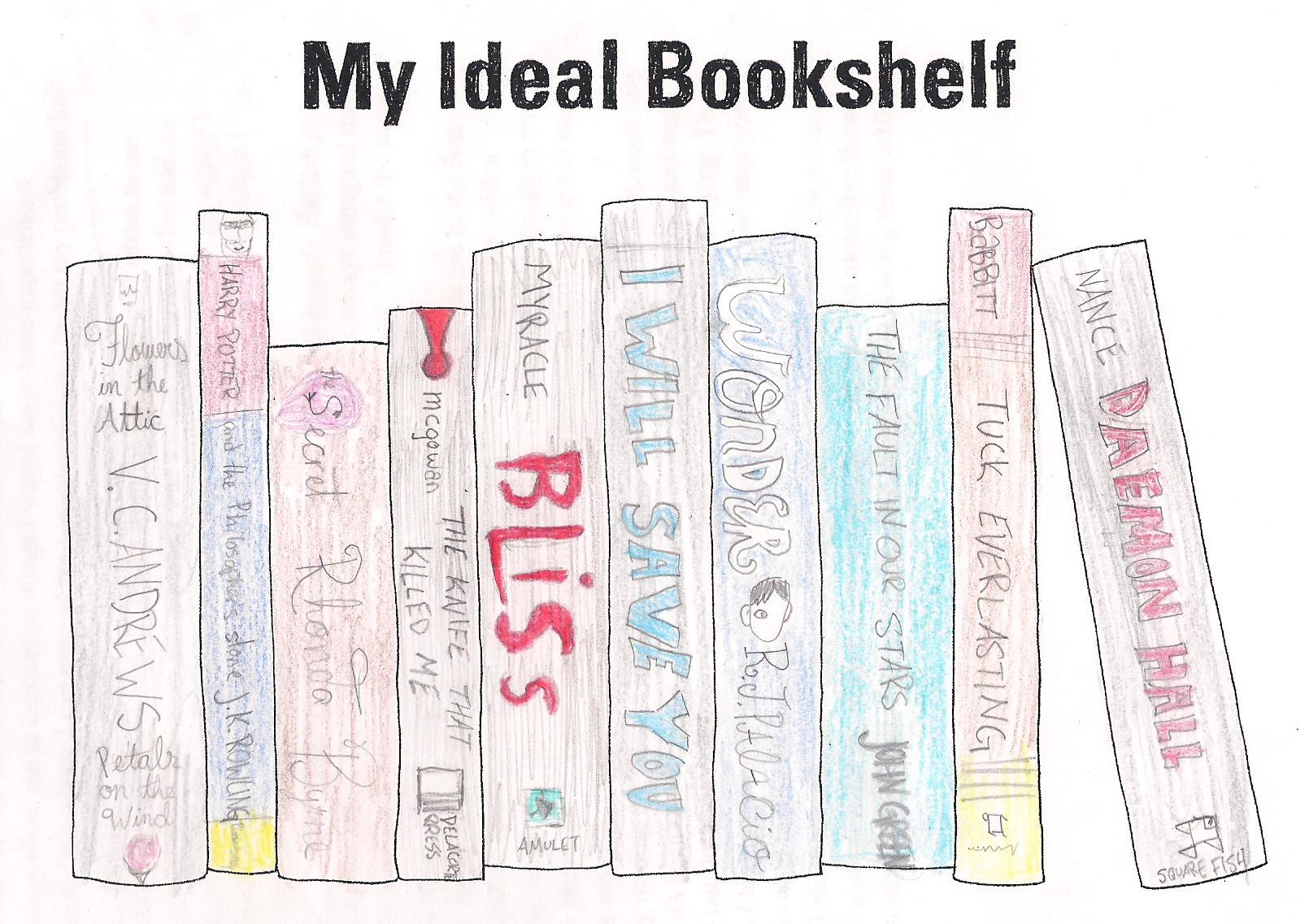
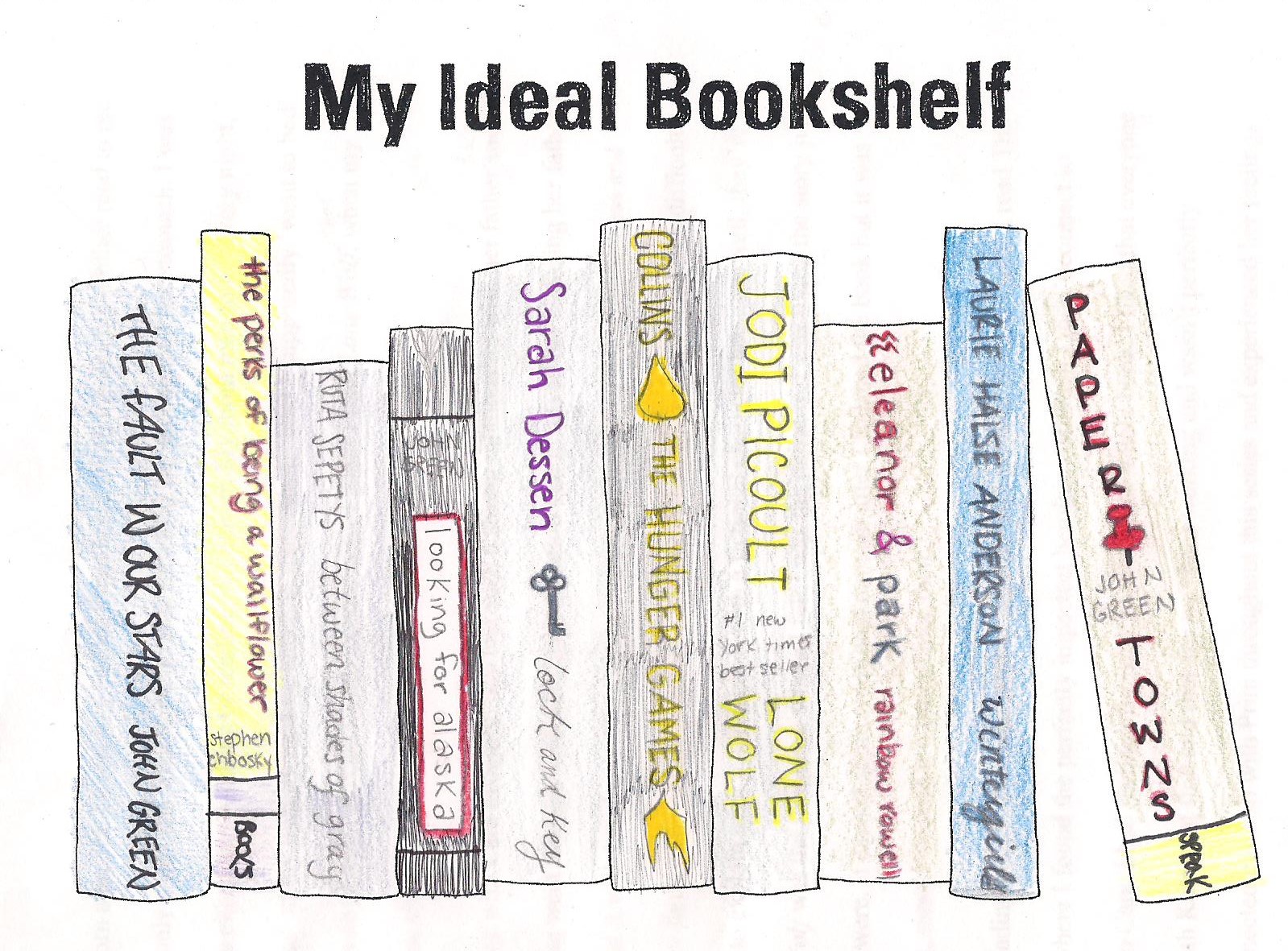
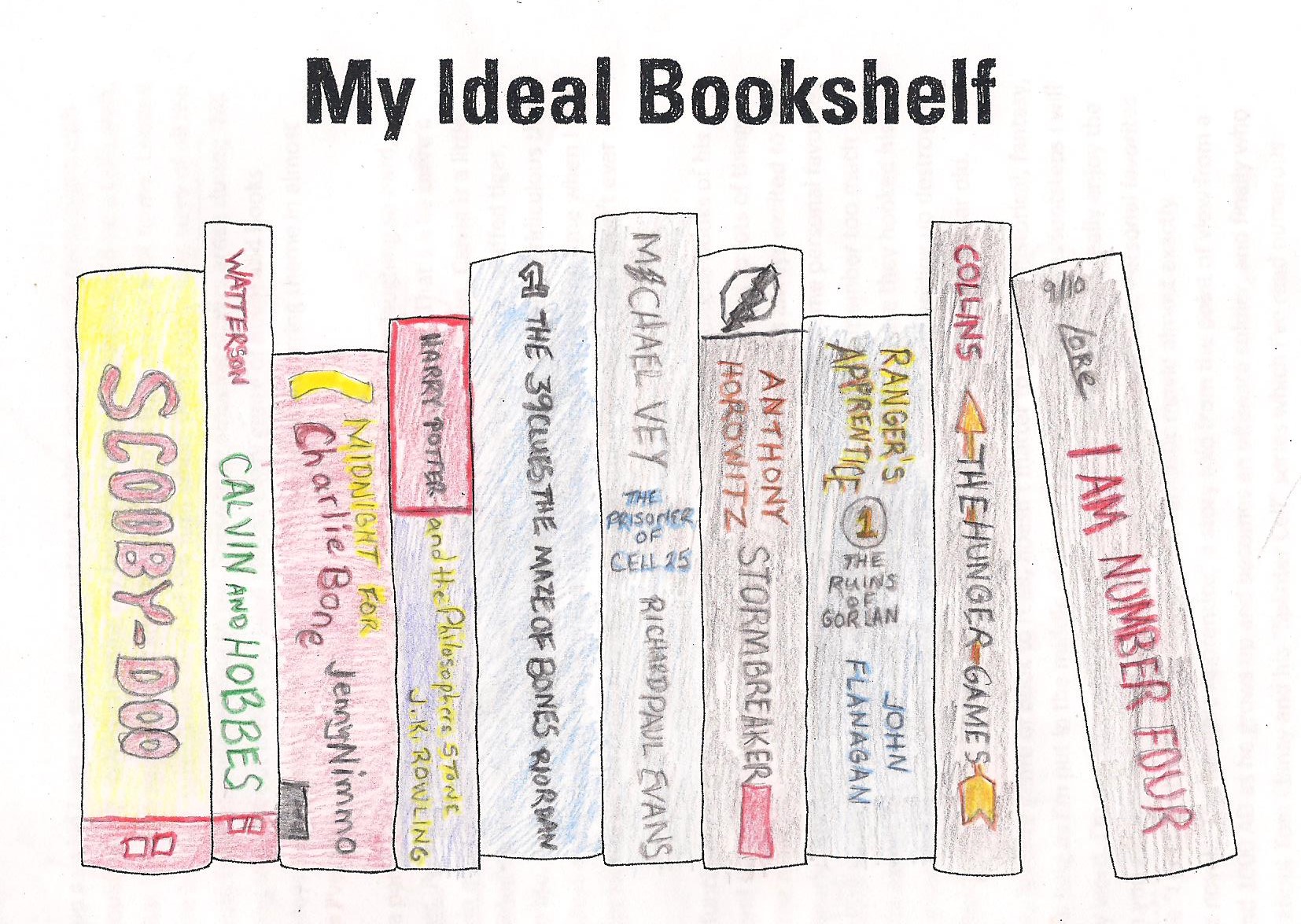
myidealbookshelf1_grandeFinally, I want to talk about a book that Connor gave me for my birthday last year: My Ideal Bookshelf by Thessaly LaForce and Jane Mount

This is a beauty of a book and totally appealed to that part of me who makes a beeline for bookshelves no matter where I am – the houses of friends and strangers, no bookshelf is safe from me. These guys asked 100 people (writers, actors, poets, designers, artists) to think back over their reading lives and come up with their ideal bookshelf. What would be on it? Mount then did an artistic interpretation of the books. The paintings are accompanied by conversations in which the bookshelf owner talks about their personal relationship with the books – they might focus in on one or just talk about their reading life in general. It’s fascinating reading – even if you don’t know the people doing the telling.

I actually did this with some grade ten students and it was a terrific activity. It forced the students to think back to books that have made a real difference in their lives. There’s a template at the back of the book (and online) for students to recreate their own ideal bookshelf – although if you’re not at all artistic (which I am not) you could take a picture, too.

Here’s a sample from one of my students – her bookshelf and an excerpt of what she had to say about books:
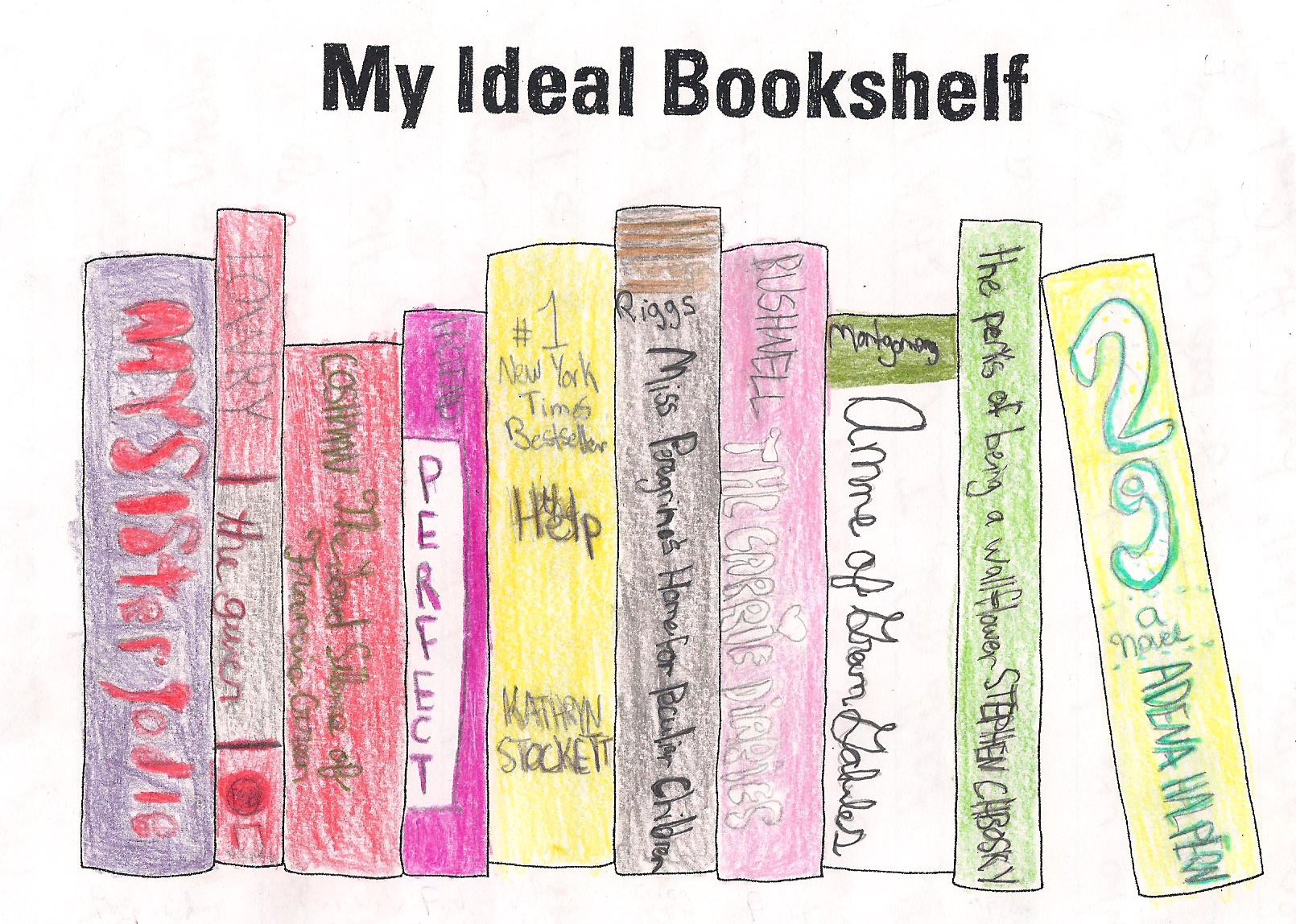
LouiseT


“In the fourth grade I was stuck in a Geronimo Stilton phase and I had a cousin who was bound and determined to see me break out of the 100-page cycle. She began sending me “adult” books. The first was The Giver by Lois Lowry. My mother read it first and then advised me to put it away for a few years until I could better handle it. I read it anyway, mainly out of sheer curiosity. And although it kept me up at night thinking about it, maybe that’s what I liked about it. I’ve read it every year since, and it always feels like I’m reading it for the first time.”

Come on – that’s like hitting the literature lottery for an English teacher.

To see some of my students’ bookshelves and read what they had to say about their reading lives,  check out this post


Love Remains – Glen Duncan

loveremains Despite the fact that Glen Duncan’s novel Love Remains is only 277 pages long, it took me about a month to finish because I could never read any more than a few pages at a time before my head started to swim. But I mean that as a compliment rather than a criticism.  Duncan is a well-known and much-praised British author who was new to me when I purchased the book. Love Remains, Duncan’s second novel, is almost relentlessly grim. Again – it’s a compliment, honest. There’s no way you could tackle the topic Duncan does in this book without being a skillful craftsman, and Duncan really is an amazing writer.

Nick and Chloe meet in university.

The possibility of love revealed itself to Chloe immediately, in a shock. When they sat opposite each other that first Wednesday, with rain streaking the steamed windows and the delicious reek of frying bacon in the air, she felt (thinking, stunned, of the billions who had felt it, down the long bloodied canvas of history) the first murderous utterance of romance: It’s him.

Nick’s feelings for Chloe are slightly more ambivalent, although he does concede that “he was so curious about what was going on inside her that lust only followed along afterwards, like an obligatory bit of luggage.”

The trajectory of Chloe and Nick’s love story is mostly straightforward. They get married, start jobs,  eventually move into “their first proper home” in Clapham and then, as with many marriages, the romantic impetus drains from their lives as they deal with life’s mundane and often inane decisions: “Do you think we should get a futon, Nick.”  As their marriage closes in around them, “They suffered, periodically, the ache of familiarity.” Chloe feels “suffocated by the sound of his breath escaping through his nostrils” and Nick “hated her for having finished the shape of him.”

Duncan masterfully builds a marriage from the ground up and then, just as masterfully, wrenches it apart in the most violent way possible.  In some ways, it’s almost as though Duncan has written two different, but equally compelling, novels.

When the novel opens, Nick has already left London because that’s what you do “when the future ended.” He is on a journey, it seems, of self-destruction comprised of smoking, drinking and having sadomasochistic sex. None of it makes sense until we learn what has happened to Chloe and, even then, it’d difficult to wrap your head around. Is Nick reprehensible for having abandoned his wife? That’s just one of the moral questions Duncan asks you to consider in this book.

Chloe is on a journey of her own. It is equally compelling, although perhaps more heartbreaking. The random and horrific experience she has endured has sharpened her: “Her face in the mirror, barely recognizable, rewritten.”

What was once a path traveled together, has now been cleaved. I commend Duncan for resisting the urge to offer a tidy ending, but the ending, nonetheless, is remarkable.

Highly recommended.

My students tackle their ideal bookshelves

For my birthday last May, my teenage son, Connor, gave me the most marvelous gift ever: My Ideal Bookshelf by Thessaly La Force & Jane Mount. This book is a book voyeur’s dream-come-true. Essentially the authors asked 100 plus people to curate their ideal bookshelf – no restrictions. Then they were invited to talk about their reading lives and to explain some of the books they had chosen.

When I finished the book, I had this crazy notion. I teach high school English and I have worked pretty hard over the last few years to create a text-rich environment in my room. I want my students to read. A lot. I have hundreds of books in my classroom and I am happy to say that my little library is well-used. My students know that I love to read and I love to talk about books and I love to recommend books and argue about them. I have some avid readers in my classes and I wondered what they would think about creating  their own ideal bookshelves. Heck, I wanted to create one!

The notion of trying to choose ten favourite books is ridiculous for any bibliophile, right? I stood in front of my bookshelves at home and pulled out 17 books without any trouble. Then I started the process of negotiation. Then I gave up. It’s hard. (In the end I decided on a YA shelf and eventually I’ll do another less specific shelf, but the thing is I’ll never be happy with my choices; I’ll always feel like I’ve left something important out.)

Here is my YA Ideal Bookshelf:

idealbookshelfya

When I suggested to my grade ten students that they were going to create their own ideal bookshelves, they were, I have to say, enthusiastic. They began the work of making lists and I was gratified to see that they had as much trouble choosing ten titles as I did. Once their lists were chosen, I gave them the bookshelf template which is provided in the back of My Ideal Bookshelf and also at their blog . The results were quite delightful.

LouiseT

Louise wrote: “In the fourth grade I was stuck in a Geronimo Stilton phase and I had a cousin who was bound and determined to see me break out of the 100-page cycle. She began sending me “adult” books. The first was The Giver by Lois Lowry. My mother read it first and then advised me to put it away for a few years until I could better handle it. I read it anyway, mainly out of sheer curiosity. And although it kept me up at night thinking about it, maybe that’s what I liked about it. I’ve read it every year since, and it always feels like I’m reading it for the first time.”

DanielleC

Danielle wrote: “The reason I like books so much is because I like to experience other lives; lives that would be impossible for me to even know someone living them let alone live them myself. Books open whole other worlds for me and reading them and experiencing them is like being reborn.”

DylanS

Dylan wrote: “I don’t just read these books, I make my own stories with them and when I was not doing that I’d be dreaming of the worlds of those realms and have myself take a place among the ranks of heroes. Reading definitely changed my life. It gave me refuge from the hardships of life and it’s probably the best hobby ever.”

EricaT

Erica wrote: “My personal favourite book on my shelf is Eragon by Christopher Paolini. I read this book in two days and immediately began to read its sequels. I’ve read the series twice now and I loved it even more the second time. This series had a great influence on me. While reading the third book, I had a strong desire to follow the elves’ path and become vegetarian. One of the main reasons I love this series so much is because of the characters: Eragon’s honour; Shaphira’s wisdom; Roran’s bravery, and Arya’s strength. There is nothing negative I could say about Eragon; I couldn’t recommend it enough.”

BriannS

Briann wrote: “I was a born reader. I even read before I was born. Well, I guess my mother read to me technically, and only when she wanted me to stop thrusting my feet against her stomach. These books are very different from one another, but they all gave me the same pleasure of living a different life through the unique characters. They all show how life can be wonderful and horrible, even if it’s fiction. I could never aspire to write anything as amazing as these authors did, but reading their stories is a reward on its own.”

AlaraS

Alara wrote: “Even though there were many characters I liked, I never identified with any of them. They are their own person; they’re like real people to me. I would be happy for them, get jealous of them, and cry for them and get sad that I couldn’t help them. I love fictional worlds better than this one, I think. I have more than 750 books in my room (I paid my sister $20 to count them) and I wouldn’t get rid of any.”

NoahR

Noah wrote: “I always had great interest in the noble Count Dracula. He was my favourite character for his strength, smarts, fits of rage and great passion. Everything about him was over-the-top, from his ability to shape-shift to his hypnotic and telepathic abilities. He was so cool to me. Every power he had was every power I wanted for my own as a kid.”

AndrewB

Andrew wrote: “My fondest memory of Calvin and Hobbes was in grade five during silent reading I lost it laughing and got kicked out of class. That’s a really stupid and funny moment I won’t ever forget.”

ErinG

Erin wrote: Books that make me cry are the most memorable because it’s a rare occasion when a novel is powerful enough to make me cry. War and slavery books usually leave me blubbering like a baby. The endings of The Book Thief and The Boy in the Striped Pajamas left me wailing. The Lottery Rose gets me to cry my eyes out after chapter three. It’s not easy to make me cry, so these books are extremely important to me.

This is an activity I will continue to do with my students because it was AWESOME!

Living Dead Girl – Elizabeth Scott

living

Elizabeth Scott’s 2008 YA novel Living Dead Girl garnered a lot of praise when it was published. Voted Best Book by the American Library Association, Voya Editor’s Choice and Teen Reads Best book in 2008, among others, Living Dead Girl seemed to be on everyone’s radar when it came out. In 2008 I was just returning to teaching after many years doing other stuff. I wasn’t reading a lot of teen fiction and I’d never heard of the book. Now that I am back in the classroom I spend a lot of time researching YA fiction in an effort to stock my classroom library with books that will appeal to my students. At just 170 pages, this riveting novel will certainly appeal to mature readers.

Alice was abducted by Ray just before her tenth birthday. For five years he has held her captive, physically, sexually and mentally abusing her.

Once upon a time, I did not live in Shady Pines.

Once upon a time, my name was not Alice. Once upon a time, I did not know how lucky I was.

Alice is fifteen now. She has been Ray’s prisoner for so long she no longer even dreams of escape even though she is left alone all day while Ray goes to work. She has been taught from a young age that if she does run away, Ray will return to Alice’s home and kill her parents. Even though Alice can barely remember the girl she was before, she know that she has no choice but to protect her parents. She knows what happened to the Alice before her.

…I keep waiting for Ray to tire of me. I am no longer short with dimpled knees and frightened eyes…I am 15 and stretched out, no more than 100 pounds. I can never weigh more than that. It keeps my breasts tiny, my hips narrow, my thighs the size Ray likes.

Half starved (she seems to live on yogurt), Alice’s days consist cleaning and watching soap operas as she waits for Ray to get home. Although the abuse is not described in detail, enough is alluded that readers will be left feeling very uncomfortable.

The thing is, you can get used to anything. You think you can’t, you want to die, but you don’t. You won’t. You just are.

Living Dead Girl is almost relentlessly grim, but it’s the kind of book that you just can’t put down. I doubt I will forget Alice anytime soon.

The Coldest Girl in Coldtown – Holly Black

Thank goodness for Holly Black — she’s put the bite back into vampire fiction.coldest  If you’ve been playing the home game, you’ll know that Stephenie Meyer pretty much took fangs and sex out of the vampire equation with her hugely popular Twilight series.  I didn’t hate the first book, but it went downhill fast afterwards. I loved The Coldest Girl in Coldtown. The prose sparkles, but the vampires don’t, so it’s win-win for lovers of vampire fiction.

Tana woke lying in a bathtub.

It doesn’t take very long for Tana and the reader to realize that something just isn’t right. Tana had been attending a sundown party and had locked herself in the bathroom to avoid her ex boyfriend, Aidan. Exiting the bathroom the morning after, Tana is aware of the quiet.

She’d been to plenty [of sundown parties], and the mornings were always full of shouting and showers, boiling coffee and trying to hack together breakfast from a couple of eggs and scraps of toast.

What Tana finds instead, as she moves through the house which smells of spilled beer and “something metallic and charnel-sweet,” are the bodies of her classmates “their bodies pale and cold, their eyes staring like rows of dolls in a shop window.”  And we’re only on page five, people!

The Coldest Girl in Coldtown takes the best parts of standard vampire mythology and ups the ante. The vampires in this book are rock stars, revered and coveted.  Black builds a mythology that is believable. Patient zero in Black’s world is Caspar Morales, a vampire who decided that he wouldn’t kill his victims, he’d infect them instead. Essentially, you’re bitten by a vampire, you’re infected, or Cold.

If one of the people who’d gone Cold drank human blood, the infection mutated. It killed the host and then raised them back up again, Colder than before. Cold through and through, forever and ever.

Pretty soon, the government has no choice but to barricade the infected people (and the wannabes) in places called Coldtowns. People who suspect that they are infected must,  by law, turn themselves in. And once you’re in a Coldtown, there’s no getting out.

As Tana comes to terms with the fact that her friends are dead, she discovers that Aidan is, in fact, not. He’s been bungee corded to a bed and chained beside him is a vampire boy, a boy who “must have been handsome when he was alive and was handsome still, although made monstrous by his pallor and her awareness of what he was.”

This is Gavriel. He is everything a vampire should be: dangerous, cunning, tortured and impossible to resist. (Okay, maybe I am just a little bit fixated on my personal notion of a vampire here, but Gavriel ticks all the vampire ticky boxes for me. )

The Coldest Girl in Coldtown is so good. Tana is smart and resourceful and brave. The book builds a world that is believable and terrifying. It is a world that just is. The book isn’t scary, but it is definitely a page-turner. The descriptions of vampirism are bloody and sensual (without being over-the-top, so there’s nothing sexually graphic).

I raced to the end, concerned for all the characters and their fates.  Should there be a sequel?  Black had this to say on her website:

Coldest Girl in Coldtown was written as a stand-alone. That said, I know what happens next, and maybe someday you will too. Right now, as with Curse Workers, I’m happy with where I left everyone. I’m sure they’ll be fine. Right?

I’m good with that.

Highly recommended.

Off the Shelf – CBC Radio

So I did my second book column on CBC Radio this morning.

Listen to it here.

Here’s what I prepared for the talk about scary books.

Literary historian J. A. Cuddon defines the horror story as “a piece of fiction which creates an eerie and frightening atmosphere. Horror is usually supernatural, though it can be non-supernatural. Often the central menace of a work of horror fiction can be interpreted as a metaphor for the larger fears of a society.” One of the first horror novels was The Castle of Otranto by Horace Walpole, 1764 – probably not going to get too many young people reading that one today.

R.L. Stine is probably the best known writer of horror novels for the middle grader. He’s the author of all the Goosebumps books and then went on to write Fear Street, a series of over 150 titles for older teens. To date he’s sold over 400 million books, so I guess the proof is in the gloopy pudding.

Teenagers love to be scared. No one knows that better than Stephen King, who’s made a career out of scaring us. King said: “horror stories allow us to safely vent our “uncivilized emotions…lifting a trap door in the civilized forebrain and throwing a basket of raw meat to the hungry alligators swimming around in that subterranean river beneath. In addition, for some young people, reading a scary story can be a rite of passage, a way of earning bragging rights: “That didn’t scare me!”

Heart-pounding, palms-sweating, doors locked, lights on – who doesn’t love a good scare? It’s like riding a rollercoaster, thrilling, scary, but ultimately safe. A really good book can creep you out way more than a movie – where the scary stuff is often in your face and you become desensitized. A good scary book can be way more unsettling.

So – in honour of Halloween, here’s a list of my favourite scary books.

I’m going to talk about some of the books in the genre geared for Young Adults – plus one.

First off – here’s a quick guide:

If you want to read a book about vampires – definitely check out Holly Black’s The Coldest Girl in Cold Town.

If you want to read a book about werewolves, check out NB writer Kathleen Peacock’s novel Hemlock.

If you want to read a book about zombies, I highly recommend Ilsa J Bick’s series, Ashes.

If you want to read a book about a ghost hunter, check out Anna Dressed in Blood by Kendare Blake

Now for a closer look at some of my recent scary reads.

Nevermore – Kelly Creagh

It sounds like your typical good girl, bad boy set up…but this book is awesome and super creepy. Isobel is a popular cheerleader who gets partnered up with Varen the goth kid (of course he’s a goth kid with a name like that!) to work on a project about Edgar Allan Poe. There’s your clue right there that things are going to take a seriously gothic turn and they do. I mean Poe’s the granddaddy of creepy and Creagh makes good use of his personal story. Fans of Poe will eat this book up, but even if you’re not a fan or know very much about him, you’ll get gooseflesh reading about the truly nightmarish world and Pinfeathers, the character who inhabits it. There’s a sequel, too, called Enshadowed.

Through the Woods – Emily Carroll

I just read this one last week. It’s a collection of short stories written by Canadian author and illustrator, Emily Carroll. I don’t know anything about art, but I can say that the art in this book is really striking, the colours are kind of menacing. Can you say that about a colour? Anyway – these are stories about dark places and strangers and people who are not whom they seem. The first story is about three girls who live with their father in the woods and one day he leaves them to go hunting and tells them, if I’m not back in three days, head to the neighbours. Of course he doesn’t come back, and then the narrator’s two sisters disappear and the ending will just give you goose bumps. You could certainly read the five stories contained in this volume in one sitting, but I think it’s the sort of book you’ll want to revisit again and again – especially at this time of year.

Miss Peregrine’s Home for Peculiar Children – Ransom Riggs

Fifteen-year-old Jake Portman has a special relationship with his grandfather, who has always been a teller of tales. Thing is, his tales are pretty fantastic and concern children who could fly or make themselves invisible. When his grandfather is killed, Jake goes to Wales to visit the orphanage that his grandfather was sent to during the war and finds out the stories might actually be true. The book is full of pretty dang creepy pictures culled from private collections, but the story itself is magical with a side of monsters.

Plus one.

I had a student a couple of years ago who insisted he’d never been frightened by a book. I promised him that I could remedy that and gave him Stephen King’s novel, It. Okay, anyone around in the 1970s will remember the miniseries starring Richard Thomas aka John Boy Walton and that clown, Pennywise. “They all float down here.” Stephen King is the king (pun intended) of making everyday things scary. He’s also really excellent at tapping into childhood fears – something all great horror fiction does – and nobody captures adolescence quite like he does. I don’t love everything King has written, but I loved It and so did my student.

Read something scary for Halloween. With the lights on, of course!


Through the Woods – Emily Carroll

throughwoodsJust in time for Hallowe’en comes Canadian author Emily Carroll’s book, Through the Woods, a collection of chilling short stories. The stories would be quite enough on their own, but Carroll ups the ante with amazing art work. As far as graphic literature goes, Through the Woods goes to eleven. (Yes, yes I did just use a Spinal Tap reference.)

There are five stories in Carroll’s collection and each one of the stories feels vaguely old-fashioned. The monsters that live on these pages have been around for a very long time.

In the first story “Our Neighbor’s House,” Mary is left in charge of her two younger sisters, Beth and Hannah, while her father goes off to hunt. Their father tells them “I’ll be gone for three days…but if I’m not back by sunset on the third day, pack some food, dress up warm, and travel to our neighbor’s house.” When their father fails to return, things go from bad to worse in short order.

In the final story, “The Nesting Place, ” Bell, short for Mabel,  spends her school holidays with her older brother, Clarence, and his wife, Rebecca, at their isolated country house. Bell is a solitary child and she takes little interest in socializing with her brother. The only other person at the house is the housekeeper who warns Bell not to venture into the woods because she could easily become lost as Rebecca once had, “found three days later at the bottom of a cave…three days all alone in the dark drinking water out of a fetid pool to stay alive.” Rebecca, as Bell is soon to find out, has been deeply changed by that experience. And not in a good way.

woods

The stories between the first and last are every bit as unsettling. Dreams and teeth and blood and beasts loom large in this collection.Carroll’s illustrations are saturated with primary colours: blood-red moons and sapphire blue rivers. I don’t know much about art, but Through the Woods is a beautiful book to look at – if slightly macabre.

See more of Carroll’s work at her website.


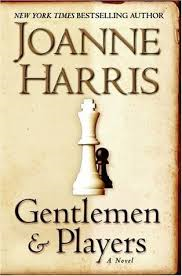
Gentlemen & Players – Joanne Harris

gentlemenGentlemen & Players is an intricate mystery by Joanne Harris, an author probably best known for her best-selling novel, Chocolat. Before she made it big in the publishing world, Harris was a school teacher which probably came in handy while writing this story of a public (in Britain this is the equivalent of our private, thus you pay a tuition)  school in England. For readers unfamiliar with the British school system, the story will likely seem extra exotic. I grew up reading Enid Blyton books and dreaming about going to boarding school in the UK, so I was all over the notion of the tuck shop (the place to buy sweets) and copious gallons of tea consumed by the teachers.

The novel gets its name from cricket, another very British enterprise. A first class cricket match pitting a team of amateurs (the Gentlemen) against the professionals (the Players) is a throw back to the class system in the 19th and 20th centuries. The Players were the working class guys and the Gentlemen from the middle and upper classes.

Harris’s novel has two narratives taking place over two different time periods. In one we follow Roy Straitley, a Classics teacher at St. Oswald’s Grammar School. He’s been in the business for over three decades and is soon to be turning 65. (I was relieved to see that Mr. Straitley still enjoys teaching since I’ll be at least that old before I will be able to afford to retire.) Straitley has dedicated his adult  life to teaching at the school and prides himself on his ability to control his class and remember all the boys he’s taught over the years.

In the other narrative, an unnamed narrator watches St Oswald’s from the gatehouse where they live with their father, the school’s porter (aka custodian).

I understood at once that they were a different race to myself; gilded not only by sunlight and their proximity to that lovely building but by something less tangible; a slick of assurance; a mysterious shine.

Later, of course, I saw it as it really was. The genteel decay behind the graceful lines. The rot.

Fifteen years later, the narrator shows up at St. Oswald’s with forged credentials and begins to teach and all hell breaks loose. At first the pranks are minor, missing registers and pens, but before long things get serious and lives are ruined and lost.

Gentlemen & Players was an easy read (despite all the wacky names I had to keep straight). Does it have something to say about the haves and the have-nots? Not really, since the second narrator just seems jealous and, quite frankly, crazy. Will I be thinking about these characters in a week? Not likely. Was I shocked by the surprise? No, I figured it out. Careful readers will. Still, I passed a pleasant few hours reading the book and if you like suspense thrillers, this is well-written (except for the over-the-top use of semi-colons!) and fun – if you don’t think too long on all the novel’s implausibilities.

The Splendor Falls – Rosemary Clement-Moore

splendorClement-Moore’s novel, The Splendor Falls, contains several recognizable gothic characteristics including an atmosphere of mystery and suspense, an ancient prophecy, a heroine who experiences visions, and supernatural events (there’s ghosts galore). Sadly, the book is too long and too slow to add up to much that would be considered frightening.

Seventeen-year-old Sylvie Davis is the “youngest-ever principal dancer for the American ballet” when she suffers a freak accident which ends her dancing career forever. Dancing is all Sylvie has ever known and the fact that she no longer can sends her into a tailspin of depression which is completely understandable. What is not understandable, however, is the fact that she starts to see things that she can’t explain. She starts to doubt her sanity and her mother, who has recently married a psychiatrist, decides to send her to her deceased father’s ancestral home in Alabama.

Sylvie and her purse dog, Gigi, arrive at Bluestone Hill, a plantation house which is currently being restored by her father’s cousin, Paula. It won’t take long for the reader to recognize the bit-players: the snotty daughter of Paula’s business partner, Clara; the golden-boy president of the Teen Council, Shawn; the mysterious and handsome, Rhys.

Sylvie is petulant about her circumstances. She doesn’t really know, Paula, and knows even less about her father’s childhood. It seems, though, that everyone in the small town knows her family. To make matters worse – she starts seeing things and hearing things.  The reader, by rights, should be creeped out right along with her. I can’t quite figure out why I wasn’t.

The Splendor Falls‘ biggest problem is, I think, with pacing. At just over 500 pages, there just weren’t enough thrills and chills to keep the pages turning. The novel’s denouement, when it comes, doesn’t really live up to its potential.

I’d been really looking forward to this book. I loved the title and the cover and the promise of things that go bump in the night, but at the end of the day the book was more whimper than bang.

Let’s talk about books – on CBC radio!

I had an opportunity to share my thoughts about young adult fiction on CBC radio’s show, Information Morning. I hope it will be a regular gig because it was SO MUCH FUN. I had a whole big thing prepared – but eight minutes goes so fast and I didn’t have a chance to say everything that I wanted to say. You can listen to the segment here.

For the hell of it, I’ll include my prepared notes below:

**

Want to make an English teacher cringe? Talk about the declining number of teens who read for pleasure.

Sadly the number of young people who read for pleasure has been on the decline and as far as I can tell it’s because they’re reading Tumblr and Facebook and texts – or not reading anything at all. I also think that in school we often expect them to read things they just aren’t interested in. I’m not an expert on the subject, but I do have anecdotal evidence about the lack of interest in books. I sometimes feel like I am on a mission to connect students to books they’ll love. I’m not alone – lots of Language Arts teachers are trying to turn kids on to the love of reading.

The National Reading campaign identifies several benefits of reading including the fact that it is essential to the well-being of society and to our functioning as a democracy; it empowers critical thinking skills, lays the foundation of future learning; it increases individuals’ health and well-being. And those are all awesome reasons to read – but I tell my students that I read to know that I am not alone, to understand what it means to be human, to learn how to be more empathetic. Most importantly I read for pleasure (which is also on the list, by the way).

I’ve been a life-long reader. I’m going to date myself here, but I’m old enough to talk about The Bobbsey Twins…I value reading, partly because my parents valued it. My kids are readers because I am. They’ve been surrounded by books their entire lives. My home is filled with books and so is my classroom and I think one of the most important things I can do as a teacher is to connect students to books because I really believe that all it takes is one good reading experience to reignite that fire that has gone out in so many kids. That sounds totally evangelical, I know.

Okay – so I am going to get off my soapbox.

One of the best parts of my job is talking about books with my students. I LOVE it. I love pulling a book off the shelf and physically putting it in someone’s hand and saying “Read this.” I’ve got about 1000 books in my classroom, so it’s a very immediate thing. I read A LOT of (though not exclusively) YA/teen fic and there’s some great stuff out there…but there’s also some junk…it’s like comparing Stephanie Meyer to Joss Whedon (pop culture reference my students will get!) A quick survey always shows that most kids read when they were younger…and then it starts to drop off as they get older. I just have to remind them of why they used to love it. And I have to find them the right book.

What makes a great teen book? The same thing that makes a good adult novel. (And, by the way, I don’t subscribe to the notion that adults shouldn’t read YA fiction. There are some amazing YA writers that adults should check out and I’m going to talk about just three.)

Character – that’s true for any book, of course, but I think young readers want to see themselves reflected back to them; they want characters to care about and root for

Plot – not overly convoluted – although subplots are great, keep turning those pages; worlds they recognize and worlds they do not

Writing – obviously, although this is subjective…which is why some people love Twilight and others do not. To each his or her own.

A conversation with the student is always the way I start – what’s the last book you read? (Often times they haven’t read anything, but I have built in reading time in my class and so I insist they get back on the reading saddle.) What are you interested in? Are you a confident reader?

So today I thought I’d just talk about three books that invariably come back to me with a student stamp of approval. These aren’t necessarily new releases, but over the past few years they’ve been books that have been borrowed a lot so they’re definitely keepers.

The Book Thief – Marcus Zusak, 2005

He’s an Australian writer and this book was originally intended – I believe – for adult audiences. It’s mostly touted as YA here – and I think teens would enjoy it, although they may find it a little slow to start. So it’s the story of Liesel Meminger.  Liesel is almost ten when she ends up in Molching with Hans and Rosa Hubermann, her new foster parents. It is 1939. In Nazi Germany. Death is personified and he’s the book’s narrator. Sometimes events are reported without comment – you forget Death’s there – other times Death weighs in on events. It might take some readers a bit to get used to. John Green – and voracious teen readers will know exactly who this guy is, called The Book Thief “brilliant and hugely ambitious.” Liesel is just a beautiful character; it is impossible not to fall in love with her. She literally steals books, the first one: The Grave Digger’s Handbook is stolen at her brother’s funeral. She doesn’t even know how to read. The Book Thief is about hope and sacrifice and love and family – all big ticket items. It’s also about the power of words and so of course I love it.

The Knife of Never Letting Go – Patrick Ness, 2009 (part of the Chaos Walking trilogy, which also includes The Ask and the Answer and Monsters of Men); American writer who lives in Britain; also author of A Monster Calls and More Than This, both of which I highly recommend

It’s about a kid named Todd who is just about to turn 13 and when he does he’ll be a man. He lives in this place called Prentisstown, which strangely sounds like some town ripped out of a Clint Eastwood spaghetti western…but it’s remarkable for a couple other reasons: there are no women and everyone can hear everyone else’s thoughts. It’s dystopian. Then one day, Todd’s out with his dog Manchee (he can hear the dog’s thoughts, too – which is often pretty comical) and he suddenly hears…nothing. When he reveals that to the men who have been looking after him they tell him to run…and keep on running and, literally, all hell breaks loose. The second and third books are every bit as fantastic as the first and, in fact, I had a grade ten student burn through all three in about a week…and the fact that he loved them and talked about them encouraged a couple more kids to start and one girl to actually go out and purchase the first book. Yay!

The Fault in Our Stars – John Green- sold 6,000,000 worldwide – movie came out a few months ago

There’s probably not a teen out there who hasn’t read this book, but I am going to talk about it because I think all the moms and dads should read it, too. Kelley Armstrong was recently at Harbour View to talk to students. In case you don’t know who she is, she’s a Canadian writer of both adult and teen fiction – a best-selling writer. She was talking about trying to sell her first book, Bitten, which is about werewolves…and it was just sort of by way of explaining how publishing changes. She said that what publishers are looking for now is the next John Green. I love the guy. He’s super smart and super nerdy and The Fault in Our Stars is just one of those books that – yes, it’s a “disease of the month” book, but it not. Hazel Grace is seventeen and she has lung cancer which is being controlled by some drug (not real). She’s addicted to America’s Next Top Model – which tells you the state of her life. Her parents insist that she attend a cancer support group and so she does, reluctantly, and that’s where she meets Augustus. This book is driven by the magic that is Hazel and Augustus and it will make you laugh and cry and curl up in a ball sobbing hysterically at 3 a.m. Possibly all at once. My favourite book in 2012. Not just my favourite teen book…my favourite book.