The God of Animals by Aryn Kyle

godofanimals

Is there a litmus test for whether or not we like a book?  At book club last night, where we discussed our first book of 2009,  The God Of Animals by Aryn Kyle, we asked the question: would you recommend this book to a friend? The answers were varied and that’s even after we had a very lively discussion of the book’s merits (and there were a few.)

The God of Animals begins with the death of 12 year old Polly Cain. It’s a riveting scene in which we learn not only of Polly’s death but also several other important things about the novel’s narrator, Alice Winston. Alice returns to Polly’s death again and again throughout the novel, but we never learn exactly how the young girl died. Whether or not the information is relative will be entirely up to the reader, but some might find that never knowing Polly’s fate is just one of the ways Kyle leaves the reader dangling.

Alice Winston lives on the family horse farm with her father, Joe, and her mother, Marian. Alice’s older sister, Nona,  left the farm six months earlier, with her rodeo husband, Jerry. The Winston’s struggle to make ends meet on the farm and Alice’s family life is further complicated by the fact that her mother  retired to her room after giving birth to her and she’s never really gotten out of bed. Of course, that doesn’t mean she isn’t aware of what’s going on;  she watches the comings and goings (of rich women who board their horses at the farm) from her window.

The story unfolds during the crippling heat of one summer and climaxes during a snow storm- the first snow in Alice’s life. As Alice tests her boundaries and learns certain truths about the way the world works, she also navigates the tricky road of adult relationships. Then, of course, there are the horses: we see them give birth, we see the foals separated from their mothers, we see them being bred and broken, we see them maimed and killed.

Despite all this, The God of Animals is a quiet book. The prose is quiet- it never quite swept me along. The characters were interesting, but I was never wholly invested in them. I wonder what might have happened if the narrator had not been Alice?

So, back to my original question: would I recommend this book? My answer – maybe. *g

The Enchantment of Lily Dahl by Siri Hustvedt

lilydahl1

Despite early reservations,  I kept reading The Enchantment of Lily Dahl, but I wouldn’t necessarily say that I loved the novel in the end. It’s a strange book populated by a cast of characters so odd it seems impossible that they should all end up in the same story.

There’s Lily, the 19 year old waitress who worships Marilyn Monroe and dreams of becoming an actress. There’s Mabel, her elderly next-door-neighbour, who  can’t sleep and spends her time writing  the story of her life. There’s Dick and Frank, two elderly men who are so filthy they leave a black cloud wherever they go. There’s Hank, Lily’s beau-hunk of an ex-boyfriend. There’s Edward, the artist who lives in the building across the street. And then there’s Martin, an oddly menacing boy Lily has known her whole life. This wild assortment of characters live in a small town, Webster Minnesota, where Lily works as a waitress at the Ideal Cafe.

The story Hustvedt is trying to tell seems to be one about secrets and memory, youth and old age, dreams lost and realized. The whole middle section of the book, though, reads as though Lily is crazy and it’s hard to say whether this is a triumph (and I am just too dense to see it) or a failing.

In between waiting tables and sleeping with the painter from the building across the road, Lily is rehearsing her part in A Midsummer Night’s Dream. She also seems to be, to some degree, coming apart at the seams- although I think this is supposed to be the character navigating the tricky road from innocence to experience.

For me, though, while her coming-of-age-journey was nicely written, I never felt connected to Lily or what was happening to her. Both the real and the imagined obstacles were off-kilter…as odd as Lily and the people she spent time with.

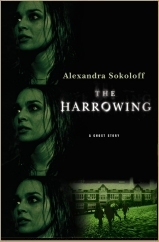
The Harrowing by Alexandra Sokoloff

harrowing

It’s been a long time since I’ve read a book this quickly. I started it last night and finally had to turn my light off after 100 pages…my eyes were burning and my heart was pounding.

Alexandra Sokoloff’s background is in theatre and as a script writer and The Harrowing, her first novel, certainly owes a debt to the screen. The prose is straightforward and while I wouldn’t go so far as to say the book is filled with trademark horror-film cliches,  the book’s creepiness (and trust me- the book is creepy) does owe a debt of gratitude to all those scary movies you watched as a teenager.

First of all, the book takes place at a remote college campus- specifically in a dorm filled with dark halls and secret staircases. You know what that means, right? The novel’s protagonist is Robin, a lonely girl who doesn’t quite fit in with the usual suspects (and trust me- all the stereotypes make an appearance: the handsome jock, the emo musician, the Southern belle, the slutty girl, the intellectual.) The book opens on a stormy Thanksgiving weekend. Everyone is heading home except for Robin; she has to spend the weekend all alone in her dorm.  Turns out she’s not alone, though.

The Harrowing benefits from its fast-moving plot and sketchy characterizations, ie it moves along at a breathtaking clip. That’s not to say that you don’t care about the characters, but this is a book with one purpose: to scare the bejebus out of you and it works on many levels.

It’d make a damn fine movie.

The Awakening by Donna Boyd

awakening1

Donna Boyd’s novel The Awakening starts off promisingly enough. A woman wakes up, confused and disoriented. It’s clear that something  traumatic has happened to her, but she has no recollection of what it is. Then we meet Paul Mason, his wife Penny and their daughter, Elsie. Paul’s a famous writer who hasn’t published anything new in over six years; Penny is a busy surgeon; Elsie is their troubled thirteen-year-old daughter. Paul and Penny’s marriage is hobbling along after Paul’s infidelity; Elsie is apparently in therapy to recover from some traumatic event.

The Awakening is a ghost story. Apparently, though, writing a ghost story wasn’t sufficient for Boyd, so she’s thrown in teen angst, suicide pacts, buried family secrets, cancer, and the whole notion of life after death. All the bits and pieces are meant to add up and when the ghost finally comes to terms with her death (and is ultimately reuinited with her true family, although we don’t actually see this happen ), the miracle of her existence propels the Masons down a road towards reconciliation and emotional healing.

Should you expect more than entertainment when you read a book like this? Not necessarily, I guess. There was something that just didn’t add up though…or maybe it’s that things did add up, just the teensiest bit too easily. So many big topics, Paul’s infidelity, for example or the ways that he and Penny had drifted apart or what happened to Elsie which had caused so much stress in the family, all of it is explained or resolved in the book’s final pages.

The Awakening turned out to be one of the tamest ghost stories I’ve ever read and an even less compelling family drama.

Black Lace Quickies by Various Authors

black-laceBlack Lace Quickies was a gift and who am I to refuse a gift, especially when it comes in book form. Also, I like smutty books. It’s hard, though, to choose someone else’s erotica. Your kinks are not necessarily my kinks.
That said, this slim volume of six stories has something for everyone and the stories are well-written and extremely naughty. The first couple of stories, in particular were well done. In ‘O’, a stewardess has an insatiable desire for sex toys and in ‘Life Boat’, a Greek cruise opens a young girl’s eyes to the erotic world. Both of these stories offered something slightly more than your standard bump and grind.

If you like a little naughty with your well, naughty, this might be the book for you. And at 122 pages, you’ll be finished in lots of time for…other reading. *g*

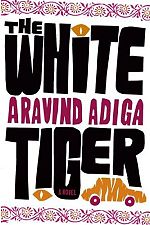
The White Tiger by Aravind Adiga

Adiga’s debut novel was the 2008 winner of the Man Booker Prize. There’s a certain cachet that comes attached to that especially if the author is relatively unknown. Adiga was, at one time, a correspondent for Time magazine- so he may actually be known to some people, but I’d never heard of him.

Truthfully, despite the accolades, I probably wouldn’t have picked up The White Tiger, but it was the choice for the book group I lead at a local book store.

In a series of missives written to His Excellency Wen Jiabao, Premier of China,  Balram Halwai recounts the details of his life, from his modest beginnings in the small village of Laxmangarh to his rise as a successful entrepreneur. His tale is an interesting one and paints a picture of India quite unlike any we have seen in the recent spate of books by Indian authors. Balram’s India isn’t swirling pink saris and saffron-infused food, it’s cockroaches, abject poverty and a system that stifles creativity and social advancement.

Balram condemns this India – the country which failed his dying father, was not able to deliver to him a meaningful education and is so filthy dirty, unless you drive in an air conditioned car, living in Delhi will take ten years off your life.

Balram grows sick of living in the muck, though, and decides he wants something more for his life than cleaning the floors in a tearoom. He learns to drive and then, through a weird twist of fate, ends up being the driver for Mr. Ashok and his wife Pinky Madam. Ashok is one of the new breed of Indians. Schooled in America, he is kind and fair to Balram but even as Balram grows fond of him, he is looking for ways to advance himself. He’s not content to be a slave forever; he aspires to be the master.

The White Tiger has been universally praised by critics. Adiga has created a wonderfully complex character in Balram. It is hard not to sympathize with him even as he goes from being underdog to monster.

The book is worth the read.