Off the Shelf – Should we let kids read what they want?

Listen here.

Um. Yeah. That’s the short answer. The long answer is a lot more complicated.

This is a topic we’ve tackled before, but it’s endlessly fascinating, isn’t it?  Just the thought of someone telling me what I can and can’t read gets my hackles up – but it’s an even pricklier subject when you start to consider younger readers. I deal with young adult readers every day and have a classroom library of more than 1000 books, several of which have been on a banned book list at some point, I’m sure.

According to an article in The Guardian, books are banned for all sorts of reasons including “Racism, homosexuality, offensive language, sexually explicit scenes, gritty topics like suicide and drugs, and talking animals.”  C’mon, you’re going to tell me Winnie the Pooh is objectionable – some of my fondest childhood memories of are of my mom reading me Winnie the Pooh.

“According to the American Library Association, the most common initiators of book challenges are parents, and the most common settings for book challenges are schools, school libraries, and public libraries. In other words, we can assume that books are most frequently challenged by concerned parents, who believe materials are unsuitable for children or teens.”

Okay, we’re going to head down the rabbit hole now.

TwilightbookObjecting to reading material is subjective. I object to Stephanie Meyer’s Twilight series all the time – loudly – in my classroom, but I have the whole series in my library. My students know I think Meyer is a hack, but that’s about the quality of her writing, not about the subject matter and it’s a personal opinion.  If students want to read her books, they should read them. And then they should read other, better vampire books like Holly Black’s The Coldest Girl in Cold Town or the granddaddy of them all Bram Stoker’s Dracula.

Young adult novels have definitely changed – but as much as things change they stay the same. So let’s have a quick primer.

Seventeenth Summer released by Maureen Daly in 1942 is widely considered the first ever YA novel. Fairly benign, certainly by today’s standards.

The first golden age of YA books happened in the 70s with novels by Judy Blume, Robert Cormier and Lois Duncan

Judy Blume’s novel Forever was an absolute a right of passage for anyone who grew up in the 70’s. The book has been on many, many challenged/banned lists since it was published in 1975, but as Ms. Blume says “How are young people supposed to make thoughtful decisions if they don’t have information and no one is willing to talk with them?”

Then there was a little lull before the baby boomers came of age in 2000. This second golden age in YA introduced readers to J.K. Rowling, Suzanne Collins and, yes, Stephanie Meyer.

If  you ask me whether or not we should allow young people to make decisions about what they read my answer has to be yes. Because let’s face they have access to way more potentially contentious stuff than what they’ll find in my classroom library, or the school library and they’ve got the power right in the palms of their hands.

And that’s really the crux of the matter. Books that are potentially controversial (and the range is crazy, Who Has Seen the Wind? for goodness sake)  are the exact books that are worth talking about because those are the books that will help young readers learn about their own limits and tastes and viewpoints and by deciding for them what those things should be we are taking away their right to develop into discerning and well-read humans.

I have been at Harbour View since 2009 and I haven’t had any issues with parents objecting to the books in my classroom. I post an introductory letter at the start of each academic year telling parents about my library and that some of the books might be considered ‘objectionable’ and I would certainly respect any parent’s right to prevent their teen from reading a book from my library – but why? It makes more sense to let them read the book and then, you read the book and then talk about the book together. That’s what I do in class. Talk about the books.

I read an article titled “The Not So Horrible Consequence of Reading Banned Books” where  psychologist Christopher Ferguson was quoted from the journal  Psychology of Aesthetics, Creativity and the Arts. He noted that “Reading banned books did not predict nonviolent or violent crime, or contribute to school GPA.” However, it was “positively associated with civic and volunteering behaviors.”  Ferguson’s research went on to report that “Such works can prompt readers to ponder ethical dilemmas, or — better yet — to discuss them with parents or teachers. In this way the books may foster higher-level thinking about these issues and promote more civic mindedness, even if the material is dark.”

And yes, there are some dark books out there. It’s a dark world. Burying our heads in the sand doesn’t make it any less dark. But I will say this – a book could save a life and Ferguson found that “It may be possible that youth with higher levels of mental health symptoms may select books that speak to them, offer them a chance for introspection, or a release from their symptoms.”

161426Allowing students to self-select reading material is important, but it is a skill and it starts at a young age. Read to your kids when they are young, take them to the library, talk about what they’re reading and read it, too. I know that when my daughter Mallory was about twelve she read a book called How I Live Now by Meg Rosoff…a book that I also read…quite an adult YA book and we actually did a mother/daughter review for my blog. Fantastic book and a powerful book for her and a book and conversation that we got to share. To me, that’s way better than any social media interaction I have with my kids.

Alice Munro talks about banning books, including her book Lives of Girls and Women here.
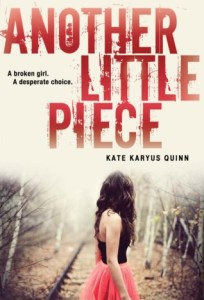


Another Little Piece – Kate Karyus Quinn

It’s been a long time since I’ve read a book as whackadoodle as Another Little Piece. But I kinda mean that as a compliment because even though I often didn’t have a sweet clue how all the disparate pieces of Kate Karyus Quinn’s novel worked together, I couldn’t seem to stop reading.

12665819A teenage girl wanders out of a field, her feet “bare and bloodied” tugging at the “garbage bag she’d refashioned as a poncho.” She doesn’t know who she is or where she is. It turns out she’s Annaliese, missing and presumed dead for the past year.

Her identity and what happened to her is just one part of the mystery and quite frankly I’m not sure I’m up to trying to untangle the messy threads of Annaliese’s life because it’s not just Annaliese’s life. In fact, Annaliese isn’t actually Annaliese at all. It’s hard to say much, but  there’s definitely something not quite right about her. She’s a girl who watches a football player across the field and feels, of all things, a pang of hunger.

I could see the beads of sweat on his golden brown skin. Except it didn’t resemble sweat so much as the juices dripping from the crisp and crackling skin of a roasted chicken. I wanted to sink my teeth into him.

As Annaliese (let’s call this one Annaliese Two) tries to reconcile her new life in this body that isn’t hers, she starts to have flashes of memory. In the first memory she is standing in the woods watching a girl (the real Annaliese, let’s call her One) have sex with a football player (same as the juicy  chicken one) and when they are done and the boy has left her, Annaliese Two steps out from her hiding place and tells  Annaliese One that “It’s time to pay.” Payment, as it turns out, is pretty gruesome, but that’s how Annaliese Two gets from body-to-body. And she’s been doing it for a long time.

Despite the desire to bite someone, Annaliese isn’t a vampire, but she is something very old (I think) and very deadly. That said, she isn’t altogether unsympathetic. When she meets Dex, the reclusive boy next door, she starts to wonder if she might not have another kind of life, a real life, one that actually belongs to her.

I had a hard time keeping all the girls straight in the story and I think that after a while I just stopped caring so much about the logistics of the plot. I followed the through-line of Annaliese and glossed over the bits that made me go WTF. Another Little Piece is well-written, creepy and original. There’s lots for careful readers to gnaw on…and that line will be really funny once you’ve read the book.


Connected Underneath – Linda Legters

Celeste, the wheelchair-bound narrator of Linda Legter’s novel Connected Underneath,  promises to tell us everything, even the parts too terrible to share. Then she admits “there, already: I’ve hardly begun and I’m already lying.” Whether or not Celeste’s lies are as pivotal to the story as she’d like to think is open to debate and, truthfully, she’s the least interesting part of the story, anyway. Connected Underneath cover

Celeste lives in Madena, a tiny town in upstate New York. She introduces the reader to the novel’s key players: Theo and Natalie – high school friends, although Theo had definitely hoped for more. Natalie, however, liked boys like Mike Teague, high school basketball star, because “Theo was from the wrong side of town, her side, and she wanted a different side.” When she becomes pregnant, Natalie turns to Theo for help and he ends up adopting her daughter, whom he names Persephone. (A fitting name, as it turns out -Persephone was the goddess of the underworld – because Seph, at fifteen, is a little off the rails.)

Theo and Seph are actually disconnected these days. Seph is in love with a girl called Krista, but she trades sex for tattoos. Billie, the tattoo artist, is “sweet, gentle, swift, so it never seemed like a very big deal, not even the first time, the time that drew blood.” Of course, Seph keeps the tattoos and the sex from her father, but even so, Theo is beginning to worry about his daughter; “he was sure his girl was in trouble.”

So that’s the impetus for a visit to Natalie’s house across town. She lives with her husband, Doug, and their son, Max. Natalie doesn’t really want anything to do with Theo and shows little interest in the daughter she gave up fifteen years ago. In fact, when Theo admits he’s afraid of losing her, Natalie’s response is callous and decidedly un-motherly: She tells him, “You’re too late. Not my fault.”

Connected Underneath is a story about secrets – those we keep from each other and those we keep from ourselves. It is also a story about the damage we can do, both willfully and inadvertently. Everyone in Connected Underneath seems to operate, ironically, without actually realizing how they are connected and when the secrets  bubble to the surface, discretion is abandoned and truth is used as a weapon.

Theo is definitely the most sympathetic character. Despite a fraught childhood, he has always tried to do the right thing. He loves his daughter, even if he isn’t quite sure how to keep her safe. Natalie is another story. I didn’t like her and also, more importantly, didn’t believe her. Not for a  minute. And then there’s Celeste. As she watches Theo’s world unravel, her world – miraculously – begins to right itself. Can’t say that I was all that invested in her, either.

On the plus side – Connected Underneath is an elliptical, strangely compelling story about the ways we try to save each other, even when we can’t. It is well-written, even if I didn’t believe in some of the characters. It is almost relentlessly grim, but sometimes life is just like that.

tlc logoThanks very much to TLC Book Tours for  inviting me to be a part of the book tour for Connected Underneath and to Linda Legters and Lethe Press for providing my review copy.


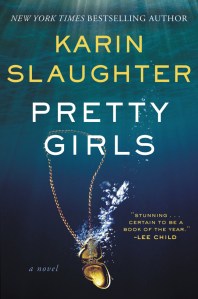
Pretty Girls – Karin Slaughter

So my son asked me how I liked Karin Slaughter’s novel Pretty Girls and I really had to think about my answer. I couldn’t just say “yes” because that isn’t exactly true. I couldn’t say “not really” because that isn’t true either. I read about 300 pages of it last night, turning the pages to get to the end, my skin crawling and my eyes burning.PrettyGirls_HC

Pretty Girls is the story of  sisters Julia, Lydia and Claire – actually it’s mostly about Lydia and Claire because twenty years back Julia, then 19, went to a bar with friends, and disappeared. Claire is married to Paul, successful architect and doting husband; Lydia is single mom to 17-year-old-Dee. She’s 19 1/2 years sober.  Lydia and Claire have been estranged for twenty years, but when Claire’s husband is brutally murdered in a botched alleyway robbery Claire turns to her sister to help her make sense of her unraveling life. And trust me – Claire’s life is about to go belly up, big time.

That’s pretty much all I can tell you about the plot without giving too much away.

The one other voice we hear in Slaughter’s novel is the girls’ father. He never gives up trying to find Julia and keeps track of his search and his feelings in journals. “When you first disappeared,” he writes, “your mother warned me that finding out exactly what had happened to you would be worse than never knowing…’The details will tear you apart.'” She wasn’t wrong.

There’s some bad blood between Claire and Lydia, but soon enough they find themselves in a heap of trouble and they have no choice but to put the past aside. The plot catapults along and if you don’t care too much about the quality of the prose (not that there’s anything wrong with it – Slaughter’s writing is more than up to the task at hand) you’ll fly through the pages unhindered by flowery language. What will give you pause are the gruesome crime details – or maybe not. Maybe we have been desensitized to that sort of thing. I’m not easily bothered, but this book bothered me.

There’s nothing pretty about Pretty Girls. If there is redemption to be had, it comes at a high price for Claire and Lydia and readers will have to have a strong stomach to go along.

What She Left Behind – Tracy Bilen

13040715Sara’s mom finally has a plan to get the two of them out of Dodge – okay, they don’t actually live in Dodge, they live in Scottsfield, a town so small it doesn’t even have traffic lights. Life with Sara’s dad, Ray, an ex-cop cum hardware store owner, has passed the point of impossible and taken a right turn at scary. He’s abusive and a tad on the crazy side considering he still thinks his son, Matt, lives at home. Matt’s dead.

This is what we know at the beginning of Tracy Bilen’s YA novel What She Left Behind. Getting away is a good plan, Sara thinks, until her mother fails to pick her up at the appointed time and place. When she gets home from school her father tells her that her mother was called away on a last minute training course, but every time Sara tries to call her cell it goes straight to voice mail and the duffle bag she’s packed and stowed under her bed, well, that’s been unpacked and everything returned to its place.

Sara was always the invisible one in the family. Her mother and brother took the brunt of Ray’s abuse. Now all eyes are on Sara and she’s desperate to find out what’s happened to her mother and to avoid her father’s ire.

Two boys come to her aid: Zach, her brother’s best friend and Alex Maloy, hot boy from school. Zach knows Sara’s family history; Alex is new on the scene and seems to be interested in Sara, for real, and although Sara likes Alex she also knows there’s no point in pursuing anything with him since she and her mom are leaving…just as soon as her mom returns. He’s cute, though.

I read What She Left Behind in one sitting. Seriously. The plot clicks along at a good clip; Sara is likeable and sympathetic. Ray is one brick short of a chimney. Alex is too-good-to-be-true, but don’t you kinda want that for the girl whose life is pretty much shit.

I’d have no trouble recommending this book to my students.

The Paris Wife – Paula McLain

I wouldn’t consider myself an Ernest Hemingway fan by any stretch. Perhaps I read him when I was too young to appreciate his spare and muscular prose. For some reason I always thought of him as a misogynist, although I couldn’t say how I came to that conclusion. He has been criticized for his portrayal of women in his work, so my opinion has clearly been borrowed from something else I’ve read. I do know, however, that he is a significant figure in American literature even if neither the man nor the myth was all that interesting to me as a reader.

parisNow, after reading Paula McLain’s novel The Paris Wife I have to admit to being quite curious about Hemingway and his writing. I think I might come at it a little differently now compared to the way I approached him as a young university student.

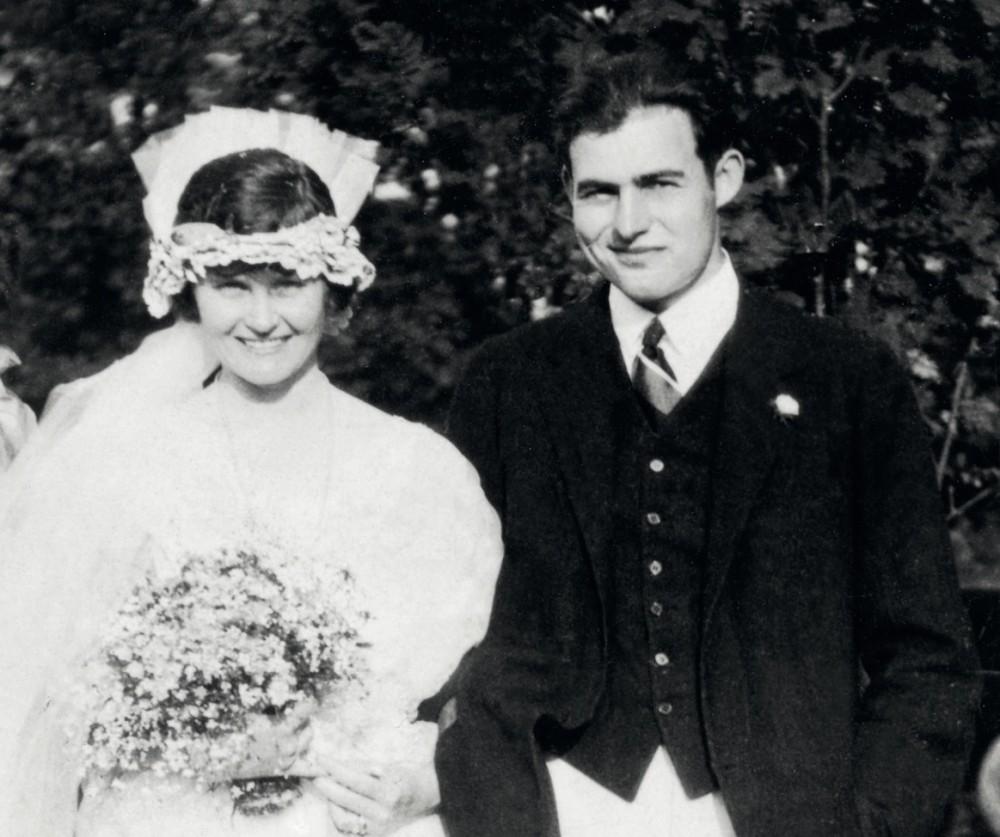
The Paris Wife is a fictional account of the relationship between a young Ernest Hemingway and his first wife, Hadley Richardson. The pair meet through mutual friends in Chicago in 1920. “The very first thing he does,” Hadley says, “is fix me with those wonderfully brown eyes…”

Hadley is 28 and has come to Chicago from St. Louis after the death of her mother. Hemingway is just 20 and “seemed to do happiness all the way up and through. There wasn’t any fear in him…just intensity and aliveness.” For Hadley, who says that her life was “stuck” long before her mother’s death, Hemingway is a revelation. When Hemingway announces that he intends on being an important writer, Hadley remarks “I thought poets were quiet and shrinking and afraid of sunlight.” Hemingway is a force and Hadley has no choice but to be swept along with him.

After Hadley returns to St. Louis, the two begin a correspondence which ends in a wedding proposal.  Once they are married, the two return to Chicago briefly before setting sail for Paris. Why Paris? Sherwood

Hadley and Ernest on their wedding day Sept 3, 1921.

Hadley and Ernest on their wedding day Sept 3, 1921.

Anderson (author of the book Winesburg, Ohio, which I’ve never heard of but apparently both the writer and the book were a big deal back in the day) tells Hemingway “…if you want to do any serious work, Paris is the place to be. That’s where the real writers are now.”

Anderson was right, of course. Paris in the 20’s was a mecca for writers and artists, a literary (and artistic) who’s who. Gertrude Stein, Ezra Pound, F. Scott Fitzgerald,  and Archibald MacLeish are just a few of the celebs who enter the Hemingways’ orbit once they find themselves in the City of Light at the end of 1921. This collection of literati came to be known as “The Lost Generation,” a term coined by Stein but made popular in Hemingway’s novel The Sun Also Rises. The term refers to those who came of age after the First Word War.

McLain’s novel does an exceptional job of capturing the literary scene of the time – its parties and squabbles, jealousies and intrigues – but also the relationship between Ernest and Hadley. There is no question they loved each other deeply and in Hemingway’s own memoir about his time in Paris, A Moveable Feast, he writes “I wish I had died before I loved anyone but her.”

I may have to rethink my position on Hemingway. I may have to read A Moveable Feast. I certainly recommend The Paris Wife especially if you love literary name dropping and Paris. Even if you don’t love those things, McLain’s novel is a delight.

Can you trust these narrators?

Listen here.

First of all, I want to go all fangirl on you because you had Ruta Sepetys in the CBC studio last week and I went with a couple teachers and some students from HVHS to hear her speak at the library on Thursday night. Writers are rock stars in my book and any personal interaction you get to have with them is so squee-worthy.

I haven’t read her other books, but I did read Between Shades of Gray with my grade nine class this year and I have to say it was a remarkable experience. Even students – mostly boys – who weren’t readers enjoyed that book and in fact read way ahead of the class. So, you know there’s something good going on when that happens. I know, too, that one of my colleagues at St. Mac’s said they’d walk through the halls during the 20 minutes they’d set aside for the school to read and there was silence…and they mentioned how gratifying it was to hear students talking about the book in the halls at lunch and break. That is solid-gold to teachers. Her talk at the library was lovely and she is so warm. She took pics with our kids (in the photo below she is on the far left), selfies even, and answered their questions. She was terrific.

IMAG0361


Okay – with that out of the way, let’s talk about the books.

I want to talk about books of a type – you know how a book will hit it big and then all of a sudden there are a bunch of similar books on the market. So, for example, everyone was talking about The Girl on the Train by Paula Hawkins and I jumped on that bandwagon and I liked the book – didn’t LOVE the book. But then all of a sudden there were all these books with unreliable narrators and so I thought I would talk about a couple of those today.

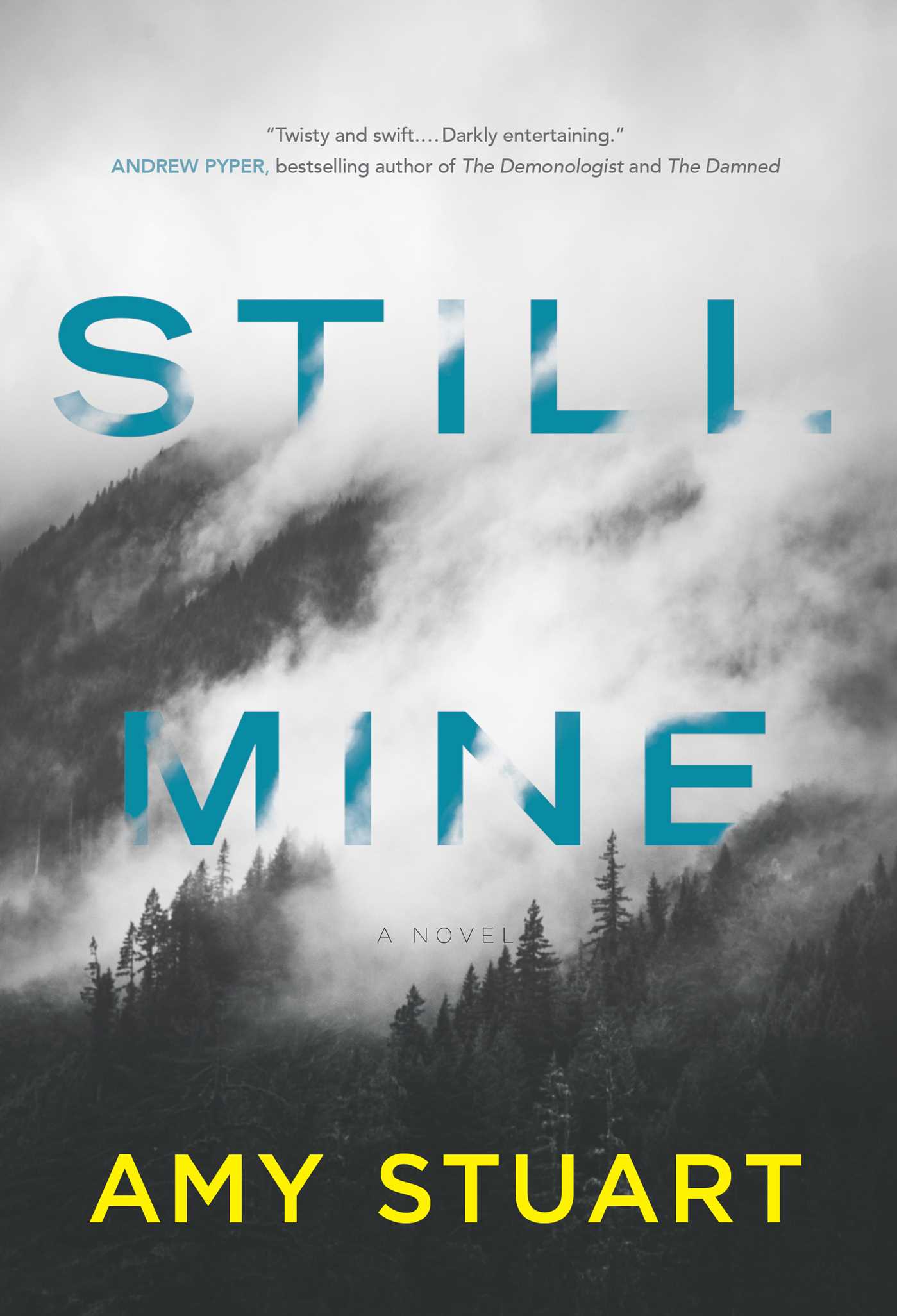
still-mine-9781476790428_hrStill Mine – Amy Stuart

Stuart is a Canadian writer and this is her first book. It’s the story of Clare O’Dey, a woman on the run from her abusive husband, Jason, who ends up making a deal with the man he’s sent to find her. In exchange for her freedom, she has to go to this tiny mining town – I’m going to say it’s Northern BC or Alberta – and find a woman called Shayna who has gone missing. Clare finds herself wholly invested in the search for Shayna and it makes a weird sort of sense because Shayna’s past is as messed up as Jason’s. The town, Blackmore, is peopled with all sorts of damaged and dangerous characters including Shayna’s ex-husband, the town’s drug dealer and even Shayna’s parents.
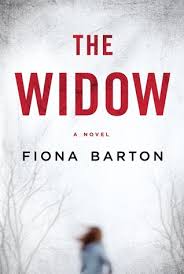
widowThe Widow – Fiona Barton

It’s the story of Glen and Jean Taylor, a pretty average 30-something couple in England whose lives are totally upended when Glenn is accused of kidnapping a little girl named Bella. When the novel opens Glenn is dead – hit by a car – and Jean has decided to tell her story to the press. Although we also spend a little time with Bella’s mother and the police detectives who are investigating the case and the reporter, it’s really Jean’s story – whether you believe her or not – that ties everything together. I should warn listeners that the subject matter of The Widow might be objectionable to some – it deals with online pornography. However, there is nothing graphic here – I promise. Just a lot of skeezy characters.

Finally, just to balance it out a YA book with a character you can trust.

And We Stay by Jenny Hubbard andwestay

This is a beautiful novel that marries prose and poetry – a technique Hubbard used in her novel Paper Cover Rock, which I also highly recommend. In this book, sixteen-year-old Emily Beam has been whisked away from her home to attend The Amherst School for Girls. The reasons for this abrupt change have to do with a tragedy which occurred back home and that tragedy is revealed through flashbacks and through the poems Emily writes. Ad We Stay won quite a few awards and is, imho, deserving of them. This is a quiet novel that treats its subject matter and its characters with care and respect. Plus – there’s Emily Dickinson, so come on.


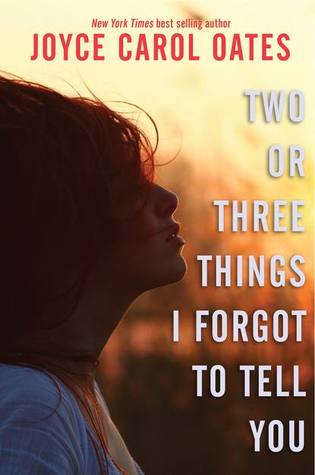
Two Or Three Things I Forgot To Tell You – Joyce Carol Oates

I have a love/hate relationship with Joyce Carol Oates. Sometimes I read her and after I’ve settled into the odd rhythm of her writing I think, yeah, that was pretty good (We Were the Mulvaneys; Beasts) and then sometimes I read her work and think, that was a lot of effort for nothing (Rape: A Love Story) and then there’s this time, when I read Two Or Three Things I Forgot To Tell You and about two thirds of the way in I thought, what the hell just happened? 13501407

Merissa Carmichael has just been accepted into Brown, her first Ivy League choice. Merissa, M’rissa to her friends, has it all going on: good students, good athlete, good friend, pretty and popular, but she is also deeply troubled.

…in the little bathroom adjoining her room, with trembling hands – trembling with excitement, anticipation! – opening a drawer beside the sink, and, at the very back of the drawer, seizing the handle of a small but very sharp paring knife – bringing out the knife, and pressing its tip against the inside of her wrist, where the skin was pale and thin…

Nadia Stillinger, Merissa’s friend, “hadn’t a chance of getting into Brown, or any Ivy League university” has her own problems including a father who works too much and a too young step-mother. She’s fat, too, weighing in at a whopping 119 pounds. And everyone knew that  it was “utterly, utterly disgusting to be fat.”

The one thing Nadia and Merissa share is Tink, the child-star who moved to their town of Quaker Heights, New Jersey during their junior year. Tink is a “short, fiery-haired girl” whose  “face was pale and plain, as if it had been scrubbed, and even her freckles looked bleached.” She’s unlike any other girl at Quaker Heights High.  She talks back to teachers, doesn’t give a rat’s ass for fashion and doesn’t even seem all that interested in making friends, which is why the girls in Merissa’s circle so desperately want to fly in Tink’s orbit. She seems fearless. Until she kills herself – which actually happens before the story begins – so much of the story is told in flashback.

Two Or Three Things I Forgot To Tell You  isn’t your average YA novel. First of all, the narrative is  Joyce Carol Oates wacky. The narrator is one of the girls – but not Merissa and not Nadia and not Tink. Lots of personal pronouns, though, like “We were stunned” and  “We laughed because Tink laughed”. Still, the first part of the novel is tightly focused on Merissa and her penchant for cutting and the trauma of her parents’ crumbling marriage. Then, Merissa is abandoned (presumably in a much better emotional place than when we meet her) and the focus switches to Nadia and her problems – mostly to do with an incident at a party and her inappropriate feelings for her kind (and handsome) Science teacher.

You either get used to the way Oates writes or you don’t. This book is rife with parentheses and asides couched in dashes. Perhaps the writing is meant to mimic the frenetic minds of its characters, but whatever the case I read the novel quickly. I can’t say I didn’t like it, but I can’t say I loved it, either. There is potential for discussion because the book is topical and in many ways captures the complicated and fraught time in a young woman’s life just before she is about to step over that imaginary line into adulthood. Sadly, some don’t make it.

Still Mine – Amy Stuart

I haven’t read a book quite as weird as Amy Stuart’s Still Mine  in a long time and I still can’t decide whether it was good weird or just weird. It reminded me a little of Go With Me – a quirky, but affecting novel by Castle Freeman Jr.

still-mine-9781476790428_hrClare O’Dey has run away from her abusive husband, Jason. In an unusual twist, the man Jason sends to find her, Malcolm Boon,  hires Clare to go to Blackmore, a remote mining town in the mountains, to look for another missing woman, Shayna Fowles.  For reasons that won’t be immediately clear, Clare invests wholeheartedly in the search for Shayna, a woman whose past is as tricky and messed up as Clare’s.

Blackmore is a shriveled up nothing of a town. “A blast at the Blackmore Coal Mine five years ago killed thirty-two men and trapped  eighteen others underground for three weeks,”  Malcolm’s notes tell Clare. She pretends to be a photographer in town to take pictures, but it’s a ruse no one buys. The only hotel in town is closed and so Clare rents a trailer on Charlie Merritt’s property. Charlie is the town drug dealer and his property (his father and brothers were killed in the mine) butts up against Shayna’s parents’ place.  Clare figures it will be a good place to snoop.

Blackmore is filled with broken people: Jared, Shayna’s ex-husband; Sara, her friend; Derek, the town’s only doctor and Shayna’s parents, Louise (who is suffering from early onset Alzheimer’s) and Wilfred, her father, the man responsible for saving the eighteen men who did make it out of the mine alive (but also the man Charlie holds responsible for the deaths of his father and siblings). None of them seem to know what happened to Shayna and with no police in town, no one is looking for her.

As Clare attempts to find out what has happened and which of the town’s odd assortment of outcasts might be responsible for Shayna’s disappearance, her own past is revealed; her own frailties are exposed. Like Shayna, Clare has a penchant for drugs and alcohol, making Charlie particularly dangerous to her. She also finds herself strangely attracted to Shayna’s ex-husband, Jared. She forges a bond with Louise, replacing the mother she recently lost to cancer. In many ways, Clare steps into the life Shayna has abandoned. Even so she realizes

These people in Blackmore, they are not Clare’s friends. Derek and Jared and Sara and Charlie. They are not even one another’s friends. They are only characters in Shayna’s story and Shayna is not here.

Still Mine is an unusual, albeit strange, psychological mystery. Apparently there is a sequel on the way, but I was quite content with how the book ended.

Definitely worth checking out.


And We Stay – Jenny Hubbard

Sixteen-year-old Emily Beam, the protagonist in Jenny Hubbard’s YA novel And We Stay,  has been whisked away from her home town to attend a boarding school in Massachusetts. It’s midway through Emily’s junior year, an odd time for a student to be starting at The Amherst School for Girls.  Emily just wants to be left alone, though, and she keeps her head down and her cards close to her chest.  It’s clear that she’s suffered some sort of trauma and her parents have decided she will not be returning to her old school to “deal with the whispers and stares and, of course, the memories.”

andwestay

Emily settles into life at Amherst as best she can. Her roommate, K.T. is friendly and not too nosey and that’s good because Emily isn’t willing to talk about her life. The most she is willing to divulge is that she’s come from Boston – which isn’t exactly true.

Although she doesn’t want to talk about why she’s started school half way through the year, her story is revealed to the reader in short order: her boyfriend, Paul, has died. The details of his death are revealed through flashbacks and the poetry Emily begins to write, in part, inspired by Emily Dickinson. As it turns out, Dickinson had been a student at Amherst one hundred years before.

Hubbard is clearly a poet. Poetry figured in her first YA novel, Paper Covers Rock, a book I really loved, too. In And We Stay, Emily uses her poetry as a way to try and make sense of the senseless. In her poem “Ashes” she writes:

The same sky that once

held her dreams has stolen

her story. And the stars

will know just

how to tell it:

night after night

over and over.

Slowly, Emily opens herself up to the possibility of recovery and healing, but the journey is not without its difficulties. Hubbard negotiates Emily’s journey with a keen sense of the teenage heart.  Perhaps one might view Emily Dickinson as a plot device, but it didn’t feel that way to me. Poetry is the art of heightened emotion, of making the unknowable knowable and Emily is trying to do just that: make a horrific act something that she can survive – because she can. Because she must.

And We Stay is all the things I want my YA books to be: beautifully written, smart and engaging, emotionally intelligent and a page-turner. The book won several awards and is, in my opinion, deserving of them all.

Highly recommended.