 Jam Gallahue just hasn’t been able to recover from the death of her boyfriend Reeve Maxfield. “I loved him,” she explains, “and then he died, and almost a year passed and no one knew what to do with me.” As a last resort, Jam’s parents send her to The Wooden Barn, “a boarding school for ’emotionally fragile, highly intelligent’ teenagers.”
Meg Wolitzer’s YA novel Belzhar follows Jam on her journey of recovery, although it probably won’t be the sort of recovery readers will be expecting.
Jam is picked to take a course called Special Topics in English, the “smallest, most elite class in the entire school.” Taught by Mrs. Quenell, Special Topics has a reputation at The Wooden Barn. Jam’s roommate, DJ, tells her that students who haven taken the class act like it’s no big deal, but “when it’s over, they say things about how it changed their lives.”
Jam shares the class with Casey, a girl in a wheelchair, Sierra, Marc, and Griffin, a boy who is “good-looking but in a hostile way.” Their special topic is Sylvia Plath, who will be the only author the five students will study. In addition, they are required to write in journals that Mrs. Quenell hands out to them. Mrs. Quenell tells the students that each of them “has something to say. But not everyone can bear to say it. Your job is to find a way.”
The thing about these five students is that they have each suffered some sort of trauma and it turns out that their journals and the entries they write in them magically transport them back to a happier time in their lives. These experiences, which they call going to Belzhar (a weird take onthe title of Plath’s only novel The Bell Jar) causes them to open up to each other and to the world.
Whether you buy into the magical realism elements of this novel or not, there is certainly truth to the fact that some people get stuck in their grief or anger. Each of these teens has been trapped by their experiences and the act of writing allows some of the poison in their lives to seep out. “Words matter,” Mrs. Quenell tells her students, and I wholeheartedly agree.
Not everyone will appreciate Belzhar. I can see how some students might balk at the notion of Belzhar as a real place, but as a metaphor it most certainly works. Human beings do get stuck. We hold on to things and people that are not healthy. We don’t fully live; we deceive ourselves. It takes work, sometimes, to shed trauma, but surely it’s worth it.
“You’re all equipped for the world, for adulthood, in a way that most people aren’t…So many people don’t even know what hits them when they grow up. They feel clobbered over the head the minute the first thing goes wrong, and they spend the rest of their lives trying to avoid pain at all costs. But you all know that avoiding pain is impossible.
Belzhar is worth a look.
 When I was a kid, I had pen pals. Lots of them. I think I started writing letters when I was about seven. We moved away from Winnipeg where we had been living for a couple years. I had to leave my best friend, Lynne, behind and we kept exchanging letters for many years – up until recently when my Christmas card to her was returned ‘address unknown.’
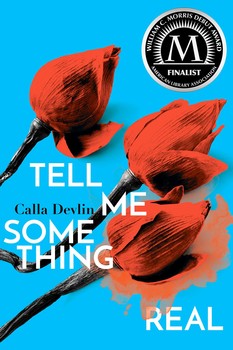 her younger sister, Marie, in San Diego. Their mother, Iris, has leukemia, and Vanessa and her sisters often accompany her to a clinic in Mexico where she is treated with the controversial drug, Laetrile.
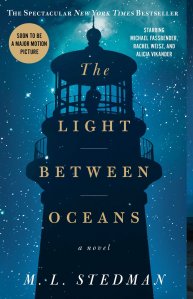 I feel heartless for saying it – but I didn’t particularly like M.L. Stedman’s first novel The Light Between Oceans. I’ve had the book for a while, but it was last month’s book club pick, so I finally had occasion to read it. [insert long-suffering sigh]
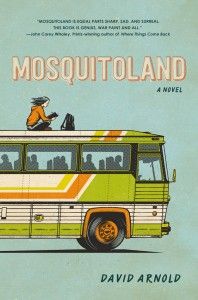 late: her parents’ divorce; her father’s quicky marriage to Kathy; their subsequent move from Ashland, Ohio to Jackson, Mississippi. When Mim overhears her father and stepmother talking to the principal, she’s convinced that her biological mother is sick and makes the decision to hop a Greyhound and travel the 947 miles back to Ohio to see her.
 Gah! This book, you guys.
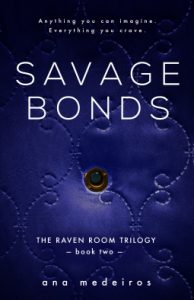 Canadian author Ana Medeiros’ The Raven Room Trilogy follows the sexcapades of Dr. Julian Reeve, a child psychologist, and journalism student Meredith Dalton. Sometimes you can jump into a series without having read the first book, but I really felt like I was at a severe disadvantage reading book two in Medeiros’ trilogy. Savage Bonds picks up where The Raven Room leaves off, but for a newbie reader, I literally had no sweet clue what was going on and I never felt as though I was sufficiently caught up.
 Creativity is a funny thing. I look around and see all these people who are tremendously creative. Both of my children are talented artists. My daughter spent many years studying ballet and is a beautiful dancer. Both my children are musical; my son taught himself to play guitar. I have other friends who are artists, painting with words or yarn or fabric or glass or clay. Some put their art on a plate. But I am probably not the only person on the planet who feels like they don’t have a creative bone in their body. I don’t draw or paint. I don’t dance. I can’t sing. The one thing I do like to do is write. I love to do it and have been doing it for as long as I can remember.
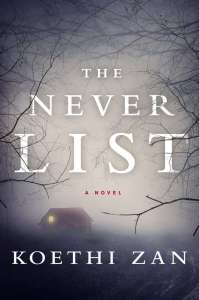 The Never List never really got off the ground for me, although the premise had a lot of potential. Koethi Zan’s debut novel is the story of Sarah, a reclusive young woman who is still suffering from the psychological scars of having been held captive by a sadist, Dr. Jack Derber.
 Amy Zhang’s novel Falling Into Place tells the story of sixteen-year-old Liz Emerson’s journey from happy child to miserable teen and the drastic choice she makes in an effort to end her emotional pain.
 The Ludic Reader