The Paris Wife – Paula McLain

I wouldn’t consider myself an Ernest Hemingway fan by any stretch. Perhaps I read him when I was too young to appreciate his spare and muscular prose. For some reason I always thought of him as a misogynist, although I couldn’t say how I came to that conclusion. He has been criticized for his portrayal of women in his work, so my opinion has clearly been borrowed from something else I’ve read. I do know, however, that he is a significant figure in American literature even if neither the man nor the myth was all that interesting to me as a reader.

parisNow, after reading Paula McLain’s novel The Paris Wife I have to admit to being quite curious about Hemingway and his writing. I think I might come at it a little differently now compared to the way I approached him as a young university student.

The Paris Wife is a fictional account of the relationship between a young Ernest Hemingway and his first wife, Hadley Richardson. The pair meet through mutual friends in Chicago in 1920. “The very first thing he does,” Hadley says, “is fix me with those wonderfully brown eyes…”

Hadley is 28 and has come to Chicago from St. Louis after the death of her mother. Hemingway is just 20 and “seemed to do happiness all the way up and through. There wasn’t any fear in him…just intensity and aliveness.” For Hadley, who says that her life was “stuck” long before her mother’s death, Hemingway is a revelation. When Hemingway announces that he intends on being an important writer, Hadley remarks “I thought poets were quiet and shrinking and afraid of sunlight.” Hemingway is a force and Hadley has no choice but to be swept along with him.

After Hadley returns to St. Louis, the two begin a correspondence which ends in a wedding proposal.  Once they are married, the two return to Chicago briefly before setting sail for Paris. Why Paris? Sherwood
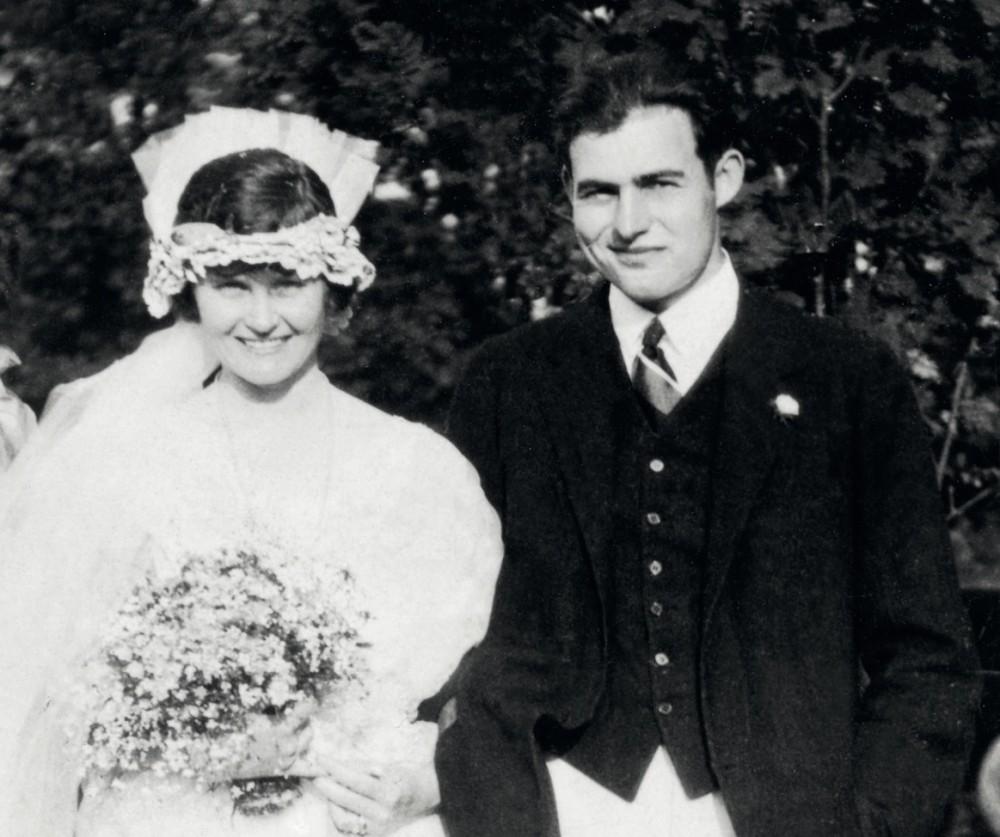
Hadley and Ernest on their wedding day Sept 3, 1921.

Hadley and Ernest on their wedding day Sept 3, 1921.

Anderson (author of the book Winesburg, Ohio, which I’ve never heard of but apparently both the writer and the book were a big deal back in the day) tells Hemingway “…if you want to do any serious work, Paris is the place to be. That’s where the real writers are now.”

Anderson was right, of course. Paris in the 20’s was a mecca for writers and artists, a literary (and artistic) who’s who. Gertrude Stein, Ezra Pound, F. Scott Fitzgerald,  and Archibald MacLeish are just a few of the celebs who enter the Hemingways’ orbit once they find themselves in the City of Light at the end of 1921. This collection of literati came to be known as “The Lost Generation,” a term coined by Stein but made popular in Hemingway’s novel The Sun Also Rises. The term refers to those who came of age after the First Word War.

McLain’s novel does an exceptional job of capturing the literary scene of the time – its parties and squabbles, jealousies and intrigues – but also the relationship between Ernest and Hadley. There is no question they loved each other deeply and in Hemingway’s own memoir about his time in Paris, A Moveable Feast, he writes “I wish I had died before I loved anyone but her.”

I may have to rethink my position on Hemingway. I may have to read A Moveable Feast. I certainly recommend The Paris Wife especially if you love literary name dropping and Paris. Even if you don’t love those things, McLain’s novel is a delight.

The Husband’s Secret – Liane Moriarty

It’s no secret to the ladies in my book club: I didn’t like Liane Moriarty’s novel The Husband’s Secret. At all. But here’s the thing, the critics loved it. Geesh, even Anne Lamott called it “smart, wise, funny.” husband

The husband in question in The Husband’s Secret is Cecilia’s husband,  John-Paul Fitzpatrick, he of the “deep, warm and comforting” voice; hopeless at the minutiae of daily life, but “he took care of his wife and daughters, in that old-fashioned, responsible I-am-the-man-and-this-is-my-job way.”  One day, while searching in the attic for a little piece of the Berlin Wall (cue metaphor alert) to give to her  daughter, Esther, who has recently shown an interest, Cecilia discovers  (by accident…or is it fate?)  an envelope upon which is written: For my wife Cecilia Fitzpatrick,  To be opened only in the event of my death.

In another part of town is Rachel, a woman whose life has been forever coloured by the death of her teenage daughter, Janie, some twenty-eight years ago. She has a son, Rob, and daughter-in-law, Lauren and a two-year-old grandson, Jacob. Rob and Lauren have just told Rachel that they are moving to New York to take advantage of a terrific job opportunity for Lauren. Jacob is the light of Rachel’s life and the news is devastating to her – never mind that she has discounted Rob and Lauren forever, because – you know – she’s grieving. Still. Always.

The third woman to figure in Moriarty’s over-stuffed plot is Tess, who has recently come home with her young son, Liam,  because her husband, Will, and cousin, Felicity, (who are also her business partners) have just revealed that they have fallen in love. Ouch.

Really, there’s enough going on in The Husband’s Secret to fuel three novels, but Moriarty chooses, instead, to tangle the fates of all these three women together and also try to comment on infidelity, love, marriage, family, parenting, friendship, and how to make a million bucks selling Tupperware.

A novel like this, let’s call it domestic drama, depends on one thing and one thing alone and that’s believability. I didn’t believe any of these characters, nor care about them one iota. The book seemed interminable to me, over 400 pages bookended with a prologue and epilogue that asks you to consider the myriad of ways your life might have gone had you only chosen a different path. But as Robert Frost’s misunderstood poem “The Road Not Taken” warns us “the passing there/ Had worn them really about the same.” No matter which path you choose in life,  a belief in fate is also a belief that everything turns out as it should.

The Husband’s Secret is an “everything but the kitchen sink” novel that tries hard to be all things to all readers: mystery (though not so much for careful readers), and family drama, with a little bit of sex thrown in for good measure. When one of my friends joked “just wait until you get to the aliens,” I actually considered she might be telling the truth.

A world of no.


Everything I Never Told You -Celeste Ng

everythingLydia is dead.

It’s been quite a while since I’ve had such a visceral reaction to a book.  I read the bulk of Celeste Ng’s debut novel, Everything I Never Told You, on my snow day (a gift for a teacher, even if it’s only because we get to catch up on  marking/yearbook/planning – and, yeah, reading). I don’t think I will ever  be able to adequately explain how I feel about this book or these characters.

Lydia is just sixteen when she is found at the bottom of the lake across the street from her home in small-town Ohio. It’s the 1970s, the decade in which I, too, was coming-of-age. On the morning she is discovered missing (and it is this “innocuous” fact that sets the story in motion) we see the Lee family dynamic.

As always, next to her cereal bowl, her mother has placed a sharpened pencil and Lydia’s physics homework, six problems flagged with small ticks.

Hannah, Lydia’s younger sister is “hunched[ed] moon-eyed over her cornflakes, sucking them to pieces one by one.” Lydia’s older brother, Nathan, is sitting on the stairs trying to wake up. James, their father, has already left for his job as a professor at the local college.

Lydia is never late. She is never anything but compliant. She is a “yes” girl, the favoured daughter. It is only after her body is found that her story, and that of her family, begins to unravel. And yes, you will want to know what happened to Lydia, but trust me, it’s just one of the many things that will break your heart in this magnificent novel.

While every family has their own secrets and burdens, the Lee family is further set apart because Marilyn is white and James is Chinese. Their story is integral to Lydia’s story. Marilyn herself was a gifted student, earning a scholarship to Radcliff, and there – while she heads towards a degree in medicine – she meets James, a fourth year graduate student in history. She is ‘other’ because she is a woman studying in a field that is dominated by men; he is ‘other’ because he’s Chinese. All Marilyn knows is that “she wanted this man in her life. Something inside her said, He understands. What it’s like to be different.”

Marilyn’s career plans are pre-empted when she gets pregnant. She and James marry and move to Ohio.  Of course, their union wouldn’t be quite so problematic now (I’d like to think, but there are always some people….), but it’s the late 50s when they marry. Another world, another time. And life, fraught as it is, moves on. But why is it fraught? Because James grew up attending private school for free because his mother worked there as the cook and his father the janitor? Because he never fit in anywhere?  Because Marilyn didn’t want the life her mother had? Because of dreams deferred? And what happens when our parents’ lives are complicated and damaged by their own childhoods? Ah, we all know the answer to that question, right? It all trickles down.

Everything I Never Told You is an astounding, complex and heart-breaking look at the secrets we keep, not only from our families but from ourselves. Why we keep them, and the damage caused because of it, is just part of what happens in Ng’s book. The horrible longing we feel to crack ourselves open, the desire for true communication and intimacy, is another part. There wasn’t a single character in this novel I didn’t want to hug – I loved them all. That they were so fabulously human and fragile is a testament to Ng’s talent.

Highly (times a billion) recommended.

Brooklyn – Colm Tóibín

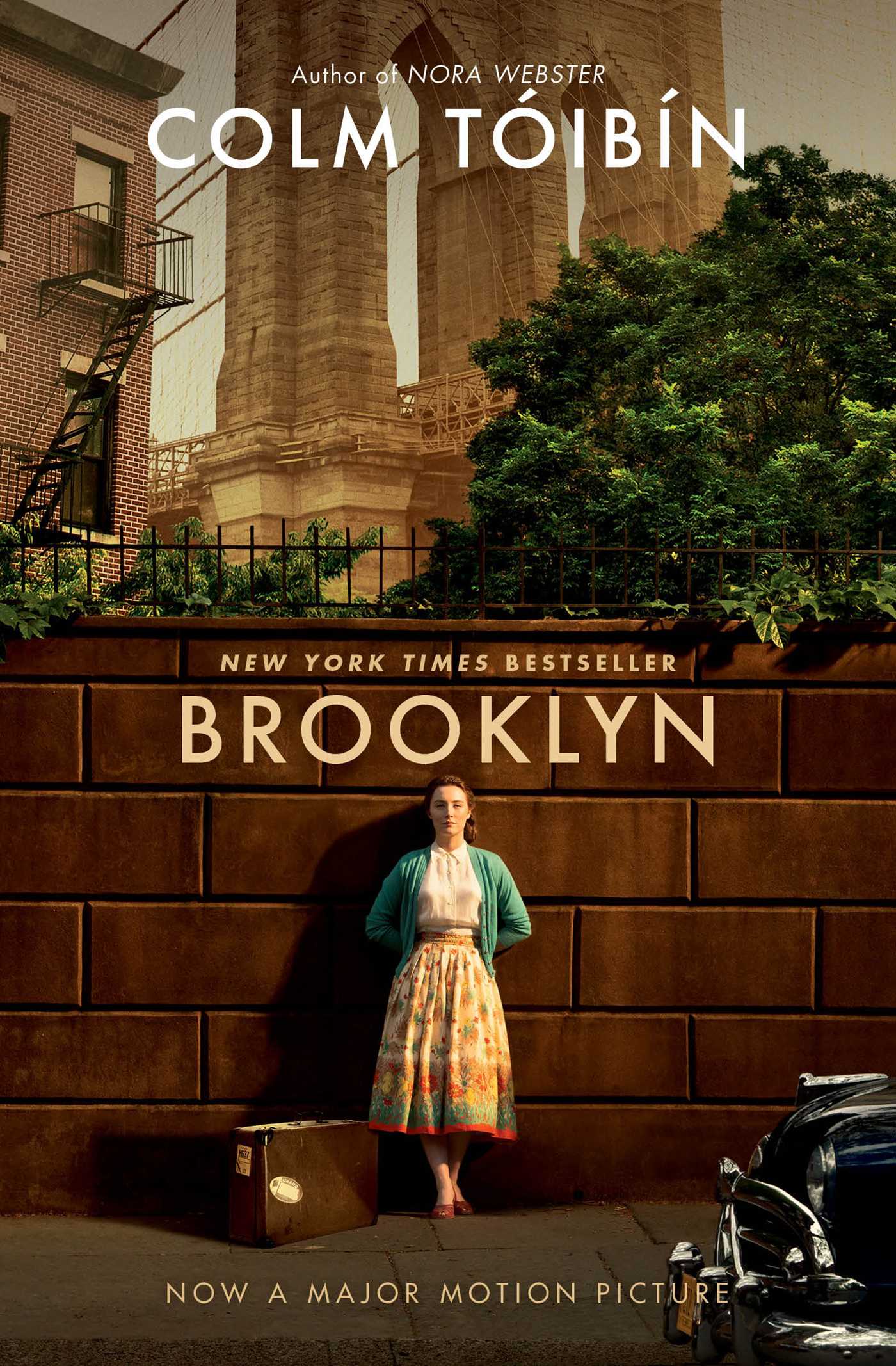
colmbrooklynMy fabulous book club kicked off 2016 by discussing Colm Tóibín‘s award winning novel Brooklyn. After our Christmas hiatus, we all enjoy getting back together for some yummy food, wine and great conversation.

Tóibín‘s novel, the story of Eilis Lacey’s coming-of-age in 1950’s Ireland and Brooklyn, NY, was a lovely way to start our new reading year, even if we didn’t all agree about the book’s merits.

Eilis is (I think – it’s never explicitly stated) a young woman in her early twenties who lives with her widowed mother and thirty-year-old sister, Rose. Rose is glamorous and independent. Times are tough in Eilis’s little town and so when an old friend of the family, Father Flood, arrives home for a visit from America and suggests he could help Eilis find work there, and perhaps further opportunities to improve her life, it’s decided that she make the journey across the Atlantic to settle in Brooklyn. Eilis’s story is actually quite common for the time period; however, one has to venture a little further back to fully understand the Irish immigration to America.

At Time.com, “Irish-American historian and novelist Peter Quinn explains, “The country wasn’t in the Second World War, it had been kind of cut off from the rest of the world, and it wasn’t part of the Marshall Plan. So it was still a very rural country.” The economy was at a standstill, while the U.S. was booming. Some 50,000 immigrants left Ireland for America in the ’50s, about a quarter of them settling in New York.

Women played an important role in that immigration process. Quinn explains “during the 19th century, the wave of Irish was “the only immigration where there were a majority of women.” And, thanks to a culture that supported nuns and teachers, those women were often able to delay marriage and look for jobs. By the mid 20th century, many Irish women—who also benefited from the ability to speak English—were working in supermarkets, utility companies, restaurants and, like Eilis, department stores. The fact that Eilis finds her job through her priest is also typical. “[The Catholic Church] was an employment agency. It was the great transatlantic organization,” Quinn says. “If you came from Ireland, everything seemed different, but the church didn’t. It was a comfort that way, and it was a connection.””

So here is Eilis, alone in the big city. Whether you like her or not (I’m sort of in the “indifferent” camp), Eilis’s story is certainly compelling. She begins a job at Bartocci’s, a department story run by Italians. Her goal is to make her way through the ranks and end up, hopefully, as a bookkeeper in the office, rather than a shop girl. Father Flood arranges for her to take a bookkeeping course at Brooklyn College. She’s a diligent and conscientious worker.

She lives in a boarding house run by an Irish lady called Mrs. Kehoe. She shares living space with a variety of other young women, some Irish, some American. We learn very little about any of them; Eilis tends to keep to herself.

And there you have it – Eilis in Brooklyn. Oh…then she meets Tony.

Eilis slowly became aware of a young man looking at her. He was smiling warmly, amused at her efforts to learn the dance steps. He was not much taller than she was, but looked strong, with blonde hair and clear blue eyes. He seemed to think there was something funny happening as he swayed to the music.

It’s almost impossible not to like Tony and his family. He courts her and they fall in love, but then personal tragedy strikes and Eilis has to return to Ireland.

Brooklyn does have something to say about the choices we make in life and why we make them – sometimes, it seems, we aren’t really sure; we’re just swept along by the tide. Some readers might be put off with the way ideas/characters/themes are introduced and then dropped without resolution. While it’s true that life often happens in this manner, I might have enjoyed just a teensy more follow-through.

Tóibín‘s prose is straight-forward, unembellished and allows his reader to fill in the gaps. Many readers will likely take issue with the novel’s conclusion, but I liked it – even if I didn’t particularly like Eilis.


Amazing Grace – Lesley Crewe

Holy ol’ Jesus, Amazing Grace is awful. So awful that if it hadn’t been chosen for book club, I would have abandoned it right around the time that Amazing Grace Willingdon, 60, flies off to New York City from her trailer in Baddeck, Namazingova Scotia, to help her estranged millionaire son, Jonathan, rescue her teenage granddaughter, Melissa, from making bad decisions. You know, the kind that you make because you are sixteen.
We are to understand that Grace is a firecracker because she doesn’t suffer fools easily,  the church women give her indigestion and she yells “asshole” at drivers who speed past her. It’s not her fault that she’s curmudgeonly; Grace has had a hard life including a duel with cancer (which she won), a sham marriage and a childhood as a member of a religious cult where she and her sister (Ave Maria – not a joke) and their mother, Trixie,  were repeatedly raped by the cult leader. I wish I could say that these are the only difficulties that Grace endures, but amazingly (see what I did there) they are not.

That’s at least part of the problem with Amazing Grace. When I tried to explain the story to my son, Connor, I found that I could not adequately convey the number of ridiculous things that happened to this character or the number of times she was saved by her inheritance or her son’s private jet or just old-fashioned serendipity. But the bigger problem in Nova Scotian writer Lesley Crewe’s book is the writing itself.  It’s just…bad.

I point my finger in his face. “You are going straight to hell, Ed Wheeler. You have the devil inside you and we all know what happens to evil people. They burn forever. The very thought of it makes me giddy. You tried to destroy me, but you didn’t. You tried to possess me but you couldn’t. I am the powerful one now. The tables have turned, you creep. You have no one. You are a big nobody. You will never cross my mind again, because I win, you bastard. I win.

I live in New Brunswick – right next door to Nova Scotia – so this landscape and these people should at least be familiar to me. On top of that, I am just a few years shy of Grace’s age; she’s my contemporary. But she’s not even remotely believable to me. I have never once overslept and yelled “Holy macaroni.” I can’t imagine being a grandmother and chasing my granddaughter down the hall, grabbing her from behind and then hauling her “squirming and yelling” back to the kitchen to apologize for a snotty comment because words are “the most powerful force of all.” It’s all so melodramatic and over-the-top.

Ultimately, this is a book about family – our biological family and the family we choose. But the book is so overstuffed and the writing so pedestrian that I just couldn’t have cared any less for these people.


Hausfrau – Jill Alexander Essbaum

hausfrauPoor Anna. Her life sucks. She’s the protagonist in Jill Alexander Essbaum’s novel Hausfrau,  an American living in Dietlikon, a suburb of Zurich, with Bruno, her Swiss banker husband and her children: Victor, 8, Charles, 6, and baby Polly. She doesn’t work. She’s barely even learned to speak the language despite having lived in Switzerland for almost a decade. Her mother-in-law seems wholly unimpressed with her– and no wonder: Anna disappears for hours, taking language classes and having sex with random men.

It’s hard to really like Anna very much. She’s not the effusive American one might expect. Instead of joining the other mothers when she meets her sons at school she “scuffed the  sole of a brown clog  against the sidewalk’s curb…fiddled with her hair and pretended to watch an invisible bird flying overheard.”  She claims she is “shy and cannot talk to strangers.”  That may be true, but she speaks the universal language just fine.

Yep – Anna is a serial cheater. The reader meets Archie Sutherland first, an expat Scotsman.

Archie and Anna shared a plate of cheese, some greengage plums, a bottle of mineral water. Then they set everything aside and fucked again. Archie came in her mouth. It tasted like school paste, starchy and thick. This is a good thing I am doing, Anna said inside of herself, though “good” was hardly the right word. Anna knew this. What she meant was expedient. What she meant was convenient. What she meant was wrong in nearly every way but justifiable as it makes me feel better, and for so very long I have felt so very, very bad.

Oh, well, that’s all right then. You just go ahead and fuck whomever you please without any regard for anyone else but yourself because, clearly, life is rough for you. Oh please.

I am not a prude. I think everyone deserves a chance to be happy. The problem with Hausfrau is that I didn’t care one bit about Anna and by the time Essbaum actually gave me a reason to care about her it was too late. Anna is a hot mess and for no good reason that I can see.  She’s whiney and self-centered and in one instance, treats her adored younger son, Charles, so deplorably that there was just no way for me to like her after that.

Okay — maybe I am being too harsh. I mean, it’s tough to be a modern woman. Like, she’s got three kids and she lives in a foreign country and her husband is a stoic workaholic. Oh, wait, she comes and goes as she pleases. She doesn’t have to worry about money. She recognizes that her affairs are a product of her “longing for diversion…and from boredom particular habits were born.” No Netflix in Switzerland, eh? How about knitting or a good book, Anna?

Not even her psychoanalyst, Doktor Messerli, is able to offer any real useful advice. Instead, she imparts pithy gems like “Shame lies. Shame a woman and she will believe she is fundamentally wrong, organically delinquent.” And when it is clear Anna is desperate, the good doctor tells her to stop ringing her bell and leave immediately. Okay, then.

Critics loved this book. I did not.

Orphan Train – Christina Baker Kline

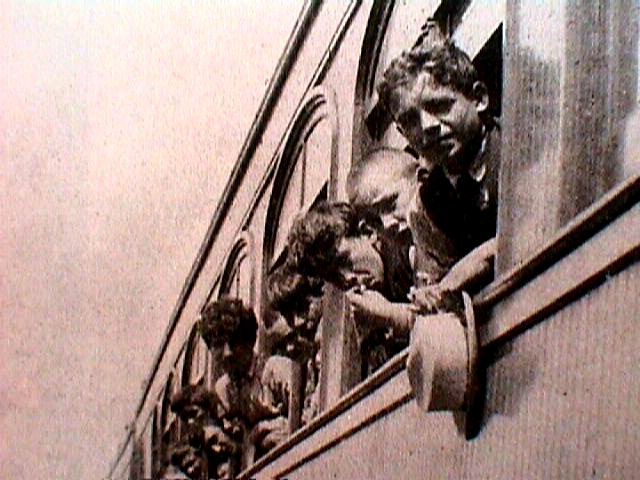
orphan2I was unaware of the history which inspired Christina Kline Baker’s novel Orphan Train. According to the notes found at the back of the book “between 1854 and 1929, so-called orphan trains transported more than two hundred thousand orphaned, abandoned, and homeless children – many of whom, like the character in this book, were first-generation Irish Catholic immigrants – from the coastal cities of the eastern United States to the Midwest for “adoption,” which often turned out to be indentured servitude.”

In a nutshell, Orphan Train is the story of one such girl.

But it is also the story of another girl, someone who is also without a home and has spent much of her childhood bouncing between foster homes. The lives of these two people (one just seventeen, the other ninety-one) intersect, but that is actually the least interesting part of this novel.

Niamh Power is a little girl when her parents decide to leave their impoverished lives in Western Ireland and make the arduous journey across the Atlantic to America.

People all around us were fleeing to America: we heard tales of oranges the size of baking potatoes; fields of grain waving under sunny skies; clean, dry timber houses with indoor plumbing and electricity. Jobs as plentiful as the fruit on the trees.

Of course, the reality is something quite different and Niamh finds herself living in a four-room apartment with her parents and three younger siblings. The landlord tells them “I have no trouble with the Irish, as long as you stay out of trouble.”  Still, Niahm is hopeful for a new start because her father “had the promise of a new job. We could pull a chain for light; the twist of a knob brought running water…”

Sadly, Niamh’s hopes for the future soon turn to despair and she finds herself alone and on one of the orphan trains bound for childrenontrainthe west. She is only nine when she is taken on a journey to find her a new family.

They call this an orphan train, children, and you are lucky to be on it. You are leaving behind an evil place, full of ignorance, poverty, and vice, for the nobility of country life.

Not so much, really.

Molly is the other character in this book. She works hard at being different in an attempt to push people away, mostly in an effort to protect herself. She had “liked the distance her persona created, the wariness and distrust she saw in the eyes of her peers.” Just lately, though, Molly has found that maintaining her ‘look’ was making her “impatient.”

When she tries to steal a copy of Jane Eyre from the local library, she is assigned community service and it is that sentence which brings her into Niamh’s world. From a prickly beginning, a real bond is formed between the two disparate women – which is both lovely and problematic for the novel.

I read Orphan Train in an afternoon; the pages literally turned themselves. I loved reading Niamh’s story. I knew nothing about these orphan trains and Niamh’s tale was fascinating and heartbreaking. Molly was also likeable. Despite her attempts at pushing people away, she is clearly smart and resilient. C’mon, her favourite book is Jane Eyre! It would be impossible for an avid reader not to like her.

For about two-thirds of the book I was all-in. Then, things started to speed up a little too much. Characters made decisions  that I just didn’t buy and things happened that made me go “oh no you didn’t!” and even though I kept turning the pages I can’t say that I enjoyed the book quite as much at the end as I did at the beginning.

Nevertheless, Orphan Train is an entertaining and well-written novel about a relatively unknown part of American history and many readers would certainly enjoy it.

Beautiful Ruins – Jess Walter

ruinsBeautiful Ruins was our last book club read before our summer hiatus. It was also the winner of ‘Best book’ or, because we don’t want to hurt anyone’s feelings when we vote, ‘book we enjoyed reading most.’ (Thus, ‘worst’ book becomes ‘book we enjoyed reading least.’) It was a close race between Beautiful Ruins and The Children Act, but Walter’s fantastic novel won out in the end.

I think I am going to have a hard time articulating how I feel about this book because it hit a lot of my sweet spots. First of all, part of the novel is set in Italy and anyone who knows me knows that Italy is my dream place. I’ve been twice and often say that some day I will live there…even if it’s just for a few months. The other part of the novel takes place in Hollywood and, okay, I admit it – I love the movie stars. Just ask anyone who was around during the David Boreanaz days…or go further back…the Robby Benson days. Ask my students how often I work Ryan Gosling into the conversation.

Beautiful Ruins follows the fortunes of Pasquale Tursi in Porto Vergogna, a tiny village near the Cinque Terre region of Italy only “it was smaller, more remote and not as picturesque.”

Port Vergogna was a tight cluster of a dozen old whitewashed houses, an abandoned chapel, and the town’s only commercial interest – the tiny hotel and café owned by Pasquale’s family – all huddled like a herd of a sleeping goats in a crease in the sheer cliffs.

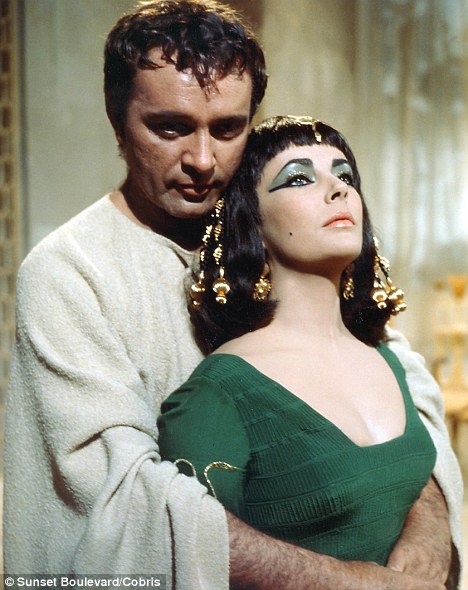
Pasquale has come back to Porto Vergogna to care for his dying mother and the Hotel Adequate View, and it is there he meets actress Dee Moray, who has come, by mistake, to the Adequate View to rest. She is in Italy to make Cleopatra, the notoriously bad film starring Richard Burton and Elizabeth Taylor.

richard and elizabeth

The title’s phony – her job’s all assisting, no developing, and she’s nobody’s chief. She tends Michael’s whims. Answers his calls and e-mails, goes for his sandwiches and coffee.

It is not the life she dreamed of when she gave up her doctoral film studies program to make movies. Now she is on the cusp of leaving her job and going to work as a curator for a private film museum.

If you’re wondering how Walter is going to dovetail these two eras, all I can say is “masterfully.” We flip back to 1960’s Italy and recent-day Hollywood and neither story (or character) gets short-shrift. In fact Claire and Pasquale aren’t the only characters who populate this story – even minor characters are fully realized including Pasquale’s elderly aunt Valeria (who provides comic relief), Shane (a screenwriter who comes to Hollywood to pitch the story of cowboy cannibals), Alvis (the failed American writer who comes to Porto Vergogna once a year to work on his novel) and even Daryl, Claire’s hunky porn-addicted boyfriend. Even Michael Deane, slimy as he is, is fun to spend time with.

And what are these Beautiful Ruins? Well, I think that’s probably the reason everyone and their dog was praising this book when it came out in 2012. This is a great story – funny and heartbreaking in equal measure – about big ideas. The people that you meet and the choices that you make are at the very center of this book. But as Alvis says to Dee, “No one gets to tell you what your life means.”

I loved this book so much.

Highly recommended.

Bird Box – Josh Malerman

birdboxIt seemed like everyone was talking about Josh Malerman’s debut novel, Bird Box, but it was still a surprise when it was chosen as our April read for book club. In the 15 years we’ve been together we’ve never read anything even resembling a horror story. I was really looking forward to this one because I love a scary book.

Malorie lives alone in a house in a Detroit suburb with two children she calls Boy and Girl. The house used to be nice but now she notices the “rusted utensils and cracked dishes. The cardboard box used as a garbage can. The chairs, some held together by twine.” Clearly, it’s not situation normal and Malorie’s musings allude to “older stains,”  for which there are “no chemicals in the house to help clean.”

Malerman doesn’t waste any time with preamble. That’s probably a good thing because Bird Box relies on a heavy dose of the unknown to make it tick. Something has happened to the world. The “Internet has blown up with a story people are calling ‘the Russia Report.'” People are behaving monstrously, attacking strangers and family members in gruesome ways (a mother buries her children alive) before ending their own lives. It’s a “the whole world’s going crazy” scenario, but it spreads from Russia to North America (and who knows where else) like wildfire. The only way to prevent doing harm to others and yourself is to prevent yourself from seeing whatever is out there. People hole up in their houses, windows covered, and if they must venture outside, they wear a blindfold.

Bird Box bounces between Malorie’s perilous journey down the river in a boat (she’s heard that there is a safe community and after four years alone, she longs for something more for herself and her children who she laments “have never seen the sky. Have never looked out a window.” ) and her time in the house with a group of strangers she discovered through an advertisement in the paper.

I can’t say I was fussy about the beginning or the ending of Bird Box, but I was seriously creeped out in the middle. There’s a scene when members of the house have to go out into the backyard to get water from the well. They have to be blindfolded, of course, and a rope is tied around their waist. The person whose job it is to go to the well must make the journey three times. On this occasion, it’s Felix’s turn. On the third and final trip from the house to the well he hears a sound.

But now he can tell where it is coming from.

It is coming from inside the well.

He releases the crank and steps back. The bucket falls, crashing against the stone, before splashing below.

Something moved. Something moved in the water.

It’s moments like these when Bird Box is at its best. Like Malerman’s characters, we are blind and we realize that the scariest thing in the world is what we can’t see.


The Gargoyle – Andrew Davidson

gargoyleI bought my copy of Andrew Davidson’s book, The Gargoyle when it was first published in 2008. I was working at Indigo at the time and this book had a lot of buzz. It actually sounded like a book I would be interested in, too – the story of lovers separated by hundreds of years. I started reading and about fifty pages in I just put the book down and never picked it up again…until last month when it was chosen for my book club.

We’ve all had the experience, I’m sure. A book doesn’t appeal to you, but a few weeks/months/years later you dive in again only to be swept away. Yeah, not so much. The impetus for finishing this book was definitely because it was a book club selection and as I said when we met a few nights ago, I can’t really decide what it was about the book that just didn’t work for me, but the sum of its parts just didn’t add up somehow.

The unnamed narrator is driving on a twisty mountain road, a bottle of bourbon wedged between his legs, when he loses control of the car, smashes through a guard rail and the car lands on its roof at the bottom of a steep embankment.

“A car crash seems to take forever, and there is always a moment in which you believe that you can correct the error,” our narrator thinks as he flies, weightless, through the air. He does survive, but he and his life are changed forever.

Our narrator is burned so badly that he “plumped up like a freshly roasted wiener, [his] skin crackling to accommodate the expanding meat.”  What follows is a graphic description of his burn injuries, perhaps too much information for the squeamish. I read a lot of horror/serial killer fiction, but even I found the catalogue of his injuries TMI at times. There’s a reason why he’s burned, though, and I get that.

Prior to his injury our narrator was a porn star. Yep – you read that right. By the time he graduated from high school, he had two skills: smoking drugs  and screwing his counselor. He didn’t figure he could make any money smoking dope, but he discovered he could earn some cash posing naked and “from there it was a short jump to $150 for photos involving sexual activity and – since you’re already for posing for stills, anyway- it makes a lot of sense to double or triple your income by acting in videos.”  Is this guy a likable character? Not particularly.

While recovering in the hospital, our narrator is visited by Marianne Engel who tells him that this is the third time he’s been burned. Thus begins their strange relationship. She visits him the hospital and tells him stories of lovers who have made great sacrifices for each other while also revealing to him, bit by bit,  how they first met – seven hundred years ago when she was a nun and he was a mercenary.

There’s a lot going on in Davidson’s book – perhaps too much. Whether you believe in Marianne’s tale or not, the book is overstuffed and could do with, I think, some judicious editing. I am all about  love that crosses time and space, but I just didn’t believe it here.