The Comfort of Monsters – Willa C. Richards

Hot on the heels of my last novel about sisters, False Witness, comes another book about sisters: The Comfort of Monsters by Willa C. Richards.
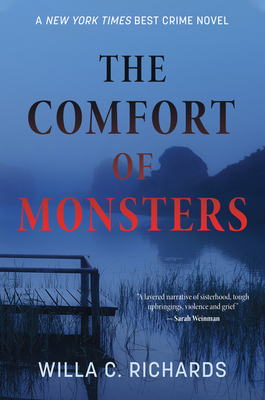
In this story, Peg McBride recalls the summer of 1991 when her younger sister, Dee, disappears. Dee’s disappearance barely causes a ripple in the crime landscape because she goes missing in Milwaukee in 1991, the same time as Jeffrey Dahmer was arrested.

Peg narrates the story of her relationship with her sister as children and young adults up until Dee’s disappearance, and then thirty years in the future when her ailing mother hires an internet-famous psychic in a last-ditch effort to find out what happened to Dee. It’s this development that causes Peg to reminisce about her sister, although I think Dee has informed every single decision Peg has made over the past 30 years.

Peg has always been convinced that Dee’s much older boyfriend, Frank, was responsible for Dee’s disappearance. She hadn’t liked him pretty much on sight.

Frank hugged me when we met. I didn’t like the feeling of his body against mine. I kept my arms awkwardly by my sides. When he pulled away, I felt like he was looking through my clothes. Some men seem to be able to do that–to make you feel totally naked.

After Dee’s disappearance, Frank vanishes into the ether and the case languishes. But despite being billed as a crime novel, the mystery of what happens to Dee isn’t really what this book is about. Sure, it informs Peg’s character (which isn’t particularly likable), but readers looking for a fast-paced mystery are not going to find that in The Comfort of Monsters.

Instead, the novel is a slow-moving, meandering character study of family dynamics, romantic entanglements, our fascination with true crime, race and memory.

Memory, of course, is also a story. It feels like the truth, especially when there is no one to dispute your recollection of events. But it is a story nonetheless–some moments have been elided, and others have been emphasized and made either luminous or horrific or both. […] And because now, more than ever, my sister’s case depends on these memories, I am terrified that crucial pieces of evidence have been lost along the way.

I liked it, but didn’t love it.
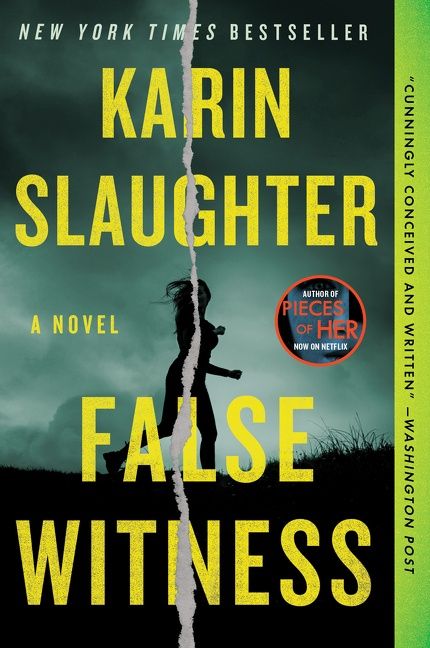
False Witness – Karin Slaughter

I know that American crime writer Karin Slaughter has legions of rabid fans, but I don’t think that I am one of them. I mean, maybe I am throwing in the towel too early because I have only read one other book, Pretty Girls, besides this one. Like that one, this is a propulsive read about estranged sisters, and horrible crimes against women.

Leigh Collier is a lawyer working her way up the food chain. Her younger sister, Callie, is a hard core drug addict living mostly on the streets. Their lives rarely intersect until Leigh is assigned a new case that sends her hurtling back to her teen years.

Andrew Tenant has been accused of brutally raping a woman and leaving her handcuffed to a table in a park. He’s fired his lawyer and hired Leigh. Turns out, he’s not a stranger.

She would never forget him. Trevor Waleski had been a sweet kid. A little awkward. A lot clingy. The last time Leigh had seen him, he was drugged into oblivion. She had watched her sister gently kiss the top of his head.

Trevor aka Andrew hired Leigh because he knows something devastating about Leigh and her sister and he won’t stop until he gets exactly what he wants. The book spends 600+ pages with the sisters as they try to outmaneuver Andrew who, as it turns out, is pretty dang smart. And also a psychopath.

The book has all the requisite twists and turns. Callie was my favourite sister and her relationship with Dr. Jerry, the memory-impaired veterinarian for whom she sometimes works (and steals drugs from) is my favourite relationship in the book. Leigh’s husband, Walter, is also a great guy. He is kind to Callie and supportive of Leigh even though they are currently separated.

The book takes place during the height of Covid – so there’s social distancing and masks. Not sure it adds anything in particular to the story, but Slaughter herself said “Covid has exposed the ever-widening chasm between the haves and have-nots, spotlighted the housing crisis and food insecurity, focused attention on the lack of proper funding for schools, hospitals, and elder care, exposed a bankruptcy of trust in our government institutions, exacerbated the horrendous treatment of inmates in our jails and prisons, exponentially worsened xenophobic, misogynistic, and racist hate speech, heightened racial inequalities, and as usual, has grossly overburdened the lives of women; all topics I have attempted to touch on within the pages of [this] book”.

None of the Covid stuff did any of that for me, really, but perhaps other people will find that it added another layer to the story. I don’t know that I would have kept reading except that I wanted to find out how Callie and Leigh were going to get out of the bind they were in. Was the ending satisfying? Believable? Not sure. Lots of people will love this book, but I think my journey with Slaughter ends here.

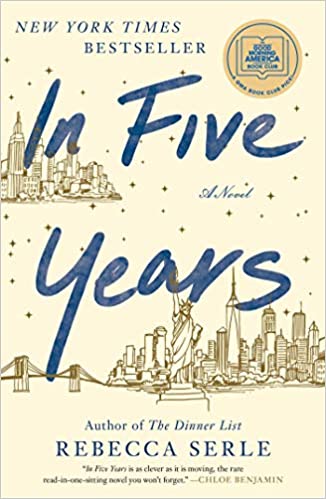
In Five Years – Rebecca Serle

I don’t think that I got the book I thought I was going to be getting with Rebecca Serle’s novel In Five Years. That’s not the fault of the book.

Dannie Kohan is living her best life as a lawyer in NYC. She has a fabulous apartment, a fabulous boyfriend and a bestie, Bella, who completes the fabulous circle of her life. One morning, after David proposes, she wakes up in a bed that is not hers with a man who is not David. It would seem five years have passed, but Dannie doesn’t remember any of it. When she wakes up, her world seems to have righted itself again.

Then, Bella introduces Dannie to her boyfriend, and it’s the hunky dude from Dannie’s dream. What does it all mean?

It would be a mistake to think that In Five Years is a romance in the traditional sense, and honestly, that’s what I thought I was going to get. Nevertheless, it is a love story.

Bella and I have been best friends since we were seven years old. Me, Nice Jewish Girl from the Main Line of Philadelphia. Her, French-Italian Princess whose parents threw her a thirteenth party big enough to stop any bat mitzvah in its tracks. Bella is spoiled, mercurial, and more than a little bit magical. It’s not just me. Everywhere she goes people fall at her feet. She is the easiest to love, and gives love freely. But she’s fragile, too. A membrane of skin stretches so thinly over her emotions it’s always threatening to burst.

So, these two women love each other and anyone who has a bestie will certainly relate to their friendship. But like any love story, it’s not all smooth sailing. I wish I could say it was as simple as Dannie’s dream and then meeting her dream guy in the flesh. But Serle goes a different route and your appetite for the story she tells will depend on whether or not you have a tolerance for …well, no spoilers.

I liked One Italian Summer better.

Carmilla – Sheridan Le Fanu

According to Encyclopedia Britannica, “Jure Grando Alilović or Giure Grando (1578–1656) was a villager from the region of Istria (in modern-day Croatia) who may have been the first real person described as a vampire in historical records.” John Polidori’s 1918 short story The Vampyre is the first modern literature to feature the bloodsucking creature of the night, Lord Ruthven, who was famously inspired by Polidori’s employer, Lord Byron.

Sheridan Le Fanu’s 1872 novella Carmilla predates Bram Stoker’s far more famous Dracula by 25 years. Le Fanu was a well-known writer of horror and mystery fiction during the Victorian period, and the author of fourteen novels and many short stories. And yet, he’s not nearly so well known as Bram Stoker, who is often credited with creating the archetypical vampiric character. (I don’t mean to say that Le Fanu is not well known, but I read Dracula as a teenager and I only heard of Carmilla a decade or so ago.)

Carmilla is the first person account of Laura who lives with her widowed father in Styria, Austria. The pair and their servants live in an isolated schloss (castle), the nearest village seven miles away. Laura is telling the story of what happened to her when she was nineteen from a point eight years in the future.

I am now going to tell you something so strange that it will require all your faith in my veracity to believe my story. It is not only true, nevertheless, but truth of which I have been an eyewitness.

A chance carriage accident brings a young lady, Carmilla, to the schloss. Her mother must attend to urgent business, but Carmilla must rest after this accident, and Laura’s father graciously agrees to welcome her into his home. After all, Laura could use a companion. Soon, though, Laura begins to feel unwell.

I felt myself a changed girl. A strange melancholy was stealing over me, a melancholy that I would not have interrupted. Dim thoughts of death began to open, and an idea that I was sinking took gentle, and, somehow, not unwelcome possession of me.

Of course, modern readers will know immediately what’s happening. Carmilla is SPOILER ALERT the undead. And, of course, the supernatural shenanigans in Le Fanu’s novel will seem pretty tame by modern standards, but I can only imagine that Victorian audiences would have been shaking in their boots to read of some of the images that plagued poor Laura.

For a vampire literature completist, Carmilla is a must read.

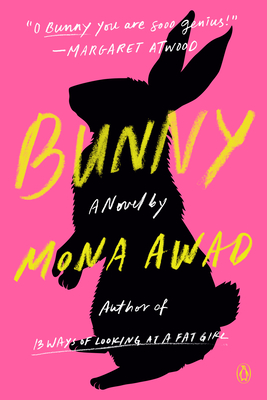
Bunny – Mona Awad

For a while, Bunny was everywhere and so I bought it and shelved it and, finally, I’ve read it. Canadian writer Mona Awad’s story of academia, writing, and mental health (??) is a masterclass of a fever dream and more than once I was scratching my head and asking myself just what in the heck is going on. When I turned the last page, I still can’t say for sure what I read.

Samantha Mackey is in the graduate writing program at an elite New England college, Warren University. In her writing class of five, she is the outlier; the other four women in the class, The Duchess, Cupcake, Creepy Doll, and Vignette, are an insular group who affectionately call each other Bunny. Their affectation drives Samantha crazy and she and her bestie, Ava, spend most of their time mocking the other women.

How fiercely they gripped each other’s pink-and-white bodies. forming a hot little circle of such rib-crushing love and understanding it took my break away.

[…]

I quietly prayed for the hug implosion all last year. That their ardent squeezing might cause the flesh to ooze from the sleeves, neckholes and A-line hems of their cupcake dresses like so much inane frosting.

But then, one day, Samantha gets invited to Smut Salon, a gathering of the bunnies where they share their “Absolute Truth” and drink a “bile-green concoction in which what looks like a small black turd floats.” Suddenly Samantha finds herself one of the members of this strange sisterhood and losing, it seems, her grip on reality.

This is a crazy novel, honestly, but I gobbled it up in a couple sittings without complaint. I think much of what happens is deliberately ambiguous. Is Samantha going crazy? Are the student bunnies really turning actual bunnies into subservient men (although men without penises and who have to wear gloves because their hands are deformed)? Is the whole thing a metaphor for the creative process? Why can’t Samantha write anything? Why does Ava disappear? Who is Max? So many questions and although none of them are answered in a specific way, I think I am satisfied with my own interpretation of the the book. Which I am not going to share here because you’ll want your own.

Definitely worth a read.

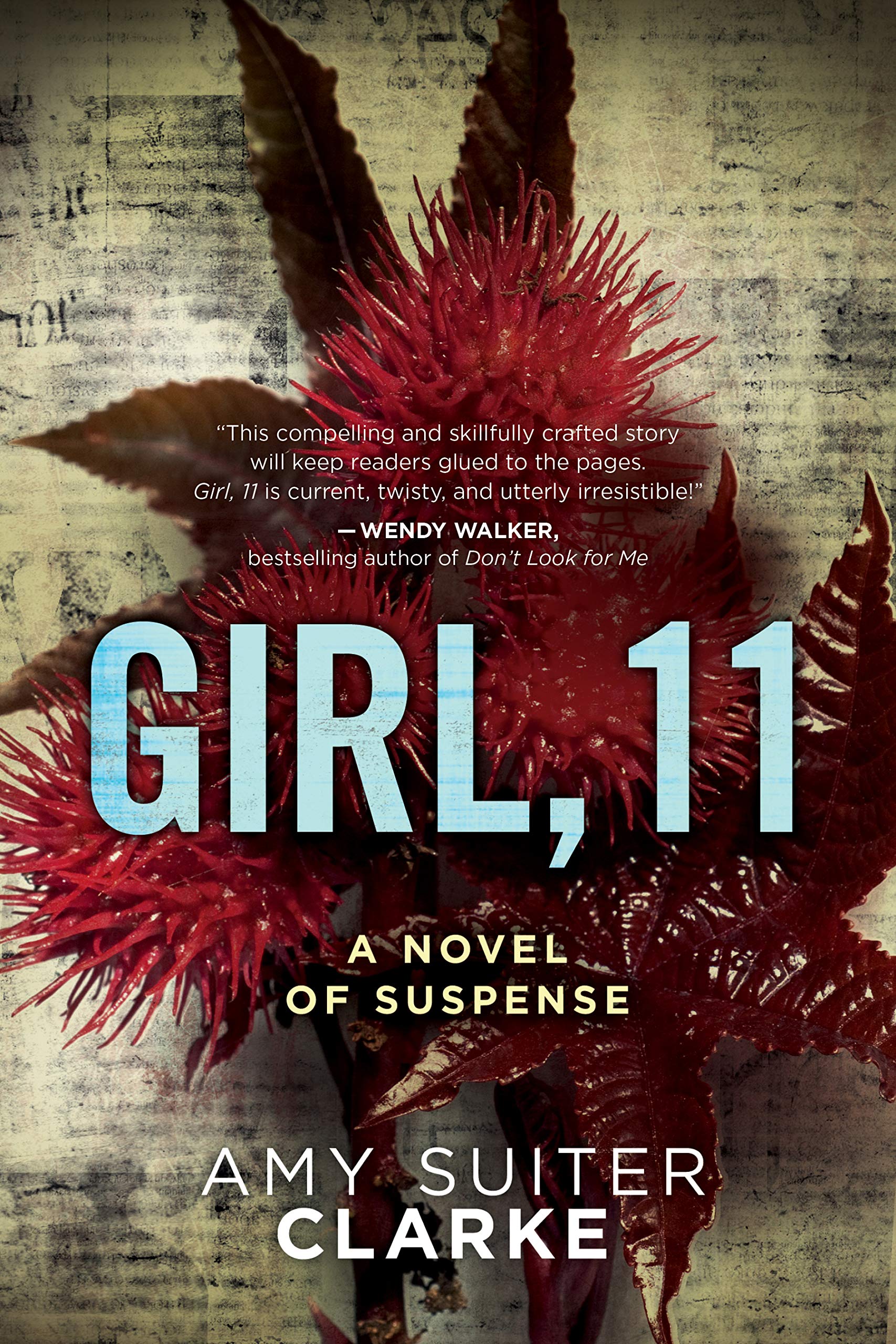
Girl, 11 – Amy Suiter Clarke

The notion of using a podcast transcript as a structural element in a novel has been around for almost a decade. Kathleen Barber’s 2017 novel Are You Sleeping is widely considered the first book to include a podcast and it must have seemed like a cool gimmick at the time. Loads of novels have done it since. Sadie, None of This is True, and Listen for the Lie are a few of the titles I have read that use this formula.

Amy Suiter Clarke’s novel Girl, 11 follows Elle Castillo, whose podcast Justice Delayed tackles unsolved cold cases. Formerly a social worker, Elle brings a strong stomach and a desire to help victims not glorify perpetrators to her work, and she’s had some successes. But now she is trying to solve the case of The Countdown Killer (TCK).

This case has involved several murders with a distinct signature. Girls, in descending order of age, are kidnapped, held for seven days, poisoned, whipped and then deposited someplace where they are easily found. There is definitely a rigid pattern to the crimes.

According to John Douglas, the former FBI special agent who made his name interviewing and analyzing serial killers, there is a difference between the modus operandi–the way a crime is committed–and the signature. The signature is what the killer does to achieve fulfillment. The way they kill might change over time, and it won’t necessarily impact the killer’s satisfaction. But every killer has a signature, something they have to do, or the kill won’t give them the release they’re after. Based on what we know, the numbers are his signature. The three girls, three days apart; the seven days of captivity; the twenty-one lashes.

The numbers mattered more than anything else. And that tells us something.

Elle is like a dog with a bone and she has earned some street cred with the police, so when another girl goes missing after a long period of dormancy, Elle is brought in to consult. The cops don’t think this can possibly be TCK, but when Elle suffers a very personal loss, it begins to look like he’s back.

The New York Times Book Review called Girl, 11 “propulsive” and, I dunno, it wasn’t propulsive for me. It was long and relatively slow and, at times, repetitive. There are multiple perspectives in the novel and some of those perspectives felt like exposition: let me show you why this person behaves this way. Here’s the backstory. I never really love that.

But, overall, this is a well-written novel and if you haven’t had a lot of experience with books like this, you could do a lot worse.

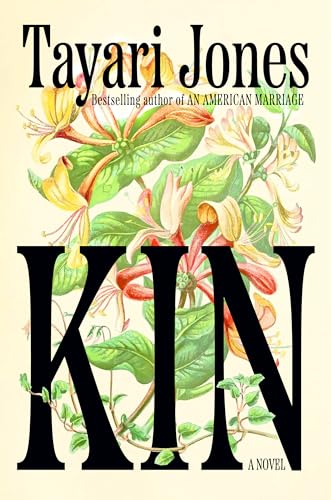
Kin – Tayari Jones

Vernice (Niecy) and Annie are childhood best friends, cradle sisters, growing up in Honeysuckle, Louisiana. Neither has a mother: Annie’s ran off when she was just a baby, left to be raised by her grandmother and Niecy’s mother was shot and killed by her father, who then killed himself. She was raised by her mother’s sister, Irene. Tayari Jones’s novel, Kin, traces the fortunes of these girls over many years in alternating voices.

Each girl has a complicated relationship with their absent mother. Niecy says

While I was tended to, I was never mothered. Many people suffered far more, even people raised at the knees of their actual mothers. Still, the hole in my spirit made me into the girls I was and then the woman that I am.

Annie’s grandmother tells her “”I can’t say what’s a harder cross to bear. Me having Hattie Lee for a daughter or you trying to be her daughter. She was my youngest. Number six. And how she did me when she was being born, she made sure no other baby could come behind her. She’s been like that all her life, salting the fields on her way out.”

The novel follows the girls as they grow up. Then, one day, Annie runs off with Clyde, Bobo and Babydoll. She heads to Memphis where, last she heard, her mother resided. Niecy is heartsick when she loses her best friend, but she is headed for college in Atlanta. Life has different things planned for the girls. Despite the road each girl travels, they are each other’s chosen family, their ‘person’. But the book gives them very separate stories and for much of the novel, those lives are lived apart. I found each girl interesting and their journeys were also interesting, but I wasn’t as invested in either of them as I thought I might be. I couldn’t tell you why.

On the plus side – I enjoyed the writing a lot. The book gave me lots to think about. As a middle aged white woman (it’s probably a stretch to characterize myself as ‘middle aged’, I know!) who grew up in Canada, I know next to nothing about the experiences of Black women in the south in the 1950s. There were some funny moments and some tender moments, too.

The story moves along, but in some cases I think I felt a little short changed. For example, Niecy’s relationship with Joette felt superficial because we didn’t really see how it developed. The ending, purported to be devastating, left me feeling …well, not very much, really. Did I enjoy my read? Sure. It was an easy book to sink into. Would I recommend it? Sure – lots of people would love it. Did I love it? Not really.

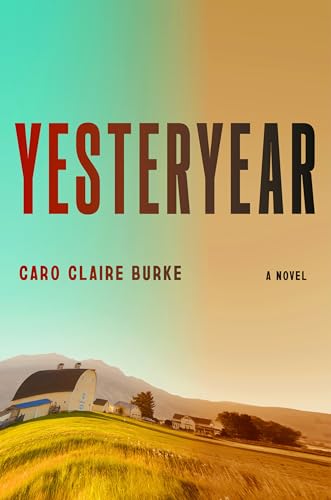
Yesteryear – Caro Claire Burke

It’s been a couple of weeks since I finished Caro Claire Burke’s debut novel, Yesteryear, but life has been very busy as it always is at the end of the school year. Exams are over now, though, and all the marking is done so once prom and grad are over and done with, it’s just a coast to the end of the year and a whole summer of reading on my deck.

I probably needed some time to sit with Yesteryear anyway. A couple of the young teachers that I work with were both raving about it, couldn’t put it down, and so I moved it up the tbr pile. My feelings are more ambivalent than theirs.

Natalie Heller Mills lives in a beautiful restored farmhouse “nestled in the rolling divots between two mountain ranges in Idaho.”

She and her husband, Caleb, are parents to five children and Natalie is pregnant with baby number six. They are living the American Dream. But it’s a curated dream because Natalie is a social media influencer. Her stock and trade is selling her lifestyle to over a million followers. That’s a lifestyle that takes a lot of work.

Through the camera’s discerning eye, the cooking space was perfectly cluttered: a half-filled mason jar of water here, a flour spill there, a few forgotten flower stems strewn across a worn-looking cutting board. It looked like a space where a mother worked; like a kitchen in the real world, only obviously better than anything the real world had to offer.

It takes a lot of effort to sell the dream Natalie is selling. She needs help to do, but she never shows the help because Natalie “wouldn’t be able to forgive [herself] if [her] social media account ended up compromising them in any way.”

Yesteryear is very timely in that it captures the current juggernaut that is tradwives. Natalie is a devout Christian (but is she?) who bakes sourdough bread, homeschools her children and eschews the modern world in favour of the world she has created. She is definitely the brains behind the operation – as readers will come to understand when they read about her upbringing, her time away at college and her decision to marry Caleb, “the youngest of five boys, the runt of the litter in an American dynasty.”

But then one morning Natalie wakes up in an unfamiliar room under an unfamiliar blanket. When she makes her way to the kitchen she discovers her family, her children but not her children “all wearing raggedy-looking clothes that remind [her] of a pioneer reenactment.” Her husband’s “eyes are not [her] husband’s eyes. This man’s eyes are black and cold and dead.” What in the actual heck is going on? Is she on some weird reality television show?Is she actually expected to live the life she sells online?

When I think about trad wives, I think about Nara Smith.

Back when I used to have Instagram I would sometimes watch her videos and laugh – her voice, the ridiculous outfits, making Froot Loops and Fruit Rollups from scratch because her kids wanted to eat them. But, she’s coining it and is clearly not a dumb woman. She has at least four kids and is 25, so she definitely fits the mold. She and her husband, Lucky Blue, are both models and Mormon. I suspect Natalie isn’t quite as glamorous as Nara, but you get the idea.

I find trad wives fascinating and terrifying, but they aren’t a new phenomenon. Remember The Stepford Wives?

Yesteryear has a great premise and it’s a timely novel and it’s well written. Natalie is a character you will love to hate because she is self-involved and fake. But I also felt some sympathy for her, although maybe I wasn’t supposed to. But I didn’t love the book. I found it too long and the reveal was sort of unbelievable for a variety of reasons that would be spoilery to talk about. I think the book does offer some pointed commentary about motherhood, fame, the patriarchy, misogyny, influencer culture and so there’s certainly lots to talk about. It was just okay for me.

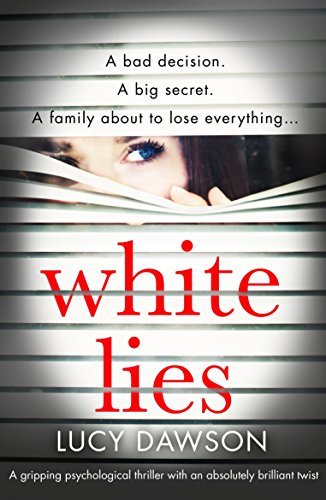
White Lies – Lucy Dawson

Many years ago I read Lucy Dawson’s novel His Other Lover which I remember really enjoying. That’s probably why I picked up White Lies, but I am sorry to report that it didn’t land quite the same.

Alexandra Inglis is a family doctor at a group practice somewhere in England. She is married to Rob and mother to two little girls, Maisie and Tilly. Her life is blissfully happy until, in retaliation for Rob’s indiscretion, she gets blinding drunk while on a girls’ weekend and sleeps with a complete stranger.

He straightened up, and I realized he was tall. I drank in a tight T-shirt, gym-honed arms, beautiful eyes–and didn’t stop staring. He looked confused at my brazenness, but then came a shy smile.

I saw how it was going to go immediately.

What Alex fails to realize in her inebriated state is this hot guy is actually a seventeen-year-old patient and sleeping with him opens up a whole world of complications.

White Lies offers more than one perspective for although Alex insists that she was too drunk to know she was crossing the line because she absolutely 100% did not know who this guy (kid?) was, he has a completely different story.

So, what we end up with is a he said/she said narrative with two wholly unreliable narrators and a a cast of secondary characters who have a vested interest in the truth.

This book was easy enough to read, but truthfully, not actually all that plausible and the ending felt like it belonged in a completely different story.

Mileage will vary.

American Fantasy – Emma Straub

I was in my later 30s before I discovered what fandom was, although in retrospect, I have always been a fan girl. I was the teenager who bought Tigerbeat magazine and spent hours making scrapbooks featuring whatever celebrity I thought was cute at the time: Davy Jones, David Cassidy, Robby Benson, Jan-Michael Vincent, Richard Gere and then David Boreanaz, who introduced me via my deep and abiding love for Buffy the Vampire Slayer to fandom proper by way of message boards and fanfiction and, eventually, LiveJournal, where I happily spent a good decade of my life.

At school, my students know me as the teacher obsessed with Ryan Gosling and over the years they have added to a huge wall of photos and other stuff devoted to the superior Canadian Ryan. (see above)

Emma Straub’s (This Time Tomorrow) latest novel American Fantasy is definitely relatable to me. This is the story of 50-year-old Annie who is on a four day cruise, a trip she was supposed to take with her sister, Katherine, who broke her leg and couldn’t come. This is a special cruise because Boy Talk will be on the ship along with 2000 woman (and a smattering of long-suffering husbands and some gay dudes) known as Talkers, uber fans of Boy Talk who have “sold millions of records. Millions. More records than artists today even imagine selling.”

But that was then; this is now. Now Boy Talk are middle aged men (and their fans are middle aged, too.) Sarah, the assistant tasked with making sure the band is looked after, and that their legions of fans have a fabulous holiday, describes the band to one of her new employees, Tyler:

It’s Shawn and Keith Fiore; they’re brothers. Shawn’s the de facto leader, I’d say, you’ll see what I mean. Intense. Keith is the nicest one. Corey West, who you’ll probably recognize from TV, et cetera. Scotty Sanchez and Terrance Campbell. Scotty is the life of the party, a sweetheart; Terrance is kind of a weirdo.

Annie is relatively ambivalent about the whole cruise, but her sister insisted that she go and life hasn’t been great for her recently. Newly divorced and with her daughter out living her own life, she feels a bit adrift, so why not go and see these boys (men!) who adorned her bedroom walls as a teenager. She never actually expects to have any fun, but soon enough fun is exactly what she is having.

The novel’s perspective shifts between Annie’s, Sarah’s and Keith Fiore’s, who is feeling increasingly isolated and out of sorts. His own marriage is on the rocks and, frankly, life hasn’t been that great. He does, though, understand which side his bread is buttered on. The women on this cruise were “crammed together like fish in a tin, and they were paying to do it. They were paying for Keith’s entire life.”

For four days, the Talkers, Annie included, drift through a variety of photo ops and mini concerts all designed to give the fans an up-close (but not too close) and personal (but not too personal) experience with the band. The lives of these three main characters and a whole list of secondary characters twine together in unexpected ways.

In many ways, this novel made me feel seen. In the early 90s, while I was living in England, I got the opportunity to see David Cassidy in Blood Brothers in the West End. I wrote about meeting him at the stage door in my review of the novel I Think I Love You.

My time in the Buffy fandom was so important to me. When I was in my early 40s, David Boreanaz came to New Brunswick and made a film called These Girls. I got to meet him.

I cried for about three solid hours after this picture was taken.

So lots and lots of this book was 100% relatable to me. And so was Annie’s personal journey of rediscovering herself post divorce as she “wondered if being alone was better or worse than being unhappy. Some days, she wasn’t sure.”

American Fantasy didn’t pack the emotional punch for me that This Time Tomorrow did, but I found it interesting, entertaining, occasionally laugh-out-loud funny and definitely made me want to dig out my Robby Benson scrapbooks. Yes, I still have them.