The Silent Girls – Eric Rickstad

silentgirlsI picked up Eric Rickstad’s novel, The Silent Girls, on a whim. Creepy cover. Compelling blurb. Killer opening. But. (Trust me, you’ll get it in a moment.)

So, Frank Rath is a former cop turned private investigator who lives in Canaan, Vermont. He’s a single dad to daughter, Rachel, who is away for her first semester at college. By his own admission, Rath was a womanizing asshole, until his sister and her husband were brutally murdered in their own home. Now he’s a middle aged ex-cop with a bad back and too much time on his hands.

Then local cop, Harland Grout, calls about a missing girl who happens to be the daughter of his wife’s cousin. He wants Rath’s help. Looking into the case, another cop, Sonja Test (yes, all the names are this weird) discovers that there have been several other missing girls in the area over the last few years. Rath starts poking around, as you do, allowing the reader to meet a strange (and often reprehensible) cast of minor characters complete with the requisite red herrings.

As far as mysteries go, this one is okay. Not fabulous, not horrible. I think part of the issue for me was that there was – perhaps – too much going on. The latest missing girl is one thing. All the other girls another thing. And Rath’s own troubled past also factors in and contributes to a completely implausible denouement. I don’t mean to imply that the plot is convoluted; it’s not hard to keep track of any of this. It’s just that…

I was distracted by the writing. So, instead of staying with Rath the whole time, Rickstad chose a less limited point of view. Okay – fair enough. However, he had this weird writing tick that drove me nuts.

“She sort of seems familiar. But. In that way that reminds you of someone from TV or a dream.”

*

“But. State borders aren’t going to stop a sicko,” Sonja said.

*

But. How did one person, or even two people, choose these girls. And why?

*

“Of course I can read.” Gale sighed. “But. Her handwriting is a first grader’s. I’ll give it my best.”

*

“That was when I thought you were an intruder. I’ve been known to fib, if circumstances warrant. But. He’s harmless.”

I’m sure you get my drift. It would be one thing if one character said “But.”  in this manner. Unfortunately, Rickstad uses it in exposition and every piece of dialogue I’ve quoted above is a different character. Is it a Vermont thing? Drove me bonkers.

Is The Silent Girls a page-turner? After all, that’s why we read books like this, right?  I was intrigued by the book’s opening  – which was uber-creepy and reminiscent of the movie The Strangers. (It took me three tries to watch that thing) but I can’t say that the rest of the book lived up to its promise. I didn’t really care for any of the characters and I hated the ending. I turned the pages, sure, but I wouldn’t turn the book over to someone else.

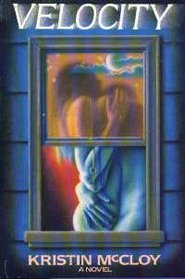
Velocity – Kristin McCloy

velocityA couple of days ago on Information Morning, I talked about how I wished that I could carve out some time to revisit some of my favourite books. I mentioned three in particular: A Tree Grows in Brooklyn by Betty Smith, Jane Eyre by Charlotte Bronte and Kristin McCloy’s Velocity. All three of these books had a profound impact on me, the first two when I was much younger and McCloy’s book when I first read it as a twenty-something. Of those three, I have actually already re-read Velocity numerous times and I just finished reading it again.

I think I am going to have a difficult time articulating exactly why I continue to find Velocity so compelling, but I do want to honour the book and its place in my personal canon here, especially because I recently had the very good fortune of exchanging a couple emails with the novel’s author, Kristin McCloy. (Insert fangirl squee here.)

When it was first published in 1988, Velocity caused quite a stir and earned copious praise. I am not sure what year I picked up my copy, perhaps 1989, but I definitely purchased it at The Strand in NYC. I devoured the book then for reasons that will surely become apparent a little further on.

So, what’s the book about?

Twenty-five-year-old Ellie Lowell has returned to her backwater North Carolina hometown to scatter her mother’s ashes. Ellie’s an only child and she’s been living in New York City for the past six years, so she’s finding it difficult to connect with her taciturn father, a local cop. They share the family home like two strangers might share a taxi ride to the airport – making small talk, but never really connecting.

Despite the awkwardness, Ellie decides to stay home for the summer, leaving her fledgling career in the film business and her boyfriend, Dec, back in the Big Apple. She gets a job at a local diner and before you can say two eggs over easy, she’s hooked up with Jesse, the half-Cherokee biker who lives down the road. Ellie knows he’s trouble. She says

…it occurs to me, a thousand woman, he’s had a thousand women, and every one of them has fed him everything she had.

Even though Jesse isn’t much for talking, Ellie finds herself pulled into his orbit. The attraction is sexual, of course, and she remarks that his “crazy height and that straight hair down to [his] shoulders, even from the shadows of [his] porch, the way [he] stared at me would’ve burned a hole in a blind woman’s side…”

When she’s with Jesse, she doesn’t think about anything else and that’s a good thing because what Ellie doesn’t want to think about is that her mother is dead. She can’t avoid the knowledge that “Everything crumbles. The walls, the rooftop…every structure will fall. Everything known, all that is so familiar, will vanish. Including myself.” What she can do, however, is push that knowledge away and although she is “aware of [her] grief waiting for [her], patient and thick,…right now it is remote.” Jesse is in its path.

At her age I was doing much the same thing, which is, I suppose, why Velocity struck a chord with me when I first read it all those years ago. I don’t recall what I was running from, but I sure knew what I thought I was running to. My guy, let’s call him S., was crazy tall, mostly silent, beautiful, at least to me, and he’d often disappear for days at a time, throwing me into a frenzy of longing, and then reappearing like an apparition. Like Ellie, I read into the smallest of gestures – a moment of tenderness could sustain me for weeks. S. wasn’t a criminal, but he definitely had his own demons and he was in no position to give me what I so desperately wanted. Our relationship was doomed from the start, but that didn’t prevent me from showing up where I’d know or hope he’d be or using sex as a bargaining chip. Our whole relationship was just fraught. And the weird thing is, 30 years later, I still feel that little electric charge on the rare occasion that I see him around.

When I read this book back in the day it was ALL about Jesse and Ellie’s relationship. I believed that Jesse did, in his own way, care for Ellie. I excused his bad behavior because Ellie excused it. I wasn’t blind to Ellie’s grief, but I hadn’t experienced real grief yet and so, although I could sympathize, I couldn’t personally relate to that part of her story. I knew exactly how she felt with Jesse, though. I knew that “electrical current” and the “pleasure like mercury.”

So, how does the book hold up upon rereading? Um – it’s still freaking fantastic. And here’s why. McCloy is a beautiful writer. That has always mattered to me. From the book’s opening line:

Sometimes in my dreams you rise up as if from a swamp, whole, younger than I remember, dazzling, jagged, and I follow you into smoky rooms, overwhelmed by the sense of being in the presence of an untamed thing, full of light, impossible to control.

…until the final pages, McCloy’s writing is fluid and evocative and painfully honest. But we readers know that beautiful writing only goes so far; we have to care about the characters, too. From this vantage point (on the slippery downward slope), I want to tell Ellie what I’m sure she already knows: he’s not the right guy. But I never wanted to shake her and say “Ellie, you’re acting like an idiot.” Her grief is palpable. I feel it like she feels it “a fist, hard-knuckled and small.”

She is so clearly out of control and there is no one able to ease her pain. Her father is caught in his own. Dec is helpless in New York and when he arrives unexpectedly, his presence just muddies the waters. It’s easy to see why Jesse becomes the center of her universe. He doesn’t ask questions that she can’t answer. He doesn’t ask anything of her at all, he simply “hunted down [his] needs – simple and precise – and in those days, it was me.”

Velocity is a novel about loss. And grief. It just so happens that it also has some incredibly erotic sex scenes; trust me, you’ll feel it in your knees. But here’s something interesting about my reread: this time, for the first time ever, I cried.

Now I understand. Since the last time I read this book – and it’s been a few years – both my parents have passed away, my mom in 2006 and my dad in 2009. I get Ellie’s frantic desire to sublimate her grief. Everything about her journey seemed organic and honest to me. I ached for her. I missed my parents. I also missed, strangely, that feeling of being so crazy in love with someone that you can’t think straight. All those things are lost to me now.

Velocity is a special book. Thanks, Kristin, for writing it.
Paris Letters – Janice MacLeod

parisI was attracted to Janice MacLeod’s memoir, Paris Letters, mostly because of its cover. I don’t often indulge myself  — book buying via aesthetics — although I do admit that I am a sucker for books with creepy houses on the front. Still, Paris Letters is a pretty book and when I read the blurb on the back I thought it sounded familiar. I used to keep track of all the books I want to read in a little notebook which I carted around with me. Then I lost the book and now I am flying solo. It’s kind of freeing, I have to admit, but I still wonder about all those titles I have logged over the past decade and think about the reading experiences I might have had. Oh well.

Paris Letters tells the story of MacLeod’s journey from exhausted copywriter to “someone who could make a great living creating something lovely.” Originally from Ontario, MacLeod lives in Los Angeles when the book opens where she admits to being “thirty-four, single, lonely, feeling unfulfilled by my job and on the brink of burnout.”

MacLeod knows she has to make a change and so, inspired by Julia Cameron’s book The Artist’s Way, she starts to keep a journal. She also created a blog –  a more visible way to make herself accountable. It doesn’t take MacLeod very long to figure out that what she really wants to do is quit her job, which is creatively unfulfilling.

I wrote true junk mail. I mucked up websites with ads, stuffed bills with flyers, and inundated the public with information on products they probably didn’t care about and likely never asked for. That was me. Mailing out perfect forest after perfect forest of perfectly useless messages from Fortune 500 companies. I was directly involved with the noise of daily life.

MacLeod decides that she is going to save enough money to take a year off to travel, an activity that has always given her pleasure in the past. So, with great determination, she pares down her life. She sells unused items, she gives up eating lunch out with her colleagues, she gives up cable and sells her TV. (MacLeod shares 100 things she did to save money at the back of the book.)

MacLeod’s plan was to start in Paris and end in Rome, but what she doesn’t factor into her plans is Krzysztof (Christophe), the cute butcher who “bore a striking resemblance to Daniel Craig.” Turns out, Krzysztof is one of the good ones and their relationship is the reason why Paris Letters isn’t Roman Letters.

Paris Letters isn’t so much of a story as it is a lovely meditation on what it is to live a simpler life. It’s a bit of a fairy tale, too. I mean, MacLeod is in Paris after all. She strolls around the city, visiting famous landmarks, writing in and about her favourite cafes and gardens and when her money starts to dwindle, she thinks about what she can do to supplement her income. That’s where the idea of the Paris letters comes from.

I would create a painted letter, copy it, personalize each copy, and mail them off to people who love fun mail….I listed the product on Etsy as a subscription service. For twelve months, people would receive a painted letter from me.

This is when I realized I had heard of MacLeod and her Paris letters, perhaps in a magazine like Canadian Living or Chatelaine. As a person who loves snail mail, I was intrigued by MacLeod’s concept. It’s cool, right?

Paris Letters is a love letter. To Paris. To Krzysztof. To living the life you want. You could argue that since MacLeod was unencumbered because she had no real ties to L.A. — no children or spouse or property —  leaving it all behind was easy. I still think it was an act of bravery. She didn’t know anyone; she didn’t really speak the language well; she was on her own. There are some days when I imagine shaking my own life up in exactly the same way.

Paris Letters is a quick read and, if nothing else, it will make you want to visit Paris. But for me, it made me consider the possibility of doing something other than.

Beautiful Ruins – Jess Walter

ruinsBeautiful Ruins was our last book club read before our summer hiatus. It was also the winner of ‘Best book’ or, because we don’t want to hurt anyone’s feelings when we vote, ‘book we enjoyed reading most.’ (Thus, ‘worst’ book becomes ‘book we enjoyed reading least.’) It was a close race between Beautiful Ruins and The Children Act, but Walter’s fantastic novel won out in the end.

I think I am going to have a hard time articulating how I feel about this book because it hit a lot of my sweet spots. First of all, part of the novel is set in Italy and anyone who knows me knows that Italy is my dream place. I’ve been twice and often say that some day I will live there…even if it’s just for a few months. The other part of the novel takes place in Hollywood and, okay, I admit it – I love the movie stars. Just ask anyone who was around during the David Boreanaz days…or go further back…the Robby Benson days. Ask my students how often I work Ryan Gosling into the conversation.

Beautiful Ruins follows the fortunes of Pasquale Tursi in Porto Vergogna, a tiny village near the Cinque Terre region of Italy only “it was smaller, more remote and not as picturesque.”

Port Vergogna was a tight cluster of a dozen old whitewashed houses, an abandoned chapel, and the town’s only commercial interest – the tiny hotel and café owned by Pasquale’s family – all huddled like a herd of a sleeping goats in a crease in the sheer cliffs.

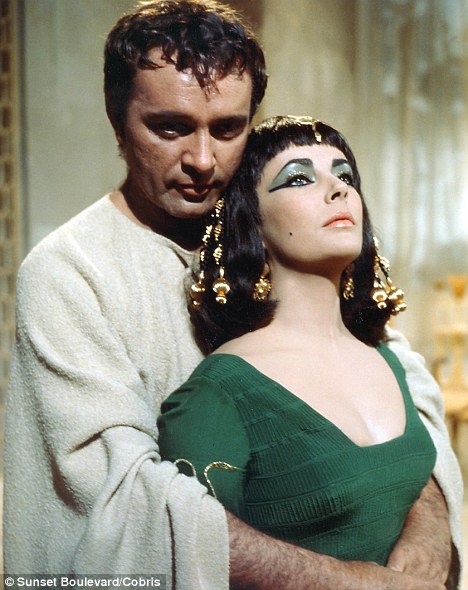
Pasquale has come back to Porto Vergogna to care for his dying mother and the Hotel Adequate View, and it is there he meets actress Dee Moray, who has come, by mistake, to the Adequate View to rest. She is in Italy to make Cleopatra, the notoriously bad film starring Richard Burton and Elizabeth Taylor.

richard and elizabeth

The title’s phony – her job’s all assisting, no developing, and she’s nobody’s chief. She tends Michael’s whims. Answers his calls and e-mails, goes for his sandwiches and coffee.

It is not the life she dreamed of when she gave up her doctoral film studies program to make movies. Now she is on the cusp of leaving her job and going to work as a curator for a private film museum.

If you’re wondering how Walter is going to dovetail these two eras, all I can say is “masterfully.” We flip back to 1960’s Italy and recent-day Hollywood and neither story (or character) gets short-shrift. In fact Claire and Pasquale aren’t the only characters who populate this story – even minor characters are fully realized including Pasquale’s elderly aunt Valeria (who provides comic relief), Shane (a screenwriter who comes to Hollywood to pitch the story of cowboy cannibals), Alvis (the failed American writer who comes to Porto Vergogna once a year to work on his novel) and even Daryl, Claire’s hunky porn-addicted boyfriend. Even Michael Deane, slimy as he is, is fun to spend time with.

And what are these Beautiful Ruins? Well, I think that’s probably the reason everyone and their dog was praising this book when it came out in 2012. This is a great story – funny and heartbreaking in equal measure – about big ideas. The people that you meet and the choices that you make are at the very center of this book. But as Alvis says to Dee, “No one gets to tell you what your life means.”

I loved this book so much.

Highly recommended.

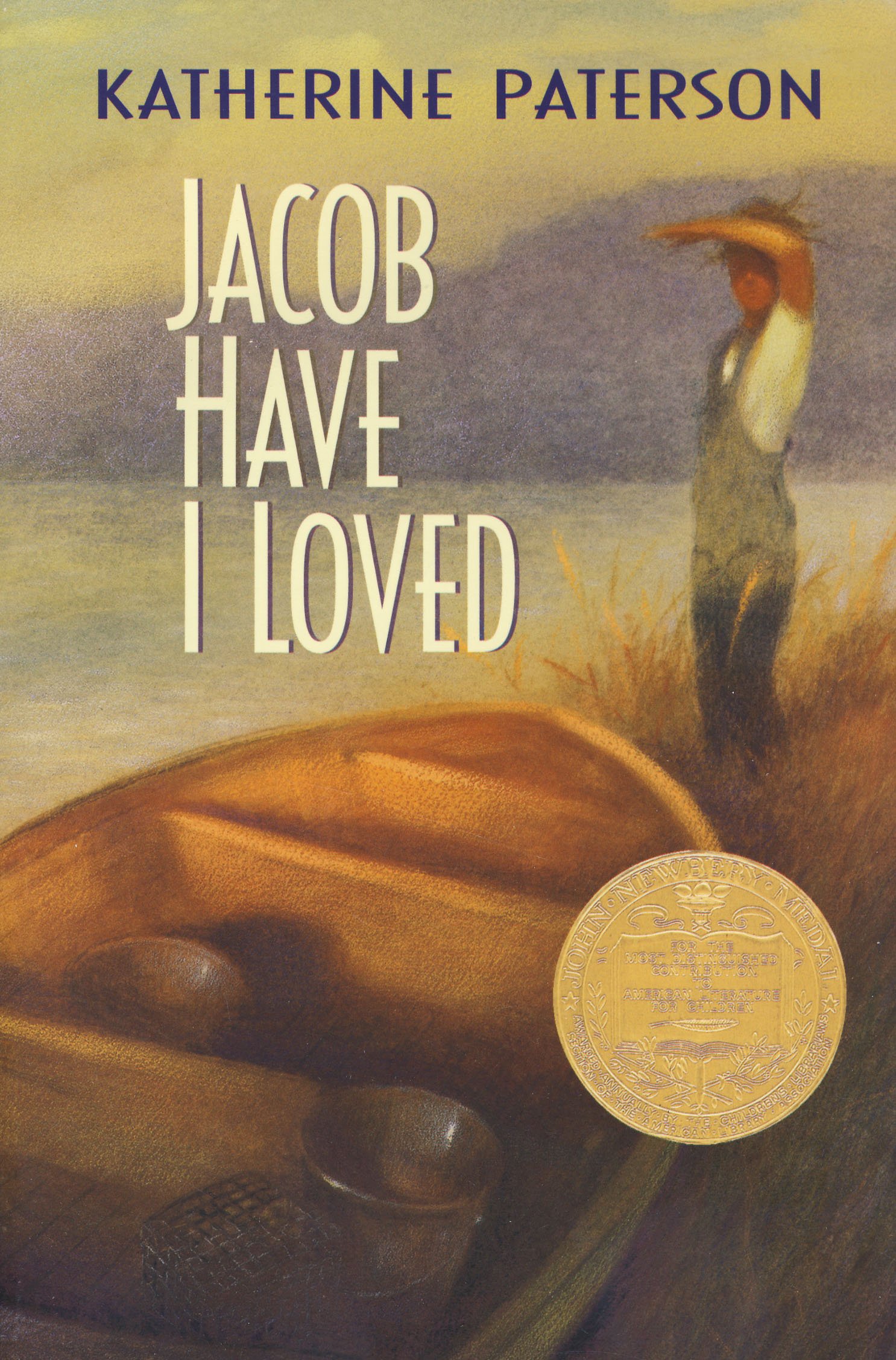
Jacob Have I Loved – Katherine Paterson

jacobKatherine Peterson’s novel Jacob Have I Loved was a Newberry Medal winner in 1981. Although this book has been on my radar for many years, I was perhaps just a teensy bit too old for it when it was published in 1980, so I didn’t read it then. It is a pretty famous book though, and I figured I should read it. So I did.

The title of the book comes from the bible, Romans 9:13: “As it is written, Jacob have I loved, but Esau have I hated.” The quote refers to the story of siblings Jacob and Esau and the novel tells the story of siblings Sara Louise and her twin sister, Caroline. The girls live on Rass Island, off the coast of Maryland. Their father is a fisherman; their mother a former school teacher. Their crotchety paternal grandmother also lives with them.

Sara Louise, or Wheeze, is the narrator. She is an adult when the novel opens, returning to Rass Island where her mother still lives. “…it is a pure sorrow to me,” she says, “that, once my mother leaves there will be no one left with the name of Bradshaw. But there were only the two of us, my sister, Caroline, and me, and neither of us could stay.”

The bulk of the story takes place in 1941 and the years that follow. Wheeze, 13, and her best friend, Call, 14, spend their days hunting for crabs. Their little island is isolated and days there are marked by routine – fisherman out on the water early and home late, school and church, the occasional ferry trip to the mainland. Paterson deftly creates a world that will be – for most of its young readers –  a place long ago and far away.

While readers may not recognize the time or place, they will most definitely recognize the friction between Wheeze and her sister, the beautiful and musically talented, Caroline. A sickly baby, Wheeze feels that Caroline has been coddled all her life and that in “the story of my sister’s life…I… was allowed a very minor role.”

There is a rare snapshot of the two of us sitting on the front stoop the summer we were a year and a half old. Caroline is tiny and exquisite, her blonde curls framing a face that is glowing with laughter, her arms outstretched to whoever is taking the picture. I am hunched there like a fat dark shadow, my eyes cut sideways toward Caroline, thumb in my mouth…

Wheeze is resentful and jealous, even though Caroline never really seems to give her any reason to be. It’s one of the lovely things about this book, which is remarkable in its stillness. Wheeze isn’t particularly likable, but you grow to love her just the same.

Jacob Have I Loved is without the bells and whistles that marks much of the YA fiction out there today. I would suggest that this is a book better suited to middle school readers, but I think anyone who has ever shared close quarters with a sibling would enjoy this story.

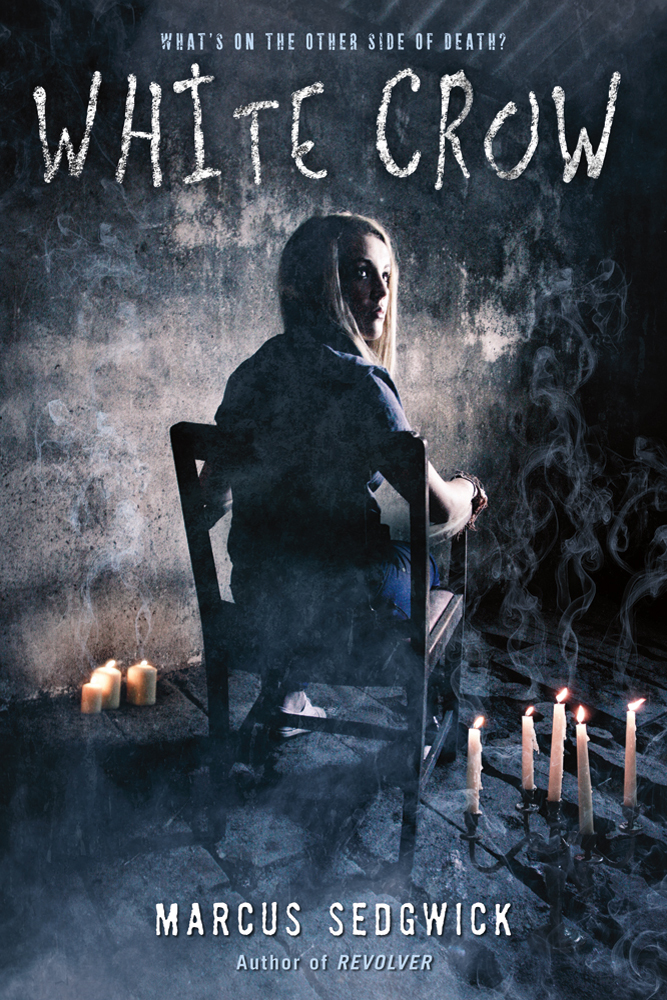
White Crow – Marcus Sedgwick

whitecrowMarcus Sedgwick’s YA novel White Crow is not for the faint of heart, but careful readers will certainly be rewarded by this atmospheric tale. It’s a creepy story of science and obsession, of ghosts both real and imagined.

Rebecca and her policeman father move to Winterfold, a seacoast town in England. Like many other villages along Britain’s coast, Winterfold is slowly being eroded by the sea and what was once a bustling village of thousands of people is now “storm by storm, year by year” crumbling into the sea  and all that remains is “a triangle of three streets, a dozen houses, an inn, a church.”

Rebecca is none too happy about having to leave her more urban life for the much quieter Winterfold. She doesn’t quite know what to do with herself besides harbor resentment towards her father (who is, essentially, hiding out after some mishap at work) and pine for Adam, the boy who she left behind.

Then she meets Ferelith, a local girl who is, frankly, pretty strange. In fact, Rebecca notes she’s “the strangest-looking girl she’s ever seen.”

There’s something elfin about her. Everything ends in points: her nose, her eyes, her chin, her lips, her fingers, the spikes of her long tresses of black hair….her teeth, not quite a vampire’s, but not far short.

Rebecca and Ferelith don’t immediately gel, although it’s clear that Ferelith is smitten. Eventually, though, with nothing better to do, Rebecca starts to hang out with her a bit and Ferelith starts to reveal Winterfold’s somewhat sinister past.

That’s where the third narrator comes in.  Entries in a diary dated 1798, reveal the strange relationship between the writer, a Reverend, and a French doctor. The two men are fascinated with the prospect of discovering if there is life after death and their methods turn out to be – well – horrifying. He writes:

And so this young man has become our first subject, and though my hopes were high, the results were low.

I scorn myself to record it herein, but we learned nothing.

Not a single thing.

But, oh!

The blood! The blood!

White Crow is like one of those old fashioned horror movies I used to watch when I was a kid. I could almost hear the menacing music as Ferelith tours Rebecca around Winterfold, through old, decaying ruins and to the one remaining church with the missing wall. When the novel reaches its climax, it’s creepy, page-turning fun. Young readers will have to pay attention; I know I did. But the book pays off in spades.

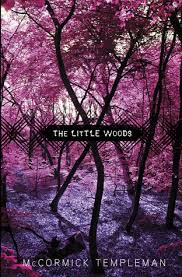
The Little Woods – McCormick Templeman

littlewoodsTen years after the death of her older sister, Clare,  Cally Woods gets accepted at St. Bede’s Academy, a boarding school in the Sierra region of California. It’s a big deal for Cally: her father is dead, her mother is a mostly absent drunk and Cally’s been offered a full-ride scholarship to St. Bede’s because of what happened to her sister. Seems that as a kid, Clare had visited St. Bede’s with a friend whose mother taught there and “on the third night of her visit, she and her friend had vanished from their beds. Their bodies were never found.” That’s pretty much the premise of  McCormick Templeman’s debut novel, The Little Woods.

There’s a lot going on in this novel, making it difficult to decide whether or not it’s a straight up mystery.  (There are definitely some mystery elements; Cally is there, after all, to figure out exactly what happened to her sister. Although as the police never have it’s ridiculous to think she’ll be able to solve the whodunit on her own. Still.) Is it a coming of age stor? (It’s certainly got all the bells and whistles: mean girls and first love.) It’s peopled with a wide variety of teenage characters: the beautiful jock (“he was black with vaguely Asian features, bright eyes and the most incredible body I’d ever seen); the student body president (whom Cally catches going through her underwear drawer) and Jack (“one of those boys who make you dizzy when you look at them). You’ll recognize all the players well enough.

Cally finds it relatively easy to infiltrate the inner-circle and soon enough learns that St. Bede’s is a hot-bed of rumours and disappearances. In fact, she’s moved into the room of a girl who disappeared only a few months ago. There’s also talk about the “little woods.” Hunky Alex explains at a party:

“All due respect, but everyone knows these woods are straight-up haunted. We do this walk all the time, and there’s always some scary fucking noise that can’t be explained. Ask anyone.

I’ll tell you what we’re hearing…We’re hearing the lost girls.”

It is at this party that Cally discovers that her sister’s death is legend: “The woods are haunted. These two little girls were murdered out there….Seriously, you guys. They wandered off into the woods or whatever, but they were totally murdered.”

Although Cally doesn’t expose her connection to Clare, she watches and listens for any clue that will help her uncover the truth.

As far as mysteries go, The Little Woods is decent enough. The problem I had with it is that the story is bogged down by so many other things – side-plots and intrigues, that it was hard to keep the whole convoluted story straight. Doesn’t mean avid YA readers won’t eat it up, though.

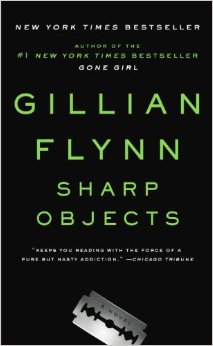
Sharp Objects – Gillian Flynn

sharpMy son Connor recently purchased Sharp Objects and zipped through it in a couple days. I had the same reading experience and now I’ve read all three of Flynn’s novels. Of the three I liked Dark Places the best, though I know Flynn is most well-known known for Gone Girl. One thing I can say for sure, she sure does like damaged female protagonists.

Camille Preaker is a reporter for a third-rate Chicago paper, the Daily Post. Mostly she covers “slice-of-life” pieces, stuff her curmudgeonly editor Frank Curry hates. Then, when a young girl goes missing in Camille’s home town, Wind Gap, Missouri, Curry suggests Camille head home and see what’s the what. Camille isn’t all that fussy about going back to Wind Gap, a town she describes as “one of those crummy little towns prone to misery,” but she can’t say no to Curry, a man whose always looked out for and believed in her.

Wind Gap truly is a backwater, though, and it’s been eight years since Camille has visited. Her mother, Adora, and step-father, Alan, still live there. So does, Amma, her half-sister who is just thirteen. Then there’s the ghost of Marian, Camille’s baby sister who died many years ago.  Camille’s arrival back at the family home, “an elaborate Victorian replete with a widow’s walk, a wraparound veranda, a summer porch jutting toward the back, and a cupola arrowing out of the top” is fraught with polite tension. When Camille rings the doorbell and her mother answers, Adora actually asks if everything okay and “didn’t offer a hug at all.”

Small towns don’t change and secrets are hard to keep, but as Camille works the few connections she has in Wind Gap, another girl goes missing and Camille struggles to keep her equilibrium. Wind Gap, it seems, is filled with old ghosts, ghosts she has worked extra hard (including a stint in a psychiatric hospital) to keep at bay.

Camille is not dissimilar to the main character in Dark Places, Libby. Both are women with troubled pasts. Both are prickly and anti-social. Both are smart and resilient.  I think, ultimately, I liked the mystery in Dark Places better than the one in Sharp Objects but if you are looking for a well-written psychological page-turner, Flynn won’t disappoint, no matter which book you read.

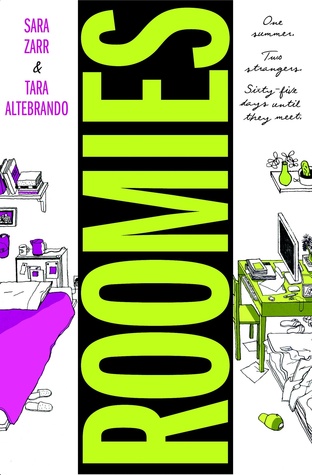
Roomies by Sara Zarr & Tara Altebrando

roomiesMaybe it’s because my daughter is graduating from high school in a few weeks and heading off to university or maybe it’s because, just lately, I have been feeling unsettled and nostalgic, but whatever the reason: I LOVED Roomies. Co-written by Sara Zarr (Story of a Girl) and Tara Altebrando, Roomies‘ narrative is comprised of the back and forth e-mail communication between Elizabeth (EB) and Lauren (Lo), who have been assigned a room together at UC Berkley, as well as their first person narrative of events during that pivotal summer between high school and what comes next.

EB lives with her single mother in a condo on the Jersey Shore (but she doesn’t sound like a character from the reality show of the same name.) Her first e-mail to Lauren is a rant of epic proportions: she’s just had a fight with her mother and she’s already counting the days until she can leave the nest and fly across country.

Lauren has five younger siblings. They are so much younger, in fact, that she’s more like another mother than an older sister. She loves her family, but she has been dreaming about a single room for a while and so the first note from EB comes as something of a disappointment. She imagines writing a reply to EB that says:

I requested a single. All I’ve wanted for the last decade is a room of my own. Some privacy. A place to be alone with my thoughts where they are not constantly interrupted by someone else making some kind of racket, or even just someone else just quietly trying to exist in the same space as me…A “roomie” is really not what I had in mind. Really not what I had in mind at all.

Of course, this is not the note Lauren sends. Her actual reply is much less personal and honest. Nevertheless, despite the awkward beginning, the email exchange between EB and Lauren slowly morphs into something special as each girl tries to navigate that tricky period between “childhood” and “adulthood”.

I remember that summer between high school and university as a very transitional time. I wasn’t actually going away to school; my parents couldn’t afford it. Most of my best friends did go away, though. And so did the boy I fell in love with that summer. I wanted to be someone different – desperately. (Funny, that – almost forty years later, I still often want to be someone different.) Zarr and Altebrando capture that yearning ache so perfectly that I felt myself magically transported back to that long ago summer. Everything was funnier or sadder or profoundly important then.

When you go off to university (which I did the following year) you get to reinvent yourself. The person you were in high school can be magically shed like an old skin; there is no one around who “knew you when” and there’s something pretty amazing (albeit terrifying) in that. But there is also something pretty amazing about being with the people who have known you through all those formative years – people who know your flaws and love you anyway.  I appreciated the way Zarr and Altebrando handled those high school relationships – the push and pull that comes from preparing to make the break and also desperately holding on to something that is important.

Lauren writes:  “There’s this party on Saturday with kids from our high school and she (Lauren’s best friend, Zoe) wants to go and wants me to go with her. I don’t know. I just feel like high school is over…”

EB writes: “Lately my friends don’t talk about anything I find interesting. I’m not sure when that started.”

Over the course of the summer, the correspondence between EB and Lauren becomes more personal as they share details about their last summer at home. I loved each girl’s voice and story. I loved the secondary characters: parents and boyfriends. I loved how EB in particular comes to a deeper understanding of her mother. Perhaps some day my own daughter will understand me a little bit better, too.

Although I would love to follow EB and Lauren through their first year as roomies, I am glad that Zarr and Altebrando decided to end their story where they did. I haven’t read a YA book I have loved as much as this one in a long time.

As my daughter prepares to embark on her own journey I am both elated and terrified. I hope she makes friends like EB and Lauren. I hope she becomes the person she wants to be.

Highly recommended.

Pushing the Limits – Katie McGarry

pushingThe only limit Katie McGarry’s YA novel Pushing the Limits pushed was my patience. It took me forever to get through this brick of a novel which was, by my estimation, about 200 pages too long. And it pains me to say this because if there’s one thing I love it’s a bad boy/good girl.

Pushing the Limits is told in the alternating voices of high school seniors Noah and Echo (and oh, how her name grated). We meet them (separately) in the office of Mrs Collins, “Eastwood High’s new clinical social worker.” We meet Echo first. She’s in the office with her father and pregnant stepmother (slash former babysitter, that’s right, the dad married the babysitter). She’s there because “after the incident, Child Protective Services had “strongly encouraged” therapy.” Echo is reluctant to talk and desperate to know more about “the incident”, an event that left her with horrible scars on her arms.

Noah doesn’t want to spend any time with Mrs. Collins, either. “Look,” he tells her at their first meeting, “I already have a social worker and she’s enough of a pain in my ass. Tell your bosses you don’t need to waste your time on me.” Of course, Mrs. Collins sees straight through the tough-guy façade to the cream puff that lives underneath. No question, Noah is a “bad boy” but he’s been dealt a crap hand: his parents were killed in a house fire and his two younger brothers are in foster care, but not in the same foster home as he is. He’s barely allowed to see them because of his “anger” issues.

Mrs. Collins figures that Echo and Noah would make good study partners and it doesn’t take long before the two of them are concentrating more on each other than on calculus.

And seriously, this exchange (before they are even ‘dating’) just made me cringe:

I smacked my lips like a cartoon character and bit into the succulent burger. When the juicy meat touched my tongue, I closed my eyes and moaned.

“I thought girls only looked like that when they orgasmed.”

Trust me, there’s more where that came from.

I can’t quite decide why Pushing the Limits didn’t work for me.  I started to get irritated by the number of times Noah called Echo “baby” or reminded me of her silken red curls and cinnamon smell. The central mystery (if you can even call it that) of what happened to Echo is revealed ever…so…slowly and when the truth finally makes its way into the light, it’s a bit of a bummer. There was something shrill about these characters and the way they fumbled through their story towards their happily ever after.