House of Hollow – Krystal Sutherland

I can’t say that fantasy is one of the genres I gravitate towards. I’m not sure what it is about other-worldly fiction; I guess I just like my stories to be rooted in reality. But that doesn’t mean I never read them nor haven’t enjoyed some of the fantasies that I have read. I very much liked Empire of the Vampire; Starling House was slightly less successful for me. Krystal Sutherland’s YA novel House of Hollow lands squarely on the winner side for me.

Sisters Iris, Vivi and Grey are special.  Not only did something remarkable happen to them when they were children (all three disappeared from an Edinburgh street, only to reappear one month later with absolutely no memory of where they’d been), but now the two oldest sisters have fabulous careers in fashion and music, while the youngest, the narrator Iris, is just hoping to get through her last year of high school.

Everyone knew who we were. Everyone had heard our story. Everyone had their own theory about what had happened to us. My sisters used this to their advantage. They were very good at cultivating their own mystery like gardeners, coaxing the heady intrigue that ripened around them into the shape of their choosing. I simply followed in their wake, quiet and studious, always embarrassed by their attention.

Then, strange things start happening in the sisters’ lives. Iris sees a strange man “wearing a horned skull over his head” during her morning run. Then her eldest sister, Grey, disappears without a trace. When she and Vivi go to investigate, they discover a dead body in Grey’s apartment. And that’s not all.

House of Hollow is a breathless romp through a malevolent fairy tale world, but it is also a mystery (just what happened to these girls when they were younger) and a timeless tale of what sacrifices siblings might be willing to make for each other. The language is lush, the body horror just squicky enough and I had a great time reading it.

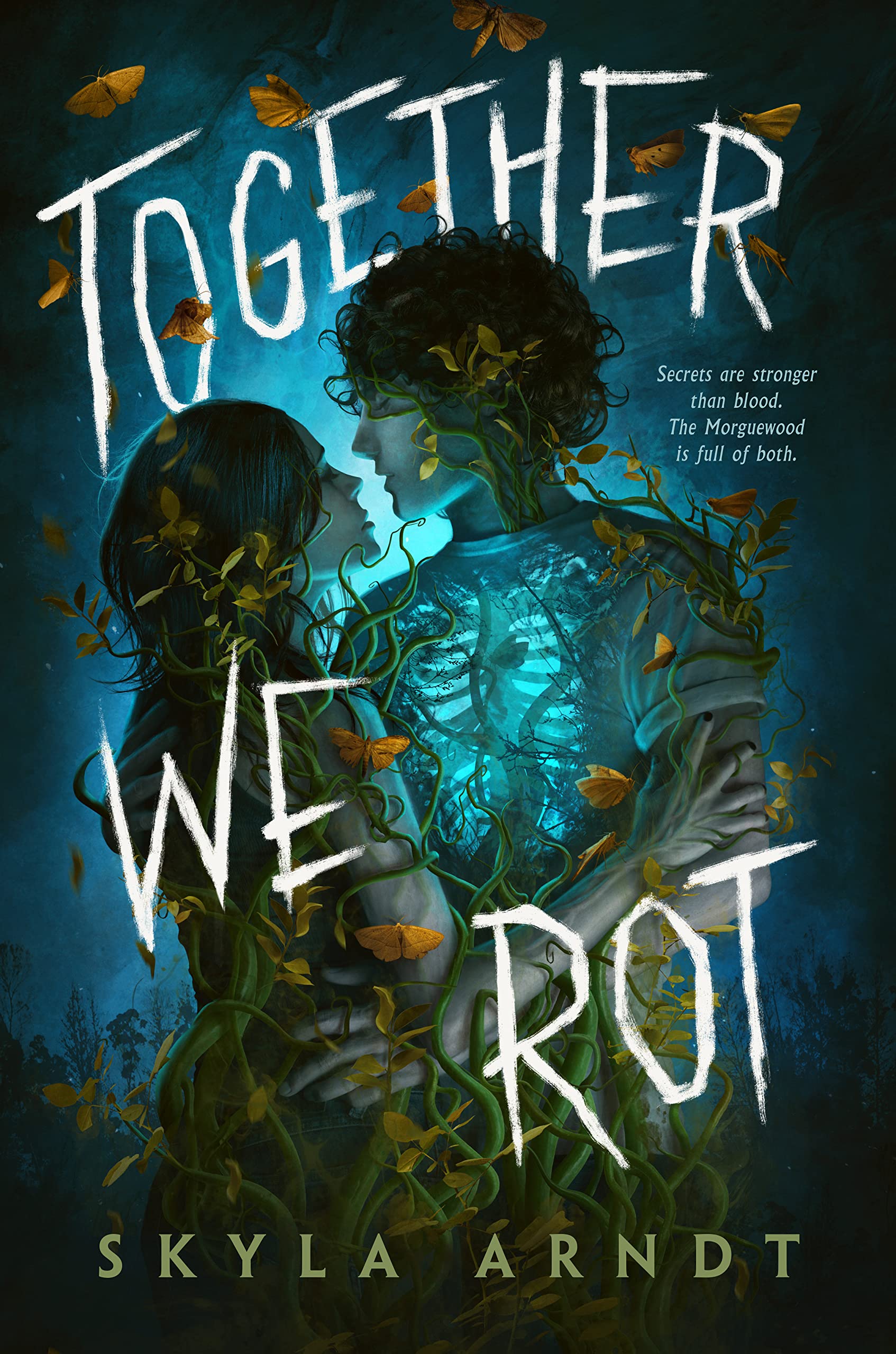
Together We Rot – Skyla Arndt

Wil Greene is on the hunt for her mother and she’s not getting too much help from Pine Point’s sheriff. She is convinced that her mother’s disappearance has something to do with Garden of Adam, a strange church deep in the woods. Her mom’s disappearance has thrown her life into turmoil: her father spends his days drinking and Wil has lost her best friend Elwood Clarke, who just happens to be the son of Garden of Adam’s pastor.

Told in alternating first person narratives, Skyla Arndt ‘s debut YA novel Together We Rot, has a lot going for it. Wil is fierce and, ultimately, fiercely loyal, and Elwood is trying to figure out how he fits into a world that was chosen for him. The demons in this book are both real and figurative.

When Elwood discovers what his father (and the church) have planned for his future, he runs away and ends up forming an alliance with Wil. In some ways, this is a fairly straightforward story about rebellion. Except, you know, for all the fantasy elements. I am not really a fantasy reader (and I keep saying that and yet I keep reading fantasy), but I did enjoy some aspects of this story – although I have to admit that I thought I was getting a cult story. And yes, there is a cult story here, but it’s all wrapped up in some very imaginative mythology that requires blood sacrifices.

Together We Rot is filled with descriptive writing. Wil describes the run-down motel where she lives with her dad:

The place feels especially haunted tonight– there’s a quiet sputtering somewhere, a faucet dripping, pipes creaking. Walls grown tired of holding their weight, floors shifting and crying beneath my feet. Shadows find their way in from outside. Wind slams at the door in violent gusts. The parking lots lights tear through the darkness, but beyond them the world has grown pitch-black.

Sometimes the description gets in the way of the pacing because, ultimately, this is a story about friends banding together to fight evil. Anyone who loves fantasy would likely love this book, but I think I need to give fantasy a rest for a bit.

Starling House – Alix E. Harrow

Alix E. Harrow’s novel Starling House wouldn’t necessarily be a book I would choose to read, even with Reese Witherspoon’s (annoying) endorsement on the cover. (I don’t mind the endorsement, but couldn’t it be a easily removed decal?) I needed to choose a book for my book club, and I needed it to be readily available and even though we have a huge Indigo where I live, its selection of awesome backlist titles seems to be shrinking. Whatever. I read some reviews about this book and I thought, sure. Let’s give it a whirl.

Twenty-something Opal lives in Eden, Kentucky with her sixteen-year-old brother Jasper. Opal works at Tractor Supply, a job she hates but does because her whole raison d’etre is to get Jasper out of Eden and into a Stonewood Academy where he can be afforded the opportunity to make something more of his talents.

The siblings live at the Garden of Eden motel where, Bev, the owner is “obligated to let [them] live in room 12 rent-free because of some shady deal she cut with [their] Mom.” Opal and Jasper’s mother died in a car accident over a decade ago; Opal survived that same crash. Life hasn’t been especially good since then, and it certainly doesn’t get any better when Opal takes a job at Starling House, a creepy mansion on the outskirts of town.

Starling House has a long, mysterious history in Eden. It’s connected to E. Starling, author of the children’s book The Underland, a woman who never wrote another book, or gave a single interview. “the only thing she left behind other than The Underland was that house, hidden in the trees.

The house is inhabited by Arthur Starling, “a Boo Radley-ish creature who was damned first by his pretentious name (Alistair or Alfred, no one can ever agree which), second by his haircut (unkempt enough to imply unfortunate politics, when last seen), and third by the dark rumor that his parents died strangely, and strangely young.”

These two are drawn to each other, despite the strangeness of their first meeting. As Arthur admits, “The house wants her, and the House is stubborn.”

I think Starling House is what as known as urban fantasy, a story that takes place in the modern world with fantastical elements. And that is certainly the case here. Starling House is sentient, there are magical beasts and a rich and complicated history connected to E. Starling’s book. It wasn’t really my cup of tea and even with all that going on, it took me a long time to read it. The writing was good, the secondary characters were interesting, Opal was a likeable protagonist…but at the end of the day, I just never felt all that invested in the story. At our book club discussion last night we all agreed that there was just too much going on, and that we would have been just as happy if there had been no beasts at all.

Empire of the Vampire – Jay Kristoff

Oh, vampires. Unless you sparkle, you’re my favourite fantasy creature. It’s hard to find books about vampires with any real bite, y’know. I enjoyed Grady Hendrix’s The Southern Book Club’s Guide to Slaying Vampires and Christopher Buehlman’s The Lesser Dead, but never in my wildest dreams did I think I was going to enjoy a 700+ page high fantasy novel about vampires. The first in a series, no less! Because 700+ pages. And fantasy. Not really two things that make my very-much-still-beating bookish heart pitter pat. I was gifted a copy of Jay Kristoff’s novel Empire of the Dead last Christmas and it seemed like a good time to take a crack at it because I am now on holiday.

Gabriel de Leon is a Silversaint. What’s that you might well ask? Silversaints are palebloods (half vampire) who have taken a vow to protect the church and the realm from coldbloods, full-on vampires. At fifteen, Gabriel was whisked away from his home to San Michon, a holy place where he is trained in the art of killing vampires.

I do here vow; Let the dark know my name and despair. So long as it burns, I am the flame. So long as it bleeds, I am the blade. So long as it sins, I am the saint. And I am silver.

When the story begins, Gabriel is a prisoner of Margot Chastain, Undying Empress of Wolves and Men. Chastain’s historian, Marquis Jean-Francois, has joined Gabriel in his cell to “gather all knowledge of [his] order.”

The conversation between Gabriel and Jean-Francois provides the structure for the story the Silversaint tells. It bounces back and forth in time and introduces a cast of characters, many of whom readers will fall madly in love with (including a lioness, a horse and a sword. Not joking.) As for Gabriel: he’s cynical, foul-mouthed, loyal and brave. He’s the hero of the tale, but he’s imperfect, for sure. He’s also likeable.

I wouldn’t have necessarily said that I read fantasy, but according to this definition from Book Riot, I guess I do:

The basic defining tenet of high fantasy is that a fantasy story is set in an alternative fictional world, typically with magical elements. High fantasy is sometimes called epic fantasy, and some of the hallmarks of this subset of the fantasy genre include a high page count, lots of characters, usually a quest, and, most importantly, an alternative or secondary world as opposed to the real or primary world. With high fantasy, there are usual global stakes involved—you know, good versus evil, saving the world, and all that.

In any case, I read enough to understand the world building and the mention of mythical creatures. It’s easy to spot the nods to Tolkien, Martin, Malory, Christianity, Beowulf, and even Buffy the Vampire Slayer. It is clear that Kristoff is a reader, and books and their myriad joys are mentioned on more than one occasion.

As an English teacher, I could easily identify the hero’s journey and so I was able to anticipate some of the twists. I probably don’t read enough fantasy to know whether Kristoff’s novel is cream of the crop or not though, but by my metric it’s great.

I’ve read some reviews that complained about the novel’s pacing. That wasn’t a problem for me. I read this book in a week and I very much looked forward to picking it up whenever I had the chance. There was lots of gory action and well-written fight scenes. There were lots of funny moments and also some truly heart-breaking moments.

I would suspect that when you are creating a world, lots of exposition is necessary – but I never felt as though Kristoff wasted time with backstory. Readers were dropped into a fully-realized world and I wasn’t too concerned with who everyone was beyond who is good and who is most definitely not. I have no clue how Kristoff managed to keep all the characters and the rules of this world straight, but it felt like a real enough place to me.

Books need stakes and Empire of the Vampire has them. The world has been dark for almost three decades, and part of this story is when Gabriel runs into someone from San Michon who claims they have found something that can finally bring an end to the darkness. Gabriel is on a vengeance mission, but he agrees to accompany the group. Cue the bloodshed.

If I have one niggle about the story, it’s the expletive-heavy insults like “you fuck-eyed little pig dick” and “fuck you, you little shitgrubber.” There’s a lot of swearing in this book. A lot a lot. I swear a fair bit myself, so when I notice it in fiction it’s past the annoying phase.

Still, I have to say that I had fun reading Empire of the Vampire far more than I expected I would. It’s the first book in a series and while I am generally pretty lazy about keeping up with series, I will definitely be spending more time with Gabriel de Leon.
Cuckoo Song – Frances Hardinge

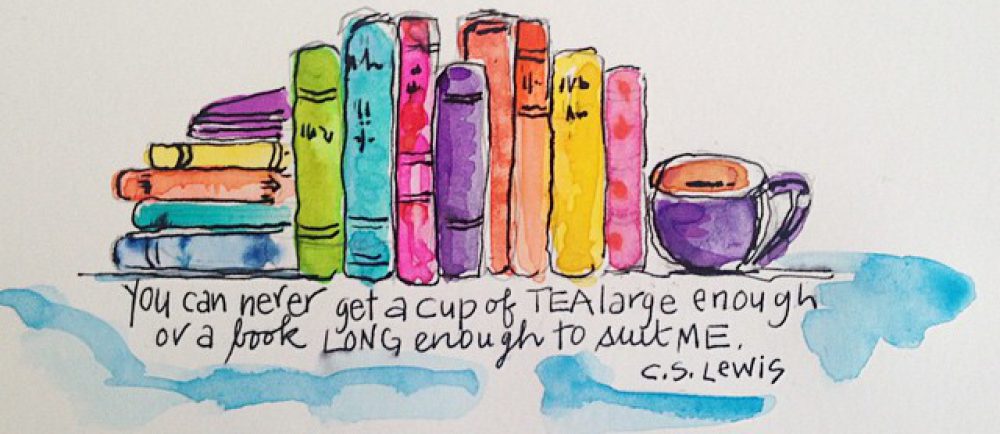
cuckoo songI don’t think I have ever read a book quite like Frances Hardinge’s YA novel Cuckoo Song. I am not much of a fantasy fan, you know – word building and that sort of thing, but I was totally enchanted by Hardinge’s story, which is as much about grief and loss, as it is a creepy story about…well, I can’t really tell you.

I can tell you that the story follows 13-year-old Triss, who wakes up after falling into the Grimmer – a pond near the cottage where she is vacationing with her family. Her mother comforts her, telling Triss that she’s “just been ill again, that’s all. You had a fever, so of course you feel rotten and a bit muddled.”

Triss’s younger sister Penny, Pen for short, doesn’t seem all that thrilled with Triss’s recovery. “She’s pretending!” she screams, when she comes to Triss’s bedroom. “It’s fake! Can’t any of you tell the difference?”

Things just get weirder for Triss because even she has to admit that something isn’t quite right. For one thing, she has a voracious appetite – never mind easing herself back into the world of food, as “soon as she saw the first bowl of soup arrive, great crusty rolls on the side of the tray, her hands started to shake.” Triss is horrified to discover that food is not the only thing that will sate her hunger; she’ll willingly eat just about anything and lots of it.

Other strange things begin to happen in Triss’s life.  Dead leaves in her hair when she wakes up. Dolls that move in her hands. Dolls that speak to her. And then what’s with all the letters from her brother, Sebastian? Those letters are impossible because Sebastian was killed in the war.

Hardinge has created a masterful, creepy and mysterious novel that is both exciting and kind of heartbreaking. I don’t want to spoil the novel’s surprises, but I will say this: you won’t forget Triss because she is brave, endearing and clever. Her desire to solve the mystery of what’s happened to her keeps the plot ticking along, but her capacity for self -reflection and self-awareness is what makes her a character who will stay with you long after the last page is turned.

Highly recommended.