Ruthless – Carolyn Lee Adams

2E11B418-C156-499C-B40A-C90F9802D4A7Seventeen-year-old Ruth Carver has a nickname on the show-riding circuit: Ruthless. She earned the name by being single-minded  when it comes to competitions, but it’s more than that. At the ranch, it’s “sink or swim” and Ruth lives by that motto. Ruth also understands that her success in the ring will benefit her parents’ struggling ranch. She’ll do whatever it takes to win, even if that means pushing other people away from her. That includes Caleb, the boy who loves her.

Carolyn Lee Adams’ YA novel Ruthless is a thrill-ride of a novel. It starts when Ruth wakes up in the back of a pickup truck, buried in a mound of manure, hay and shavings. She’s hurt and she soon realizes that she is in trouble, serious trouble.

The trouble comes in the shape of a man Ruth nicknames Wolfman.

He is tall and big, with a large, black beard and bushy eyebrows. He has strange hazel-orange eyes. He reminds me of a wolf.

Ruth remembers him from the ranch. “I kept seeing that wolf-looking guy, and that wolf-looking guy kept seeing me,” Ruth recalls. So “I told Dad to fire him.” Seems like Wolfman is the kind of guy to carry a grudge.

Wolfman aka Jerry Balls, is a smart and dogged  psychopath.  He punishes girls who he feels are deserving and Ruth can see that “He hates me in a way that I didn’t know was possible.”

So here is Ruth, trapped with a psycho in the middle of the Blue Ridge Mountains. Left alone when Wolfman is called in to work, she discovers that she is not his first victim, but she is determined that she will be his last. Her breathless escape from his cabin is just the start of 200+ pages of pulse-pounding reading.

If you’re wondering how Ruth is going to manage getting and staying away from Wolfman in the middle of nowhere, in terrain she doesn’t know, without supplies…well, that’s part of what makes Lee’s novel so compelling. Failing is not an option here and readers soon discover that Ruth is every bit as tenacious as Wolfman.

There is nothing graphic about this book, although the threat is imminent. Wolfman is also not a one-dimensional character; his story is told through a series of flashbacks. Doesn’t make him any more sympathetic, but you still get a glimpse into how he might have ended up the way he did.

We also see a bit of Ruth’s story from pre her abduction. One surprisingly prescient snippet recalls a conversation she has with her family. Her grandfather, once a sheriff, is offering advice should she ever be taken. He tells her “Don’t ever let them take you to a second location.” Her father offers “May God have mercy on the soul of the poor bastard who ever dared try.” Truer words.

Ruthless is terrific.

Stories I Only Tell My Friends – Rob Lowe

I was more of a Robby Benson than a Rob Lowe fan back in the day. I guess they were sort of popular around the same time, give or take a few years. 0D9E8612-E728-46F5-8D69-9E382FBC38EFRob Lowe’s autobiography Stories I Only Tell My Friends, however, made for riveting reading, and the same can not be said for Robby Benson’s novel Who Stole the Funny.

Lowe was born in Charlottesville, Virginia in 1964. He moved with his mother and father to Dayton, Ohio when he was still an infant. His parents chose Dayton because it was “a bustling, growing city,”  home to many national companies. Lowe’s father was a lawyer; his mother gave up her job as a high school English teacher to stay home and raise her son. Four years later, Lowe’s brother, Chad, was born.

Lowe got an early start in the acting business in Dayton. A trip to see a production of Oliver!  turned out to be a “a transformational experience” for ten-year-old Lowe. A few weeks later,  he participated in a community theatre production of The Wizard of Oz. Lowe notes that his parents (well, his mom and step-father because by then his parents were divorced) would have had “no way of knowing how deeply affected I’d been, how electrified I was by the age-old connection of actors, material and audience…that was a club I wanted to belong to.”

Flash forward a few years and the family has moved to Malibu, California.

An entire book could (and should) be written about Malibu in 1976. In the bicentennial sunlight of that year, it was a place of rural beauty where people still rode to the local market on horseback and tied up to a hitching post in the parking lot. Long before every agent and studio president knocked down the beach shacks to build their mega mansions, Malibu was populated by a wonderful mix of normal working-class families, hippies, asshole surfers, drugged-out reclusive rock stars, and the odd actor or two.

It is during this period that Lowe begins to pursue acting in earnest, and also lands the role that will turn him into a household name.

Stories I Only Tell My Friends is an honest, self-deprecating look at fame and its rewards and consequences. It’s a who’s who of the times, which makes it especially fun to read if you are of the same vintage as Lowe…which I am. I loved reading about Lowe’s participation in The Outsiders. He’s candid about his career highs and lows, and about his prodigious romantic interludes (some clearly less to do with romance and more to do with sex – but look at the guy.) Lowe is aware that he’s a good-looking (great looking, really) man, but he never comes across as full of himself. He’s also honest about how he abused alcohol, a hard-earned perspective that comes from being twenty plus years sober.

This is a really dishy memoir – not a tell-all, exactly, but a Hollywood story about a decent guy who came-of-age in the public eye, and managed to keep his wits about him. He wrote it himself and it’s funny and witty and at times it almost seems as though Lowe can’t believe the ride he’s had either.

Great book.

The Vigilante Poets of Selwyn Academy – Kate Hattemer

vigilanteEthan Andrezejczak attends Selwyn Academy, a fine arts high school in Minneapolis, Minnesota. He’s the narrator of Kate Hattemer’s debut YA novel The Vigilante Poets of Selwyn Academy. His life revolves around hanging with his friends Jackson, Elizabeth and the too-cool-for-their-friend-group, Luke, and teaching Jackson’s gerbil, Baconnaise circus tricks. Ethan pines for ballerina Maura and loathes Miki Frigging Reagler from afar. Maura and Miki are two of the stars of the reality show For Art’s Sake (FAS), which is filmed at Selwyn.

They’d chosen a school (our school) and they’d chosen contestants (not me). Every episode, they had some artistic challenge and someone got kicked off. The last person standing would be crowned America’s Best Teen Artist.

Ethan and his friends are convinced that For Art’s Sake is wrecking Selwyn. Luke is especially bent out of shape because the school’s literary arts magazine refuses to publish his commentary about the TV show. “It’s a review, but mostly it’s editorial,” he tells Ethan. “I tried to suppress my snideness. I may not have been totally successful.”

The fact that someone as cool as Luke is anti-FAS is a touchstone for Ethan. When he enters Ethan’s orbit in grade seven, Ethan describes him as

the most popular prepubescent on the planet. He was impossible to dislike. That’s not hyperbole: I tried. I have a strict policy of holding automatic grudges against people everyone likes. But Luke had a mouthful of braces and said “awesome” all the time, and he was totally genuine.

It’s Luke’s idea to roast FAS in a poem. He announces “We need to reclaim our society and values and culture.”

Conquistadors, they thundered in,
And dizzy, we succumbed to spin.
They’ve colonized our native land.
What once was vivid now is bland.
We sing and dance at their command.
 – The Contracantos


Luke’s ultimately betrayal is especially hard on Ethan, but it gives him the chance to take some chances and find his own voice.

The Vigilante Poets of Selwyn Academy plumbs the depths of poetry, friendship, loyalty, art, betrayal and growing up. These characters (and I am certainly including Baconnaise) are witty, intelligent and human. They are trying to figure it all out. They don’t always get it right, but Elizabeth asks Ethan if he thinks he’s “the only one who’s amazed and scared and freaked out by how complicated everyone is.”

This is a smart book. I highly recommend it.

We All Love the Beautiful Girls – Joanne Proulx

E1A054FB-47D3-4BF8-93BC-7A8F56A62626The characters in Joanne Proulx’s second novel We All Love the Beautiful Girls are so perfectly imperfect that you can’t help but fall in love with them.

At the centre of this finely crafted family drama is the Slate family, Mia and Michael, and their seventeen-year-old son, Finn. Then there’s Jess, Finn’s former babysitter who now sneaks into his bedroom at night to…you know. Frankie is the daughter of Michael’s business partner, Peter. Peter’s wife, Helen, is Mia’s best friend. Frankie and Finn have grown up together.

Mia and Michael’s perfect life starts to unravel when they get a visit from Stanley, the company accountant (I’m not sure that’s his actual his title, but it doesn’t really matter; he’s only the messenger). He’s discovered that Peter has restructured the company and written Michael out. Michael has, it turns out, been pretty lax about the financials of the company because he and Peter have “known each other since high school.”

On the same night that Michael finds himself screwed out of his own company, Finn finds out that Jess won’t be leaving her boyfriend, Eric, for him. She can’t even though Finn is “So gorgeous and so nice.”  Finn is just a kid. (She’s 23.) Eric’s a total douche and happens to be the older brother of Finn’s best friend, Eli. Finn’s at a party at their house, drunk, and after an encounter with Jess he makes a couple of bad choices. First, he hooks up with Frankie. Second, he passes out in the backyard. It’s  January. In Canada.

These two incidents are game-changers for the Slate family and their repercussions propel Proulx’s story along like a thriller. I literally could not put this book down. I finished it well past my bed-time. On a school night.

The novel flips between characters. We watch Finn’s heart break. We watch Mia and Michael’s marriage topple. We watch friends become enemies. Proulx toggles between these perspectives masterfully, the blame and the shame carefully shared. And if there is redemption or peace to be had, it’s hard won.

No one makes it through life unscathed, but perhaps the key to surviving is understanding. As Finn tells his mother: “I’m not the same as I was….I’m different now….But it’s good, you know? I’m good. Like I understand things I didn’t understand before.”

The boy becomes a man. The parents – well, I guess they do what all parents do. The best they can.

I LOVED this book.

Eleanor Oliphant is Completely Fine – Gail Honeyman

155356C2-E75D-4FCF-8F1B-CEB6EB1DA2B9Eleanor Oliphant, the titular character of Gail Honeyman’s debut novel Eleanor Oliphant is Completely Fine, is not like anyone else you have likely met before. She has worked in the same office for the last nine years, she has no friends and she lives on a diet of vodka and pizza or pasta and pesto. Her life is structured and predictable, right down to her weekly calls from “Mummy.”

It doesn’t take long to figure out that Eleanor is actually not completely fine. She is pretty much the loneliest person I have ever met. She has no aptitude for social niceties; she says whatever pops into her head. It makes it difficult for her co-workers to warm up to her. Her mother is particularly harsh.   When she wins tickets to a concert and asks one of her office mates to accompany her, she becomes the butt of the joke because as everyone knows “she’s mental.”

Enter Raymond. He’s the new office IT guy. When he comes to fix Eleanor’s computer she notes that “he was barely taller than me, and was wearing green training shoes, ill-fitting denim trousers and a T-shirt showing a cartoon dog lying on tops of its kennel. It was stretched taut against a burgeoning belly….All of his visible skin, both face and body, was very pink.”

It’s funny that Eleanor dismisses Raymond as she has, similarly, been dismissed by others. She is aware of her own appearance, her “face a scarred palimpsest of fire. A nose that’s too small and eyes that are too big. Ears: unexceptional.” But Raymond doesn’t seem to see Eleanor’s appearance – or care much either way, at least, and is persistent and the two become unlikely friends.

The stuff that comes out of Eleanor’s mouth is often funny. She has no filter and doesn’t seem to take offence to the things she hears, even when she is the subject of ridicule. When an office mate makes a cruel joke at her expense, Eleanor admits that she “laughed at that one, actually.” Her world is very black and white. When she and Raymond stumble upon an elderly man in distress, Eleanor is tasked with keeping him calm.

…don’t worry, you won’t be lying here in the middle of the street for long. There’s no need to be anxious; medical care is completely free of charge in this country, and the standard is generally considered to be among the best in the world. You’re a fortunate man, I mean, you probably wouldn’t want to fall and bump your head in, say, the new state of South Sudan, given its current political and economic situation.

Oh, Eleanor.

It is Eleanor’s friendship with Raymond that starts to crack open her insular, dysfunctional life. The more we know of her story, the more amazing she becomes. Eleanor Oliphant will stay with you long after you’ve closed the final pages and you will leave her knowing that she will actually be completely (mostly) fine.


Cuckoo Song – Frances Hardinge

cuckoo songI don’t think I have ever read a book quite like Frances Hardinge’s YA novel Cuckoo Song. I am not much of a fantasy fan, you know – word building and that sort of thing, but I was totally enchanted by Hardinge’s story, which is as much about grief and loss, as it is a creepy story about…well, I can’t really tell you.
I can tell you that the story follows 13-year-old Triss, who wakes up after falling into the Grimmer – a pond near the cottage where she is vacationing with her family. Her mother comforts her, telling Triss that she’s “just been ill again, that’s all. You had a fever, so of course you feel rotten and a bit muddled.”

Triss’s younger sister Penny, Pen for short, doesn’t seem all that thrilled with Triss’s recovery. “She’s pretending!” she screams, when she comes to Triss’s bedroom. “It’s fake! Can’t any of you tell the difference?”

Things just get weirder for Triss because even she has to admit that something isn’t quite right. For one thing, she has a voracious appetite – never mind easing herself back into the world of food, as “soon as she saw the first bowl of soup arrive, great crusty rolls on the side of the tray, her hands started to shake.” Triss is horrified to discover that food is not the only thing that will sate her hunger; she’ll willingly eat just about anything and lots of it.

Other strange things begin to happen in Triss’s life.  Dead leaves in her hair when she wakes up. Dolls that move in her hands. Dolls that speak to her. And then what’s with all the letters from her brother, Sebastian? Those letters are impossible because Sebastian was killed in the war.

Hardinge has created a masterful, creepy and mysterious novel that is both exciting and kind of heartbreaking. I don’t want to spoil the novel’s surprises, but I will say this: you won’t forget Triss because she is brave, endearing and clever. Her desire to solve the mystery of what’s happened to her keeps the plot ticking along, but her capacity for self -reflection and self-awareness is what makes her a character who will stay with you long after the last page is turned.

Highly recommended.

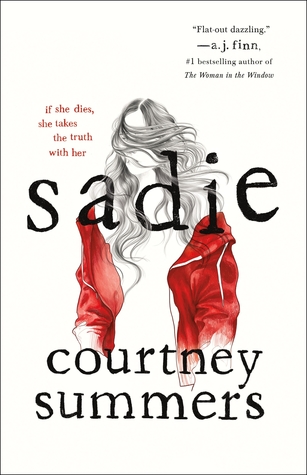
Sadie – Courtney Summers

sadieI thought if I waited a few days after finishing Courtney Summers’ latest book Sadie, I would have a better chance of articulating my feelings coherently. Sadly, I don’t think I am actually going to be able to adequately express all the ways I loved (and hated) this book.

The premise is clever. West McCray, a radio producer at New York’s WNRK, is shaking up the station’s format by introducing a new podcast, The Girls. The podcast “explores what happens when a devastating crime reveals a deeply unsettling mystery.”  McCray dives headlong into the story of Mattie Southern, a thirteen-year-old whose dead body was discovered in an orchard near a burning schoolhouse, and her nineteen-year-old sister, Sadie, who is missing.

I’ve decided the gruesome details of what was uncovered in that orchard will not be part of this show. While the murder, the crime, might have captured your initial interest, its violence and brutality do not exist for your entertainment – so please don’t ask us.

Transcripts of the podcast (and you can actually listen to those here) alternate with Sadie’s first person narrative. Sadie leaves Cold Creek’s trailer park and her surrogate grandmother, May Beth, to find Keith, a man who once lived with Sadie and Mattie’s mother, Claire. Claire is currently out of the picture, an addict who’s had a steady stream of creeps in her bed.

Despite being blocked at every turn, Sadie is like a dog with a bone when it comes to tracking down Keith, a man she claims is her father. She buys a junker car, and asks fearless questions, hindered only by her stutter and youth. By about page thirty I was as invested in Sadie’s hunt as she was. She is equal parts vulnerable and tough-as-nails and 100% believable.

And this is where I have to pause and commend Summers, once again, for writing characters who are so real. Regular readers to this blog will know I am a fan of Summers and have read several of her books including Cracked Up to Be, All the Rage, This Is Not a Test, and Some Girls Are. I’ll tell you this – Summers is not writing the same book over and over. Her characters are not stereotypes. They are vulnerable, broken, tough, cynical and hopeful and every combination in between. Sometimes they say or do things that are wince-worthy, but as a mom and high school teacher, I know that Summers cuts as close to the bone as it’s possible to get. Like it or not.

So, I wasn’t surprised that I fell in love with Sadie, rough edges and all. I expected to be invested in her journey and I hated (that’s what I hated, folks) that it was a journey that she felt compelled to take. I hated that I was afraid for her the entire freakin’ time! Sadie loved her sister and made sacrifices for her that Mattie would never have the opportunity to understand. That’s what it is to love someone.

McCray is always just one step behind Sadie, but his podcasts fill in some blanks, allowing us to see how Sadie is viewed from other perspectives. Former teacher, Edward Colburn, says, “She was teased by her classmates because of the stutter and that caused her to withdraw.” Her boss, Marty McKinnon said Sadie was “a good kid, hard worker.” Mae Beth said that “The only thing Sadie was afraid of was losing the family she had left and that was Mattie.”

All of these ingredients add up to a story that McCray describes as being “about family, about sisters, and the untold  lives lived in small-town America. It’s about the lengths we go to protect the ones we love…and the high price we pay when we can’t.”

There are few moments of levity in this novel, but Sadie (the novel and the character) will haunt your dreams.

Highly recommended.


I Will Always Write Back – Caitlin Alifirenka & Martin Ganda w/ Liz Welch

I will alwaysWhen I was a kid, I had pen pals. Lots of them. I think I started writing letters when I was about seven. We moved away from Winnipeg  where we had been living for a couple years. I had to leave my best friend, Lynne, behind and we kept exchanging letters for many years – up until recently when my Christmas card to her was returned ‘address unknown.’
I came of age in the 70s, way before Facebook or email. The only way to maintain a relationship with someone who lived far away was to write a letter. Long distance phone calls were pretty expensive, but stamps were cheap. By the time I was sixteen I had at least two dozen pen pals from all over the world. I loved getting their letters and learning about their lives. I still have one of those pen pals, and although we tend to catch up via the Internet now, we have shared dozens of letters over our 40+ year correspondence.

So I was ready to love I Will Always Write Back by Caitlin Alifirenka & Martin Ganda (with help from Liz Welch). I’ll spare you the suspense: I LOVED this book.  It’s the true story of how Caitlin, a thirteen-year-old from Hatfield, Pennsylvania writes (via a school project) a letter to thirteen-year-old Martin who lives in Mutare, Zimbabwe. That letter  – as generic as it must have been – is the beginning of a beautiful friendship.

Caitlin chose Zimbabwe from a long list of countries because it sounded exotic. She really knew nothing about the country.

My knowledge of Africa consisted of what I had seen in the National Geographic magazines my mother subscribed to for our family. I loved looking at the colorful photos of tribal people who wore face paint, loincloths and beads. I didn’t think my pen pal would dress like that, but I had no idea what kids in Africa wore. Jeans, like me?

Caitlin has no idea of Martin’s circumstances, but the reader does. Martin lives with his parents and siblings in Chisamba Singles “a housing development built in the 1960s as a place for men from the rural areas to stay during the week while they worked in different factories.” Martin and his family share a room with another family, upwards of twelve people crammed into a space designed to hold two.

The story toggles back and forth between Caitlin and Martin. Caitlin’s life is mostly concerned with friends and shopping, while Martin’s life is focused on doing well at school. Education in Zimbabwe is a privilege, not a right. Martin understands that to be successful at school is a (potential) ticket out of abject poverty.

While most of Caitlin’s classmates give up their pen pals after only a couple letters, Caitlin and Martin maintain their correspondence and  Caitlin comes to understand the truth of Martin’s circumstances. If only she could have known the anxiety her asking for a photograph caused Martin. Or what he had to give up to send her some cheap earrings. It was truly heartbreaking.

And also amazing. Because once Caitlin and her family are aware of just how dire things are for Martin and his family, they do everything in their power to help. It’s pretty awesome.

In 2015, Caitlin addressed students at a high school. She said “One small act of kindness…You have no idea how powerful that can be, whose lives it can change, including your own.”

Be the change, people.

Highly recommended.

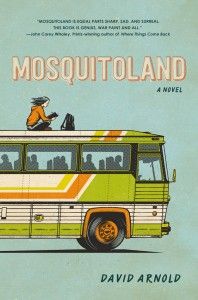
Mosquitoland – David Arnold

Mary Iris Malone, Mim for short, is not okay. Life has thrown her some curve-balls of mosquitolandlate: her parents’ divorce; her father’s quicky marriage to Kathy; their subsequent move from Ashland, Ohio to Jackson, Mississippi. When Mim overhears her father and stepmother talking to the principal, she’s convinced that her biological mother is sick and makes the decision to hop a Greyhound and travel the 947 miles back to Ohio to see her.

This is the premise of David Arnold’s debut novel Mosquitoland , a book which garnered massive praise and stellar reviews when it was published in 2015. I have to say, it’s worthy of all the fuss.

Mim’s journey is both literal, and she meets all-sorts on the bus and beyond, and figurative; this is a journey of self-discovery only a quirky, intelligent and empathetic sixteen-year-old could take.  Mim reveals herself in journal entries addressed to Isabel, and to various passengers, including Arlene, the old lady who sits next to her on the bus. Arlene turns out to be just what Mim needs because “it’s nice to sit that close to someone and not feel the incessant need to talk.”

Then there’s Walt, the boy Mim meets when she ends up getting off the bus. Walt is slightly left of center. He lives in a tent in the woods. “What are you doing?” He asks her  when he finds her asleep under an overpass. “…as a part of big things?”

Walt is a completely endearing character and Mim is “100 percent intrigued” when he says “Do you like shiny things? I have lots of shiny things there. And a pool…You’re a pretty dirty person right now. You could use a pool. Also, there’s ham.”

And then there’s Beck. Mim first notices him on the bus and then in a weird twist of fate, she meets him again at the police station (long story).

He’s older than me, probably early twenties, so it’s not completely out of the question – us getting married and traveling the world over, I mean. Right now, a five-year difference might seem like a lot, but once he’s fifty-four and I’m forty-nine, well shoot, that’s nothing.

There’s a quality about him, something like a movie star but not quite. Like he  could be Hollywood if it weren’t for his humanitarian efforts, or his volunteer work, or his clean conscience, no doubt filled to the brim with truth, integrity, and a heart for the homeless.

There is nothing I didn’t love about Mim or her journey. There is nothing I didn’t love about the other characters she meets – except for Poncho Man. (Obviously.) Mosquitoland has it all: the absurd, the laughs and the feels. It is a beautifully written book about growing up, facing your fears, what family means (both the family you are born with and the family you make) and why it is okay to admit that you are not okay.

Mad love for this book, so of course it is highly recommended.


The Marrow Thieves – Cherie Dimaline

marrowGah! This book, you guys.

Francis, though everyone calls him Frenchie, is on the run from the “recruiters”.  Pretty much every Indigenous person is because their bone marrow holds the key to dreaming, which is something white folks no longer have the ability to do.

“Dreams get caught in the webs woven in your bones. That’s where they live, in that marrow there.”

“You are born with them. Your DNA weaves them into the marrow like spinners….That’s where they pluck them from.”

It’s sometime in the not too distant future and we’ve pretty much wrecked the Earth. Because of course we have. When Cherie Dimaline’s YA novel The Marrow Thieves opens, Frenchie is holed up in a tree house with his older brother, Mitch. But then the recruiters show up, and the boys are separated, and Frenchie finds himself on the run once more.

The characters in The Marrow Thieves are all too aware of their rocky history with the Canadian government, and sharing those stories is part of what keeps them focused on getting to safety, which in this case is north where they hope they will find fresh water and clean air and freedom.  So north is the direction Frenchie heads and it isn’t long before he meets a group of travelers. Frenchie joins this ad hoc family and his adventure begins.

The dystopian nature of this novel is really only the story’s framework. It’s enough to know that these people are considered ‘other’ and useful only for what they can provide to the government. Their current plight mirrors the whole residential school debacle, a part of my country’s history, I am ashamed to admit, I was grossly ignorant of until recently.  Those places were less about assimilation (and even that is abhorrent)  and more about annihilation.

The real story, the heartbeat of Dimaline’s novel, is the characters and their stories – both individually (which they tell in their own ‘Coming-To’ stories) and collectively. Getting to know these people felt like a privilege; I fell in love with them and the way they looked out for each other. I experienced a real fear for their safety and on the few occasions they were rewarded with something good, I felt that, too.

I will not forget these people, their connection to the Earth and each other, for a long time. The Marrow Thieves should be required reading for all Canadians…and, trust me, once you start reading, you won’t want to put it down anyway.

Highly recommended.