Well, that’s three 5 star books for Jeff Zentner. There’s just something about the way he writes characters that breaks my heart and Cash Pruitt, the sixteen-year-old protagonist of In the Wild Light now joins the ranks of Dill (The Serpent King) and Carver (Goodbye Days) as one of my all-time favourites.
Cash lives with his Papaw and Mamaw in Sawyer, Tennessee. It’s a backwater town and Cash doesn’t imagine much of a future for himself even though it is a place he loves. His mother died of a drug overdose; he never knew his father, but his grandparents are just salt of the earth people.
Cash’s best friend is Delaney Doyle. They met at a support group for people with family members who are addicts. Delaney is a genius, and that’s not an overstatement. For Cash, trying to understand how her mind works “is like trying to form a coherent thought in a dream.”
When Delaney makes an important scientific discovery, it earns her a full ride at Middleford Academy, a fancy private school in Connecticut. Delaney has no reason to stay in Sawyer – and every reason to go – but she isn’t going without Cash. Cash isn’t sure he wants to leave his grandfather who has end stage emphysema.
Cash agrees to go with Delaney and it is a decision that changes his life. First of all, he makes friends with a Alex, a boy he meets on the rowing team. He develops a crush on Delaney’s roommate, Vi, and he takes a poetry class, and this experience (and the teacher, Dr. Adkins) blow his world wide open. She tells him:
“I have two intuitions about you. The first is that you’ve got in your hear that poetry has to be elaborate, and that’s what’s fueling your hesitancy.
[…]
Number two: that you’re someone who pays attention to the world around him.”
Dr. Adkins is not wrong. Cash notices everything: the way people smell, the way Delaney worries the skin on her thumbs, the way water looks. “Ever since I first became aware that the world contains mysteries and incomprehensible wonders, I’ve tried to live as a witness to them.”
In the Wild Light is a coming-of-age story about a kid who has had to grow up way too fast, who feels out of his depth, but who learns to trust himself. Like every Zentner book I’ve read, this one made me cry on more than one occasion.
Andrew Joseph White (Hell Followed With Us) has written another amazing YA novel that feels especially timely given what is currently happening in the USA.
Sixteen-year-old Silas Bell, the protagonist in The Spirit Bares Its Teeth, wants to escape his future. In this version of 1883 London, the Speakers take what they want and what they want is to be married to violet-eyed girls. Except Silas isn’t a girl. That’s just biology. What he wants is to find a way to trick the system into giving him a spirit-work seal and then he hopes to slink off, and find a way to study medicine and become a doctor like his older brother, George.
But it all goes horribly wrong, and Silas is taken to Braxton’s Finishing School and Sanitorium, where the Headmaster and his wife turn young girls with “veil sickness” into women men will want to marry. Think conversion therapy, with ghosts. Because Braxton is haunted and as girls born with violet eyes have the ability to reach through the veil, it isn’t long before Silas realizes that something really horrible has been happening at the school.
Silas doesn’t have anyone to trust at Braxton’s, until she gets to know Edward Luckenbill, the young man to whom she is engaged. Is it just possible that Edward is not like the other men Silas has encountered?
You really only come to understand yourself by comparing other’s stories to yours; you find where things are the same, and where they’re not. … Its difficult when the story isn’t one the world wants to hear.
Silas is determined to find out what happened to some of the students that have gone missing, but it isn’t going to be easy and it’s definitely going to get bloody.
White has a remarkable imagination, but this book feels especially timely given the way the rights of marginalized people are being eroded. As Silas seeks to learn the truth about Braxton, he also comes into his own power and it is impossible not to root for him. If you haven’t yet discovered this author, I can highly recommend. You won’t read anything else like it.
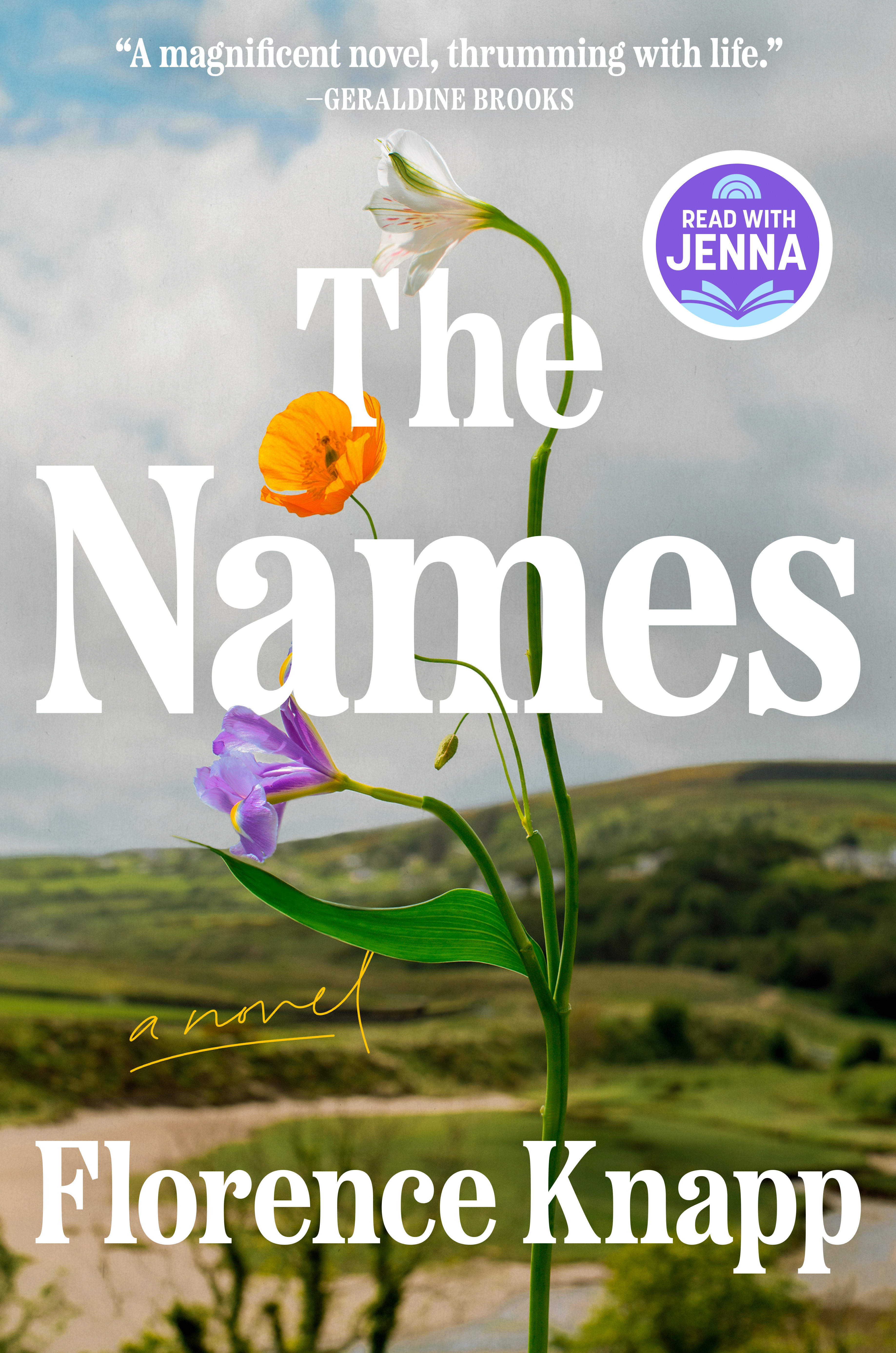
Cora has never liked the name Gordon. The way it starts with a splintering sound that makes her think of cracked boiled sweets, and then ends with a thud like someone slamming down a sportsbag. Gordon. Bu what disturbs her more is that she must now pour the goodness of her son into its mold, hoping he’ll be strong enough to find his own shape within it.
This is Cora’s dilemma after the birth of her second child. She doesn’t want to name the baby after his father, a prominent, beloved doctor who is also a physically and mentally abusive husband. So, on the day that Cora and her daughter Maia, 9, walk to the registry office to officially register the baby’s name, they imagine other names instead of Gordon. Maia is fond of Bear because “It sounds all soft and cuddling and kind.” Cora is partial to Julian, which means “sky father.”
Florence Knapp’s novel The Names imagines the lives of these characters if the baby had been named Bear, Julian or Gordon – skipping forward at seven year intervals for thirty-five years. Who dos this little boy become and how does his name affect the people in his life?
I loved everything about this book, honestly. Although the author has written books previously, The Names is her debut novel and it’s a corker. I loved the glimpses into Bear/Julian/Gordon’s life, loved seeing what things were similar in each iteration an what things were vastly different.
But the novel is not just concerned with his life. We are also privy to Cora’s story, her early courtship with Gordon, her upbringing in Ireland, and what becomes of her in each of these scenarios. Maia, too, gets her story.
What’s in a name? Turns out, quite a lot. Highly recommended.
I plucked Michael Marshall Smith’s 2009 novel The Servants off my TBR shelf — where it has been languishing for a long time no doubt– and was rewarded with a lovely, quiet tale about eleven-year-old Mark who has moved to Brighton with his brand-new step-dad, David, and his mom, who appears to be quite ill. The book reminded me of The Book of Lost Things and A Monster Calls , both five star reads for me.
Mark is wholly unhappy about his new circumstances. Although he’d been to Brighton before, back when his parents were still married, then it had been on holiday where his days had been filled with fun activities. It’s winter now, and cold, and he spends his days trying to learn how to ride his new skateboard down by the beach. He doesn’t like David, “who liked to explain everything” in a weird accent because he had spent so much time living in America. Mark also feels that David has some sort of weird control over his mother and was always “hovering in the background doing whatever it was he always did.”
One day, Mark meets the old lady who lives in the basement apartment.
…she was not so much old as very old, and also a little scary-looking. When she blinked, she looked like a bird, the kind you saw on the seafront, stealing bits of other people’s toast
When she invites him for tea and cake, she shows him an astonishing piece of the house’s history, hidden behind a locked door in her apartment. This is the servants’ quarters and, as it turns out, it is haunted.
The Servants is very much a coming-of-age story. It is about Mark trying to navigate his new world, a world where there is never enough diet Coke in the fridge, and where his understanding of the way life works is skewed by his immaturity therefore elevating his father to a position he clearly does not deserve and casting David in the role of evil step dad.
There was one tiny conversation between David and Mark that reduced me to tears and the metaphor of the servants as the beating heart of a home, who have to work together for anything to be accomplished, was apt.
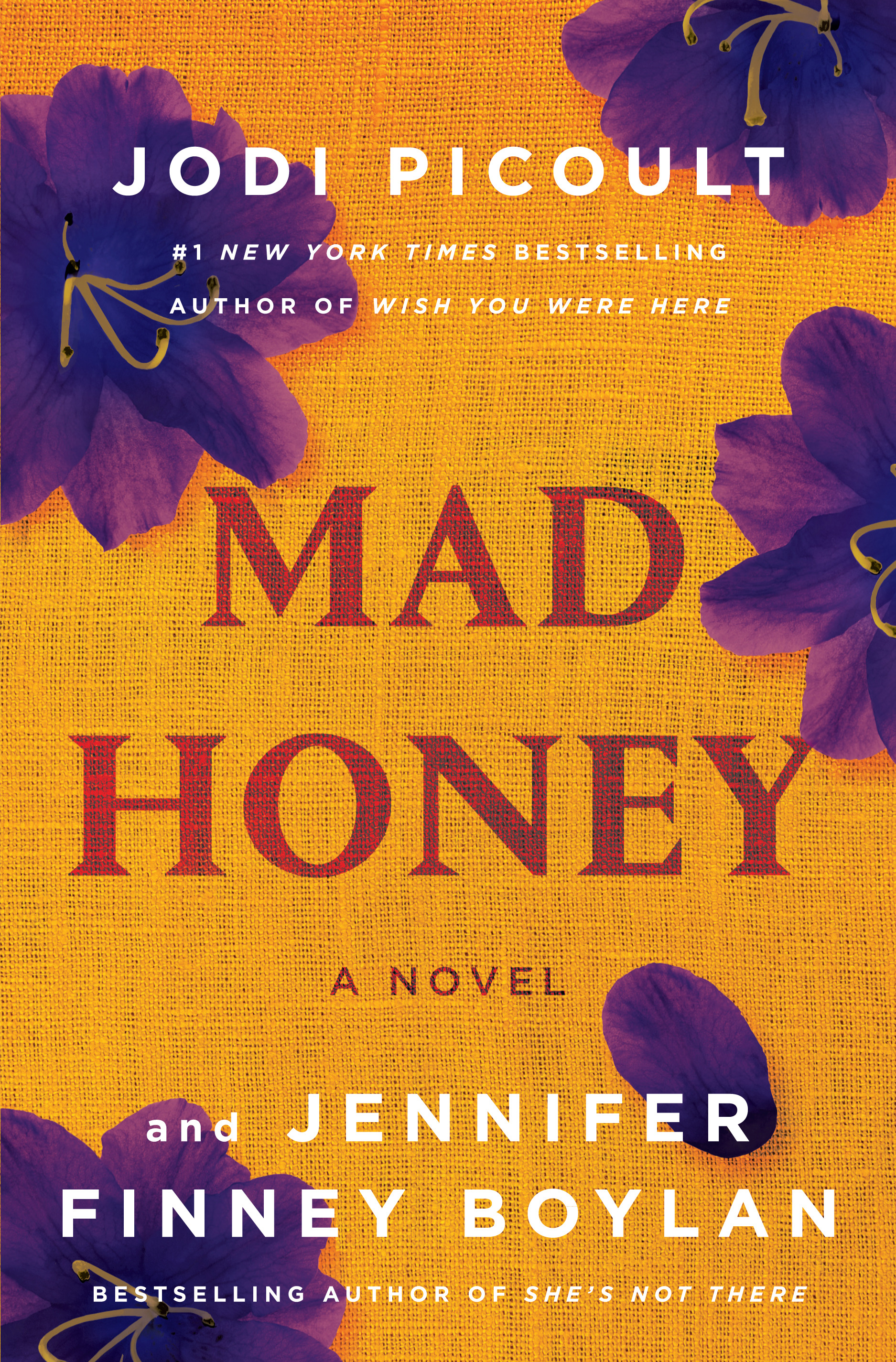
Although I have read several books by Jodi Picoult (The Pact, Nineteen Minutes, The Tenth Circle, My Sister’s Keeper), I read them pre-2007, which is when I started this blog. I loved The Pact, but I remember feeling manipulated by My Sister’s Keeper, which is probably when I stopped reading her. I had never heard of Jennifer Finney Boylan. I can’t really tell you why I picked up Mad Honey, but I can tell you that I loved it.
This is the story of Olivia, who lives with her teenaged son, Asher, a star hockey player, in the house she grew up in in rural New Hampshire. She’d left her life as the wife of a cardiothoracic surgeon when Asher was six, well, she’d fled her life, really, because her ex was abusive. Now she does what her father did before her: she is a beekeeper. There’s loads of interesting things about beekeeping in this book.
This is also the story of Lily, who has recently moved to this same small town with her single mother, Ava. Lily is beautiful and fragile and shy, but when she and Asher meet, through Asher’s childhood bestie, Maya, something clicks and the two are soon inseparable.
This novel is told from these two perspectives and it is really a story about love: the love a mother has for their child, romantic love and self love. It is also a story about secrets, the ones we keep from others, but the truths we keep from ourselves, too. It is also a page-turning courtroom drama because– this is not a spoiler; it is revealed in the blurb– at the end of the first chapter we learn that Lily is dead.
The story toggles back and forth to the beginning of Lily and Asher’s relationship, to their growing feelings for each other (as seen through Lily’s eyes, but also what is witnessed by Olivia), but also reaches further back to provide some insight into how Lily and her mother ended up in New Hampshire. Olivia also reflects on her marriage to Braden, the giddy beginning and the incident that finally caused her, after many other incidents, to flee. She and Asher are close, and so when he is charged with Lily’s murder there is no question of believing he is innocent. But then: maybe Asher has something of his father in him after all.
There is a plot twist in this book that I did not see coming — although I probably should have since Picoult is very much known for her topicality. Anyway, it was a surprise and it definitely added a whole new layer to this story. These characters felt real to me and their struggles also felt nuanced and authentic. I was wholly invested in the outcome of the trial and I absolutely could not wait to get back to the book after I set it down. Mad Honey is provocative, thoughtful, and timely.
If you have never read Picoult before this would be a great place to start, and if you’ve read her but, like me, given her a break, I highly recommend this one.
Part ghost story, part serial killer story and part story about grief, new-to-me author Ronald Malfi’s novel Come With Me reminded me of the work of authors like Peter Straub and Thomas H. Cook, both fine authors imho.
Aaron Decker, a translator, and his wife, Allison, a reporter for a community newspaper, are happily married. They live a quiet life, but their happiness is upended when Allison is tragically killed. It is only after she is gone that Aaron discovers a receipt from a motel stay that Allison hadn’t told him about. Was she having an affair?
I’m of the opinion that when it comes to secrets, there is no end to what we don’t know about a person. Even the person who sleeps next to us and shares our lives.
Aaron can’t help himself; he has to go looking and what he discovers takes him on a journey through the back roads of his wife’s childhood and towards a serial killer.
Come With Me is written as though Aaron is talking to Allison and it appears Allison is communicating with Aaron from beyond the grave. Lights flick on. Songs offer clues. Fragments of conversations that previously made no sense click into place. Aaron discovers surprising secrets about his wife and soon he finds that he has no choice but to finish what she had started before her death,
I really enjoyed this book. It isn’t horror, and it isn’t a straight up thriller, either. It’s not a page turner, although I did very much look forward to diving into it every chance I could. There’s definitely some creepy moments and definitely some suspense, but I compared Malfi to Straub and Cook because both of those writers penned literary mysteries/ghost stories. Thoughtful and slow moving. I hope the comparison is understood as the compliment I intend it to be.
I will definitely be checking out more work by this author.
Kathleen and Yannick, the protagonists in Sarah Leipciger’s 2024 novel Moon Road, haven’t spoken to each other in almost twenty years. Their marriage
lasted only a few years, but they remained good friends over two decades because of Una, their daughter. And because they never stopped being fond of each other. So, a lasting friendship, but then one day, they had an argument. The argument was bad enough that they didn’t speak for nineteen years. Not a card, not a text message, not an email.
Another momentous thing happened all those years ago, too: Una, who had left Ontario and moved to the West Coast, disappeared. In the intervening years, Kathleen keeps track of how long Una has been missing by marking the days in a notebook (over 7000 of them by the time the novel starts) and hosting an annual party in her honour. Now 65, she grows flowers to sell to local businesses. Yannick, 73, is on wife number four and has three sons and a daughter. Now Yannick is back in Birchfield because he has “received some unexpected news” and “it’s about time they saw each other again.”
The news concerns Una, of course. It is her disappearance that has driven Kathleen and Yannick apart, as grief sometimes does, but it is also the thing that pulls them back together. Yannick has decided that he will drive to Tofino and he wants Kathleen to come.
This is a road trip novel, but only marginally. As Yannick and Kathleen set off on their cross-country drive, they talk and bicker and reminisce, weaving together the past and the present. They’ve both dealt with their grief and their guilt separately and neither knows for sure what they are going to find when the arrive on Vancouver Island.
The novel also provides a glimpse of Una and her time in BC, living rough, working odd jobs and trying to figure out what her life is meant to be. These sections are strung out throughout the novel and it isn’t until the very end that we learn what actually happened to her. The mystery of her fate, the subsequent searches, and the leads that go nowhere definitely keep the pages turning.
But what I loved about this novel was Yannick and Kathleen and how connected they were despite the intervening years. Their marriage didn’t work, but they have a child and that is a bond that sticks. (Unless it doesn’t and I have first-hand knowledge of that scenario.) It was wonderful to read a book featuring mature characters who have lived a life, suffered a terrible loss, and then made an effort to keep moving forward.
The book is also beautifully written – not quite a travelogue, despite the road trip, but Canada is a gorgeous country, and anyone who has even driven from coast to coast (I have!) will likely recognize some of the descriptions of the vastness of the prairies and the majesty of the mountains.
I grew up in an era where we were told too much television would rot our brains. Turns out, our brains are rotting because of a little device that every person in the world, toddlers even, carry around in their pockets. I can see my high school students rolling their eyes at me: blame it on the phones, boomer. They don’t know a life when phones weren’t melded to their palms, though. They don’t actually know what they’re missing and what’s being stolen from them.
When Facebook was launched in 2004, I had two young children and no interest. I think I called it FaceDevil or something. But then FOMO kicked in; all my friends were on there and I just gave in and joined. For a while it was okay, I guess. It was nice to catch up with people I hadn’t seen in a long time and share a little bit of my life. There are all sorts of reasons why the platform has become shittier over the last few years and I opted out in January 2025. Don’t miss it at all. Yes, I still have Instagram; yes, that has to go too.
Jaron Lanier, a well-known computer scientist, author, and philosopher makes a compelling pitch to ditch your social media accounts in his book of essays Ten Arguments for Deleting Your Social Media Accounts Right Now. His argument, that social media platforms are turning us into nasty sheeple lacking in critical thinking skills and ripe for being duped by bad actors, is both horrifying and motivating. Lanier encourages us to be like a cat (which is an apt simile since cute cat videos started taking over the Internet in 2005. And let’s face it, who doesn’t love watching cats get scared out of their wits by tinfoil?) Cats, Lanier suggests
have done the seemingly impossible: They’ve integrated themselves into the modern high-tech world without giving themselves up. They are still in charge. There is no worry that some stealthy meme crafted by algorithms and paid for by a creepy, hidden oligarch has taken over your cat
We, however, are not cats. Every interaction on social media is being tracked or, as Lanier explains, is a BUMMER (Behavior of Users Modified and Made into an Empire for Rent). BUMMER, simply put, is a “statistical machine that lives in the clouds. It gathers data from users to whom it has no responsibility and uses that data to manipulate the user and make tremendous profit while simultaneously undermining the economic dignity of the user…with Google and Facebook we are not the customers, we are the product.” (Law & Liberty)
Big Brother is watching and he’s not benevolent.
It is hard to be optimistic about the state of the world given the current political landscape. Lanier’s argument in the essay “Social media is undermining truth” is that
People are clustered into paranoia peer groups because then they can be more easily and predictable swayed….The only reason BUMMER reinforces this stuff is that paranoia turns out, as a matter of course, to be an efficient way of corralling attention.
…
In order to benefit in the long term as technology improves, we have to find a way to not let our improved comfort and security turn into cover for a lazy drift into perilous fantasy. Media forms that promote truth are essential for survival, but the dominant media of our age do no such thing.
I come from a generation of newspaper readers. The paper came every evening and we all read it. We watched the supper hour news. News was impartial (or, okay, at least somewhat objective.) Journalism has been steadily eroded and more and more young people get their news from TikTok influencers. Truth, so it seems, is fluid. Or, if you’re Fox News, optional.
In his essay “Social media is destroying your capacity for empathy”, Lanier argues that our “worldview is distorted” and that we “have less awareness of other people’s worldviews.” Empathy, let’s face it, has been seriously eroded as we are pitted against each other by the powers that be. They’re coming for your jobs; interaction with trans or gay people will make you trans or gay. One of my favourite lines from Harper Lee’s novel To Kill a Mockingbird is when Atticus tells Scout “You never really understand a person until you consider things from his point of view…until you climb inside of his skin and walk around in it.” It’s one of the things I love about teaching high school English, encouraging my students to read widely and see that there are other ways of looking at things, that not everyone has the same experience that you have. Of course, as Trump defunds schools and libraries and bans books, well, I guess that’s a topic for another day. (I should also point out that I am Canadian and watching the dumpster fire that is what is happening in the US with abject horror.)
Lanier isn’t a fan of Trump either but he says “What’s really going on is that we see less than ever before of what others are seeing, so we have less opportunity to understand each other.” It seems like the exact opposite of what the Internet should/could be facilitating: a way to see that we share the planet and the human experience and we should be working together for the betterment of both of those things.
Although T. Greenwood is a prolific writer, Such a Pretty Girl is the first of her books I have read. It’s one of those books where nothing happens–I mean this is a book driven by character, not plot–and yet it is absolutely riveting.
When the novel opens, Ryan Flannigan is counting down the last few days before her daughter, Sasha, heads to the West coast to start college. Ryan’s childhood bestie, Gilly, keeps sending her urgent texts before finally just sending her a link to a story from the Times. Ryan is shocked to discover that the story is about her mother, Fiona, from whom Ryan is mostly estranged. Worse, the story is about the discovery of a very personal photo of Ryan when she was just a girl that was found in the possession of Zev Brenner, a billionaire who has been charged with sex trafficking and pedophilia a la Jeffrey Epstein. This news is followed by even more shocking news and Gilly begs Ryan to come back to New York City.
Such a Pretty Girl bounces between the 1970s and present day 2019. As a child, Ryan lived with her mother, Fiona, in Lost River, Vermont, home to the Lost River Playhouse where Fiona was an aspiring actress. Lost River was meant to be a “summer respite for actors who worked in the city and a place for aspiring actors to apprentice themselves.” Fiona had been there since 1965 and she and Ryan lived there full time. Gilly and his family also live at Lost River, but only in the summer. Gilly’s father is a working actor and his mother an artist in New York.
Fiona decides to leave Lost River and go into the city to give acting a more serious try, but in the end it is Ryan, who is just ten, who is discovered–first as a model and then as an actress. This strains the relationship between mother and daughter. The time the novel spends in NYC
After Gilly gives Ryan the news about the discovery of the photograph, he begs Ryan to come back to Westbeth, an apartment building populated by dancers and actors and artists and, famously, Jackie O. It’s a real place, actually. It’s worth reading about its interesting history and it is definitely a character in Greenwood’s book. So, in the present day Ryan and her daughter head back to the city and to the place that she, for a very important time in her life at least, called home. There are matters to attend to, and ghosts to exorcise.
This book is very evocative of a time and place and as someone who loves New York and grew up in the 1970s, I found that very compelling. I also loved Ryan’s recollection of her childhood, the perspective skewed through the lens of adulthood. When she recalls her first major ad campaign (for Love’s Baby Soft, a mainstay of every teenage girl in the 1970s) she says
I am wearing fake eyelashes, pink rouge on my cheeks, and lip gloss so thick and shiny you can almost see your reflection in my pout. I am holding a pale pink stuffed bunny. But you can’t tell if I am a child made up to look like an adult, or an adult made to look like a child. When I found the ad years later, it felt like someone had punched me in my throat.
And if you are wondering where Ryan’s mother was in all this, yeah, that’s kind of the point.
This is a terrific, well-written book. Highly recommended.
By page fifteen of Susan Mihalic’s novel Dark Horses, I knew that I was in for a ride – and not just because this is the story of fifteen-year-old equestrian Roan Montgomery. This early into the story I’d learned that Roan is a skilled rider and shares a special bond with her horse, Jasper, that her relationship with her mother is tenuous partly because she’s having an affair with a teacher at Roan’s school, and that her relationship with her father, Monty, is close. And when I say close I mean he enters the bathroom while Roan is in the tub and kisses her, “his mouth gentle and persuasive.”
Roan only cares about riding and her life revolves around training. Her father was an Olympic medal winner and now trains Roan. She goes to school because she has to, but what she really wants is to do well at competitions so that she can earn a spot on an Olympic team.
Roan’s life is pretty insular. Although their farm, Rosemount, employs a handful and people, including Gertrude and Eddie who have been there since before Roan was born, Roan is isolated. She doesn’t have friends or a cell phone; her life is strictly controlled by her father. That is until she starts getting to know Will Howard, a guy at school.
Her friendship with Will amps up the tension between Roan and Monty because she has to keep Will a secret. And she has to keep the sexual relationship with her father a secret from Will. Mihalic does an interesting thing with the incestuous relationship. Roan is trapped by her complicated feelings for her father: she loves him and she loathes him, sometimes at the same time. She acknowledges how confusing it is that “I didn’t fight or scream, […] my body responded to his, the ease with which he made me come–the fact that I came at all.” She has spent a long time compartmentalizing all these feelings. She admires her father’s coaching abilities. But she is becoming increasingly uncomfortable with the sexual relationship. There’s no saying no to Monty.
There’s nobody reading this book who is going to think what Monty is doing to Roan is anything but abuse, but Roan is only coming to that realization as her feelings for Will grow. When Monty realizes that Will is a real threat to this prison he has kept Roan in, he tightens the noose. Then there is no question that he is raping his daughter. It’s devastating.
It’s not right to say that I “enjoyed” this book, although I did fly through it, wholly invested in Roan’s story. If I have one complaint it’s that I hated the way the book ended. Well, maybe ‘hate’ is too strong a word. Something big had to happen, for sure, and something big does happen. For me, it just wasn’t big enough. I hated Monty Montgomery and he just didn’t suffer enough.
Dark Horses is an unflinching look at sexual abuse and what it means to be a survivor. It’s graphic and certainly has the potential to be triggering, but I thought it was a compelling read.





 The Ludic Reader