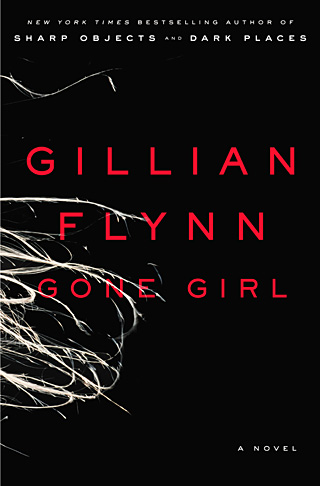
Gone Girl – Gillian Flynn

gonegirl

That I read Gone Girl so soon after finishing Dark Places is a tribute to Gillian Flynn’s talent. With so many books on my tbr shelf, I don’t generally read books by the same author back-to-back. Gone Girl had a few extra things going for it, though. Virtually everyone has been talking about it and I just couldn’t resist its lure any longer.

Nick Dunne and Amy Elliott Dunne are just about to celebrate their fifth wedding anniversary when Amy goes missing. There are signs of a struggle in their rented Missouri home and Nick can’t really account for his whereabouts that morning, so it doesn’t take too long for the police to start treating him like the prime suspect.

Flynn uses a dual narrative approach to tell the story of their courtship and life in New York where Nick was a magazine writer and Amy wrote quizzes for a variety of publications. Life was pretty good for them. They were beautiful, smart and rich. Well, Amy was rich because her parents – Rand and Mary Beth – had written a series of books called Amazing Amy which had, until recently, been a bit of a cash cow. Then Nick and Amy’s fortunes take a turn for the worse and suddenly they find themselves back in Nick’s hometown.

From the start we know that the golden lives of these two protagonists is slightly tarnished. On the morning of the anniversary, Nick’s reaction to his wife’s greeting of “Well, hello, handsome” is one of “bile and dread” inching up his throat. Then: Amy’s missing.

Gone Girl is a supremely entertaining game of cat and mouse. Their married lives had been marked with anniversary treasure hunts and this year is no different. Amy has left the first in a series of clues for her husband. The clues, and the letters which accompany them, seem to indicate Amy’s  awareness of her husband’s unhappiness and her own part in it. But Amy wants to patch things up. The treasure hunt also seems to point to Nick as the person responsible for Amy’s disappearance and slowly the media, Amy’s parents and even his twin sister, Go, start to regard him with suspicion.

But there is more to Gone Girl than a suspenseful mystery. There’s actually quite a damning indictment of the fakery of  relationships; the  potential for infidelity, boredom, entitlement. We want the fairy tale until we don’t. Marriage is hard work. Nick and Amy’s story is extreme, but recognizable nonetheless.

Flynn is a terrific writer. I mean – gifted. She inhabits Nick’s brain as easily as she inhabits Amy’s. They are sympathetic and reprehensible and downright scary in equal measure. To say much more about the plot would be to spoil the novel’s twists. Suffice to say, this is one married couple I wouldn’t be inviting over for dinner any time soon!
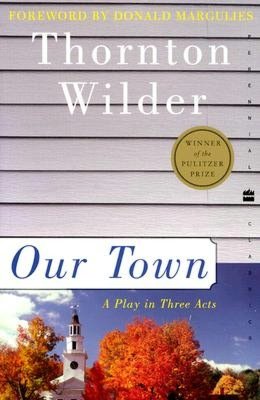
Our Town – Thornton Wilder

ourtownI have loved Thornton Wilder’s Pulitzer Prize winning play, Our Town, since I was fourteen or fifteen. I was trying to figure out how I would have come into contact with it, as I certainly didn’t read it while in school. My best guess is that it was because of Robby Benson, who starred in an adaptation of the play which must have aired on television. If you are a regular visitor to this blog, then you know that Robby and I go way (way) back.

I probably purchased my copy of the play around then – it’s an Avon paperback which, according to the cover, cost $1.75. (I know, eh?) It’s dog-eared and highlighted and marked up and the words contained within still, after all these years, move me.

In the Foreward of the HarperPerennial edition of the play Donald Marguiles, an American playwright and professor, calls Wilder “the first American playwright.” Marguiles further posits that Wilder paved the way for many of the playwrights who came after, and are perhaps better known: Albee, Williams, Miller.

First produced for the stage in 1938, Wilder’s play takes place in Grover’s Corner, New Hampshire. The play is performed on a bare stage. The actors mime their stage business. For theatre goers attending that first production, Wilder’s play must have seemed wildly modern.

“Stripping the stage of fancy artifice, Wilder set himself a formidable challenge,” says Marguiles. “With two ladders, a few pieces of furniture, and a minimum of props, he attempted to “find a value above all price for the smallest events in our daily life.””

Our Town could be any town. That’s the point. The characters on the stage are us. The three act structure of the play mirrors the circle of life: birth, love and marriage, death. One might easily argue that nothing happens. Yet the exact opposite is true: everything happens.

The Stage Manager guides us through the play.  Our Town is a fine example of metadrama; that is a play which draws attention to the fact that it is a play. The Stage Manager acts both as a sort of Greek chorus and bit player. He has the power to alert the audience to events in the future and to allow characters to revisit the past, as he does – famously –  for Emily in Act Three.

The language of the play is simple. Characters speak colloquially. They are just average citizens, concerned with the weather, town gossip, and their children. Even my class of grade ten students were able to see themselves in George and Emily. It is a tribute to the timeless quality of the play that despite the intervening years – from the play’s debut until now –  not much has changed.

DR. GIBBS: Well, George, while I was in my office today I heard a funny sound…and what do you think it was? It was your mother chopping wood. There you see your mother – getting up early; cooking meals all day; washing and ironing  – and still she has to go out in the backyard and chop wood. I suppose she just got tired of asking you. And you eat her meals, and put on the clothes she keeps nice for you., and you run off and play baseball, – like she’s some hired girl we keep around the house but that we don’t like very much.

As a teenager I would have certainly seen myself in that passage. Now, I see my own children.

We are all the same: we are born, we live and we die. The Stage Manager remarks  that even in Babylon “all those families sat down to supper, and the father came home from his work, and the smoke went up the chimney, – same as here.”  It underscores one of the play’s motifs: time and its passing. What do we know of those people? “…all we know about the real life of the people is what we can piece together out of the joking poems and the comedies they wrote for the theatre back then,” remarks the Stage Manager.

In the Joss Whedon’s landmark television show Angel, the title character says “If there’s no great glorious end to all this, if nothing we do matters… , then all that matters is what we do. ‘Cause that’s all there is. What we do. Now. Today.” (Epiphany, 2001)

In Our Town‘s final act Emily comes to the same realization, albeit too late. “Do human beings ever realize life while they live it? – every, every minute?” she cries.

The Stage Manager replies: “No. (pause) The saints and poets, maybe – they do some.”

Perhaps my students aren’t quite ready to acknowledge life’s brevity. I know, for sure, they don’t live “every, every minute.” Why should they? I didn’t. I don’t.

Wilder’s play is a powerful reminder, though, that we should. And that message is as meaningful now in 2013 as it was in 1938.

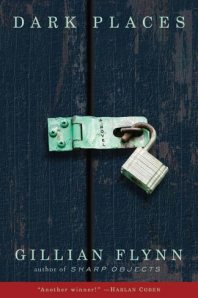
Dark Places – Gillian Flynn

dark-places-book-coverLibby Day is a survivor. She’s survived a drunken, dead-beat father, Runner,  extreme poverty, and the horrific massacre of her mother, Patty, and two older sisters, Michelle and Debby. Well, maybe to call her a survivor is a stretch because Libby is reclusive and mean. She says it herself at the beginning of Gillian Flynn’s terrific novel, Dark Places.

I have a meaness inside me, real as an organ. Slit me at my belly and it might slide out, meaty and dark, drop on the floor so you can stomp on it. It’s the Day blood. Something’s wrong with it. I was never a good little girl, and I got worse after the murders.

Ah, yes, the murders. For the past 24 years Libby’s older brother, Ben, has languised in prison for the crime. He was 15 when he is alledged to have killed his mother and younger sisters. Libby has never once visited him partly, perhaps, because it was her testimony that sent him there. She was seven at the time.

Now, at 30, Libby is alone, broke and desperate. That’s how she comes to accept The Kill Club’s offer. Lyle, one of the Kill Club’s members, reaches out to Libby and makes her a propostion. If she’s willing to come to a meeting and talk about the case, they’ll pay her $500. That original deal morphs into something more and suddenly Libby is revisiting the night that changed her life forever.

gillian-flynnGillian Flynn (right) is a new-to-me writer although everyone and their dog has likely heard about her by now due to her recent novel, Gone Girl. She started her writing career as a journalist and was the TV critic for Entertainment Weekly for a decade before turning her hand to fiction. Look at her: she’s beautiful. And scary. And it just occurred to me that her writing reminds me of one of my all-time favourite writers, Lisa Reardon. Her writing is fearless…and fear-inducing.

Dark Places unspools the Day murders in two ways: as Libby digs for the truth and as the events of the day unravel. For this, we spend time with Patty and Ben. Patty is a sympathetic character, a mom who loves her children and tries to care for them, but whose dwindling emotional and financial resources make it nearly impossible. Ben, on the other hand, is a fifteen-year-old boy in a house full of women. He’s desperately searching for a place to belong and an outlet for the anger which bubbles inside him.

Flynn skilfully weaves the threads of this story together offering the reader equal measures of horror and heartbreak.  I couldn’t put the book down – that’s just about the highest praise I can give a book.

The Casual Vacancy – J.K. Rowling

200px-The_Casual_Vacancy

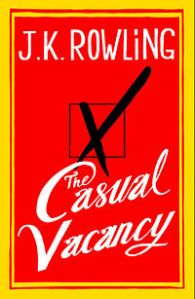
I’m not sure I would have ever read J.K. Rowling’s adult novel The Casual Vacancy if it hadn’t been chosen by a member of my book club. For starters, the book didn’t sound all that appealing to me – Barry Fairbrother dies and leaves a vacant seat on the  parish council. Small town politics? Ugh. I wouldn’t have been motivated to read it because I’m a fan of her other books either. You know, the ones about the wizard and his friends and he who shall not be named.  Yeah. I’ve only read the first one. Loved the movies, though.

So, I started this novel not really expecting very much of anything. I mean, c’mon, it’s 503 pages long. It’s about a small British town. There are a zillion characters. And I loved it. Okay, maybe love is too strong a word. (My kids say I never love any book, but that’s not true.) I really liked The Casual Vacancy. A lot.

First of all, I lived in England for a couple years and so Pagford, the fictional setting of this novel, seemed familiar to me. I knew the shops and the narrow streets, the school  and the council flats. I could hear the characters (I kept imagining Coronation Street although I know that’s probably the wrong accent.) Once I got settled, the characters and their stories (all of which intersect due to their relationship with Mr. Fairbrother) felt very much like I was watching a British soap opera marathon. Every character was brought brilliantly to life. Fathers and mothers, teenage children, doctors, addicts, rich and poor – no one is left out.  I really think that writing character is Ms. Rowling’s true gift as a writer. Characters drive story and that is certainly the case in this book. Nothing much happens. And everything happens and all of it because Barry Fairbrother dies.

Some of The Casual Vacancy is laugh-out-loud funny. For example, middle-aged Samantha’s growing preoccupation with the hunky lead singer of a British boy band. (I may know a thing or two about this, as I find myself staring at pictures of Zayn Malik from One Direction just a teensy bit longer than is necessary.) Some of the characters are so heart-breaking you just want to hug them: Krystal and her little brother, Robbie. Some characters are reprehensible, yes, Simon, I’m looking at you! All of them are so…human…though. Flawed and brave and cowardly and pretentious and blind and you’ll see yourself or someone you know in every single one of them. This isn’t a book where something happens. The plot is pretty much incidental to the novel. Spending time with these people is time well spent, though.

I do have one niggle with the book. Rowling took such care building up these people in this place and time, I did find the ending a little rushed. I would have been happier, perhaps, with a little less in the middle in exchange for a little more at the end. I didn’t feel cheated, exactly, I guess I just wanted more. I don’t need to know the fate of everyone, but some pretty dramatic things happen near the end and I just felt pushed along.

I’d recommend this book, though. If you weren’t a fan before, The Casual Vacancy could very well win you over. I am definitely going to read those Harry Potter books.


Nevermore – @Kelly_Creagh

I’ve been trying to finish Kelly Creagh’s debut YA novel Nevermore for the past few nights. Kids in bed, kitchen clean,  email answered. Check, check, check. With my cat Lily curled beside me, I finally settle down to the book and read until my eyes are burning.  I actually finished it during my 4th period Writing class today. (We read for the first 30 minutes on Tues and Thurs!) I have SO much love for this book.

Isobel Lanley is a popular sixteen-year-old cheerleader. In many ways she is just what you’d imagine her to be; she’s pretty, dates a hunky football player and sits with the ‘in’ crowd at lunch. But Isobel’s world takes a flying leap from normal when she is paired  with Varen Nethers to do an English project.

He sat in the back row against the far corner, slumped in his seat and staring straight ahead through shreds of inky locks, his thin wrists lined in black leather bands specked with hostile silver studs.

Isobel can’t believe her crappy luck. Not only are they going to have to work together, but they are going to be researching Edgar Allan Poe. And Varen is clearly hostile towards her. A simple (although slightly unconventional) phone number exchange sets off a chain of events that isolates Isobel in ways she couldn’t ever imagine. And then things start to get really weird.

Kelly Creagh’s book is so much fun, I couldn’t wait to read it every day. Voya called it an “English teacher’s jewel box,” and it’s easy to see why. Although I am not an expert on Edgar Allan Poe (and I don’t mean to imply that you have to be in order to enjoy this book), I did catch many of the allusions. Nevermore is a well-written, intelligent, puzzle of a book that will appeal to any reader – young or old – who likes a novel with a little meat on its bones.

Although it’s likely that Nevermore will get stuck with the ‘paranormal romance’ tag, I think that label actually does the book a disservice. Yes, there is romance – but you wait for hundreds of pages before Isobel and Varen even kiss. Ratchet up the angst, why don’t you. (And, Ms. Creagh, was that some Buffy speak I caught in there?) There were moments in this book when I was seriously creeped out. One menacing character, Pinfeathers, is super-creepy. Reynolds is another character that is difficult to figure out. Is he good? Is he deceitful?

And, best of all, Isobel is a terrific character. She’s smart and brave and resourceful. And I can’t wait to see what happens to her  in Nevermore‘s sequel, Enshadowed.

I am really looking forward to passing this one on to students in my class.


Ashes – Ilsa J. Bick

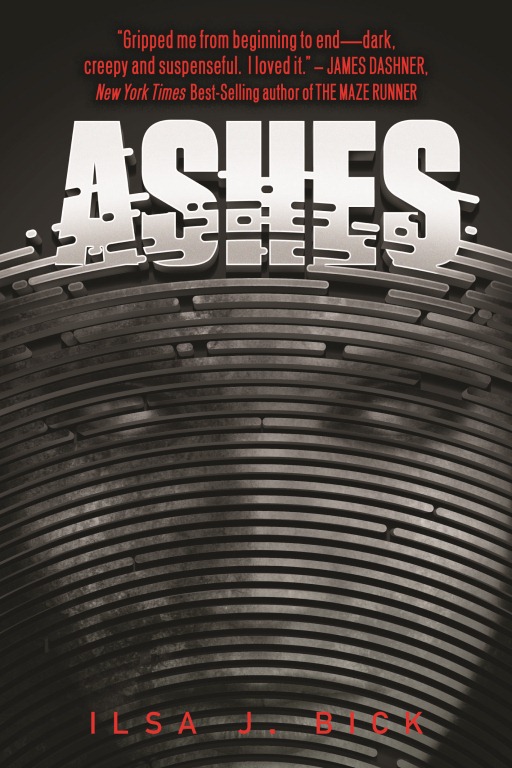
We learn quite a lot about the feisty heroine, Alex, in the prologue of Ilsa J. Bick’s dynamite YA novel, Ashes. She’s stubborn. Aunt Hannah tells us that. “…once you’ve made up your mind, there’s no talking to you,” she says. She’s seventeen. And  she has “a brain tumor the size of a tennis ball” lodged in her head.

Alex is on the run, sort of. She’s decided not to do any more of the experimental  treatments for her brain tumor – so she’s left her Aunt Hannah and headed to Waucamaw Wilderness in Michigan to clear her head and scatter the ashes of her parents, who had been killed in a helicopter crash.

Alex is enjoying the solitude of the woods until Jack, his granddaughter, Ellie and their dog Mina happen by. Ellie is eight and is clearly not happy to be tramping through the woods. By page 25, Jack is dead and Alex and Ellie are running for their lives.

By page 72 both Alex and the reader know they aren’t in Kansas anymore. When she and Ellie stumble into a camp site, this is what Alex sees:

The boy and girl were eating. Stuffing their faces, actually. Splashes of blood smeared their mouths and dripped over their chins like runny clown’s makeup. With a grunt, the boy plunged his fist into the woman’s abdomen and rooted around before coming back up with a drippy fistful of something liverish and soft enough that Alex could hear the squelch as the meaty thing oozed between his fists.

It’s a waking nightmare. But these flesh eating teens aren’t the only thing Alex has to contend with. For one thing, she’s completely cut off from the rest of the world. She is quickly running out of supplies. Winter is coming.

This is one of those no-holds-barred works of fiction that teens will love. I think boys will especially love it because it really has a gross-out factor.  As the story went on, it did make me think about Patrick Ness’s novel The Knife of Never Letting Go a little. Like that book, Bick’s novel stretches out beyond the confines of teen against supernatural/fantasy/strange forces/etc and starts to tackle some other questions. What does it mean to be free? for example.  Who is trustworthy and how can we be sure they don’t just have a personal agenda? Ashes has a crazy mythology: part religious fanaticism, part survival of the fittest.

As Alex tries to figure out what has happened to the world…and herself (because she isn’t the same anymore either). Bick continues to introduce new perils and characters and we must decide — as must Alex– whether or not we can trust them.

Ashes is the first book in a trilogy and I will definitely be continuing on with the series. Bick’s writing is crisp and fast-paced. Alex is a great character — smart and resourceful. Although the book is written in the third person, it’s a limited point of view so it feels like first person narration. You really do see everything through Alex’s filter.

And holy-ol’-cliffhanger. Great book!

The Fault in Our Stars – John Green

Late in the winter of my seventeenth year, my mother decided I was depressed, presumably because I rarely left the house, spent quite a lot of time in bed, read the same books over and over, ate infrequently, and devoted quite a bit of my abundant free time to thinking about death.

Meet Hazel. She’s got cancer. It started as thyroid cancer, but now it’s in her lungs. There is no cure, but there is this miracle drug, Phalanxifor (Green points out in his acknowledgements that it’s a made up drug.), and although Hazel’s lungs are practically useless and she has to be hooked up to her oxygen tank all the time, she does okay. Except for, you know, the depression. Or whatever.

Her parents insist that she go to the  cancer survivor’s support group meeting – which she had grown to “to be rather kicking-and-screaming about” – and it is there that she meets Augustus Waters.  He’s in remission after losing his leg below the knee from “a little touch of osteosarcoma.” Her immediate reaction: he’s hot. From this point on, I flew through the pages of  John Green’s YA novel The Fault in Our Stars, alternately laughing and crying.

Telling you much more about the plot won’t actually do the book any justice. Besides, it isn’t so much about what as it is about to whom. The Fault in Our Stars is driven by the magic that is Hazel and Augustus.

Their relationship begins over an exchange of books (be still my heart). Hazel lends Augustus her favourite novel,  An Imperial Affliction, the story of Anna, a girl with a rare cancer of the blood. But, Hazel says:

it’s not a cancer book, because cancer books suck. Like, in cancer books, the cancer person starts a charity that raises money to fight cancer, right? And this commitment to charity reminds the cancer person of the essential goodness of humanity and makes him/her feel loved and encouraged because s/he will leave a cancer-curing legacy. But in AIA, Anna decides that being a person with cancer who starts a cancer charity is a bit narcissistic, so she starts a charity called The Anna Foundation for People with Cancer Who Want to Cure Cholera.

Hazel has some unanswered questions about An Imperial Affliction. She has tried for months to get in touch with the book’s author, Peter Van Houten. When Augustus actually makes contact with Van Houten, it sends the pair on the trip of a lifetime.

But much of that is plot and while the story might be predictable in many ways, there is nothing ordinary about this novel. Nothing. Hazel has been sick for a long time; she has already come to terms with her mortality. What she doesn’t know how to do is live. Augustus is the perfect antidote to her doldrums, beautiful and funny.

And make no mistake – this book is funny. These kids know how to laugh at themselves. When  Isaac, another member of the support group, loses his remaining eye to cancer he says: ” …people keep saying my other senses will improve to compensate, but CLEARLY NOT YET. Hi, Support Group Hazel. Come over here so I can examine your face with my hands and see deeper into your soul than a sighted person ever could.”

As if navigating the thorny path to adulthood weren’t difficult enough, the teenagers in this book must also contend with bodies that have forsaken them.  It is also heartbreaking to watch Hazel’s parents try to protect their daughter, even when they know they can’t. As a mom myself, I can only imagine how horrific it must be to care for a terminally ill child.

Augustus sums it up best: “…the thing about pain…it demands to be felt.”

Absolutely my favourite book this year.

A Spell of Winter – Helen Dunmore

I read Helen Dunmore’s novel With Your Crooked Heart many years ago and I’ve been a fan ever since. Dunmore’s prose is like poetry, every sentence a perfect balance between beauty and truth. Winner of the 1996 Orange Prize, A Spell of Winter is the fourth novel I’ve read by her, and I have also read her collection of short stories, Ice Cream.

A Spell of Winter concerns the lives of Cathy and Rob, siblings who live in a crumbling manor house in England.  Their guardian is their maternal grandfather, “the man from nowhere”, and through Cathy’s eyes he is seen as stern and unsympathetic.

When A Spell of Winter begins Rob is nine and Cathy, our narrator, is seven. They are on their way, with Miss Gallagher, to visit their father in the sanatorium. It’s a traumatic visit –and also marks the last time the children will see their father alive.

The children’s lives are isolated and insular. Cathy remarks:

I look at the house, still and breathless in the frost. I have got what I wanted. A spell of winter hangs over it, and everyone has gone.

Perhaps it is isolation, perhaps it is abandonment, but eventually Cathy and Rob cross the line. Their story reminds me of another pair of British siblings who become lovers: Cathy and Christopher, protagonists of Carolyn Slaughter’s magnificent novel Relations (also published as The Story of the Weasel.) With a huge house to creep around in and no one to pay attention to them except Kate, their trusted servant, Cathy and Rob fall into a strange spell of their own.

A Spell of Winter has many of the gothic hallmarks: the gloomy dwelling, a sense of mystery, a distressed heroine. As long as Cathy and Rob are isolated, they manage to sustain their relationship. But like winter, it can’t last. Eventually, the real world seeps in in ways both expected and unexpected.

I loved A Spell of Winter. It’s not a ‘love’ story in the way Relations is. I wasn’t rooting for Cathy and Rob. I was rooting for Cathy. She is abandoned many times during her life, but her resilient nature, whether through necessity or tenacity, keeps her going.  The language is beautiful. And the story despite its dark subject matter, is brimming with the promise of spring.


Room – Emma Donoghue

Today I am five. I was four last night going to sleep in Wardrobe, but when I woke up in Bed in the dark I am changed to five abracadabra. Before that I was three, then two, then one, then zero. “Was I minus numbers?”

Jack is the narrator of Emma Donoghue’s stunning novel, Room. (Yes, I am late to the bandwagon; everyone and their dog was talking about this book when it first came out. But you all know I buy more books than it will ever be possible for me to read, right?)

From the book’s opening scene until I closed the novel a few hours later I was totally mesmerized by Jack and his Ma and the eleven by eleven world they lived in, their ‘Room.’  Jack and Ma live in this Room because of Old Nick, a predator who kidnapped Ma when she was 19 and has held her captive for seven years. Room is a prison, but it’s also the only home Jack has ever known. He doesn’t understand Outside, but he’s curious and  Ma knows that time is running out. They must find a way to escape.

Jack is a mesmerizing character and although it was risky to allow the story be told entirely through him, it’s a risk that pays off.  His worldview is so naive. He has no real concept of time (his sixth birthday will happen next week, his birthday cake takes hours and hours to make) and he believes that the people in TV “are made just of colors.”  His world is structured: sleep, eat, exercise, watch TV, read. His only playmate is his mother, but even through his innocent eyes he can see that Ma is struggling. Sometimes she spends entire days “Gone.” Sometimes she displays emotions Jack is unable to understand.

What wakes me up is a noise over and over. Ma’s not in bed. There’s a bit of light, the air’s still icy. I look over the edge, she’s in the middle of Floor going thump thump thump with her hand. “What did Floor do?”

Ma stops, she puffs out a long breath. “I need to hit something,” she says, but I don’t want to break anything.”

“Why not?”

“Actually, I’d love to break something. I’d love to break everything.”

“I don’t like her like this. “What’s for breakfast?”

Room is a remarkable achievement. It reads like a thriller; I couldn’t turn the pages fast enough. But it is also a beautiful testament to the power of love. What wouldn’t Ma do for Jack? Even more amazing, is what Jack is willing and able to do for Ma. I’ll be thinking about this book for a long time.

Highly recommended.

The House at Riverton – Kate Morton

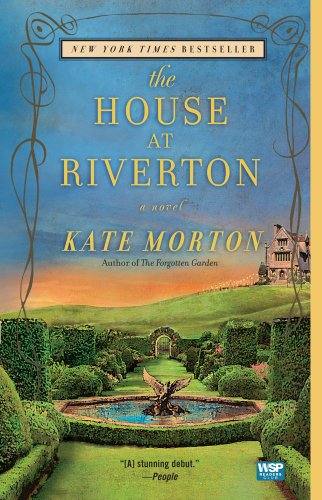
I’m sure many of you have already read Kate Morton’s debut novel, The House at Riverton, but I only just finished it yesterday afternoon. If you haven’t already found a book to while away the dog day’s of summer, might I suggest you run to your bookstore immediately and purchase this one. Whew. What a read!

Grace Bradley is fourteen years old when she comes to Riverton House to work. Her mother had also worked at the sprawling Essex manor house, but had to leave under mysterious circumstances.  It is through Grace that we learn of Riverton and its inhabitants.

I have been thinking about the day I started at Riverton. I can see it clearly. The intervening years concertina and it is June 1914. I am fourteen again: naive, gauche. terrified, following Nancy up flight after flight of scrubbed elm stairs. Her skirt swishes efficiently with every step, each swish an indictment of my own inexperience.

The story, though, starts in the present. Grace is an old woman now. Her husband is dead; her daughter is in her sixties and her beloved grandson, Marcus, has been missing for several weeks. When a filmmaker from America writes to ask if Grace would consult on a film she’s making about a tragedy at Riverton, Grace is pulled back into her memories.

Fans of Downton Abbey will be able to picture Grace’s life perfectly: the servants downstairs, their dedication to service, their hierarchy. But Grace is more concerned with the Hartford siblings: David, Hannah and Emmeline. Over the years she becomes particularly close to Hannah and  when Hannah marries, she is whisked off to London to live.

The House at Riverton is about an aristocratic family in decline. Set between the two great wars, characters go off to their deaths, or come home damaged. The Roaring Twenties usher in an era of shifting sensibilities. Morton does a spectacular job of evoking a time and place. It’s easy to sympathize with the female characters who yearn for  a different life and although criticism has been leveled at Grace for choosing service over personal happiness, I believe I understand her choice.

Because Grace is looking back, the reader knows early on that some tragedy has befallen the Hartford family. That alone would be enough to turn the pages. But the novel takes its time arriving at its conclusion. Perhaps some readers found the novel slow and the prose over-written; I know it took me a while to settle into the story.

However, when I left Grace, 468 pages later, it was with great sadness because even though this is the story of Riverton, Grace’s own story is inextricably linked.