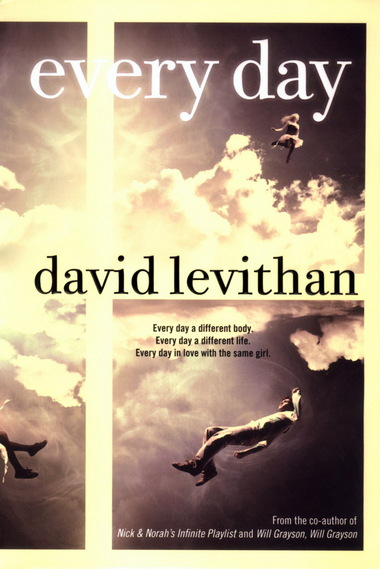
Every Day – David Levithan

16BLEVITHANWhat if every day you woke up in someone else’s body? You are you, but also them; you have access to their memories, but also retain your own. This is A’s predicament in David Levithan’s clever and emotionally resonant YA novel, Every Day.

I don’t know how this works. Or why. I stopped trying to figure it out a long time ago. I’m never going to figure it out, any more than a normal person will figure out his or her own existance. After a while, you have to be at peace with the fact that you simply are. There is no way to know why.

Dispensing with the prickly question of how this works (or doesn’t) early on, Levithan dumps the reader into A’s life on Day 5994. He is 16.  Today he is in Justin’s body.  Justin’s not a particularly likeable guy and A figures that out pretty quickly. He admits: “I know I am not going to like today.”

A’s ability to access information from each person he inhabits allows him to live each day with relative ease, plus he always has an escape hatch because he knows that he will wake up as someone else the next day. Even if he wakes up in the body of an idiot, he knows it’s not forever.  Justin is a bit of an idiot and that wouldn’t be such a big deal if it weren’t for Rhiannon. She’s Justin’s girlfriend.

…there’s something about her – the cities on her shoes, the flash of bravery, the unnecessary sadness – that makes me want to know what the word will be when it stops being a sound. I have spent years meeting people without ever knowing them, and on this morning, in this place, with this girl, I feel the faintest pull of wanting to know. And in a moment of either weakness or bravery on my own part, I decide to follow it. I decide to find out more.

Thus begins A’s relationship with Rhiannon. And as you might imagine, there’s nothing typical about it. There’s nothing typical about Every Day period.

A has spent his entire existence trying to keep himself separate from the person whose body he inhabits. His feelings for Rhiannon complicate his life in ways too numerous to mention; suffice it to say that every day becomes a challenge to see her, but first he somehow has to convince her of the truth of his strange reality.

In one sense, Every Day works as a terrific page-turner: will A and Rhiannon find a way to be together despite their terrific obstacles? After all one day A could be in the body of a hunky football player and the next he could be an overweight teenage girl. Will Rhiannon love him back despite his outward appearance? What is love anyway?

But I think this novel also works hard to be something more and in that way I think it will probably speak to teenagers everywhere. It allows us to inhabit the bodies of confident, beautiful teens and also depressed teens who wish themselves harm. We hang with straight teens and gay teens, teens with parents who smother them and parents who trust them. Each scenario allows Levithan the opportunity to show the reader his tremendous capacity for empathy. And it also allows us to see A  – despite his lack of corpreal form – as the embodiment of what it means to be human.

A Monster Calls – Patrick Ness

Monster-calls_shadow“Are you crying, Mom?”

My daughter was settled in at the foot of my bed playing on her iPhone and I was  reading the last few pages of Patrick Ness’s remarkable novel, A Monster Calls.

And, yeah, I was crying. Hard by the end of it.

Damn you, Patrick Ness.

Siobhan Dowd is credited for the idea for A Monster Calls, but sadly Ms. Dowd died  – at the age of 47 – before she ever had the chance to see her idea through to the end. As Ness acknowledges in his Author’s Note, “the thing about good ideas is that they grow other ideas. Almost before I could help it, Siobhan’s ideas were suggesting new ones to me, and I began to feel that itch that every writer longs for: the itch to start getting words down, the itch to tell a story.”

A Monster Calls is the story of thirteen-year-old Conor O’Malley who lives with his mom in a little house in a little town in England. His parents are divorced and his dad now lives in the States with his new wife and a baby daughter. Conor rarely sees him.

Conor’s mom is ill. Readers will figure out early on that she has cancer and that Conor is doing his level best to cope, with varying degrees of success.  Then the monster shows up “just after midnight. As they do.”

Conor isn’t particularly afraid of this monster. Despite its “great and terrible face”, Conor tells the monster he’s “seen worse.” And even though he claims not to be frightened of the monster, the monster replies that he will be “before the end.”

The monster continues to visit at night with stories that make no sense to Conor. The monster also claims that there will come a time for the fourth tale – that is Conor’s story. Conor knows what the monster is talking about: a recurring nightmare which terrifies him and which he insists he will not be sharing. In the meantime, his mother grows weaker, his grandmother steps in to help out (much to Conor’s dismay) and his father visits from America – a sure sign of the Apocalypse.

The monster drives Conor to action, but also to irrefutable truths. The monster says,      “Stories are important. They can be more important than anything. If they carry the truth.”

Conor’s truth is one that he is unwilling to face, but which comes barreling towards him anyway. And as a reader, I have to say, I was unprepared for its impact.

A Monster Calls reminded me a little bit of John Connolly’s brilliant novel The Book of Lost Things. Connolly’s story is also about a boy on a journey from innocence to experience. You should definitely check it out.

As for A Monster Calls – I cannot recommend it highly enough.


Master of the Delta – Thomas H. Cook

masterofthedeltaI always say Thomas H. Cook is a mystery writer and he is…but I think he is also so much more than that. Master of the Delta is my 8th outing with Cook and it didn’t disappoint, even though some of the themes were familiar. The novel has the propulsive energy of a mystery, a book with a thread of whodunit twined with a ribbon of ‘is this going to end like I think it’s going to end?’ And of course – nothing is ever quite what it seems. But Cook operates on another level and this is where I think he excels.

Master of the Delta is Jack Branch’s story. Branch is a twenty-three year old teacher who has returned to his hometown to teach at Lakeland High School. Branch has had a priviledged upbringing: he grew up at Great Oaks, one of the town’s massive plantation homes.  It is 1954.

As a boy I’d sat with my father on just such a veranda, evenings that despite all that has happened since still hold a storied beauty for me. There was something calm and sure about them, and it would never have occurred to me that anything might shatter the sheer stability of it all, a father much admired, a son who seemed to please him, a family name everywhere revered and to which no act of dishonour had ever been ascribed.

Branch is a fussy young man – no, fussy isn’t the right word. He’s cocky. He believes his own hype. I don’t mean to say that he is without merit, but his youthful arrogance is partly to blame for events that haunt him for the rest of his life.

And that’s one of the cool things about Master of the Delta (and Cook’s novels in general). Cook always manages to weave past and present together seamlessly so Branch’s story is told as it unfolds, but also from the vantage point of Branch as a much older man – someone who is, from this vantage point at least, able to see his own character flaws.

Branch is teaching a course on evil through the ages and he discovers that one of his students, Eddie Miller, is the son of Luke Miller, the Coed Killer – a man who had killed a local girl and subsequently been killed in jail. Branch encourages Eddie to write a paper about his father. He feels it will help Eddie get out from under the weight of his awful heritage. So Eddie starts to research the father he barely remembers, but when this research reaches into his own life, Branch’s age and inexperience begin to show.

Really, Master of the Delta is a book about fathers and sons, about the part luck plays in how our lives turn out, about kindness and cruelty.  It is a book that has something to say about teachers and books and as a teacher who loves books, I enjoyed that. I truly believe Cook is a masterful observor of human life – our weaknesses and our strengths.  He might wrap it all up in a mystery, but I can’t think of anyone who does it better than he does.

In the Woods – Tana French

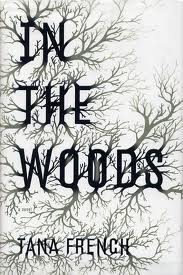
in the woodsWhen Tana French’s first novel In the Woods was published in 2007, critics and mystery lovers went wild. The book was an Edgar Award winner (no small feat for a debut novelist) and for a while everyone was talking about it. It’s been on my TBR list for ages…and I finally picked up a copy at the library book sale this year.

In the Woods is Rob Ryan’s story. Ryan is a Murder detective in Dublin, Ireland. He and his partner, the spunky Cassie Maddox, have been given the task of determining who killed twelve-year-old Katy Devlin and left her body in Knocknaree Woods. As with all good police procedurals, In the Woods offers readers plenty of red herrings and plot twists – all of it anchored by the relationship between Ryan and Maddox.

But there’s more.

In 1984, three other children went missing in Knocknaree. Two of the children were never found. Ryan was the third.

When I was found I was wearing blue denim shorts, a white cotton T-shirt, white cotton socks and white lace-up running shoes. The shoes were heavily bloodstained, the socks less heavily. Later analysis of the staining pattern showed that the blood had soaked through the shoes from the inside outwards; it had soaked through the socks, in lesser concentrations,  from the outside in. The implication was that the shoes had been removed and blood had spilled into them; some time later, when it had begun to coagulate, the shoes had been replaced on my feet, thus transferring blood to the socks. The T-shirt showed four parallel tears, between three and five inches in length, running diagonally across the back from the mid-left shoulder blade to the right back ribs.

Ryan doesn’t remember a thing. Nothing from the moment he left the house with the friends to go into the woods – where they had played all the time – until he was found and being examined in the hospital.

So when he has to return to Knocknaree, it opens the proverbial can of worms. Are there any parallels between the Devlin case and his own? Will he finally remember what happened all those years ago?

The Devlin case is interesting and as Maddox and Ryan knock on doors, ask questions and try to piece together who would have killed Katy, Ryan also wrestles with his own complicated past. All of it makes for page-turning goodness.

And the icing on the cake: Tana French can write. I mean, a great mystery doesn’t really depend on stellar writing to be entertaining and fun to read, but French gives you more bang for the buck: a compelling mystery times two, characters who are complicated and human, and writing which forces you to slow down.

As you know, I am a huge fan of Thomas H. Cook – a mystery writer who cares about the writing, too. I’d definitely stick French in that category and I look forward to reading more of her work.

The Sky is Everywhere – Jandy Nelson

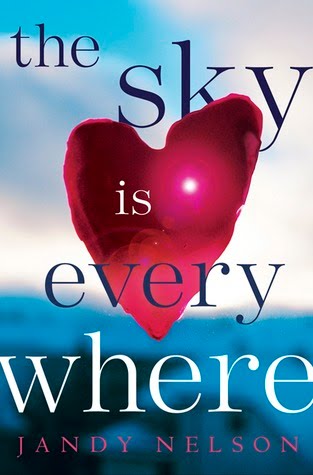
The Sky is EverywhereJandy Nelson has written a debut novel which will resonate with anyone who has ever lost someone they’ve truly loved.  The Sky is Everywhere is seventeen-year-old Lennie Walker’s journey through the grief of losing her nineteen-year-old sister.

My sister Bailey collapsed one month ago from a fatal arrhythmia while in rehearsal for a local production of Romeo & Juliet. It’s as if someone vacuumed up the horizon while we were looking the other way.

The loss of her sister isn’t the first significant loss of Lennie’s young life. She lives with her grandmother and her uncle ‘Big’ (yes, he is indeed) because her mother abandoned her and her sister when Lennie was only one. Despite the fact that Gram and Big are awesome, Lennie is finding it difficult to cope. Lucky for her, Bailey’s boyfriend, Toby, is on hand to share her grief.

“How will we do this? I say under my breath. “Day after day after day without her…”

“Oh, Len.” he turns to me, smooths the hair around my face with his hand.

I look into his sorrowful eyes and he into mine, and I think, He misses her as much as I do, and that’s when he kisses me –

There isn’t a thing I didn’t love about Lennie. She’s lived, thus far, in her sister’s shadow; Bailey was the outgoing, beautiful one.  Now, suddenly, Bailey is gone and Lennie is lost. Perhaps that’s what makes Toby so desirable. They can share their grief, but also their memories of someone they both loved.

But, then it gets complicated.

“Even in the stun of grief, my eyes roam from the black boots, up the miles of legs covered in denim, over the endless torso, and finally settle on a face so animated I wonder if I’ve interrupted a conversation between him and my music stand.

Meet Joe Fontaine, the “gypsy,” “rock star,” “pirate,” who arrived at school while Lennie was away. Suddenly Lennie finds herself in a precarious predicament: she is  impossibly drawn to Toby even as she crushes hard on Joe. Those feelings are compounded by her guilt because she’s supposed to be sad. And she is.

Make no mistake, The Sky is Everywhere is not a romantic comedy; it’s a beautifully written novel about loss, about being left behind and about what it means to be alive. All the characters are fully realized; even the adults have interior lives, a fact Lennie only begins to understand months after her sister’s death. She also comes to understand that grief is a living thing. Lennie thinks, “I don’t know how the heart withstands it.”

I’m not a fan of eReaders, but I can’t imagine reading this book on one would offer as satisfying an experience as reading the book the traditional way. The novel is filled with poetry written on scraps of paper and found in various places which are named on the back of the found object.  How they came to be collected is revealed at the end of the story. The poetry itself is beautiful (Nelson herself is a poet) and I loved its inclusion in the book.

This is a novel I will really look forward to passing on to and talking about with my students.

Our Daily Bread – Lauren B. Davis

ourdailybread

Picking a book for my book club  is serious business. The way our group works, we have one opportunity to pick and host per year and so you don’t want to choose a dud. The women in our group our merciless [cough] The White Iris [/cough] and it sucks to be on the receiving end of a book choice gone bad.  Usually I spend a lot of time choosing my book. This year I thought I would choose something from my own massive tbr  pile, but the problem was that every book I selected from my shelf was unavailable at local stores. In the end, I headed over to Indigo to peruse the shelves. The only criteria at that point was that there were enough copies on the shelf for the members of my club.

In the end, I chose a book I’d never heard of but which was plastered with accolades and a bright red sticker proclaiming that it had been longlisted for the Giller in 2012. Feeling confident of its pedigree, I brought home Lauren B. Davis’s novel Our Daily Bread.

Davis’s novel owes some of its gripping story to the real-life Golers from South Mountain, Nova Scotia. But Davis is quick to point out that Our Daily Bread is not ABOUT the Golers. While it’s true that Davis’s fictional Erskine family shares some similarities with the real-life family, that is only one small part of this mesmerizing and beautifully-written tale.

Albert Erskine is not like the rest of his violent, drug and alcohol addicted, sexually deviant family. He has already separated himself from the pack by building himself a small shack away from the main buildings on his family’s “compound”  on North Mountain.  His uncle Lloyd comments on Albert’s ‘otherness’ by saying: “You don’t act like the family at all now, do you? Don’t come visiting. Live in your little shack. Course maybe you have your own parties. That it? You have kids come to see you?”

It’s near impossible to trace the branches of  Albert’s family tree. Suffice it to say, there are a lot of younger kids with questionable DNA and Albert regards them with a mixture of annoyance and helplessness.  When ten-year-old Toots stops by his shack looking for food,  Albert ponders the sticky question: “What would she be like, if she’d been raised in some other place?” Albert often wonders how he might be different if his circumstances had been different. It’s a painful road for both Albert and the reader to travel.

Down in Gideon is another family with their own struggles: Tom and Patty Evans and their children Ivy and Bobby.  Tom is a good man. He grew up in Gideon and is well-liked and well-known. His wife, Patty, is another story. For starters, she’s from away. And although Tom seems desperately in love with her, she seems detached and unhappy. No matter what Tom does, it’s not good enough. As the tension in the household escalates, Ivy and Bobby seek shelter elsewhere. For Ivy, it is with the benign widow Dorothy Carlisle; Bobby’s new friend and confidant turns out to be  Albert Erskine. The intersection of these lives makes up the bulk of the narrative of Our Daily Bread.

I am guessing that some of the women in my group will have difficulty with the graphic (but never, imo, gratuitous) nature of the subject matter. As a mother, it’s certainly upsetting to see children in peril. The interesting thing about this book is that peril means different things to different people. Is Ivy’s falling-apart life any less horrible because she has a warm bed to sleep in? The impact Bobby and Albert have on each other’s lives is astounding and heart-breaking, too. Bobby is filled with a fifteen year old’s rage and angst and it isn’t until the novel’s powerful climax that he understands the value of his father’s love.

It truly is the mark of a great novel when you can empathize with so many of the characters. I loved Ivy’s resolute determination and Albert’s jaded hope and Dorothy’s refusal to bend to the will of small-town politics. And I loved Tom. A lot. As he copes with his unraveling marriage, as he asked himself the question, “How can I ever trust myself again?” I just saw so much of myself in him. But, ultimately, it all comes back to Albert. I so desperately wanted him to get in his truck and just go. I will be thinking about him for a long time.

Our Daily Breadisn’t ‘light’ reading, but this is a book that will stay with you long after the final page is turned.

As expected, our discussion of this book was lively and we were SO excited to be able to Tweet with Ms. Davis about her book. Here is some of our conversation:

Lauren B. Davis:  Oh, that’s wonderful, Christie!  If you have any questions, just send me a tweet! Thanks so much. #Ilovebookclubs

The Ludic Reader: Lively discussion about Our Daily Bread. @Laurenbdavis girls want to know if you think Albert ever contemplated a sexual advance towards Bobby?

Lauren B. Davis‏:  Not consciously, altho I do think the conditioned response of his childhood arose (pardon the pun) a few times, including that moment in the cabin the night Bobby came up to the compound with him.

@bitebymichelle wants to know where the wife went.

Lauren B. Davis‏: At the very end of the book?  Ah, who knows.  She is a lost soul, I fear.  I wonder if she’ll  ever come back and finally make that long walk up to the door.  What do you all think?

The Ludic Reader: Nobody is going to love her like Tom did, but we don’t think she’ll come back until her life is shit.

The Ludic Reader:  We all loved Albert so much – why did he have to die? (Altho we do know the answer.)

Lauren B. Davis‏: Can’t tell you how I tried not to kill him.  In the first draft he survived, but it just didn’t work.  I suppose it’s the symbolic sacrifice, but to be honest, I still grieve him. I found the final scene difficult to write.

The Ludic Reader: Some feel the trial was not necessary. Why did you decide to include it?

Lauren B. Davis:  It is rough, isn’t it?  But I felt readers would want to know what happened to the abusers, and since the courtroom  dialogue was taken from trial transcripts, I felt I was bearing witness to the children whose story inspired me. There was so much more of the Goler case which I did not include, because it was simply too horrible. But the response of the townspeople was important to the meaning of the book  I understand the squeamishness.  I felt I, too.  But yes, I think it’s important to be fearless in our gaze and to speak  truth to power even if our voice shakes.

Wonder – R. J. Palacio

wonder

R. J. Palacio’s debut novel Wonder is wonderful. It tells the story of ten-year-old August (Auggie) Pullman who was born with “a previously unknown type of mandibulofacial dysostosis caused by a autosomal recessive mutation in the TCOF1 gene,” or, in other words, he’s not “normal” looking.  Auggie has already had twenty-seven surgeries in an effort to correct some of the problems, but he has  come to terms with the way he looks. He doesn’t like it, but he accepts it.

August lives with his parents and 14-year-old sister Olivia (Via) in North River Heights, which is located at the very top of Manhattan. His parents have decided to take the very brave step of enrolling August in school for the first time. Until now his mom has been home schooling him. They are all hyper-aware of August’s stare-inducing face, but  his mom and dad also understand that they can’t protect him forever.

Wonder follows August through fifth grade, not only from his point of view, but from the perspective of some of his classmates and his sister, too. One of his new friends, Summer, says:

I sat with him that first day because I felt sorry for him. That’s all. Here he was, this strange-looking kid in a brand-new school. No one was talking to him. Everyone was staring at him. All the girls at my table were whispering about him. He wasn’t the only new kid at Beecher Prep, but he was the only one everyone was talking about. Julian had nicknamed him the Zombie Kid, and that’s what everyone was calling him.

August’s favourite day of the whole year is, you guessed it, Hallowe’en.  He says it’s “the best holiday in the world. It even beats Christmas. I get to dress up in a costume. I get to wear a mask. I get to go around like every other kid with a mask and no one thinks I look weird. Nobody takes a second look. Nobody notices me.” If that doesn’t break your heart, I don’t know what will.

Olivia is also spreading her wings and her fierce love for her brother is  tinged, realistically, with some adolescent id. For example, she doesn’t want her parents to attend a school play because they’ll bring August and she doesn’t want her new high school friends to see him.  Despite understanding the extreme nature of Auggie’s problem  – she would never call it deformity, but there you have it – she is starting to want some of her mother’s very  August – focused attention for herself. Still, she is a good sister.

August is  smart and funny and well-supported by parents who love him and understand that they cannot shield him from life’s cruelty forever. He is beginning to make his way in a world that may not always show him kindness and yet he is so buoyed by the love of his family and the support of friends, one can only imagine that he will be just fine.

If  the ending is perhaps just the teensiest bit instructional, the proffered lesson is one I can get behind. We must be kind to each other. Cynical readers might also argue that Wonder‘s ending is a bit saccharine. I disagree. Instead, I agree with Auggie’s mother when she  tells him: “You really are a wonder.” And so is this book.

A must read.

Gone Girl – Gillian Flynn

gonegirl

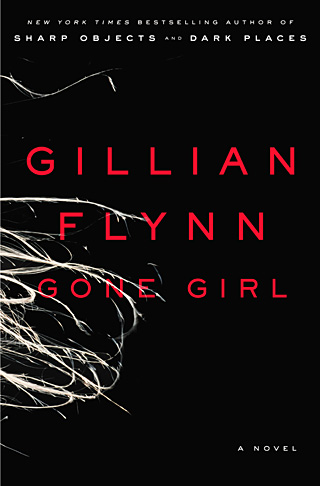
That I read Gone Girl so soon after finishing Dark Places is a tribute to Gillian Flynn’s talent. With so many books on my tbr shelf, I don’t generally read books by the same author back-to-back. Gone Girl had a few extra things going for it, though. Virtually everyone has been talking about it and I just couldn’t resist its lure any longer.

Nick Dunne and Amy Elliott Dunne are just about to celebrate their fifth wedding anniversary when Amy goes missing. There are signs of a struggle in their rented Missouri home and Nick can’t really account for his whereabouts that morning, so it doesn’t take too long for the police to start treating him like the prime suspect.

Flynn uses a dual narrative approach to tell the story of their courtship and life in New York where Nick was a magazine writer and Amy wrote quizzes for a variety of publications. Life was pretty good for them. They were beautiful, smart and rich. Well, Amy was rich because her parents – Rand and Mary Beth – had written a series of books called Amazing Amy which had, until recently, been a bit of a cash cow. Then Nick and Amy’s fortunes take a turn for the worse and suddenly they find themselves back in Nick’s hometown.

From the start we know that the golden lives of these two protagonists is slightly tarnished. On the morning of the anniversary, Nick’s reaction to his wife’s greeting of “Well, hello, handsome” is one of “bile and dread” inching up his throat. Then: Amy’s missing.

Gone Girl is a supremely entertaining game of cat and mouse. Their married lives had been marked with anniversary treasure hunts and this year is no different. Amy has left the first in a series of clues for her husband. The clues, and the letters which accompany them, seem to indicate Amy’s  awareness of her husband’s unhappiness and her own part in it. But Amy wants to patch things up. The treasure hunt also seems to point to Nick as the person responsible for Amy’s disappearance and slowly the media, Amy’s parents and even his twin sister, Go, start to regard him with suspicion.

But there is more to Gone Girl than a suspenseful mystery. There’s actually quite a damning indictment of the fakery of  relationships; the  potential for infidelity, boredom, entitlement. We want the fairy tale until we don’t. Marriage is hard work. Nick and Amy’s story is extreme, but recognizable nonetheless.

Flynn is a terrific writer. I mean – gifted. She inhabits Nick’s brain as easily as she inhabits Amy’s. They are sympathetic and reprehensible and downright scary in equal measure. To say much more about the plot would be to spoil the novel’s twists. Suffice to say, this is one married couple I wouldn’t be inviting over for dinner any time soon!

Our Town – Thornton Wilder

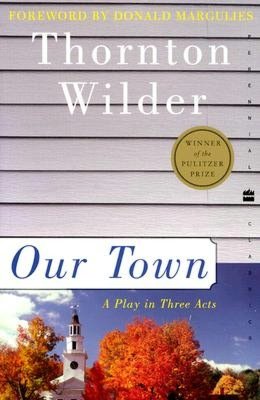
ourtownI have loved Thornton Wilder’s Pulitzer Prize winning play, Our Town, since I was fourteen or fifteen. I was trying to figure out how I would have come into contact with it, as I certainly didn’t read it while in school. My best guess is that it was because of Robby Benson, who starred in an adaptation of the play which must have aired on television. If you are a regular visitor to this blog, then you know that Robby and I go way (way) back.

I probably purchased my copy of the play around then – it’s an Avon paperback which, according to the cover, cost $1.75. (I know, eh?) It’s dog-eared and highlighted and marked up and the words contained within still, after all these years, move me.

In the Foreward of the HarperPerennial edition of the play Donald Marguiles, an American playwright and professor, calls Wilder “the first American playwright.” Marguiles further posits that Wilder paved the way for many of the playwrights who came after, and are perhaps better known: Albee, Williams, Miller.

First produced for the stage in 1938, Wilder’s play takes place in Grover’s Corner, New Hampshire. The play is performed on a bare stage. The actors mime their stage business. For theatre goers attending that first production, Wilder’s play must have seemed wildly modern.

“Stripping the stage of fancy artifice, Wilder set himself a formidable challenge,” says Marguiles. “With two ladders, a few pieces of furniture, and a minimum of props, he attempted to “find a value above all price for the smallest events in our daily life.””

Our Town could be any town. That’s the point. The characters on the stage are us. The three act structure of the play mirrors the circle of life: birth, love and marriage, death. One might easily argue that nothing happens. Yet the exact opposite is true: everything happens.

The Stage Manager guides us through the play.  Our Town is a fine example of metadrama; that is a play which draws attention to the fact that it is a play. The Stage Manager acts both as a sort of Greek chorus and bit player. He has the power to alert the audience to events in the future and to allow characters to revisit the past, as he does – famously –  for Emily in Act Three.

The language of the play is simple. Characters speak colloquially. They are just average citizens, concerned with the weather, town gossip, and their children. Even my class of grade ten students were able to see themselves in George and Emily. It is a tribute to the timeless quality of the play that despite the intervening years – from the play’s debut until now –  not much has changed.

DR. GIBBS: Well, George, while I was in my office today I heard a funny sound…and what do you think it was? It was your mother chopping wood. There you see your mother – getting up early; cooking meals all day; washing and ironing  – and still she has to go out in the backyard and chop wood. I suppose she just got tired of asking you. And you eat her meals, and put on the clothes she keeps nice for you., and you run off and play baseball, – like she’s some hired girl we keep around the house but that we don’t like very much.

As a teenager I would have certainly seen myself in that passage. Now, I see my own children.

We are all the same: we are born, we live and we die. The Stage Manager remarks  that even in Babylon “all those families sat down to supper, and the father came home from his work, and the smoke went up the chimney, – same as here.”  It underscores one of the play’s motifs: time and its passing. What do we know of those people? “…all we know about the real life of the people is what we can piece together out of the joking poems and the comedies they wrote for the theatre back then,” remarks the Stage Manager.

In the Joss Whedon’s landmark television show Angel, the title character says “If there’s no great glorious end to all this, if nothing we do matters… , then all that matters is what we do. ‘Cause that’s all there is. What we do. Now. Today.” (Epiphany, 2001)

In Our Town‘s final act Emily comes to the same realization, albeit too late. “Do human beings ever realize life while they live it? – every, every minute?” she cries.

The Stage Manager replies: “No. (pause) The saints and poets, maybe – they do some.”

Perhaps my students aren’t quite ready to acknowledge life’s brevity. I know, for sure, they don’t live “every, every minute.” Why should they? I didn’t. I don’t.

Wilder’s play is a powerful reminder, though, that we should. And that message is as meaningful now in 2013 as it was in 1938.

Dark Places – Gillian Flynn

dark-places-book-coverLibby Day is a survivor. She’s survived a drunken, dead-beat father, Runner,  extreme poverty, and the horrific massacre of her mother, Patty, and two older sisters, Michelle and Debby. Well, maybe to call her a survivor is a stretch because Libby is reclusive and mean. She says it herself at the beginning of Gillian Flynn’s terrific novel, Dark Places.

I have a meaness inside me, real as an organ. Slit me at my belly and it might slide out, meaty and dark, drop on the floor so you can stomp on it. It’s the Day blood. Something’s wrong with it. I was never a good little girl, and I got worse after the murders.

Ah, yes, the murders. For the past 24 years Libby’s older brother, Ben, has languised in prison for the crime. He was 15 when he is alledged to have killed his mother and younger sisters. Libby has never once visited him partly, perhaps, because it was her testimony that sent him there. She was seven at the time.

Now, at 30, Libby is alone, broke and desperate. That’s how she comes to accept The Kill Club’s offer. Lyle, one of the Kill Club’s members, reaches out to Libby and makes her a propostion. If she’s willing to come to a meeting and talk about the case, they’ll pay her $500. That original deal morphs into something more and suddenly Libby is revisiting the night that changed her life forever.

gillian-flynnGillian Flynn (right) is a new-to-me writer although everyone and their dog has likely heard about her by now due to her recent novel, Gone Girl. She started her writing career as a journalist and was the TV critic for Entertainment Weekly for a decade before turning her hand to fiction. Look at her: she’s beautiful. And scary. And it just occurred to me that her writing reminds me of one of my all-time favourite writers, Lisa Reardon. Her writing is fearless…and fear-inducing.

Dark Places unspools the Day murders in two ways: as Libby digs for the truth and as the events of the day unravel. For this, we spend time with Patty and Ben. Patty is a sympathetic character, a mom who loves her children and tries to care for them, but whose dwindling emotional and financial resources make it nearly impossible. Ben, on the other hand, is a fifteen-year-old boy in a house full of women. He’s desperately searching for a place to belong and an outlet for the anger which bubbles inside him.

Flynn skilfully weaves the threads of this story together offering the reader equal measures of horror and heartbreak.  I couldn’t put the book down – that’s just about the highest praise I can give a book.