If I Forget You – Thomas Christopher Greene

Coming on the heels of You Made a Fool of Death With Your Beauty, Thomas Christopher Greene’s 2016 novel If I Forget You confirmed what I already knew: I like my romance novels to be a little less fantastical. If I Forget You is my fourth novel by this author (The Perfect Liar, The Headmaster’s Wife and Envious Moon) and I think it is fair to say that he is one of my favourite writers.

This novel introduces us to Henry and Margot. Margot is as WASPish as can be (her father is a soft-drink kingpin; her mother lunches) and Henry is the son of Jewish immigrants. Their paths first cross in 1991at Bannister College, where they are both students. Margot’s father is a college benefactor; there is a building named after him. Henry arrives on a scholarship. The two meet after a poetry reading (Henry is the poet and a talented one) and are immediately smitten. More than smitten.

…she knows that tonight she will kiss him and that soon she will sleep with him and she also knows, more broadly, that if she doesn’t want to fall in love with him, she needs to decide that now.

The novel opens in 2012. Henry, a poet and lecturer at NYU, sees Margot – for the first time in 20 years – on the street in Manhattan. When their eyes meet, “the face Henry sees travels to him from a lifetime ago.” Instead of speaking to him, though, she runs away. It is from this point that their story unspools – toggling between their college days and this point in the present. Lives lived and all that.

Greene’s novel is filled with tenderness. The choices these characters make or, in some instances, are forced to make, inform their lives. Despite how young they are when they first meet, it is clear that Henry and Margot’s feelings for each other are sincere and deep, but as Henry remarks “The more you love someone, the more that person will eventually break your heart.”

Margot is also introspective. She is married to the bland but kind Chad, and has two almost adult children. Her son, Alex, causes her to get “nostalgic for the time of life he is occupying” although “part of her hates herself for this, the always looking back.”

If I Forget You is a quiet novel filled with joy and melancholy and hope. I loved both main characters and how, while their lives were filled with missteps, they managed to find each other again.

Highly recommended.

Notes on a Silencing – Lacy Crawford

At just 15, Lacy Crawford is sexually assaulted by two older boys at the New England boarding school that she attends. Notes on a Silencing is Crawford’s memoir of how this event impacted her life in the short term, but also how this event was part of a much more insidious instance of coverups at the prestigious school.

…it took a very long time to find the right name for what happened to me. I was too stunned to think rape when I pleaded with them not to have sex with me, though rape, in the traditional sense, was precisely what I meant to avoid. I had been raised to believe that by every metric, the most serious thing a girl could do was have a penis in her vagina. Not even Mary the mother of Jesus had done that. Certainly I had not. It had not occurred to me what else these two boys might do.

The memoir begins with the heinous assault and then invites the reader into Crawford’s life at St. Paul’s before this event. In many ways, Crawford was a typical teenager: studious, athletic, awkward and graceful in equal measure. Like many teenagers, Crawford is looking for a way to belong and longs to be both appealing and invisible to the opposite sex. After the assault, though, an event which she keeps to herself, Crawford is overcome with anxiety. She believes that what happened to her is her fault and many of the decisions she made in the following months lead to more emotional damage.

As much as Notes on a Silencing is about this one event and its aftermath, this is also the story of one girl’s journey through the land-mined path from adolescence to adulthood. It is about the casual cruelty girls often sling at each other, and the small kindnesses people can extend especially when you least expect them to. It is also very much about institutional abuse, even more appalling in this case because St. Paul’s is a well-respected religious school that prides itself on turning out graduates headed for the Ivy League. Crawford was failed over and over.

Twenty-five years after Crawford’s graduation from St. Paul’s, she reads about another assault on campus. There is a plea for information and Crawford tells her story. She is contacted by detectives and her case is added to what turns out to be many cases of sexual assault which were covered up on the campus. I’d love to say that Crawford gets her day in court, but that’s not what happens.

It’s so simple, what happened at St. Paul’s. It happens all the time.

First, they refused to believe me. Then they shamed me. Then they silenced me. On balance, if this is a girl’s trajectory from dignity to disappearance, I say it is better to be a slut than to be silent.

Notes on a Silencing is a powerful, frustrating, devastating and beautifully written story about one girl’s experience which will speak to every single woman out there.

Highly recommended.

The Secret History – Donna Tartt

Published in 1992, Donna Tartt’s debut novel The Secret History is an astounding accomplishment. I read it for the first time shortly after it was published and I remember it making such a huge impression on me. It was a book that sort of stuck in my brain even though, over the years, I forgot the details of what it was about. I often recommend it to students and this summer my son Connor – who read the book, at my urging, when he was 13 or 14 – suggested we do a re-read. I did; he did not.

The book’s narrator, Richard Papen, recalls his time at Hampden College, a small liberal arts college in rural Vermont. (Many critics say it’s based off Tartt’s alma mater, Bennington.) The novel opens dramatically

The snow in the mountains was melting and Bunny had been dead for several weeks before we came to understand the gravity of our situation. He’d been dead for ten days before they found him, you know.

Richard has come to Hampden from Plano, California a place which has “created for [him] an expendable past, disposable as a plastic cup.” After beginning college in California, a fight with his parents leads him to Hampden where he hopes to study Greek, a subject for which he has an affinity. The only Greek tutor, Julian Morrow, is reluctant to accept Richard into his class. Julian tells him, “I have limited myself to five students and I cannot even think of adding another.”

Those five students soon become central to Richard’s life. There’s Edmund “Bunny” Corcoran, the twins, Charles and Camilla Macauley, Francis Abernathy and Henry Winter.

All of them, to me, seemed highly unapproachable. But I watched them with interest whenever I happened to see them: Francis, stooping to talk to a cat on a doorstep; Henry dashing past at the wheel of a little white car, with Julian in the passenger’s seat; Bunny leaning out of an upstairs window to yell something at the twins on the lawn below.

A chance encounter in the library offers Richard an invitation to this insular group and from there a front row seat to their complicated dynamics. The novel traces the shifting alliances, the pretentious ponderings and the copious drinking of this group of young academics. Oh, and there’s a murder and other dark deeds.

The Secret History is considered the grand dame of dark academia, although it wasn’t even really a thing when the book was published. Dark academia became a thing on Tumblr in 2015 and “is a genre of literature that literally revolves around academia or learning. Therefore, you will see that it is mostly set in educational institutions and follows the lives of students.” (Medium) TikTok has a trend for the aesthetic subculture of dark academia. (NY Times) For me, dark academia is a story that takes place on a college campus or at a boarding school, where students are concerned with the study of literature but there are also dark forces (not of the supernatural variety) at play. Wikipedia has a pretty good overview here.

When I read The Secret History the first time, dark academia didn’t exist, so it was interesting to read it this time and see all the qualities that I recognize now as being hallmarks of the category: an isolated, insular campus setting, a preoccupation with academia, toxic relationships, corrupted morality. I think inherent in dark academia is bildungsroman. It is certainly true that Richard is changed by the novel’s end – and not necessarily for the better.

My memory of my first reading of Tartt’s book is that it was exceptional. This is a literary novel which I would now describe as overwritten, but that is a stylistic choice. Tartt has penned two other novels, The Little Friend and The Goldfinch, which won the Pulitzer in 2014 and they all have this in common: Tartt loves language and she is a master of her craft.

This reading of The Secret History was a little bit more of a slog than the first time around considering I was waiting for the “big” things to happen. I also found the characters just a little bit precious and not of this world. For a book that is set in the 1980s – granted a lot more years ago now than it was when first written – Richard and company seem just a tad foolish. They dress in “starchy shirts with French cuffs” and Richard sometimes observes to his delight, Francis wearing pince-nez. I mean, really. Sometimes they speak as though they are from another planet. But perhaps all the pretention is the point. These are students in their early 20s, trying to make sense of their world but they are, perhaps, too clever for their own good.

If you haven’t yet read The Secret History, I highly recommend it. And if you are already a fan of dark academia, check out these titles:

If We Were Villains – M.O. Rio

Bunny by Mona Awad

The Girls Are All So Nice Here – Laurie Elizabeth Flynn

Babel – R.F. Kuang

Never Let Me Go – Kazuo Ishiguro

One of Us Is Lying – Karen M. McManus

The Broken Girls – Simone St. James

Vladimir – Julia May Jonas

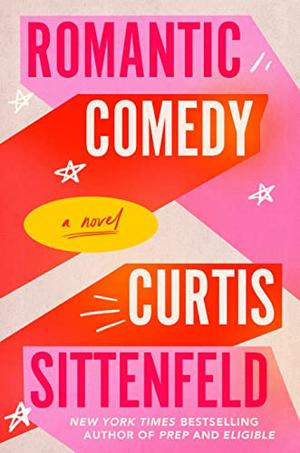
Romantic Comedy – Curtis Sittenfeld

Someone once told me that I was the most romantic person they’d ever met. That was a long time ago; life has chipped away at my notion of “romance”. Not that I ever consumed a lot of romance in literature, but I really don’t read that much straight-up romance at all now. If I do read it, I prefer a little angst (or, a lot of angst, tbh) and I like my main characters to be a little scuffed up by life. Still, the hype for Curtis Sittenfeld’s Romantic Comedy was irresistible and so I picked up a copy.

Sally Milz, 36, writes sketches for a late-night comedy show The Night Owls (picture Saturday Night Live). When the novel opens, Sally is getting ready for the crazy week ahead which includes writing sketch outlines, pitching them, fine-tuning them, taking them to rehearsal and then the live show. This week’s guest is Noah Brewster, “a cheesily handsome, extremely successful singer-songwriter who specialized in cloying pop music and was known for dating models in their early twenties.”

Noah is doing double duty this week acting as musical guest and host, a gig he claims “has been a lifelong dream, ever since [he] was a middle school misfit sneaking down to the basement to watch [the show] after [his] parents went to bed.” When he asks Sally for some help with a sketch he wants to pitch, Sally obliges and in doing so discovers that there is more to Noah than his piercing blue eyes, surfer hair and chiseled body. This is the meet cute.

While not necessarily a romantic cynic, Sally is also aware of how these things go – romantic relationships in an industry filled with beautiful people. She has written a sketch called “The Danny Horst Rule”. Danny is another writer on the show and even though he is “like a little brother” to Sally, the fact that he recently started dating Annabel Lily, “a gorgeous, talented, world-famous movie star” has sent Sally into a bit tizzy. Danny is, according to Sally, a “schlub.”

He was pasty skinned and sleep-deprived and sarcastic. And, perhaps because he was male or perhaps because he was a decade younger than I was, he was a lot less self-consciously people-pleasing and a lot more recklessly crass.

How come a guy like that ends up with a woman like Annabelle? This “was the essence of [her] fury: that such couples would never exist with the genders switched, that a gorgeous male celebrity would never fall in love with an ordinary, dorky, unkempt woman. Never. No matter how clever she was.”

There seems to be chemistry between Sally and Noah – or is he just turning on the high-wattage charisma big stars seem to have? Sally can’t tell. They definitely have banter, but it’s not vacuous banter. Then, at the after-after party there is a moment when – and Sally knows exactly when it happens – that things change.

The Covid lock-down two years later puts Noah back in Sally’s orbit and their email exchange is one of my favourite parts of the book – and that’s saying something considering I loved all the parts of the book.

Romantic Comedy is often laugh-out-loud funny, but it is also a book that examines notions of celebrity, beauty, gender and the perils of social media. I loved Sally’s insecurities and interior monologue – at one point she tells Noah that she “feel[s] like [she’s] writing dialogue for the character of [her]self.” And I loved Noah. He was self-aware and smart and patient with Sally. They are kind of perfect together.

Even if, like me, you wouldn’t necessarily consider yourself a romance reader, I can whole-heartedly recommend this book.

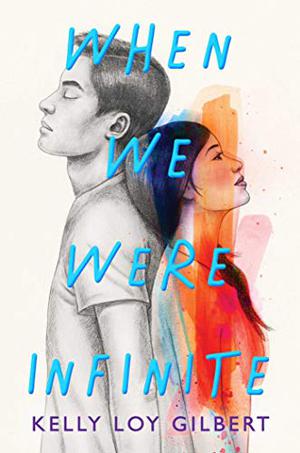
When We Were Infinite – Kelly Loy Gilbert

I read a lot of YA – especially during the school year. I started Kelly Loy Gilbert’s novel When We Were Infinite some time in May, but didn’t get around to finishing it because of all the craziness that happens at the end of the school year. I brought it home and finally got around to reading the second half of the book and I am so glad that I did because this is a superior YA book.

Beth, a talented violinist, lives in the Bay area with her Chinese-American mother. Her white father has moved out and Beth blames her mother. Her besties – Grace, Brandon, Sunny and Jason – are all Asian-American and also musicians. The five of them are part of the Bay Area Youth Symphony and are making plans to attend the same college after graduation.

There was so much the five of us had lived through together, so much we’d seen each other through. But in the whole long span of our history together, this was the most important thing my friends had done for me: erased that silence in my life. In the music and outside it, too, we could take all our discordant parts and raise them into a greater whole so that together, and only together, we were transcendent.

Beth is secretly in love with Jason and has been “for nearly as long as [she’d] known him.” That’s why, when she and Brandon witness an act of violence at Jason’s house, which ultimately needs to an even more shocking act, it sends Beth into a tailspin of worry.

Beth is telling this story from some point in the future, and the care with which she treats her younger self and her friends is lovely. It’s easy to look back at our younger selves and view the mistakes and missteps harshly, but Beth doesn’t do that. This book is really a love story: friendship and family and even our ability to love ourselves as much as anything else.

As an only child, and as a child of mixed ethnicity, Beth struggles with feeling as though she doesn’t really belong. She’s not white enough and she’s not Asian enough. Musically, perhaps she’s not good enough. Her conductor thinks she is and encourages her to apply to Julliard. Jason is first chair and clearly talented and he applies too, and when they both get auditions, they sneak off to NYC together.

This book is so beautifully written and so heartfelt and would speak to anyone who has ever felt ‘other’. Beth has a hard time articulating her feelings. I think she constantly feels as though she has to work harder than anyone else to be accepted and loved and perfect because if she’s not – maybe her friends will leave her just like her father did.

When We Were Infinite tackles some tough topics with sensitivity and I highly recommend it.

Yellowface – R.F. Kuang

R. F. Kuang’s novel Yellowface — a book about as buzzy as its possible to be right now — is the story of June Hayward, a struggling writer with one mediocre published novel under her belt. June is “friends” with Athena Liu, a celebrated Chinese-American novelist, who shot to fame after her debut novel was published and has since gone on to further acclaim and a Netflix deal. (Here’s how readers will know that this book is very much of the moment; it’s not enough to be published — you want to be nominated for awards, Internet famous, and optioned for a streaming service adaptation.)

The truth of the matter is, June doesn’t really like Athena all that much. Athena doesn’t have any friends and June is convinced that people find her as “unbearable” as she does.

She’s unbelievable. She’s literally unbelievable.

So of course Athena gets every good thing, because that’s how this industry works. Publishing picks a winner – someone attractive enough, someone cool and young and, oh, we’re all thinking it, let’s just say it, “diverse” enough – and lavishes all its money and resources on them.

June is not without some talent, but she’s just “brown-eyed, brown-haired June Hayward, from Philly.” No one is interested in stories by white female writers. When Athena dies accidentally (not a spoiler — the novel’s first line tells us this happens), June does the unthinkable: she steals an unfinished manuscript from Athena’s desk. The manuscript needs some work, but June can see that it is a “masterpiece.” The problem is that it’s the story of the “unsung contributions and experiences of the Chinese Labor Corps”, a subject about which June knows nothing. It’s barely even a draft, but June acknowledges that she can “see where it’s all going and it’s gorgeous.” It’s so gorgeous, that June feels that she should finish it.

I know you won’t believe me, but there was never a moment when I thought to myself, I’m going to take this and make it mine. It’s not like I sat down and hatched up some evil plan to profit off my dear friend’s work. No, seriously – it felt natural, like this was my calling, like it was divinely ordained.

This is a novel that is tuned into the publishing world, the social-media-famous landscape, and online bullies. When June/Athena’s novel is published to critical acclaim, June feels validated and deserving. There’s no imposter syndrome here because she feels as though she worked every bit as hard on the novel as Athena did. So what if she’s not Chinese (as some of the critics says). She did her research. When there is any criticism of the book, June can chalk it up to Athena’s contribution: she always knew Athena was a fraud. The only thing she had going for her was the fact that she wasn’t white.

This novel seems very timely given the trouble other writers have faced because they were writing from a point of view that was clearly not part of their experience. (American Dirt springs to mind.) If you are a voracious reader and pay attention to things that happen on social media, you’ll certainly get some of the references Kuang makes.

June isn’t a particularly likeable character– neither is Athena for that matter. June isn’t trying to hide her theft from herself or the reader, but she does spend a lot of time justifying it. I ripped through this book waiting for the other shoe to drop and loved every minute of it.

Brother – Ania Ahlborn

Ania Ahlborn’s novel Brother is like getting throat punched. Well, I haven’t actually ever been throat punched, but I can imagine what it’s like.

Michael Morrow is nineteen and lives with his older brother Rebel, younger sister Misty Dawn, and their parents, Wade and Claudine in a remote part of Appalachia. Another sister, Lauralynn, no longer lives at home. It is clear from the book’s opening lines that life at the Morrow house is not normal.

Michael twisted in his bed, the threadbare blanket he’d used all his life tangled around his legs. A girl was screaming bloody murder outside….Those girls usually went quiet fast. They’d yell so hard they ended up making themselves hoarse. Them’s the perks of livin’ in the wilderness, Momma had once said. You scream and scream and ain’t nobody around to hear.

It’s hard to talk about this book without spoiling the dark and sinister things that happen in this house, but I think you’ll get the idea pretty quickly. And trust me when I say – this book goes there, all the way there. And even though Michael is a part of it all, he is also an incredibly sympathetic character. His life cracks open a little bit when he meets Alice, a girl about his age who works at a local record store.

She looked like Snow White from Lauralynn’s old book of fairy tales, except a hundred times more beautiful and wearing all black, looking about as modern as the music sounded.

Meeting Alice gives Michael a sense of hope. She reminds him that the world is big and full of possibility, if he can only find a way to escape his family. But that is easier said than done. The major problem is his brother Reb, a quick-tempered drunk who is impossibly cruel and cunning. Reb easily manipulates Michael and it isn’t until the novel’s unbelievable climax that you realize just how evil he truly is.

There are no moments of levity in Ahlborn’s book; it’s as black as pitch. And that makes it sort of odd to admit that I loved it, but I really did. Despite the atrocious acts committed by Michael, I just wanted him to find a way to escape. I watched him struggle to make sense of his life and if anyone was deserving of a redemptive ending, it was certainly him.

He was starting to see how he could separate himself from the responsibility of the things he’d done in his life. The fear. The manipulation. The sense of duty that had been beaten into him.

In the sections focused on Reb, we are provided with a glimpse into how his own experiences have shaped him. It doesn’t actually make him any more likeable, though. Claudine, the book’s most reprehensible character, has a horrifying backstory, too, but I really didn’t like her.

Brother is a pulse-pounding, emotionally resonate and horrifying novel and I highly recommend it…if you have a strong stomach and aren’t prone to nightmares.

Vladimir – Julia May Jonas

Vladimir, Julia May Jonas’s much-lauded debut novel, tells the story of an unnamed English professor at a small college in upstate New York. She and her husband John cohabitate in a house filled with the detritus of a long marriage, of “times passed and things seen.” Their academic lives are winding down; John has recently been suspended for a series of accusations about sexual misconduct with former students. Their adult daughter lives in the city.

While I wouldn’t call the narrator happy, she has carved out a life for herself. She forgives her husband’s transgressions believing that the accusations against him demonstrate a “lack of self-regard these women have – the lack of their own confidence.” She and John have had a long-standing arrangement: they can sleep with other people without acrimony.

Her life begins to unravel a little with the arrival of celebrated novelist Vladimir Vladinski, the new young professor who has come to teach at the college. Her attraction to him is immediate.

I wanted to be intimate with him, so deeply intimate, from that moment that I saw him with his legs crossed in the reflection of the window. It was as if an entirely new world had opened up for me, or if not a world, a pit, with no bottom – a continual experience of the exhilarating delirium of falling.

The narrator’s infatuation is problematic and not just because of their age difference: she is 58 and he is 40. He is married with a young daughter, too. His wife, Cynthia, is a brilliant, albeit troubled, writer. None of this impedes the narrator’s fantasies, though. She imagines scenarios where Vladimir returns her feelings; they are physically and intellectually aligned.

But the narrator also realizes that she is perhaps past the point where she is sexually alluring.

…as I looked in the bathroom mirror at the webbing around my eyes, my frowning jowls, and the shriveled space between my clavicles, I felt desperation at the idea that I would never captivate anyone ever again. A man might make a concession for me based on mutual agreeability, shared crinkliness, but he wouldn’t, he couldn’t, be in my thrall.

The narrator’s obsession with Vladimir deepens and about three quarters of the way through the novel the story takes a weird left turn. I am not sure I was 100% on board with the last quarter of the book, but it in no way undermined my enjoyment of the book overall. It has interesting things to say about academia, desire, family and marriage and female agency. It is also beautifully written and as a woman of a certain age not too far removed from the narrator, I felt seen on many levels..

Highly recommended

Watch Over Me – Nina LaCour

Watch Over Me is quiet – which is exactly what I said about Nina LaCour’s book We Are Okay In this award winning YA novel, LaCour tells the story of eighteen-year-old Mila who has recently aged out of the foster care system, but is offered the opportunity to remake her life as an intern at a farm in Northern California. She’s told

“Quite a few people have turned it down. And some people haven’t known what they were getting into and it hasn’t worked out. You need to want it. It’s a farm. It’s in the middle of nowhere – to one side is the ocean and in every other direction is nothing but rocky hills and open land. It’s almost always foggy and cold and there’s no cell service and no town to shop in or meet people…”

The farm is owned by Terry and Julia, an older couple who have fostered dozens of young people including Nick Bancroft, a former resident who now interviews prospective residents and who tells her that the farm “becomes home if you let it.”

It sounds sort of perfect to Mila, though, a place to take a breath and think about what might happen next. She will be teaching a nine-year-old with a traumatic past and helping out with the farm’s booth at the local farmer’s market.

Once at the farm, she meets her fellow interns, Billy and Liz, and her new student, Lee, with whom she forms an immediate bond. Mila finds comfort in the farm’s structure and in Terry and Julia, who are patient and kind. There is a kind of magic in working hard and being with these people.

But there are also ghosts – figurative and literal.

The ghost hovered in place on the moonlit field. It lifted its arms to the sky and spun in a slow circle. A girl, I thought, by the way she moved. And, in spite of myself, I was mesmerized.

This is not the first ghost Mila has ever seen, and it’s not the only ghost on the property. But Watch Over Me isn’t a ghost story, per se. It is a story about one girl’s path to healing, the memories which haunt her, and finding a place to belong in the world. It’s a beautifully written book and, strangely, a page-turner, too. (Not that those two things are mutually exclusive.) And that cover!

Highly recommended.

The Body Lies – Jo Baker

Jo Baker’s novel The Body Lies opens with two acts of violence, a body curled up in the snow “her skin blue-white, dark hair tumbled over her face” and then our unnamed narrator being attacked on her walk home, a man telling her “what he’d like to do to me” and then attempting to do it. These two seemingly unrelated events do click together eventually, but Baker’s novel goes beyond straight-up thriller.

Three years after the attack, the narrator, a novelist with one published book, has taken a job as a creative writing instructor at a small university in the north of England; London is a city where she no longer feels safe. She believes she and her son, Sammy, with whom she was pregnant when the man assaulted her, can have a more peaceful life outside of the city. Her husband, Mark, doesn’t want to give up his teaching job, so they decide to maintain two households until they can work out a better arrangement. She and Sammy rent a little house, Gill House, with a “view of open fields, a derelict barn, pylons, woodland and sky.”

The narrator feels slightly overwhelmed at work where she is offering a graduate writing class, as well as being tasked to do other jobs left by the professor who’d previously taught writing but who was now on sabbatical in Canada. She is, as it turns out, the sole creative writing instructor.

There are six students in her graduate class, including “the good-looking almost-ugly guy with the cigarettes and the scar through his eyebrow.” That’s Nicholas Palmer, a young writer who is “interested in pushing the form, pushing [his] writing as far as it will go.” Nicholas is talented and problematic. He claims to only write the truth, and soon the narrator starts to recognize herself in some of the pages Nicholas turns in.

The Body Lies has elements that make it very much a thriller: a man lurking outside of Gill House in the dusk, Nicholas’s murky past and suspect mental health, the isolated locale including lack of cell service. The novel is more ambitious than that, though, offering commentary on university politics, the way women are used as props in fiction, and how violence against them is often used as entertainment. This is a literary novel that is both beautifully written and unputdownable.

Highly recommended.