The Cape Ann – Faith Sullivan

Six-year-old Lark Erhardt is the precocious narrator of Faith Sullivan’s Depression-era novel The Cape Ann. She lives with her mother, Arlene, and father, Willie, in Harvester, Minnesota. Her father is the clerk at the train depot and when he took the job, there was no housing for train employees so he and his family live in what was a “large empty room at the east of the ground floor.” Arlene is willing to make due, viewing her accommodations as their “rent-free living quarters for the next few years” while she saves money for a house of their own. The room has no running water or plumbing, no heat source, no comforts of any kind, but Arlene is determined and it is this determination that fuels the story.

Arlene and Lark settle upon The Cape Ann, plan #127, a house that “had two bathrooms, one up and one down.” Lark can’t imagine being lucky enough to live in a house with two bathrooms, especially since one of her jobs is to drag slop buckets across the railway tracks and empty them. When the novel opens, Arlene has squirreled away five hundred dollars, a princely sum at that time, and enough for a down payment.

Unfortunately, Willie has a gambling problem, enjoys drinking a little too much and is prone to violent outbursts. He really is the villain in this story. Every time Arlene gets close to achieving her dream of building The Cape Ann, Willie thwarts those plans with his selfishness. He is really a detestable character.

Sullivan’s book isn’t just about Arlene and Lark’s dreams of building a place to call their own, though. Harvester is a town filled with interesting characters, including Hilly, a handsome young man who had gone off to war, been injured and returned home with physical wounds that soon healed but with a “mind [that] had carried him back to early childhood.” Then there’s Beverly Ridza, a girl from Lark’s First Communion class, who “had no manners” which, according to Arlene, wasn’t her fault because her “drunken, good-for-nothing papa had done a disappearing act”. There are also some other family members who make an impression, including Arlene’s sister, Betty.

Nothing much happens in The Cape Ann. It is hard to believe that Lark has the insight she does at such a young age. She certainly doesn’t sound like any six-year-old I’ve ever encountered. She is both worldly and naïve, an often comical combination. She believes, for example, that the stork brings babies and that even though her father has undermined all her mother’s efforts to save for a house, staying together as a family is important.

Although I found the book slow-moving, I also really enjoyed my time spent in Harvester. Arlene was spunky. When she realizes that Willie is useless, she teaches herself to type and builds a thriving business. When Betty is pregnant and needs help, Arlene takes Lark and goes to her, taking charge of a messy situation. Arlene is a mother to be admired and when I finished The Cape Ann I knew that she and Lark were going to be okay.
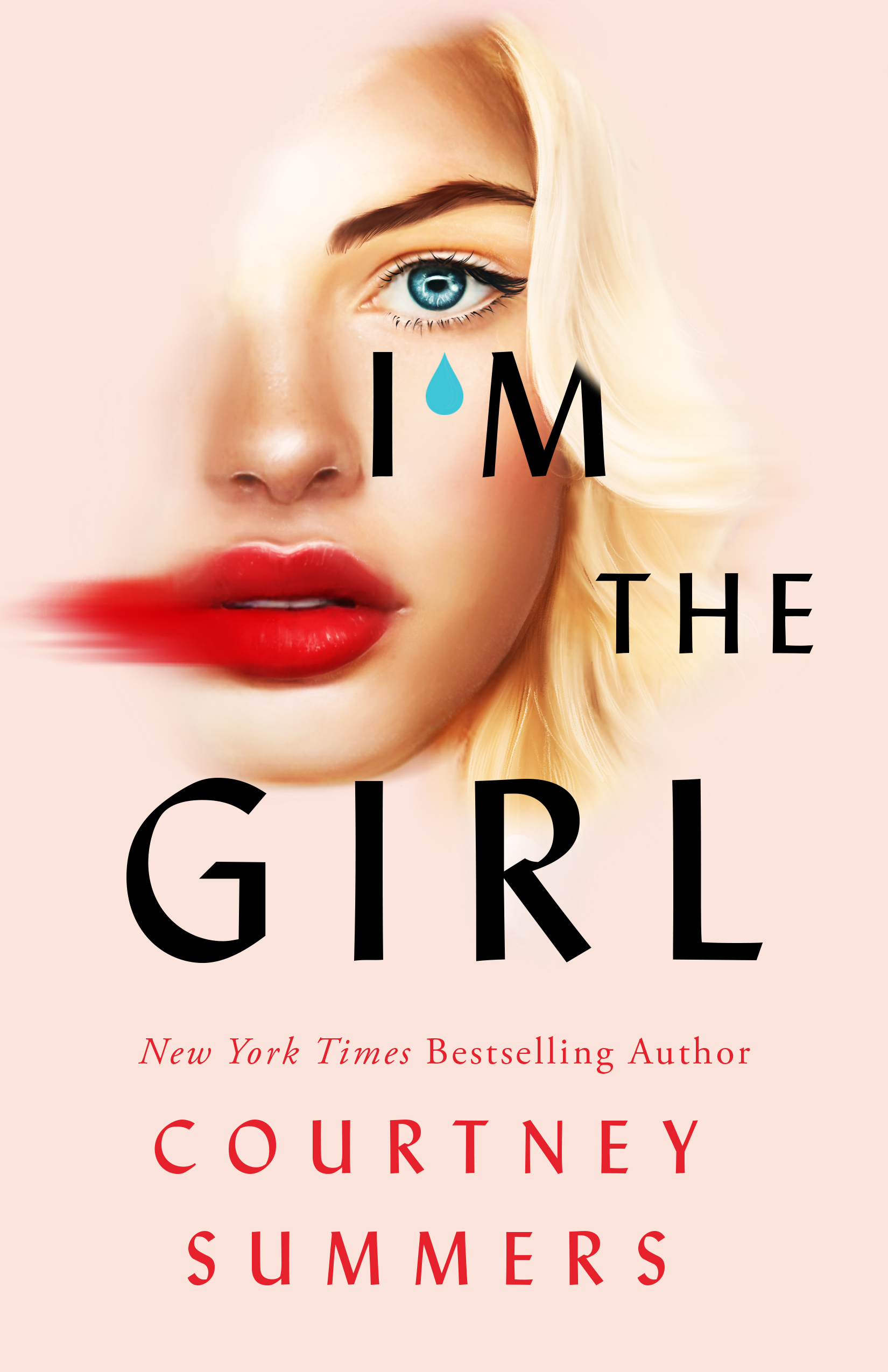
I’m the Girl – Courtney Summers

Canadian author Courtney Summers is an auto-buy for me. I know that I am guaranteed a terrific story with compelling, albeit often prickly, characters and excellent writing. I’m the Girl is Summers’ latest novel and the story treads somewhat familiar ground, but as always Summers scratches beneath the surface offering up a timely story about power, abuse, and privilege.

Sixteen-year-old Georgia Avis is untethered. She lives with her brother Tyler in a rinky-dink town called Ketchum. Their mother has died of cancer and Tyler, 30, has moved home to take care of her.

At the beginning of the novel, Georgia is hit by a car. When she comes to, her eye catches a flash of pink in the field beside her. It’s the body of 13-year-old Ashley James, daughter of a local deputy sheriff. “At first I wonder if we both got hit by the same car.” But it is clear that something much worse has happened to Ashley.

The accident happens out near Aspera, a private members-only club. It is actually Cleo Hayes, owner with her husband Matthew, who finds her on the side of the road. For as long as Georgia can remember, she’s wanted to be an Aspera girl, “moving through the resort, turning heads like I was meant to”. Instead, when the Hayes’ agree to hire Georgia, despite the fact that her mother, who had worked at Aspera before her death, had betrayed them, she discovers that she is going to be nothing more than a “glorified fetch.”

Aspera values beauty and Georgia is beautiful, but she doesn’t quite believe it. That makes her a target. There is something decidedly unsavoury, sinister even, about Aspera, although Georgia doesn’t see it as quickly as readers will.

As Georgia tries to navigate her new reality at Aspera, she begins a tentative friendship with Ashley’s older sister, Nora. Nora is determined to find out who killed her little sister and all the clues seem to point back to Aspera.

I’m the Girl is a thriller, for sure, because you’ll certainly turn the pages in an effort to discover who killed Ashley. But this is also a book that explores our relationships to our bodies and image. Georgia comes to understand that she is beautiful enough to wield a certain power over the men she encounters even though, as she tells Matthew, “I like girls.” But Georgia is too young not to realize when she is being manipulated and the consequences of her naiveté are often brutal and heartbreaking.

Highly recommended.

Other books by Courtney Summers: This is Not a Test, Cracked Up to Be, The Project, Sadie, Fall For Anything, All the Rage, Some Girls Are

One of the Boys – Daniel Magariel

In my Young Adult Literature class we just talked about some of the characteristics of YA lit: first person narrator, first person perspective, limited number of characters, compressed timeline.

While Daniel Magariel’s debut novel One of the Boys meets the criteria, I would say the novel straddles the line between YA and adult fiction because despite the fact that the narrator is just twelve, this is a tough read.

None of the three main characters, the narrator, his older brother and their father, are named in the novel. When the story begins, the father has just picked up his son from his mother’s place. The boy and his mother had gotten into a fight and the father tells his son “She said you were out of control.”

The father wants custody of his sons and he convinces the narrator to lie about the altercation and to fabricate some photo evidence so that he can gain that custody. Once he has it, he and the boys leave Kansas and head for New Mexico.

“This will end the war,” he said. “No custody. No child support. This will get us free. Free to start our lives over. You’ll see. In New Mexico I’ll be a kid again. We’ll all be kids again. How’s that sound? Isn’t that what you want?”

New Mexico isn’t paradise, as the narrator and his brother soon discover. Their father is manipulative, controlling and dangerous. He’s also a serious drug addict and the boys have to learn how to navigate his highs and lows. There are no other adults in their life who might intervene on their behalf; everyone is out to get them. In order to be “one of the boys” they have to submit to his increasingly paranoid demands.

I didn’t love this book. I never really felt as though I knew these characters and watching their lives spin out of control, while troubling, didn’t offer the emotional gut punch I was expecting. There is some potentially triggering content and some sexual content that would certainly be a caveat for any teen who might want to read it.

Blameless – Lisa Reardon

Blameless is Lisa Reardon’s second novel and finishing it means that I have now read all three of her novels. (She is also the author of several plays, short stories and some nonfiction.) I discovered her years ago when I read Billy Dead, a book that has stayed with me ever since. I also read and enjoyed her novel The Mercy Killers. She would definitely be an auto buy for me if she wrote another novel.

Mary Culpepper is in her 30s. She lives alone in rural Michigan, the oldest of three sisters. She drives a school bus, plays softball, lives alone and drinks too much. She’s a solitary character, although she is friends with 12-year-old Julianna. Mary is currently waiting to testify at the trial of Patricia Colby, a mother accused of killing her six-year-old daughter Jen. The anxiety of the trial manifests itself as the Night Visitor, a huge stone monster that visits her at night.

Mary’s life has been one of trauma. Her father was a philanderer and her parents’ toxic marriage pitted Mary between them. Her mother cautions her: “Don’t you ever trust a man […] Men are selfish sons of bitches. […] And women are worse. You scratch the surface on any one of ’em and you get a whore.”

It’s hard for Mary to escape the legacy of her mother’s thoughts about marriage and relationships, especially when her own marriage fails. That betrayal is added to the list of reasons Mary has, in many respects, removed herself from the world. Yes, she still goes to Sunday dinner at her mother’s and, yes, she has friends, but just after the discovery of Jen Colby’s body, Mary had a breakdown which required hospitalization.

The she meets Number 34.

I concentrated on the players in the field. Looked for that particular width of Number 34’s shoulders, how the muscles tapered down to the small of his back. There he was in left field, where he’d been all summer. He snagged a fly ball for the second out. Jesus, I wanted to sink my teeth into those shoulders.

Blameless is a quiet novel where nothing much happens. Mary is often her own worst enemy, but as her story is pulled back layer by layer and you come to understand all the ways life has kicked her in the teeth, you just want something, anything, good to happen for her. Reardon has a particular gift when it comes to writing broken characters and I really enjoyed my time with Mary, even though, like her previous novels, the story is pretty grim.

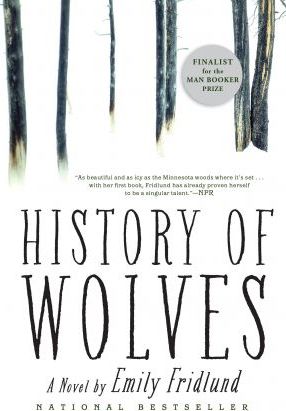
History of Wolves – Emily Fridlund

Emily Fridlund’s debut, History of Wolves, was shortlisted for the Man Booker Prize in 2017 and was the winner of the McGinnis-Ritchie Award for its first chapter. Awards generally mean very little to me because an award is no guarantee of my enjoyment. Just because someone is a NY Times best selling author doesn’t mean they can actually write. cough::Colleen Hoover::/cough

Linda lives with her parents on a lake in northern Minnesota. Once a part of a commune, Linda and her parents are all that remain.

I knew from stories how my parents had ridden in a stolen van to Loose River in the early eighties, how my father had stockpiled rifles and pot, and how, when the commune fell apart, my mother traded whatever hippie fanaticism she had left for Christianity.

The first thing to upend Linda’s life is a new teacher, Mr. Grierson, who “arrived a month before Christmas with a deep, otherworldly tan [and] wore one gold hoop earring and a brilliant white shirt with pearly buttons.”

Friendless and an outsider, Linda watches and “I wanted him to know that I saw how he looked at Lily Holburn.” The scandal about Mr. Grierson breaks in the fall of Linda’s grade nine year when he is accused of “pedophilia and sex crimes at his previous school and was promptly fired at ours.”

Then she meets four-year-old Paul and his mother, Patra, who have moved in across the lake. Thus begins a long, strange relationship which Linda recounts both as she lives it, but also from an adult perspective several years after the events take place.

At the trial they kept asking, when did you know for sure there was something wrong? And the answer was probably: right away.

History of Wolves is beautifully written, slow-moving novel about family, memory, faith and what it is to leave your childhood behind. Highly recommended.

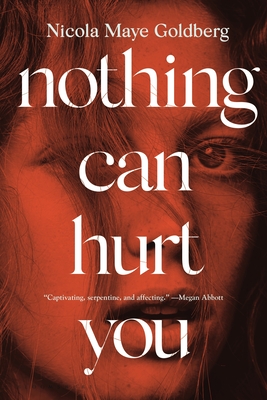
Nothing Can Hurt You – Nicola Maye Goldberg

Sara Morgan, a student at a liberal arts college in upstate New York is violently killed by her boyfriend Blake Campbell. He admits to the crime straight away and pleads temporary insanity. Nicola Maye Goldberg’s beautifully written novel, Nothing Can Hurt You, follows how this violent crime affects the people in the community where Sara lived, as well as her family and friends.

Goldberg’s novel is not linear; instead, it reads like a series of short stories that don’t even necessarily connect to each other other than the fact that the character in each one is somehow connected to Sara.

Marianne, for example, has recently moved to Rhinebeck with her husband. Marianne is fragile. She suffers from episodes.

At first it was just nausea. Then came images, as clear as if I were watching them on television. They were so violent. I saw myself stretched out on a piece of wood. Then the wood snapped in half, and so did I.

It is these episodes that have driven Marianne and her husband out of NYC, where they both hope that the fresh air and slower pace of life will help Marianne heal from her trauma. It is Marianne who discovers Sara Morgan’s body.

Katherine meets Blake Campbell at Paradise Lake, a tranquil Recovery Centre.

If she’d met Blake at a party, or a bar, Katherine would have liked him a lot. It helped that he was movie-star handsome, the kind of handsome that shifted the air in the room when he walked in.

Then there’s Luna, Sara’s half sister. Luna was just two when Sara was killed so she has no real memories of her. Twenty years later she takes a job as a nanny to Blake’s daughter, Ruby.

Nothing Can Hurt You asks you to consider our fascination with violent crime, with the perpetrators and the victims. It is not a thriller per se, but it is a thrilling read. And while you don’t come to know any of the characters very well, especially not the victim, and although there isn’t a traditional resolution or structure, this is a book that is thoughtful, intelligent and well-written.

Sorrow and Bliss – Meg Mason

Martha Friel, the protagonist of Meg Mason’s widely praised novel Sorrow and Bliss, is in the middle of a crisis: her marriage is imploding. Things have gotten so bad that, on their way home from the last party they attend as husband and wife, she says to him “When you do that pointing thing it makes me want to shoot you with an actual gun.” Patrick’s response? “How about we don’t talk until we get home.”

Things weren’t always so vitriolic between the pair. Once upon a time, they were each other’s most favourite person and Martha felt as though “we had been melted down and made into another thing. […] It was the happiest I have ever felt.”

Happiness, as it turns out, is a rare commodity for Martha. She and her younger sister, Ingrid, comes from a relatively dysfunctional family. Her father, Fergus Russell, is a failed poet; her mother, Celia Barry, a sculptor. Fergus and Celia still live in the family home in Shepherd’s Bush (a district in West London), but they can only afford their lives because of Celia’s sister, Winsome, who at first seems like a rich snob, but in the end turns out to be the rock in the lives of these fragile, broken people. Patrick was childhood friends with Winsome’s son, Oliver, and Martha has known him since she was sixteen.

It is around the same time that Martha meets Patrick that she wakes up with “no feeling in [her] hands and arms.” It is the beginning of a long period of ill (mental) health for Martha. No one seems able to diagnose the problem, and her family reacts with varying degrees of sympathy. Her mother “no longer came into [her] room, except once with the vacuum cleaner. She pretended not to notice [her], but made a point of vacuuming around [her] feet.” Her father “stayed up with [her] in the night, sitting on the floor, leaning against [her] bed.” Ingrid tells her “You’ve basically turned into Mum.”

Sorrow and Bliss traces Martha’s journey through this unnamed mental illness (Mason uses dashes — instead of naming it, and a nurse in my book club said it sounded like schizophrenia), but Mason herself says that the book is not really about mental illness. In an article in The Guardian, Mason said “It’s not the schizophrenia book, the bipolar book, the borderline personality book, it’s a book about what it feels like to have X or to look after someone with X and what it does to the extended family and the marriage.”

By the time the book begins, Martha has been — with varying degrees of success –managing her mental health issues, the myriad dysfunctions of her family, her own stalled career aspirations and for the last eight years, her marriage to Patrick; one woman tells her that she should feel so lucky to be “married to a man like that.” The truth of the matter is that life and relationships are complicated and Martha’s life sometimes spins itself into a deep, dark hole from which there is often no escape. Strangely, it is a tattoo artist who puts things into perspective for Martha

Everything is broken and messed up and completely fine. That is what life is. It’s only the ratios that change. Usually on their own. As soon as you think that’s it, it’s going to be like this forever, they change again.

I loved this book. I loved Martha’s family, particularly Winsome. I loved Martha’s relationship with Ingrid – which was often laugh-out-loud funny. I loved Patrick, who somehow didn’t come across as a martyr even though he was self-sacrificing. And I loved Martha, in all her messy glory.

This book is a winner and I highly recommend it.

All the Beautiful Strangers – Elizabeth Klehfoth

There’s lots of things to like about Elizabeth Klehfoth’s debut novel All the Beautiful Strangers. The story follows two timelines separated by a decade. In 2007 Grace Calloway, wife to Manhattan real estate mogul Alistair Calloway, has vanished without a trace. In 2017, Grace’s eldest daughter, Charlie, is in her final year at Knollwood Prep, a prestigious school where her father was once a revered student.

Charlie thinks she wants to be part of the only group that matters, the super secret A’s. But to become a part of that group is to participate in some extremely problematic initiation rituals. No matter: Knollwood is her life and the A’s offer an opportunity to belong in a way Charlie has never felt she has.

The thing is, Charlie is being chased by ghosts in the form of her mother’s mysterious disappearance. Then, she gets a message from her Uncle Hank, her mother’s brother.

I hadn’t seen Uncle Hank in years – since I was ten, and my father issued the restraining order.

…

No one besides Dr. Malby ever talked to me about my mother. But he wanted to know. What had that last month been like with her? Had she seemed different in any way? Who came and went at the house? How had things been between her and my father? And that night that she disappeared – what had I heard? What had I seen?

When Hank shows up with some photographs taken around the time his sister went missing, it sends Charlie back into her past, asking the questions she never knew to ask.

All the Beautiful Strangers is a layered story about family secrets, loyalties and the lengths people go to to protect those they love. Charlie is a tenacious, intelligent character who is determined, once and for all, to find out what happened to her mother. Although it’s not specifically YA, I think it would certainly appeal to patient YA readers. It makes for compelling reading, although at times it moved just a teensy bit too slowly. The two time lines are handled deftly, and the writing is terrific, so Klehfoth is definitely one to watch.

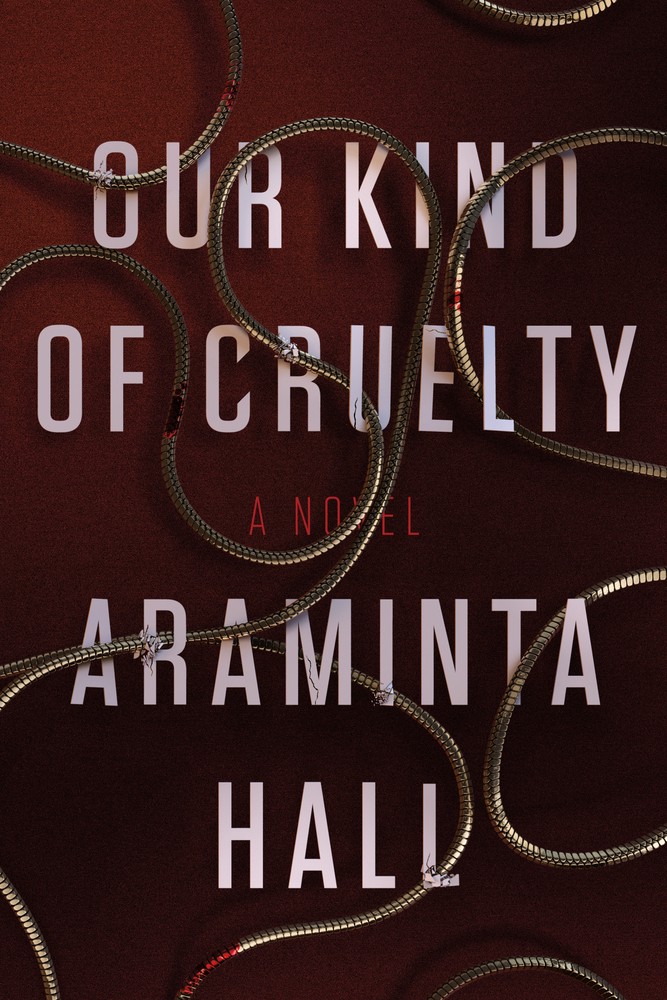
Our Kind of Cruelty – Araminta Hall

Mike and Verity spent much of their nine years together (from second year university until their late twenties) playing a game called the Crave. The two would head to a club, where Mike would hide in the shadowy corners watching while Verity waited at the bar until some poor unsuspecting guy would hit on her. When she’d had enough, she’d touch her necklace and Mike would “rescue” her.

I would push through the mass of people, pulling at the useless man drooling over her, and ask him what he thought he was doing talking to my girlfriend. And because I am useful-looing in that tall, broad way, and because V likes me to lift weights and start all my days with a run, they would invariably back off with their hands in front of their faces, looking scared and timid. Sometimes we couldn’t wait to start kissing, sometimes we went to the loo and fucked in the stalls, V calling out so anyone could hear.

Things are different now, though, for these crazy kids. Mike has just returned to London after two years in New York City. And he’s just received an invitation to Verity’s wedding. He’s pretty sure that this wedding is just a newer, more complicated version of the Crave. After all, he and Verity are end game. When he returned to London he bought a house he knew she’d like, had it decorated as she would like it, spent thousands of pounds redoing the garden. Mike knows Verity better than she knows herself.

Early on in Araminta Hall’s novel Our Kind of Cruelty, we learn that Mike is telling his story at the request of his barrister who “needs to get a clear handle on the situation.” Mike reveals his horrific childhood, living in extreme poverty with his addicted mother, and her various abusive boyfriends until he is taken into care by his loving foster parents, Elaine and Barry. Despite his past, Mike has had a successful and lucrative career as a banker but everything starts to spin out of control after he gets the wedding invitation. When it comes to Verity, Mike is not clear-headed.

Hall chooses to tell the story from Mike’s perspective; we never hear Verity’s side of things. Although Mike is clearly delusional, he isn’t unsympathetic. (Much in the same way that Joe in You, despite the fact that he is clearly a psychopath, isn’t unsympathetic.) To believe Mike is to believe that Verity took a shy, awkward, damaged young man and molded him into a physically imposing, devoted lover. And then, when she tired of the game, she abandoned him.

What’s missing, of course, is Verity’s perspective, which we never get. On top of that, Mike is an unreliable narrator. Then, in court, Verity is further punished – which hints at Hall’s political agenda. I kept thinking that the story might be slightly more interesting as a psychological thriller if, in fact, Mike had been right all along: they were still playing the Crave.

Nevertheless, Our Kind of Cruelty is well-written and moderately entertaining.

A Little Life – Hanya Yanagihara

Hanya Yanagihara’s 2015 novel A Little Life garnered copious praise and was a finalist for both the Man Booker Prize and the National Book Award, as well as making it onto many ‘Best of’ lists when it was published. It has been sitting on my TBR shelf for at least two years and I made it my mission this summer to make my way through at least two of my chunkier books: I read Empire of the Vampire in July and finished this one a few days ago.

The novel tells the story of four friends who were college roommates and are now making their way in the world in Manhattan in the nineties. There’s JB, the gay artist; Malcom, the bi-racial trust fund kid; Willem, the handsome wannabe actor and Jude, the mysterious, brilliant glue that bonds these men together over three+ decades.

Why wasn’t friendship as good as a relationship? Why wasn’t it even better? It was two people who remained together, day after day, bound not by sex or physical attraction or money or children or property, but only by the shared agreement to keep going, the mutual dedication to a union that could never be codified. Friendship was witnessing another’s slow drip of miseries, and long bouts of boredom, and occasional triumphs. It was feeling honored by the privilege of getting to be present for another person’s most dismal moments, and knowing that you could be dismal around him in return.

At first I was wholly invested in their stories, although it’s really mostly about Jude. It’s clear early on that he’s had some sort of tragedy/trauma in his past (and although there are no trigger warnings: reader beware), but he is not forthcoming about the details of his life and spends most of the novel’s hefty 814 pages alternately berating and abusing himself. He doesn’t deserve happiness, after all, even though almost everyone who meets him admires him and loves him and even, in his early twenties, want to adopt him.

As the narrative starts to close in on Jude and his relationship with Willem (which morphs from besties to something more, although I am not sure there was really a point to having their relationship become romantic), it loses its focus on JB and Malcom. Suddenly they are bit players in their own story and perhaps they should have been treated as such from the beginning because Yanagihara clearly loves Willem and Jude the most. I started to feel a bit as if these two men were trauma-bonded. Jude has clearly had an horrific life and although I am sure there are lots of people who do, it just felt as though Yanagihara went way over the top with Jude (he meets one monster after another over the course of his life, but as smart as he is and despite having so many amazing people in his adult life, he never really gets the help he so desperately needs.) His story wore me out–and not in a good way where I felt as though there was a cathartic payoff; at a certain point, the book just became an exhaustive catalogue of misery.

I think this is a novel that has been quite divisive. People seem to love it or hate it, although I wouldn’t characterize my reaction to it as quite so black or white. The book is not without its charms. In the beginning I enjoyed the writing (it was Donna Tartt-lite), but I found the last 300-ish pages almost unbearable. (It just felt like more of the same: misery heaped onto misery.) I also grew weary of the long lists of names — like, really, what are the chances that you’d know two dudes with the same name so you have to call them Asian Henry Young and Black Henry Young? — and the balance between the horrible things that happened to Jude and the amazing things that happened seemed, frankly, unrealistic. By the time the men were in their late forties I expected them to at least sound different than they did at twenty, but no. I didn’t believe in them.

Although there are many critics who love this book and have called it a masterpiece, there are others who point out the book’s flaws. I rarely read reviews before I write my own, but I felt like I had to go see if I was the outlier; it seems I am not. Slate took a closer look at the book when it first came out. The New York Times also had somewhat ambivalent feelings about the novel.

Would I recommend this book? Not really. I am not sure there is an emotional payoff big enough to wade through all the trauma for. It is almost relentlessly grim and not even decent writing can save it from its perpetual bleakness.