Everything I Never Told You -Celeste Ng

everythingLydia is dead.

It’s been quite a while since I’ve had such a visceral reaction to a book.  I read the bulk of Celeste Ng’s debut novel, Everything I Never Told You, on my snow day (a gift for a teacher, even if it’s only because we get to catch up on  marking/yearbook/planning – and, yeah, reading). I don’t think I will ever  be able to adequately explain how I feel about this book or these characters.

Lydia is just sixteen when she is found at the bottom of the lake across the street from her home in small-town Ohio. It’s the 1970s, the decade in which I, too, was coming-of-age. On the morning she is discovered missing (and it is this “innocuous” fact that sets the story in motion) we see the Lee family dynamic.

As always, next to her cereal bowl, her mother has placed a sharpened pencil and Lydia’s physics homework, six problems flagged with small ticks.

Hannah, Lydia’s younger sister is “hunched[ed] moon-eyed over her cornflakes, sucking them to pieces one by one.” Lydia’s older brother, Nathan, is sitting on the stairs trying to wake up. James, their father, has already left for his job as a professor at the local college.

Lydia is never late. She is never anything but compliant. She is a “yes” girl, the favoured daughter. It is only after her body is found that her story, and that of her family, begins to unravel. And yes, you will want to know what happened to Lydia, but trust me, it’s just one of the many things that will break your heart in this magnificent novel.

While every family has their own secrets and burdens, the Lee family is further set apart because Marilyn is white and James is Chinese. Their story is integral to Lydia’s story. Marilyn herself was a gifted student, earning a scholarship to Radcliff, and there – while she heads towards a degree in medicine – she meets James, a fourth year graduate student in history. She is ‘other’ because she is a woman studying in a field that is dominated by men; he is ‘other’ because he’s Chinese. All Marilyn knows is that “she wanted this man in her life. Something inside her said, He understands. What it’s like to be different.”

Marilyn’s career plans are pre-empted when she gets pregnant. She and James marry and move to Ohio.  Of course, their union wouldn’t be quite so problematic now (I’d like to think, but there are always some people….), but it’s the late 50s when they marry. Another world, another time. And life, fraught as it is, moves on. But why is it fraught? Because James grew up attending private school for free because his mother worked there as the cook and his father the janitor? Because he never fit in anywhere?  Because Marilyn didn’t want the life her mother had? Because of dreams deferred? And what happens when our parents’ lives are complicated and damaged by their own childhoods? Ah, we all know the answer to that question, right? It all trickles down.

Everything I Never Told You is an astounding, complex and heart-breaking look at the secrets we keep, not only from our families but from ourselves. Why we keep them, and the damage caused because of it, is just part of what happens in Ng’s book. The horrible longing we feel to crack ourselves open, the desire for true communication and intimacy, is another part. There wasn’t a single character in this novel I didn’t want to hug – I loved them all. That they were so fabulously human and fragile is a testament to Ng’s talent.

Highly (times a billion) recommended.
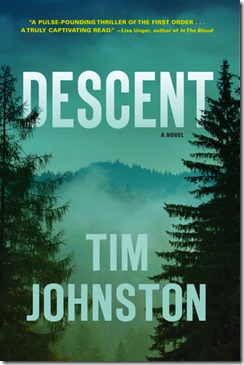
Descent – Tim Johnston

descent_thumbI love it when a book lives up to its hype…and if you believed the accolades plastering the back cover and the first three pages of Tim Johnston’s novel Descent, you’d certainly be expecting great things. The Washington Post said “Read this astonishing novel. The magic of his prose equals the horror of Johnston’s story.” Esquire called it “Outstanding” adding that “the days when you had to choose between a great story and a great piece of writing” are “gone.”

I don’t even know how this book came to be on my radar – I just know that I had a picture of it on my phone and a couple weekends ago I was pleased to discover that Indigo had topped up my Plum Points and I had $100 to spend…but only that weekend to spend it. So, I flipped through the pictures of covers and chose five, Descent being one of them. A couple of weeks ago, I mentioned the book on Information Morning and decided that since I had, I should probably read it. Once I started, I couldn’t stop.

The Courtlands are spending a little family time in the Rocky Mountains – a holiday before Caitlin, 18, heads off for her first semester of college. Her mom and dad, Angela and Grant, are clearly in crisis and then there’s Sean, Caitlin’s 15-year-old brother.

Caitlin is a runner and on the morning the story opens, she and her brother are heading up a mountain trail – Caitlin on her feet, Sean on his bike. Johnston meanders up the mountain with the pair as they bicker and share confidences. Then the unthinkable happens: Sean is hit by a jeep

…it came, monstering through the trees at an incredible speed, crushing deadfall, the whip and scream of branches dragged on sheet metal and then the suddenly unobstructed roar that made her wrap her head in her arms, the sound of tires locking and skidding and the thing slamming into what sounded like the sad tin post of a stop sign and then the meaty whump and the woof of air which was in fact the boy’s airborne body coming to a stop against the trunk of a tree.

When Grant and Angela get a call from the local police, they learn Sean’s been badly injured;  Caitlin is missing.

Fast forward a year or so. Grant has moved to the area and is living on the property owned by the local sheriff’s father, Emmet. Sean is on the road, driving from place to place picking up odd jobs. Angela is living with her sister when she isn’t hospitalized for depression/mental health issues. Caitlin’s disappearance has fractured the Courtland family.  It’s mostly the men that Johnston spends time with, allowing the reader a glimpse into their own personal hells: the father who can’t and won’t give up hope that Caitlin will be found and the son who can’t forget what happened that morning on the mountain.

The characters in Descent are trying to get on with it, but their personal pain is palpable. Grant works around Emmet’s property, sometimes pausing to “stare into the hills beyond the ranch, up into the climbing green mountains.” He hears his daughter’s voice and  “take[s] his skull in his hands and clench[es] his teeth until he [feels] the roots giving way.”

As for Sean, he is closed off from the world. In one particularly horrific scene, he puts himself in harm’s way in an effort to save a young girl – perhaps in an effort to atone for the ultimate crime of not being able to save his sister. It’s not the only time he does something selfless, albeit, foolish.  I just wanted to hug him.

We do spend less time with Angela, but that doesn’t mean that we know less about her. She moves through her much diminished world like a whisper. Only a parent who has suffered the loss of a child could truly understand Angela’s debilitating sadness.

The girls’ heartbeat still played in her arms. In her chest. She remembered the hour, the minute, she was born: precious small head, the known, perfect-formed weight of it. All her fears of motherhood – of unreadiness, of unfitness– vanishing at the sight of that plum-colored face mewling in outrage. My child, my life.

Secondary characters, Emmet’s  black-sheep son, Billy, for example, are equally well-drawn. Billy arrives back in town, much to the chagrin of his father and older brother, and swaggers his way into everyone’s bad graces. But even Billy is allowed his shades of gray – there are no stock characters here.

Into these complicated interior lives, Johnston deftly weaves the mystery of Caitlin’s disappearance. She is not a footnote, trust me. The story of her disappearance is unraveled with excruciating care and her story is definitely one of the things that will speed your journey through this book.

Descent is fantastic on every level and I highly recommend it.


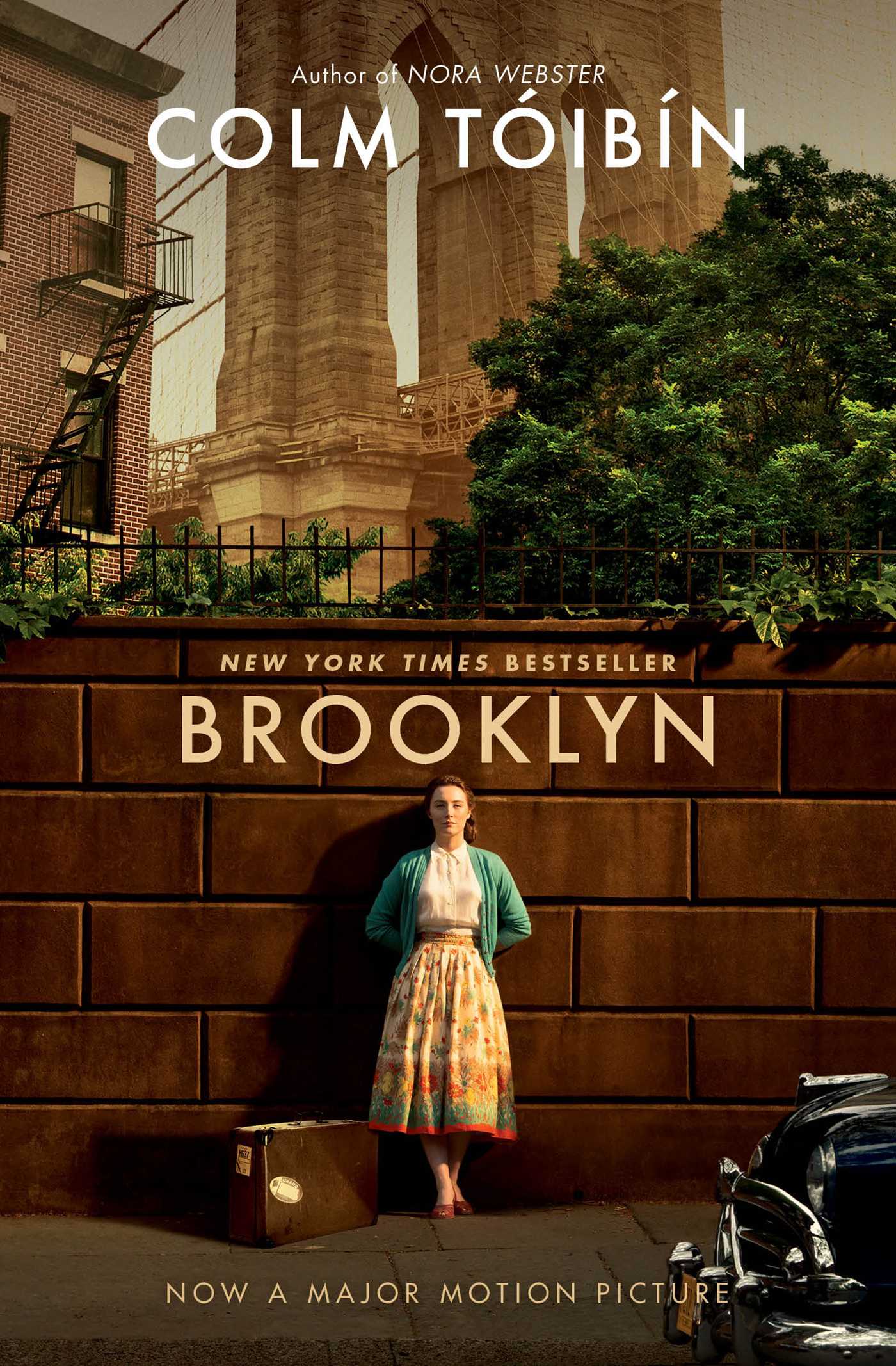
Brooklyn – Colm Tóibín

colmbrooklynMy fabulous book club kicked off 2016 by discussing Colm Tóibín‘s award winning novel Brooklyn. After our Christmas hiatus, we all enjoy getting back together for some yummy food, wine and great conversation.

Tóibín‘s novel, the story of Eilis Lacey’s coming-of-age in 1950’s Ireland and Brooklyn, NY, was a lovely way to start our new reading year, even if we didn’t all agree about the book’s merits.

Eilis is (I think – it’s never explicitly stated) a young woman in her early twenties who lives with her widowed mother and thirty-year-old sister, Rose. Rose is glamorous and independent. Times are tough in Eilis’s little town and so when an old friend of the family, Father Flood, arrives home for a visit from America and suggests he could help Eilis find work there, and perhaps further opportunities to improve her life, it’s decided that she make the journey across the Atlantic to settle in Brooklyn. Eilis’s story is actually quite common for the time period; however, one has to venture a little further back to fully understand the Irish immigration to America.

At Time.com, “Irish-American historian and novelist Peter Quinn explains, “The country wasn’t in the Second World War, it had been kind of cut off from the rest of the world, and it wasn’t part of the Marshall Plan. So it was still a very rural country.” The economy was at a standstill, while the U.S. was booming. Some 50,000 immigrants left Ireland for America in the ’50s, about a quarter of them settling in New York.

Women played an important role in that immigration process. Quinn explains “during the 19th century, the wave of Irish was “the only immigration where there were a majority of women.” And, thanks to a culture that supported nuns and teachers, those women were often able to delay marriage and look for jobs. By the mid 20th century, many Irish women—who also benefited from the ability to speak English—were working in supermarkets, utility companies, restaurants and, like Eilis, department stores. The fact that Eilis finds her job through her priest is also typical. “[The Catholic Church] was an employment agency. It was the great transatlantic organization,” Quinn says. “If you came from Ireland, everything seemed different, but the church didn’t. It was a comfort that way, and it was a connection.””

So here is Eilis, alone in the big city. Whether you like her or not (I’m sort of in the “indifferent” camp), Eilis’s story is certainly compelling. She begins a job at Bartocci’s, a department story run by Italians. Her goal is to make her way through the ranks and end up, hopefully, as a bookkeeper in the office, rather than a shop girl. Father Flood arranges for her to take a bookkeeping course at Brooklyn College. She’s a diligent and conscientious worker.

She lives in a boarding house run by an Irish lady called Mrs. Kehoe. She shares living space with a variety of other young women, some Irish, some American. We learn very little about any of them; Eilis tends to keep to herself.

And there you have it – Eilis in Brooklyn. Oh…then she meets Tony.

Eilis slowly became aware of a young man looking at her. He was smiling warmly, amused at her efforts to learn the dance steps. He was not much taller than she was, but looked strong, with blonde hair and clear blue eyes. He seemed to think there was something funny happening as he swayed to the music.

It’s almost impossible not to like Tony and his family. He courts her and they fall in love, but then personal tragedy strikes and Eilis has to return to Ireland.

Brooklyn does have something to say about the choices we make in life and why we make them – sometimes, it seems, we aren’t really sure; we’re just swept along by the tide. Some readers might be put off with the way ideas/characters/themes are introduced and then dropped without resolution. While it’s true that life often happens in this manner, I might have enjoyed just a teensy more follow-through.

Tóibín‘s prose is straight-forward, unembellished and allows his reader to fill in the gaps. Many readers will likely take issue with the novel’s conclusion, but I liked it – even if I didn’t particularly like Eilis.


Hausfrau – Jill Alexander Essbaum

hausfrauPoor Anna. Her life sucks. She’s the protagonist in Jill Alexander Essbaum’s novel Hausfrau,  an American living in Dietlikon, a suburb of Zurich, with Bruno, her Swiss banker husband and her children: Victor, 8, Charles, 6, and baby Polly. She doesn’t work. She’s barely even learned to speak the language despite having lived in Switzerland for almost a decade. Her mother-in-law seems wholly unimpressed with her– and no wonder: Anna disappears for hours, taking language classes and having sex with random men.

It’s hard to really like Anna very much. She’s not the effusive American one might expect. Instead of joining the other mothers when she meets her sons at school she “scuffed the  sole of a brown clog  against the sidewalk’s curb…fiddled with her hair and pretended to watch an invisible bird flying overheard.”  She claims she is “shy and cannot talk to strangers.”  That may be true, but she speaks the universal language just fine.

Yep – Anna is a serial cheater. The reader meets Archie Sutherland first, an expat Scotsman.

Archie and Anna shared a plate of cheese, some greengage plums, a bottle of mineral water. Then they set everything aside and fucked again. Archie came in her mouth. It tasted like school paste, starchy and thick. This is a good thing I am doing, Anna said inside of herself, though “good” was hardly the right word. Anna knew this. What she meant was expedient. What she meant was convenient. What she meant was wrong in nearly every way but justifiable as it makes me feel better, and for so very long I have felt so very, very bad.

Oh, well, that’s all right then. You just go ahead and fuck whomever you please without any regard for anyone else but yourself because, clearly, life is rough for you. Oh please.

I am not a prude. I think everyone deserves a chance to be happy. The problem with Hausfrau is that I didn’t care one bit about Anna and by the time Essbaum actually gave me a reason to care about her it was too late. Anna is a hot mess and for no good reason that I can see.  She’s whiney and self-centered and in one instance, treats her adored younger son, Charles, so deplorably that there was just no way for me to like her after that.

Okay — maybe I am being too harsh. I mean, it’s tough to be a modern woman. Like, she’s got three kids and she lives in a foreign country and her husband is a stoic workaholic. Oh, wait, she comes and goes as she pleases. She doesn’t have to worry about money. She recognizes that her affairs are a product of her “longing for diversion…and from boredom particular habits were born.” No Netflix in Switzerland, eh? How about knitting or a good book, Anna?

Not even her psychoanalyst, Doktor Messerli, is able to offer any real useful advice. Instead, she imparts pithy gems like “Shame lies. Shame a woman and she will believe she is fundamentally wrong, organically delinquent.” And when it is clear Anna is desperate, the good doctor tells her to stop ringing her bell and leave immediately. Okay, then.

Critics loved this book. I did not.

The Swimming Pool – Holly LeCraw

swimmingHolly LeCraw’s novel The Swimming Pool was well-reviewed when it was published in 2010 and so my lackluster feelings about the book make me feel like I must have missed something. I kept thinking it was ultimately bound for my Book Graveyard but I kept at, mostly because LeCraw’s writing was quite lovely even though the characters were mostly irritating.

Marcella Atkinson and her husband, Anthony, and daughter, Toni, spend a summer at Cape Cod. There, they meet the McClatcheys, Cecil and Betsy and their children, Jed and Callie. Marcella is an exotic Italian goddess, somehow separate from all the other women on the Cape and Cecil is drawn to her.

Flash forward a handful of years: Cecil and Betsy are dead and adult Jed finds an old bathing suit in the family home. He knows it belongs to Marcella, so he tracks her down. He’s at loose ends – he’s taken a leave of absence from his job as a lawyer to spend time with his sister, Callie, who has just given birth to her second child and is clearly super-depressed. Everyone in this book is depressed – maybe that’s why it seemed like such a slog. Geesh, people, you’re on the Cape, you clearly have pots of money for which you don’t have to work, some of you are having sex…on the floor…lighten up already!

Marcella welcomes Jed into her world like she’s been waiting for him all her life. After their first night together (nothing happened, btw) he watches her in the kitchen.

She was barefoot. Her feet on the wooden floor were narrow, with a high, delicate arch. Her legs were slender – he’d noticed that already, but in this morning light they were not like a young girl’s legs – the skin was different, looser, not taut and smooth. He didn’t care.

It’s hard to say whether Marcella’s feelings for Jed blossom out of all those babies she lost or the fact that he’s the son of the man she had an affair with, but before you can say strudel, those two are at it like rabbits.

All the people in The Swimming Pool have angst to spare and perhaps that’s one of the main reasons I found the book so slow. Where’s the narrative center? Is this a story about Callie and her post-partum depression? Is it the story of Marcella’s estranged relationship with her daughter? Is it a love story? Is this a story about the power of secrets to destroy families? There’s all this and more crammed into the book, but at the end of the day, the pretty writing doesn’t make up for the listless plot.

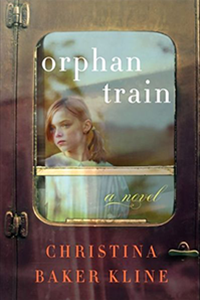
Orphan Train – Christina Baker Kline

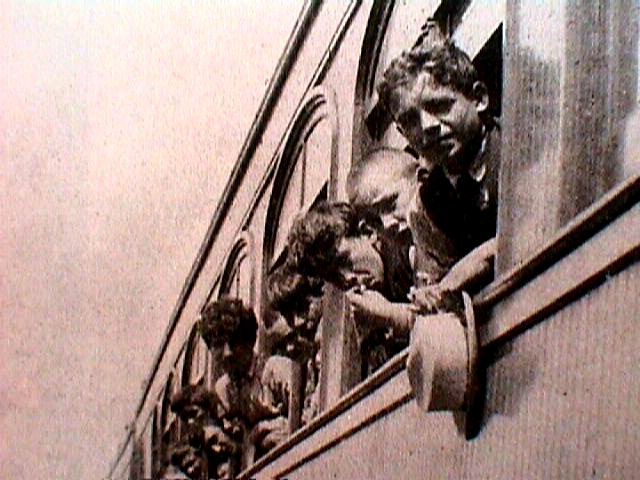
orphan2I was unaware of the history which inspired Christina Kline Baker’s novel Orphan Train. According to the notes found at the back of the book “between 1854 and 1929, so-called orphan trains transported more than two hundred thousand orphaned, abandoned, and homeless children – many of whom, like the character in this book, were first-generation Irish Catholic immigrants – from the coastal cities of the eastern United States to the Midwest for “adoption,” which often turned out to be indentured servitude.”

In a nutshell, Orphan Train is the story of one such girl.

But it is also the story of another girl, someone who is also without a home and has spent much of her childhood bouncing between foster homes. The lives of these two people (one just seventeen, the other ninety-one) intersect, but that is actually the least interesting part of this novel.

Niamh Power is a little girl when her parents decide to leave their impoverished lives in Western Ireland and make the arduous journey across the Atlantic to America.

People all around us were fleeing to America: we heard tales of oranges the size of baking potatoes; fields of grain waving under sunny skies; clean, dry timber houses with indoor plumbing and electricity. Jobs as plentiful as the fruit on the trees.

Of course, the reality is something quite different and Niamh finds herself living in a four-room apartment with her parents and three younger siblings. The landlord tells them “I have no trouble with the Irish, as long as you stay out of trouble.”  Still, Niahm is hopeful for a new start because her father “had the promise of a new job. We could pull a chain for light; the twist of a knob brought running water…”

Sadly, Niamh’s hopes for the future soon turn to despair and she finds herself alone and on one of the orphan trains bound for childrenontrainthe west. She is only nine when she is taken on a journey to find her a new family.

They call this an orphan train, children, and you are lucky to be on it. You are leaving behind an evil place, full of ignorance, poverty, and vice, for the nobility of country life.

Not so much, really.

Molly is the other character in this book. She works hard at being different in an attempt to push people away, mostly in an effort to protect herself. She had “liked the distance her persona created, the wariness and distrust she saw in the eyes of her peers.” Just lately, though, Molly has found that maintaining her ‘look’ was making her “impatient.”

When she tries to steal a copy of Jane Eyre from the local library, she is assigned community service and it is that sentence which brings her into Niamh’s world. From a prickly beginning, a real bond is formed between the two disparate women – which is both lovely and problematic for the novel.

I read Orphan Train in an afternoon; the pages literally turned themselves. I loved reading Niamh’s story. I knew nothing about these orphan trains and Niamh’s tale was fascinating and heartbreaking. Molly was also likeable. Despite her attempts at pushing people away, she is clearly smart and resilient. C’mon, her favourite book is Jane Eyre! It would be impossible for an avid reader not to like her.

For about two-thirds of the book I was all-in. Then, things started to speed up a little too much. Characters made decisions  that I just didn’t buy and things happened that made me go “oh no you didn’t!” and even though I kept turning the pages I can’t say that I enjoyed the book quite as much at the end as I did at the beginning.

Nevertheless, Orphan Train is an entertaining and well-written novel about a relatively unknown part of American history and many readers would certainly enjoy it.

Off the shelf – Books with buzz

Listen here.

There are always books which are hotly anticipated by the reading public. Avid readers know, for example, when their favourite authors will be releasing their next book. Publishers generate a lot of pre-publishing buzz and of course books that win major literary awards also garner extra attention. I think book buying has changed a lot in the forty years I’ve been buying books with my own money. I remember when the Scholastic book flyer was my only real opportunity to purchase books – and then all you had was this teensy picture of the cover and the equivalent of a tweet’s worth of description. When you could actually go into a book store and hold the books, well, that was heaven. I have books on my shelf that literally cost 60 cents. Can you believe that? Social media wasn’t even a twinkle in someone’s eye – so word of mouth or checking out top ten lists was really the only ways to hear which books were hot and which books were not.

goldfinchThen you have to wonder if all books with buzz are created equal. Even books that have won big prizes are often mired in controversy. A huge portion of my summer reading time was taken up with reading Donna Tartt’s Pulitzer Prize winning magnum opus The Goldfinch. That book is close to 800 pages long and, for me at least, was thrilling and infuriating in equal measure. Not everyone agreed that it should have won the Pulitzer. In fact, The Washington Post called it “the disappointing novel that just won a Pulitzer”  Lady Vowell Smith, a professor of literature and book blogger, wondered about the book’s merits in her post “Did the Goldfinch Deserve the Pulitzer?” The UK’s Sunday Times said “”no amount of straining for high-flown uplift can disguise the fact that The Goldfinch is a turkey”. Newsweek’s review said that “The Goldfinch neither sings nor flies.”  Ouch.

I am not much of a follower when it comes to reading, but I have read both of Tartt’s previous novels: The Secret History, which is my favourite and The Little Friend. Plus, my son, Con, read this book and really liked it – so I had to give it a go.

Okay – so what’s this book about?

Theo Decker is thirteen and lives with his mother in New York City. They are on their way to a meeting at Theo’s school when they duck into the Metropolitan Museum of Art to take a look at an exhibit of Dutch paintings, including that of The Goldfinch. Theo’s mom wanders off to the gift shop; Theo is entranced by a girl of about the same age, who is in the museum with her grandfather…and then there’s an explosion and Theo’s life is irrevocably altered. The old man, as he’s dying, encourages – insists – that Theo make off with the painting of the goldfinch and that’s certainly central to the book’s story – but that’s really only a part of it. Tartt wrestles with a lot of themes here: family – both biological and the family you choose, art, beauty, addiction. Theo isn’t necessarily the most likable character, even though lots of bad things happen to him he also makes a lot of poor decisions. This book is chock-a-block with characters – Boris, the friend Theo meets while living in Vegas; Hobie, a furniture restorer, the Barbours, family friends who care for Theo when his mom first dies. A lot of people, lots of stuff happens and it’s up to the reader to decide whether any of it matters. Does it add up to something worthy of praise in the form of the Pulitzer – that is if you think prizes matter at all. It probably mattered to Tartt to the tune of $100,000.

Another book that everyone is talking about is Harper Lee’s Go Set a Watchman. When this manuscript was “discovered” it Watchmanexploded the publishing world – but really: discovered? Everyone knows Harper Lee for To Kill a Mockingbird. Other than Mockingbird she is best known for helping Truman Capote (her childhood friend) with research for his book In Cold Blood. She published a handful of essays – but that’s it. She’s notoriously private and always maintained she’d never publish another book. So, it’s  kinda suspicious that this one turned up after all these years. It’s essentially an early draft of Mockingbird. Lee is 89, lives in assisted care and I think the publication of this book has something to do with the fact that her sister, Alice, sort of her gatekeeper, passed away. There’s an awesome series of articles about the discovery of Watchman and a look back at Mockingbird in The New Republic. The first article, “The Suspicious Story Behind Go Set a Watchman” is particularly interesting for anyone who wants to read the whole story behind the birth of Watchman.

Personally, I’ve resisted buying the book. I love Mockingbird. I’ve read it multiple times. Since I believe I know the story of how Watchman came to be, I’m reluctant to hand over my $30 for a book which has pretty much been panned. And of course it has – it’s unedited because Lee is blind and deaf and perhaps even the teensiest bit senile. The book’s a cash grab. I hate that.

In any case – if you are looking for something to read, something that will guarantee you something to talk about at the water cooler or dinner or with your book club, it’s easy to find those books.

If you are interested in  books that generated buzz, check out some of these titles.

girlontrain

The Girl on the Train – Paula Hawkins

This is this year’s Gone Girl. It’s on my tbr shelf, but I haven’t read it yet. I’m probably just about the last person who hasn’t.

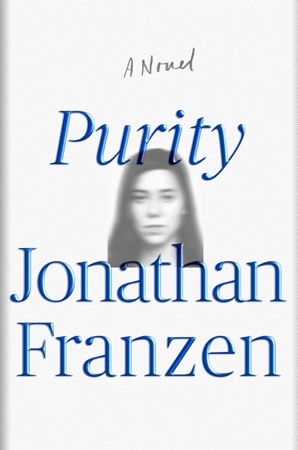
purity

Purity – Jonathan Franzen

Famous for dissing Oprah, there’s no arguing with Franzen’s talent. His newest book hits the shelves Sept. 15.

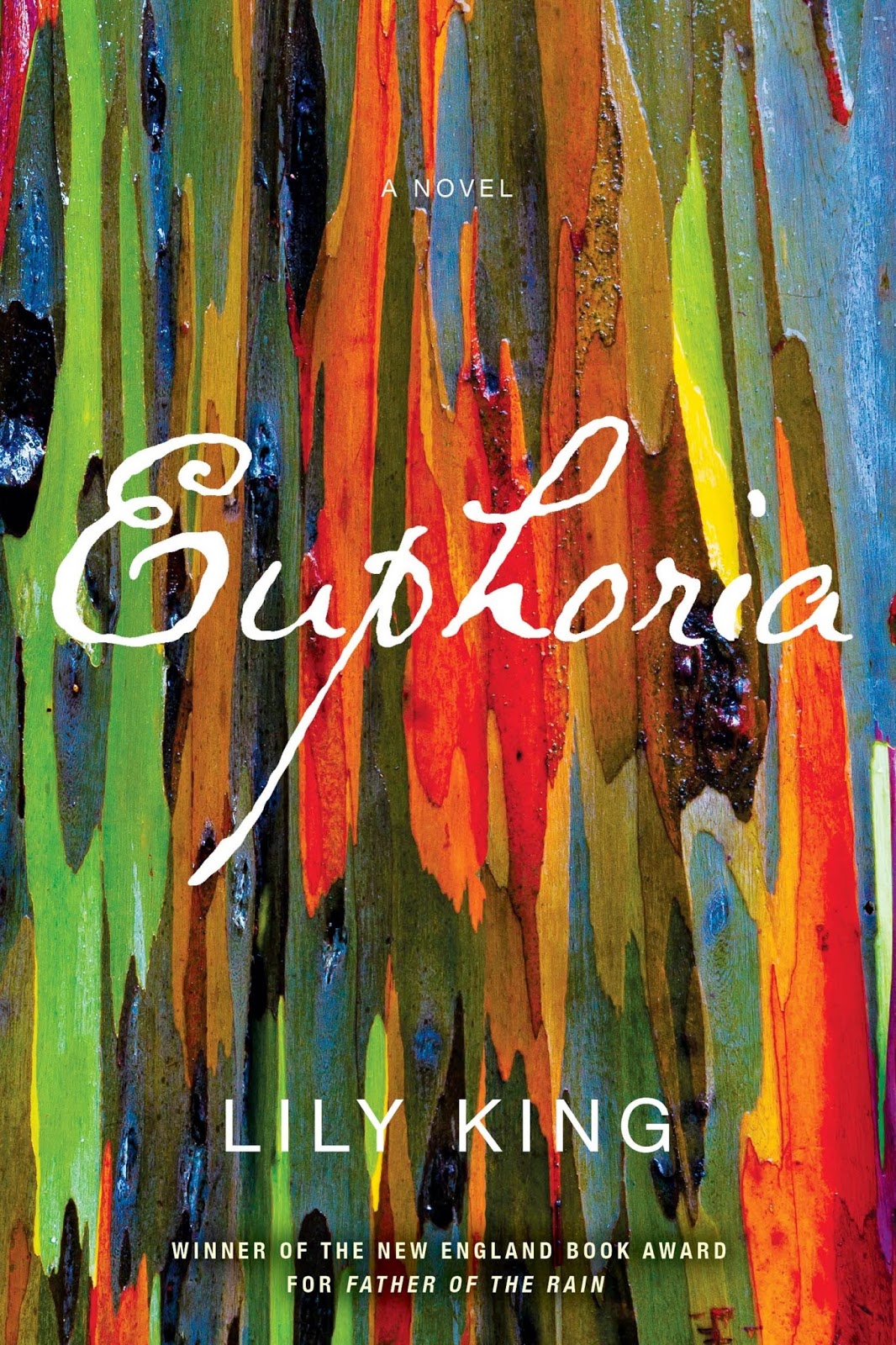
Euphoria

Euphoria – Lily King

Inspired by the life of Margaret Mead and almost universally praised.

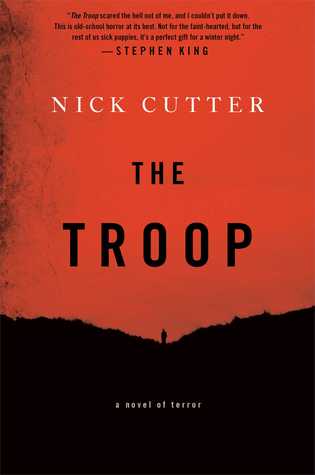
troop

The Troop – Nick Cutter

Unless you love horror novels, you might not have heard of this one…but trust me, everyone was talking about it.

spider

The Girl in the Spider’s Web – David Lagercrantz

Stieg Larsson, the creator of the Millennium series, died of a heart attack in 2004, but that apparently won’t stop Lisbeth Salander, the series’ prickly computer genius. Hotly anticipated and hitting the shelves Sept 1st.

Some Girls – Kristin McCloy

somegirlsWhat’s a reader to do when the author of her favourite book of all time, Velocity, encourages her to read another of her books. Said book, Kristin McCloy’s second novel, Some Girls, has been languishing on my tbr shelf for at least four years and clearly I intended to read it at some point – I wouldn’t have purchased it otherwise. The stakes are higher now, though. Not only have I recently re-read Velocity, but I’ve struck up a sort of email friendship with Ms. McCloy and I was terrified to read this book (I have her third book, Hollywood Savage also waiting to be read) for a variety of reasons – not the least of which is that I LOVE Velocity and nothing could ever be as good as that. Also, what happens if I don’t like this book or the next one. Gah!

Ok, I have my reader-angst out of the way.

Some Girls is the story of twenty-three-year-old Claire Stearn who flees Alamogordo, New Mexico for the bright lights of NYC circa  1989. She leaves behind her divorced and bitter mother, Ginny, her older sister, Paula, and her boyfriend, a rancher called Tommy. In many ways, Claire isn’t different from  any other young person who, desperate to escape the confines of their lives,  makes their way to a big city. Claire is “aware of her spine, the strength of her pelvic bones, the arches of her feet. It was all she needed to support her.” She’s ready to become herself.

New York City is very much a character In Some Girls. The 1989 version depicted in the novel isn’t the NYC of 2015.  As Claire rides into the city from the airport she describes it as “a terror, glossy buildings rising out of a slum, a place of anarchy, crooked and lawless, impenetrable.” I remember that New York because I spent some time in the city in the 1980s. It was a little rough around the edges, but for a small-town girl like me still spectacular.

For that reason, I related to Claire’s assimilation. Those first few days, when Claire had “nothing but the speed with which she walked and her sunglasses to protect her” reminded me of me. I was so desperate to blend in, to not look like I knew nothing.  I’m sure, in the early days,  you could smell my terror from twenty paces. And like, Claire, I was constantly pinching myself and thinking “I’m here, I’m in New York City, a shock each time.”

McCloy captures the frenetic energy, the heat and the smells, the blast of icy cold, the patchwork quilt of humanity that is New York City and I liked revisiting the city through her lens very much.

Claire meets Jade the day she moves into her little downtown apartment. (I sort of imagine it in the area of Soho, but I wasn’t familiar with White Street so I had to look it up on the map.)  Jade is, to Claire’s innocent eyes, “a woman of the city.”  When they finally spend a little time together Claire feels “the crushing sense of anonymity that had dogged her ever since she had arrived suddenly turned to reveal its other face.” There is erotic tension between the two women from the start.

This relationship was a little harder for me to relate to than Ellie’s relationship with Jesse in Velocity. I am worldly enough now to know that sexuality is vastly more fluid than I might have viewed it when I was Claire’s age. I think my unease has more to do with the fact that I didn’t particularly care for Jade. She seemed self-centered and reckless and I never felt as though I knew her well enough to understand Claire’s attraction to her. She was startlingly beautiful, but surely there was more to it than that? That said, I felt as though Claire’s feelings – about Jade, about her life, about what she was leaving behind when she said good-bye to Tommy – were authentic. Complicated and messy, but certainly true.

Some Girls does a fine job of capturing a young adult on the precipice of figuring her life out, making choices that are both difficult and blindingly simple. While I may not have been able to relate to Claire’s relationship with Jade, I did love her journey and ultimately, isn’t that the point?

I also loved the writing in this novel. It was different from Velocity, which demonstrates the depth of McCloy’s talents, but still a pleasure to read.

Beautiful Ruins – Jess Walter

ruinsBeautiful Ruins was our last book club read before our summer hiatus. It was also the winner of ‘Best book’ or, because we don’t want to hurt anyone’s feelings when we vote, ‘book we enjoyed reading most.’ (Thus, ‘worst’ book becomes ‘book we enjoyed reading least.’) It was a close race between Beautiful Ruins and The Children Act, but Walter’s fantastic novel won out in the end.

I think I am going to have a hard time articulating how I feel about this book because it hit a lot of my sweet spots. First of all, part of the novel is set in Italy and anyone who knows me knows that Italy is my dream place. I’ve been twice and often say that some day I will live there…even if it’s just for a few months. The other part of the novel takes place in Hollywood and, okay, I admit it – I love the movie stars. Just ask anyone who was around during the David Boreanaz days…or go further back…the Robby Benson days. Ask my students how often I work Ryan Gosling into the conversation.

Beautiful Ruins follows the fortunes of Pasquale Tursi in Porto Vergogna, a tiny village near the Cinque Terre region of Italy only “it was smaller, more remote and not as picturesque.”

Port Vergogna was a tight cluster of a dozen old whitewashed houses, an abandoned chapel, and the town’s only commercial interest – the tiny hotel and café owned by Pasquale’s family – all huddled like a herd of a sleeping goats in a crease in the sheer cliffs.

Pasquale has come back to Porto Vergogna to care for his dying mother and the Hotel Adequate View, and it is there he meets actress Dee Moray, who has come, by mistake, to the Adequate View to rest. She is in Italy to make Cleopatra, the notoriously bad film starring Richard Burton and Elizabeth Taylor.

richard and elizabeth

The title’s phony – her job’s all assisting, no developing, and she’s nobody’s chief. She tends Michael’s whims. Answers his calls and e-mails, goes for his sandwiches and coffee.

It is not the life she dreamed of when she gave up her doctoral film studies program to make movies. Now she is on the cusp of leaving her job and going to work as a curator for a private film museum.

If you’re wondering how Walter is going to dovetail these two eras, all I can say is “masterfully.” We flip back to 1960’s Italy and recent-day Hollywood and neither story (or character) gets short-shrift. In fact Claire and Pasquale aren’t the only characters who populate this story – even minor characters are fully realized including Pasquale’s elderly aunt Valeria (who provides comic relief), Shane (a screenwriter who comes to Hollywood to pitch the story of cowboy cannibals), Alvis (the failed American writer who comes to Porto Vergogna once a year to work on his novel) and even Daryl, Claire’s hunky porn-addicted boyfriend. Even Michael Deane, slimy as he is, is fun to spend time with.

And what are these Beautiful Ruins? Well, I think that’s probably the reason everyone and their dog was praising this book when it came out in 2012. This is a great story – funny and heartbreaking in equal measure – about big ideas. The people that you meet and the choices that you make are at the very center of this book. But as Alvis says to Dee, “No one gets to tell you what your life means.”

I loved this book so much.

Highly recommended.

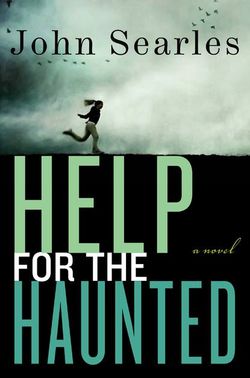
Help For The Haunted – John Searles

helpforthehauntedIn some ways, John Searles reminds me of Thomas H. Cook, an American mystery writer I greatly admire. Neither of them seem to have any interest in racing through plot points to the story’s denouement. Instead, like Cook, Searles lets us get to know the characters and takes his time layering the narrative. Help For The Haunted  is the story of Sylvie Mason and her unusual family. It is part mystery, part ghost story and part family drama.

“Whenever the phone rang late at night, I lay in my narrow bed and listened,” says 14-year-old Sylvie, the narrator of the story. Late night phone calls are a common occurrence in the Mason household. That’s because Sylvie’s parents, Sylvester and Rose, have a very unusual occupation: they help the haunted. People who feel they may be themselves, or have family members who are, possessed by demons seek them out and the Masons help with prayer. It’s not a lucrative business, people ” only occasionally enclosed a check to cover gas or airline tickets” but it is work that the Masons, particularly the father, feel strongly about.

The phone call that opens the novel is of a more personal nature, though. The Mason’s eldest daughter, also named Rose, has asked her parents to meet her at the church in town.  Rose has always been difficult and on this occasion she has been missing for three days. The Masons don’t want to miss this opportunity to reconcile with their daughter so, despite the blizzard, they head to the church, Sylvie in tow.

When Sylvie’s dad disappears inside the church Sylvie admits to “a prickly feeling of dread” and when her mother ventures inside to see what is taking so long, Sylvie drifts off to sleep only to be awoken by the sound of gun shots.

Searles manages a tricky narrative here. The present blends seamlessly with the past as Sylvie tries to unlock some of her family’s most closely guarded secrets. There is a compelling cast of secondary characters including her father’s estranged older brother, Howie; Sam Heekin, the reporter who wrote a book about her parents; Albert Lynch, the man currently sitting in jail for the murder of her parents.

Sylvie herself, despite her young age, is tenacious and resourceful. A year after the death of her parents, as the police put the finishing touches on their case against Albert Lynch, Sylvie starts to doubt what she saw in the church on that fateful night. New evidence shows that Lynch might, in fact, be innocent and it makes Sylvie question her earlier statement. But if Lynch isn’t the killer, who is?

Help For The Haunted is a literary page-turner. The whodunit isn’t actually as important as Sylvie’s journey from adolescent to adult and the demons, ultimately, are more human than you might think. Great book.