The Crooked House – Christobel Kent

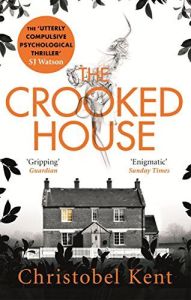
I can certainly see why Christobel Kent’s novel The Crooked House has drawn comparisons with the British mystery Broadchurch. Like that story, Kent’s novel takes place in an isolated village (in this case, Saltleigh) and concerns a horrific crime which has rippled out into the community.

Alison used to be Esme and when she was fourteen her entire family was slaughtered. 748d3761900605840ce32be83a67d549Since that horrible night, Alison has flown under the radar. She lived first with her aunt in the south and then, after school, she moved to London where she worked in publishing, and where she met Paul. Paul is older, in his forties, and a professor. They had “Long, lazy conversations about books and movies and work, eating dinner at his big wooden table, or leaning against each other on his old sofa.” Alison likes him, so when he asks her to accompany him to Saltleigh to attend the wedding of a former girlfriend, she can’t seem to refuse even though she hasn’t been back since the crime.
Saltleigh is the same as Alison remembers. The smells, the colours, the landscape, and the memories of living there with her older brother, younger twin sisters, and her parents are palpable. On the first morning, while Paul sleeps on, Alison answers the memories and goes to her childhood home.

The house was boarded and derelict, weathered plywood splintered and graffitied at each window and the purple spikes of some plant sprouting above the lintel over the front door. The little enclosed yard behind where they had hidden and whispered and left secret messages. Thirteen years.

Despite the fact that she has spent the last thirteen years trying to forget, the memories have been triggered by coming back and she can do nothing but follow where they lead. What really happened that night?

The Crooked House was clearly a big hit in the UK. My version was covered with praise — a combination of praise from other authors, which is always suspect to me, and from the press.  Good Housekeeping said it “Demands to be read in one sitting.” I think that might actually be wise advice because although I did like this book (it’s clever, smart and well-written), I found it really disjointed. It shifts time periods all over the damn place and there are loads of characters and subplots (all relevant, mind you) to keep track of. If I managed to read without interruption, I easily settled into the book’s rhythms. but it definitely wasn’t a book you could pick up on the fly.

I think this book would make an excellent mini-series or movie. Get on that, would you, BBC!

The Vanishing Act of Esme Lennox – Maggie O’Farrell

Maggie O’Farrell’s novel The Vanishing Act of Esme Lennox is the story of sisters Euphemia (Esme) and Kitty and while the novel’s first line announces that the story begins “with two girls at a dance”, the story really begins in India, where Kitty and Esme live with their parents. There, one hot afternoon, Esme, aged four and a half,  recalls an insect getting caught in her ear and letting “out another piercing shriek.” She staggers around the lawn until the insect crawls out of her ear. “Could this be her earliest memory?” she wonders. “It might be. A beginning of sorts – the only one she remembers.”

250729This is also the story of Iris, Kitty’s granddaughter, owner of a small vintage clothing store, and half-heartedly involved with a married man.

The narrative jumps around a lot: present day, India,  Edinburgh in the 1930s after Esme and Kitty and their parents return from India. To confuse matters even more, Kitty now suffers from dementia and her fragmented thoughts are part of O’Farrell’s narrative. If it sounds complicated, it’s actually not.

The main part of the story is Esme’s. The psychiatric hospital where she has spent the last sixty years of her life is closing and she needs to be moved. Kitty clearly can’t care for her – she’s in a nursing home herself. It falls to Iris to look after a woman she’s never met and knows nothing about. When Iris finally meets her great aunt, she seems quite sane.

Iris had, she realises, been expecting someone frail or infirm, a tiny geriatric, a witch from a fairy tale. But this woman is tall, with an angular face and searching eyes. She has an air of slight hauteur, the expression arch, the eyebrows raised.

Esme is a fascinating character and her story is both heartbreaking and compelling. She is a victim of the time, of family tragedy and the will of others, yet she remains somehow sane. She wanted an education, but her parents wanted her to make a good marriage.  The circumstances of her incarceration are revealed to the reader through the novel’s layered narrative and it’s more than enough to keep you turning the pages.

However, I do feel there was more to be said. I was particularly drawn to Iris’s story and her relationship with her brother, Alex, and that felt (in some ways) like another book entirely. Some people probably won’t like the way The Vanishing Act of Esme Lennox finishes, but I didn’t mind how it ended. I think my overall reaction to the book was that it was lightweight despite the novel’s more serious themes. Easy to read, sad, but somehow sort of superficial.

Connected Underneath – Linda Legters

Celeste, the wheelchair-bound narrator of Linda Legter’s novel Connected Underneath,  promises to tell us everything, even the parts too terrible to share. Then she admits “there, already: I’ve hardly begun and I’m already lying.” Whether or not Celeste’s lies are as pivotal to the story as she’d like to think is open to debate and, truthfully, she’s the least interesting part of the story, anyway. Connected Underneath cover

Celeste lives in Madena, a tiny town in upstate New York. She introduces the reader to the novel’s key players: Theo and Natalie – high school friends, although Theo had definitely hoped for more. Natalie, however, liked boys like Mike Teague, high school basketball star, because “Theo was from the wrong side of town, her side, and she wanted a different side.” When she becomes pregnant, Natalie turns to Theo for help and he ends up adopting her daughter, whom he names Persephone. (A fitting name, as it turns out -Persephone was the goddess of the underworld – because Seph, at fifteen, is a little off the rails.)

Theo and Seph are actually disconnected these days. Seph is in love with a girl called Krista, but she trades sex for tattoos. Billie, the tattoo artist, is “sweet, gentle, swift, so it never seemed like a very big deal, not even the first time, the time that drew blood.” Of course, Seph keeps the tattoos and the sex from her father, but even so, Theo is beginning to worry about his daughter; “he was sure his girl was in trouble.”

So that’s the impetus for a visit to Natalie’s house across town. She lives with her husband, Doug, and their son, Max. Natalie doesn’t really want anything to do with Theo and shows little interest in the daughter she gave up fifteen years ago. In fact, when Theo admits he’s afraid of losing her, Natalie’s response is callous and decidedly un-motherly: She tells him, “You’re too late. Not my fault.”

Connected Underneath is a story about secrets – those we keep from each other and those we keep from ourselves. It is also a story about the damage we can do, both willfully and inadvertently. Everyone in Connected Underneath seems to operate, ironically, without actually realizing how they are connected and when the secrets  bubble to the surface, discretion is abandoned and truth is used as a weapon.

Theo is definitely the most sympathetic character. Despite a fraught childhood, he has always tried to do the right thing. He loves his daughter, even if he isn’t quite sure how to keep her safe. Natalie is another story. I didn’t like her and also, more importantly, didn’t believe her. Not for a  minute. And then there’s Celeste. As she watches Theo’s world unravel, her world – miraculously – begins to right itself. Can’t say that I was all that invested in her, either.

On the plus side – Connected Underneath is an elliptical, strangely compelling story about the ways we try to save each other, even when we can’t. It is well-written, even if I didn’t believe in some of the characters. It is almost relentlessly grim, but sometimes life is just like that.

tlc logoThanks very much to TLC Book Tours for  inviting me to be a part of the book tour for Connected Underneath and to Linda Legters and Lethe Press for providing my review copy.


The Paris Wife – Paula McLain

I wouldn’t consider myself an Ernest Hemingway fan by any stretch. Perhaps I read him when I was too young to appreciate his spare and muscular prose. For some reason I always thought of him as a misogynist, although I couldn’t say how I came to that conclusion. He has been criticized for his portrayal of women in his work, so my opinion has clearly been borrowed from something else I’ve read. I do know, however, that he is a significant figure in American literature even if neither the man nor the myth was all that interesting to me as a reader.

parisNow, after reading Paula McLain’s novel The Paris Wife I have to admit to being quite curious about Hemingway and his writing. I think I might come at it a little differently now compared to the way I approached him as a young university student.

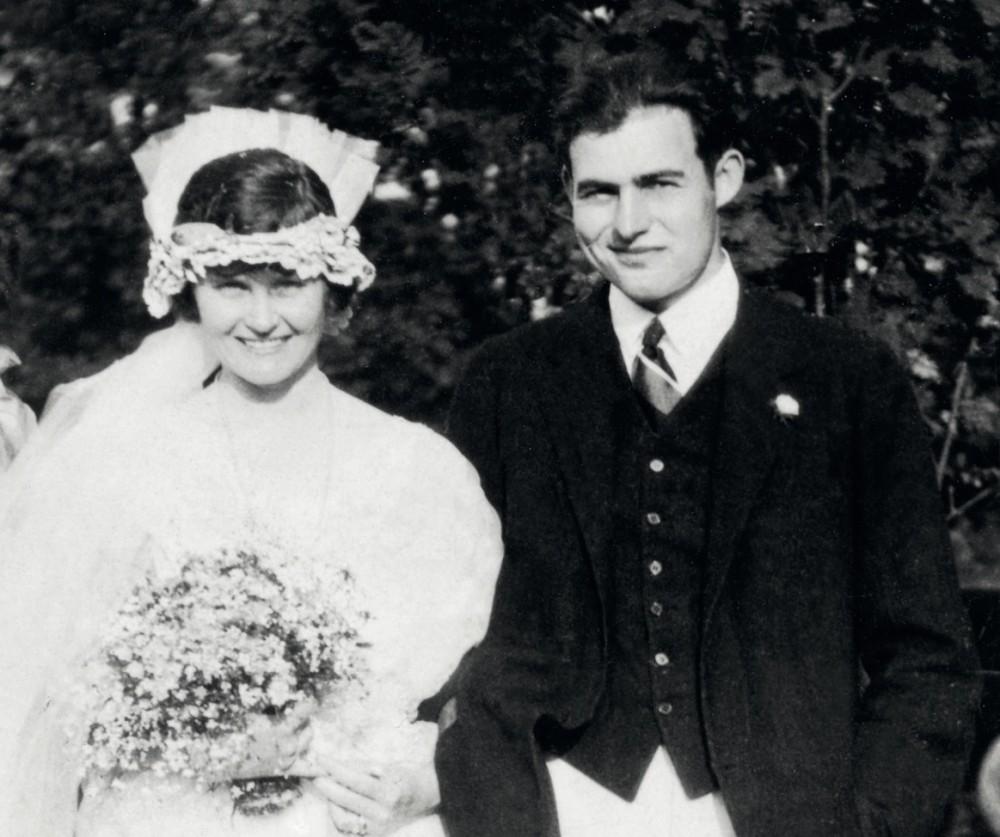
The Paris Wife is a fictional account of the relationship between a young Ernest Hemingway and his first wife, Hadley Richardson. The pair meet through mutual friends in Chicago in 1920. “The very first thing he does,” Hadley says, “is fix me with those wonderfully brown eyes…”

Hadley is 28 and has come to Chicago from St. Louis after the death of her mother. Hemingway is just 20 and “seemed to do happiness all the way up and through. There wasn’t any fear in him…just intensity and aliveness.” For Hadley, who says that her life was “stuck” long before her mother’s death, Hemingway is a revelation. When Hemingway announces that he intends on being an important writer, Hadley remarks “I thought poets were quiet and shrinking and afraid of sunlight.” Hemingway is a force and Hadley has no choice but to be swept along with him.

After Hadley returns to St. Louis, the two begin a correspondence which ends in a wedding proposal.  Once they are married, the two return to Chicago briefly before setting sail for Paris. Why Paris? Sherwood

Hadley and Ernest on their wedding day Sept 3, 1921.

Hadley and Ernest on their wedding day Sept 3, 1921.

Anderson (author of the book Winesburg, Ohio, which I’ve never heard of but apparently both the writer and the book were a big deal back in the day) tells Hemingway “…if you want to do any serious work, Paris is the place to be. That’s where the real writers are now.”

Anderson was right, of course. Paris in the 20’s was a mecca for writers and artists, a literary (and artistic) who’s who. Gertrude Stein, Ezra Pound, F. Scott Fitzgerald,  and Archibald MacLeish are just a few of the celebs who enter the Hemingways’ orbit once they find themselves in the City of Light at the end of 1921. This collection of literati came to be known as “The Lost Generation,” a term coined by Stein but made popular in Hemingway’s novel The Sun Also Rises. The term refers to those who came of age after the First Word War.

McLain’s novel does an exceptional job of capturing the literary scene of the time – its parties and squabbles, jealousies and intrigues – but also the relationship between Ernest and Hadley. There is no question they loved each other deeply and in Hemingway’s own memoir about his time in Paris, A Moveable Feast, he writes “I wish I had died before I loved anyone but her.”

I may have to rethink my position on Hemingway. I may have to read A Moveable Feast. I certainly recommend The Paris Wife especially if you love literary name dropping and Paris. Even if you don’t love those things, McLain’s novel is a delight.

Still Mine – Amy Stuart

I haven’t read a book quite as weird as Amy Stuart’s Still Mine  in a long time and I still can’t decide whether it was good weird or just weird. It reminded me a little of Go With Me – a quirky, but affecting novel by Castle Freeman Jr.

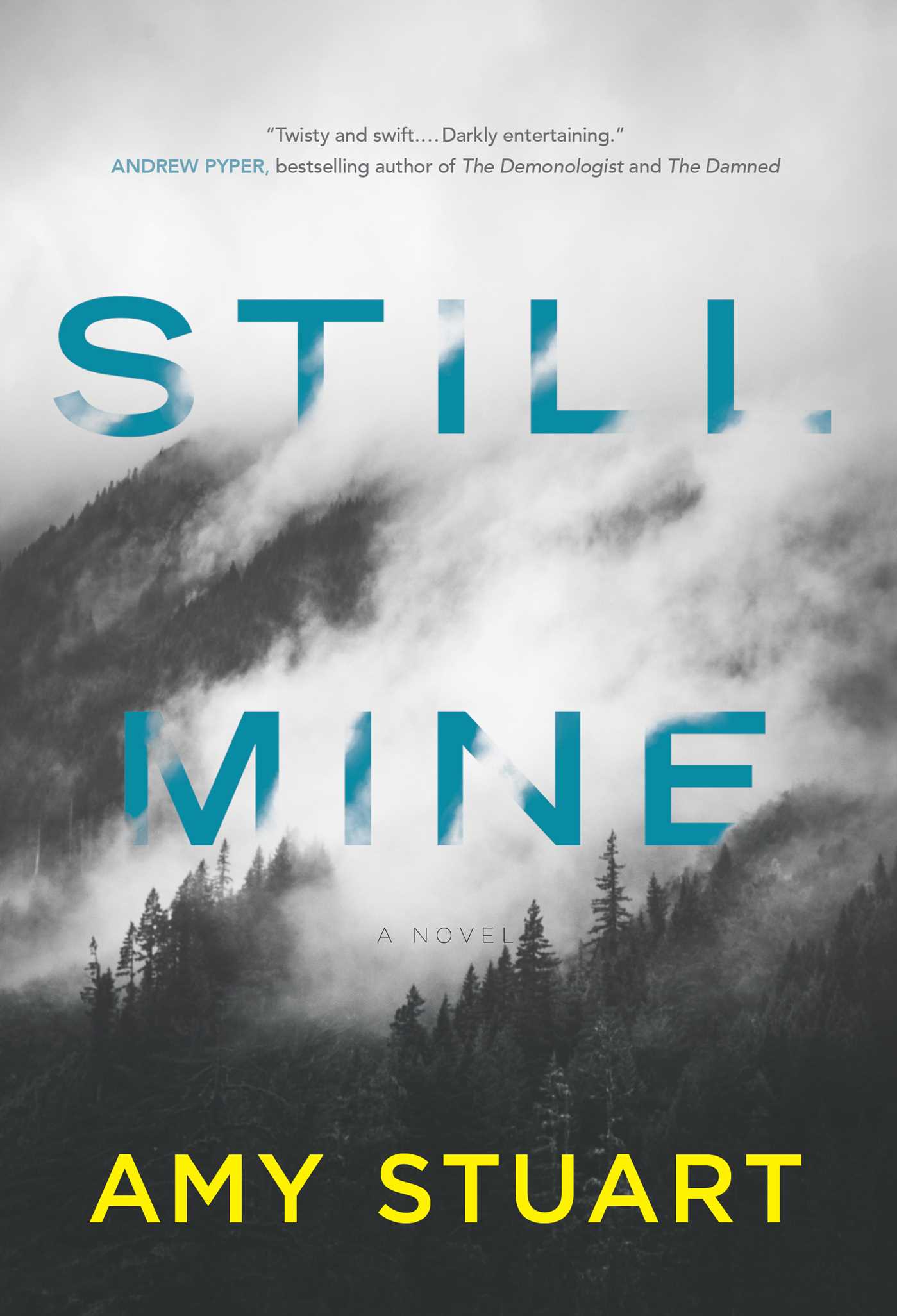
still-mine-9781476790428_hrClare O’Dey has run away from her abusive husband, Jason. In an unusual twist, the man Jason sends to find her, Malcolm Boon,  hires Clare to go to Blackmore, a remote mining town in the mountains, to look for another missing woman, Shayna Fowles.  For reasons that won’t be immediately clear, Clare invests wholeheartedly in the search for Shayna, a woman whose past is as tricky and messed up as Clare’s.

Blackmore is a shriveled up nothing of a town. “A blast at the Blackmore Coal Mine five years ago killed thirty-two men and trapped  eighteen others underground for three weeks,”  Malcolm’s notes tell Clare. She pretends to be a photographer in town to take pictures, but it’s a ruse no one buys. The only hotel in town is closed and so Clare rents a trailer on Charlie Merritt’s property. Charlie is the town drug dealer and his property (his father and brothers were killed in the mine) butts up against Shayna’s parents’ place.  Clare figures it will be a good place to snoop.

Blackmore is filled with broken people: Jared, Shayna’s ex-husband; Sara, her friend; Derek, the town’s only doctor and Shayna’s parents, Louise (who is suffering from early onset Alzheimer’s) and Wilfred, her father, the man responsible for saving the eighteen men who did make it out of the mine alive (but also the man Charlie holds responsible for the deaths of his father and siblings). None of them seem to know what happened to Shayna and with no police in town, no one is looking for her.

As Clare attempts to find out what has happened and which of the town’s odd assortment of outcasts might be responsible for Shayna’s disappearance, her own past is revealed; her own frailties are exposed. Like Shayna, Clare has a penchant for drugs and alcohol, making Charlie particularly dangerous to her. She also finds herself strangely attracted to Shayna’s ex-husband, Jared. She forges a bond with Louise, replacing the mother she recently lost to cancer. In many ways, Clare steps into the life Shayna has abandoned. Even so she realizes

These people in Blackmore, they are not Clare’s friends. Derek and Jared and Sara and Charlie. They are not even one another’s friends. They are only characters in Shayna’s story and Shayna is not here.

Still Mine is an unusual, albeit strange, psychological mystery. Apparently there is a sequel on the way, but I was quite content with how the book ended.

Definitely worth checking out.


The Book of You – Claire Kendal

You know how sometimes you start a book and you just can’t put it down – that’s what happened when I started reading Claire Kendal’s debut novel The Book of You. I mean, it’s not an original story – woman sleeps with guy after a bad break up and guy turns out to be a psychopathic stalker – but Kendal’s novel had an extra layer of creep, plus some interesting things to say about victim-blaming.

Thirty-eight-year-old Clarissa works as an administrator at the university in Bath. Her book of youaffair with Henry, a professor, has recently ended. Rafe also works at the university and has just published a new book on fairy tales and it is at his book launch that Clarissa drinks too much. She hadn’t really wanted to go, but he’d sent her three invitations. Hello, alarm bells.
“It is the night that I make the very big mistake of sleeping with you,” she writes in her journal. She has decided to follow the advice from the literature on stalkers and document everything. Clarissa knows she has to build a case before she can even consider going to the police.

I am trying to piece it all together. I am trying to fill in the gaps. I am trying to recollect the things you did before this morning, when I started to record it all. I don’t want to miss out a single bit of evidence – I can’t afford to. But doing this forces me to relive it. Doing this keeps you with me, which is exactly where I don’t want to be.

Everything about Rafe is skin-crawlingly-creepy.

“It makes me want to scream, the way you say my name all the time,” Clarissa writes. And Rafe has plenty of opportunities to say it. He is everywhere: outside her apartment, lurking at train stations, waiting for her outside the court room where she is on jury duty. He sends her things: chocolates, notes, flowers. He calls and texts her dozens of times. He rallies her friends against her, isolates her further. He makes Clarissa question her own sanity.

If there is a bright spot in Clarissa’s day, it is the time she spends in court, listening to the rather horrific details of a violent drug-related rape. It is here where she meets fellow-juror, Robert, a firefighter who recently lost his wife. As she and Robert become closer, Rafe becomes more aggressive.

The Book of You is an edge-of-your-seat thriller which also happens to be well-written. Clarissa refuses to let herself be a victim, but she is human and doesn’t always make the right choices. I never once thought “What?! Don’t do that!” though – which is certainly due to Kendal’s skill.

It’s a bit graphic, so if that’s not your thing perhaps this isn’t the book for you. However, I couldn’t put it down and highly recommend it.


Everything I Never Told You -Celeste Ng

everythingLydia is dead.

It’s been quite a while since I’ve had such a visceral reaction to a book.  I read the bulk of Celeste Ng’s debut novel, Everything I Never Told You, on my snow day (a gift for a teacher, even if it’s only because we get to catch up on  marking/yearbook/planning – and, yeah, reading). I don’t think I will ever  be able to adequately explain how I feel about this book or these characters.

Lydia is just sixteen when she is found at the bottom of the lake across the street from her home in small-town Ohio. It’s the 1970s, the decade in which I, too, was coming-of-age. On the morning she is discovered missing (and it is this “innocuous” fact that sets the story in motion) we see the Lee family dynamic.

As always, next to her cereal bowl, her mother has placed a sharpened pencil and Lydia’s physics homework, six problems flagged with small ticks.

Hannah, Lydia’s younger sister is “hunched[ed] moon-eyed over her cornflakes, sucking them to pieces one by one.” Lydia’s older brother, Nathan, is sitting on the stairs trying to wake up. James, their father, has already left for his job as a professor at the local college.

Lydia is never late. She is never anything but compliant. She is a “yes” girl, the favoured daughter. It is only after her body is found that her story, and that of her family, begins to unravel. And yes, you will want to know what happened to Lydia, but trust me, it’s just one of the many things that will break your heart in this magnificent novel.

While every family has their own secrets and burdens, the Lee family is further set apart because Marilyn is white and James is Chinese. Their story is integral to Lydia’s story. Marilyn herself was a gifted student, earning a scholarship to Radcliff, and there – while she heads towards a degree in medicine – she meets James, a fourth year graduate student in history. She is ‘other’ because she is a woman studying in a field that is dominated by men; he is ‘other’ because he’s Chinese. All Marilyn knows is that “she wanted this man in her life. Something inside her said, He understands. What it’s like to be different.”

Marilyn’s career plans are pre-empted when she gets pregnant. She and James marry and move to Ohio.  Of course, their union wouldn’t be quite so problematic now (I’d like to think, but there are always some people….), but it’s the late 50s when they marry. Another world, another time. And life, fraught as it is, moves on. But why is it fraught? Because James grew up attending private school for free because his mother worked there as the cook and his father the janitor? Because he never fit in anywhere?  Because Marilyn didn’t want the life her mother had? Because of dreams deferred? And what happens when our parents’ lives are complicated and damaged by their own childhoods? Ah, we all know the answer to that question, right? It all trickles down.

Everything I Never Told You is an astounding, complex and heart-breaking look at the secrets we keep, not only from our families but from ourselves. Why we keep them, and the damage caused because of it, is just part of what happens in Ng’s book. The horrible longing we feel to crack ourselves open, the desire for true communication and intimacy, is another part. There wasn’t a single character in this novel I didn’t want to hug – I loved them all. That they were so fabulously human and fragile is a testament to Ng’s talent.

Highly (times a billion) recommended.

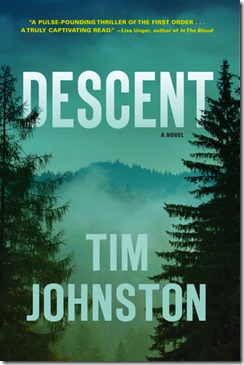
Descent – Tim Johnston

descent_thumbI love it when a book lives up to its hype…and if you believed the accolades plastering the back cover and the first three pages of Tim Johnston’s novel Descent, you’d certainly be expecting great things. The Washington Post said “Read this astonishing novel. The magic of his prose equals the horror of Johnston’s story.” Esquire called it “Outstanding” adding that “the days when you had to choose between a great story and a great piece of writing” are “gone.”

I don’t even know how this book came to be on my radar – I just know that I had a picture of it on my phone and a couple weekends ago I was pleased to discover that Indigo had topped up my Plum Points and I had $100 to spend…but only that weekend to spend it. So, I flipped through the pictures of covers and chose five, Descent being one of them. A couple of weeks ago, I mentioned the book on Information Morning and decided that since I had, I should probably read it. Once I started, I couldn’t stop.

The Courtlands are spending a little family time in the Rocky Mountains – a holiday before Caitlin, 18, heads off for her first semester of college. Her mom and dad, Angela and Grant, are clearly in crisis and then there’s Sean, Caitlin’s 15-year-old brother.

Caitlin is a runner and on the morning the story opens, she and her brother are heading up a mountain trail – Caitlin on her feet, Sean on his bike. Johnston meanders up the mountain with the pair as they bicker and share confidences. Then the unthinkable happens: Sean is hit by a jeep

…it came, monstering through the trees at an incredible speed, crushing deadfall, the whip and scream of branches dragged on sheet metal and then the suddenly unobstructed roar that made her wrap her head in her arms, the sound of tires locking and skidding and the thing slamming into what sounded like the sad tin post of a stop sign and then the meaty whump and the woof of air which was in fact the boy’s airborne body coming to a stop against the trunk of a tree.

When Grant and Angela get a call from the local police, they learn Sean’s been badly injured;  Caitlin is missing.

Fast forward a year or so. Grant has moved to the area and is living on the property owned by the local sheriff’s father, Emmet. Sean is on the road, driving from place to place picking up odd jobs. Angela is living with her sister when she isn’t hospitalized for depression/mental health issues. Caitlin’s disappearance has fractured the Courtland family.  It’s mostly the men that Johnston spends time with, allowing the reader a glimpse into their own personal hells: the father who can’t and won’t give up hope that Caitlin will be found and the son who can’t forget what happened that morning on the mountain.

The characters in Descent are trying to get on with it, but their personal pain is palpable. Grant works around Emmet’s property, sometimes pausing to “stare into the hills beyond the ranch, up into the climbing green mountains.” He hears his daughter’s voice and  “take[s] his skull in his hands and clench[es] his teeth until he [feels] the roots giving way.”

As for Sean, he is closed off from the world. In one particularly horrific scene, he puts himself in harm’s way in an effort to save a young girl – perhaps in an effort to atone for the ultimate crime of not being able to save his sister. It’s not the only time he does something selfless, albeit, foolish.  I just wanted to hug him.

We do spend less time with Angela, but that doesn’t mean that we know less about her. She moves through her much diminished world like a whisper. Only a parent who has suffered the loss of a child could truly understand Angela’s debilitating sadness.

The girls’ heartbeat still played in her arms. In her chest. She remembered the hour, the minute, she was born: precious small head, the known, perfect-formed weight of it. All her fears of motherhood – of unreadiness, of unfitness– vanishing at the sight of that plum-colored face mewling in outrage. My child, my life.

Secondary characters, Emmet’s  black-sheep son, Billy, for example, are equally well-drawn. Billy arrives back in town, much to the chagrin of his father and older brother, and swaggers his way into everyone’s bad graces. But even Billy is allowed his shades of gray – there are no stock characters here.

Into these complicated interior lives, Johnston deftly weaves the mystery of Caitlin’s disappearance. She is not a footnote, trust me. The story of her disappearance is unraveled with excruciating care and her story is definitely one of the things that will speed your journey through this book.

Descent is fantastic on every level and I highly recommend it.


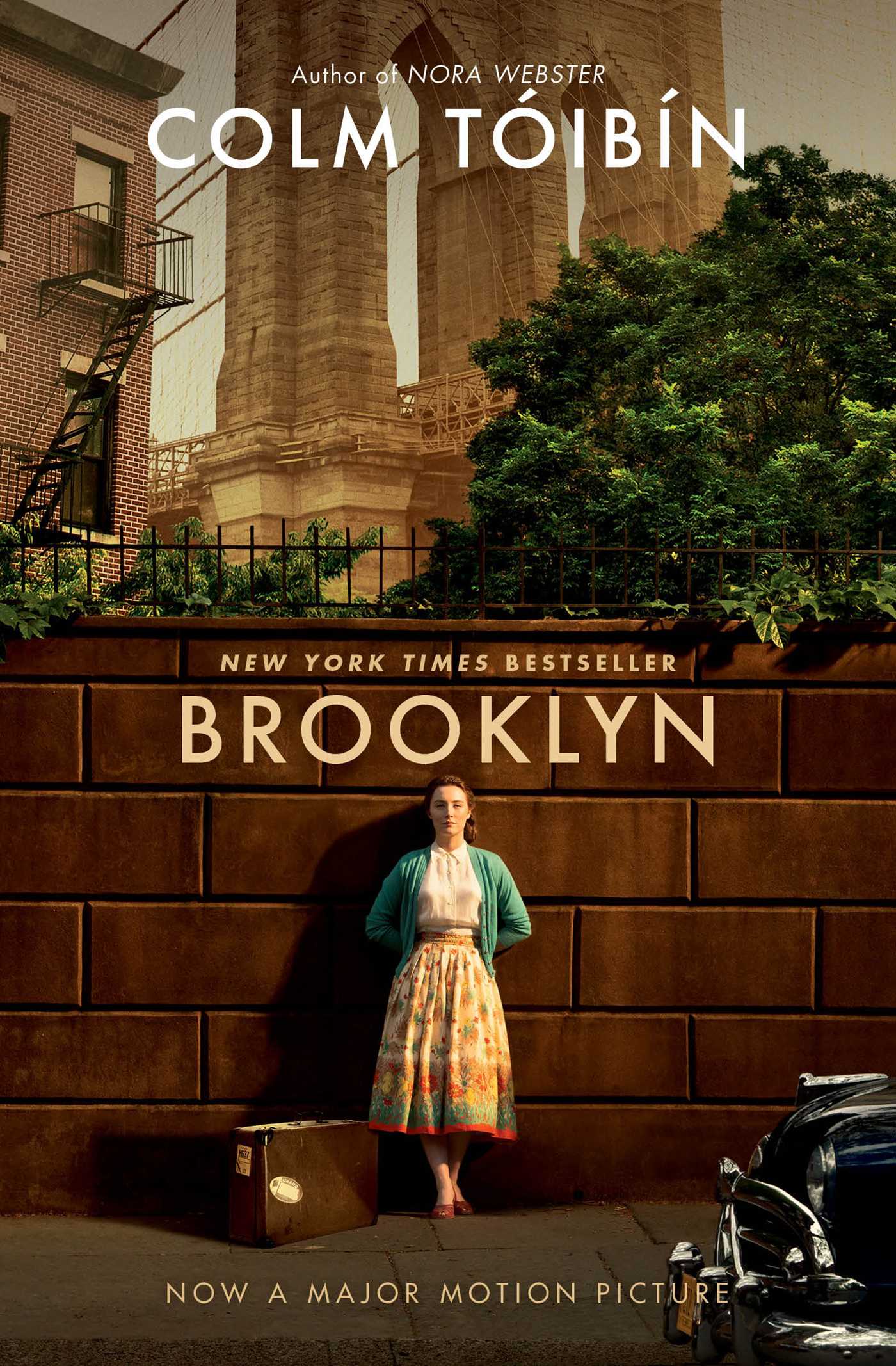
Brooklyn – Colm Tóibín

colmbrooklynMy fabulous book club kicked off 2016 by discussing Colm Tóibín‘s award winning novel Brooklyn. After our Christmas hiatus, we all enjoy getting back together for some yummy food, wine and great conversation.

Tóibín‘s novel, the story of Eilis Lacey’s coming-of-age in 1950’s Ireland and Brooklyn, NY, was a lovely way to start our new reading year, even if we didn’t all agree about the book’s merits.

Eilis is (I think – it’s never explicitly stated) a young woman in her early twenties who lives with her widowed mother and thirty-year-old sister, Rose. Rose is glamorous and independent. Times are tough in Eilis’s little town and so when an old friend of the family, Father Flood, arrives home for a visit from America and suggests he could help Eilis find work there, and perhaps further opportunities to improve her life, it’s decided that she make the journey across the Atlantic to settle in Brooklyn. Eilis’s story is actually quite common for the time period; however, one has to venture a little further back to fully understand the Irish immigration to America.

At Time.com, “Irish-American historian and novelist Peter Quinn explains, “The country wasn’t in the Second World War, it had been kind of cut off from the rest of the world, and it wasn’t part of the Marshall Plan. So it was still a very rural country.” The economy was at a standstill, while the U.S. was booming. Some 50,000 immigrants left Ireland for America in the ’50s, about a quarter of them settling in New York.

Women played an important role in that immigration process. Quinn explains “during the 19th century, the wave of Irish was “the only immigration where there were a majority of women.” And, thanks to a culture that supported nuns and teachers, those women were often able to delay marriage and look for jobs. By the mid 20th century, many Irish women—who also benefited from the ability to speak English—were working in supermarkets, utility companies, restaurants and, like Eilis, department stores. The fact that Eilis finds her job through her priest is also typical. “[The Catholic Church] was an employment agency. It was the great transatlantic organization,” Quinn says. “If you came from Ireland, everything seemed different, but the church didn’t. It was a comfort that way, and it was a connection.””

So here is Eilis, alone in the big city. Whether you like her or not (I’m sort of in the “indifferent” camp), Eilis’s story is certainly compelling. She begins a job at Bartocci’s, a department story run by Italians. Her goal is to make her way through the ranks and end up, hopefully, as a bookkeeper in the office, rather than a shop girl. Father Flood arranges for her to take a bookkeeping course at Brooklyn College. She’s a diligent and conscientious worker.

She lives in a boarding house run by an Irish lady called Mrs. Kehoe. She shares living space with a variety of other young women, some Irish, some American. We learn very little about any of them; Eilis tends to keep to herself.

And there you have it – Eilis in Brooklyn. Oh…then she meets Tony.

Eilis slowly became aware of a young man looking at her. He was smiling warmly, amused at her efforts to learn the dance steps. He was not much taller than she was, but looked strong, with blonde hair and clear blue eyes. He seemed to think there was something funny happening as he swayed to the music.

It’s almost impossible not to like Tony and his family. He courts her and they fall in love, but then personal tragedy strikes and Eilis has to return to Ireland.

Brooklyn does have something to say about the choices we make in life and why we make them – sometimes, it seems, we aren’t really sure; we’re just swept along by the tide. Some readers might be put off with the way ideas/characters/themes are introduced and then dropped without resolution. While it’s true that life often happens in this manner, I might have enjoyed just a teensy more follow-through.

Tóibín‘s prose is straight-forward, unembellished and allows his reader to fill in the gaps. Many readers will likely take issue with the novel’s conclusion, but I liked it – even if I didn’t particularly like Eilis.


Hausfrau – Jill Alexander Essbaum

hausfrauPoor Anna. Her life sucks. She’s the protagonist in Jill Alexander Essbaum’s novel Hausfrau,  an American living in Dietlikon, a suburb of Zurich, with Bruno, her Swiss banker husband and her children: Victor, 8, Charles, 6, and baby Polly. She doesn’t work. She’s barely even learned to speak the language despite having lived in Switzerland for almost a decade. Her mother-in-law seems wholly unimpressed with her– and no wonder: Anna disappears for hours, taking language classes and having sex with random men.

It’s hard to really like Anna very much. She’s not the effusive American one might expect. Instead of joining the other mothers when she meets her sons at school she “scuffed the  sole of a brown clog  against the sidewalk’s curb…fiddled with her hair and pretended to watch an invisible bird flying overheard.”  She claims she is “shy and cannot talk to strangers.”  That may be true, but she speaks the universal language just fine.

Yep – Anna is a serial cheater. The reader meets Archie Sutherland first, an expat Scotsman.

Archie and Anna shared a plate of cheese, some greengage plums, a bottle of mineral water. Then they set everything aside and fucked again. Archie came in her mouth. It tasted like school paste, starchy and thick. This is a good thing I am doing, Anna said inside of herself, though “good” was hardly the right word. Anna knew this. What she meant was expedient. What she meant was convenient. What she meant was wrong in nearly every way but justifiable as it makes me feel better, and for so very long I have felt so very, very bad.

Oh, well, that’s all right then. You just go ahead and fuck whomever you please without any regard for anyone else but yourself because, clearly, life is rough for you. Oh please.

I am not a prude. I think everyone deserves a chance to be happy. The problem with Hausfrau is that I didn’t care one bit about Anna and by the time Essbaum actually gave me a reason to care about her it was too late. Anna is a hot mess and for no good reason that I can see.  She’s whiney and self-centered and in one instance, treats her adored younger son, Charles, so deplorably that there was just no way for me to like her after that.

Okay — maybe I am being too harsh. I mean, it’s tough to be a modern woman. Like, she’s got three kids and she lives in a foreign country and her husband is a stoic workaholic. Oh, wait, she comes and goes as she pleases. She doesn’t have to worry about money. She recognizes that her affairs are a product of her “longing for diversion…and from boredom particular habits were born.” No Netflix in Switzerland, eh? How about knitting or a good book, Anna?

Not even her psychoanalyst, Doktor Messerli, is able to offer any real useful advice. Instead, she imparts pithy gems like “Shame lies. Shame a woman and she will believe she is fundamentally wrong, organically delinquent.” And when it is clear Anna is desperate, the good doctor tells her to stop ringing her bell and leave immediately. Okay, then.

Critics loved this book. I did not.