Revenge by Mary Morris

Revenge is the story of Andrea Geller,  an artist who teaches at a small college in Hartwood. Andrea has gained some notoriety for a collection of art she once showed at a gallery in New York, but now her work has stalled.  She’s also struggling with the recent accidental death of her father. She’s having an affair with a married man.  All in all, Andrea’s a bit of a mess.

She happens to live across the street from Loretta Partlow, a highly successful novelist. Although Partlow had been required reading in high school, Andrea isn’t much of a fan until her stepmother mentions loving Partlow’s novel  What If? So Andrea revisits her work, the novels and essays on gardening and the poems. She becomes sort of obsessed with Partlow and contrives ways to bump into her.

Revenge is the rather odd story of the friendship which develops between Andrea and Loretta. Andrea enters into the relationship thinking Loretta might use her writing skills to exact a sort of revenge on her stepmother, but her scheme is only incidental to the story. Revenge is not a thriller, exactly, but you do race along its bizarre trajectory hoping for answers which never come.

That’s not to say that I didn’t like Revenge. Morris is a fine writer and I look forward to reading more of her work (and, in fact, I have Acts of God on my tbr shelf). This is, however, one of those books that seems to be promising one thing and then delivers something entirely different.

Ultimately, Morris has written a story about two rather quirky and self-centered women who need each other… until they don’t.

After Life by Rhian Ellis

After Life was a delight to read from beginning to end. The novel opens with the compelling line: “First I had to get his body into the boat.”   The narrator is Naomi Ash, a woman in her early 30s who lives in Train Line, a whole town owned by The Church of Spiritualist Studies in Upstate New York.

My first impression of the town was of clutter. Cars were parked nearly on the front steps, cats jumped from porch roofs and windowsills, hanging plants and wind chimes and mobiles dangled by every door. Winnie Sandox – said one painted wooden sign – Reader. And another: Mrs. Lawrence, Medium, is out. I couldn’t believe it: a town made just for us.

It really is a town for Naomi and her mother, Madame Galina, who is a medium.

After Ellis is Naomi’s story. It’s the story of her relationship with her mother, the story of her relationship with the quirky little town and its odd assortment of characters and her relationship with Peter.

It is also about Naomi’s relationship with the dead. Although she grew up helping her mother augment her readings with sounds and voices, Naomi doesn’t really believe in any of it or as she says: “I sort of believed. I pretended to. I enjoyed the attention I got when I worked message services and sat for seances , and sometimes I felt the thrill of connection, but part of me held back.”

When Naomi hears her first voice, everything changes.

After Life is a wonderful novel. Naomi is a terrific character: flawed and odd and vulnerable. The novel’s mystery – who is this ‘body’ she has to get in the boat and why – propels the story along at a thriller-like clip, but ultimately After Life is really about a woman trying to make her way in the world, which just happens to include a few ghosts.

Loved it.

Memory by Philippe Grimbert

Although Philippe Grimbert’s book,  Memory, claims to be a novel, the story has the ring of truth.

Although an only child, for many years I had a brother. Holiday friends and casual acquaintances had no option but to take my word for it. I had a brother. Stronger and better looking. An older brother, invisible and glorious.

Grimbert’s novel is the story of a family. The narrator, a sickly child of  athletic and beautiful parents whose “every muscle had been buffed and toned”, recounts the family’s history as it is told to him by, Louise,  a woman who runs a sort of homeopathic consulting business in two rooms in the same building as the narrator’s parents have their whole sportswear business.

It is clear from the beginning that the family is Jewish and that their story has been deeply affected by the Nazi’s.  It is Louise who unspools the narrative for the boy after he discovers  a toy dog in an attic filled with suitcases and furniture.

Memory is a scant 145 pages long, but it packs a punch as, I think, all personal stories about Hitler’s regime do.  It won numerous prizes and was a bestseller in France. Despite its claim of being fiction, it is impossible to deny its ring of authenticity and the knowledge that some (if not all) might have happened gives the book even more emotional heft.

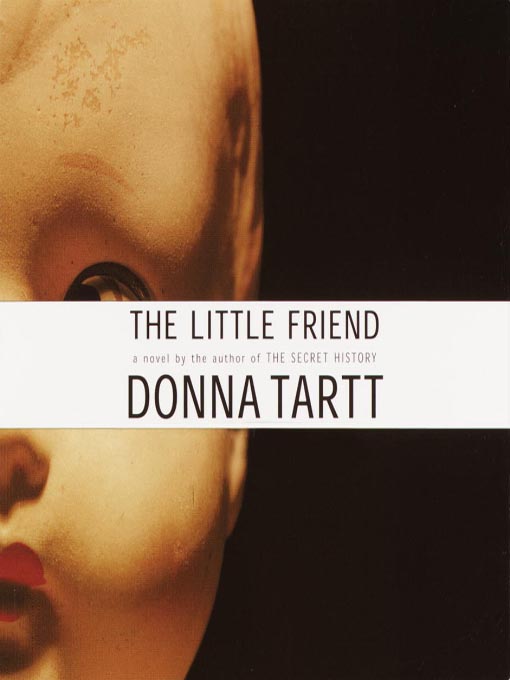
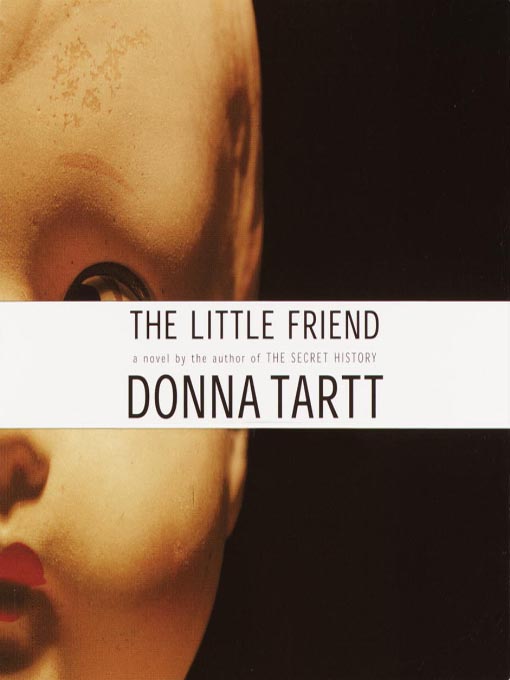
The Little Friend by Donna Tartt

Almost 20 years ago I stumbled upon Donna Tartt’s fantastic novel The Secret History, a novel which has stayed with me all these years. Having recently finished her second novel (and I believe there was almost ten years between the two books), I now have an overwelming desire to re-read The Secret History to see if it’s as good as I remember. I wonder if I’ll be saying the same thing about The Little Friend in 20 years?

There’s no doubt, Tartt is a talented writer. The Little Friend is a gorgeous book, certainly a book to linger over. (It’s over 600 pages long.) It concerns 12 year old Harriet Dufresnes. On Mother’s Day, when Harriet is just an infant, her older brother, Robin, is found hanging from a tree in the yard. His murderer is never found. Harriet has decided that she will discover who has killed her brother because  while she is neither pretty or sweet, Harriet is smart.

The Little Friend is a densely-written, slow-moving novel. Set in Alexandria, Mississippi in the 1970s,  the novel evokes the period (without bothering to fuss with specific details) and sets a tone which it sustains throughout. Harriet is surrounded by a cast of eccentric characters including her grandmother, Edie and Edie’s unmarried sisters. Harriet’s mother, Charlotte, has never fully recovered from the loss of her son. Harriet’s father, Dix, has long since removed himself to Nashville. Harriet’s best friend, Hely, is her constant companion. Harriet’s family once had money, but they don’t any longer. They all have ‘negro’ help, though. The maid/cook/surrogate mother in Harriet’s household is Ida Rhew and Harriet loves her fiercely.

On the other side of town live the Ratliff’s: Farish, Eugene, Danny and Curtis. Farish runs a meth lab out of a trailer on the property. Eugene is a self-proclaimed preacher and Danny is addicted to the drug his brother produces. Curtis is Harriet’s age and a little on the slow side. Harriet decides that Danny is responsible for her brother’s death – something Ida told her reinforces her belief that Danny hated Robin. She and Hely set out to prove his guilt and exact their revenge.

The Little Friend isn’t really about Harriet’s quest to find a murderer, though. It is about Harriet on the cusp of adulthood; about that long, hot summer between innocence and experience. This is a novel about loss. Harriet has more to lose than she might have thought and what she learns about herself and others surely shapes the woman she will become.

This is a novel to savor. It evokes a time and place that is both familiar and exotic. I have to say, though,  that when the end came I didn’t feel all together rewarded for my time and effort. But maybe that’s exactly what it feels like to leave childhood behind.

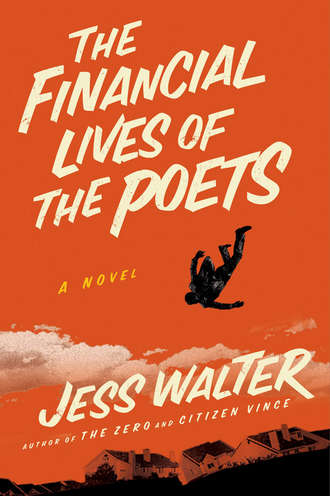
The Financial Lives of Poets by Jess Walter

Here’s a book I never would have chosen for myself in a million years, but which actually turned out to be better than I thought it would. The Financial Lives of Poets follows one week in the life of a middle-aged guy named  Matt Prior. Matt lives somewhere in America with his wife, two young sons and senile father. Matt used to be a newspaper business writer, but he took a buy-out so he could start a website which would deliver financial advice through poetry. It’s no surprise that it flopped. A couple bad investments and the economy’s belly flop later and Matt (and his family) are in serious financial trouble.

The plot of The Financial Lives of the Poets really begins when Matt hits the 7-11 to buy a gallon of milk. He’s not sleeping much these days – his mind is in a constant state of chaos trying to figure out how he’ll pay the bank the $30,000 plus he’s missed in mortgage payments, how he’ll keep his two young sons in private Catholic school and how, most importantly, he’ll keep their dire situation from his wife, a woman he loves but is sure is having an Internet relationship with an old boyfriend. At the 7-11 he meets a couple of low-level thugs. He ends up getting stoned with them and before you know it, Matt’s selling hydroponic weed.

Despite its serious subject matter, The Financial Lives of Poets is often laugh-out-loud funny.

Should anyone doubt that our miserable time here on Earth is just a sad existential joke, here is the cruelest thing I can imagine describing: my father (who is obsessed with sex, like a lot of dementia sufferers) – at seventy-one years of age, frail, balding, with a paunch that looks like it should wear its own pair of jockey shorts –  recently had ten days of crazy sex with a twenty-one-year-old stripper with long smooth legs and two big round silicone funbags, and the poor son-of-a-bitch doesn’t remember a thing about it.

Despite the often comical narrative, Walter tackles some weighty issues: how do people cope with the failing health of their parents, (Matt’s desire for his father to have just one moment of lucidity is heartbreaking); how do you save a marriage, why are we so concerned with having more stuff The Financial Lives of Poets doesn’t necessarily offer solutions, but time spent with Matt as he works through his problems is time well-spent. Funny and intelligent.

The Last Night I Spent With You by Mayra Montero

The Last Night I Spent With You is a slim volume, only 115 pages. Translated from the Spanish, Montero’s novel tells the story of Celia and Fernando – a middle-aged couple on a cruise. Their only daughter has just been married and Fernando’s friend, Bermudez, has sagely offered this advice: “women lose their inhibitions on ships.”

Actually, it seems as though everyone does.

Both Fernando and Celia are trying to come to terms with suddenly being cut loose from the strings that tied them to their daughter and each other. Fernando, too, seems to be experiencing a bit of a midlife crisis: death is looming. As their ship sails and docks, Fernando falls into an affair with Julieta, a middle-aged passenger.  For her part, Celia reminisces about an affair she’d had several years ago, when she’d been taking care of her ailing father.

Everything about this voyage is sexually charged in a way, one gathers, things haven’t been for several years between this married couple.

At last we were alone, it was true, after almost twenty-three years of winters and vacations, springs and birthdays, when Elena had been the axis of our lives. Elena growing up, becoming pretty, becoming taller than Celia, much more slender, infinitely more flirtatious. Our daughter Elena.

The Last Night I Spent With You is graphic and the writing is – despite it being a translation – good. The characters are selfish and often  behave inappropriately. It’s hard to say what they are searching for. It’s even harder to say whether, by the novel’s end, they’ve found it.

The Shadow of the Wind by Carlos Ruiz Zafon

This novel has been on my tbr list for a long time so I was thrilled when it was chosen as our book club pick.  Zafon’s  novel has been universally praised by famous writers (Stephen King called it “one gorgeous read”) critics  (Booklist said the book was “rich, lavish storytelling”) and everyone in my book club loved it. Except me. I didn’t hate the book; I enjoyed reading it.

Let me explain.

Ten-year-old Daniel, son of an antiquarian bookseller, is still suffering from the death of his mother – whose face he can no longer remember. His father decides to take him to The Cemetery of Forgotten Books, a labyrinth of passages and shelves – almost impossible to navigate.

This is a place of mystery, Daniel, a sanctuary. Every book, every volume you see here has a soul. The soul of the person who wrote it and of those who read it and lived and dreamed with it. Every time a book changes hands, every time someone runs his eyes down its pages, its spirit grows and strengthens.

Traditionally, when someone visits the Cemetery, he or she is allowed to choose one book and then they must promise to safeguard that book for all time. Daniel chooses The Shadow of the Wind by Julian Carax.

Daniel falls in love with the novel, a story about a man searching for his real father. He is so enchanted by the novel that he decides he must read everything by Carax and it is this quest that kick starts the novel.  Carax is something of a mystery himself and Daniel’s quest to learn more spans several years, introduces him a cast of broken and sinister characters and leads the reader on an adventure.

I think that’s what my problem was with this book.

I heard a regular customer say that few things leave a deeper mark on a reader than the first book that finds its way into his heart.

I think my expectations for the book and what the book was actually about didn’t actually jibe.  I had no trouble turning the pages, but ultimately The Shadow of the Wind was more of a stuffed-to-the-brim melodrama than a meditation on first books or even books in general.

As Daniel begins his quest to track down further Carax novels, a strange and somewhat threatening man offers to buy The Shadow of the Wind. Of course, this just redoubles Daniel’s efforts –  a quest that yields some surprises.

I guess, ultimately, my reservations about this book come from the hype. If I hadn’t heard so much, I might have been swept along. The writing is great (despite the fact that it’s a translation), the characters are sympathetic…but for me…the book was too long, and sometimes I felt that all the pieces just locked into place just a little too neatly. Daniel explained it best when he said:

the structure of the story began to remind me of one of those Russian dolls that contain innumerable ever-smaller dolls within.

Despite my own personal feelings, however, I would certainly encourage other readers to check this book out. It’s a lot of fun – the kind of book you can truly lose yourself in.

What You Have Left by Will Allison

Will Allison’s debut novel What You Have Left, reads like a series of connected short stories. When the book opens, five year old Holly has just been dropped off at her grandfather’s dairy farm. Her father says he’ll be back, waves good-bye and disappears from her life for thirty years. What follows are alternating narratives of the years both before Holly’s birth (concerning her parents Wylie and Maddy) and after, concerning Holly’s relationship with Lyle.

Holly is a bit of a train wreck. She drinks too much and abuses Lyle both before they marry and after. Of course, she has abandonment issues.

I really liked the first chapter of What You Have Left. Allison captured young Holly’s voice (although I have to admit that at first I thought the narrator was a young boy) beautifully. The first chapter mainly concerns Holly’s relationship with her grandfather, Cal, a kind man who tries to be both mother and father to Holly. His death sends Holly on a course of recklessness that seems to take her years to pull out of.

It’s not always easy to  like Holly. She’s one of those chip-on-her-shoulder types of characters who doesn’t seem to take into account anyone else’s feelings but her own. Her husband, Lyle, is a saint – even when he, too, seems to make stupid decisions.

I also appreciated hearing her father’s story. I think we tend to forget that parents have lives before they become parents and sometimes it’s hard to reconcile that. Children can be selfish. Parents, too.

In the end, I liked What You Have Left. Perhaps not everyone will like the narrative, but the voices are distinct and compelling and this slim novel has a lot to say about family and forgiveness.

Girls by Frederick Busch

The best word I can think of to describe Frederick Busch’s novel Girls is muscular. The novel has certainly received much higher praise than that. Glamour Magazine called it “powerful,” and went on to describe it as an intriguing crime story although the novel’s real strength lay with the main character’s  “growing insight about his marriage, his town, and himself [which] transforms this page-turner about lost children into a tender and eloquent examination of the even greater mystery that is the human heart.”

Jack is a somewhat cantankerous Vietnam veteran who is currently a campus cop at a small college in upstate New York. His wife, Fanny, is an emergency-room nurse. Jack and Fanny are mourning the recent loss of their infant daughter, Hannah. They can barely be in the same room with each other and so they work opposite shifts, drifting past each other in a haze of exhaustion and grief.

Then a local girl goes missing and someone suggests Jack help out with the investigation, ostensibly as a way of working through his own issues.

The characters in Busch’s novel are all messed up.  Jack and Hannah are locked in a grief-fueled stalemate and neither seems to know how to make the first move. As Jack observes:

I thought, as I stayed where I was, that somebody ought to walk around the table and hug this woman hard and just hold on.

Instead, Jack fills his days helping cars up icy hills, rescuing suicidal co-eds, drinking sour coffee with his confessor, Archie, and trying to figure out just what happened to the missing girl.

Girls is a  atmospheric and tragic story and the characters, particularly Jack, are well-drawn and convincing. The novel is often funny, too. In one scene, where Jack runs a drug-dealer off the campus, I laughed out loud.

Busch is a new-to-me writer, but he’s written 20 other novels and he’s impressed me enough to look for more.

The New York Times has a terrific review of the novel here.

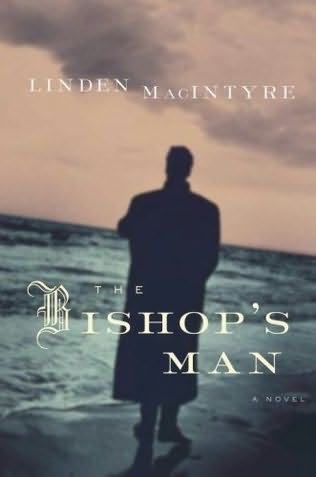
The Bishop’s Man by Linden MacIntyre

The Bishop’s Man was the 2009  Giller Prize winner. For those of you who aren’t familiar with the Giller, it’s Canada’s largest annual prize for fiction, netting the winner $50,000. MacIntyre, a well-known Canadian journalist who has won nine Geminis for broadcast journalism, beat out Anne Michaels, Colin McAdam, Annabel Lyon, and Kim Echlin.

I’m not sure The Bishop’s Man is a book I’d pick up on my own, but it’s this month’s book club pick. Still, the novel’s opening pages had me intrigued.  Its narrator, Father Duncan MacAskill,  is an intriguing character, but then he starts to spiral out of control and so does the book.

MacAskill is known as the “Exorcist.”  The Bishop  sends him to clean up after fallen priests – men who have sullied the name of the priesthood by engaging in sexual relationships with – well – anyone. As we all know, celibacy is one of the tenets of the priesthood.

MacAskill isn’t without his own secrets, though. When the bishop decides to send him back to his childhood home, MacAskill is forced to confront his own demons. Isolated from the world in backwoods  Cape Breton MacAskill suddenly realizes how lonely he is and he begins to drink heavily.

The Bishop’s Man is a page-turner. Lots of things are hinted at, enough to make the reader wonder: about the suicide of a young man and his relationship with a charismatic priest who has since left the order and married; about MacAskill’s time  in Honduras, revealed in snippets from his diary; about where his relationship with Stella, a woman in the village, might be headed; about his childhood.

MacIntyre juggles all these various threads and I guess this is where the book failed for me. I’m not a moron,  but sometimes the out of sequence narration was really a pain-in-the-ass. I’m all for the elliptical, but I’m not sure it served the story in this instance (unless MacIntyre was trying to mimic the disordered state of MacAskill’s mind.)

I haven’t read the other novels on the Giller shortlist and so I’d be curious to see how they stack up against this one. I guess the one thing The Bishop’s Man has going for it is a sense of immediacy. The Catholic Church has certainly had its share of troubles. Whether or not the novel’s verisimilitude is enough to overlook its other issues is up to the reader, I suppose.