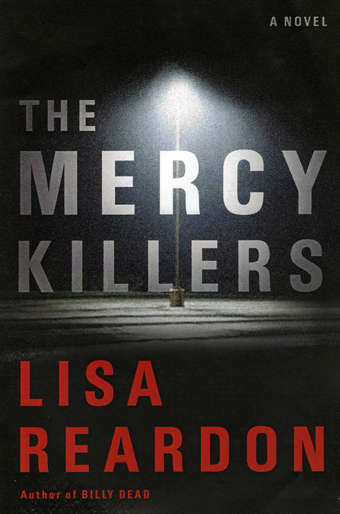
The Mercy Killers – Lisa Reardon

I first discovered Reardon a few years back when I read Billy Dead, a novel that continues to haunt me. The Mercy Killers has been on my tbr shelf for ages but I kept putting off reading it because its subject matter didn’t really appeal to me. Once I started it, though, I couldn’t put it down.

Lisa Reardon writes about characters who live in a world vastly different from my own. They are broken-down people whose lives are messy – filled with violence and alcohol and drugs and hopelessness.

The Mercy Killers concerns the fortunes (and misfortunes) of a group of people who hang out at Gil McGurk’s bar. When the novel opens, one of the regulars, Old Jerry, is complaining about his inability to take a bath. He wants to die.  It’s his birthday.

PT is one of Old Jerry’s grandsons. He’s nineteen and developmentally delayed after suffering one too many beatings at the hands of his father. Charlie, PT’s younger brother, is a petty criminal. He hangs out with Gino whose “bottle blue eyes and falling black hair” make him attractive to Gil’s daughter, Katie. Thing is, Gino’s not interested in women.

When PT decides to grant his grandfather’s wish and smothers him with a pillow, Charlie and Gino decide to cover up the crime. This propels the novel forward; Charlie ends up in Vietnam. Gino, too.

Although these characters weren’t familiar to me – the bonds of family and friendship, the small acts of kindness  in unexpected places certainly were. Charlie is fiercely protective of his older brother, the brother who had put himself in harm’s way to protect him against their violent father as children. Although Charlie is not without his flaws, he has the potential to be decent and it is this inherent goodness on which other characters (Gino in particular) hang their hopes.

Reardon’s writing is propulsive. As with Billy Dead I couldn’t stop turning the pages. I wanted one of these characters to break the cycle of violence and addiction. While there’s no question that Vietnam has a role to play in this book – and that the psychological aftermath of that horrific war adds another layer of despair to the lives of the characters – it is clear that sometimes our own choices cause just as much pain.

As I was surfing around the web looking for a picture of the book, I came across a few stories about Reardon’s personal life. In August 2009, she shot her father. She didn’t kill him, but apparently she meant to. From what I have read, it seems like there was some bad blood between them. When asked whether he knew of any reason Lisa would want to harm him he said “yes,” but wouldn’t elaborate.

Perhaps the marginalized and damaged characters Reardon writes about are cut from personal cloth. I feel badly that she’s had some  trouble. I think she’s an amazing writer.

The Sister by Poppy Adams

It’s ten to two in the afternoon and I’ve been waiting for my little sister, Vivi, since one-thirty. She’s finally coming home, at sixty-seven years old, after an absence of almost fifty years.


Thus begins Poppy Adams’ strange debut novel, The Sister.  Narrated by the incredibly brilliant Ginny, The Sister tells the story of the sisters and their parents, Maud and Clive. They share  a crumbling English estate known as The Red House because of the Virginia Creeper. Whole areas of the house have been shut down because Clive, a moth expert, and Maud can’t afford the estate.

Ginny takes the reader back in time, to the moment that her mother brought Vivi home from the hospital “her fluffy hair sticking up and her big round eyes gazing at me”. She recounts the time Vivi fell off the bell tower, an injury which very nearly cost her her life, but which did make it impossible for her to bear children. Ginny is the keeper of the memories and is in sole possession of the secrets, too.

Why did Vivi leave, never to return? It will be left to the reader to decide whether her homecoming is worth the hype. For me, the book falls short of the opening line’s promise. I was expecting something altogether more suspenseful. Instead, Adams spends a great deal of time instructing the reader on the nature of moths – a subject that holds absolutely no interest for me- and not nearly enough time examining just what keeps two sisters apart for fifty years.

The novel is well-written, certainly, but it moved too slowly and didn’t deliver on its early promise.

Moth lovers will likely be delighted.

The Prime of Miss Jean Brodie – Muriel Spark

When I was in grade seven, a million years ago, we watched The Prime of Miss Jean Brodie  on television. I have a clear memory of it.  I distinctly remember  Maggie Smith’s portrayal of the slightly aristocratic, strangely compelling school teacher, Jean Brodie. She’s remained in my memory just as the character herself remained in the memories of the students she taught, the creme de la creme.

Miss Jean Brodie’s class of twelve year olds are impressionable, inquisitive and sensitive.  The ‘Brodie set’ as they are known to the other students at the Marcia Blaine School are enjoying their final year with Miss Brodie before they move to the senior school. Miss Brodie is ‘shaping them’ and her notion of the curriculum isn’t exactly approved of by the other teachers of the school.

If anyone comes along in the course of the following lesson, remember that it is the hour of English grammar. Meantime I will tell you a little of my life when I was younger than I am now…

 Muriel Spark’s novella is interesting because Miss Brodie herself in interesting. Her girls were discovered to have

heard of the Buchmanites and Mussolini, the Italian Renaissance painters, the advantages to the skin of cleansing cream and witch-hazel over honest soap and water…

Of course, one begins to suspect that Miss Brodie might be a little bit of a fake and it is her complcated relationship with the girls who adore her and mock her in equal measure that makes up the bulk of this not altogether easy to read novella.

The House of Mirth by Edith Wharton

Edith Wharton’s novel, The House of Mirth, seems every bit as relevant now, some 105 years after it was first published. The novel follows the fortunes (and misfortunes) of Miss Lily Bart, a stunningly beautiful woman about town. The town in question: New York City.  Despite her attractiveness, Lily is without a husband and without a fortune. In order to maintain her lifestyle – which up until now has depended on the kindness of her rich friends – Lily must marry…soon and to her financial advantage.

Wharton’s novel trails after Lily and her consorts, following them to the Hamptons and Monte Carlo, in and out of fabulous homes where words are carefully chosen and one small misstep can cost someone their standing in society. This is a novel about class and entitlement. Lily has nothing but her beauty and although it is clear from the beginning that she is in love with someone else, and he her, marrying is out of the question.

Lily is a wonderful creation and Wharton’s novel is filled with the minutia of the time. My copy even had footnotes to help me navigate some of the more unfamiliar terms of the day. For that reason, the novel certainly isn’t a quick read. The prose is dense and often seems artificial; surely people didn’t speak this way?

As a heroine, Lily might be hard to sympathize with. Modern women might find her quest to marry for money reprehensible. She uses her looks to her advantage, spends money she doesn’t have and seems impossible naive for someone who is pushing 30. But then, really, I know lots of women who play the very same games nowadays, always looking for an advantage and willing to climb the ladder (social or otherwise) by any means necessary.

I thoroughly enjoyed Wharton’s novel and am glad it was chosen as one of our ‘classic’ reads for this year’s book club.

My copy of the novel is one of Penguin’s Product Reds, an imprint where 50% of the profits from sales go towards  the Global Fund to help eliminate Aids in Africa. About bloody time, don’t you think?

The Bronte Project by Jennifer Vandever

I am starting to get annoyed with the recommendations slapped on book covers. For example, Karen Quinn called The Bronte Project “a brilliant first novel of love. ” On the back  there’s more praise: “So original, so enchanting, so poignantly true that it defies you to put it down.” But wait- that’s also by Quinn. Was there only one author willing to give this book their seal of approval? After reading The Bronte Project, I’m not surprised.

The blurb makes this sound like a great read, especially for someone as enamored of Brontes as I am.

Shy young scholar Sara Frost’s unsuccessful search for the lost love letters of Charlotte Bronte hasn’t won her any favours at her university, particularly now the glamorous new Head of Princess Diana Studies has introduced her media-savvy exploits to the staid halls of academia. But it’s not until Sara’s fiance suddenly leaves her that she begins to question her life’s vocation.

I thought the book sounded like it had promise…but not so much. By about half way through I was totally exasperated with the expository nature of the writing, the mini-lessons on the Brontes, the ridiculous decisions Sara made and the even more outlandish denouement. Then I realized that Vandever is a Film School graduate. Like Sara, maybe she hoped her work would somehow make the perfect fodder for a film.

Let’s face it – I don’t have anything intelligent to say about this book…except perhaps – don’t waste your time reading it. Even if, like me, you love Jane Eyre and Wuthering Heights.

The Night Climbers by Ivo Stourton

A couple weeks ago I mentioned Donna Tartt’s novel The Secret History, a book I read almost 20 years ago. If you haven’t already read it, I can highly recommend it as a compelling novel about art and literature, particularly from the Greek period. But even if this isn’t your thing, The Secret History tells an intriguing tale of friendships made and destroyed on a college campus. It’s a book that has stayed with me all these years and one I should really re-read.

Ivo Stourton’s novel The Night Climbers mirrors Tartt’s novel in some respects. When James Walker arrives at Tudor College, Cambridge, he is careful about the friendships he forms.

My father and Evelyn Waugh had warned me against the dangers of making early friends, so I deliberately avoided contact with my fellow freshers in my first weeks, hoping to cultivate a vague air of mystery that would bring me to the notice of the social elite.

Pure chance brings Michael Findlay into his room and then, shortly thereafter,  into a secret circle known as The Night Climbers.  James is smitten with The Night Climbers, particularly Francis, the son of a Lord.  Francis is beautiful and irreverent, blithely spending his substantial allowance on alcohol, drugs and dinners out. Soon James is a part of this group and the novel follows their escapades from their delirious (both literally and figuratively) highs to their rock-bottom lows.

Stourton’s novel is well written. The story begins some years after James has left university and is paid a visit by one of his former friends who hints at some trouble that might be coming their way. The story then artfully backtracks, introducing us to this interesting group of characters. James is not altogether unsympathetic, either, which is helpful because despite Stourton’s skill, the book lacked any emotional resonance for me.

Revenge by Mary Morris

Revenge is the story of Andrea Geller,  an artist who teaches at a small college in Hartwood. Andrea has gained some notoriety for a collection of art she once showed at a gallery in New York, but now her work has stalled.  She’s also struggling with the recent accidental death of her father. She’s having an affair with a married man.  All in all, Andrea’s a bit of a mess.

She happens to live across the street from Loretta Partlow, a highly successful novelist. Although Partlow had been required reading in high school, Andrea isn’t much of a fan until her stepmother mentions loving Partlow’s novel  What If? So Andrea revisits her work, the novels and essays on gardening and the poems. She becomes sort of obsessed with Partlow and contrives ways to bump into her.

Revenge is the rather odd story of the friendship which develops between Andrea and Loretta. Andrea enters into the relationship thinking Loretta might use her writing skills to exact a sort of revenge on her stepmother, but her scheme is only incidental to the story. Revenge is not a thriller, exactly, but you do race along its bizarre trajectory hoping for answers which never come.

That’s not to say that I didn’t like Revenge. Morris is a fine writer and I look forward to reading more of her work (and, in fact, I have Acts of God on my tbr shelf). This is, however, one of those books that seems to be promising one thing and then delivers something entirely different.

Ultimately, Morris has written a story about two rather quirky and self-centered women who need each other… until they don’t.

After Life by Rhian Ellis

After Life was a delight to read from beginning to end. The novel opens with the compelling line: “First I had to get his body into the boat.”   The narrator is Naomi Ash, a woman in her early 30s who lives in Train Line, a whole town owned by The Church of Spiritualist Studies in Upstate New York.

My first impression of the town was of clutter. Cars were parked nearly on the front steps, cats jumped from porch roofs and windowsills, hanging plants and wind chimes and mobiles dangled by every door. Winnie Sandox – said one painted wooden sign – Reader. And another: Mrs. Lawrence, Medium, is out. I couldn’t believe it: a town made just for us.

It really is a town for Naomi and her mother, Madame Galina, who is a medium.

After Ellis is Naomi’s story. It’s the story of her relationship with her mother, the story of her relationship with the quirky little town and its odd assortment of characters and her relationship with Peter.

It is also about Naomi’s relationship with the dead. Although she grew up helping her mother augment her readings with sounds and voices, Naomi doesn’t really believe in any of it or as she says: “I sort of believed. I pretended to. I enjoyed the attention I got when I worked message services and sat for seances , and sometimes I felt the thrill of connection, but part of me held back.”

When Naomi hears her first voice, everything changes.

After Life is a wonderful novel. Naomi is a terrific character: flawed and odd and vulnerable. The novel’s mystery – who is this ‘body’ she has to get in the boat and why – propels the story along at a thriller-like clip, but ultimately After Life is really about a woman trying to make her way in the world, which just happens to include a few ghosts.

Loved it.

Memory by Philippe Grimbert

Although Philippe Grimbert’s book,  Memory, claims to be a novel, the story has the ring of truth.

Although an only child, for many years I had a brother. Holiday friends and casual acquaintances had no option but to take my word for it. I had a brother. Stronger and better looking. An older brother, invisible and glorious.

Grimbert’s novel is the story of a family. The narrator, a sickly child of  athletic and beautiful parents whose “every muscle had been buffed and toned”, recounts the family’s history as it is told to him by, Louise,  a woman who runs a sort of homeopathic consulting business in two rooms in the same building as the narrator’s parents have their whole sportswear business.

It is clear from the beginning that the family is Jewish and that their story has been deeply affected by the Nazi’s.  It is Louise who unspools the narrative for the boy after he discovers  a toy dog in an attic filled with suitcases and furniture.

Memory is a scant 145 pages long, but it packs a punch as, I think, all personal stories about Hitler’s regime do.  It won numerous prizes and was a bestseller in France. Despite its claim of being fiction, it is impossible to deny its ring of authenticity and the knowledge that some (if not all) might have happened gives the book even more emotional heft.

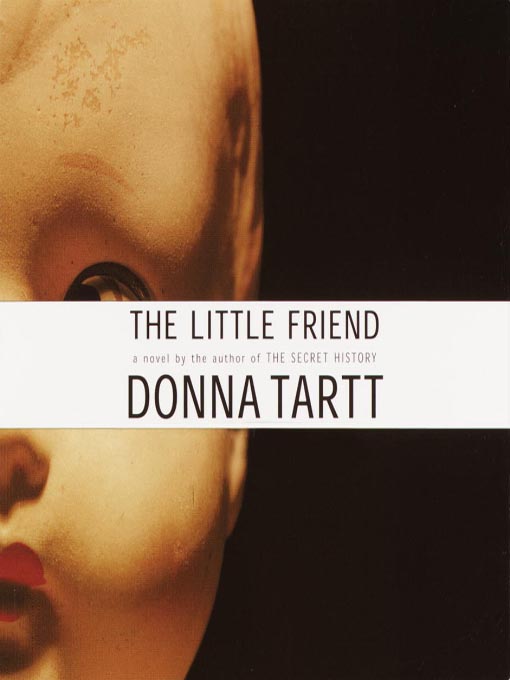
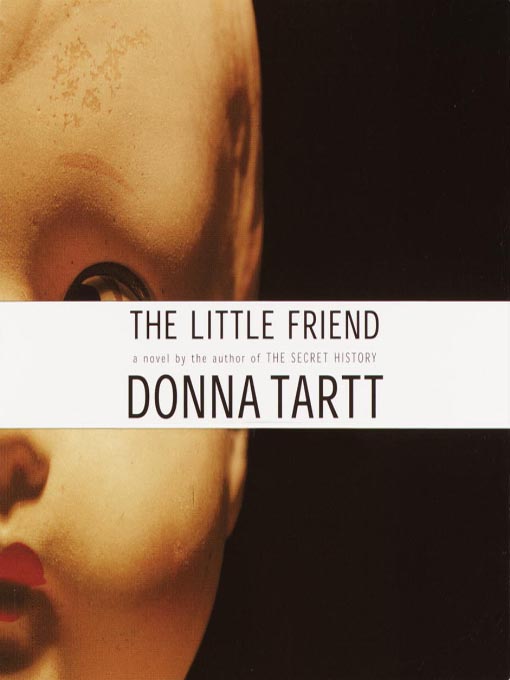
The Little Friend by Donna Tartt

Almost 20 years ago I stumbled upon Donna Tartt’s fantastic novel The Secret History, a novel which has stayed with me all these years. Having recently finished her second novel (and I believe there was almost ten years between the two books), I now have an overwelming desire to re-read The Secret History to see if it’s as good as I remember. I wonder if I’ll be saying the same thing about The Little Friend in 20 years?

There’s no doubt, Tartt is a talented writer. The Little Friend is a gorgeous book, certainly a book to linger over. (It’s over 600 pages long.) It concerns 12 year old Harriet Dufresnes. On Mother’s Day, when Harriet is just an infant, her older brother, Robin, is found hanging from a tree in the yard. His murderer is never found. Harriet has decided that she will discover who has killed her brother because  while she is neither pretty or sweet, Harriet is smart.

The Little Friend is a densely-written, slow-moving novel. Set in Alexandria, Mississippi in the 1970s,  the novel evokes the period (without bothering to fuss with specific details) and sets a tone which it sustains throughout. Harriet is surrounded by a cast of eccentric characters including her grandmother, Edie and Edie’s unmarried sisters. Harriet’s mother, Charlotte, has never fully recovered from the loss of her son. Harriet’s father, Dix, has long since removed himself to Nashville. Harriet’s best friend, Hely, is her constant companion. Harriet’s family once had money, but they don’t any longer. They all have ‘negro’ help, though. The maid/cook/surrogate mother in Harriet’s household is Ida Rhew and Harriet loves her fiercely.

On the other side of town live the Ratliff’s: Farish, Eugene, Danny and Curtis. Farish runs a meth lab out of a trailer on the property. Eugene is a self-proclaimed preacher and Danny is addicted to the drug his brother produces. Curtis is Harriet’s age and a little on the slow side. Harriet decides that Danny is responsible for her brother’s death – something Ida told her reinforces her belief that Danny hated Robin. She and Hely set out to prove his guilt and exact their revenge.

The Little Friend isn’t really about Harriet’s quest to find a murderer, though. It is about Harriet on the cusp of adulthood; about that long, hot summer between innocence and experience. This is a novel about loss. Harriet has more to lose than she might have thought and what she learns about herself and others surely shapes the woman she will become.

This is a novel to savor. It evokes a time and place that is both familiar and exotic. I have to say, though,  that when the end came I didn’t feel all together rewarded for my time and effort. But maybe that’s exactly what it feels like to leave childhood behind.