
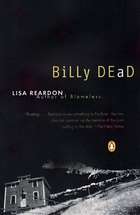
Lisa Reardon’s book, Billy Dead, earned copious praise when it was published in 1998 and it deserves the honors. Years after I first read it, I keep thinking about the story’s flawed and difficult characters, siblings Billy, Ray and Jean. The story is narrated by Ray and it’s a story of poverty, abuse, and redemption. It’s unflinching, too; Reardon doesn’t gloss over any of the details and it is for perhaps this reason that the book was highly regarded by critics. Alice Munro (perhaps the greatest writer of short stories ever) said: “Billy Dead is a brave, heart-wrenching debut. I couldn’t look away.”
I chose it for my book club several years ago… and no one liked it. Truthfully, the book probably isn’t for everyone: it’s graphic and violent. But the characters are so compellingly real and their journey is so honest, they’ll make an indelible impression on you. Really.
To save you from signing up, here’s a review from the NY Times
Lisa Reardon’s first novel, Billy Dead, instantly brings to mind Dorothy Allison’s Bastard Out of Carolina. Both depict poor, rural white families in which innocent lives are ravaged by brutality and incest. But Billy Dead, if you can believe it, is even more harrowing, and while Reardon possesses enough skill to render any awful act believable, she does so at the expense of the book’s frail beauty. When you finish reading it, you’re left with a crowd of horrific images that overwhelm what the story is finally about: the redemptive power of love, no matter how unconventional.
Unlike Allison’s child narrator, the speaker in Billy Dead, Ray, is an adult who has the language and sexual knowledge to describe the family’s heinous history in graphic detail. Of the three Johnson children, who grew up in Michigan, Ray was clearly the least equipped to shoulder abuse; as a man, he is helpless and dazed, given to hallucinations and physical self-torture. He lives in a perpetual cringe, shrinking from memories that constantly threaten to unravel him. But when he learns that his beastly older brother, Billy, has been sadistically murdered, Ray can’t help flashing back to his freakish family life, a three-ring circus of savagery in which the siblings all take turns in the spotlight.
Ray and Billy have a little sister, Jean, who not only suffers her father’s beatings as they do but also endures sexual abuse at the hands of all her menfolk. But she is a mean, tough kid — qualities that meek, sensitive Ray admires. When Jean is only 7, Billy and Ray force her to perform fellatio on them, an act that belies Ray’s affection for Jean and underscores his fear of Billy. A few years later, she pounces on her opportunity for revenge: as Ray, now 14, lies weak in bed with chickenpox, she burns his sores with a cigarette while bringing him to orgasm with her other hand. ”Do you love me?” she asks, grinding the hot cigarette into his wounds. ”Are you sorry?” He appears relieved to submit to Jean’s punishment; he is also in awe of her spitefulness.
Ray and Jean remain allies in their house of horrors. After his senior year, Ray spends the summer working in another town; Jean, now 16, joins him. Away from their tormentors, they become lovers, and, impossibly, you find yourself actually rooting for them. It’s a credit to Reardon’s writing that their romance seems right and tender. But everything goes wrong when they return home to find that the whole town knows about them. In a flash of possessiveness, Ray turns on Jean, and the two remain estranged until Billy’s death years later — an event that prompts Ray to seek her out again. Whoever got Billy ”must have been even meaner than him. Only one person I know like that,” Ray says as he begins a delirious search for the love of his life, his baby sister.
Billy Dead is quite well written, but its literary merits are diminished by the relentlessness and intensity of its atrocities. Billy throws a cat against a wall for fun, breaking its neck, and his father then chops the dying pet’s head off with a shovel; after Billy molests her, Jean hangs his dog from a tree and beats it to death with a baseball bat; during one particularly violent episode of rape, Jean nearly bites her father’s penis off. Still, all this excess isn’t just sensationalism, and most of these scenes seem warranted by the larger story. Indeed, this is an extremely powerful novel, but whether you want to read it depends on your stomach for human — or, better said, subhuman — ugliness.
-By LAURA JAMISON




 The Ludic Reader