You Let Me In – Camilla Bruce

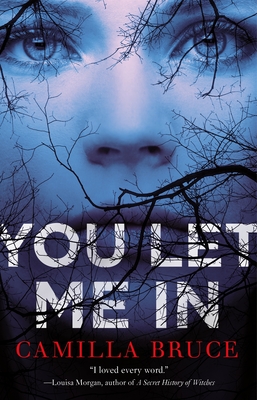
Camilla Bruce’s debut You Let Me In is quite unlike anything I have ever read before and although it was odd, it was also strangely compelling.

Eccentric and reclusive romance writer Cassandra Tipp has disappeared….or died…no one is really sure. Her life has been a strange one which has included the death of her husband and then the apparent murder-suicide of her brother and father. In her will, she leaves everything to her sister’s children, but first they have to read the manuscript she’s left them.

Cassandra’s life has been difficult. Her mother was “a stern woman, maybe not too happy.” Her father was “a big man with fleshy lips and cheeks like a basset hound.” She had a younger brother, Ferdinand, and a younger sister, Olivia. By her own account, Cassandra was a bad girl and

No one keeps an eye on the bad girl. The peculiar daughter is left on her own. So easy to slip away then, fall into the twilight places of the world. To be taken and lost. Preyed upon.

This is how Cassandra comes into contact with Pepper-Man, a twilight figure who would “appear at the end of [her] bed and sit there cross-legged, grooming his hair with a comb made of bone.”

Cassandra’s relationship with Pepper-Man is an intimate one. He feeds on her; sometimes Cassandra wakes up with “his deep buried deep in [her] throat.” It’s difficult for readers to know if he is real or whether, like Cassandra’s psychiatrist believes, a manifestation of childhood trauma because sometimes “something happens that is so horrible, so painful and confusing our brains take charge and rewrites.”

Dr. Martin writes a whole book about Cassandra: Away with the Fairies: A Study in Trauma-Induced Psychosis. This book tries to explain an alternate view of Pepper-Man. Its publication doesn’t do anything to make Cassandra and the strange circumstances of her life any more palatable, and it sure as heck won’t help the reader determine what the heck is really going on in Bruce’s novel.

I do have my own theory, but I won’t spoil the book by offering it up. You Let Me In wasn’t at all what I was expecting, but it was – I was going to say enjoyable, but that’s not the right word- definitely a fascinating read.

The Four Winds – Kristin Hannah

Although I am certainly familiar with Kristin Hannah, The Four Winds is the first book I have read by her. This novel has loads of positive reviews and made several ‘Best of’ lists, and while I certainly had no trouble reading it, I am not sure this book has turned me into a fan.

Elsa Wolcott has been lonely her whole life. She is tall and awkward, skinny and shy.

It didn’t take a genius to look down the road of Elsa’s life and see her future. She would stay here, in her parents’ house on Rock Road, being cared for by Maria, the maid who’d managed the household forever. Someday, when Maria retired, Elsa would be left to care for her parents, and then, when they were gone, she would be alone.

Elsa is twenty-five when she meets Rafe Martinelli, a young man “so handsome she felt a little sick.” Soon after meeting Rafe, she discovers that she is pregnant and her father packs her up and drives her out to the Martinelli farm in Lonesome Tree and leaves her there. Although Rafe is not unkind, he is also not all that interested in marrying Elsa, but his parents, Mary and Tony, insist and soon Elsa finds herself absorbed into this warm, Italian family. Despite knowing nothing about farming life, Elsa is a hard worker and proves herself willing to do whatever it takes, which turns out to be a lot more than she bargained for when the droughts and wind storms come.

Years of drought, combined with the economic ravages of the Great Depression, had brought the Great Plains to its knees.

They’d suffered through these dry years in the Texas Panhandle, but with the whole country devastated by the Crash of ’29 and twelve million people out of work, the big-city newspapers didn’t bother covering the drought. The government offered no assistance, not that the farmers wanted it anyway. They were too proud to live on the dole.

Elsa and her family stumble through devastating windstorms, lack of water, dying animals, devastated crops, scorching temperatures and dust for many years until Elsa’s youngest child, Anthony, gets ill from dust pneumonia and Elsa makes the decision to take her children to California, the supposed land of milk and honey. It turns out things are not any better there.

The Four Winds is an easy read and I liked some of these characters a lot, especially Elsa’s in-laws. I was familiar with the Dustbowl and what happened during the 1930s, but I didn’t know anything about how migrant workers were treated in California, when they arrived by the hundreds of thousands in the 1930s.

What I didn’t like was Hannah’s very obvious emotional manipulation. I knew she wanted me to cry – which I did not. Perhaps that’s because the last 75 pages or so felt rushed, or maybe it’s just that I could hear the swelling music and the language felt purposely manipulative. I love a good cry, and there were certainly some things in this book that should have had me reaching for the tissue, but it just didn’t work for me.

Vladimir – Julia May Jonas

Vladimir, Julia May Jonas’s much-lauded debut novel, tells the story of an unnamed English professor at a small college in upstate New York. She and her husband John cohabitate in a house filled with the detritus of a long marriage, of “times passed and things seen.” Their academic lives are winding down; John has recently been suspended for a series of accusations about sexual misconduct with former students. Their adult daughter lives in the city.

While I wouldn’t call the narrator happy, she has carved out a life for herself. She forgives her husband’s transgressions believing that the accusations against him demonstrate a “lack of self-regard these women have – the lack of their own confidence.” She and John have had a long-standing arrangement: they can sleep with other people without acrimony.

Her life begins to unravel a little with the arrival of celebrated novelist Vladimir Vladinski, the new young professor who has come to teach at the college. Her attraction to him is immediate.

I wanted to be intimate with him, so deeply intimate, from that moment that I saw him with his legs crossed in the reflection of the window. It was as if an entirely new world had opened up for me, or if not a world, a pit, with no bottom – a continual experience of the exhilarating delirium of falling.

The narrator’s infatuation is problematic and not just because of their age difference: she is 58 and he is 40. He is married with a young daughter, too. His wife, Cynthia, is a brilliant, albeit troubled, writer. None of this impedes the narrator’s fantasies, though. She imagines scenarios where Vladimir returns her feelings; they are physically and intellectually aligned.

But the narrator also realizes that she is perhaps past the point where she is sexually alluring.

…as I looked in the bathroom mirror at the webbing around my eyes, my frowning jowls, and the shriveled space between my clavicles, I felt desperation at the idea that I would never captivate anyone ever again. A man might make a concession for me based on mutual agreeability, shared crinkliness, but he wouldn’t, he couldn’t, be in my thrall.

The narrator’s obsession with Vladimir deepens and about three quarters of the way through the novel the story takes a weird left turn. I am not sure I was 100% on board with the last quarter of the book, but it in no way undermined my enjoyment of the book overall. It has interesting things to say about academia, desire, family and marriage and female agency. It is also beautifully written and as a woman of a certain age not too far removed from the narrator, I felt seen on many levels..

Highly recommended

Black Cake – Charmaine Wilkerson

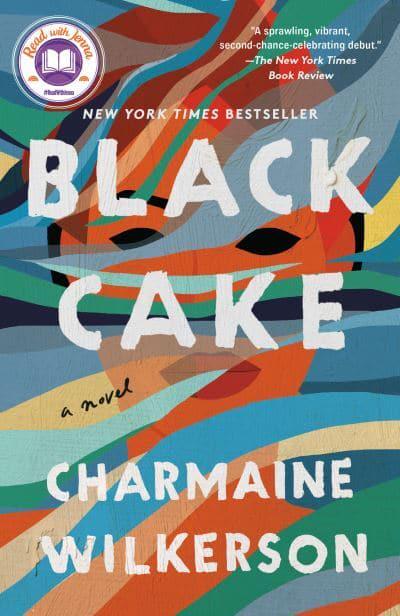
I wanted to like this novel way more than I did. I kept waiting for the story of Eleanor Bennett to be more than what it appeared to be, but that never happened.

When their mother dies, adult siblings Byron and Benny reunite (after a years-long estrangement) to bury her, but also to listen to the recording she left for them, which recounts the story of a girl named Covey.

B and B, I know, I need to explain why you never knew any of this. But it won’t make any sense if I don’t start at the beginning.

You children need to know about your family, about where we came from, about how I really met your father. You two need to know about your sister.

Sister?! This revelation is shocking to the siblings. Over the course of an afternoon, Benny and Byron listen to their mother’s voice and readers will be taken on a journey that spans decades.

This isn’t only about your sister. There are other people involved, so just bear with me. Everything goes back to the island and what happened there more than fifty years ago. The first thing you need to know about is a girl named Covey.

My main problem with Black Cake is that it is all tell. I never felt as though I was inhabiting any of these character’s lives. I was told what I needed to know before being shuffled off to the next character/scene -and there are a lot of characters and a lot of moving parts in this story. (And at almost 400 pages…) The story itself was interesting and the writing was fine, but I just never settled into the narrative. Maybe that’s a me thing because the accolades are numerous and who am I to disagree?

Ultimately, this is a story about family and the secrets we sometimes keep from them. Benny and Byron really shouldn’t have been so surprised that their mother had a life before they came along. Don’t we all keep secrets from the people we love to some degree? Wilkerson also offers some commentary about racism and the environment (Byron is an ocean scientist, so there’s lots of talk about the health of our oceans) that feel less organic and more didactic. Then there are all the convenient plot – I won’t call them twists – contrivances.

This is a debut novel, and it’s an ambitious one. It didn’t necessarily work for me, but so what? Loads of people love it and it’s definitely worth a read.

The Body Lies – Jo Baker

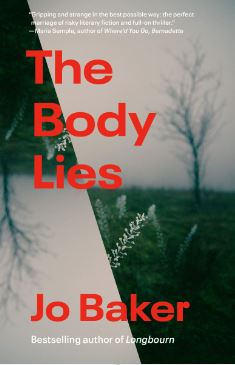
Jo Baker’s novel The Body Lies opens with two acts of violence, a body curled up in the snow “her skin blue-white, dark hair tumbled over her face” and then our unnamed narrator being attacked on her walk home, a man telling her “what he’d like to do to me” and then attempting to do it. These two seemingly unrelated events do click together eventually, but Baker’s novel goes beyond straight-up thriller.

Three years after the attack, the narrator, a novelist with one published book, has taken a job as a creative writing instructor at a small university in the north of England; London is a city where she no longer feels safe. She believes she and her son, Sammy, with whom she was pregnant when the man assaulted her, can have a more peaceful life outside of the city. Her husband, Mark, doesn’t want to give up his teaching job, so they decide to maintain two households until they can work out a better arrangement. She and Sammy rent a little house, Gill House, with a “view of open fields, a derelict barn, pylons, woodland and sky.”

The narrator feels slightly overwhelmed at work where she is offering a graduate writing class, as well as being tasked to do other jobs left by the professor who’d previously taught writing but who was now on sabbatical in Canada. She is, as it turns out, the sole creative writing instructor.

There are six students in her graduate class, including “the good-looking almost-ugly guy with the cigarettes and the scar through his eyebrow.” That’s Nicholas Palmer, a young writer who is “interested in pushing the form, pushing [his] writing as far as it will go.” Nicholas is talented and problematic. He claims to only write the truth, and soon the narrator starts to recognize herself in some of the pages Nicholas turns in.

The Body Lies has elements that make it very much a thriller: a man lurking outside of Gill House in the dusk, Nicholas’s murky past and suspect mental health, the isolated locale including lack of cell service. The novel is more ambitious than that, though, offering commentary on university politics, the way women are used as props in fiction, and how violence against them is often used as entertainment. This is a literary novel that is both beautifully written and unputdownable.

Highly recommended.

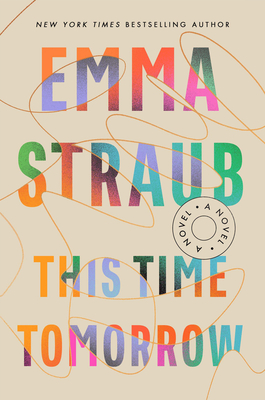
This Time Tomorrow – Emma Straub

I am not even going to try to hide the fact that I loved Emma Straub’s novel This Time Tomorrow. Never mind that it takes place in New York City, a city I adore, never mind that it references all the great time travel movies (Peggy Sue Got Married, 13 Going on 30, Back to the Future), never mind that Sarah Michelle Gellar is mentioned, this novel would be fantastic even without those things.

Alice Stern is turning 40. She likes her life just fine, even if it hasn’t turned out exactly as she might have imagined. She has good friends, a sweet apartment, a boyfriend, a decent job in admissions at her old school. But her father, Leonard Stern, is currently ailing in the hospital “heavily pregnant with death” and because they are close – her mother skipped out early after “she’d had a self-actualized visit from her future consciousness” – Alice spends as much time with him as she can.

Leonard is the author of the cult classic Time Brothers, “a novel about two time-traveling brothers that had sold millions of copies and gone on to become a serialized television program that everyone watched”. She and her father had lived on Pomander Walk “a straight dash through the middle of the block, cutting from 94th to 95th Street between Broadway and West End […] with two rows of tiny houses that looked straight out of “Hansel and Gretel” locked behind a gate.”

On her 40th birthday, Alice gets drunk and ends up heading back to Pomander where she passes out in the little guardhouse and wakes up the next morning back in 1996, on the morning of her 16th birthday. It’s disconcerting because Alice was “herself, only herself, but she was both herself then and herself now. She was forty and she was sixteen.” And her father was young, “forty-nine years old. Less than a decade older than she was.”

This is an opportunity for a do-over. Perhaps she can convince Leonard to make healthier choices; perhaps she can treat herself a little more kindly because “Every second of her teenage years, Alice had thought that she was average. Average looks, average brain, average body[…] But what she saw in the mirror now made her burst into tears.”

Okay, a book about time travel logistically seems ridiculous so I didn’t spend too much time worrying about the physics/magic/science fiction of it. Instead, I paid attention to the things that Alice noticed as if for the first time. Like Emily in Thornton Wilder’s play Our Town, Alice begins to appreciate “every, every moment.”

In her acknowledgements, Straub thanks her father, acclaimed novelist Peter Straub, who died the same year this book was published – making the book just that much more poignant. She writes “thank you to my dad, for showing me what fiction could do, and for knowing that the real story is both here and not here, that we are both here and not here”.

This Time Tomorrow is full-hearted, life-affirming, and heartbreaking and I highly recommend it.

The Cape Ann – Faith Sullivan

Six-year-old Lark Erhardt is the precocious narrator of Faith Sullivan’s Depression-era novel The Cape Ann. She lives with her mother, Arlene, and father, Willie, in Harvester, Minnesota. Her father is the clerk at the train depot and when he took the job, there was no housing for train employees so he and his family live in what was a “large empty room at the east of the ground floor.” Arlene is willing to make due, viewing her accommodations as their “rent-free living quarters for the next few years” while she saves money for a house of their own. The room has no running water or plumbing, no heat source, no comforts of any kind, but Arlene is determined and it is this determination that fuels the story.

Arlene and Lark settle upon The Cape Ann, plan #127, a house that “had two bathrooms, one up and one down.” Lark can’t imagine being lucky enough to live in a house with two bathrooms, especially since one of her jobs is to drag slop buckets across the railway tracks and empty them. When the novel opens, Arlene has squirreled away five hundred dollars, a princely sum at that time, and enough for a down payment.

Unfortunately, Willie has a gambling problem, enjoys drinking a little too much and is prone to violent outbursts. He really is the villain in this story. Every time Arlene gets close to achieving her dream of building The Cape Ann, Willie thwarts those plans with his selfishness. He is really a detestable character.

Sullivan’s book isn’t just about Arlene and Lark’s dreams of building a place to call their own, though. Harvester is a town filled with interesting characters, including Hilly, a handsome young man who had gone off to war, been injured and returned home with physical wounds that soon healed but with a “mind [that] had carried him back to early childhood.” Then there’s Beverly Ridza, a girl from Lark’s First Communion class, who “had no manners” which, according to Arlene, wasn’t her fault because her “drunken, good-for-nothing papa had done a disappearing act”. There are also some other family members who make an impression, including Arlene’s sister, Betty.

Nothing much happens in The Cape Ann. It is hard to believe that Lark has the insight she does at such a young age. She certainly doesn’t sound like any six-year-old I’ve ever encountered. She is both worldly and naïve, an often comical combination. She believes, for example, that the stork brings babies and that even though her father has undermined all her mother’s efforts to save for a house, staying together as a family is important.

Although I found the book slow-moving, I also really enjoyed my time spent in Harvester. Arlene was spunky. When she realizes that Willie is useless, she teaches herself to type and builds a thriving business. When Betty is pregnant and needs help, Arlene takes Lark and goes to her, taking charge of a messy situation. Arlene is a mother to be admired and when I finished The Cape Ann I knew that she and Lark were going to be okay.

I’m the Girl – Courtney Summers

Canadian author Courtney Summers is an auto-buy for me. I know that I am guaranteed a terrific story with compelling, albeit often prickly, characters and excellent writing. I’m the Girl is Summers’ latest novel and the story treads somewhat familiar ground, but as always Summers scratches beneath the surface offering up a timely story about power, abuse, and privilege.

Sixteen-year-old Georgia Avis is untethered. She lives with her brother Tyler in a rinky-dink town called Ketchum. Their mother has died of cancer and Tyler, 30, has moved home to take care of her.

At the beginning of the novel, Georgia is hit by a car. When she comes to, her eye catches a flash of pink in the field beside her. It’s the body of 13-year-old Ashley James, daughter of a local deputy sheriff. “At first I wonder if we both got hit by the same car.” But it is clear that something much worse has happened to Ashley.

The accident happens out near Aspera, a private members-only club. It is actually Cleo Hayes, owner with her husband Matthew, who finds her on the side of the road. For as long as Georgia can remember, she’s wanted to be an Aspera girl, “moving through the resort, turning heads like I was meant to”. Instead, when the Hayes’ agree to hire Georgia, despite the fact that her mother, who had worked at Aspera before her death, had betrayed them, she discovers that she is going to be nothing more than a “glorified fetch.”

Aspera values beauty and Georgia is beautiful, but she doesn’t quite believe it. That makes her a target. There is something decidedly unsavoury, sinister even, about Aspera, although Georgia doesn’t see it as quickly as readers will.

As Georgia tries to navigate her new reality at Aspera, she begins a tentative friendship with Ashley’s older sister, Nora. Nora is determined to find out who killed her little sister and all the clues seem to point back to Aspera.

I’m the Girl is a thriller, for sure, because you’ll certainly turn the pages in an effort to discover who killed Ashley. But this is also a book that explores our relationships to our bodies and image. Georgia comes to understand that she is beautiful enough to wield a certain power over the men she encounters even though, as she tells Matthew, “I like girls.” But Georgia is too young not to realize when she is being manipulated and the consequences of her naiveté are often brutal and heartbreaking.

Highly recommended.

Other books by Courtney Summers: This is Not a Test, Cracked Up to Be, The Project, Sadie, Fall For Anything, All the Rage, Some Girls Are

One of the Boys – Daniel Magariel

In my Young Adult Literature class we just talked about some of the characteristics of YA lit: first person narrator, first person perspective, limited number of characters, compressed timeline.

While Daniel Magariel’s debut novel One of the Boys meets the criteria, I would say the novel straddles the line between YA and adult fiction because despite the fact that the narrator is just twelve, this is a tough read.

None of the three main characters, the narrator, his older brother and their father, are named in the novel. When the story begins, the father has just picked up his son from his mother’s place. The boy and his mother had gotten into a fight and the father tells his son “She said you were out of control.”

The father wants custody of his sons and he convinces the narrator to lie about the altercation and to fabricate some photo evidence so that he can gain that custody. Once he has it, he and the boys leave Kansas and head for New Mexico.

“This will end the war,” he said. “No custody. No child support. This will get us free. Free to start our lives over. You’ll see. In New Mexico I’ll be a kid again. We’ll all be kids again. How’s that sound? Isn’t that what you want?”

New Mexico isn’t paradise, as the narrator and his brother soon discover. Their father is manipulative, controlling and dangerous. He’s also a serious drug addict and the boys have to learn how to navigate his highs and lows. There are no other adults in their life who might intervene on their behalf; everyone is out to get them. In order to be “one of the boys” they have to submit to his increasingly paranoid demands.

I didn’t love this book. I never really felt as though I knew these characters and watching their lives spin out of control, while troubling, didn’t offer the emotional gut punch I was expecting. There is some potentially triggering content and some sexual content that would certainly be a caveat for any teen who might want to read it.

Blameless – Lisa Reardon

Blameless is Lisa Reardon’s second novel and finishing it means that I have now read all three of her novels. (She is also the author of several plays, short stories and some nonfiction.) I discovered her years ago when I read Billy Dead, a book that has stayed with me ever since. I also read and enjoyed her novel The Mercy Killers. She would definitely be an auto buy for me if she wrote another novel.

Mary Culpepper is in her 30s. She lives alone in rural Michigan, the oldest of three sisters. She drives a school bus, plays softball, lives alone and drinks too much. She’s a solitary character, although she is friends with 12-year-old Julianna. Mary is currently waiting to testify at the trial of Patricia Colby, a mother accused of killing her six-year-old daughter Jen. The anxiety of the trial manifests itself as the Night Visitor, a huge stone monster that visits her at night.

Mary’s life has been one of trauma. Her father was a philanderer and her parents’ toxic marriage pitted Mary between them. Her mother cautions her: “Don’t you ever trust a man […] Men are selfish sons of bitches. […] And women are worse. You scratch the surface on any one of ’em and you get a whore.”

It’s hard for Mary to escape the legacy of her mother’s thoughts about marriage and relationships, especially when her own marriage fails. That betrayal is added to the list of reasons Mary has, in many respects, removed herself from the world. Yes, she still goes to Sunday dinner at her mother’s and, yes, she has friends, but just after the discovery of Jen Colby’s body, Mary had a breakdown which required hospitalization.

The she meets Number 34.

I concentrated on the players in the field. Looked for that particular width of Number 34’s shoulders, how the muscles tapered down to the small of his back. There he was in left field, where he’d been all summer. He snagged a fly ball for the second out. Jesus, I wanted to sink my teeth into those shoulders.

Blameless is a quiet novel where nothing much happens. Mary is often her own worst enemy, but as her story is pulled back layer by layer and you come to understand all the ways life has kicked her in the teeth, you just want something, anything, good to happen for her. Reardon has a particular gift when it comes to writing broken characters and I really enjoyed my time with Mary, even though, like her previous novels, the story is pretty grim.