Instruments of Night by Thomas H. Cook

There’s a really great interview with mystery writer, Thomas H. Cook, in the September ’09 issue of January Magazine. In the article Ali Karim asks the very question that puzzles me every time I finish one of Cook’s novels. Why is this man not enormously famous? I mean, perhaps he is famous in mystery circles – but even if you’re not a fan of the genre, I think you should still give Cook a go.

I picked up Instruments of Night on Friday night and read about 30 pages. It was late when I started and so eventually my eyes gave out. On Saturday I picked it up again and didn’t put it down until I finished – with a gasp, I must add – the book.  I stumbled on Cook totally by accident three or four years back. I picked up, at a second hand bookstore, his novel Breakheart Hill and read these lines: “This is the darkest story I ever heard and all my life I have labored not to tell it.” Hooked. 

Instruments of Night is the fifth novel I’ve read by Cook. It’s the story of writer Paul Graves, a man who has spent his career writing about the horrible dance between serial killer and sadist Kessler (and his accomplice, Sykes) and the man who has spent his career chasing him, Detective Slovak. Instruments of Night operates on more than one level, though. Graves has almost completed the 14th installment of his series when he is invited to upstate New York to meet with Allison Davies, mistress of an estate known as Riverwood. Fifty years ago, Allison’s best friend, Faye, was murdered on the grounds and now Allison wants Paul to “imagine what happened to Faye. And why.”

But that’s not all. Paul Graves is a tortured man. His own past is filled with ghosts, horrible ghosts. He is a beautifully nuanced character and I particularly admired the glimpse we got into his head as a writer. Perhaps Cook was revealing a little bit about himself there, I don’t know, but Paul’s imagination allowed him to write scenes, and adjust them as needed, on the fly. Using this technique, he attempts to solve the question of who killed Faye.

The way Cook juggled the three threads of this story: the mystery of Faye’s death, the stand-off between Kessler and Slovak and the past that is creeping up on Paul is nothing short of amazing. But Cook is an accomplished writer. And this is literature. Truly. Page-turning, white-knuckling, horrifying literature. In every book I’ve read by him, I’ve been amazed at how complex his characters are and Paul is no exception.

If you haven’t read Cook yet, I beg you to give him a go. He’s fabulous!
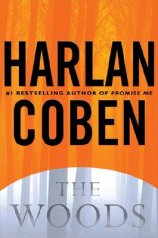
The Woods by Harlan Coben

Woods

So, I know there are loads of Harlan Coben fans out there. I get why people like him. He’s a straight-up writer, lots of dialogue and characters and plot threads to keep you busy. Coben’s the sort of writer you read when you’re looking for something fast-paced and, dare I say it, fluffy.

The Woods has a convoluted plot that concerns Paul Copeland, County Prosecutor. Twenty years ago his sister, Camille, went missing (presumed dead) along with three of her friends while they were all at a camp for teens. When one of the presumed dead turns up dead (again) twenty years later, it cracks open a door to a past that Paul knows nothing about.

I liked Paul’s character. He’s a smart-mouthed lawyer who isn’t afraid to look the bad guy in the eye. His chief investigator, Muse, is the female equivalent of Paul and they make a fine team.

For me, though, The Woods was just too busy and, at the end of the day, the secrets buried in the woods just weren’t enough to hang 400 pages on.

A Reliable Wife by Robert Goolrick

reliablewife

Everyone,  it seems, is raving about Robert Goolrick’s novel A Reliable Wife. Sadly, I am not going to be one of those people. I don’t mean to imply that I didn’t enjoy the book; I actually liked the book quite a lot (once I got past the first dry chapter). Still, there were elements of the book that just didn’t work for me.

A Reliable Wife tells the story of Ralph Pruitt, a wealthy man who lives in Wisconsin. He’s been a widower for the past twenty years and when the story opens he is standing on the platform at the train station waiting for Catherine Land, his soon-to-be-bride. Catherine has answered Truitt’s advertisement in a St. Louis paper for ‘a reliable wife.’ It is 1907.

Not all is as it seems with these two characters, though. Each has hidden agendas and secrets galore and as I read I imagined the fantastic movie this would make. Did it make a fantastic book, though, that’s the question. Well, yes and no.

What did A Reliable Wife do well?

It gave the reader a real glimpse into the hardships and isolation of a mid-western winter. It dealt sympathetically with the novel’s central characters: Catherine and Truitt. Truitt is especially well-drawn. He is a man who selfishly chases  erotic pleasures for much of his young life, returning to the family business only after his father dies. His story unfolds a little at a time, saving one last ’secret’ for the novel’s final pages.

Catherine comes to him the supposed daughter of missionaries, but her story is actually far more sordid.  It gives nothing away to say that she has come to Wisconsin to marry and then murder Truitt by way of arsenic poisoning.

What did A Reliable Wife do less well?

At a certain point in the novel I felt like everything became melodramatic. Sub-plots did nothing to advance the story. Catherine’s sister, Alice, is introduced near the middle of the book and I know it’s meant to juxtapose her life with Catherine’s, but for me it seemed tacked on. We hear tidbits of violent crimes or horrible accidents which have happened in Truitt’s community followed by the author’s statement ”such things happen”, as if this explains all the wrong-doing in the world. Or, perhaps, to say that some things can’t be explained.

Ultimately, A Reliable Wife asks the question: Is it possible to be redeemed? Truitt wants to make up for what he believes is a horrible mark against him as a father. Catherine makes a decision which changes the course of her future. Other characters hold on to their anger and bitterness and suffer a more drastic fate.

There is also the question of suspense. I wouldn’t say that the book was suspenseful in the way modern readers might expect. We know from the book’s jacket that Truitt and Catherine are hiding something and so we start reading with the knowledge that not everything is as it seems. I don’t think the story is propulsive because of any so-called suspense.  A lot of stuff happens and it happens at a relatively quick clip. On a few occasions  (especially towards the end) I actually felt I was being told what was happening rather than watching the story unfold.

One thing that totally surprised me about this book was the amount of sex in it. These are people with very real human appetites and the book does a terrific job with sensual details of all sorts: the sex is not the fade-to-black kind. Truitt’s sexual reawakening, in particular, is impressively realistic.

All this to say that I enjoyed reading the book, but I didn’t feel totally satisfied when I’d finished.

Red Leaves by Thomas H. Cook

redleavesI’ve gotta say- Thomas Cook hasn’t disappointed me yet. Red Leaves is the fourth novel I’ve read by this terrific mystery writer and it was excellent. Not my favourite so far, but still a great read. Let’s face it, there are only so many mystery stories to tell: murders committed by psychopaths, depraved sex crimes, crimes of passion, greed or power run amok. Cook is the cream of the crop of writers in this genre for a couple of reasons. First of all, the man can turn a phrase. Secondly, his characters are complicated people with messy human lives. Cook does a terrific job, in every book I’ve read, of turning them inside out and exposing their frailties, fears and darkness.

Red Leaves tells the story of the Moore family: Eric (owner of a camera shop), Meredith (teacher at a small community college) and Keith (their teenage son). They live in a small New England town and live, what Eric believes, is a perfect life. That is until eight-year-old Amy Giordano goes missing and the last person to have seen her is Keith, who’d been babysitting her that evening.

As Eric struggles to come to terms with his failed relationship with his son and his growing suspicions that Keith might actually have had something to do with Amy’s disappearance, other cracks in his life start to appear. What follows is a terrific page turner as Eric races to protect Keith and shore up his own life against the damage secrets and lies cause.

I’ve said it before about Cook, he is a wonderful observer of human nature and he writes about the things that we love and fear as well as any other popular writer I’ve ever read. If you haven’t given him a try, I’d encourage you to check him out.

Beautiful Lies by Lisa Unger

beautifullies

Beautiful Lies is a silly book. Silly in the sense that the plot is mostly ridiculously contrived and way more convoluted than it needed to be. But who cares? When you read suspense thrillers only a couple things really matter. First of all- can we get behind the main character? Do we like her/him? Do we care what happens to them? Secondly,  is there enough  mystery/action/suspense/sex to keep the pages turning?

Beautiful Lies concerns the life of Ridley Jones, a successful, single freelance writer living in New York City. One day, on her way to meet her ex-boyfriend for breakfast, she saves a life and is thrust into the spotlight.  Soon after,  she gets a letter in the mail and everything she ever thought she knew about herself and her life is suddenly suspect.

There’s a lot of stuff going on in Unger’s book: doting parents who have pat answers for all Ridley’s questions, a junkie brother, a cloying ex-boyfriend, and a new love interest cut from romance 101 fabric.

Yet even as I questioned some of Ridley’s choices, even as I tried to piece together things that didn’t make a lick of sense, I kept turning those pages.

Perhaps it was Unger’s conversational style. Ridley tells the story herself and in some ways as a reader I felt as though she was telling me her story over a pot of tea on a  long afternoon. That intense focus, though, also means as a reader you get to be more critical of the character and I have to admit that sometimes I did want to shake her.

Ultimately, though, you don’t read a book like Beautiful Lies for insight into the human condition. You read it for sheer fun and I had a lot of that.

Obedience by Will Lavender

obedience

There’s no lack of praise for Will Lavender’s debut novel, Obedience. It’s a twisty, knot of a book that concerns students in a Logic and Reasoning Class at a small college campus in Indiana. Their only assignment:  find a missing girl, Polly, before the six-week course is up or she will be murdered by her abductors.

Lavender does not  concern himself with all the students in Professor Williams’ class. He focuses his attention on Mary, a slightly fragile and obsessive girl; Brian, a student overcoming the loss of his brother and Dennis, Mary’s ex-boyfriend. As they work alone and then together to solve the mystery of Polly’s disappearance, Lavender strings them (and us) along with enough plot twists and convoluted clues  for three novels. At one point I considered making a chart.

I can’t claim any real expertise when it comes to mystery novels. I read them, I enjoy them. Lavender is working on -at least- a couple levels in Obedience and while the ending is certainly clever and tidy…the final chapter made me question what I thought I knew all over again.

No matter- this is a fast-paced page-turner of a novel, smart and complicated and, yeah, a chart’s not a bad idea.

Places in the Dark by Thomas H. Cook

placesinthedark

This is third book I’ve read by mystery writer Thomas H. Cook and I have to say that I continue to be impressed. The critics seem to adore Cook and have described Places in the Dark as “a serpentine tale of long-buried secrets leading to murder and betrayal” (The Orlando Sentinel) and “complex, multi-layered and haunting” (Romantic Times).

The story concerns brothers William and Cal who grow up in an idyllic seaside town in Maine in the 1930s. They are as different as night and day: William an energetic dreamer who rushes through life filled with hope and enthusiasm and Cal, the older more pragmatic brother. Still, despite their differences, they are close. Then Dora March comes to town.

It gives nothing away to say one brother ends up dead, but the book’s mystery isn’t so much a whodunit as a what are the circumstances surrounding the death.

Cook’s skill comes from his ability to create character. His mysteries unfold slowly, but I don’t mean to say that his books aren’t page turners. You’ll turn the pages, but I think you’ll also linger over Cook’s beautiful writing. Cook is a master of layering his character’s motives, of giving them real interior lives. He’s also pretty good at leading us on and this is particularly true in Places in the Dark where things are not always what they seem.

If you like a well-written mystery, I highly recommend Thomas H. Cook. I haven’t been disappointed yet.

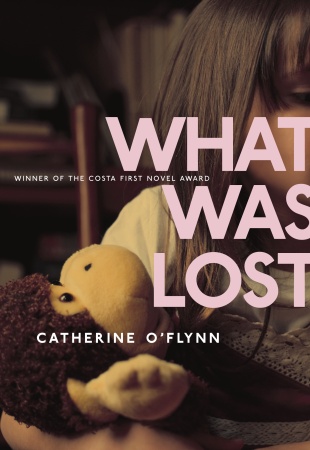
What Was Lost by Catherine O’Flynn

Catherine O’Flynn’s debut novel, What Was Lost, is as labyrinthine as the tunnels under the Green Oaks Shopping Centre. Ten year old Kate Meany is an amateur detective, raised (until his sudden death) by an older, single father. In the novel’s opening third, we travel with Kate and her stuffed monkey, Mickey, as they conduct stakeouts, deliberate over office stationary for Kate’s fledgling detective agency, and pal around with Adrian, the 22 year old son of the man who runs the store next to Kate’s house.

Flash forward almost 20 years and meet Kurt, a security guard at Green Oaks and Lisa, a manager at ‘Your Music’ a big-box music store in the same mall (and not incidentally, Adrian’s younger sister). One night, while sleepily watching the security moniter, Kurt sees Kate. It’s not possible: Kate disappeared the year she was ten and was never found. Adrian, suspected of wrong-doing, but never charged, disappeared and made no contact with his family except for a mixed tape he sent to Lisa every year on her birthday.

From these tangled threads, O’Flynn weaves an exceptionally good story about missed opportunities, luck, family and secrets. She even throws in a slightly gloomy (but fairly funny) picture of what it’s like to work in retail.

O’Flynn’s real strength is in her characters. Kate Meany is a wholly believable and totally enchanting little girl. Lisa and Kurt are flawed and likable. O’Flynn manages to tell us everything we need to know about a character with a line or two – whole back stories come to life with a few carefully chosen words. Even minor characters spring to glorious life and create a picture of small town-life which is ultimately eroded by progress aka big  impersonal malls.

The story had an extra layer of meaning for me because it took place in the West Midlands of England and I once lived there.  I am pretty sure that Green Oaks is actually Merry Hill, a huge shopping centre on the outskirts of Birmingham.

If I have one niggle about the book, it comes at the end. I didn’t like part 42- it felt extraneous to me, like an unnecessary bow on a beautifully wrapped present. Had O’Flynn quit at the end of part 41, I think this little gem of a novel would have been damn near perfect.

The Innocent by Harlan Coben

Those who like Harlan Coben, seem to like him a lot. The Innocent was my first Coben book and while I didn’t love it, it did deliver enough curious twists and sympathetic characters to keep my interest.

The difficulty in writing about a suspense thriller is trying to avoid giving away too many important plot points. Briefly, The Innocent concerns Matt Hunter an ex-con (but only marginally because his crime was more accident than premeditated) who has returned to his home town after serving his sentence with his wife, Olivia. Olivia goes away on a business trip and Matt receives a cell phone picture of her in a hotel room with another man. The story unravels from there.

In some ways The Innocent’s convoluted plot doesn’t really work.Too many people have too small a part to play in the book’s nasty business…and some of the pieces seem gratuitous rather than helpful. Still, like a good book in this genre should, the book clicks along at a healthy pace and the lead character, Matt, is smart and likable.

The Thirteenth Tale by Diane Setterfield

“The Thirteenth Tale is a cleverly plotted, beautifully written homage to the classic romantic mystery novel… Gothic elements are skilfully re-imagined in a peculiar tale of madness, murder, incest and dark secrets…. It is a remarkable first book, a book about the joy of books, a riveting multi-layered mystery that twists and turns, and weaves a quite magical spell for most of its length.” –The Independent

Diane Setterfield’s first novel is a wonderful accomplishment. This is a book lover’s book- even the book’s cover and the weight of the pages appealed to the bibliophile in me. But beyond the aesthetics of the book, Setterfield tells a rip roarin’ tale, an old-fashioned tale filled with mystery and intrigue and personal ghosts.

Margaret Lea lives a quiet life, working with her father in their little antiquarian bookstore. We know very little about Margaret other than the fact that she is close to her father, but not to her mother. She is unmarried. We don’t know how old she is. We do learn, early on, that she is a surviving twin- a fact she stumbles upon, quite by accident when she is young, a piece of her family history which haunts her throughout her life.

Then Vida Winter, the most celebrated writer of the time, writes to Margaret inviting her to hear the truth of her life- a life which has been largely reclusive. This story is the subject of The Thirteenth Tale. And it is a tale that is Gothic, relying on the conventions of literature from the 18th and 19th centuries: ghosts and secrets and unrequited love abound in its pages. It’s a page-turner in the very best sense.

And as the story’s mystery unravels, you’ll find yourself wondering whether all the clues were there from the very beginning…and want to go back to trace the breadcrumb trail.