The Kind Worth Killing – Peter Swanson

kindworthI have been in a bit of a reading slump this year – which seems like a ridiculous thing to say considering we are only two months in. The first couple of books I read at the start of 2017 were lackluster at best, and I just haven’t been able to find my reading groove. Peter Swanson’s The Kind Worth Killing may have actually changed all that.

Lily Kintner and Ted Severson meet in a bar at Heathrow. Over martinis,  Ted discloses a few details about his life including the fact that he thinks his wife, Miranda, is having an affair with Brad,  the contractor that is building their dream home in a coastal town in Maine.

Ted admits to Lily that he wants to kill his wife. Perhaps even more unusual, Lily offers to help. It might take a teensy bit of suspension of disbelief to believe that a cuckolded husband would meet a beautiful woman in a bar in a foreign country who expresses a desire to help him plan his wife’s murder, but stranger things have surely happened.

Once on the plane, Lily suggests that “…since we’re on a plane, and it’s a long flight, and we’re never going to see each other again, let’s tell each other the absolute truth. About everything.” During the trans-Atlantic flight, the two reveal tidbits both mundane and philosophical. Lily remarks: “…everyone is going to die eventually. If you killed your wife you would only be doing to her what would happen anyway. And you’d save other people from her. She’s a negative.”

Lily isn’t quite as forthcoming about her life as Ted is about his. Her story is revealed in alternating chapters. The daughter of  bohemian academics, Lily is an intelligent, thoughtful child. Through her eyes, we learn about growing up in “Monk’s House,” a Victorian mansion  deep in the Connecticut woods, about an hour from New York City.

There was never only one guest at Monk’s House, especially in the summertime when my parents’ teaching duties died down and they could focus on what they truly loved –  drinking and adultery. I don’t say that in order to make some sort of tragedy of my childhood. I say it because it’s the truth.

Lily has a skewed morality, but it’s the very thing that makes her such a fascinating character. She’s a charming psychopath, and it’s almost impossible not to like her, to root for her, even. She’s  – by far –  the most interesting of cast of characters in Swanson’s novel. She reminded me a little bit of Alice Morgan, a character in the brilliant BBC crime series, Luther. (If you haven’t ever seen the show, you must watch it immediately. It’s on Netflix.)

There are twists and turns aplenty in The Kind Worth Killing. The plot did unravel slightly for me towards the end, but that in no way undermined my enjoyment of the shenanigans these people got up to.

The Kind Worth Killing was a whim purchase for me. I needed a book for my book club and this one was popular on Litsy. I am pleased to report that everyone in my group really enjoyed the book, even though it was definitely a departure from the sort of stuff we normally read.

This is a page-turner.

Where They Found Her – Kimberly McCreight

9200000033245456I’ve had a slow start to the 2017 reading year. Usually I power though a handful of books over the Christmas break, but this year I tended to binge-watch Netflix (The Fall – check it out if you haven’t already seen it) and sleep. I have about a half-dozen novels started, but none of them really grabbed me. Although it rarely happens to me, I’ve been in the book doldrums. I needed something to grab me by the throat and swing me back into reading gear. I chose what I was sure was going to be a winner, but I was disappointed. I did finish though.
Where They Found Her is the second book by Brooklyn-based novelist Kimberly McCreight. I read her debut novel, Reconstructing Amelia last year and loved it. It was one of those books that you just couldn’t put down and was well-written to boot. A literary win-win. Where They Found Her didn’t work for me at all.

When the body of an infant is found floating in the creek at Essex Bridge, Molly Anderson gets the call to check it out. She’s the Lifestyles reporter for the Ridgedale Reader and crime wouldn’t normally be her beat, but she’s the only one available to cover the story.

Molly’s at a fragile point in her life. She and her husband, Justin, are new in Ridgedale, a bedroom community in New Jersey. Justin teaches English at the local college and their daughter, Ella, is in kindergarten. Life is just starting to settle down after the death of Molly’s unborn baby, so the discovery that the body at the creek is also an infant is almost more than Molly can handle. She’s plucky, though.

On the other -shittier – side of town lives sixteen-year-old Sandy and her floozy of a mother, Jenna. Sandy is the adult in that relationship. She loves her mother, but she’s also tired of being the adult.

Barbara is the Stepford-wife of Steve, the town’s police chief. Her daughter, Hannah, is tutoring Sandy so that Sandy can graduate. Her young son, Cole, has been sucking all the oxygen from the room with his odd behavior.

Although it won’t be immediately obvious how the lives of these women intersect, their paths will cross and that’s when the gears started to grind for me. (It took me about 100 pages just to keep all the names straight – and that’s only a slight exaggeration.)

In all the ways that Reconstructing Amelia was a tightly focused story about a mother and daughter who are close, but still keep secrets from each other, Where They Found Her borders on melodrama. As Molly starts to unravel the identity of the baby and what happened to her, the reader will, too. There’s a fair share of red herrings, but everything gets tidied up in the end.

I turned the pages (once I got going), but I can’t say that I cared very much about any of the players and, for me, that’s one of the failings of McCreight’s novel. Where They Found Her just didn’t resonate on any level with me. I’m definitely in the minority, though. Critics loved it.

So – decent mystery (red herrings and tidy-ending aside). McCreight can certainly write and I would definitely read her again. But Where They Found Her was only so-so for me.

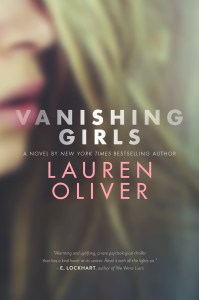
Vanishing Girls – Lauren Oliver

Now that I am back at school, it’s time to start reading YA fiction again. I give it a little  break in the summer so that I can tackle my own mammoth tbr pile. I started this year by reading Lauren Oliver’s highly praised book Vanishing Girls. It’s pretty un-put-down-vanishing-girls-jacketable, folks.

Nicole (Nick) and her younger sister, Dara, couldn’t really be more unalike. Nick is the responsible one; Dara is the wild child and for as long as Nick can remember, people have been comparing the sisters.

She’s not as pretty as her younger sister…shyer than her younger sister…not as popular as her younger sister.

But despite their differences, Nick and Dara are close. Dara recalls that they’d spent

practically our whole lives sneaking into each other’s rooms to sleep in the same bed, whisper about our crushes, watch moon patterns on the ceiling and try to pick out different shapes…cut our fingers and let them bleed together so we’d be bonded forever, so we’d be made not just of the same genes but of each other.

Parker is Nick’s best friend – the boy from the neighbourhood who has shared every single milestone in Nick’s life. Then he and Dara hook up and things get awkward. Dara goes off the rails – drinking and doing drugs – and then there’s the car accident.

Oliver has written a novel that is both an exciting page-turner (a young girl goes missing and then Dara disappears and Nick is convinced the two disappearances are somehow connected) and a moving family drama. Nick and Dara’s parents have separated and the accidents adds extra emotional weight to the already damaged family.

The narrative unfolds in dual first-person narratives, through diary entries and police reports and photographs and illustrations. Each sister has her own version of the truth of what happened on the night of the accident and the time-shifting narrative will yield important clues to careful readers, but the truth is that when all is revealed, you’ll probably still be scrambling to figure out how Oliver’s pulled it off.

Oliver is well-known in the YA world. She wrote the popular Delirium series and I have been looking forward to reading her adult novel, Rooms. After reading Vanishing Girls I think I’ll have to move Rooms up my reading list. That’s pretty much the highest praise I can give.

Bittersweet – Miranda Beverly-Whittemore

18339743Mabel Dagmar, the seventeen-year-old narrator of Miranda Beverly-Whittemore’s stunning novel Bittersweet is attending an upper-crust East Coast college on a scholarship. Her roommate, Genevra “Ev” Winslow is from an  influential blue blood family. The two girls couldn’t be any more different and yet somehow Mabel finds herself invited to spend the summer at Winloch, the Winslow family compound in Vermont. Mabel has no interest in returning home to Oregon for the summer, so she gratefully agrees even though she has to help Ev prepare Bittersweet, Ev’s personal cottage, for her father’s “inspection”.

“…if we don’t get that little hovel in shipshape in less than a week, I won’t inherit it,” Ev tells Mabel on the train to Vermont.

Winloch is a strange out-of-time place comprised of an assortment of cottages and a communal Dining Hall set around a beautiful lake,  inhabited by Ev’s immediate family including her parents, Birch and Tilde. It’s isolated and idyllic and Mabel is enchanted. This, she decides, is the life she wants.

Her visit to Birch and Tilde’s cottage only reaffirms her admiration:

Upon the honey-colored floor stood antique wood sideboards and a large mahogany table. An exquisite burgundy Oriental rug tied the furniture together, ending before a large fireplace sporting a brass fender and matching andirons. Canapes were arranged in colorful formations upon hand-painted porcelain platters: crab cakes and mini-lobster rolls and demitasses of chilled pea soup.

Even more impressive, the Winslow’s cottage boasts an impressive Van Gogh, “the most beautiful painting I’d ever seen.”

But there is also something slightly sinister about Winloch. For one thing, Ev installs bolts on the bathroom and bedroom door at Bittersweet. Then Mabel meets Indo, Birch’s sister, who enlists Mabel’s help in locating some important documents lost somewhere in the attic of the Dining Hall, claiming she’d been “looking for a friend like [Mabel] for a while.”

Mabel soon finds herself negotiating a landscape of shifting loyalties and strange tensions. It makes for compelling reading, that’s for sure; I couldn’t turn the pages quickly enough.

Although the bulk of Bittersweet takes place during that one summer, Mabel is actually remembering the events from a vantage point many years later. This will, in part,  help explain why Mabel seems older than seventeen. Her own personal history, revealed in tantalizing snippets, will also help the reader understand her motivations. Bittersweet is Shakespearean in its scope.

Highly recommended.

I Let You Go – Clare Mackintosh

There have been a lot of books in the suspense thriller vein of late and I love them, especialllet you goy in the summer when I just want to give my brain a break from school.  Publishers always want to draw comparisons to Gone Girl, which is the book that perhaps kick-started this newest craze, but I think it’s better to let a book stand on its own bookish merits.
Clare Mackintosh’s novel I Let You Go is definitely top of the thriller heap. I couldn’t put this book down and galloped through it in just a couple of sittings.

In the book’s opening pages, a mother is walking home in the pouring rain with her young son. Just at the road across the street from their home, he lets go of her hand and runs across the street. Out of nowhere, a car comes barreling down the street and hits the boy. From this point on, I Let You Go is a grab-you-by-the-throat suspense thriller that follows Jenna Gray as she goes to the Welsh coast to escape the tragic death and the police detectives, Ray and Kate, who are trying to find the driver behind the wheel.

Jenna’s grief is palpable. “Everything has changed,” she muses. “The instant the car slid across the wet tarmac, my whole life changed.” She stays until she can’t anymore and then, packing only what will fit into her holdall, including a box of treasures from her life, she runs away.

Unable to resist, I open the box and pick up the uppermost photo: a Polaroid taken by a soft-spoken midwife on the day he was born. He is a tiny scrap of pink, barely visible beneath the white hospital blanket.

As a mom, it’s hard to imagine how Jenna will ever survive this tragedy, but survive she must. She finally settles in a tiny tourist town called Penfach, somewhere outside of Swansea. There she rents an isolated, dilapidated cottage and begins the arduous process of overcoming her grief.

In the meantime, Ray and Kate sift through the non-existent evidence, hoping for a break in the case. Mackintosh spent twelve years as a police officer and so these sections are authentic, but don’t weigh the narrative down with unnecessary police jargon. In addition, Ray and Kate – especially Ray – are given interesting personal lives, which add another dimension to the story.

It doesn’t always work, but it does here – Mackintosh pushes the story along and months pass. Jenna starts to make a life for herself; Ray and Kate are taken off the hit and run case because they’ve done all they can do and then all hell breaks loose in a totally WTF fashion. You’ll know what I mean when you get there and from that moment on, it is a breathless race to the book’s conclusion.

LOVED IT!


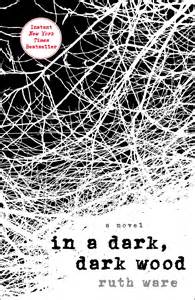
In a Dark, Dark Wood – Ruth Ware

Ruth Ware and I have lived parallel lives. I, too, have worked as a waitress, EAL teacher and  bookseller. Okay, I may have never been an official book publicist, but I could argue that I sell books all the time by talking about them here and in my classroom and on the radio. I have not, however, written a much-lauded “instant New York Times bestseller.” Crap.

Leonora (also known as Lee and Nora and Leo) is a reclusive and slightly odd mystery th9H5NVHJNwriter who lives in a small flat in London. One day she receives an email invitation to a weekend bridal shower (a “hen” night) for her once best friend, Clare. The invitation is puzzling to Nora because she hasn’t seen Clare in a decade and it seems as though they may have ended things on relatively awkward terms.

The invitation to the party starts Nora’s trip down memory lane, but it’s not a journey she takes willingly.

Clare had been my friend. My best friend, for a long time. And yet I’d run, without looking back, without even leaving a number. What kind of friend did that make me?

There’s only one other name Nora recognizes on the invite list: Nina da Souza. Nora reaches out and the two women make an “I’ll go if you go” pact. This is how they end up in the middle of the woods at a house that seems “as if it had been thrown down carelessly by a child tired of playing with some very minimalist bricks.” For someone used to living in close quarters in the middle of a huge city, Nora finds the location of Clare’s hen night “painfully exposed.” There’s a reason the place is called ‘The Glass House.’

The party’s host is Clare’s best friend from university, Flo. The other attendees are Melanie, a new mother and Tom, the token gay friend. When Nina and Nora arrive, Clare is not yet there. The whole event is awkward and fraught with tension.

Ware intersperses the hen night shenanigans with the aftermath of the weekend. Nora wakes up and “everything hurts. The light in my eyes, the pain in my head. There’s a stench of blood in my nostrils, and my hands are sticky with it.” There are police officers outside her hospital room door and someone is dead.

I enjoyed reading In a Dark, Dark Wood, but I sure wish people would stop comparing every psychological thriller/mystery to Gone Girl. This book is nothing like Gone Girl. That’s not a criticism, by the way. Ware doesn’t waste time with verbosity; this book moves along lickity split. Nora is a perfectly serviceable character, although not particularly endearing. There are plenty of creepy moments – as you’d expect in the fishbowl of a location.  The book has “blockbuster movie starring Reese Witherspoon (an early fan of the novel)” written all over it.


The Dog Days of Summer

Listen Here.

Want to live longer? Apparently all you have to do is read. According to a study that will be published in  the Sept issue of the journal Social Science & Medicine  “reading doesn’t only help us to tolerate existence, but actually prolongs it,”  and that “that people who read books for 30 minutes a day lived longer than those who didn’t read at all.” The study looked at the reading habits of about 3500 people aged 50 and older and discovered that readers lived, on average, two years longer than non-readers.

Of course this is great news for people like me because I read every day – clearly in a bid to prolong my life, but also because I stubbornly refuse to leave this earth until all the books on my tbr shelf have been read. I figure I’m good until at least 140.

So there’s no time like the present to make reading a part of your regular routine – like yoga for the brain. Read the entire article from The Guardian here.

At the start of the summer I talked all about the books that I was going to try to read this summer, including the entire Harry Potter series. Yeah, not so much. I did read The Chamber of Secrets and I am currently reading Prisoner of Azkaban and there is no question of the appeal of these books but I am, for obvious reasons, finding them young. I know that as the characters get older, the themes will get darker and I will read them all as promised…but I am never getting through them all this summer.

I also said I was going to read Martin Short’s memoir I Must Say and I did read that. If you20604377 are at all a fan of Canada’s funny man, it’s worth a look. Apparently the audiobook is narrated by Short and although I don’t listen to audiobooks, I might have made an exception in this case because he does all his characters. In any case, I enjoyed reading about Short’s early life in Hamilton and his start in show business.  It’s a namedropping extravaganza.
But of the books I spoke about back at the beginning of July, that’s as far as I got. I got distracted by shiny new books and so I thought I’d offer some suggestions for the dog days of summer.

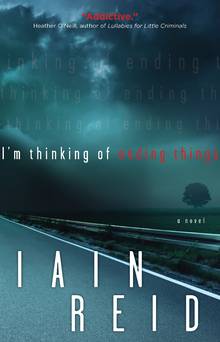
I’m Thinking of Ending Things – Iain ReidIm+Thinking+of+Ending+Things

So, Reid is a Canadian writer and this is his first book of fiction although he’s written a couple memoirs. This book is a total mind-you-know-what. An unnamed narrator is on her way to meet her boyfriend’s parents. In a snowstorm. As they drive, she catalogues their relationship and contemplates ending things. When they arrive at Jake’s parent’s house – which is in the middle of nowhere – things take a turn for the what-the-hell. It’s compulsively readable and totally strange. If you read this book, I’d love for you to tell me what you think happens.

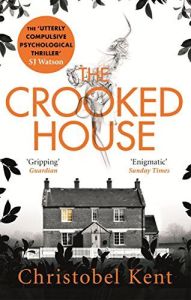
The Crooked House – Christobel Kent

If you are a fan of the BBC miniseries Broadchurch, this is the book for you. It’s about a girl named Alison who, until she was 14, lived in a small British town called Saltleigh. Her life is irrevocably changed when her entire family, with the exception of her father,  is murdered. The police determine that it was  her dad that committed the crime. Fast forward several years later and Alison finds herself back in Saltleigh with her boyfriend to attend a wedding.  She has no choice but to start to examine the past and try to figure out what really happened. This is a slow burn, but it’s well-written and perfect for a rainy day because it can (and should ) be read in one go.

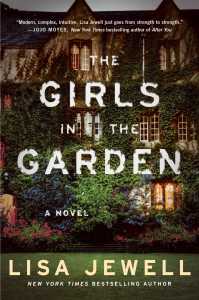
the-girls-in-the-garden-9781476792217_hrThe Girls in the Garden – Lisa Jewell

This book is about a woman who moves to a small community in London after her husband has a psychotic break and burns their house down. Which, would probably be enough fodder for a book on all its own, but that’s not really what the book is about. When the book starts the eldest daughter, soon-to-be-thirteen-year-old Grace,  is found bloody and unconscious in the community garden behind the house. Then the book sort of unspools the story of the residents that live around the garden…and the children…and what really happened to Grace. It’s a domestic drama that reads like a thriller.


The Crooked House – Christobel Kent

I can certainly see why Christobel Kent’s novel The Crooked House has drawn comparisons with the British mystery Broadchurch. Like that story, Kent’s novel takes place in an isolated village (in this case, Saltleigh) and concerns a horrific crime which has rippled out into the community.

Alison used to be Esme and when she was fourteen her entire family was slaughtered. 748d3761900605840ce32be83a67d549Since that horrible night, Alison has flown under the radar. She lived first with her aunt in the south and then, after school, she moved to London where she worked in publishing, and where she met Paul. Paul is older, in his forties, and a professor. They had “Long, lazy conversations about books and movies and work, eating dinner at his big wooden table, or leaning against each other on his old sofa.” Alison likes him, so when he asks her to accompany him to Saltleigh to attend the wedding of a former girlfriend, she can’t seem to refuse even though she hasn’t been back since the crime.

Saltleigh is the same as Alison remembers. The smells, the colours, the landscape, and the memories of living there with her older brother, younger twin sisters, and her parents are palpable. On the first morning, while Paul sleeps on, Alison answers the memories and goes to her childhood home.

The house was boarded and derelict, weathered plywood splintered and graffitied at each window and the purple spikes of some plant sprouting above the lintel over the front door. The little enclosed yard behind where they had hidden and whispered and left secret messages. Thirteen years.

Despite the fact that she has spent the last thirteen years trying to forget, the memories have been triggered by coming back and she can do nothing but follow where they lead. What really happened that night?

The Crooked House was clearly a big hit in the UK. My version was covered with praise — a combination of praise from other authors, which is always suspect to me, and from the press.  Good Housekeeping said it “Demands to be read in one sitting.” I think that might actually be wise advice because although I did like this book (it’s clever, smart and well-written), I found it really disjointed. It shifts time periods all over the damn place and there are loads of characters and subplots (all relevant, mind you) to keep track of. If I managed to read without interruption, I easily settled into the book’s rhythms. but it definitely wasn’t a book you could pick up on the fly.

I think this book would make an excellent mini-series or movie. Get on that, would you, BBC!

Twisted River – Siobhan MacDonald

I was that customer at Indigo a couple weeks ago when I sent  Matt and Jerrod looking25810336 for a book that I described as “blue” and “used to be on the front table.” Yep. So ridiculous, right, thinking that those descriptors would help them locate a book in a store filled with books. Talk about the proverbial needle in a haystack. Strangely enough, I found it on my own in the mystery section – although the book’s cover is definitely not blue.  (And it might have helped if I’d remembered the keys on the cover.)

Kate and Mannix O’Brien and their children Izzy and Fergus, and Hazel and Oscar Harvey and their children Elliot and Jess, are the central characters in Siobhan MacDonald’s novel Twisted River. We meet them separately, the O’Briens in their house in Limerick, Ireland and the Harveys in their Manhattan apartment. Each family has their own domestic rhythms and  difficulties. For example, Fergus is being bullied at school. Hazel is lying to her children – and herself – about her damaged cheekbone and her eye which “had swollen a mix of red and purple.” Mannix and Oscar each have work-related troubles. Then there’s Mannix’s brother Spike, a nightclub owner who’s mixed up with a local crime family.  When the families’ crises reach a boiling point, the moms take matters into their own hands and arrange a vacation. Using a house swap site they connect and swap houses; the O’Briens head to New York and the Harveys to Limerick, Hazel’s place of birth.

And a family vacation sounds great – except the novel starts with Oscar stuffing the body of a woman into the trunk of a car. (Not a spoiler – the novel’s opening line is “She would never have fit as neatly into the trunk of his own car.”) From that compelling opening line, the story weaves past and present, revealing secrets and lies.

Twisted River is twisted, all right. It’s really one of those books where things are not entirely as they seem. MacDonald’s layered narrative reveals characters and their motives with slippery-eel finesse. I didn’t feel duped by MacDonald’s  plot as much as I did by the novel’s kind of fallen souffle ending.  But as  far as being a page-turner, yes, I turned the pages.


The Girl With All The Gifts – M.R Carey

Joss Whedon (Buffy the Vampire Slayer, Angel) called The Girl With All The Gifts “Heartfelt [and] painfully human.”   Without really knowing I was buying a zombie book, I picked up M.R. Carey’s novel  a few weeks ago  and finally settled down to read it.  I am not a huge fan – or even a fan at all really – of zombies. I am, however, a fan of Joss Whedon, and an endorsement from him is enough for me to read outside of my comfort zone. Zombies, unlike vampires (Joss Whedon’s vampires at any rate), are just not sexy, and while I am still not a fan of zombie novels, I did really like this book.

17235026Melanie is ten. She lives at some sort of army base, dubbed ‘Hotel Echo’ in an area of the U.K. known as region 6. The base is about thirty miles north of London, and just beyond that is Beacon. Welcome to life since the Breakdown.

Most of region 6 is clear, but the only thing that keeps it that way is the burn patrols, with their frags and fireballs. This is what the base is for, Melanie is pretty sure. It sends out burn patrols, to clear away the hungries.

Melanie is not an ordinary girl. For one thing, she is kept locked in a cell. For another, she and the other children at Hotel Echo exist on a diet of grubs.  Every morning, she is strapped, wrists, ankles and neck, into a chair and taken, along with the other children,  to the classroom where their teacher – usually Helen Justineau – teaches them. Those are Melanie’s favourite days because when Miss Justineau is teaching “the day is full of amazing things.” The children learn math and spelling; sometimes they are read to. Melanie is keen to learn as much as she can, but it’s difficult to know just what the lessons are for because as Mr. Whitaker (another one of the teachers) explains “None of this stuff matters anymore…it’s irrelevant. It’s ancient history! There’s nothing out there any more. Not a damn thing. The population of Birmingham is zero.”

Dr. Caldwell also lives at Hotel Echo. She’s busily working on a cure for the infection that causes people to become ‘hungries’ (and you’d be right in thinking that what they’re hungry for is humans). She sees the children as test subjects, nothing more. Helen Justineau strenuously disagrees with Caldwell’s methods and the relationship between the two women is fraught with ethical disharmony.

When Hotel Echo is attacked by junkers (violent scavengers taking advantage of the chaotic state of the world) Justineau, Caldwell and Melanie end up on the run with two soldiers, Parks and Gallagher.

I don’t really have a frame of reference for a zombie apocalypse book. I don’t watch The Walking Dead, which I have been told is really good, but really gory. I read and loved Courtney Summers’ This Is Not a Test, but despite the fact that it’s a zombie novel it is zombie-lite compared to The Girl With All The Gifts. So I don’t have any preconceived zombie notions, not like when I read vampire fiction and get all annoyed when they sparkle.

But make no mistake, The Girl With All The Gifts is more than a zombie novel. It’s a novel that asks us to consider what makes us human and whether or not we can be more than our nature allows. Caldwell views Melanie as a test subject, someone with the biological potential to save the world. Justineau views Melanie as a little girl. Parks views Melanie as a monster. They are all right. And wrong. The journey they take together will horrify and break the hearts of any reader prepared to go with them.

Highly recommended.

Read it before the movie comes out!