The Woman in the Window – A.J. Finn

The-Woman-in-the-Window-A_-J_-FinnHoly unreliable narrator, Batman! There seems to be a whole slew of books of this type post  The Girl on the Train. A.J. Finn (nom de plume of Daniel Mallory, executive editor at Morrow) adds yet another to the cast with Anna Fox, the first person narrator in The Woman in the Window. A student in one of my classes wanted to read this book, so I bought it for my classroom library. He read it lickety-split and then encouraged me to read it, which I did, in two breathless days.

Anna Fox is a watcher. From the windows of her  Victorian home in Harlem, she watches the lives of her neighbours. “My Nikon D5500 doesn’t miss much, not with that Opteka lens,” she admits.

From her vantage point, she can observe people living their daily lives: cheating spouses, book club meetings, teenagers playing video games and musical instruments. Slowly it is revealed that Anna is separated from her husband and daughter, and also suffers from agoraphobia. As Anna explains “Agoraphobic fears…include being outside the home alone; being in a crowd, or standing in a line; being on a bridge.” She considers herself to be an extreme case, “the most severely afflicted…grappling with post-traumatic stress disorder.”

She occupies her time on the Internet, learning French and playing chess and overseeing a discussion board called Agora, set up for other sufferers of her condition. (She’s actually qualified because before her life went south, Anna was a psychologist.)  She’s a fan of old movies, particularly noir films, and merlot — of which she drinks a lot. The fear of being outside the safety of her mansion/prison is not the only problem in Anna’s life; she is clearly depressed and self-medicating with alcohol and the drugs her own psychiatrist prescribes, a lethal combination that impacts what Anna sees one night.

That would be a murder.

By then, Finn has done such a good job of portraying Anna as such a hot mess that readers won’t know what to believe. Anna doesn’t either. When the police investigate the crime, they discover there’s no body and the person Anna thought she saw doesn’t even exist. Oh, what a tangled web.

Keeping Anna trapped in her house ups the suspense ante, for sure. Her days are often a drunken blur and even when she tries to get it together so that she can figure out what she saw or didn’t see, she just can’t. Despite this, Anna is a sympathetic character, whose well-being you will care about, especially when you discover one of the novel’s central plot points (which I did relatively early on but, trust me, that in no way hindered my enjoyment of this novel).

The Woman in the Window has garnered a lot of buzz and for good reason. It’s well-written, page-turning fun, with a beating heart at its core.

Highly recommended.

The Burning Air – Erin Kelly

burning airI was a big fan of Erin Kelly’s novel The Dark Rose and so I was very much looking forward to reading The Burning Air. Kelly is a terrific writer, which is what saved The Burning Air for me because while the writing was great and I certainly had no trouble turning the pages, I just thought it was a lot of fuss for nothing.

The MacBrides have it all. Dad, Rowan, is the headmaster at a prestigious school; mom, Lydia, is a magistrate, and then there are three adult children: Sophie, Tara, and Felix. The novel opens with a deathbed confession. Lydia writes:

Of course it was love for my children, love for my son, that caused me to act as I did. It was a lapse of judgment. If I could have foreseen the rippling aftershocks that followed I would have acted differently, but by the time I realized the extent of the consequences, it was too late.

When Sophie, Tara and Felix and their families arrive to spend a weekend with their father at the family’s special getaway, Far Barn in Devon, it’s clear that the death of their mother has caused some collateral damage. But there were cracks in the family’s perfect façade anyway. And they aren’t the only ones with secrets.

Darcy also has a connection to the MacBride family. I am carefully going to avoid saying too much about Darcy, other than to say that they are filled with vitriol for the MacBride family. Their lives intersect when Darcy interviews for a place at Rowan’s school and fails to make the grade, so to speak. What happens next sets the course for all their lives.

The novel flips back and forth between present day and back when Darcy and Sophie, Tara and Felix were children, mostly concentrating on Sophie’s 3rd person and Darcy’s first person narrative.

There is a lot of stuff happening in The Burning Air, complicated resentments and personal trauma. Darcy’s revenge plot seems over-the-top considering its impetus, but the thing about Kelly is that she can manage to make just about anything believable. I believed in Darcy’s hatred towards the MacBrides, but I felt that underneath all that pent up anger was little more than hot air and when the denouement finally arrived, it felt rather like a fallen soufflé.

That said – The Burning Air is way better than a lot of books in the genre and I will definitely be checking out the third Erin Kelly book on my TBR shelf: The Poison Tree.

My Sunshine Away – M.O. Walsh

My-Sunshine-AwayJust when I thought my reading slump was never going to end, I read M.O. Walsh’s compelling debut novel My Sunshine Away. I can’t even begin to tell you how much I loved this book – start to finish.
The unnamed adult narrator is recalling the time between ages 14 and 16, when he lived with his mother on Piney Creek Road, in an affluent area outside Baton Rouge, Louisiana. He’s obsessively in love with Lindy Simpson, the beautiful fifteen-year-old track star who lives across the street. After Lindy is raped, our narrator’s life is irrevocably changed. Through his eyes we try to unravel the mystery of who hurt Lindy and so, in that respect, My Sunshine Away is a total page-turner. But it is so, so much more than that.

First of all, Walsh evokes a sense of time and place that is both exotic (I have never been to Louisiana, although I would love to visit once Trump is no longer in office) and familiar. Set in 1989, the book’s sense of time and place is practically nostalgia now. The children on the street get together and play football, go fishing, wander the woods, gather piles of moss. It’s pre-Internet and so reminiscent of my own childhood despite the fact that it’s 20 years later. You know, back when kids played outside. With each other.

The main character is completely authentic. From his vantage point as an adult, he spills both the varnished and unvarnished truth about those two turbulent years when he watched Lindy so closely that readers might actually believe he could have had something to do with her attack. He even admits that  he was “one of the suspects”,  but then begs the reader to “Hear me out. Let me explain.”

There was something about My Sunshine Away that reminded me of Thomas H. Cook.  This is a compliment. Really. At his best, Cook writes literate mysteries that often plumb the complicated depths of family and memory. I couldn’t help but think of Cook while reading Walsh because Cook’s characters are never stereotypes. They are so fully realized that his novels always feel like  much more than just a straight-up mystery. This was true of My Sunshine Away, also. Like our narrator, we want to find out who had hurt Lindy, but we also want to come to terms with the narrator’s relationship with his father who has left the family home, and his wife and son bereft. We want to see him work his way through his awkward adolescence. This is  a bildungsroman done so well that your breath will literally catch in your throat.

The narrator’s self-awareness is so profound that it takes My Sunshine Away to another level entirely.

And it is not until times like these, when there are years between myself and the events, that I feel even close to understanding my memories and how the people I’ve known have affected me. And I am often impressed and overwhelmed by the beautiful ways the heart and mind work without cease to create this feeling of connection.

I highly and wholeheartedly recommend this book.

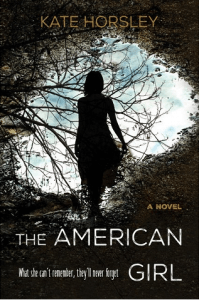
The American Girl – Kate Horsley

american girlMeet Quinn Perkins, a seventeen-year-old American exchange student spending a semester in the small French town of St. Roch.

Meet the Blavettes, Quinn’s host family. Sixteen-year-old Noemie, her nineteen-year-old brother, Raphael, and their mom, Emilie.

Meet Molly Swift, an American reporter for American Confessional, an podcast series that takes on “stories of police incompetence or just general incompetence, and find[s] the real story.”

When Quinn wanders out of the woods “barefoot and bloodied” only to be hit by a car (the driver of which doesn’t stop) and left in a coma, Molly and her journalistic muse, Bill, think Quinn would make a perfect story, something about “a young American girl coming of age, going into the world on her own only to encounter the unkindness of a stranger.”

Quinn’s story is slightly more complicated than that, though. Through a series of flashbacks, readers are introduced to the toxic Blavette household: father Marc  has left the family after an incident at the local school (which is attached to the house the family lives in and has subsequently been closed). Madame Blavette now takes exchange students as a way of making ends meet.

First thought to be away on a holiday, it is soon revealed that the Blavette family has disappeared without a trace. When Quinn wakes up in the hospital after her accident, she has no memory. Good thing, too, since Molly feels like the best way to get close to Quinn is to pretend to be her aunt. (Quinn’s father back home in America, is too busy with his much-younger pregnant wife to make the trip to France after Quinn’s accident.)

Kate Horsley’s The American Girl would make a terrific Netflix mini series. It’s populated with a cast of characters who all seem to have ulterior motives making it impossible to decide who is telling the truth. There are subplots galore including threatening Snapchat messages, sinister caves, locked doors and menacing strangers.

If this seems like a lot – it’s really not. The book was a lot of fun to read.


I Found You – Lisa Jewell

IFoundYouIn present day, Lily Monrose’s husband is missing. Newly married, Lily is frantic to find the man she loves, the man who came “home with gifts, with ‘two-week anniversary’ cards, with flowers.” Her husband, Carl, is “certainly never more than a minute late,” but he’s seemingly just vanished.

Alice Lake is a single mom with three kids who lives in a ramshackle cottage by the sea in Ridinghouse Bay. One day, from her window, she spies a man sitting on the beach.

He’s been there all day, since she opened her curtains at seven o’clock this morning, sitting on the damp sand, his arms around his knees, staring and staring out to sea.

Finally, Alice goes out to see if the man is okay and he admits “I think…that I have lost my memory…Because I don’t know what my name is. And I must have a name.”

Alice invites him in to her home and together they try to uncover who he is and where he came from.

In 1993, we meet Gray, 17, and Kirsty, 15, who are staying Rabbit Cottage in Ridinghouse Bay with their parents. They are on holiday, enjoying their family time when they meet Mark, a boy just a little older than Gray and for whom Gray takes an immediate dislike.

When Mark stops to chat to the family on the beach, Gray notes that the

smile on his face [looked] to Gray suspiciously like triumph. As though this ‘spontaneous’ conversation with his family was not just a passing moment of friendly human interaction, but the first brilliant stroke of a much bigger master plan.

Gray is right to be wary.

From these seemingly unconnected threads, British writer Lisa Jewell weaves an often riveting account of family, love and obsession. Although I was less interested in Lily’s situation – something about her irked me – I was wholly invested in Gray and Kirsty.  Their relationship was really believable and their part in the story provided the most heart-pounding moments.

As for Alice and her mystery man, well, obviously I don’t want to spoil anything. Alice is a likeable character, kind-hearted  and slightly reckless. As they work to peel back the layers of missing memory, the threads of this story start to come together. I found some of the machinations a bit clunky, but overall I Found You had me turning the pages way past my bedtime.

Welcome to the Dark House – Laurie Faria Stolarz

darkhouseWho doesn’t love a good scare? Not Ivy Jensen. That’s not her fault, though. When she was 12, someone broke into her house and slaughtered her parents. In her recurring nightmare about that horrible night, Ivy wakes “with a gasp, covered in [her] own blood. It’s everywhere. Soaking into the bed covers, splattered against the wall, running through the cracks in the hardwood floor, and dripping over [her] fingers and hands.”

Ivy is just one of the teens in Laurie Faria Stolarz’s YA novel, Welcome to the Dark House. She decides to enter a contest sponsored by Justin Blake, director of several famous (infamous) horror films featuring the Nightmare Elf. Intrigued by the promise that her nightmares will disappear, Ivy submits an essay describing her worst fear. So do Frankie, Garth, Parker, Shayla, Natalie and Taylor.

These teens win an exclusive weekend away to meet Justin Blake and get an exclusive look at his latest project. For some of the attendees, this is the chance of a lifetime. Boy-crazy Shayla is on a mission to “”make the most of every moment” [and] have a fun and fulfilling life.” Garth, Frankie and Natalie are uber-fans. Parker is an aspiring film maker. Taylor is…well…missing. Ivy just wants her nightmares to go away.

When the group arrives at the B & B where they will be staying, they find their rooms kitted out with their most favourite things. Their hostess is Midge, “the psycho chamber-maid who collects her victims’ fingers in the pockets of her apron.” The next afternoon, the teens are taken to a nightmarish amusement park in the middle of nowhere.

It’s like something out of a dream. WELCOME, DARK HOUSE DREAMERS is lit up in Gothic lettering, hanging above an entrance gate. There’s also a Ferris wheel, a merry-go-round, and a ride called Hotel 9; with multiple pointed roofs, it looks like the hotel in the movie.

The rules are simple: the group has to leave their cell pones and recording devices behind, ride the rides and have some snacks, but each participant MUST ride the ride that has been specifically tailored to them. The prize? Well, “the camera’s already rolling” and so essentially, in a found-footage way, these guys are the stars of Blake’s latest project.

Of course, this is when things start to get a little hairy.

Welcome to the Dark House is reminiscent of teen horror movies like Friday the 13th and Nightmare on Elm Street. This isn’t necessarily a bad thing. Fans of horror movies (and horror fiction) will likely enjoy the inventive ‘rides’ and these characters – although you don’t get to know any one of them particularly well. Of course, you wouldn’t want to get too attached now, would you? There are some truly creepy moments and a cliff hanger ending, so you’ll have to read the sequel, Return to the Dark House to discover how it all turns out.


The Quiet Child – John Burley

20170423-QUIET-CHILD-cover-rev-11-18-16John Burley’s novel The Quiet Child asks some compelling questions: ‘How far would you go to protect the people you love?’ chief among them.
It’s 1954 in Cottonwood, California and high school Science teacher Michael McCray and his wife Kate had it all. Had being the operative word. Things have been different for them for a while now, ever since their younger son Danny was born six years ago. That’s when Kate started to get sick; now she is practically bedridden. The people of their small town started to pull away from the McCrays because it seemed that coming into close contact with them meant that you, too, would become ill and maybe even die. Danny is an odd child, mostly because he is silent. He doesn’t say a word. Sean, 10, is protective of his younger brother and that’s part of the reason both boys are kidnapped outside of a convenience store on the night their dad takes them for ice cream.

The man in the tan jacket crossing the street, heading in the direction of the parking lot. Danny in the back seat of the car, gazing out the window as he waited for them to return. The engine starting. The spin of tires on gravel. And Sean, standing there less than a minute ago. But now…

After the boys go missing, readers follow local Sherriff Jim Kent and two detectives from Shasta County as they try to piece together what happened and where the boys might be. Don’t forget – it’s the early 50s and sussing out what happened is a lot more time consuming and difficult without the aid of technology.

Kate insists that Michael do “whatever it takes” to bring back  her sons and so Michael sets off on his own. It takes a little bit before the police figure out that the kidnapper has made contact with Michael, but soon they are hot on the trail.

The Quiet Child is certainly a page-turner; I read it in a couple of sittings. Burley provides just the right amount of backstory about the key players so that we care about them and minor characters are fleshed out so that their fate is also important to us.

The interesting thing about this book is that it works on a bunch of different levels. Partly it’s a thriller: will Michael find his sons? Will they be alive? Will everyone survive? Partly it’s sort of supernatural, but I don’t think that’s even the right word. Why is Kate sick? Why is Michael starting to experience tremors in his arm? Are people right to be suspicious of Danny? Is he really able to make people ill? And then, the book is strangely philosophical. Do we really have the right to make decisions that affect the lives of others if they benefit the greater good?

Even if you think you know where The Quiet Child is heading, I suspect you’ll be surprised and I guarantee you’ll be thinking about this book for a while after you’ve read the last page.

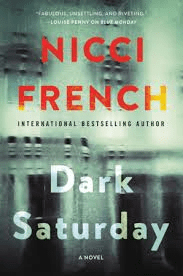
Dark Saturday – Nicci French

Dark Saturday is the sixth book in Nicci French’s mystery series featuring London- darksatbased psychotherapist Frieda Klein. Although I was at a (slight) disadvantage having not read any of the previous novels in this series, I have read (and enjoyed) several other novels by French (actually the husband/wife writing team of Sean French and Nicci Gerrard) so I knew what I was in for.
There will always be a slight disconnect when reading a single  book from a series, but I didn’t find it particularly problematic. It was clear that I was missing some back story, but there were enough salient details to aid my understanding and allow me to get on with the business at hand – which is the case of Hannah Docherty.

Hannah was just eighteen when she was arrested for brutally murdering her mother, stepfather and thirteen-year-old brother, Rory. Since then she’s been incarcerated at Chelsworth Hospital which was “not a prison [but an institution where] its inmates were patients and the doctors’ job was to treat them and make them better.” However, when Frieda goes to visit Hannah for the first time “it felt like all the other high-security prisons she’d been to over the course of her career.”

Hannah has been incarcerated for 13 years and it’s immediately clear to Frieda that there has been no attempt to help her during that time. And why is Frieda visiting Hannah? She’s been asked by the police (who have clearly had five books’ worth of dealings with her) to look into Hannah’s case to see if, perhaps, there’s the possibility that she is innocent. The lead investigator on the case has recently had another conviction overturned and the police department simply want to cross their T’s and dot their I’s. They aren’t really expecting Frieda to find anything because Hannah is clearly crazy and the evidence against her is compelling.

I suspect that readers who have been reading along with Frieda over the series will already know what I quickly discovered: Frieda is tenacious. She isn’t satisfied with one meeting with Hannah. She asks for the case files and pores through documents and photographs in an effort to better understand Hannah’s story. If Hannah didn’t kill her family, who did and why?

That’s pretty much the main story in Dark Saturday. As a straight-up mystery, there’s plenty to keep readers turning the pages. For someone who isn’t familiar with all the back-story, I found some of it to be a distraction. Was I really interested in sitting in on her therapy sessions with a middle-aged woman who is suffering from panic attacks? Um. No. Did I especially care about a colleague’s cancer diagnosis? Not really because I haven’t had the chance to really know him or understand his relationship with Frieda.

I don’t know how this novel stacks up to the others in the series. Frieda isn’t the most compelling sleuth I’ve ever encountered, but I will chalk that up to having missed out getting to know her in previous novels. She’s smart and careful…although I often wondered how safe it was for her to be walking around London alone in the middle of the night.  Still, I enjoyed watching her attempt to create a new narrative for Hannah. Whether the re-written story is ultimately satisfying will likely depend on how it compares to Frieda’s previous cases. I wasn’t wholly satisfied, but I suspect that fans of this series will be anxiously awaiting the next book.

Visit Harper Collins for more info about this and other excellent titles.

The Leaving – Tara Altebrando

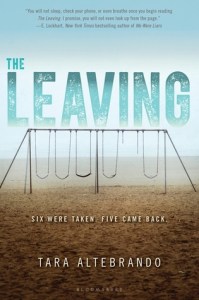
leavingTara Altebrando’s YA novel, The Leaving, will give readers lots to chew on. It’s the story of six kindergarten-aged kids who disappear from their small Florida town only to turn up – minus one – eleven years later.  The kids are dropped off at a playground with maps tucked into their pockets to help them find their way home. They have no memory of where they were and their arrival back home sends ripples through their lives, the lives of their families and the community.
The narrative is shared between two of the returned, Lucas and Scarlett, and Avery, the younger sister of Max, the one child who doesn’t come back.  Avery was just four when her brother disappeared and her memories are vague. When her mother gets the call that the children have returned, Avery ” certainly hadn’t pictured it happening this way.”

It’s actually hard to imagine how any of these characters might have envisioned this moment – to have their sons and daughters returned to them without any memory of where they’ve been or what’s happened to them. And for Avery, she could already anticipate “the endless news coverage, the weird-sad looks she’d get from neighbors and everyone at school…she’d be famous, but not in the right way.”

As for Lucas and Scarlett, they feel a pull towards each other that seems more than survivor’s guilt. They discover they can do things they don’t remember being taught: Scarlett can drive a car; Lucas can load a gun. They also have strange elliptical flashes of memory: a carousel, a man carrying wrapping paper, hot air balloons. They are determined to solve the mystery of the missing eleven years and that makes for pretty compelling reading.

But the part of the book that was especially intriguing to me was this notion of memory and how our memories shape who we are and how, without them, we would certainly feel unmoored. Also worth consideration – and something I certainly thought about as I read Altebrando’s book – was what it would mean if we could actually cherry pick our memories. Lucas considers this notion, wondering:

“Why not forget?

Why not just black out something awful?

Like a shooting.

Or war.

Childhood, even.

Sure!

Oh.

Forgetting meant not knowing, meant ignorance, meant making the same mistakes again and again.”

The Leaving offers lots of food for thought, but even if young readers aren’t ready to consider the value of holding tight to the memories which animate their lives, there’s lots to keep them turning the pages. For my money, the last few lines of the book are worth the bits I didn’t quite buy.

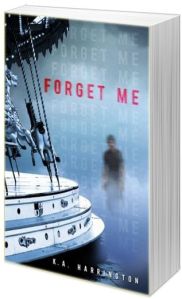
Forget Me – K.A. Harrington

forgetMorgan lives in River’s End, a small town in central Massachusetts. While once prosperous, “the town’s only major employer, Stell Pharmaceutical’s, went under [and] several other businesses that relied on Stell soon followed.” That meant that both of Morgan’s parents (and almost everyone else in town) lost their jobs as biochemists and River’s End is a bit of a ghost town.

When K.A. Harrington’s YA mystery Forget Me opens, Morgan is on her way to a party when she happens upon her boyfriend, Flynn, standing on the side of the road. He hadn’t been able to go to the party because of plans with his parents, so Morgan is surprised to see him.  It’s clear that Flynn is a bit of a mystery man; Morgan admits she is “the only one he ever voluntarily talked to.” Still, Flynn’s behavior is particularly jittery and when Morgan  presses Flynn for an explanation, he breaks up with her. She watches him walk away and then – shockingly – Flynn’s hit by a car.

Flash forward three months and Morgan is still trying to come to terms with Flynn’s death when she agrees to her best friend Toni’s suggestion to create an on-line memorial for Flynn. When she uploads a picture of Flynn onto her FriendShare (like Facebook, I guess), the program wants to tag the picture as someone else, a guy named Evan Murphy. When she does a little investigation, it appears as though Evan Murphy and Flynn are one and the same and Flynn appears to be very much alive.

Forget Me is a terrific little YA mystery that will keep readers guessing. Morgan is smart and tenacious and readers will be rooting for her to get to the bottom of Flynn’s death (?). There is the potential for the machinations to get clunky or convoluted, but Harrington avoids both. The plot clicks along, clues are revealed in a timely fashion and readers should be wholly satisfied with the outcome.