Dark Matter – Blake Crouch

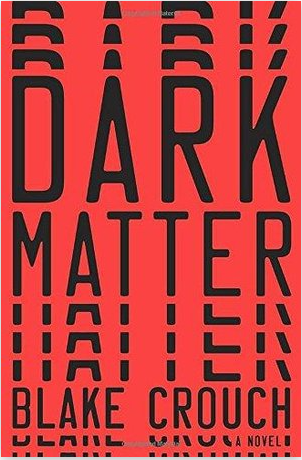
Jason Dessen, the protagonist of Blake Crouch’s novel Dark Matter has the perfect life. Well, no life is perfect, but he loves his wife, Daniela, once a promising artist, now a teacher, and his teenaged son, Charlie. His job as a physics professor at Lakemount College affords him a nice life but everyone knows that he could have had so much more if he had chosen a different path.

When the novel opens, Jason is off to raise a glass to his former college buddy Ryan, who has just won the prestigious Pavia Prize. On the way home, he is mugged and abducted and things only get stranger from there.

I am not going to pretend to understand anything about the science that happens in this book, but I honestly don’t think that it matters all too much if you do. Ultimately this is a book that examines the different trajectories that your life might take if you had made different decisions. It posits that every time you come to a fork in the road, and you make a selection, another version of you and the other choice carries on. That’s an extremely simplified version, of course.

The action of the story unfolds as Jason tries desperately to return to his old life while encountering versions of himself that actually want to continue living their chosen lives. Essentially, it’s the multiverse and although some of it was certainly beyond my understanding, the human side of it was completely relatable.

“Every moment, every breath, contains a choice. But life is imperfect. We make the wrong choices. So we end up living in a state of perpetual regret, and is there anything worse?”

Ah, yes, the road not taken.

The Offing – Roz Nay

I have had good luck and so-so luck with Canadian writer Roz Nay. I LOVED Our Little Secret and I enjoyed reading The Hunted, although it was a little bit less successful overall. Her latest novel, The Offing swings more to the so-so side of the scale. It was certainly an easy book to read and it definitely had its heart-pounding moments, but it was also slightly unbelievable – especially the big reveal.

So, Ivy and her bestie, a beautiful model named Regan, have escaped their lives in New York and are currently backpacking in Australia. Ivy, especially, had a need to get out of NYC. Her elicit relationship with one of her professors has imploded and now he seems to be stalking her. She needs to get off the grid, so she convinces Regan to take a job crewing on a sail boat bound for Darwin. The boat’s owner, Christopher, and his eleven-year-old daughter, Lila are on a Christmas Break adventure. The only other passenger will be Desh, the boat’s cook (and also a new hire.)

Christopher gives off total Dad vibes, and the fact that his daughter (and her cat) is with him, makes him seem even more harmless, so the girls sign on and off they go. Of course, nothing is ever that simple in this type of novel, right?

First of all, Ivy’s creepy ex-lover seems to have made his way to Australia. Secondly, Lila suffers from night terrors. Christopher seems indecisive and odd. Desh is friendly and hot and Ivy is drawn to him, but her insecurities over Regan’s physical appearance – what dude wouldn’t find her more attractive? – causes a strain in the girls’ relationship. Then there’s Blake Coleman, skipper of The Salty Dog, a boat that keeps showing up.

As is the way with these books, you are supposed to be thrown off by everyone’s shady behaviour – and there is certainly plenty of it in this book. There are some truly tense moments and some instances where I turned the pages super fast because…what’s going to happen?! But…

That denouement just didn’t totally work for me.

That said, The Offing is a twisty, fun and entertaining book. It’s perfect if you are looking for something fast-paced and not too difficult to read…which, as I was returning to another school year when I picked it up, made it the perfect book for me.

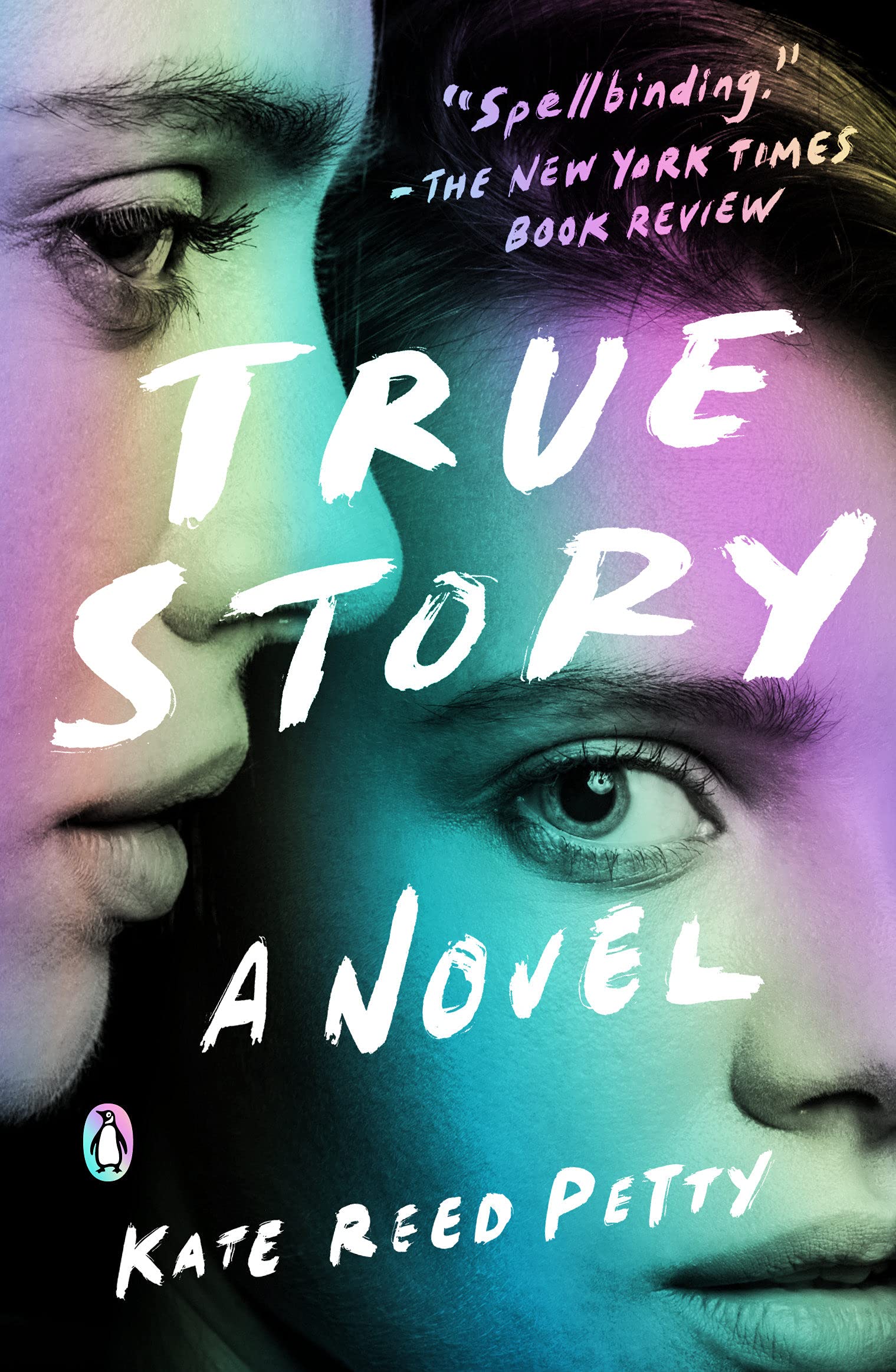
True Story – Kate Reed Petty

Kate Reed Petty’s debut True Story is the story of a high school junior’s sexual assault in the back of a car. Drunk at a party, Alice Lovett is driven home by two lacrosse players, Max and Richard, and the details of the assault spread throughout their town, destroying several lives in the process.

When the novel opens Alice is living in Barcelona and working as a ghost writer. Someone has asked her to tell the story of what happened all those years ago, but Alice is reluctant to even talk to this person.

The truth is I was embarrassed. You’ve always been the one who was brave – no, the one who was sure. You’ve always been so sure of the story you want me to tell. the story you’ve been asking me for since we were seventeen: the story about the things that happened while I was asleep.

Now, Alice hopes this person will accept the version of the story she is prepared to give.

Petty employs a variety of different formats to tell this story. There are movie scripts, college application drafts (complete with teacher feedback); there’s an account from Nick Brothers, a member of the same lacrosse team who was there when Max and Richard came back to the Denny’s and bragged about what they had done to Alice in the backseat of the car; there’s a whole series of email messages from Alice to Haley (the friend who has been encouraging Alice to tell her story); there’s the transcript of an interview Alice is trying to spin into a book for a client. There is nothing necessarily linear about the narrative and it doesn’t matter one bit.

I couldn’t put this book down.

But besides being a page turner, True Story definitely has something to say about rape culture and the way women’s stories are told. I found Alice’s college application essays a perfect example of this. She is trying to write about something that has had an impact on her life (the assault) and she attempts to get there through several drafts, before eventually landing on a benign story about shoes. Society has made it almost impossible for women to tell their own stories and you barely even know that it is happening.

True Story is a horror story, a mystery, a revenge story: it’s well-written and fast-paced and thoughtful and I highly recommend it.

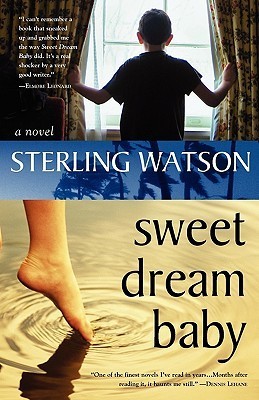
Sweet Dream Baby – Sterling Watson

In an effort to do something about my toppling Mount Doom of backlist books, I am going to read one for every newer release I read. Not sure it will help, but maybe I will luck out and the majority of books languishing on my shelves will be as good as Sweet Dream Baby by Sterling Watson.

In this book, 12-year-old Travis Hollister is sent to Widow Rock, Florida to live with his paternal grandparents and 16-year-old aunt, Delia. It is 1958 and Travis’s father can’t cope. Travis’s mother is convalescing because, as Travis explains, “One day, I came home from school and found Mom curled up under the kitchen sink.” This will be the break everyone needs.

Travis’s grandparents are two sides of a coin: his grandmother is an effusive women, given to retreating to her room with headaches; his grandfather, the town sheriff, is a hard man who demands respect. The real surprise for Travis is his father’s much younger sister, Delia, whose smile “is like a sunrise over the wheat fields back in Omaha.”

Delia takes Travis everywhere and Travis is soon privy to things he doesn’t really understand. Ultimately, it makes this novel more than just the story of one boy’s coming of age. I blame Delia. Delia’s super power is her ability to wrap people, particularly men, around her little finger.

When Travis first meets Delia, he can see the effect she has on her father after she speeds into the garage, music blaring.

Grandpa Hollister’s eyes change. They look like I never expected them to. They say he doesn’t care about the loud radio or the reckless driving. Nobody’s gonna get arrested. They say he can’t do nothing about how he feels right now. Nothing at all.

It seems that every male who comes into Delia’s orbit, from Princeton-bound Bick Sifford, to the the local James Dean wannabe Kenny Griner, wants something from Delia. And soon, Travis wants something from her, too.

Sweet Dream Baby captures the innocence of youth, and the sharp tang of sexual longing and sets it all to the soundtrack of the music of the period. The book doesn’t go where you expect it to and ends up being quite a bit darker, too.

I loved every second of it.

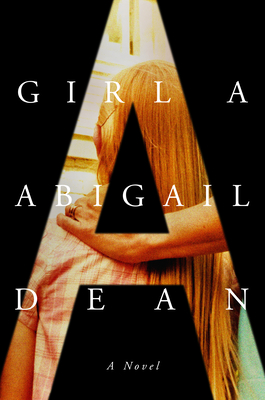
Girl A – Abigail Dean

You don’t know me, but you’ll have seen my face.

At just fifteen, Lex Gracie escapes her family home on Moor Woods Road, flags down a car and thus rescues her siblings from what is soon dubbed by the press as the “House of Horrors”. She is named Girl A to keep her identity secret from the world. Her siblings, Ethan, Evie, Gabriel, Delilah and Noah, are similarly named.

Now, years later, Lex, a lawyer based in NYC, is off to the prison where her mother has just died. Lex has been named executor of the estate, which is comprised of the house and a little bit of money. Lex feels the right thing to do is to build a community centre where the house stands, but in order to do that she needs her siblings to sign off. Abigail Dean’s accomplished debut Girl A traces Lex’s journey through the trauma of her past as she locates and visits with her siblings in an effort to secure their signatures.

Wisely, Dean chooses to leave much of what happens in the house to the reader’s imagination. It’s more than enough, trust me.

Sometimes, in my head, I visit our little room. There were two single beds, pressed into opposite corners, as far away from each other as they could be. My bed and Evie’s bed. A bare bulb hung between them and twitched at footsteps in the hallway outside. It was usually dull. but sometimes, if Father decided, it was left on for days. He had sealed a flattened cardboard box against the window, intending to control time, but a dim, brown light seeped through and granted us our days and nights.

The disintegration of the Gracie family doesn’t happen all at once, although the father, Charlie, is definitely volatile. As he becomes more and more evangelical – even going so far as to start his own church – he becomes more rigid and violent. Lex and Evie finds solace in a hidden book of Greek myths and school is a safe place until Charlie forbids them to go. Lex’s mother shrinks into the background, often disappearing for days into her bedroom to care for the newest baby.

Lex unspools the story of her childhood as she visits with each of her siblings, all adopted into different families after the rescue. Thus, this is a story about the aftermath of trauma as much as it is about the trauma itself. What becomes of these children makes for compelling reading.

Highly recommended.

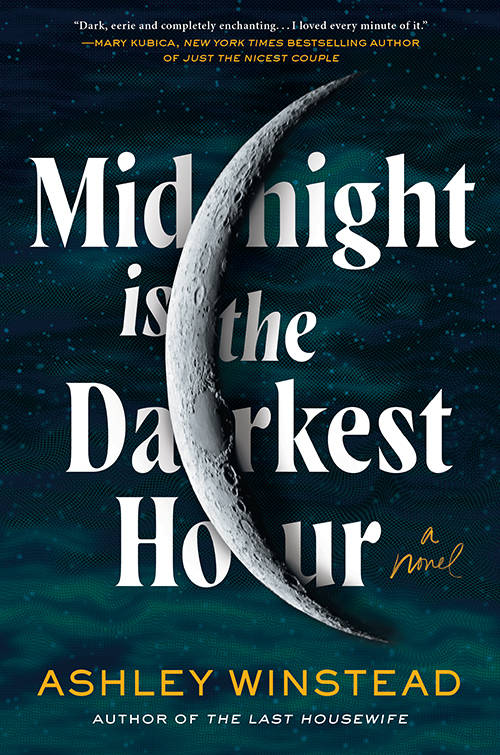
Midnight is the Darkest Hour – Ashley Winstead

I really wish the cover flap hadn’t compared Ashley Winstead’s novel Midnight is the Darkest Hour to Verity because it really does her book a disservice. Winstead’s book is far superior to Hoover’s (but I am not a fan of Hoover at all, so there’s that).

Ruth Cornier lives in Bottom Springs, Louisiana, where her father is the evangelical preacher in charge of Holy Fire Baptist. An only child, Ruth leads a sheltered, friendless life; her only companions are books, in particular, Twilight. She dreams of one day finding her own Edward Cullen.

…in the vampire Edward, I found everything I’d ever wanted in a man. He loved Bella with single-minded devotion, a self-effacing passion beyond anything a human man was capable of. That’s in turn how I loved him.

(I too have loved a taciturn vampire, although mine was a little less sparkly than Edward. LOL)

But anyway.

Everett Duncan also lives in Bottom Springs. An act of violence brings Everett and Ruth together and bonds them when they are seventeen and the story flips between this early period of their relationship and several years later, when they are 23. When a skull is discovered in the swamp, Everett and Ruth work together to uncover Bottom Springs’ dark underbelly.

In the present day, Ruth lives on her own and works at the local library. She has very little to do with her parents, stepping away from the church’s fire and brimstone teachings. Everett has left Bottom Springs, returning “every year on the first true day of summer.” Things are different this year, though, and not only because the discovery of the skull, but because Ruth has a boyfriend, Deputy Barry Holt.

I read Midnight is the Darkest Hour in one sitting. It’s the perfect blend of southern gothic and mystery, plus a dash of angsty romance. (Which, c’mon, if you’re going to love a vampire, you gotta love the angst.) This book has a lot to say about the patriarchy, religion, and family. Ruth has been cowed all her life, but when she decides she’s not going to take it anymore – well, that’s a journey worth taking.

I think Winstead’s only gotten better. I wasn’t a huge fan of In My Dreams I Hold a Knife (although there were some parts of it I really did enjoy), but I LOVED The Last Housewife. Midnight is the Darkest Hour is another winner and I can’t wait to see what she writes next.

Theme Music – T. Marie Vandelly

T. Marie Vandelly’s debut Theme Music promises a lot with its prologue. At just eighteen months, Dixie Wheeler is the only member of her family to survive a chilling event in the family home. One day at breakfast, her father left the kitchen, went to his shed and returned with an axe.

He rentered the kitchen, extra warm and cozy thanks to a turkey in the oven, looked upon the bewildered faces of his adoring family, and butchered them all. Well, not all, of course. I lived.

After he was done, her father slit his own throat.

Now, twenty-five years later, Dixie happens upon an advertisement announcing the sale of her family home – not that she has any real memories of it. After the death of her family, Dixie lived with her father’s sister, Celia, and her uncle, Ford, and her cousin, Leah. Now, as an adult, she cohabitates with her boyfriend, Garrett. What can it hurt to go check out the house, she wonders.

The house is “charming” in fact, despite its horrific history. Garrett falls in love with it, too, although he isn’t aware of what happened there. In fact, Dixie hasn’t been forthcoming with the details of her past at all. That’s bound to cause some friction and it does which ultimately means that Dixie moves into the house solo. Not only does she move in, but she brings with her all the household belongings that her father’s brother Davis had stored in his own basement. This includes, unfortunately, a file folder filled with crime scene photos. Davis, it seems, always believed his brother was innocent and until his death was working to prove it.

Theme Music isn’t quite sure whether it wants to be a thriller or a horror novel. Dixie’s house is haunted because of course it is, but most of the book is concerned with Dixie picking up the threads of her uncle’s investigation, and trying to figure out what really happened that day.

Books of this type depend on a likable main character, which I am sad to say, Dixie was not. Was there peril? Yes. Did she do some stupid things? Yes. Were there some twists and suspense? Also yes. But I also often found the tone uneven, sarcasm when it was uncalled for and a fair number of unbelievable plot machinations that caused a little bit of eye rolling.

All that said, Theme Music is a promising debut even if it wasn’t quite sure what kind of book it wanted to be.

Demon Copperhead – Barbara Kingsolver

I might have never gotten around to reading Barbara Kingsolver’s Pulitzer Prize winning novel Demon Copperhead if it hadn’t been chosen for our book club. Like A Little Life , the book seems to be pretty divisive. I hated that book; I did not hate this one.

“First, I got myself born,” says Demon, mimicking Charles Dickens’ classic David Copperfield in which the titular narrator says “To begin my life with the beginning of my life, I record that I was born…” in the book’s opening paragraph. Kingsolver thanks Dickens in her acknowledgement and her novel definitely owes a debt to him.

Born Damon Fields to a teenage mother with few prospects, Demon survives poverty, his mother’s addictions, and physical abuse at the hands of her boyfriend, Stoner, mostly because he lives next door to the Peggots and their grandson, Demon’s best friend, Maggot. (Yes, there are a lot of weird names in this book, but they correspond to names from Dickens’ novel.) The Peggots’ home in rural Virginia was “a place where things got put where they went.” The Peggots were de facto grandparents to Demon, Mrs. Peggot making sure that “she played no favorites: same Hostess cakes, same cowboy shirts she made for both of us with the fringe on the sleeves. Same little smack on the shoulder with her knuckles if you cussed or wore your ball cap to her table.” For this reason, with the exception of his mother having difficulty staying sober, Demon would probably say that he had a wonderful childhood, until he didn’t.

Forced into the foster system at age 11, Demon’s life deteriorates and I won’t spoil the ups and downs of his journey to adulthood because those details are the meat and potatoes of his story. Let’s just say that I was wholly invested until about the midpoint of the story (which clocks in at 546 pages).

I was happy to spend time with Demon. I enjoyed his ‘voice’ and admired his resilience in the face of tremendous adversity. I shared his minor victories and bemoaned his poor choices and bad luck. I didn’t 100% believe all of it. He was lucky and unlucky in equal measure and despite having a really solid supporting cast, he still didn’t always make the best choices. That’s probably to be expected, though, as he’s young and young people do stupid things even when they acknowledge that they are stupid.

Kingsolver has lots of opinions on capitalism, pharmaceutical companies, education, the foster system, rural life and readers will certainly be aware when didactics trickle into fiction. It doesn’t interfere, per se, although sometimes it’s pretty obvious when her point of view wants to take center stage.

I am not sure when I stopped being 100% invested in his story. I will say that I really didn’t like the ending of the book. I will also say that I had zero trouble turning the pages even though Demon’s story was generally grim. He is a memorable character and I was invested in his survival.

All the Colors of the Dark – Chris Whitaker

Chris Whitaker’s novel We Begin at the End is one of the best books I’ve read in the last few years and so when I heard that he had a new book coming out I purchased it as soon as it was available. (Sadly, it’s a flimsy paperback with a stupid unremovable “Read with Jenna” sticker on it. ) Not only did I race out to purchase All the Colors of the Dark, but I started reading it almost immediately. The weather cooperated, too; I got a rainy Saturday with nothing much to do and so I didn’t stop reading until just after 2 a.m. when I turned the final page (595 of them!)

Patch and Saint meet as kids. They’re both outsiders in their small town of Monta Clare, Missouri. Patch lives with his single mother, Ivy, who has barely been able to keep it together; Saint lives with her grandmother, Norma. Their friendship sustains them for many years and is the central relationship in the novel.

At the beginning of the story, Patch rescues another local girl, Misty, from a man who clearly intends to do her harm. He has admired Misty from afar and when he encounters them in the woods, he recognizes that something is not right.

Patch desperately looked around for anyone at all. Anyone who could handle this, who could ease the responsibility, the acute burden of seeing a girl in trouble.

He has no choice but to act, and he does, and it changes the trajectory of his life.

When Patch disappears, Saint lets nothing stand in her way until she finds him. But he is not the same person he was and as the details of what happened to him emerge, it also reveals a dogged determination to get to the truth.

I can’t say any more than that.

This is an epic story because it takes place over many years. It is also a story that moves swiftly. There’s a lot of dialogue in this story and so despite its length it almost begs to be read in one sitting. I think Whitaker’s super power is his characters. I loved Saint and Patch, who are revealed to us through their actions and their dialogue. But they are not the only characters to love. There’s Chief Nix, Norma and Sammy, too. I felt like I knew and cared for each and every one of them.

There’s not a lot of exposition here. (Honestly, this would make a terrific series and given the author’s connection to Jordy Moblo, I’ve got my fingers crossed.) But there is a compelling mystery and some heart-stopping moments. In fact, there’s a lot going on in this book and while the conclusion wasn’t as punch-you-in-the-gut as We Begin at the End, I finished feeling very satisfied. And as a person who generally falls asleep relatively early, the fact that I had to stay awake – in fact, couldn’t fall asleep even after I finished – to find out what happened to these people I had fallen in love with should tell you everything you need to know about All the Colors of the Dark.

The Butterfly Garden – Dot Hutchison

Dot Hutchison’s novel The Butterfly Garden requires some suspension of disbelief. It is the story of Maya, one of several young girls who have been rescued from a horrifying situation. FBI agents Victor Hanoverian and Brandon Eddison are tasked with questioning Maya about what happened, but she is a bit reticent to reveal many details.

After a night working at a restaurant, Maya wakes up in a strange place with “a splitting headache.” She is being cared for by a woman who calls herself Lyonette who tells her “Don’t bother telling me your name because I won’t be able to use it.” Where is Maya? She’s in The Garden.

Lyonette led me out from behind the curtain of water into a garden so beautiful it nearly hurt to look at it. Brilliant flowers of every conceivable color bloomed in a riotous profusion of leaves and trees, clouds of butterflies drifting through them. A man-made cliff rose above us, more greenery and trees alive on its flat top, and the trees on the edges just brushed the sides of the glass roof that loomed impossibly far away.

Maya is a prisoner. And she is not alone. She is one of many “butterflies” being held captive in this garden, young women who must submit to having intricate butterfly wings tattooed on their backs, and worse, must endure being raped by The Gardener and his sadistic son.

Just how Maya and the rest of the ‘butterflies’ come to be rescued makes up the main part of the story. We also get a little bit of insight into her troubling childhood. What we don’t really get is why The Gardener, a man who seems devoted to his frail, clearly out-to-lunch wife, would go to the lengths he has to hold these girls captive.

It’s hard to imagine this place he has built. It’s even harder to imagine that he hasn’t been found out. And when his younger son, Desmond, is introduced to this creepy garden, it’s hard to imagine him not ratting his father out, especially when he seems to develop feelings for Maya.

Still, The Butterfly Garden is oddly compelling. It’s not nearly as graphic as you might imagine it to be, but is still potentially triggering. It was an easy read.