Demon Copperhead – Barbara Kingsolver

I might have never gotten around to reading Barbara Kingsolver’s Pulitzer Prize winning novel Demon Copperhead if it hadn’t been chosen for our book club. Like A Little Life , the book seems to be pretty divisive. I hated that book; I did not hate this one.

“First, I got myself born,” says Demon, mimicking Charles Dickens’ classic David Copperfield in which the titular narrator says “To begin my life with the beginning of my life, I record that I was born…” in the book’s opening paragraph. Kingsolver thanks Dickens in her acknowledgement and her novel definitely owes a debt to him.

Born Damon Fields to a teenage mother with few prospects, Demon survives poverty, his mother’s addictions, and physical abuse at the hands of her boyfriend, Stoner, mostly because he lives next door to the Peggots and their grandson, Demon’s best friend, Maggot. (Yes, there are a lot of weird names in this book, but they correspond to names from Dickens’ novel.) The Peggots’ home in rural Virginia was “a place where things got put where they went.” The Peggots were de facto grandparents to Demon, Mrs. Peggot making sure that “she played no favorites: same Hostess cakes, same cowboy shirts she made for both of us with the fringe on the sleeves. Same little smack on the shoulder with her knuckles if you cussed or wore your ball cap to her table.” For this reason, with the exception of his mother having difficulty staying sober, Demon would probably say that he had a wonderful childhood, until he didn’t.

Forced into the foster system at age 11, Demon’s life deteriorates and I won’t spoil the ups and downs of his journey to adulthood because those details are the meat and potatoes of his story. Let’s just say that I was wholly invested until about the midpoint of the story (which clocks in at 546 pages).

I was happy to spend time with Demon. I enjoyed his ‘voice’ and admired his resilience in the face of tremendous adversity. I shared his minor victories and bemoaned his poor choices and bad luck. I didn’t 100% believe all of it. He was lucky and unlucky in equal measure and despite having a really solid supporting cast, he still didn’t always make the best choices. That’s probably to be expected, though, as he’s young and young people do stupid things even when they acknowledge that they are stupid.

Kingsolver has lots of opinions on capitalism, pharmaceutical companies, education, the foster system, rural life and readers will certainly be aware when didactics trickle into fiction. It doesn’t interfere, per se, although sometimes it’s pretty obvious when her point of view wants to take center stage.

I am not sure when I stopped being 100% invested in his story. I will say that I really didn’t like the ending of the book. I will also say that I had zero trouble turning the pages even though Demon’s story was generally grim. He is a memorable character and I was invested in his survival.

All the Colors of the Dark – Chris Whitaker

Chris Whitaker’s novel We Begin at the End is one of the best books I’ve read in the last few years and so when I heard that he had a new book coming out I purchased it as soon as it was available. (Sadly, it’s a flimsy paperback with a stupid unremovable “Read with Jenna” sticker on it. ) Not only did I race out to purchase All the Colors of the Dark, but I started reading it almost immediately. The weather cooperated, too; I got a rainy Saturday with nothing much to do and so I didn’t stop reading until just after 2 a.m. when I turned the final page (595 of them!)

Patch and Saint meet as kids. They’re both outsiders in their small town of Monta Clare, Missouri. Patch lives with his single mother, Ivy, who has barely been able to keep it together; Saint lives with her grandmother, Norma. Their friendship sustains them for many years and is the central relationship in the novel.

At the beginning of the story, Patch rescues another local girl, Misty, from a man who clearly intends to do her harm. He has admired Misty from afar and when he encounters them in the woods, he recognizes that something is not right.

Patch desperately looked around for anyone at all. Anyone who could handle this, who could ease the responsibility, the acute burden of seeing a girl in trouble.

He has no choice but to act, and he does, and it changes the trajectory of his life.

When Patch disappears, Saint lets nothing stand in her way until she finds him. But he is not the same person he was and as the details of what happened to him emerge, it also reveals a dogged determination to get to the truth.

I can’t say any more than that.

This is an epic story because it takes place over many years. It is also a story that moves swiftly. There’s a lot of dialogue in this story and so despite its length it almost begs to be read in one sitting. I think Whitaker’s super power is his characters. I loved Saint and Patch, who are revealed to us through their actions and their dialogue. But they are not the only characters to love. There’s Chief Nix, Norma and Sammy, too. I felt like I knew and cared for each and every one of them.

There’s not a lot of exposition here. (Honestly, this would make a terrific series and given the author’s connection to Jordy Moblo, I’ve got my fingers crossed.) But there is a compelling mystery and some heart-stopping moments. In fact, there’s a lot going on in this book and while the conclusion wasn’t as punch-you-in-the-gut as We Begin at the End, I finished feeling very satisfied. And as a person who generally falls asleep relatively early, the fact that I had to stay awake – in fact, couldn’t fall asleep even after I finished – to find out what happened to these people I had fallen in love with should tell you everything you need to know about All the Colors of the Dark.

The Butterfly Garden – Dot Hutchison

Dot Hutchison’s novel The Butterfly Garden requires some suspension of disbelief. It is the story of Maya, one of several young girls who have been rescued from a horrifying situation. FBI agents Victor Hanoverian and Brandon Eddison are tasked with questioning Maya about what happened, but she is a bit reticent to reveal many details.

After a night working at a restaurant, Maya wakes up in a strange place with “a splitting headache.” She is being cared for by a woman who calls herself Lyonette who tells her “Don’t bother telling me your name because I won’t be able to use it.” Where is Maya? She’s in The Garden.

Lyonette led me out from behind the curtain of water into a garden so beautiful it nearly hurt to look at it. Brilliant flowers of every conceivable color bloomed in a riotous profusion of leaves and trees, clouds of butterflies drifting through them. A man-made cliff rose above us, more greenery and trees alive on its flat top, and the trees on the edges just brushed the sides of the glass roof that loomed impossibly far away.

Maya is a prisoner. And she is not alone. She is one of many “butterflies” being held captive in this garden, young women who must submit to having intricate butterfly wings tattooed on their backs, and worse, must endure being raped by The Gardener and his sadistic son.

Just how Maya and the rest of the ‘butterflies’ come to be rescued makes up the main part of the story. We also get a little bit of insight into her troubling childhood. What we don’t really get is why The Gardener, a man who seems devoted to his frail, clearly out-to-lunch wife, would go to the lengths he has to hold these girls captive.

It’s hard to imagine this place he has built. It’s even harder to imagine that he hasn’t been found out. And when his younger son, Desmond, is introduced to this creepy garden, it’s hard to imagine him not ratting his father out, especially when he seems to develop feelings for Maya.

Still, The Butterfly Garden is oddly compelling. It’s not nearly as graphic as you might imagine it to be, but is still potentially triggering. It was an easy read.

Chasing the Boogeyman – Richard Chizmar

I have been suffering from the slump of all slumps over the past few weeks. I haven’t been able to concentrate on a single book, and have abandoned more than a few. For anyone who has suffered from a book slump, you’ll understand how frustrating it is to want to read without actually being able to settle into a book.

Then, along comes Richard Chizmar’s novel Chasing the Boogeyman. Although I was familiar with Chizmar’s name (he has co-authored three books with Stephen King), this was the first time I have ever read anything by him and it was a thoroughly enjoyable experience. I started and finished the book in a couple of sittings. #slumpbuster

Chasing the Boogeyman is a novel, but it reads like true crime. That’s because Chizmar himself is purportedly telling the story of the summer after college when he returns home to Edgewood, Maryland to write, assemble his horror magazine, Cemetery Dance – a publication that actually does exist – and save money before he gets married.

Just before Chizmar arrives back home in 1988, a young girl was taken from her bedroom in the middle of the night, her savaged body discovered in the woods the next day. Over the coming weeks, more girls end up dead.

I can’t explain how or why it happened the way it did, the timing of me being back there on Hudson Road when the murders occurred. […] I was there. I was a witness. And, somehow, the monster’s story became my own.

With the help of a high school friend who works at the local newspaper, Chizmar begins to try to piece together what happened to the victims. Although Edgewood wasn’t crime-free before these horrific murders, “no one could remember anything remotely this violent or depraved. It was almost as an invisible switch had been thrown….”

Chasing the Boogeyman is a clever and compelling (fake) true crime book complete with photos, that is also a nostalgic look at coming home again. It is clear that Chizmar is a fan of the genre and he certainly does it justice here. I really enjoyed my read and I would definitely read more by this author.

The Darkest Corners – Kara Thomas

Eighteen-year-old Tessa is returning to her childhood hometown of Fayette, Pennsylvania to visit her incarcerated father who is dying of cancer. This isn’t the only reunion she’s facing. When she moved to Florida to live with her grandmother, she left behind her best friend Callie and the trauma of having to testify in a murder trial. She and Callie are estranged now, which makes the fact that she is going to be staying with Callie and her parents slightly uncomfortable.

Home is both different and the same. There’s a reminder around every corner of the summer when she was nine and Callie’s cousin Lori was murdered. She and Callie were material witnesses in the trial that put Wyatt Stokes behind bars, not only for Lori’s murder but for a string of other homicides. Not long after she lands back in Fayette, another girl is killed and it’s impossible not to see the similarities between this girl and all those who came before. But how is it possible, when Wyatt Stokes is behind bars? Things just don’t add up and so Tessa (and eventually Callie) start to dig into their memories of what happened that long ago summer.

The Darkest Corners is a fun read, but it’s definitely better if you read it in one or two sittings because there is a lot going on and a lot of character names to keep track of. Some of these characters have very little to do and are not much more than names on a page. They drive a certain part of the plot and are dropped like hot potatoes. Other characters, like Tessa and Callie, are more rounded. The last fifty pages – although perhaps not all that believable – flew by.

Mostly though, it was a good time.

When I Was Ten – Fiona Cummins

Something horrible happened at Hilltop House.

Fiona Cummins’ thriller When I Was Ten travels back in forth between then (the immediate aftermath of the crime and then even further back to the time leading up to it) and now, twenty years later.

After Brinley, one of two main characters, reveals that she was struck by lightning when she was twelve, she also tells us that the parents of her childhood friends, Sara and Shannon, were “Stabbed fourteen times with a pair of scissors in a frenzied and brutal attack.”

Catherine Allen, the other protagonist, lives a quiet life with her husband, Edward, and twelve-year-old daughter, Honor. She “only wants to be ordinary” but the truth is that her story is anything but.

How are these two women connected? That part of the mystery is easily solved, but there is so much more to come in Cummins’ novel about childhood friendship, family relationships, and abuse. As Brinley, a journalist, starts to revisit her part in what happened at Hilltop House, the book picks up steam and the last half was pretty much unputdownable. Cummins was a journalist, so she has some interesting observations about the parasitic nature of true crime journalism.

Overall, I really enjoyed this book.

Rovers – Richard Lange

Stephen King called Richard Lange’s novel Rovers, “The best vampire novel [he’d] read since Let the Right One In.” I don’t usually go in for author endorsements except I know that King is a voracious reader and when it comes to things that go bump in the night, you could do way worse than King when he’s at the top of his game (and let’s face it, he usually is.)

Lange’s novel tells the story of brothers Jesse and Edgar (think George and Lennie from Of Mice and Men if they were bloodsuckers). They’ve been vampires–or Rovers as they’re called in Lange’s universe– for seventy-five years, Jesse first and then, at his mother’s behest, Edgar. They travel together, stay away from other people (except for that time when Jesse fell in love with Claudine) and feed only when they have to, usually about once a month. As far as vampires go, they’re relatively benign.

The Fiends, on the other hand, are not. They’re a motorcycle gang, led by bookworm Antonia and her lover, Elijah. For the right price, they’ll do a job and the job at hand involves a lot of money and a baby. When two of the gang take the baby to a remote location to feed, Jesse, Edgar, and a human woman they’ve just met– and to whom Jesse has taken a shine because she reminds him of Claudine–just happen to be nearby. Right place wrong time or wrong place right time – take your pick, but either way, now the three are on the run because the Fiends will stop at nothing to find them.

Then there’s Charles, a man who has been bouncing from city to city, hunting for the person responsible for the death of his son, Benny. When he meets Czarnecki a grizzled old man on a similar mission – to rid the world of Rovers- Charles’ understanding of the world is forever altered.

Rovers is a straightforward, action packed novel where I found myself feeling tremendous sympathy for some of these characters, even though I clearly should not. Lange leans into some of the vampire tropes: sunlight kills, behead the vampire and they turn to dust. Other things are slightly different: no fangs, instead a nick to the jugular and it’s an all you can drink buffet and just about any injury will heal given time. These vampires eat a lot of people food, too.

This is a violent, often gory, fun novel – if vampires are your thing.

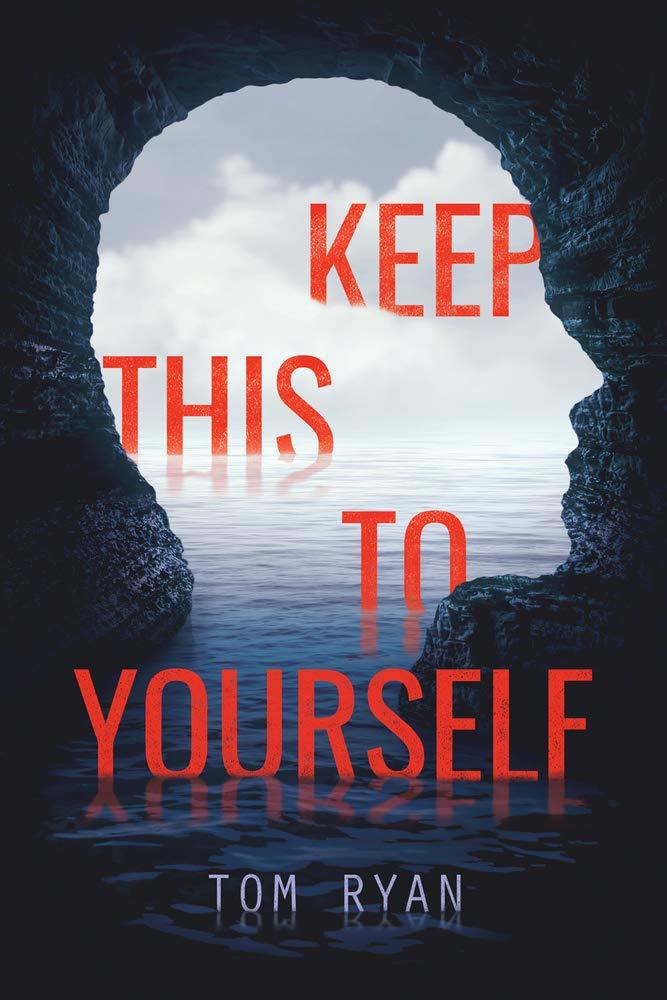
Keep This To Yourself – Tom Ryan

Mac Bell and his friends are marking the occasion of their high school graduation and the anniversary of the death of their best friend, Connor, by digging up the time capsule they’d buried as kids when Tom Ryan’s YA mystery Keep This To Yourself opens. Although they’ve tried to move on with their lives, it hasn’t been easy. Connor was the last victim in a series of killings that have remained unsolved and Mac, in particular, is having a hard time letting go.

Connor.

Seventeen. Tall and good-looking. Always smiling. Loved by everyone. The kind of guy that adults liked to say had “a bright future ahead of him.”

One of my very best friends since childhood. One of my only friends, if I’m being honest.

Mac wonders if he might not have been a little bit in love with Connor, too. Maybe that’s why, when he discovers a note tucked into a comic book (the two had been swapping comic books forever), he knows that Connor is reaching out to him from beyond the grave, asking for Mac’s help in bringing the killer to justice.

Ryan’s book is set in the tiny coastal town of Camera Cove, a place where everyone knows everyone– which means that everyone is a suspect. As Mac begins following the cold case, he meets Quinn, cousin of one of the other victims. There’s an immediate attraction between the two young men, and Quinn is as anxious as Mac to crack this cold case open once and for all, so they band together to try and find a connection between the victims or anything else the authorities might have missed.

Keep This To Yourself is a straightforward YA mystery with a smart and likeable narrator and some clever twists. This is not my first book by this author (I Hope You’re Listening), and it certainly won’t be my last.

Just Like Mother – Anne Heltzel

Maeve is a book editor in NYC. She’s got a pretty good life, including a friends with benefits arrangement with Ryan. What Maeve doesn’t have is family. She grew up in a matriarchal cult, Mother Collective, a situation from which she escaped/was rescued when she was just a child. The only thing she really misses from that time in her life is her cousin, Andrea. They lost touch and Maeve hasn’t looked for her in years. Then, on a whim, she takes a DNA test and suddenly Andrea is back in her life…and things get, well, complicated.

This is the premise of Anne Heltzel’s first novel for adults Just Like Mother. And it started out really well. I love cult stories, and although this once doesn’t spend too much time in the cult, there is certainly enough information for readers to know that it’s whackadoodle (although, really, are there any cults out there that aren’t?) This is a cult of women, the one male child mentioned is referred to as ‘Boy’. There’s a locked room and strange sounds come from behind the door, a puppy Maeve thinks.

When Maeve and Andrea are reunited, Maeve is both elated and wary. After all, their shared childhoods weren’t idyllic. Andrea seems to have landed on her feet though. She’s made millions as the “CEO of a start-up that had been making the news for its groundbreaking contributions to the lifestyle market.” But almost as soon as Andrea re-enters her life, Maeve’s life starts to implode. She loses her job and then, a personal tragedy catapults Maeve to upstate New York, where Andrea lives in a fabulous mansion with her husband, Rob.

That’s when things get weird. Just Like Mother is one of those books that you keep reading because it is so ridiculous that you can’t stop. Some readers called it “terrifying” and “deeply disturbing” but it was neither of those things for me.

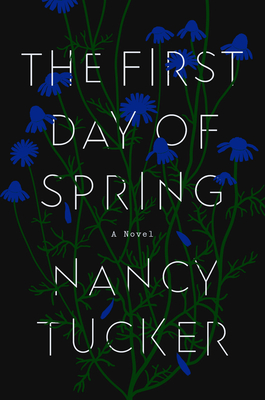
The First Day of Spring – Nancy Tucker

The opening line Nancy Tucker’s debut The First Day of Spring is a corker.

I killed a little boy today.

That’s eight-year-old Chrissie speaking. Yep – you heard that right; Chrissie is eight. She lives an impoverished life with her mother, but beyond being poor, her mother is emotionally distant and Chrissie is mostly left to fend for herself. Her clothes are never clean; she often wets the bed and there is never anything to eat at her house “even though the whole point of a kitchen was to have food in it.”

Chrissie survives because of free school dinners and by hanging around at her best friend Linda’s house at tea time, even though she is fairly certain Linda’s mother doesn’t really like her. In fact, no one seems to like Chrissie very much; she’s bossy, often kicks people who talk back to her, and brags and lies in equal measure.

After she kills the little boy, Chrissie has a “belly-fizzing feeling [like when she] remembered a delicious secret, like sherbet exploding in [her] guts.” Somehow the secret sustains her and provides opportunities for her to receive the attention she so desperately craves. Besides, Chrissie is fairly certain the little boy will come back from the dead: Jesus did and so does her father, who disappears and reappears at random intervals.

The novel also features an adult Chrissie, now going by the name Julia. She and her young daughter, Molly, live by a strict set of rules.

…back to the apartment at three forty-five, […] a snack at four, […] read the reading book at four-thirty, […] watched Blue Peter at five, […] had tea at five-thirty.

Julie’s life is structured because bad things happen “when [she] stopped concentrating.”

Julia has already had to move and change her name once because people are not kind when they find out who she is and what she has done. When she starts getting phone calls, she thinks her life is going to be upended again. And when Molly accidentally breaks her wrist, Julia is sure that the authorities are going to take her daughter away from her. That sends her on a journey back into her past.

The First Day of Spring is suspenseful, heart-breaking and hopeful, and I highly recommend it.