Kept in the Dark – Penny Hancock

keptinthedarkI read Penny Hancock’s debut novel Kept in the Dark in one breathless gulp. I absolutely couldn’t put it down. I love it when that happens.

Sonia lives in a house next to the Thames. Her husband, Greg, is a lecturing neurosurgeon; her daughter, Kit, is a student at university and Sonia herself is a vocal coach. From the outside looking in, it would appear that Sonia has it all. It’s pretty obvious, though, that Sonia isn’t entirely sane. When the nephew of a friend drops by to pick up an album, Sonia plies him with wine, then drugs him and locks him upstairs in the sound proof music studio.

Jez is just fifteen. He’s in London visiting his Aunt Helen and Uncle Mick and applying to colleges. His mother, Maria, lives in Paris. Sonia is taken with Jez immediately.

His dark fringe has fallen across one eye. He flicks I back, and looks at me from under long, perfectly formed black eyebrows. I notice his sinuous neck with its smooth Adam’s apple. There’s a triangular dip where his throat descends towards his sternum. His skin has a sheen on it that I’d like to touch. He’s of adult proportions yet everything about him is glossy and new.

The novel’s first person narrative is so creepy and claustrophobic.  We get to watch as Sonia justifies her behavior and work through the endless complications of keeping a fifteen-year-old boy captive. First of all, what happens when her husband arrives home from his business trip? What will she do when her daughter and her boyfriend come home from university. And then there’s Seb. He’s clearly someone from her past and Jez obviously reminds her of him, but who is he? Sonia says he was “the most beautiful creature that ever walked upon the earth.” Hancock seamlessly weaves Sonia’s present with her past and the mystery of Seb is equally as compelling as Jez’s fate.

There is a second narrator: Helen. Jez’s aunt is a bit of a mess in her own way. Jez’s disappearance while under her care has thrown Helen’s life into turmoil. When her sister arrives from Paris and the police get involved, Helen feels more like a suspect than a relative.

This book was so good. S.J. Watson, author of Before I Go to Sleep, sang its praises and I have to say I agree with Mr. Watson. Sonia’s midlife crisis – a rather strained relationship with her daughter; a sexless marriage; a difficult mother; and the house she grew up in that she vows never to leave despite the fact that her husband wants to sell and move to Geneva all seem to be conspiring against her. But none of it is convoluted or silly. The plot unravels like a dream that is both terrifying and strangely erotic.

Highly recommended.
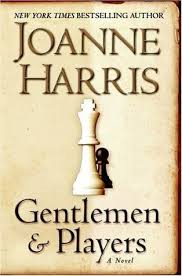
Gentlemen & Players – Joanne Harris

gentlemenGentlemen & Players is an intricate mystery by Joanne Harris, an author probably best known for her best-selling novel, Chocolat. Before she made it big in the publishing world, Harris was a school teacher which probably came in handy while writing this story of a public (in Britain this is the equivalent of our private, thus you pay a tuition)  school in England. For readers unfamiliar with the British school system, the story will likely seem extra exotic. I grew up reading Enid Blyton books and dreaming about going to boarding school in the UK, so I was all over the notion of the tuck shop (the place to buy sweets) and copious gallons of tea consumed by the teachers.

The novel gets its name from cricket, another very British enterprise. A first class cricket match pitting a team of amateurs (the Gentlemen) against the professionals (the Players) is a throw back to the class system in the 19th and 20th centuries. The Players were the working class guys and the Gentlemen from the middle and upper classes.

Harris’s novel has two narratives taking place over two different time periods. In one we follow Roy Straitley, a Classics teacher at St. Oswald’s Grammar School. He’s been in the business for over three decades and is soon to be turning 65. (I was relieved to see that Mr. Straitley still enjoys teaching since I’ll be at least that old before I will be able to afford to retire.) Straitley has dedicated his adult  life to teaching at the school and prides himself on his ability to control his class and remember all the boys he’s taught over the years.

In the other narrative, an unnamed narrator watches St Oswald’s from the gatehouse where they live with their father, the school’s porter (aka custodian).

I understood at once that they were a different race to myself; gilded not only by sunlight and their proximity to that lovely building but by something less tangible; a slick of assurance; a mysterious shine.

Later, of course, I saw it as it really was. The genteel decay behind the graceful lines. The rot.

Fifteen years later, the narrator shows up at St. Oswald’s with forged credentials and begins to teach and all hell breaks loose. At first the pranks are minor, missing registers and pens, but before long things get serious and lives are ruined and lost.

Gentlemen & Players was an easy read (despite all the wacky names I had to keep straight). Does it have something to say about the haves and the have-nots? Not really, since the second narrator just seems jealous and, quite frankly, crazy. Will I be thinking about these characters in a week? Not likely. Was I shocked by the surprise? No, I figured it out. Careful readers will. Still, I passed a pleasant few hours reading the book and if you like suspense thrillers, this is well-written (except for the over-the-top use of semi-colons!) and fun – if you don’t think too long on all the novel’s implausibilities.

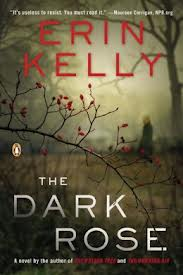
The Dark Rose – Erin Kelly

darkroseSO ANNOYED! I had an awesome review of this book written and when I posted it all that posted was what is below between the **…and I am tired and never going to be able to recreate what I had written and I could SCREAM.

So, briefly:

39-year-old Louisa and 19-year-old Paul are both working on the restoration of a ruined Elizabethan garden in Kelstice, a small town northwest of London. She’s hiding out – as she has done for the past twenty years or so – because she’s still obsessed with the guy she was in love with when she was 18. Paul’s hiding out because his best friend, Daniel, will soon be on trial for murder and he’s the star witness for the prosecution.

Paul’s had a traumatic childhood. He lost his father in a rather traumatic and gory accident which he witnessed. Then he started to get picked on in school and Daniel became his saviour.  He’s really a decent guy who just made some stupid choices because of his loyalty to Daniel.

**It’s also impossible not to relate to Louisa – at least I could relate to her. She falls madly in love with Adam Glasslake, lead singer of the band Glasslake and the more distant and unattainable he is, the more she wants him. What 18-year-old hasn’t been on that roller coaster ride?

After they make love for the first time and after Adam falls asleep, Louisa

…inhaled the thick oily skin between his shoulder blades where he smelled most like himself. If you could distill and bottle the essence of a human being, if you could crush skin like petals , then she would do this with Adam Glasslake. The vetiver scent was faint now, but his neck still bore the visible traces of the oil he had anointed himself with earlier. It was a faint dark green. Below this, on his clavicle, she had marked him for herself, a vivid red circle, half kiss, half bite. She felt intensely female and powerful, like a witch.

Louisa and Adam’s relationship is rocky at best and ends badly and years later she still gives in to a ritual that requires liquor and a few tatty mementos.   The first time she sees Paul she is so overcome that she felt that “the strength of her longing had finally called him [Adam] into being, that she had conjured his spirit.” She is so overcome she “would have smashed through the glass walls of the greenhouse to get away from him.”

When Louisa and Adam’s separate but equally compelling lives intersect, things don’t turn out at all like you might expect. And I mean that in a good way. Kelly does an admirable job making both Louisa and Paul into characters that you actually kind of root for thus elevating The Dark Rose  from run-of-the-mill thriller to literary page-turner.

The Dark Rose is my first encounter with Erin Kelly, but I will certainly be reading more of her work.**

Blacklands – Belinda Bauer

blacklandsTwelve-year-old Steven Lamb, the protagonist of Belinda Bauer’s debut novel Blacklands, lives with his mother, Lettie, his grandmother and his little brother, Davey,  in a small English village called Shipcott.  Steven spends his time out on the moors digging holes. He’s looking for the body of his mother’s brother, Billy, who had been killed by pedophile and serial killer, Arnold Avery, eighteen years earlier.  Avery had never given up the location of Billy’s body (or that of two of the other children he’d killed) and Steven thinks if he can find the body, it might bring closure for his perpetually grim and unhappy grandmother and his own mother, who has had to live under the weight of the tragedy her whole life.

Everything in Steven’s young life is miserable. Not only is his home life unhappy (even though he loves his family), he only has one friend at school (and it’s a relationship of convenience more than anything) and he’s constantly bullied by the “hoodies,” three lads who make it their mission to pick on him in and out of school. Even the teachers don’t know him. So Steven is a relatively solitary kid whose only goal is to find Uncle Billy so that “everything would change. [His nan] would stop standing at the window waiting for an impossible boy to come home; she would start to notice him and Davey, and not just in a mean, spiteful way, but in ways that a grandmother should notice them – with love, and secrets, and fifty pence for sweets.”

But Blacklands isn’t just Steven’s story; it’s Arnold Avery’s story, too. He’s rotting away in prison and, trust me, time spent with him isn’t so we can know his story and empathize with him. He’s reprehensible –  a cunning deviant with a predilection for sexual torture and murder. He’s been a model prisoner because “model prisoners wanted to be rehabilitated, so Avery had signed up for countless classes, workshops and courses over the years.” It had all paid off, too, because two years earlier he’d been moved from a high-security prison to Longmoor Prison, a low-security facility.

So when he receives Steven Lamb’s first letter, a plea for help in finding Billy’s body, Avery begins to dream of escape.

Blacklands was the 2010 winner of the Crime Writers’ Association Gold Dagger Award for Crime Novel of the Year.  It works on multiple levels – as a story of what grief does to a person and how that legacy trickles down to poison all who come after, as a coming-of-age tale, and finally, as a can’t-turn-the-pages-fast-enough thrill-ride. Bauer manages the tricky shift between Steven and Avery with finesse and the whole story races, with only a couple minor missteps, towards an inevitable and  thrilling denouement.

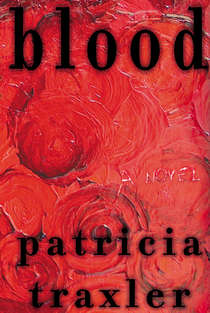
Blood – Patricia Traxler

BloodNorrie Blume, the protagonist of Patricia Traxler’s debut novel, Blood, is a thirty-five-year-old painter who has taken a leave of absence from her job as a graphic artist to focus on her art. To do that, she has accepted a Larkin fellowship at Radcliffe in Boston and has moved into one of the residences. It is there that she meets two other Larkin fellows, Clara, a journalist from Chile and Devi, a poet from London. Norrie doesn’t make friends easily and she is used to a certain degree of isolation – partly because of her vocation and partly because of her relationship with Michael Sullivan, a best-selling novelist who just happens to be married. It’s not like they can hang out in public. Nevertheless, she likes Devi immediately and sees all Clara’s character flaws just as quickly.

I have mixed feelings about Blood. Generally speaking, I liked it. The writing was decent and the story moved along. My problem had to do with a certain degree of uneveness.

Norrie tells the reader, “Though it’s true there’s a killing in my story, its principal violence is, I think I’d have to say, the violence of love.”

True enough: Norrie and Michael can’t keep their hands off each other and in one respect, Blood is a relatively explicit examination of infidelity. Of course, while  there’s no real honour in adultery, Michael does genuinely seem to love Norrie and wants a future with her. On the other hand, he can’t quite seem to get his shit together enough to leave his wife of 25 years. And why should he when he can have his cake and eat it, too.

Much of Blood is given over to the push/pull of Norrie’s top-secret relationship with Michael (no one, not even her best friend Liz, knows about him even though they’ve been together for two years.) And that might have been quite enough for one novel, but Traxler also delves into the mysterious world of female relationships and that’s where Clara and Devi come in.

Clara is clearly passive-aggressive and Norrie alternates between feeling sorry for and irritated by her. When she meets Devi, however, her feelings are immediately of the warm and fuzzy variety. This strangely dysfunctional threesome makes up the other third of the novel’s narrative. It’s also what, apparently, drives the book’s suspense – not to say that I didn’t turn the pages, but towards the end it did get a little, um, silly.

Not content with all those relationships, Traxler also dips a brush into the whole world of creativity. Traxler herself is an award-winning poet and so she likely knows a thing or two about the creative process, I’m just not sure that as it was written here is added any value to this story.

I guess that’s why when I came to the end of Blood I couldn’t really say I loved the book. I might have liked it a whole lot better if it had been about just Norrie and Michael, or just Norrie and Clara and Devi or even just about Norrie and her struggles to create art. As it was, the canvas was just a little too crowded for me.

The Doctor’s Wife – Elizabeth Brundage

thedoctorswife_325Interesting timing. I finished Elizabeth Brundage’s novel The Doctor’s Wife just a couple days before Dr. Henry Morgentaler passed away at the ripe old age of 90.  What do a novel and a  doctor who changed the laws regarding abortion in Canada have to do with each other? Well, it’s the polarizing subject of abortion which is at the centre of Brundage’s over-written and  uneven novel.

Annie and Michael Knowles live in upstate New York. Michael is an obstetrician who practices in Albany. Annie is a journalist who teaches at the local college. When the novel opens, it is clear that their marriage is rocky: Michael is a workaholic; Annie is dissatisfied with her role as mother and the doctor’s wife.

Then there’s Lydia and Simon Haas. Simon was a renowned artist, but now he’s a bit washed up and he teaches at the same college as Annie. His wife, Lydia, is much younger and clearly unstable. She’s also found Jesus and is hanging out with a bunch of bible thumping right wing conservatives.

When Lydia discovers that Simon and Annie are having an affair and her church friends decide that Michael’s new role at the local abortion clinic is worthy of punishment, The Doctor’s Wife propels the reader into page-turner territory.  But it’s a weird mash-up of social commentary and scorned-wife-gone-wild.

None of the characters in this novel are particularly likeable. Usually when people enter into an extramarital affair it’s sort of easy to choose a side. Simon might be sympathetic if you really had a better of understanding of his relationship with Lydia. Does he love her? Is he afraid of her? (If not, he should be!) Does he love Annie?

And Annie’s feelings for her husband are equally ambiguous. She is “no longer the college girl Michael had fallen in love with.” When she and Simon hook up at a faculty party it’s like they hop a fast-moving train that’s not able to stop until it either runs out of fuel or crashes. The fact that Simon is a bit of a doofus makes you question Annie’s sense.

I actually didn’t mind the affair part of the story. And Lydia was bat-shit crazy. Where the story really  veered off the believability path was how Lydia was involved with these crazy church people and how she had the cunning to plan and execute some of these outlandish crimes.

By the end of the book, the whole thing felt a little bit like a made-for-tv-movie. Which is too bad, as there was potential there at the beginning.


The Last Weekend – Blake Morrison

Henry Sutton wrote an interesting article for The Guardian about fiction’s most unreliable narrators but he neglected to include Ian from Blake images_list_co_uk_blake-morrison-the-last-weeken-chatto-and-windusB-LST072324Morrison’s entertaining novel The Last Weekend. Although it isn’t obvious in the beginning, Ian’s narrative soon starts to unravel as he and his wife, Em, spend a weekend with his college roommate, Ollie and Ollie’s partner, Daisy.

Ian is a primary school teacher and Em a social worker and their marriage seems solid enough, although perhaps slightly lacklustre compared to Ollie and Daisy’s relationship. Of course, as seen through a series of reminiscences, we come to understand that Ian’s relationship with Ollie has always been fraught with jealousy and a certain prickliness.

“I met Ollie in my second term at university,” Ian remembers. He admits that he was something of a loner, that  he “didn’t really have a circle – my circle was me.” Ollie, on the other hand, was hard to miss  with his “brooding intensity. ” He was, Ian admits, “smart, sporty, funny, handsome and popular – the antithesis of me.” And yet chance throws the two young men together and a strangely co-dependent relationship is forged.

It’s a lopsided relationship, a fact that Ian is only too willing point out.

The essential contrasts, all to our disadvantage, go: large Georgian house in west London vs small modern semi in Ilkeston; Range Rover and BMW vs Ford Fiesta; Mauritius (Florence, Antigua, etc.) vs Lanzarote (if we’re lucky); The Ivy vs Pizza Express; Royal Opera House vs local Odeon; Waitrose vs Morrisons; golden couple vs pair of ugly toads. I exaggerate but not much.

So, off Ian and Em go, on a hot summer weekend at the end of August to visit with Ollie and Daisy. And it’s weird from the very start. First of all, Ian had been expecting “posh” accommodations instead of a dwelling which is a “serious disappointment.”  Secondly, there is a strange undercurrent in the house. At first I suspected that Ollie wasn’t all Ian had described, but as it turns out much of what happens during that weekend is not quite as it seems.

“As to the events of August,” Ian says near the beginning of the novel, “I don’t suppose I’ll ever get over them. I’m the kind of guy who feels guilty even when he’s innocent…” It’s only after I finished reading The Last Weekend that these words revealed their menacing underbelly. And much of the novel is strangely creepy and also deeply funny. Once it is revealed that Ian is not to be trusted, The Last Weekend becomes a wonderful maze of a book.

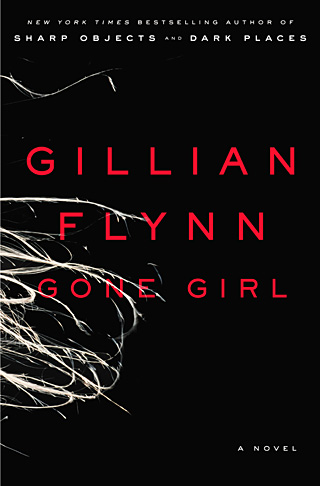
Gone Girl – Gillian Flynn

gonegirl

That I read Gone Girl so soon after finishing Dark Places is a tribute to Gillian Flynn’s talent. With so many books on my tbr shelf, I don’t generally read books by the same author back-to-back. Gone Girl had a few extra things going for it, though. Virtually everyone has been talking about it and I just couldn’t resist its lure any longer.

Nick Dunne and Amy Elliott Dunne are just about to celebrate their fifth wedding anniversary when Amy goes missing. There are signs of a struggle in their rented Missouri home and Nick can’t really account for his whereabouts that morning, so it doesn’t take too long for the police to start treating him like the prime suspect.

Flynn uses a dual narrative approach to tell the story of their courtship and life in New York where Nick was a magazine writer and Amy wrote quizzes for a variety of publications. Life was pretty good for them. They were beautiful, smart and rich. Well, Amy was rich because her parents – Rand and Mary Beth – had written a series of books called Amazing Amy which had, until recently, been a bit of a cash cow. Then Nick and Amy’s fortunes take a turn for the worse and suddenly they find themselves back in Nick’s hometown.

From the start we know that the golden lives of these two protagonists is slightly tarnished. On the morning of the anniversary, Nick’s reaction to his wife’s greeting of “Well, hello, handsome” is one of “bile and dread” inching up his throat. Then: Amy’s missing.

Gone Girl is a supremely entertaining game of cat and mouse. Their married lives had been marked with anniversary treasure hunts and this year is no different. Amy has left the first in a series of clues for her husband. The clues, and the letters which accompany them, seem to indicate Amy’s  awareness of her husband’s unhappiness and her own part in it. But Amy wants to patch things up. The treasure hunt also seems to point to Nick as the person responsible for Amy’s disappearance and slowly the media, Amy’s parents and even his twin sister, Go, start to regard him with suspicion.

But there is more to Gone Girl than a suspenseful mystery. There’s actually quite a damning indictment of the fakery of  relationships; the  potential for infidelity, boredom, entitlement. We want the fairy tale until we don’t. Marriage is hard work. Nick and Amy’s story is extreme, but recognizable nonetheless.

Flynn is a terrific writer. I mean – gifted. She inhabits Nick’s brain as easily as she inhabits Amy’s. They are sympathetic and reprehensible and downright scary in equal measure. To say much more about the plot would be to spoil the novel’s twists. Suffice to say, this is one married couple I wouldn’t be inviting over for dinner any time soon!

The Guardians – @andrewpyper

guardiansAndrew Pyper’s been on my literary radar for a few years now – ever since I read his first novel, Lost Girls. (This was well before I blogged, or even knew what blogging was, so I have no review. I do remember that I thought it was smart, well-written and creepy.) A couple years ago I read Pyper’s novel. The Trade Mission, a book I had some trouble with. Not because of the writing, more because I felt like I was in way over my head.  The Guardians was a much easier read, well, perhaps not easier, but more accessible.

Carl, Ben, Randy and Trevor, the novel’s narrator, grow up in Grimshaw, Ontario. It’s a one-horse town, a place they can’t wait to leave. They are solid friends and have been since they were kids. They play hockey for the Grimshaw Guardians, smoke up in Carl’s car before class and fantasize about Ms. Langham, their young and beautiful music teacher. On one level, The Guardians is about this friendship. But there’s more to this story than four boys making out with their girls and smoking dope.

Because there’s this house which just happens to be across the street from Ben’s house and as Trevor recalls: “it alone is waiting for us. Ready to see us stand on the presumed safety of weed-cracked sidewalk as we had as schoolchildren, daring each other to see who could look longest through its windows without blinking or running away.”

The Guardians opens with Ben’s suicide in the present. Trevor must return to his old stomping grounds to attend the funeral. He’s at a bit of a crossroads, Trevor. He’s recently been diagnosed with Parkinson’s and he’s a man of a certain age (40) and he’s feeling the full force of death’s lingering gaze. Pretty much the last place he wants to be is back in Grimshaw, where he’ll have no choice but to remember certain events from his youth that he has sworn a pact with his buddies to never talk about.

I hope Mr. Pyper will consider it a compliment when I say that The Guardians reminded me a little bit of Stephen King’s brilliant novel, It. I loved that book, not just because it scared the bejeesus out of me  (which, frankly, seems silly now given that the monster was a giant girl spider that lived in a cave) but because of the friendships between the characters – which King always handles so deftly. Pyper does a fine job, too, of giving us characters to care about even when they make bad decisions. And they do; they’re kids.

The house has a part to play, too. It’s long abandoned and creepy as hell and bad things happen there, both real and imagined. Their relationship with the house drives the narrative both in the past and now, present day.

The strength of the story, though, is that it taps into that very human feeling of helplessness, and frailty. Trevor’s feeling it as his body begins to betray him. There’s also this notion of “you can’t go home again.” I’m not a 40 year-old-man, but I understand perfectly that idea of returning to the place of your youth but no longer being young. Trevor feels it when he is reunited with Randy. “That’s what we see in each other’s eyes, what we silently share in the pause between recognition and brotherly embrace.”  Their youth is gone, but they are haunted by it nonetheless.

The Guardians is a sad tale, well told.


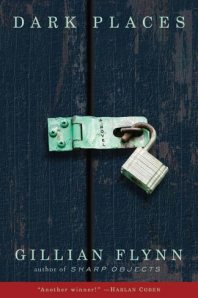
Dark Places – Gillian Flynn

dark-places-book-coverLibby Day is a survivor. She’s survived a drunken, dead-beat father, Runner,  extreme poverty, and the horrific massacre of her mother, Patty, and two older sisters, Michelle and Debby. Well, maybe to call her a survivor is a stretch because Libby is reclusive and mean. She says it herself at the beginning of Gillian Flynn’s terrific novel, Dark Places.

I have a meaness inside me, real as an organ. Slit me at my belly and it might slide out, meaty and dark, drop on the floor so you can stomp on it. It’s the Day blood. Something’s wrong with it. I was never a good little girl, and I got worse after the murders.

Ah, yes, the murders. For the past 24 years Libby’s older brother, Ben, has languised in prison for the crime. He was 15 when he is alledged to have killed his mother and younger sisters. Libby has never once visited him partly, perhaps, because it was her testimony that sent him there. She was seven at the time.

Now, at 30, Libby is alone, broke and desperate. That’s how she comes to accept The Kill Club’s offer. Lyle, one of the Kill Club’s members, reaches out to Libby and makes her a propostion. If she’s willing to come to a meeting and talk about the case, they’ll pay her $500. That original deal morphs into something more and suddenly Libby is revisiting the night that changed her life forever.

gillian-flynnGillian Flynn (right) is a new-to-me writer although everyone and their dog has likely heard about her by now due to her recent novel, Gone Girl. She started her writing career as a journalist and was the TV critic for Entertainment Weekly for a decade before turning her hand to fiction. Look at her: she’s beautiful. And scary. And it just occurred to me that her writing reminds me of one of my all-time favourite writers, Lisa Reardon. Her writing is fearless…and fear-inducing.

Dark Places unspools the Day murders in two ways: as Libby digs for the truth and as the events of the day unravel. For this, we spend time with Patty and Ben. Patty is a sympathetic character, a mom who loves her children and tries to care for them, but whose dwindling emotional and financial resources make it nearly impossible. Ben, on the other hand, is a fifteen-year-old boy in a house full of women. He’s desperately searching for a place to belong and an outlet for the anger which bubbles inside him.

Flynn skilfully weaves the threads of this story together offering the reader equal measures of horror and heartbreak.  I couldn’t put the book down – that’s just about the highest praise I can give a book.