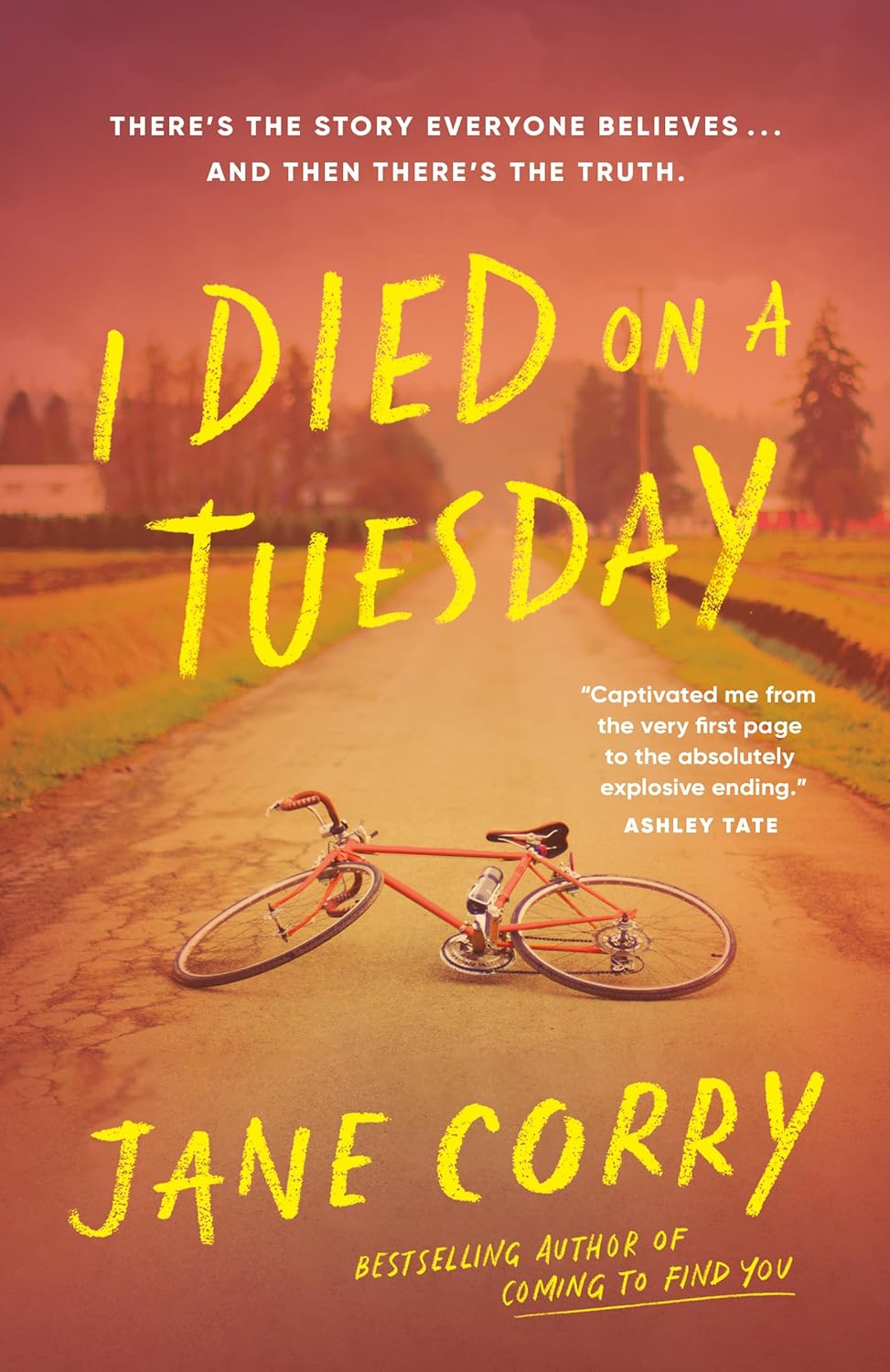
I Died on a Tuesday – Jane Corry

Janie White, 18, is just about to move to London to start a job in publishing when she is run down while biking home from the beach. “On the day I died, the sea was exceptionally flat,” she recalls. So, clearly not dead then. Twenty years later, an arrest is made in this horrific hit and run and the culprit appears to be pop sensation Robbie Manning. He surrenders without argument because “the past has finally caught up with him.”

Jane Corry’s novel I Died on a Tuesday is an overly long (465 pgs), overly complicated, not-very-well-written thriller. Besides these two narratives (well, Janie can’t speak anymore, but she can sing) we also hear from Vanessa, a widow who works at the local courthouse as a witness service volunteer, who comes into Janie and Robbie’s orbit through the trial.

Things might have been a little more palatable if Corry had focused on just one story, but everyone gets in on the action. For example, Vanessa’s marriage is harbouring a huge secret and her friend, Richard, a local judge (and whom she cleverly refers to as Judge) has a secret, and Janie’s mother went missing around the time she had her accident. But did she though? And Robbie’s rise to fame is suspicious. And all these threads, somehow – and mostly unbelievably – tie themselves into a neat little bow by the time we get to the end of the book. Some people might (and did) say that this book was full of twists. Honestly I just felt like yelling “squirrel” every time I turned the page.

None of these characters were remotely believable to me. None of their motives sufficiently explained their decisions. None of the dialogue felt real to me. It was all tell. I knew by about page 50 that I wasn’t going to like it, but I slogged through hoping that where the writing suffered, there might be a pay off in the plot. I will happily read a book with mediocre prose if the story is a banger.

Nothing to see here.

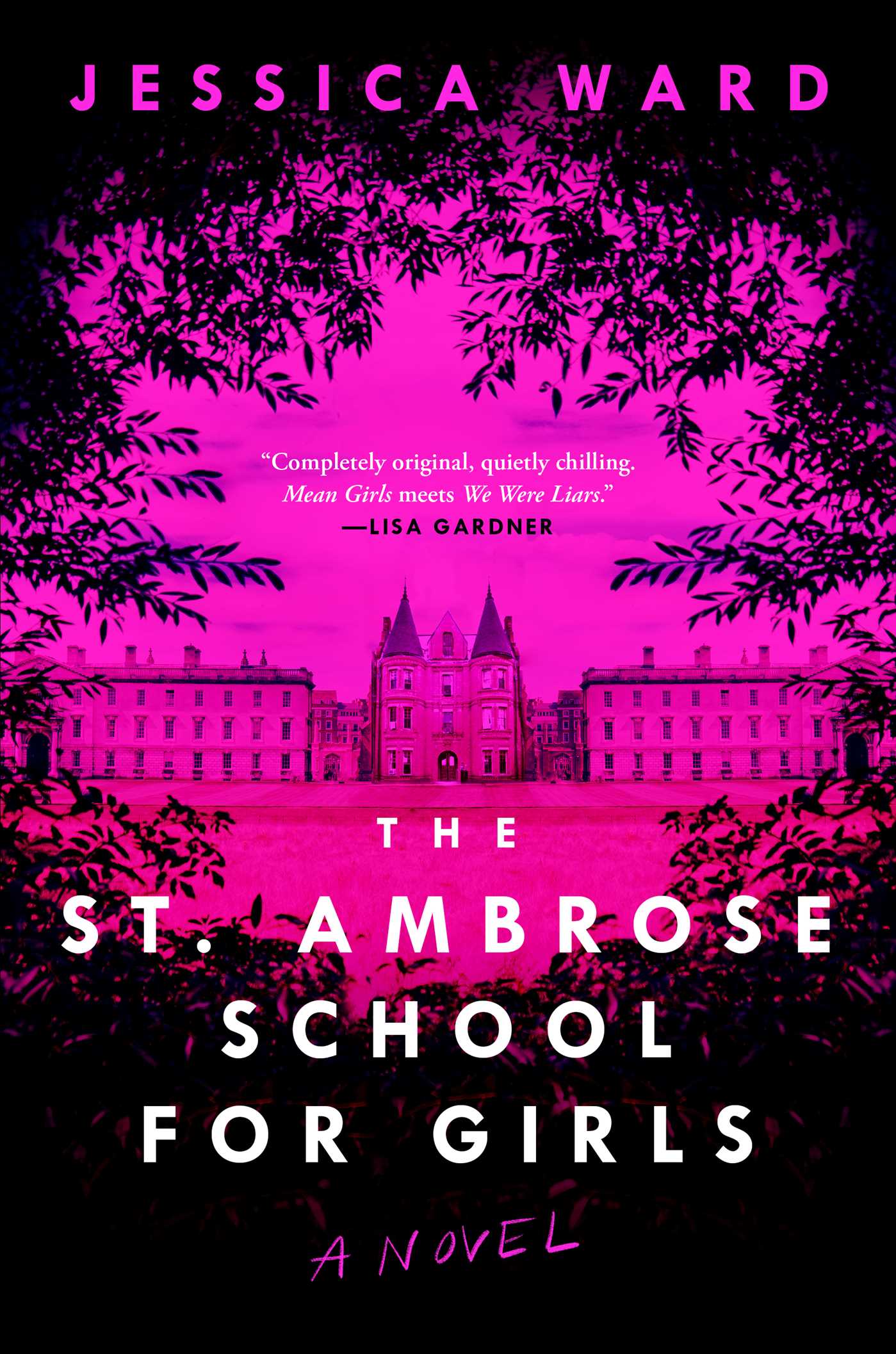
The St. Ambrose School For Girls – Jessica Ward

The St. Ambrose School for Girls by Jessica Ward (perhaps better known as J. R. Ward) has been compared to everything from The Secret History (laughable) to We Were Liars (um, okay maybe in the sense that like Candance, Sarah Taylor is an unreliable narrator). I think I bought the book because I liked the cover and I like dark academia. I still like the cover and I still like dark academia, but this book was…annoying.

Fifteen-year-old Sarah Taylor has won a scholarship to the prestigious St. Ambrose School in Massachusetts. There is NO WAY she’d have been able to attend without the scholarship. Her father is MIA and her mother is a lunch lady who trades in boyfriends as often as one might change their socks.

Sarah, who says she is going to tell people her name is ‘Bo’, but never actually does, is an odd duck.

Unlike the other girls I see walking around campus–who look like they’ve stepped out of the rainbow page of a United Colors of Benetton ad–I’m dressed in black and loose clothing. I’m also not wearing shoes, but lace-up boots with steel toes. My hair is dyed jet black, although my mouse-brown roots are starting to show already, a trail of mud at night.

Things don’t really start smoothly for Sarah. For starters, she finds herself in Greta Stanhope’s crosshairs from day one. When they meet, Sarah notes that Greta “somehow manages to smile wider and narrow her stare at the same time. It’s a cute trick. If you’re Cujo.”

Then the pranks start. They’re minor things, but they are upsetting to Sarah. Her roommate, the star athlete Ellen “Strots” Strotsberry, encourages Sarah to ignore Greta and her minions. “Just don’t give ’em what they’re looking for and they’ll get bored.” Easier said than done, but honestly, the pranks are so benign they’d be easy enough to ignore. And the fact that they make up three quarters of this book is frustrating because nothing happens until about the last fifty pages.

In fact, so much of nothing happens that I started to be distracted by Ward’s weird writing tick of starting multiple sentences with “As.” And when I say multiple, I mean it – sometimes as many as three or four on a single page and it drove me crazy!

The St. Ambrose School For Girls was a long book. The last fifty pages were marginally better, but the truth of the matter is that I didn’t care about any of these characters – even the so-called ‘mean girl’ wasn’t mean enough and the plot was neither “riveting” nor “twisty.”

Not for me.

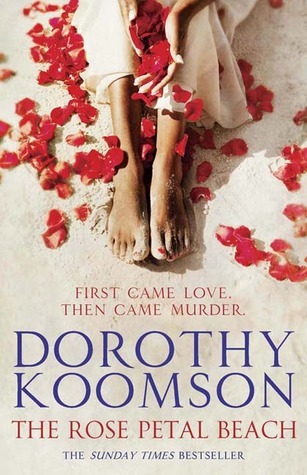
The Rose Petal Beach – Dorothy Koomson

I was a big fan of Dorothy Koomson’s novel The Ice Cream Girls, but The Rose Petal Beach? Not so much.

Told from multiple perspectives and bouncing from the present back to different points in the past, this is mainly the story of Tami and Scott, a married couple with two young daughters, who live in Brighton. Tami, who is Black, and Scott, who is white, have known each other since they were children. Scott is a Challey and “everyone knew the Challey family.”

Whenever Mum or Dad saw one of the Challeys in the street they’d talk about them quietly afterwards but not so quietly we didn’t hear. We knew they were people you crossed over the road to avoid. But you had to pretend that wasn’t why you crossed the road – they’d do you over if they thought you’d done that.

A chance encounter between Scott and Tami when they are eleven changes their lives. Tami tells Scott he can be whoever he wants — wise words from an eleven-year-old. Fast forward to present day and the couple are — at least from the outside — happily married and living the dream. Until the police arrive and arrest Scott. From that point on, Tami’s life spirals out of control.

The other two women in this story are Beatrix and Mirabelle, two women who live on the same street at the Challeys, and both of whom are friends with Tami. Mirabelle also works with Scott. Although Mirabelle isn’t one of the novel’s narrators, we do get to know quite a lot about her life. Later on in the story — and it’s a long one, clocking in at over 600 pages — we also meet Fleur.

The main problem with The Rose Petal Beach is that these people were ridiculous. The characterization was all over the place, especially with Scott. Is he a good guy? Is he an asshole? Is he a criminal? Well, yes and he can be all of those things in a single paragraph. The reveals seemed to come out of nowhere and felt less like legitimate twists and more like wtf?!

Although this novel is well reviewed – some even calling it a “masterpiece”, I found it kind of ridiculous. I know that we have to be willing to suspend disbelief a little bit when we read this kind of domestic thriller, but I at least want to care about the characters and I didn’t — not even a little bit.

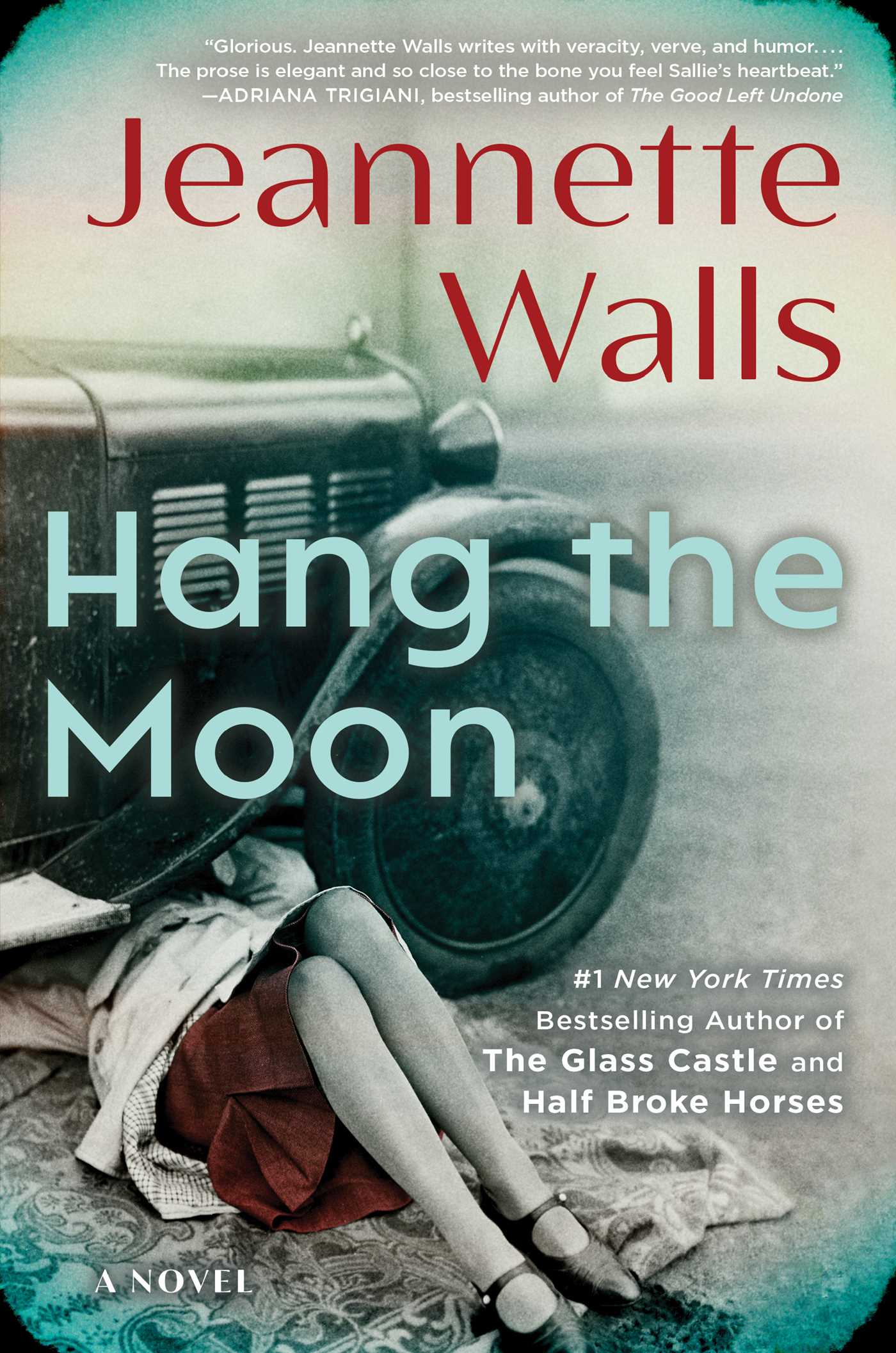
Hang the Moon – Jeannette Walls

I wouldn’t have read past page 10 if not for the fact that Hang the Moon was this month’s book club read. Although I read and enjoyed Jeannette Walls’ memoir The Glass Castle years ago, this is the only other book I have read by her and I certainly won’t be reading anything else. In fact, since this is a Heather’s Pick – it will be going back to the bookstore for a refund.

Sallie Kincaid is the daughter of Duke Kincaid, a larger-than-life figure in a small town in the 1920s. Sallie admires her father even though, as it turns out, he’s not really worthy of that admiration. When she is eight, she causes an accident that injures her step-bother Eddie and she is sent away to live with her Aunt Faye. When she returns to the Big House, she is 17. Do we really know what happens during that time? How she is molded by this experience? How it shapes her opinion of her father and the other members of her family? Nope.

Back at the Big House, Duke gives Sallie a job collecting the rents from all the farmers who live on his land. She’s really good at it…because she just is. She can drive a car, and shoot a gun, and also talk to people. Sallie says “it is a horrible job, grueling and dusty, grimy and greasy, thankless and endless. And I love it.” Sallie is determined to carve her own way in the world, and to win her much-adored (but undeserving) father’s approval.

Despite the accolades this book received – including a starred review from Kirkus – I thought this book was just awful. I didn’t believe any of the characters. It was an eye-rolling, over-the-top series of “shocking” deaths and familial reveals that just strained credulity.

Save your time and money.

In Pieces – Danielle Pearl

THIS REVIEW CONTAINS A LOT OF SWEARING. You’ve been warned.

Fucking nineteen-year-old Beth Caplan (also known as ‘kid’, ‘Bits’ and ‘Bea’) and fucking twenty-one-year old David March have known each other their whole motherfucking lives because David is fucking Sammy ‘Cap’ Caplan’s bestie. These fuckers are players, but fucking David has secretly fucking yearned for fucking Beth for fucking-ever. The feeling is fucking mutual. Back in high school when she was dating Brian fucking Falco, David told Cap he was interested in Beth, but that was never going to fucking fly because Cap knew exactly what kind of fucking fucker David was. A fist-fight ensued and that was the fucking end of that. Until it wasn’t. Because now Beth is at the same fucking college and David is tasked with looking out for her fucking ass – and it’s a fine ass, trust me. Beth/kid/Bits/Bea is fragile because of Brian fucking Falco, and when he shows up on some sports scholarship, and some other dude from her Abnormal Psychology class seemingly starts to stalk her, well, fucking David loses his fucking shit and before you can say “hot porn sex” these two are having, well, hot porn sex.

Yeah. That’s annoying, right?

I actually started highlighting how many times the characters in Danielle Pearl’s NA novel In Pieces said the word fuck. (And it’s not NA really because this isn’t about navigating that slippery period between being a teenager and an adult as much as it is about having sex.) It was a lot. I stopped counting at 500. So much swearing that it distracted from everything else that was going on. I read a previous novel by Pearl, In Ruins, and I had the same complaint. Too much swearing. And I say this as someone who enjoys a well-placed f-bomb. It was grating, distracting and it made these characters, particularly David, sound like idiots.

Other things make these characters sound way older than they chronologically are. For example, David says “I’m a single, red-blooded, relatively good-looking guy who’s never been in a relationship. Who’s never even considered one. Relationships are for guys who want marriage and a mortgage and a nine-to-five.” Um, not sure there are many 21-year-old dudes like that out there. Is this supposed to count as character development, a reminder of how Beth is changing him?

These two crazy kids consummate their relationship while intoxicated. Remember, David is supposed to have feelings for Beth. What does he say to her?

“Fuck, you feel amazing,” David rasps, his words resonating in every part of me – even the one place it really shouldn’t – and I silently scold my heart and demand it make itself scarce. “So fucking tight,” he marvels. “So wet. Goddamn, beautiful girl…”

There are no words. Although post coitus, Beth decides that David is the smooth talker of her dreams and that even if he doesn’t have feelings for her, she definitely enjoys seeing him naked because he’s hawt, perhaps they could have a friends with benefits sort of arrangement.

After all sorts of stoo-pid miscommunications and other contrived plot twists, these star-crossed lovers end up together because of course they do. They’re a match made in fucking heaven.

Yuck.

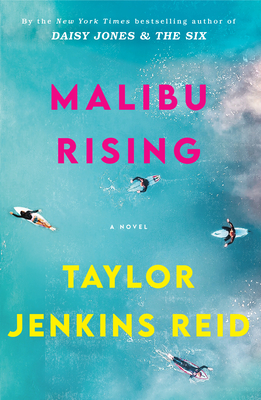
Malibu Rising – Taylor Jenkins Reid

Oh dear.

I loved Daisy Jones and the Six. Loved loved it. I was convinced that Taylor Jenkins Reid and I were going to be book besties. Then I bought One True Loves. Okay, I thought, well that was one of her earlier titles – a book she wrote way before the juggernaut success of Daisy Jones. Malibu Rising came after Daisy Jones and so it was bound to offer up the same sort of fast-paced, character-driven narrative right?

Right?

The Riva siblings, Nina, Jay, Hud and Kit, come from Hollywood royalty. Their father is Mick Riva – who makes an appearance in Daisy Jones – a superstar musician. He’s also a philandering dead-beat, who leaves his wife, June, when she is pregnant for Kit. I mean, I guess he’s charming in the beginning, which is why June – a young girl who works at her parent’s Malibu take-out falls for him. But his pretty promises don’t amount to much and June turns to alcohol to numb the pain.

It’s Nina, the eldest Riva child, who steps in when her mother can no longer keep it together. It’s because of her that her younger siblings are successful. Then, someone sees her surfing and she’s so beautiful she gets some sort of contract and suddenly she’s everyone’s poster-girl. That’s how she ends up married to tennis pro Brandon Randall. One year later, she’s been dumped.

The action of Malibu Rising takes place over the course of one day – the biggest day of the year: the Riva’s annual party. If you know where it is, you’re invited. But simmering beneath all the party excitement are all these secrets and resentments and lost dreams, and you best be sure those things are all going to come to the surface and burn that fucker to the ground. Literally and figuratively because as metaphors go, the fire in this book is not subtle.

Through flashbacks, Reid unspools June and Mick’s romance and marriage and Mick’s rise to fame. We watch June’s disintegration when Mick leaves her, her renewed hope when he returns. Then, of course, he leaves her again. We learn about the children, their unbreakable bond, their surfing prowess (because that’s what you do at Malibu, you surf, right?) We learn about Nina’s struggle to keep it together, the sacrifices she makes. Her quick-fire romance. Her separation. All of this in an effort to help us understand – I dunno – the familial bonds that nothing can break?

This book is long. Like almost 400 pages long. And I didn’t give a hoot about a single character. Early on, when it was June and Mick’s story I was, like, okay. This isn’t what I thought it was going to be, but it’s readable. But like with One True Loves, Malibu Rising is all tell. And all the tell is supposed to get us to the big, I dunno, party? So that when it all comes to a head we’re going to actually care. Yeah, no.

Suddenly we’re introduced to all these new characters, who have had sweet FA to do with the Riva story: best friends out of the wood work, actors (some made up, some real names air dropped in) who show up for colour, I guess. The woman Brandon ran off with, Carrie Soto (who is apparently getting a book of her own), makes a crazy appearance on the Riva lawn, someone who might be a sibling arrives, there’s models and producers and the people who work at the family diner. It’s chaos. Cocaine is passed around like hor d’oeuvres, gun shots are fired, plates are being thrown like frisbees and people are literally swinging on chandeliers.

And what are the Riva children doing? Why, they’re down on the beach with Papa Riva, whom they haven’t seen or heard from in years, having a “come to Jesus” share session.

It’s, frankly, ridiculous.

I would say thus ends my short-lived love affair with Reid, but apparently The Seven Husbands of Evelyn Hugo is worth the read, so I may bite the bullet and give it a go.

This book, however, was a colossal waste of my precious reading time.

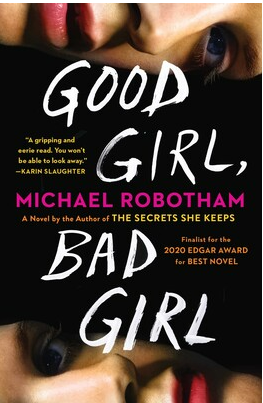
Good Girl, Bad Girl – Michael Robotham

I was expecting great things from Michael Robotham’s novel Good Girl, Bad Girl, which was a 2020 finalist for the Edgar, and named Best Thriller of the Year by both Kirkus and Publishers Weekly.

Cyrus Haven is a psychologist who has been called in to determine whether or not Evie Cormac should be allowed to leave the secure children’s home where she has been living ever since she was discovered hiding in a secret room in a house where a rotting corpse is found six years previous. Very little is known about Evie – not her real name or her exact age or what happened to her because she either can’t remember or she isn’t willing to disclose the information. It’s Haven’s job to figure out whether Evie is a danger to herself or society.

As if that wouldn’t keep Haven busy enough, when the body of a teenage girl is discovered on a footpath by a woman walking her dog, his help is needed to determine who is potentially withholding info. The lead detective on the case, Lenny Parvel, is important to Haven because she was “the first police officer on the scene when [his] parents and sisters were murdered.” So, yeah, Haven has some issues of his own.

So, as he works this case and tries to get to the bottom of Evie’s trauma and shove his own PTSD to the back, you can imagine – it all gets to be a little complicated. Is Haven up to the task? Well, it would appear so. Things get even more convoluted when Evie is released and goes to live with Haven. I can’t imagine that that is a thing that could ever really happen, but it does.

My problem with Good Girl, Bad Girl is that I felt like I never really understood these characters. For example, we never do learn who Evie is or why she was hiding in a secret room, or who the dead guy was beyond his name. That’s apparently going to be revealed in the novel’s sequel When She Was Good, which I won’t be reading. Haven’s own family tragedy is also never really explored. It’s a horrific crime, perpetrated by Haven’s older brother, who is now in a facility for the criminally insane. And although we do discover what happens to Jodie Sheehan, the girl found on the footpath, it’s not that thrilling of a mystery. Evie inserts herself into the investigation in a wholly unrealistic way, too. I kinda got the feeling that Haven was a crap psychologist – which is sort of awkward because I think we’re supposed to be rooting for him. And Evie. And I just didn’t care about wither of them. Maybe if the book had focused on just one of these stories and dedicated its energy in making these characters into flesh and blood people things might have turned out differently, but when Evie turns out to be a card shark, wins thousands of pounds at a game she happens to know about, then gets robbed and ends up in the trunk of a car – well, how much are we supposed to believe can happen to one person and not have them be a raving lunatic?

It was a miss for me.

The Hypnotist – Lars Keplar

I am going to take a little break from reading translations now. I know some people don’t mind them, but it’s the rare translation that doesn’t irk me. Lars Keplar’s well-reviewed suspense thriller The Hypnotist was another translated miss for me.

Detective Joona Linna is on the hunt for a serial killer after a family is discovered in their home stabbed to death. Well, the father was killed elsewhere, the oldest sister is missing, and the son – although suffering from major injuries – has survived, but is in a coma. Linna figures that time is of the essence because what if the killer is after the sister? He needs whatever information the survivor, Josef, can provide. Who you gonna call?

That would be Erik Maria Bark, disgraced hypnotherapist. He’s got all sorts of professional and personal baggage, but he’s absolutely the dude you want to call if you want to reach someone unreachable. Apparently. He takes some convincing, though, because he has sworn off practicing hypnosis.

Okay – so I was relatively invested in the beginning. Gruesome murder. Conflicted doctor. Whodunnit. You know, all the things. But then the translation started to irritate me, mostly the dialogue which always seems clunky and inauthentic to me. I sorta feel like once something’s been translated into English, a native English speaker needs to have a pass at it to smooth out the rough edges or something. Or maybe that’s what has happened. In any case, when there’s a lot of dialogue it just rips me out of the story because I keep think, people don’t speak this way.

Listen to this exchange between Linna and a witness. (And it’s not even a good example.)

After a while a man appears with a towel wound around his hips. His skin looks as if it’s burning; he’s leathery and very tanned. “Hi. I was on the sun bed.”

Nice,” says Joona.

“No, it isn’t,” Tobias Franzen replies. “There’s an enzyme missing from my liver. I have to spend two hours a day on that thing.”

“That’s quite another matter, of course,” Joona says dryly.

“You wanted to ask me something.”

“I want to know if you saw or heard anything unusual in the early morning of Saturday, December twelfth.”

Tobias scratches his chest. His fingernails leave white marks on his sunburned skin.

“Let me think, last Friday night. I’m sorry, but I can’t really remember anything in particular.

OK, thank you very much, that’s all,” says Joona, inclining his head.

Yep. That’s your crack detective, right there. No wonder it took 500 pages to solve this thing.

And then, the whole thing started to fall apart for me.

Josef goes missing. And then is rarely mentioned again. His sister is put into witness protection…and is rarely mentioned again. Then we get all this stuff about Erik Maria Bark’s past. (Yes, that’s how he’s referred to almost every time.) And his son, Benjamin, goes missing. And his wife’s ex-cop father gets involved. And all these previous hypnosis patients come into the mix. I just lost interest in the whole proceeding and I slogged through only because I was mildly interested in seeing how the whole thing played out.

Unsatisfactorily, I must say.

This is the beginning of a series featuring Detective Linna. I will not be reading any more.

Blind Kiss – Renee Carlino

blindOh dear. Renee Carlino is a USA Today bestselling author, whatever that means. It doesn’t mean much to me after reading Blind Kiss, which was an impulse buy for me and cringe-y on every level.

Penny is in her final year of college when she is railroaded into taking part in a psych experiment where she is blindfolded and made to kiss an absolute stranger.  This kiss made Penny feel as though she is going to “spontaneously combust” and that  even “If he was the ugliest guy in the world [she] would have still been attracted to him.” Of course, Gavin is not unattractive. “He was gorgeous, with warm green eyes and an angled jawline.”

Chemistry doesn’t lie and Penny and Gavin have chemistry up the ying yang, but Penny wants to focus on finishing her dance degree so she friend zones Gavin. Thus begins a ridiculous fourteen year “friendship” where Gavin dates a million other people and Penny marries the most boring dude on the planet. The best friends schtick is fooling no one, of course, but that doesn’t stop these two from denying their feelings over and over, and, quite frankly, acting like idiots for most of the book.

Look, I am all over a book where a couple – for whatever reasons including misplaced honour, or bad timing  – can’t seem to get their shit together. Serve me up a heaping helping of angst and I will fall to my knees, but Blind Kiss  didn’t have that.

These characters behave in ways that are wholly, well, frankly, ridiculous. For example, in the present, when Gavin tells Penny he’s moving to France she “screamed at the top of [her] lungs and then made a guttural sound as [she] hunched over and held [her] stomach.” They’re in a bar. She’s 35. I mean, is this the behaviour of a married mother of a teenager? It was at that point (page 6) that I felt like this story, which I felt might have promise – which is why I bought the book – went off the rails. Every interaction between Gavin and Penny is so over-the-top histrionic that it was hard to take any of it seriously.

Which I didn’t.

My Husband’s Wife – Jane Corry

By the time I got to page 100 of Jane Corry’s debut novel My Husband’s Wife, I felt like it myhusbandswifewas too late to abandon it even though I didn’t like any of the characters. I just don’t get why this book garnered so much praise. Geesh, Parade even compared it to Gone Girl

Lily is a brand new solicitor in London. She’s also newly married to Ed, an artist. Theirs was a whirlwind romance, and I am not joking. They married about two weeks after meeting. Lily has some dark secrets in her past, though, and she is hoping that this marriage will help her move on.

Her first professional job is to meet with Joe, a guy serving time for scalding his girlfriend to death. Yes, you heard that correct. Joe is an odd man, but Lily finds herself strangely attracted to him.

Then there’s Carla, a nine-year-old, who lives with her single mother. They are Italian, which is apparently cause for much ridicule…in London…in 2000. Carla is picked on mercilessly by the other kids, has no friends and is not even cared for by the teachers at her school. She is a strange child, no question. Her path crosses with Lily’s because they live in the same apartment complex. Soon Lily and Ed are looking after Carla when Carla’s mother is “working” (code for meeting her married lover).

One of the issues I had with My Husband’s Wife is that there is SO much going on. There’s Joe’s case. There’s Carla’s sad little life. There’s Lily’s precarious marriage to Ed. There’s her secret past.  And then the novel flashes forward twelve years.

Carla returns to London from Italy where she’s been living with her mother and grandparents. She is bent on revenge for some imagined slight. She reconnects with Lily and Ed; she thinks she is owed a great deal of money because of a painting Ed did of her as a child. Lily and Ed now have a son, Tom, but he has Asperger’s and is too difficult to handle, so they’ve shipped him off to live with Lily’s parents in Devon. Lily is now a well-respected lawyer because of what happened with Joe. Her marriage, however, is less successful. And she still has her dark secrets.

It’s not that I couldn’t keep up with all the plot’s machinations, it’s more like I just didn’t care about them and that has less to do with the plot points and more to do with the characters. Not a single one of these people were sympathetic (perhaps with the exception of Lily’s parents) or even all that believable.  I felt like I was being told a story, rather than experiencing events as they unfolded.

Just a huge disappointment…and yet I did finish it, so I guess that’s something. And I suspect I am in a very small minority of readers who didn’t like this book.