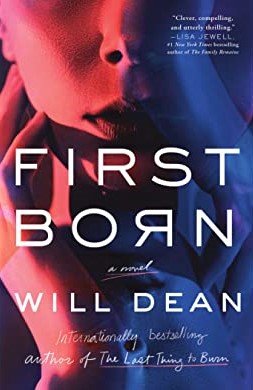
First Born – Will Dean

I discovered Will Dean on Twitter and a few months ago I nabbed a copy of his well-reviewed novel The Last Thing to Burn, which I thoroughly enjoyed. I recently picked up First Born and although I read it in just a couple of sittings, I didn’t enjoy it nearly as much.

First Born is the story of 22-year-old identical twins Molly and Katie “KT” Raven. Molly tells us “I don’t use the term identical twin because it’s a blatant lie. A travesty. Our base DNA is identical, sure, but that’s about all that is. We were once one person. We are not anymore.”

When the novel opens, Molly is working in an office in London, while KT is studying in New York City. KT is the risk taker; Molly spends her time assessing threats and preparing for the worst. Molly sees danger everywhere and she is always prepared, even going to far as to making homemade weapons out of pound coins and a sock.

The twins’ parents have been visiting KT in New York and when Molly arrives, they spend their time eating toast and drinking tea and waiting for the police to give them information about just what happened to KT. There’s very little to go on, and Molly feels that it is her duty to help the investigation along. She tracks down KT’s best friend, boyfriend, investigates the creepy son of the landlord and uncovers some things about her sister she did not know.

First Born does offer a couple of excellent twists, and Molly’s voice is definitely singular. The action clips along, for sure. For me, though, it wasn’t believable and I wasn’t sure I understood character motivations at all. By about a third of the way in the prose started to grate a little bit and there was something sort of ‘lazy’ about it. Like, suddenly a character has a gun which she pulled out of nowhere, but we’re told she’d purchased before. That sort of thing. The shenanigans were all a bit over-the-top.

Still – if that sort of thing doesn’t irk you, you’ll probably have a lot of fun reading this book – if you are willing to suspend disbelief and don’t mind the crazy.
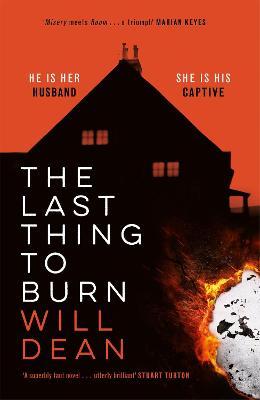
The Last Thing to Burn – Will Dean

Coming on the heels of a really disappointing read, made Will Dean’s novel The Last Thing to Burn extra terrific. I probably would have felt that way about it no matter when I read it though. I discovered this book via Twitter, which is the same way I came across Chris Whitaker’s amazing novel We Begin at the End. Twitter, keep up the good work.

The Last Thing to Burn opens with our first-person narrator hobbling across a field, her “right ankle the size of a fist.” Her voice is so distinct and her anxiety so palpable that I was immediately sucked into the story. It is only when a Land Rover appears on the track and the man driving comes for her, that we realize this person is a captive.

He holds me with no force. His power is absolute. He needs no violence at this moment because he controls everything the eye can see. I can feel his forearm at the back of my knees and he’s holding it there as gently as a concert violinist might hold a bow.

His name is Lenn. Her name is Jane. Except that’s not her name. She’d come to England from Vietnam with her younger sister, Kim-Ly. They’d been told there would be jobs waiting for them and that they’d be earning enough money to send home. First, though, they would have to pay back the people who’d arranged for their travel. This debt is endless. At first, Jane and Kim-Ly work on a farm where they are fed and have one day off. Then, Jane is sold to Lenn and Kim-Ly is sent off. That was seven years ago.

Jane’s life is one of captivity. There are cameras everywhere in the little farmhouse she shares with Lenn. Every day when Lenn comes back from tending to the fields, he watches the tapes. Her responsibilities are to keep the house just as his mother, also called Jane, did and to cook his meals, the same rotation every week, exactly as his mother did. She wears his mother’s old clothes, uses her cloth sanitary napkins. One week a month, Jane is allowed to sleep in the back bedroom. Three weeks a month,

I lie on the bed and pull the thin cotton sheet over myself. I adjust it so the sheet’s covering me from the navel and higher. This is, in some ways, the worst of it. The waiting. because it drives the truth home like a hammer would drive a nail through a plank of rotten wood.

When Jane misbehaves, Lenn throws one of her precious belongings into the fire. All these years later, all that remains are her ID with her true name on it, letters from her sister (who is working in a Manchester), a picture of her parents and a copy of Of Mice and Men.

The Last Thing to Burn is really one of those books that you read with your heart in your throat. I flew through it in two sittings because I had to know what was going to happen. Jane is an unforgettable character, but so is Lenn. He’s clearly a monster, a psychopath, and “even though he’s not a violent man, not usually, […] he’ll take what he wants in his own horrifically gentle way.” Dean wisely avoids being too graphic, but it won’t matter, the implied is enough.

Although the ending was a teensy bit abrupt, The Last Thing to Burn is a solid, well-written, propulsive page turner, and I doubt you’ll soon forget Jane.

Highly recommended.

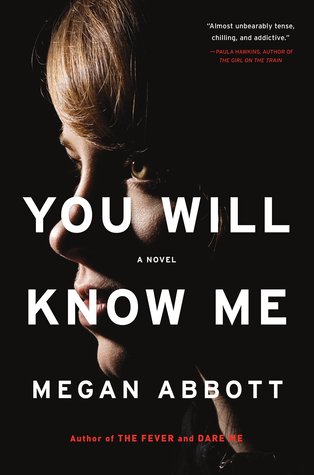
You Will Know Me – Megan Abbott

Eric and Katie Knox know their daughter is special and so they spend all their energy on helping her achieve her (their) dreams of Olympic gold. That’s the premise of Megan Abbott’s 2016 novel You Will Know Me. This is my third novel by Abbott (Dare Me, The End of Everything), but I can’t say that I liked it all that much, although it was on everyone’s Best Book list when it was published.

There is nothing Devon’s parent’s won’t do for her: get a second mortgage on their house, rack up debt on their credit cards, neglect her younger brother Drew. All of this and more in an effort to fulfill Devon’s gymnastic promise.

Just after her tenth birthday, Devon’s coach, Coach T, shows her parents “The Track, which lays out the next few years of Devon’s life on her way to the Olympics. But, as Coach T tells the Knoxes, “It takes a family to make this happen. And it takes action. Devon needs to be here at least thirty hours a week, maybe more.”

The whole trajectory is remarkable since a childhood accident had left Devon with two missing toes, her foot now referred to affectionately as the Frankenfoot. Devon is as determined as her parents, though, and nothing stands in her way. That’s not something I can relate to, really. Neither of my children were ever involved in competitive sports. The closest I ever came was my daughter’s commitment to ballet; she danced 12 hours a week, sometimes more and perhaps at one time thought about pursuing it more seriously. I do understand that desire to support a child’s dreams; however, these parents are single-minded.

When someone with ties to the gym is killed, Katie’s world starts to implode. She discovers that the people closest to her have been keeping secrets and she understands that her capacity to prevent anyone from getting in Devon’s way is full-on mama bear. So, I guess, You Will Know Me is meant to be, among other things, a thriller. Except – not so much with the thrilling.

I just didn’t like or care about any of these people. Everyone just seems so single-minded and shrill and, frankly, Eric and Katie are bad parents. Poor little Drew. He’s an after thought at all times.

Just meh for me.

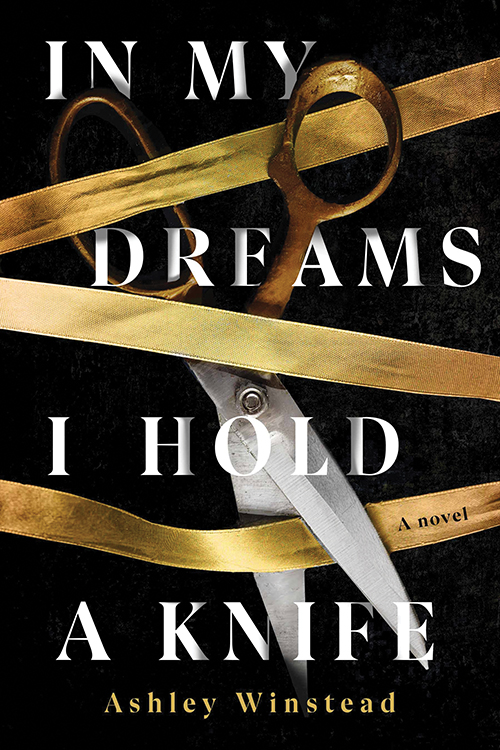
In My Dreams I Hold a Knife – Ashley Winstead

There seems to be a lot of novels out there about college reunions these days. Must be a millennial thing. I was excited to read Ashley Winstead’s debut In My Dreams I Hold a Knife because I love the title and that cover. Sadly, I am ambivalent about the book as a whole. I am not going to say I didn’t like it because I was wholly invested for the first third and still hanging in there for the second, but by the last third I was just….nope.

Jessica Miller is headed back to Duquette University to attend her ten-year class reunion. She is keen to show her former gang, collectively known as the East House Seven, that she has made it.

I wanted them to see perfection. I ached for it in the deep, dark core of me: to be so good I left other people in the dust.

The East Coast Seven are “the people responsible for the best days of [Jessica’s] life, and the worst.” She’d met them all early in freshman year, and they’d bonded instantly. There’s Jack (“an eighteen-year-old Mr. Rogers”), Heather ( “the confident blonde”), Coop (hot in a “one-time, get-the-bad-boy-out-of-your-system kind of way”), Mint (“the most beautiful boy” Jess had ever seen) , Frankie (“tall and broad…in a way that screamed athlete”), and Caro (“small and olive-skinned and pretty”).

Fast-forward a decade though and she’s really only speaking to Caro, her bestie, and Jack. Going back to Duquette means seeing Mint (her boyfriend through college) and Coop (the boy she actually loved) again. One is married to another girl, and one is engaged to Caro. As if this drama isn’t enough, this reunion has the potential to stir up the unsolved murder of Heather, who was savagely stabbed to death senior year.

So – there are lots of things I did like about this book. First of all, I am all about angst and the relationship between Jessica and Coop has that in spades. Although I am long past my university days, I do enjoy books set on college campuses. Heather’s unsolved murder has lots of potential for red herrings and such and, of course, who doesn’t love a story where people are reunited after a trauma? I also thought the writing was quite good – no quibbles with that.

The novel flips back and forth between then and now. We get glimpses of the East House Seven at various points during the four years of college, but mostly through Jess’s eyes. Towards the end, we do see certain events from the 3rd person perspective of some of the other characters. These sections felt mostly expository because they were things Jess couldn’t possibly have known, but the reader had to be told in order for the narrative to make sense.

I was wholly invested at the start. It started to unravel, though, when Eric Shelby, Heather’s younger brother, confronts the group at the reunion. He’s determined to reveal who is responsible for his sister’s death – something the police hadn’t been able to do. As each character is accused and their closely-held secrets start spilling out, the book started to lose momentum for me. I think part of the issue might have been that Winstead just tried to cram way too much into the book, and none of these “secrets” had any room to breathe. Part of the problem might have been the first person narration. It’s limiting because we only know that character’s perspective and of course, in a book like this, you have to wonder how reliable the narrator actually is. The denouement just felt sort of ridiculous – lots of shouting, and running.

All of that said, though, I would 100% read something else by Winstead. Despite the fact that In My Dreams I Hold a Knife didn’t quite work for me, it was brimming with potential and I suspect that her next offering will be awesome.

The Perfect Liar – Thomas Christopher Greene

Max W. and Susannah meet at a fancy art party in New York City. They are drawn to each other almost immediately and soon after, they are married. Now they live in Vermont where Max has taken a job as a lecturer at a small liberal arts college. One morning, while Max is away giving a lecture at an art institute in Chicago, Susannah discovers a note pinned to their front door:

I KNOW WHO YOU ARE.

Thomas Christopher Green’s (The Headmaster’s Wife, Envious Moon) The Perfect Liar is the perfect book for a rainy afternoon because you can read it pretty much in one sitting. It won’t take you long to realize that you are dealing with a couple of unreliable narrators – my favourite kind of narrator – and that’s what makes this book so much fun.

Max has reinvented himself from runaway/vagabond – to artist – to viral TedTalk phenom. He’s pretty forthcoming about the details of his life and he also knows that “he had the gift to read people. He imagined he could often tell what they desired even before he knew it themselves.” He knows how to hold a room, so he’s soon a sought after speaker at art institutes and corporate functions.

Susannah was widowed young and is the mother of one son, Freddy, now sixteen. Her former husband was her therapist first and despite the obvious conflict of interest, she continued to see him professionally even after they were married. Joseph was twenty years older than her with a “voice calming like a metronome. Susannah loved his voice and she loved how he used words. She couldn’t get enough of his voice. Just the sound of it was enough for her to feel at ease, to stop being aware of her heart.”

Susannah suffers from extreme panic attacks and anxiety, and being in Vermont seems to be helping – until she finds the first note. Then this perfect life she seems to have found starts to unravel. And Max, too, seems unsettled by the note…and the notes that follow.

Greene does a great job of moving the narrative along and giving you lots of opportunities to shift allegiances. I’m not sure I would go so far as to say that either Max or Susannah are particularly sympathetic, but that doesn’t really matter at the end of the day. I don’t want to spoil any of the novel’s several surprises, so I’ll just say The Perfect Liar is the perfect book for your beach bag.

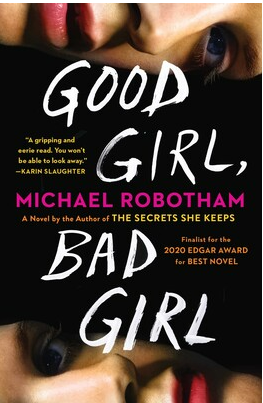
Good Girl, Bad Girl – Michael Robotham

I was expecting great things from Michael Robotham’s novel Good Girl, Bad Girl, which was a 2020 finalist for the Edgar, and named Best Thriller of the Year by both Kirkus and Publishers Weekly.

Cyrus Haven is a psychologist who has been called in to determine whether or not Evie Cormac should be allowed to leave the secure children’s home where she has been living ever since she was discovered hiding in a secret room in a house where a rotting corpse is found six years previous. Very little is known about Evie – not her real name or her exact age or what happened to her because she either can’t remember or she isn’t willing to disclose the information. It’s Haven’s job to figure out whether Evie is a danger to herself or society.

As if that wouldn’t keep Haven busy enough, when the body of a teenage girl is discovered on a footpath by a woman walking her dog, his help is needed to determine who is potentially withholding info. The lead detective on the case, Lenny Parvel, is important to Haven because she was “the first police officer on the scene when [his] parents and sisters were murdered.” So, yeah, Haven has some issues of his own.

So, as he works this case and tries to get to the bottom of Evie’s trauma and shove his own PTSD to the back, you can imagine – it all gets to be a little complicated. Is Haven up to the task? Well, it would appear so. Things get even more convoluted when Evie is released and goes to live with Haven. I can’t imagine that that is a thing that could ever really happen, but it does.

My problem with Good Girl, Bad Girl is that I felt like I never really understood these characters. For example, we never do learn who Evie is or why she was hiding in a secret room, or who the dead guy was beyond his name. That’s apparently going to be revealed in the novel’s sequel When She Was Good, which I won’t be reading. Haven’s own family tragedy is also never really explored. It’s a horrific crime, perpetrated by Haven’s older brother, who is now in a facility for the criminally insane. And although we do discover what happens to Jodie Sheehan, the girl found on the footpath, it’s not that thrilling of a mystery. Evie inserts herself into the investigation in a wholly unrealistic way, too. I kinda got the feeling that Haven was a crap psychologist – which is sort of awkward because I think we’re supposed to be rooting for him. And Evie. And I just didn’t care about either of them. Maybe if the book had focused on just one of these stories and dedicated its energy in making these characters into flesh and blood people things might have turned out differently, but when Evie turns out to be a card shark, wins thousands of pounds at a game she happens to know about, then gets robbed and ends up in the trunk of a car – well, how much are we supposed to believe can happen to one person and not have them be a raving lunatic?

It was a miss for me.

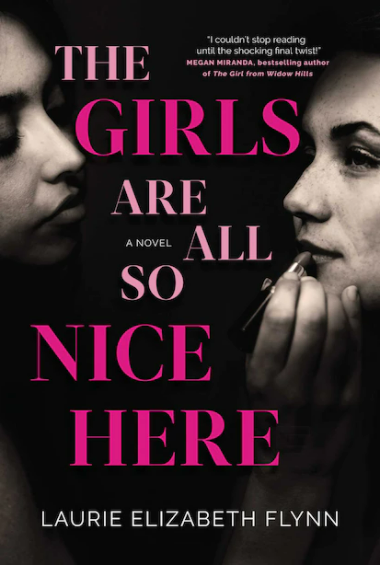
The Girls Are All So Nice Here – Laurie Elizabeth Flynn

So. Much. Fun.

Ambrosia (Amb) Wellington has just received an invitation to attend the tenth reunion of her Wesleyan graduating class. When the email arrives, Ambrosia deletes it immediately. As she does the second email. Then she gets a note in the mail: “You need to come. We need to talk about what we did that night.” The who and what implied in this message is at the centre of Laurie Elizabeth Flynn’s thriller The Girls Are All So Nice Here. Flynn’s first novel for adults (she has written three novels for young adults) is pretty much un-put-down-able. I started it one night when the book I was reading just wasn’t floating my boat. I read 100 pages and only stopped because it was a school night and I needed to turn off my light.

The novel flips back and forth between now, Amb in the present day, an executive at a NYC PR firm and then, when Amb was an awkward college freshman looking for a way to fit in. She arrives at her college dorm, Butterfields, and meets her new roommate, Flora, and although they’d been emailing back and forth over the summer, Amb seems to bristle when she meets Flora in person. She thinks about what she’ll say about her when she texts her high school bestie, Billie, recalling how they’d studied the pretty girls in high school, peeling “them like overripe fruit in marathon gossip sessions to lessen the sting of not being invited to their parties.”

Flora isn’t a mean girl, though. She’s kind and thoughtful and leaves cheerful, positive post-its on the doors of the other girls in their dorm. Her life at home, despite her wealth, isn’t perfect. Her long-term boyfriend, son of her mother’s best friend, is attending Dartmouth, three hours away. So the friction isn’t instigated or perpetuated by Flora; Amb’s insecurities are the problem. The low-key cool she’d cultivated back home seems misplaced here where “the girls seemed casually beautiful in a way that felt unachievable.” Then she meets Sloane (Sully) Sullivan, a girl with “a face that instantly held everybody’s attention.”

To timid, trying-too-hard Amb, Sully seems fearless. And she is, I guess, if your idea of fearless is someone who drinks, does drugs, and sleeps with just about anyone she crosses paths with. For whatever reason, Amb finds that she will do pretty much anything to get herself on Sully’s radar because when Sully “fixed her gaze on me. It was like being anointed.” Sully’s roommate, Lauren, warns Amb that Sully has “zero attention span”, but Amb is intrigued. Sully isn’t nice though, far from it, and she warps Amb’s insecurities and deep-seated desire to fit in into something toxic.

The Girls Are All So Nice Here, beyond being a page-turning thriller, has lots to say about female relationships. If you were ever on the outside looking in, you’ll relate to these girls. Even when Amb realizes that she’s being manipulated, Sully’s approval means more to her than doing the right thing. And the right thing might have prevented a tragedy which destroys more than one life. The book also has lots to say about a culture that still seems to pit women against each other. Instead of looking out for each other, these girls look for ways to undermine each other. It’s like Mean Girls on steroids.

“Our reign was short and bloody,” Amb recalls. She’s not lying.

Highly recommended.

The Night Inside – Nancy Baker

I have a vague memory of reading Nancy Baker’s novel The Night Inside years ago – perhaps closer to the time it was first published in 1993. I am not going to classify this as a re-read, though, because most of it was so unfamiliar it felt like I was reading it for the first time.

Ardeth Alexander is a grad student who is just about ready to graduate, leave academia behind and step into the real world. She’s the dependable one; her younger sister, Sara, is the wild one. She can’t shake this feeling that she’s being followed, though, and one morning on a run near Casa Loma, she’s grabbed by two thugs and whisked off to parts unknown, where she ends up in a basement cell.

The guy in the cell next to her is Dimitri Rozokov. He’s a vampire, and an old one. He’s lived as long as he has by being extremely careful. Even though Ardeth is sure there is no way he can exist because, after all, “Vampires do not exist, except as metaphors,” Ardeth’s captors prove that he’s deadly by showing Ardeth why he’s in a cell.

Turns out, they’re making movies. Roias, one of the men who nabbed her, gives her a private show and what she witnesses horrifies her.

The vampire was hungry and not particularly neat. When he was done, he dropped Suzy’s body over the table. Blood was smeared across her breasts and shoulders, painted across her face in a parody of cosmetics. Her blonde hair was dark with it, but not as dark as the gaping hole in her throat. When he let her fall, one limp arm knocked over the wedding cake and left its remains decorated with red icing.

It turns out, though, that Rozokov is a civilized being, and in their time chained in cells next to each other, the two captives talk. When it becomes clear that their days are numbered, they devise a plan to escape, but the plan comes at a cost.

I have long been fascinated with vampires. When I was a kid, I can remember going to old black and white movies starring Peter Cushing and Christopher Lee and being terrified. What was my mother thinking?! I’ve read Dracula and devoured ‘salem’s Lot. Then, right around the time my kids were born, I discovered Buffy the Vampire Slayer and that sent me down a rabbit hole.

I didn’t hate The Night Inside, but I didn’t love it, either. Part of the problem is that there was a lot going on. Rozokov’s back story and the people chasing him might have been enough to sustain a novel. There needed to be a meet cute, or a meet ick in this case, though. Ardeth and Rozokov’s time as captives only makes up a small portion of the story, though, and then the pair are separated. Oddly enough, the novel felt dated to me, which is weird considering Rozokov is 500 years old.

The Hypnotist – Lars Keplar

I am going to take a little break from reading translations now. I know some people don’t mind them, but it’s the rare translation that doesn’t irk me. Lars Keplar’s well-reviewed suspense thriller The Hypnotist was another translated miss for me.

Detective Joona Linna is on the hunt for a serial killer after a family is discovered in their home stabbed to death. Well, the father was killed elsewhere, the oldest sister is missing, and the son – although suffering from major injuries – has survived, but is in a coma. Linna figures that time is of the essence because what if the killer is after the sister? He needs whatever information the survivor, Josef, can provide. Who you gonna call?

That would be Erik Maria Bark, disgraced hypnotherapist. He’s got all sorts of professional and personal baggage, but he’s absolutely the dude you want to call if you want to reach someone unreachable. Apparently. He takes some convincing, though, because he has sworn off practicing hypnosis.

Okay – so I was relatively invested in the beginning. Gruesome murder. Conflicted doctor. Whodunnit. You know, all the things. But then the translation started to irritate me, mostly the dialogue which always seems clunky and inauthentic to me. I sorta feel like once something’s been translated into English, a native English speaker needs to have a pass at it to smooth out the rough edges or something. Or maybe that’s what has happened. In any case, when there’s a lot of dialogue it just rips me out of the story because I keep think, people don’t speak this way.

Listen to this exchange between Linna and a witness. (And it’s not even a good example.)

After a while a man appears with a towel wound around his hips. His skin looks as if it’s burning; he’s leathery and very tanned. “Hi. I was on the sun bed.”

Nice,” says Joona.

“No, it isn’t,” Tobias Franzen replies. “There’s an enzyme missing from my liver. I have to spend two hours a day on that thing.”

“That’s quite another matter, of course,” Joona says dryly.

“You wanted to ask me something.”

“I want to know if you saw or heard anything unusual in the early morning of Saturday, December twelfth.”

Tobias scratches his chest. His fingernails leave white marks on his sunburned skin.

“Let me think, last Friday night. I’m sorry, but I can’t really remember anything in particular.

OK, thank you very much, that’s all,” says Joona, inclining his head.

Yep. That’s your crack detective, right there. No wonder it took 500 pages to solve this thing.

And then, the whole thing started to fall apart for me.

Josef goes missing. And then is rarely mentioned again. His sister is put into witness protection…and is rarely mentioned again. Then we get all this stuff about Erik Maria Bark’s past. (Yes, that’s how he’s referred to almost every time.) And his son, Benjamin, goes missing. And his wife’s ex-cop father gets involved. And all these previous hypnosis patients come into the mix. I just lost interest in the whole proceeding and I slogged through only because I was mildly interested in seeing how the whole thing played out.

Unsatisfactorily, I must say.

This is the beginning of a series featuring Detective Linna. I will not be reading any more.

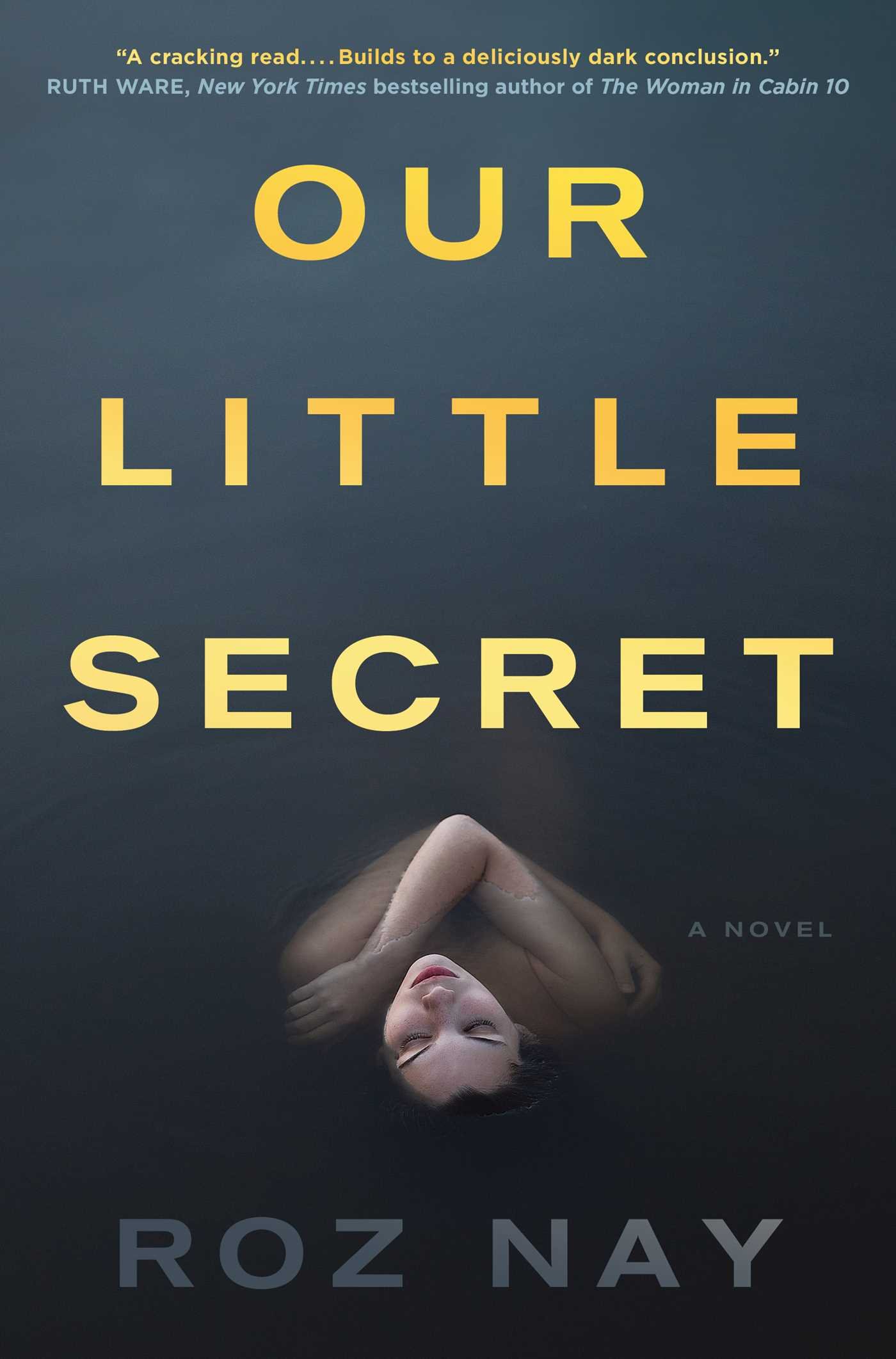
Our Little Secret – Roz Nay

New-to-me Canadian writer Roz Nay’s debut, Our Little Secret, delivers the goods. I couldn’t put this book down.

Our Little Secret is Angela Petitjean’s story, and it unfurls in an interrogation room at the local police station. Detective Novak is asking questions about a missing woman, Saskia Parker.

That’s the thing: they sound like they’re asking about Saskia, but all roads lead to Mr. Parker and me. The police want to know if I’m in love with him, and they ask it like it’s the simplest explanation rather than the most complicated. My definition is nothing like theirs, though.

Angela meets HP, (the Mr. Parker in question) when they are in Grade 10. This is a new school for Angela and she tells the detective that “Moving when you’re fifteen is terrifying.” Angela is immediately targeted by the mean, cool girls until HP comes to her rescue. That moment forges a bond between the two teens. Over the course of the next two years, Angela (or “Little John” as he calls her) and HP are inseparable, but not romantically linked.

I never understood why HP had chosen me as his friend, or how I’d gotten an all-access pass to him. It was like having a key to the White House. He told me everything he thought and felt and wanted, and I don’t think he told anyone else in the world…

By the end of high school, though, their relationship shifts gears. And then, Angela gets an opportunity to spend a year at Oxford, but HP stays behind. The distance complicates their new status. Enter Saskia, an effusive Australian HP meets while visiting Angela in England..

Our Little Secret garnered a lot of praise when it was published in 2017. I find thrillers are hit and miss. They sound good, but they ultimately disappoint. Not this one.

I felt terrific sympathy for Angela, who claims and maintains her innocence after Saskia goes missing. Her friendship and then romantic relationship with HP is believable and complicated. There’s angst here and I love me some angst. It’s only as her story unravels, that we start to see that her version of events might be just a tad unreliable. But we all revise our histories to a certain degree, don’t we?

If you’re looking for an addictive, well-written, smart thriller, look no further.

Highly recommended.