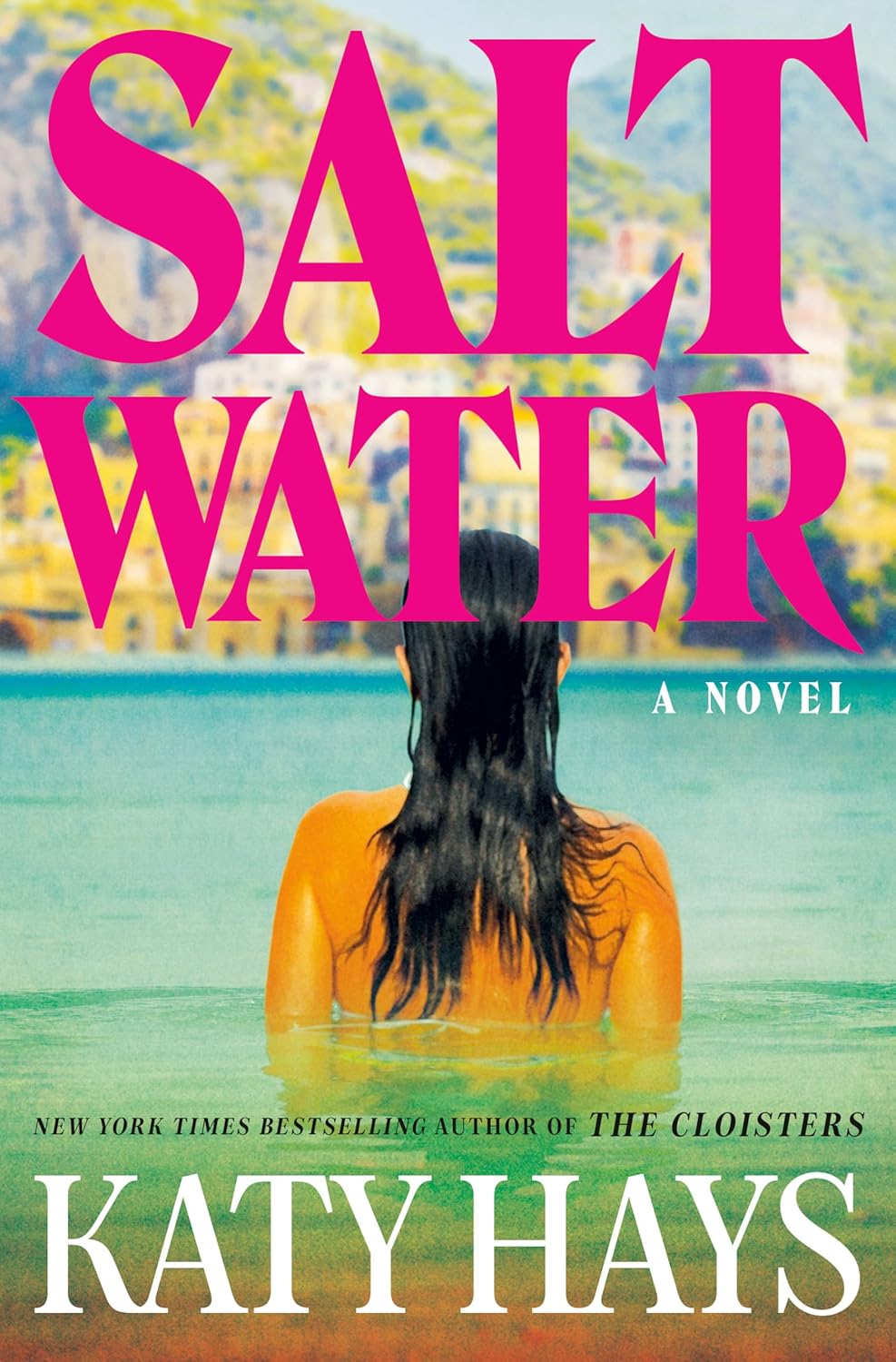
Loads of people liked Katy Hays’ sundrenched (it takes place in Capri, which is pretty much the only thing I liked about it) thriller Saltwater. Told from multiple perspectives, it’s the story of a bunch of rich assholes behaving badly and maybe I’ve just had enough of that in RL to care very much about it happening on the page.
Helen Lingate is vacationing on Capri with her father, Richard, her Uncle Marcus and Aunt Naomi, her boyfriend, Teddy, and Marcus’ assistant (and Helen’s friend) Lorna. The Lingates return to the same villa every year to honour Helen’s mother Sarah’s accidental (but was it, though?) death 30 years prior.
Helen is trapped by her family’s wealth. She just wants to live her life, but she can’t. She is haunted by the family tragedy, has a relatively distant relationship with her father, and has never really made any friends until Lorna came into her life. Now the two women seem to be plotting some sort of “get-out-of-Dodge” scheme that will free them from the tangle of family obligations (Helen) and sleeping with rich old guys (Lorna). Just about the only good thing about Capri (other than, you know, the sun and endless drinking) is Ciro, the handsome son of the villa’s housekeeper, whom Helen has known and loved since she was a child.
Everyone has a secret in this book; I suppose that is what is meant to keep you turning the pages, but the problem is that I didn’t care about any of these people. Helen is 33, for God’s sake, and she is behaving as though she doesn’t have any agency at all. Seriously, I just wanted to give her a good shake. If this is all so unpalatable, just take Ciro and go. Hard to give up all that cash though. But even the cash isn’t what Helen thinks it is.
What motivates any of these people, beyond money, is hard to pinpoint. As Helen says “Money is my phantom limb. It was part of my body once. I know this because I feel its loss like an ambient current that runs up my spine, an occasional, sudden shock. Money is metabolic, a universal part of our constitution.” Um? What?
I didn’t enjoy this book, but I read it to the end because, y’know, there’s a part of me that wanted to know how it would all play out. There were a bunch of requisite twists near the end and while some readers were likely shocked and surprised, my reaction was more of the eye-roll variety. I found the writing choppy and repetitive and, like I said, it took me way longer to read this than I thought it would.
So, not for me, but I suspect lots of people would find it enjoyable.
At last count, I have 500 unread books on my bookshelves. I wish I could say that I am mortified by that number, but I am not. I am a mood reader and I like to be prepared for all contingencies. I also love buying books because books as objects just make me happy. Who knows what I am going to feel like reading on any given day, and it gives me a lot of pleasure to shop my shelves.
But then there are those tried and true authors whose books somehow make it to the tip top of that pesky TBR pile. Somehow, these authors always seem to move to the front of the line and even though I have many (many) books that have been languishing on my shelves waiting to be read, when these authors have a new book out–or in the case of today’s featured author, I stumble across a new-to-me book by them–I somehow forget my shelf and read the book straight away. (Alternatively, as is also true in the case of today’s featured author, I squirrel the book away for a rainy day when nothing else is floating my boat, and I need a guaranteed winner.)
What makes someone an auto buy author? That’s what I would like to write about today because I have several writers who meet my own very subjective criteria, my drop-everything-and-read-their-latest-book-asap crew.
Writing. I love it when a book is well written. Sometimes the writing doesn’t have to be stellar for me to enjoy a book’s plot or characters, but when the writing is excellent, that is definitely a bonus. Auto buy authors always have, at the very least, prose that isn’t clunky.
Plot. There are certain types of plots that I really enjoy. I love books that keep me guessing. I love angst. I love dark academia. I love it when the writer alludes to things that have yet to be revealed to the reader. I love to be surprised.
Characters. I love it when I love the characters, when they feel as though they could be a friend of mine. When I root for their success (or sometimes their demise). I love characters that feel like real people.
The feels. I love a book that punches me in the gut, makes my eyes burn with unshed tears, or a book that makes me sob. I love a book that grabs me by the throat and shakes me until my teeth rattle, a book that makes me read way past my bedtime, until my eyes are burning.
The unexpected. I love a twist, especially when it’s not contrived. I love it when a book breaks my heart.
Somehow, auto buy authors always have the perfect combination of these things and there’s something about that first encounter that makes me want to dive into another book. When that book also turns out to be great, then they make my auto buy list. I thought it might be fun to take a look at some of the authors whose work I have enjoyed and whose books I will always buy.
I thought it might be fun to share these authors with you and, of course, I would love to hear which writers would make your list!
First up: Thomas H. Cook
Thomas H. Cook is an American writer of mysteries with over 30 titles to his name. It doesn’t look like he’s had anything published since 2018. He has won many awards over the years, including an Edgar Award from the Mystery Writers of America.
I discovered Cook in 2007 when I happened upon his 1995 novel Breakheart Hill in a second hand bookstore. I knew nothing about Cook, but I was totally intrigued by the novel’s opening lines: “This is the darkest story that I have ever heard, and all my life I have labored not to tell it.”
Thus began my love affair with Cook.
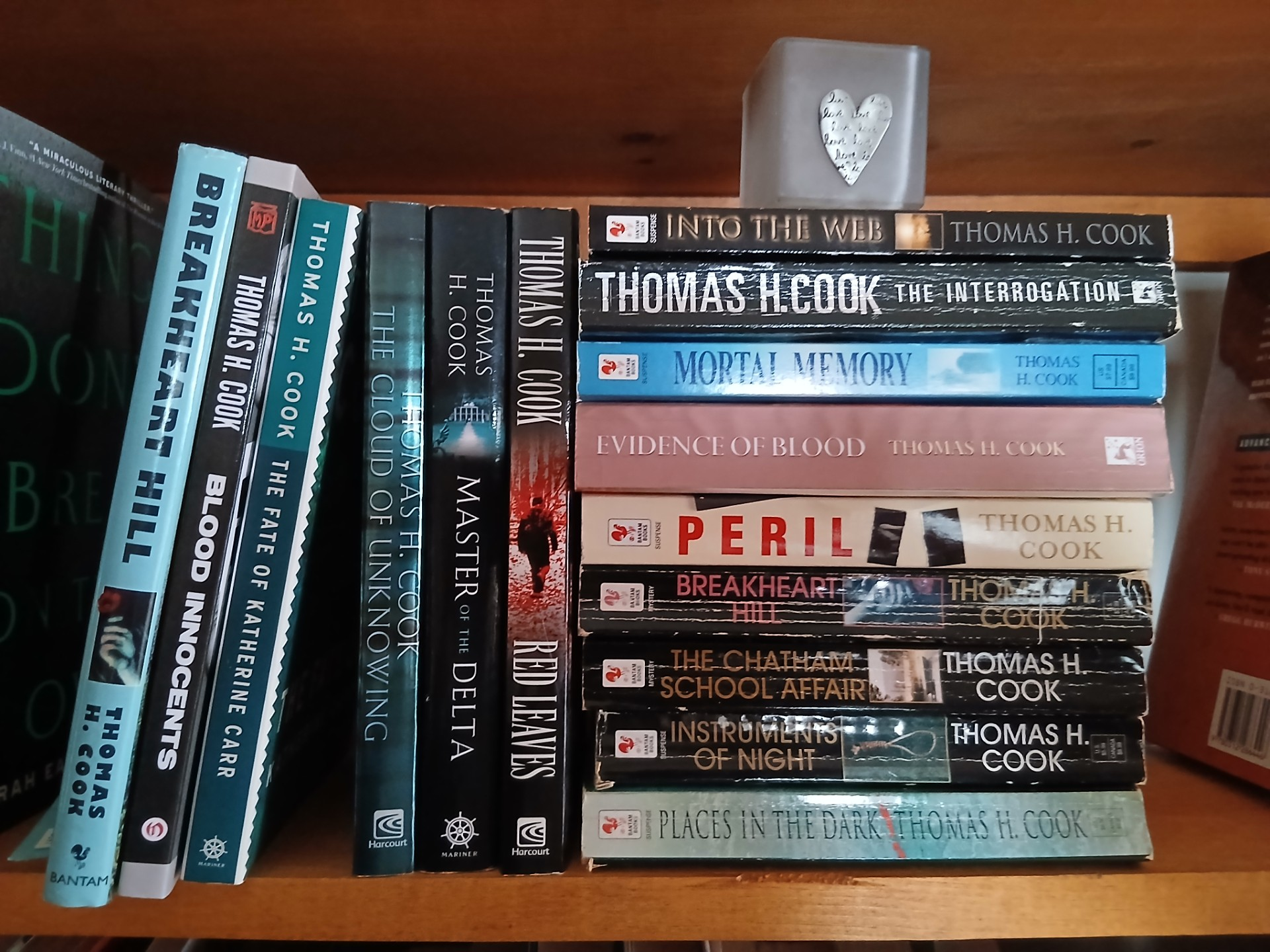
Turns out, though, his books are not that easy to find. I can’t just head to Indigo and grab one of his books off the shelf. Tracking Cook books (haha) down is a bit like going on a treasure hunt. I was delighted when I went to a huge second hand book sale in Moncton (about 90 minutes from me) last summer and happened upon a title I didn’t own. If I am in a second hand book store, he’s the first author I look for. Over the years, I have managed to get my hands on 16 of his novels (two of which I am saving for that rainy book day).
Here’s why I love him.
First of all, he’s a brilliant writer. His writing is astute, and often lyrical (but not overly fussy.) He (mostly) writes what I would classify as literary mysteries. They are never just straight-up whodunnits. His characters are complicated and many of his novels deal with father/son dynamics. In virtually every book I have ever read by Cook, there has been some sort of mind-blowing/wait, what? twist that has made me want to go back and start again to see what I missed. While I have not loved every single book I have read, every single book I have read has been well worth the time and effort and has been heads and tails better than much of the dreck out there.
So, here’s what I have read:
Breakheart Hill – a leisurely southern gothic novel, filled with a real sense of place and time. The characters are interesting and flawed and I was 100% surprised by the ending, which wasn’t a cheat even though it felt like it should have been.
The Chatham School Affair – a richly realized mystery which unfolds as the book’s narrator, an elderly lawyer named Henry Griswald, recalls the events which transpired the year he was 15.
Places in the Dark – The story concerns brothers William and Cal who grow up in an idyllic seaside town in Maine in the 1930s. They are as different as night and day: William an energetic dreamer who rushes through life filled with hope and enthusiasm and Cal, the older more pragmatic brother. Still, despite their differences, they are close. Then Dora March comes to town.
Red Leaves – the story of the Moore family: Eric (owner of a camera shop), Meredith (teacher at a small community college) and Keith (their teenage son). They live in a small New England town and live, what Eric believes, is a perfect life. That is until eight-year-old Amy Giordano goes missing and the last person to have seen her is Keith, who’d been babysitting her that evening.
Instruments of the Night – the story of writer Paul Graves, a man who has spent his career writing about the horrible dance between serial killer and sadist Kessler (and his accomplice, Sykes) and the man who has spent his career chasing him, Detective Slovak. This might be my favourite novel by Cook.
The Cloud of Unknowing – David and Diana Sears were raised by their brilliant but schizophrenic father. Now they are adults and they carry all the baggage from that often difficult childhood. I have lukewarm feelings about this one.
Evidence of Blood – Jackson Kinley is a true-crime writer. His career has brought him close to unimaginable horrors: rapists and murderers and people who torture others for pleasure. Kinley (as he is most often called) seems somehow immune to these horrors. His armor is breached, however, when he gets the call that his childhood friend, Ray Tindall, has been found dead.
Master of the Delta – a book about fathers and sons, about the part luck plays in how our lives turn out, about kindness and cruelty.
The Fate of Katherine Carr – George Gates is a former travel writer who now writes features for the local paper and spends his evenings drinking scotch at his neighbourhood bar. He’s a broken man, but no wonder: his eight year old son, Teddy, had been taken off the street on his way home from school, murdered and the murderer had never been caught.
The Interrogation – the story of two cops, Norman Cohen and Jack Pierce. Each man has a heart full of demons (Cohen is haunted by his experiences in war; Pierce’s young daughter was a murder victim), but they are tenacious and accomplished interrogators. Since the story is set in 1952 they have to rely on the evidence they gather the old-fashioned way: visiting crime scenes, talking to people, chasing leads.
Mortal Memory – a story that begins when narrator Stevie Farris discovers, at age 9, that his father has shot and killed his mother, Marie, older brother, Jamie and sister, Laura. The knowledge of this horrific act tortures Stevie, mostly because he doesn’t understand why his father committed such a horrible crime. Wasn’t his family happy?
Peril – like a noir film, peopled with shadowy gangsters in crumpled hats, a beautiful, fragile heroine who earns the good will of the men she meets, and a bunch of guys who ultimately, turn out to be loyal and decent.
Blood Innocents – the story of NYC police detective John Reardon who, returning to work after the death of his wife, is given a strange case involving the slaughter of two deer in the Children’s Zoo in Central Park.
Into the Web – Roy Slater’s acrimonious relationship with his father isn’t the only difficult thing about returning to his childhood home. Just a few weeks before he was about to leave for college, Roy’s brother Archie was arrested for the murders of Lavenia and Horace Kellogg. Now he’s back in a town filled with ghosts – and then another dead body turns up.
And the two books I am saving for a rainy day: Flesh and Blood & Night Secrets.
I am on a mission to find all the remaining Thomas H. Cook titles that exist.
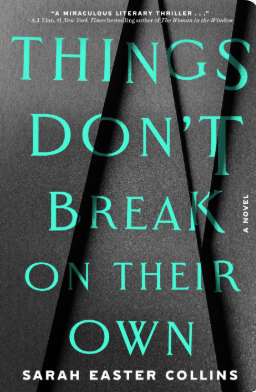
Although Things Don’t Break on Their Own is touted as a “miraculous literary thriller”, I think that’s doing Sarah Easter Collins’ debut a disservice. While the book is definitely literary and it’s definitely a page turner, I don’t think I would call it a “thriller”. But maybe that’s nitpicking and it really doesn’t matter.
Robyn and her wife, Cat, have invited some friends and family round for dinner. There’s Robyn’s older brother, Michael, and his girlfriend, Liv. There’s Nate, Cat’s brother, and his new girlfriend, Claudette, and then there’s Willa and her boyfriend, Jamie. Robyn and Willa have history; when they were 17 and in boarding school together they were roommates and then lovers, but it ended badly. That was years ago, now, though and the two women are friends. It wasn’t a particularly happy time for Willa. Her younger sister, Laika, disappeared when she was just 13 and nearly 22 years later, the family still doesn’t know what happened to her.
The story changes perspectives and doesn’t follow a straight line. As Robyn anticipates Willa’s arrival, she remembers the summer she took her back to Tea Mountain, the remote place she calls home. It is a transformative experience for Willa, whose own family is a dysfunctional mess. Robyn’s father is a potter, and as he repairs a broken bowl using the Japanese method of kintsugi, he assures Willa (without even knowing her all that well) that “You can fix anything, given the right tools.”
There is no fixing Willa’s fractured family though. Her father, Bryce, has a successful business, so money is not an issue, but he is a horrible and abusive bully, especially to Willa’s mother and Laika. In fact, Bryce never touched Willa, and perhaps some of her guilt stems from that. About Laika, Robyn says
I tried to keep her safe. I really did. I told her, keep your head down, don’t bring unnecessary attention to yourself, just do what you’re told, all the things that just came naturally to me. But I was so busy keeping her safe from herself that I forgot to warn her about the outside world. I should have told her that there were people out there, men, women even, who could harm her.
So much was my fault.
Robyn and Cat’s dinner party proves to be revelatory, but by the time you get to the “twist” (maybe that’s why they call this book a thriller), you’ll be so invested in these characters that –well, I don’t want to say it hardly matters, but it was honestly the least interesting part of the book.
I really enjoyed Things Don’t Break on Their Own. The writing was great, the characters were compelling, and the mystery surrounding Laika’s disappearance was intriguing. It’s a solid debut and I highly recommend it.
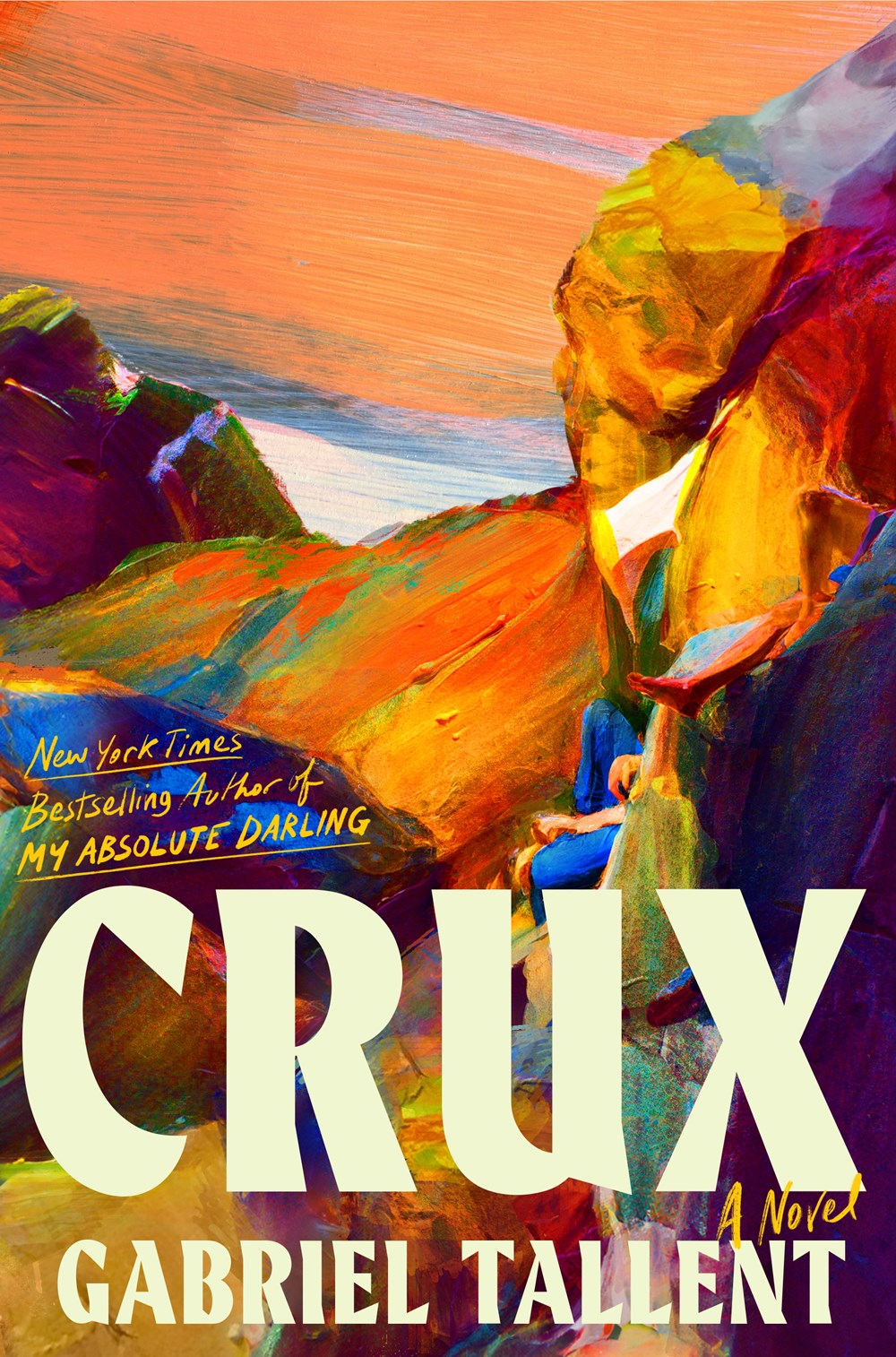
According to Merriam-Webster, crux is “a puzzling or difficult problem: an unsolved question; an essential point requiring resolution or resolving an outcome; a main or central feature”.
Gabriel Tallent’s novel, Crux, comes nine years after his debut, the much lauded My Absolute Darling. Crux landed on the top of my must read pile based on my love for his debut and now that I have read it, it cements Tallent’s place in my auto buy list. (I hope I won’t have to wait another nine years for is next book!)
For Tamma and Dan, seventeen-year-old besties, a crux is a metaphor for the difficulties and decisions they face in their everyday lives, but also the very real problems they encounter every time they head out into the Mojave to climb boulders.
These kids live next door to each other in the middle of nowhere. Their mothers, Alexandra and Kendra, used to be best friends until they had a falling out and now no longer speak. Alexandra wrote a best-selling novel when she was eighteen. She married Lawrence, a construction worker, and had Dan. Kendra is a diner waitress and, besides Tamma, is mother to Sierra (who has three kids of her own) and Colin. She lives with a dirtbag drug dealer ten years younger than her in a ratchety trailer. Neither Dan nor Tamma’s home lives are particular stellar. Dan and his father don’t really have much to say to each other; Alexandra barely comes out of her room. She had heart valve replacement surgery years ago, and the valve is now deteriorating. Although she did write a second novel, she’s been blocked ever since. Kendra is deplorable. Whether it’s the circumstances of her own life or she’s just an awful person, she is not kind to Tamma. On the rare occasions Tamma would be in Dan’s house, Dan would “catch Tamma eating orange peels. Chewing steak bones from the night before. She’d nab butter off the stick. […] “Dude,” he’d whisper, meaning, That bread is moldy, and “Dude,” she’d say back, meaning, Don’t worry, I scraped the mold off.”
Tamma and Dan spend as much time out in the desert as they can. They don’t have the right gear, but they climb anyway, spotting each other and egging each other on and challenging each other to climb more difficult rocks. “On the ground, Tamma was the clumsiest person he had ever met, but on the wall, she was breathtaking. […] Everyone he knew seemed to think Tamma was trash, but he thought she was some kind of genius.”
The teens have a dream, and that is to graduate from high school (although it is highly unlikely Tamma will graduate, Dan is a whipsmart scholar) and head to Indian Creek, “the last place on earth you can still dirtbag, the way the old-school climbers did.” The friends dream about perhaps going pro, making a living doing the thing that they love the best of all.
But life seems to have other plans for them.
Dan’s mother has a life-threatening medical issue. Tamma’s baby nephew, River, has a traumatic brain injury. Suddenly the pair find themselves having to reassess their lives and priorities. Their choices will have a profound impact on their lives.
Tamma couldn’t say that she’d never despair. All she could do was think, Not today. All her hope felt terribly insecure. And she could get to where she had this feeling of rage. I don’t want to be strong. I don’t want to have to try and find joy when it all feels so scary. And then she’d think: You can do this. You are a rad climber and people like you. You can show up every day and be an indomitable force for joy and hope and you can let everyone else fall apart without falling apart yourself.
Dan has his own struggles, but he knows that his parents “believed that it was possible for [him] to go out into the world and succeed. That belief was built into [his] worldview. No one had ever believed that about Tamma.”
Boulders aren’t the only things Tamma and Dan have to climb; life is going to shoot the motherlode of obstacles their way. How they ultimately handle these trials is what makes these characters people you want to root for. Their friendship is genuine and refreshing; their conversations often laugh-out-loud funny; their love and admiration for each other is real and beautiful.
There is a lot of climbing jargon in this book and that might not be to everyone’s taste. I don’t know a dang thing about climbing, but by the end of it I was invested in their pursuit of “sending” each climb they attempted. I loved Crux. It’s my first five star read of 2026.

 The Ludic Reader