Everything We Lost – Valerie Geary

Valerie Geary (Crooked River) is definitely an auto-buy author for me. Although Everything We Lost wasn’t what I was expecting, I still found the book well-written and thoughtful.

Lucy Durant was just 14 when her older brother, Nolan, 16, disappeared. Although life wasn’t particularly easy for the siblings (their father left and their mother turned to alcohol), they have always been close, that is until Nolan’s former best friend, Patrick, starts paying attention to Lucy and she decides that Nolan and his interest in the stars and UFOs is just too uncool.

After Nolan goes missing, Lucy goes to live with her father and that’s where we find her, ten years later, with a stalled life. Her father, Robert, is about to remarry and he feels that it’s time for Lucy to get on with her own life.

They were kicking her out. She had seen this coming, was surprised it hadn’t happened sooner, like after she dropped out of college her freshman year, but still her eyes blurred with tears that she quickly blinked away. She wasn’t ready. She would never be ready.

At loose ends, Lucy returns to Bishop, the small California town where she grew up. She feels as though she might finally be able to unravel the tangled truth of what happened the night that her brother disappeared. That means she’s going to have to talk to her mother, from whom she’s been estranged for the past decade. It also means that she is going to have to try to remember what happened on that last night she and Nolan were together.

Lucy and Nolan take turns telling the story of what happened leading up to the night Nolan goes missing. Nolan’s narrative illustrates his growing isolation, and fascination with outer space. He is convinced of the existence of life on other planets and extraterrestrials. He spends all his time watching the sky and taking notes about what he sees. When he meets a strange and beautiful girl called Celeste, he is sure that she is from another planet.

Everything We Lost is really a coming-of-age story, even though Nolan’s disappearance is an intriguing mystery. Geary writes Lucy and Nolan’s story as believer and non-believer. From the outside looking in, it is easy to dismiss Nolan’s increasing paranoia as just that: the men in the black cars are watching him; the lights in the sky are from space ships; he imagined Celeste before she miraculously appeared in his life.

Although I have my suspicions about what happened to Nolan — and I think the clues are in the story — Geary doesn’t offer any easy answers, and I am okay with that. Everything We Lost isn’t a quick read, but I enjoyed the book.

Brother – Ania Ahlborn

Ania Ahlborn’s novel Brother is like getting throat punched. Well, I haven’t actually ever been throat punched, but I can imagine what it’s like.

Michael Morrow is nineteen and lives with his older brother Rebel, younger sister Misty Dawn, and their parents, Wade and Claudine in a remote part of Appalachia. Another sister, Lauralynn, no longer lives at home. It is clear from the book’s opening lines that life at the Morrow house is not normal.

Michael twisted in his bed, the threadbare blanket he’d used all his life tangled around his legs. A girl was screaming bloody murder outside….Those girls usually went quiet fast. They’d yell so hard they ended up making themselves hoarse. Them’s the perks of livin’ in the wilderness, Momma had once said. You scream and scream and ain’t nobody around to hear.

It’s hard to talk about this book without spoiling the dark and sinister things that happen in this house, but I think you’ll get the idea pretty quickly. And trust me when I say – this book goes there, all the way there. And even though Michael is a part of it all, he is also an incredibly sympathetic character. His life cracks open a little bit when he meets Alice, a girl about his age who works at a local record store.

She looked like Snow White from Lauralynn’s old book of fairy tales, except a hundred times more beautiful and wearing all black, looking about as modern as the music sounded.

Meeting Alice gives Michael a sense of hope. She reminds him that the world is big and full of possibility, if he can only find a way to escape his family. But that is easier said than done. The major problem is his brother Reb, a quick-tempered drunk who is impossibly cruel and cunning. Reb easily manipulates Michael and it isn’t until the novel’s unbelievable climax that you realize just how evil he truly is.

There are no moments of levity in Ahlborn’s book; it’s as black as pitch. And that makes it sort of odd to admit that I loved it, but I really did. Despite the atrocious acts committed by Michael, I just wanted him to find a way to escape. I watched him struggle to make sense of his life and if anyone was deserving of a redemptive ending, it was certainly him.

He was starting to see how he could separate himself from the responsibility of the things he’d done in his life. The fear. The manipulation. The sense of duty that had been beaten into him.

In the sections focused on Reb, we are provided with a glimpse into how his own experiences have shaped him. It doesn’t actually make him any more likeable, though. Claudine, the book’s most reprehensible character, has a horrifying backstory, too, but I really didn’t like her.

Brother is a pulse-pounding, emotionally resonate and horrifying novel and I highly recommend it…if you have a strong stomach and aren’t prone to nightmares.

Lessons in Chemistry – Bonnie Garmus

I don’t know what it is about hyped books, but I rarely like them as much as everyone else does. It probably says more about me than it does about the book, really. Everyone and their dog loved Bonnie Garmus’s novel Lessons in Chemistry and I was actually looking forward to reading it when it was chosen for my RL book club. Sadly, it just wasn’t for me.

The novel is about Elizabeth Zott, a brilliant woman who is a chemist without the credentials because she was forced to leave her program after being sexually assaulted by a lecherous professor. It’s the sixties and there is no recourse for her. When she files a complaint, the cops ask her if she would “like to make a statement of regret” for defending herself. It’s the 60s and that’s the world Elizabeth is living in.

When the novel opens, Emily Zott is working as the host of a cooking show called Supper at Six. She is not a natural in front of the camera and she certainly won’t play the games demanded of her by the studio execs including smiling a lot and wearing tight fitting clothes. She does, however, tap into something women seem to want: someone who sees them and understands them.

You’d never find Elizabeth Zott explaining how to make tiny cucumber sandwiches or delicate souffles. Her recipes were hearty: stews, casseroles, things made in big metal pans. She stressed the four food groups. She believed in decent portions. And she insisted that any dish worth making was worth making in under an hour.

The novel unravels Elizabeth’s story backwards from this point. We learn how she ended up, a single mother, in front of the camera. We watch as her relationship with Calvin Evans, a brilliant and award-winning chemist unfolds, from its antagonistic meet cute to its tragic ending. We watch as she struggles to be taken seriously in the man’s world of science. We watch her teach her dog, Six-Thirty, to understand human words.

Lessons in Chemistry is a book crammed with characters and ideas and lessons about chemistry equality, but none of it is subtle. The narrative isn’t just Elizabeth’s, either. We get to hear about Calvin and his personal tragedies. We even get to hear from the dog. Yep. This book tried so hard to be funny, but mostly I just rolled my eyes at how unbelievable these characters were. The ideas are sound; the delivery not so much.

I wanted to like it, but I just didn’t.

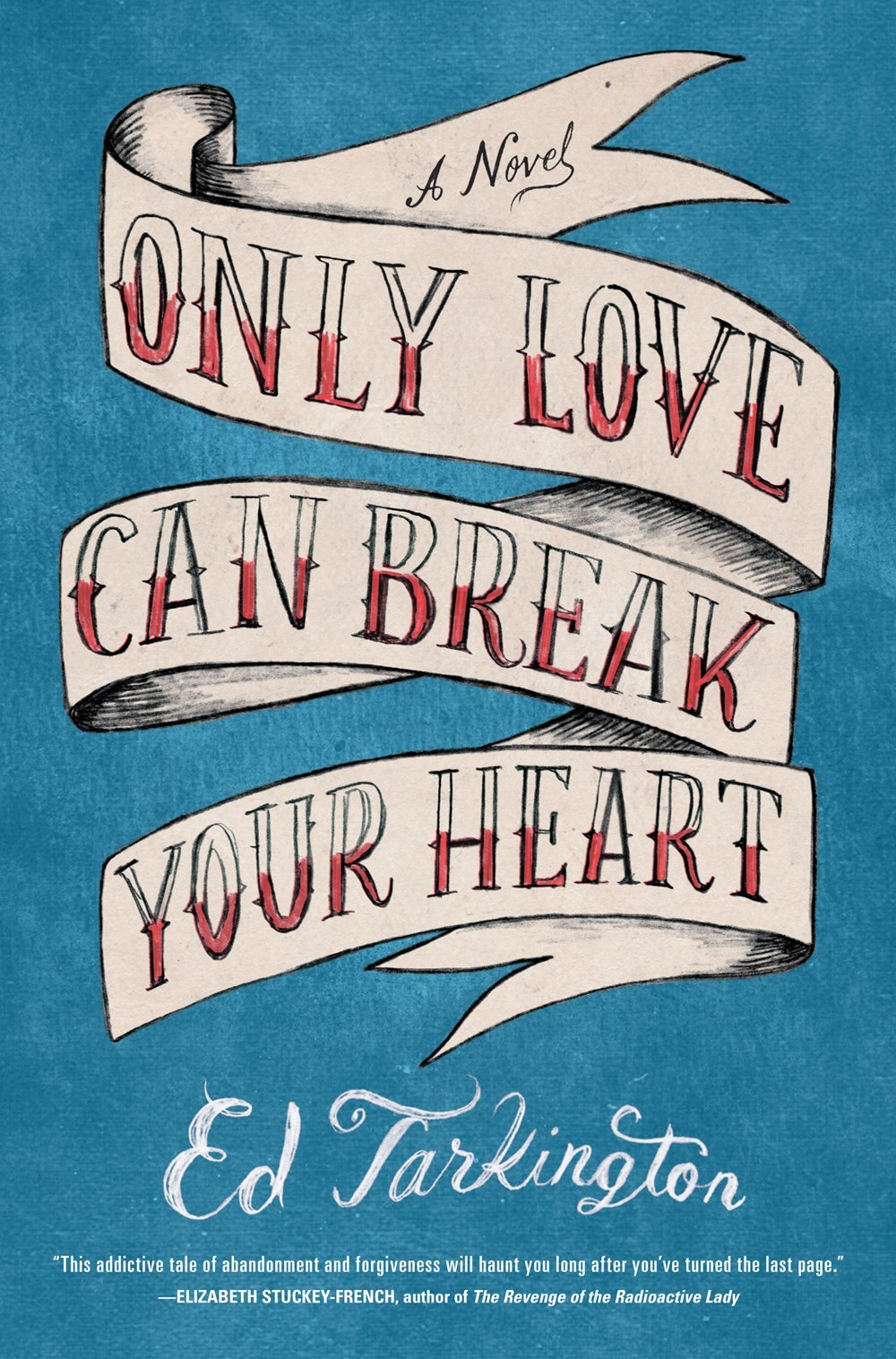
Only Love Can Break Your Heart – Ed Tarkington

The whole time I was reading Ed Tarkington’s debut novel Only Love Can Break Your Heart, I was having this weird deja vu. I don’t know whether it was specific plot points – although the story isn’t particularly original – or just the book’s general vibe. In any case, it was very reminiscent of M.O. Walsh’s My Sunshine Away or any number of Thomas H. Cook’s mysteries. This is high praise, trust me.

The narrator of Tarkington’s novel is Richard “Rocky” Askew. He’s telling this story from some distant point in the future, but when the book opens he is seven and lives with his father, “the Old Man”, mother, Alice, and his older-by-eight-years step brother, Paul, who “had a reputation around town as a “bad kid.””

Rocky worships Paul, hangs on his every word, and follows him around like a puppy. He is equally smitten with Leigh, Paul’s girlfriend, daughter of the town’s judge. When the novel opens, Paul suggests a visit to Twin Oaks, the huge unoccupied mansion with a violent history near the Askew’s property. Turns out, someone (Brad and Jane Culver) has purchased the house and Paul is shot on the property. This incident sets off a strange chain reaction of events – perhaps too many for one book – that includes a failed business deal, a romantic tryst between a teenaged Rocky and the Culver’s adult daughter, Patricia, and a double homicide. This murder comes late in the novel and propels the novel’s final chapters forward to its tidy conclusion.

Only Love Can Break Your Heart is not a story which is driven by plot. This is a story about family, love, regret. The novel takes place, for the most part, in the 70s and 80s. Paul introduces to Rocky to music, including Neil Young, whose song “Only Love Can Break Your Heart” provides the title of book. This is a novel that is very much steeped in a time and place. That’s one of the novel’s admirable traits. Actually, there is a lot to like about this book even though sometimes I felt like I wanted more of one thing (why did Paul “kidnap” Rocky; where did Paul disappear to and why?) and less of another (the choice of Equus as the high school play felt a little too on the nose).

Still, I enjoyed my time with Rocky and although there wasn’t a huge emotional payoff at the novel’s conclusion, this was still a great read.

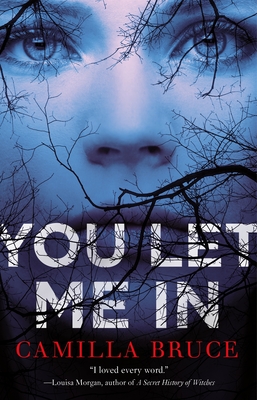
You Let Me In – Camilla Bruce

Camilla Bruce’s debut You Let Me In is quite unlike anything I have ever read before and although it was odd, it was also strangely compelling.

Eccentric and reclusive romance writer Cassandra Tipp has disappeared….or died…no one is really sure. Her life has been a strange one which has included the death of her husband and then the apparent murder-suicide of her brother and father. In her will, she leaves everything to her sister’s children, but first they have to read the manuscript she’s left them.

Cassandra’s life has been difficult. Her mother was “a stern woman, maybe not too happy.” Her father was “a big man with fleshy lips and cheeks like a basset hound.” She had a younger brother, Ferdinand, and a younger sister, Olivia. By her own account, Cassandra was a bad girl and

No one keeps an eye on the bad girl. The peculiar daughter is left on her own. So easy to slip away then, fall into the twilight places of the world. To be taken and lost. Preyed upon.

This is how Cassandra comes into contact with Pepper-Man, a twilight figure who would “appear at the end of [her] bed and sit there cross-legged, grooming his hair with a comb made of bone.”

Cassandra’s relationship with Pepper-Man is an intimate one. He feeds on her; sometimes Cassandra wakes up with “his deep buried deep in [her] throat.” It’s difficult for readers to know if he is real or whether, like Cassandra’s psychiatrist believes, a manifestation of childhood trauma because sometimes “something happens that is so horrible, so painful and confusing our brains take charge and rewrites.”

Dr. Martin writes a whole book about Cassandra: Away with the Fairies: A Study in Trauma-Induced Psychosis. This book tries to explain an alternate view of Pepper-Man. Its publication doesn’t do anything to make Cassandra and the strange circumstances of her life any more palatable, and it sure as heck won’t help the reader determine what the heck is really going on in Bruce’s novel.

I do have my own theory, but I won’t spoil the book by offering it up. You Let Me In wasn’t at all what I was expecting, but it was – I was going to say enjoyable, but that’s not the right word- definitely a fascinating read.

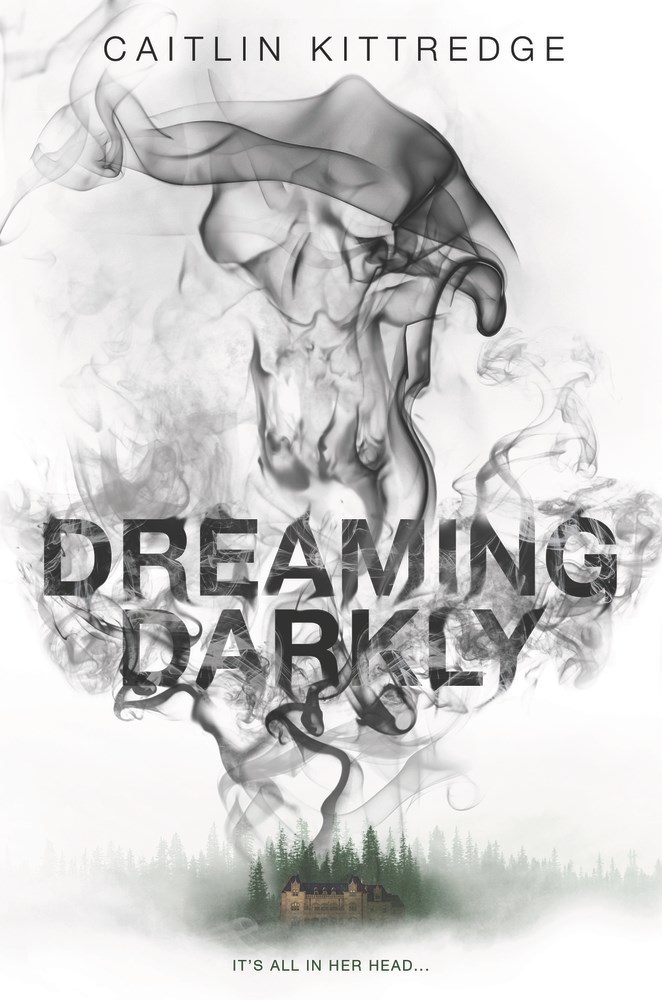
Dreaming Darkly – Caitlin Kittredge

After her mother dies, seventeen-year-old Ivy Bloodgood is sent to Darkhaven, a small island off the coast of Maine, to live with her mother’s brother Simon. Ivy and her mother haven’t had the most stable of lives, moving from place to place and existing on what they could make reading tarot cards and stealing. Ivy isn’t sure life is going to be much better at Darkhaven, a place made “from granite blocks the size of Volkswagens”.

Ivy doesn’t know much about her mother’s family and when she arrives at Darkhaven she realizes she might not have known very much about her mother, either.

Why would my mother have left this behind? She was ruthless, and she loved money. I couldn’t believe poor-little-rich-girl syndrome have driven her out of this spectacular house and away from the credit cards and clothes and cars that came with a family like this. Never mind the inheritance.

Darkhaven isn’t a safe haven, though. Almost as soon as she arrives, Ivy begins having horrifying dreams of blood and violence. Then there’s the Ramseys, the only other family who lives on the island. There’s bad blood between the Ramseys and the Bloodgoods, but that doesn’t stop Ivy from spending time with Doyle Ramsey, the only person she feels like she can trust.

There’s a lot going on in Caitlin Kittredge’s YA novel Dreaming Darkly. As Ivy digs into her family history, she starts to discover that her mother had withheld more than just the size of the house she grew up in. Uncle Simon isn’t all that forthcoming with the family stories, either, and that just makes Ivy even more determined to get to the bottom of the family secrets. And there are lots of them.

While I did enjoy reading this book, I think it’s about 100 pages too long. The last 25 pages, as the secrets of Darkhaven are revealed, happen so quickly, you barely have time to get your feet underneath you. There were lots of moments in the middle that just slowed the narrative down and probably didn’t need to be there. There were also some instances where characters appeared only as a way to impart information to Ivy; they didn’t seem to serve any other purpose.

Still, if you like family secrets, a creepy location, and a plucky heroine then Dreaming Darkly might just be the book for you

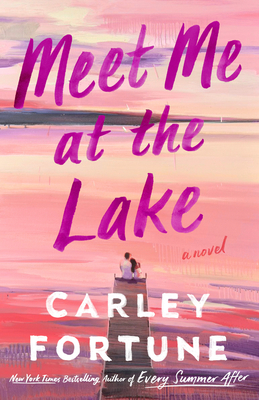
Meet Me at the Lake – Carley Fortune

Canadian writer Carley Fortune’s second novel, Meet Me at the Lake, doesn’t stray too far from the plot of her first book Every Summer After. In that book, childhood besties become more and are then separated by a bad decision, only to reunite many years later.

In this iteration, Fern Brookbanks meets Will Baker in Toronto just after she’s graduated with her BBA. He’s an artist who has been hired to paint a mural at the coffee shop where Fern works.

Guys this hot were the worst. Cocky, self-absorbed, dull. Plus, he was tall. Hot plus tall meant he’d be completely insufferable.

Except, Will is not insufferable; he’s actually pretty great. He suggests a tour of Toronto before he heads back to Vancouver and she heads home to Hunstville, where she’s about to start working at the family business, a resort on the lake. The problem is, Fern is at a crossroad. She is pretty sure that’s not what she wants to do, even though that’s where her boyfriend of four years, Jamie, is. She has different dreams.

There is definitely a spark between Fern and Will, and they agree to meet in Muskoka in one year – except Will doesn’t show. Well, he does show, actually: nine years late.

Fortune offers readers two timelines: the day Will and Fern spend together and then their reunion in present day. Will is nothing like Fern remembers him, except that he’s still tall and hot. Instead of being an artist, he’s some sort of consultant who was apparently hired by Fern’s mother Maggie, to help breathe new life into the resort. He is both Will and not Will, but Fern still feels the crazy chemistry she felt all those years ago. What’s a girl to do?

The things I liked about the book are the same things I liked about Every Summer After. Canadian settings (I have friends in Huntsville, though I have never been), and references just make me happy. There are some fun characters in the book; I particularly liked the Roses, a couple who have been coming to the resort Fern’s whole life and “have hosted a Sunday cocktail hour at Cabin 15” since Fern was born and Peter, the pastry chef and Fern’s surrogate father.

The story itself, vague details of running a lodge and lots of food talk, is mildly diverting. But that’s not why you read this sort of book anyway. We’re here for the romance and I am guessing, based on the book’s massive popularity — shooting to the top of the NYT’s best sellers list when it was released — that most everyone loves that aspect of it. Like with her first book, it just didn’t quite work for me.

But maybe that’s just me. I like angst. Will and Fern had a day, a really special day from all accounts, but then ten years later Fern is almost immediately ready to put that in the past because Will is there to work with her and she needs him to do that to save a business she didn’t even want anything to do with ten years ago –and yes, I get it people/circumstances change. And he’s tall. And hot. Their reunion just felt a little too easy and the bumps, when they arrive, come out of nowhere, and are all resolved with a little bit of familial exposition.

I didn’t hate this book. It was 50 pages too long, but it was easy to read. I didn’t feel annoyed when I was done reading, but I also didn’t feel that post-romance swoon. If you’re not going to break my heart — which is actually what I’d prefer — at least I don’t want to read Erotica 101. That’s mean: this book is definitely better than that, really, but it didn’t 100% scratch my romance itch even though I liked both main characters just fine. Still, a great book for your beach bag.

Wilder – Andrew Simonet

Jason Wilder is a high school senior who doesn’t actually attend classes. Instead, he spends his time in the Rubber Room…for his own protection.

Officially, it was In-School Suspension, but kids called it the Rubber Room. It wasn’t covered in rubber, but it was delinquent proof. […] The Rubber Room was set up to prevent tragedies like school shootings, or at least to make it look like you could prevent them.

Jason set a fire that hurt someone and now he’s a target. The thing about Jason is that he’s big and tough and, according to Meili, “a danger because [he] wants to be.”

Meili is in the Rubber Room because, according to the story that’s been passed around and likely exaggerated, she broke someone’s finger. She’s not afraid of Jason or his reputation for violence; she is fearless, mysterious, and just a tad crazy.

These are the characters in Andrew Simonet’s debut YA novel,Wilder.

Despite his propensity for violence, Jason is a sympathetic character. He has a distinctive voice and a troubling backstory. He lives alone; his mother and her boyfriend, Al, have moved to Florida, apparently to dry out. He lives in their crappy house existing on the little bit of money they send home to him. Because he is on probation for setting the fire, he can’t let anyone know that he lives alone. It’s not that hard to keep it a secret; Jason doesn’t really have any friends. Until Meili.

It is clear from early on in the story that something happens to Jason and Meili. Jason informs us

I have lots of time now to think about what happened. I’m straightening out how one thing led to the next, how I got drawn in, how things became inevitable.

Other people have their ideas, what should have happened, what I did and didn’t do. Meili has her version. This is my story, what it’s like inside my skin.

It is no wonder Jason and Meili are drawn to each other. It is also no wonder why things end up going horribly wrong.

I never want Meili – or anyone – to be so betrayed and broken. But if we’re gonna live in a world where that happens, I want this. I want her thrashing sobs and gut screams. I want to clench my body to hers and tumble. I want this velocity. I want my share.

Wilder is full of forward momentum. I found it a compelling read, but it’s definitely for mature readers. There is violence, lots of swearing and some fairly explicit sex.

Please See Us – Caitlin Mullen

Caitlin Mullen’s debut novel – and Edgar Award Winner – Please See Us is well written, but it took me forever to read. I don’t know: is that a bad thing?

Twenty-something Lily has run away from NYC and a messy breakup with about-to-be-famous sculptor Matthew and landed back home in Atlantic City. She needs a job but “it was unsettling to be in Atlantic City again — coming home had filled [her] with an inarticulate dread.” She takes a job as a receptionist at a hotel spa, a job she doesn’t want but needs if she wants to get back to her life, a new life, in New York.

Ava, aka Clara Voyant, is a teenager who reads tarot cards and palms on the strip. She lives with her aunt, Des, above the shop. They’re behind on their rent and Ava lives with the dream of saving enough money to join her mother in California. When the novel opens, Ava reads the cards of a man looking for his niece, Julie. Ava has seen the missing posters around town, but she doesn’t want to mislead the man.

I didn’t want to disappoint him with the truth: what I saw was limited, out of my control. I couldn’t just call up information from the universe as easily as plugging a question into a Google search.

Ava and Lily’s paths cross and soon they are working sort of together to find out what has happened to the missing girl who, turns out, is one of several missing girls. Of course, the reader will already know that the outcome of the man’s search probably won’t be good. The novel’s opening lines tell us that “By the second week of June, there are two dead women laid out like tallies in the stretch of marsh just behind the Sunset Motel.”

Mullen’s novel meanders through the interior lives of Ava and Lily and also, Luis, a deaf and mute janitor who works at the spa. We also get a glimpse into the lives of the girls who end up in the marsh, poignant snapshots into who they are, and the circumstances and choices which led to this most horrifying end.

Ava and Lily are compelling characters, both young enough – especially Ava – to use poor judgement and make bad decisions. Please See Us definitely has a something to say about the violence against women, and how society sees and judges women who, often through no fault of their own, end up using their bodies as a means to an end. (Frankly, the most despicable character in this whole thing is Ava’s Aunt Des who essentially pimps her out to make rent money.) There is a mystery here, but it’s a s-l-o-w burn and might not appeal to readers who want things to move along a little more quickly.

Horrid – Katrina Leno

There was a little girl 
Who had a little curl 
Right in the middle of her forehead. 
And when she was good, 
She was very, very good, 
But when she was bad, she was horrid. 

You’re familiar with the nursery rhyme, right? Well, so is Katrina Leno and she puts it to excellent use in her YA horror novel Horrid. (And look at that fantastic cover!)

Jane and her mother, Ruthellen, have left their lives in Los Angeles and driven across country to Bells Hollow, Maine. Neither of them particularly want to be there, but they have no choice: they have no place else to go. Ruth’s has inherited North Manor, “a large colonial-style mansion with three gables at the front and four white columns supporting a white-railed balcony.” The issue is that the house is dilapidated and creepy, looking like “one big tetanus trap.” Still, Jane and her mother are hoping for a fresh start and a place to heal from their personal tragedy.

Ruth gets a job and Jane resumes her senior year, where she meets and befriends Susie and Alana. School is school and Jane doesn’t have any issues until she encounters Alana’s cousin, Melanie, who seems to dislike her on sight. Jane isn’t interested in drama and besides, Melanie has troubles of her own, including an older sister who is very ill.

North Manor’s reputation as the “creep house” is well-deserved. Lights come on before there is electricity. Jane sees a shadow in an upstairs room. Marbles roll across the floor. The smell of roses is so strong, Jane feels choked by it. There are sounds that Ruth says are just the house settling, but they sound like footsteps to Jane.

In all the usual ways, Horrid is a straight-up haunted house story. And an unsettling one, too. But there’s more going on in Leno’s book than just things that go bump in the night. Jane is tortured by her father’s death and her blind-rage temper, which only he seemed able to subdue. The house seems to exacerbate Jane’s anxiety and when she discovers a decade’s old secret, well things get really interesting.

I really enjoyed reading Horrid. Jane was a sympathetic character and the ending was not YA – all – is – well – in -the – world, which I actually really appreciated. Loads of fun.