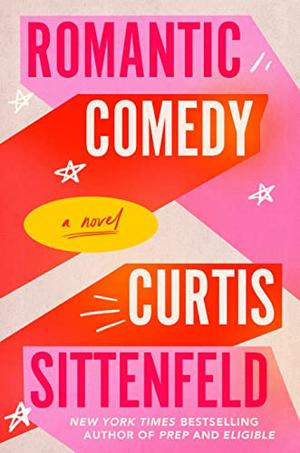
Romantic Comedy – Curtis Sittenfeld

Someone once told me that I was the most romantic person they’d ever met. That was a long time ago; life has chipped away at my notion of “romance”. Not that I ever consumed a lot of romance in literature, but I really don’t read that much straight-up romance at all now. If I do read it, I prefer a little angst (or, a lot of angst, tbh) and I like my main characters to be a little scuffed up by life. Still, the hype for Curtis Sittenfeld’s Romantic Comedy was irresistible and so I picked up a copy.

Sally Milz, 36, writes sketches for a late-night comedy show The Night Owls (picture Saturday Night Live). When the novel opens, Sally is getting ready for the crazy week ahead which includes writing sketch outlines, pitching them, fine-tuning them, taking them to rehearsal and then the live show. This week’s guest is Noah Brewster, “a cheesily handsome, extremely successful singer-songwriter who specialized in cloying pop music and was known for dating models in their early twenties.”

Noah is doing double duty this week acting as musical guest and host, a gig he claims “has been a lifelong dream, ever since [he] was a middle school misfit sneaking down to the basement to watch [the show] after [his] parents went to bed.” When he asks Sally for some help with a sketch he wants to pitch, Sally obliges and in doing so discovers that there is more to Noah than his piercing blue eyes, surfer hair and chiseled body. This is the meet cute.

While not necessarily a romantic cynic, Sally is also aware of how these things go – romantic relationships in an industry filled with beautiful people. She has written a sketch called “The Danny Horst Rule”. Danny is another writer on the show and even though he is “like a little brother” to Sally, the fact that he recently started dating Annabel Lily, “a gorgeous, talented, world-famous movie star” has sent Sally into a bit tizzy. Danny is, according to Sally, a “schlub.”

He was pasty skinned and sleep-deprived and sarcastic. And, perhaps because he was male or perhaps because he was a decade younger than I was, he was a lot less self-consciously people-pleasing and a lot more recklessly crass.

How come a guy like that ends up with a woman like Annabelle? This “was the essence of [her] fury: that such couples would never exist with the genders switched, that a gorgeous male celebrity would never fall in love with an ordinary, dorky, unkempt woman. Never. No matter how clever she was.”

There seems to be chemistry between Sally and Noah – or is he just turning on the high-wattage charisma big stars seem to have? Sally can’t tell. They definitely have banter, but it’s not vacuous banter. Then, at the after-after party there is a moment when – and Sally knows exactly when it happens – that things change.

The Covid lock-down two years later puts Noah back in Sally’s orbit and their email exchange is one of my favourite parts of the book – and that’s saying something considering I loved all the parts of the book.

Romantic Comedy is often laugh-out-loud funny, but it is also a book that examines notions of celebrity, beauty, gender and the perils of social media. I loved Sally’s insecurities and interior monologue – at one point she tells Noah that she “feel[s] like [she’s] writing dialogue for the character of [her]self.” And I loved Noah. He was self-aware and smart and patient with Sally. They are kind of perfect together.

Even if, like me, you wouldn’t necessarily consider yourself a romance reader, I can whole-heartedly recommend this book.

The Whistling – Rebecca Netley

Rebecca Netley’s debut novel The Whistling has all the necessary ingredients for an old-fashioned ghost story: an isolated location, a crumbling manor, unexplained occurrences, and plenty of things that go bump in the night.

It is 1860 and 24-year-old Elspeth Swansome arrives on the remote Scottish island of Skelthsea. She has been hired by Miss Gillies to look after her niece, Mary.

Iskar, Miss Gillies’ home, sits on the top of a hill. It is “a house larger than the others” remote and casting “a long shadow beneath which gorse and scrub shivered in the autumn chill.” Iskar was once beautiful, but is now showing signs of age and disrepair. It feels, to the reader and surely to Elspeth, dark and claustrophobic.

Elspeth’s young charge, Mary, has not spoken in months – not since the death of her twin brother William. There was also some scandal with the last nanny, Hettie, who ran off in the night with her lover. In addition, Mary’s mother – Miss Gillies’ sister – has recently died. All these tragedies strike a chord with Elspeth as she has also had some personal tragedy in her own life.

It doesn’t take long for things to get going. There are the requisite menacing characters, including Greer, a maid in the house who seems to hate Elspeth on sight and Ailsa, a woman from town who tells her that “All is not well at Iskar.” She’s got that right.

Elspeth hears humming in the halls, finds weird stones wrapped in human hair, sees shadows. Sometimes she finds Mary staring off into space and muttering to herself in a language no one can understand – even though she doesn’t speak to anyone else. Things get so creepy for Elspeth that she decides she is going to go back to the mainland, but in the end she can’t do it because of her growing affection for Mary.

Things get creepy for Mary, but unfortunately things didn’t get creepy for me. I mean – I guess I like my “horror” a little more horrific. This is an atmospheric book and might actually make a good movie, but it’s not scary.

There is a mystery at the centre of The Whistling. Although it’s not really my type of book, it was easy to read and entertaining enough for the kind of book it was. I suspect people who like their horror a little on the “lite” side, will likely really enjoy this book.

My version of the book, published by Harper Collins, has 377 pages…but the margins are wide and the font is huge – not sure what that was about. In addition, Netley had a writing quirk that drove me a little batty: “As I studied her features”; “As we walked”; “As I explained in my correspondence”. This is, I understand, a 100% personal pet peeve, but it did drive me a little batty. Otherwise, the writing is fine.

Easy to read, but nothing new.

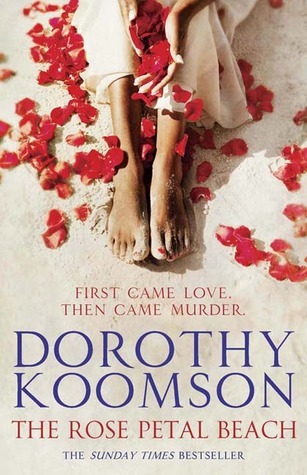
The Rose Petal Beach – Dorothy Koomson

I was a big fan of Dorothy Koomson’s novel The Ice Cream Girls, but The Rose Petal Beach? Not so much.

Told from multiple perspectives and bouncing from the present back to different points in the past, this is mainly the story of Tami and Scott, a married couple with two young daughters, who live in Brighton. Tami, who is Black, and Scott, who is white, have known each other since they were children. Scott is a Challey and “everyone knew the Challey family.”

Whenever Mum or Dad saw one of the Challeys in the street they’d talk about them quietly afterwards but not so quietly we didn’t hear. We knew they were people you crossed over the road to avoid. But you had to pretend that wasn’t why you crossed the road – they’d do you over if they thought you’d done that.

A chance encounter between Scott and Tami when they are eleven changes their lives. Tami tells Scott he can be whoever he wants — wise words from an eleven-year-old. Fast forward to present day and the couple are — at least from the outside — happily married and living the dream. Until the police arrive and arrest Scott. From that point on, Tami’s life spirals out of control.

The other two women in this story are Beatrix and Mirabelle, two women who live on the same street at the Challeys, and both of whom are friends with Tami. Mirabelle also works with Scott. Although Mirabelle isn’t one of the novel’s narrators, we do get to know quite a lot about her life. Later on in the story — and it’s a long one, clocking in at over 600 pages — we also meet Fleur.

The main problem with The Rose Petal Beach is that these people were ridiculous. The characterization was all over the place, especially with Scott. Is he a good guy? Is he an asshole? Is he a criminal? Well, yes and he can be all of those things in a single paragraph. The reveals seemed to come out of nowhere and felt less like legitimate twists and more like wtf?!

Although this novel is well reviewed – some even calling it a “masterpiece”, I found it kind of ridiculous. I know that we have to be willing to suspend disbelief a little bit when we read this kind of domestic thriller, but I at least want to care about the characters and I didn’t — not even a little bit.

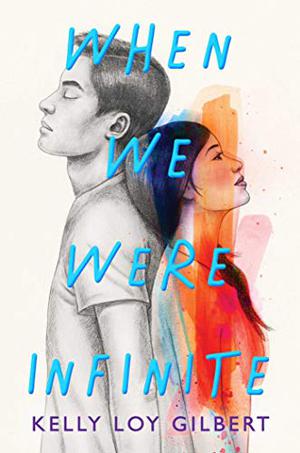
When We Were Infinite – Kelly Loy Gilbert

I read a lot of YA – especially during the school year. I started Kelly Loy Gilbert’s novel When We Were Infinite some time in May, but didn’t get around to finishing it because of all the craziness that happens at the end of the school year. I brought it home and finally got around to reading the second half of the book and I am so glad that I did because this is a superior YA book.

Beth, a talented violinist, lives in the Bay area with her Chinese-American mother. Her white father has moved out and Beth blames her mother. Her besties – Grace, Brandon, Sunny and Jason – are all Asian-American and also musicians. The five of them are part of the Bay Area Youth Symphony and are making plans to attend the same college after graduation.

There was so much the five of us had lived through together, so much we’d seen each other through. But in the whole long span of our history together, this was the most important thing my friends had done for me: erased that silence in my life. In the music and outside it, too, we could take all our discordant parts and raise them into a greater whole so that together, and only together, we were transcendent.

Beth is secretly in love with Jason and has been “for nearly as long as [she’d] known him.” That’s why, when she and Brandon witness an act of violence at Jason’s house, which ultimately leads to an even more shocking act, it sends Beth into a tailspin of worry.

Beth is telling this story from some point in the future, and the care with which she treats her younger self and her friends is lovely. It’s easy to look back at our younger selves and view the mistakes and missteps harshly, but Beth doesn’t do that. This book is really a love story: friendship and family and even our ability to love ourselves as much as anything else.

As an only child, and as a child of mixed ethnicity, Beth struggles with feeling as though she doesn’t really belong. She’s not white enough and she’s not Asian enough. Musically, perhaps she’s not good enough. Her conductor thinks she is and encourages her to apply to Julliard. Jason is first chair and clearly talented and he applies too, and when they both get auditions, they sneak off to NYC together.

This book is so beautifully written and so heartfelt and would speak to anyone who has ever felt ‘other’. Beth has a hard time articulating her feelings. I think she constantly feels as though she has to work harder than anyone else to be accepted and loved and perfect because if she’s not – maybe her friends will leave her just like her father did.

When We Were Infinite tackles some tough topics with sensitivity and I highly recommend it.

The Family Remains – Lisa Jewell

Lisa Jewell has always been a dependable writer for me. I know I am going to get a well-written, page-turning, thrill of a book, usually with multiple narratives that somehow all dovetail together in a satisfying way.

The Family Remains is a stand-alone sequel to The Family Upstairs, a book that I absolutely flew through when I read it during the height of Covid. I honestly do not think that you could read this one without having read its predecessor, though, and truthfully I don’t think this one is necessary.

Siblings Henry and Lucy Lamb are the adult survivors of a traumatic childhood — their parents, Henry and Martina, fell under the spell of a con man, David Thomsen and a woman called Birdie Dunlop-Evers. I won’t say much more about that because that’s the story you really want to read. Lucy is the mother of three children, Libby, whom she had when she was a kid, Marco and Stella. Currently they live with Henry until they can move into the huge new house she’s recently purchased with her share of a giant windfall. Libby is about to head to Botswana to meet, for the first time, her father Phin (who just happens to be David Thomsen’s son and also lived in the house when all the shit went down in the first book.) Henry has always been obsessed with Phin, but hasn’t seen him in years, so he decides to tag along. Except Phin leaves Botswana and heads stateside, so Henry drops everything to chase after him. Honestly, it’s all sort of unbelievable and ridiculous. (And I hate to say that because I really do love this author.)

Seemingly unconnected to that narrative is another character called Rachel, a struggling jewelry designer who meets, randomly, Michael. After a whirlwind romance, the two marry and then that all goes to hell in a handbasket. Could not have cared less about her.

Finally, there’s Detective Inspector Samuel Owusu, the man tasked with finding the identity of a human skeleton which washes up onto the banks of the Thames. This discovery is the catalyst that is meant to kickstart this new chapter in the lives of these characters.

This story depends, I think, on an understanding of what came first because without it, this all feels like telling. In her acknowledgments, Jewell thanks the readers who begged her to write a sequel to The Family Upstairs. Perhaps some people felt like they needed to know what happened after the final pages of that book, but I was not one of them. I mean, I never feel like I waste my time when I read this author because I do really like her, but this book just didn’t work for me.

Try these ones instead: The Night She Disappeared, Invisible Girl, Watching You, I Found You, The Girls in the Garden

We Spread – Iain Reid

Canadian novelist Iain Reid is an auto-buy author for me. A few years back I read and loved his debut I’m Thinking of Ending Things. Then I read his equally compelling novel, Foe.

Oh, Iain – your mind is a strange and wonderful place.

In We Spread, readers are introduced to Penny, a woman left alone after the death of her long term partner.

I am near the end now, and I am alone. Very old and very much alone. I have been both for some time. surrounded by the listless stacks and heavy piles of a life already lived: vinyl records, empty flowerpots, clothing, dishes, photo albums, magazines about art, drawings, letters from friends, the library of paperback books lining my shelves. It’s no wonder I’m stuck in the past, thinking about him, our days together, how our relationship started, and how it ended.

Penny leads an insular life. She has no children or extended family. She has lived in the same apartment for over fifty years, surrounded by the detritus of a life that is winding down, things that at one time “wasn’t just stuff. It all meant so much to [her]. All of it. Marrow that has turned to fat.”

After a fall, Penny is taken — by a pre-arrangement she and her partner made but that she does not remember — to Six Cedars Residence, a special care home out in the country. There are only three other residents, Pete, Ruth and Hilbert, and — as far as Penny can tell — two employees, Shelley and Jack. Shelley tells her that she will “feel at home in no time.”

And, at first, it is nice. Her room is beautiful.

I can almost feel a weight lifted off my shoulders, not having to think about objects. No debris. All that stuff that comes with obligation and duty. It hits me that I won’t be the responsible one here. No upkeep or cleaning. No laundry. No shopping. No bills or light-bulbs to change. No decision-making.

But then things start to get weird. When she has a shower, Shelley gets in the stall with her. There’s a weird rule about not being allowed outside. She starts losing time. The story’s structure, and the way the words appear on the page – short paragraphs with big gaps between – add to the breathlessness of Penny’s narrative and contribute, I think, to the reader’s own sense of unease. Holy unreliable narrator, Batman!

I read We Spread in just a few hours. I vacillated between theories about what the heck was going on, but at the end of the day, it doesn’t really matter. Reid seems to love ambiguity and I am there for it. He’s way smarter than me and that’s okay by me.

Great read.

All the Sinners Bleed – S.A. Cosby

I am not really a reader that jumps on the hype train and I think at least 75% of my time is spent reading backlist books. Even when I do buy a popular title when it comes out, there’s no guarantee that I am going to read it straight away.

S.A. Cosby has been on my reading radar for a while and I own a copy of his novel Blacktop Wasteland, but it’s been languishing on my tbr pile for months despite its rave reviews. His newest book All the Sinners Bleed is all over the place and lots of people are talking about it, so on my most recent visit to the bookstore, I picked it up. Then I read it…in about 48 hours and when I wasn’t reading it, I was thinking about when I could get back to it.

Titus Crown is Charon County’s first Black sheriff. He’s recently returned to his hometown after some time in the FBI and he’s going to need those skills to uncover the identity of a serial killer.

When the novel opens, Titus is called to the local high school where there is an active shooter. The shooter is the son of one of his friends from high school and one of the victims is a beloved teacher, Mr. Spearman. It’s hard to make sense of the crime, but as it turns out it’s just the beginning of the horror that will grip Charon.

I love a good thriller/mystery. And I love a main character who can look after himself. Titus is 6’2″ and a former football player, so I am guessing he cuts a pretty imposing figure. He’s a no-nonsense, take-charge kind of guy, but he also has some demons of his own. There’s an incident from his days with the FBI that he alludes to, there’s a strained relationship with his younger brother, Marquis, and then there’s his love life. It’s complicated.

What makes All the Sinners Bleed so propulsive is its straight-forward plot. Cosby doesn’t waste any time igniting the powder keg, but there are other interesting things going on too. There’s the white supremacists who want to march during a town festival and the Black leader of one of the local churches who wants to prevent that march. Small town politics means that the white chairman of the board, Scott Cunningham, thinks Titus answers to him. There’s religious fanaticism and confederate apologists. And bonus: the writing is really solid. It doesn’t get in the way of the plot; it’s muscular when it needs to be but also, at times, poetic.

But there were moments like today when the true nature of existence was revealed to him. Moments when the ephemeral curtain of divine composition was pulled away and entropy strode across the stage. For all his attempts at control, days like today, when he’d seen a boy he’d known since infancy get his chest cratered, reminded him that chaos was the true nature of things.

All the Sinners Bleed is a well-written, violent, dark novel and I loved every minute of it.

Zennor in Darkness – Helen Dunmore

In 1915, D.H. Lawrence and his wife, Frieda, moved to the Cornish coast and spent two years living in a cottage in Zennor. (You can read a little bit more about that here and see pictures of the cottage where they stayed here.)

In her debut novel, Zennor in Darkness, Helen Dunmore imagines a friendship between the Lawrences and a local girl, Clare Coyne. It is the nearing the end of World War 1, 1917, when the story takes place and suspicion and paranoia are rampant, so the fact that Lawrence’s wife is German and Lawrence himself is vehemently opposed to the war is the cause of much consternation and rumour mongering among the locals.

This is also a novel about Clare, who lives with her widowed father, and spends time with her extended family, particularly her cousins Hannah and John William. When John William returns from France, it is easy to see that the war has changed him, and the easy relationship between the cousins is forever altered.

He is lost to her. He is a thousand miles away, hearing the guns, seeing the ring of faces round him and knowing their chances.

Nothing much happens in this novel, yet it does capture a real sense of a specific time and place. I have been to St. Ives and so it was easy to imagine the windswept cliffs and natural beauty of the places Dunmore describes.

It is a landscape of irregular small fields shaped by Celtic farmers two thousand years ago. Lichened granite boulders are lodged into the hedges. They stand upright in the fields, a crop of stone. Lanes run tunnel-like between the furze down to the farms. Here, by the cottage, the lane dips and dampens and is lines with foxglove and hart’s tongue fern and slow drops of oozing water. It is so quiet here.

Like with her other works of fiction, Zennor in Darkness has a thread of the gothic and the forbidden running though it and this book is particularly melancholy because of the setting. Modern readers will have had no experience with the horrors of WW1 and what it did to communities and individuals, and although this book doesn’t take place in the trenches the book captures so much of that horrible period in history.

I am a long-time fan of Dunmore and have read several of her novels including The Greatcoat, A Spell of Winter, Talking to the Dead, Your Blue-Eyed Boy, and With Your Crooked Heart (which predates this blog and was the first book I read by her) and one collection of short stories, Ice Cream. All her work has something in common: the writing is beautiful. Dunmore began her career as a poet and it shows, but not at the expense of plot. Her work is not a case of style over substance.

A beautiful read.

Edited to add: I was delighted to talk to Shawn (of Shawn the Book Maniac) about this book. My segment starts at about 7:22.

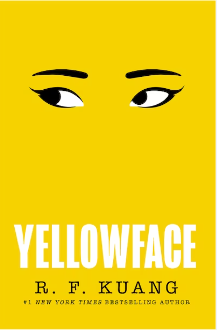
Yellowface – R.F. Kuang

R. F. Kuang’s novel Yellowface — a book about as buzzy as its possible to be right now — is the story of June Hayward, a struggling writer with one mediocre published novel under her belt. June is “friends” with Athena Liu, a celebrated Chinese-American novelist, who shot to fame after her debut novel was published and has since gone on to further acclaim and a Netflix deal. (Here’s how readers will know that this book is very much of the moment; it’s not enough to be published — you want to be nominated for awards, Internet famous, and optioned for a streaming service adaptation.)

The truth of the matter is, June doesn’t really like Athena all that much. Athena doesn’t have any friends and June is convinced that people find her as “unbearable” as she does.

She’s unbelievable. She’s literally unbelievable.

So of course Athena gets every good thing, because that’s how this industry works. Publishing picks a winner – someone attractive enough, someone cool and young and, oh, we’re all thinking it, let’s just say it, “diverse” enough – and lavishes all its money and resources on them.

June is not without some talent, but she’s just “brown-eyed, brown-haired June Hayward, from Philly.” No one is interested in stories by white female writers. When Athena dies accidentally (not a spoiler — the novel’s first line tells us this happens), June does the unthinkable: she steals an unfinished manuscript from Athena’s desk. The manuscript needs some work, but June can see that it is a “masterpiece.” The problem is that it’s the story of the “unsung contributions and experiences of the Chinese Labor Corps”, a subject about which June knows nothing. It’s barely even a draft, but June acknowledges that she can “see where it’s all going and it’s gorgeous.” It’s so gorgeous, that June feels that she should finish it.

I know you won’t believe me, but there was never a moment when I thought to myself, I’m going to take this and make it mine. It’s not like I sat down and hatched up some evil plan to profit off my dear friend’s work. No, seriously – it felt natural, like this was my calling, like it was divinely ordained.

This is a novel that is tuned into the publishing world, the social-media-famous landscape, and online bullies. When June/Athena’s novel is published to critical acclaim, June feels validated and deserving. There’s no imposter syndrome here because she feels as though she worked every bit as hard on the novel as Athena did. So what if she’s not Chinese (as some of the critics says). She did her research. When there is any criticism of the book, June can chalk it up to Athena’s contribution: she always knew Athena was a fraud. The only thing she had going for her was the fact that she wasn’t white.

This novel seems very timely given the trouble other writers have faced because they were writing from a point of view that was clearly not part of their experience. (American Dirt springs to mind.) If you are a voracious reader and pay attention to things that happen on social media, you’ll certainly get some of the references Kuang makes.

June isn’t a particularly likeable character– neither is Athena for that matter. June isn’t trying to hide her theft from herself or the reader, but she does spend a lot of time justifying it. I ripped through this book waiting for the other shoe to drop and loved every minute of it.

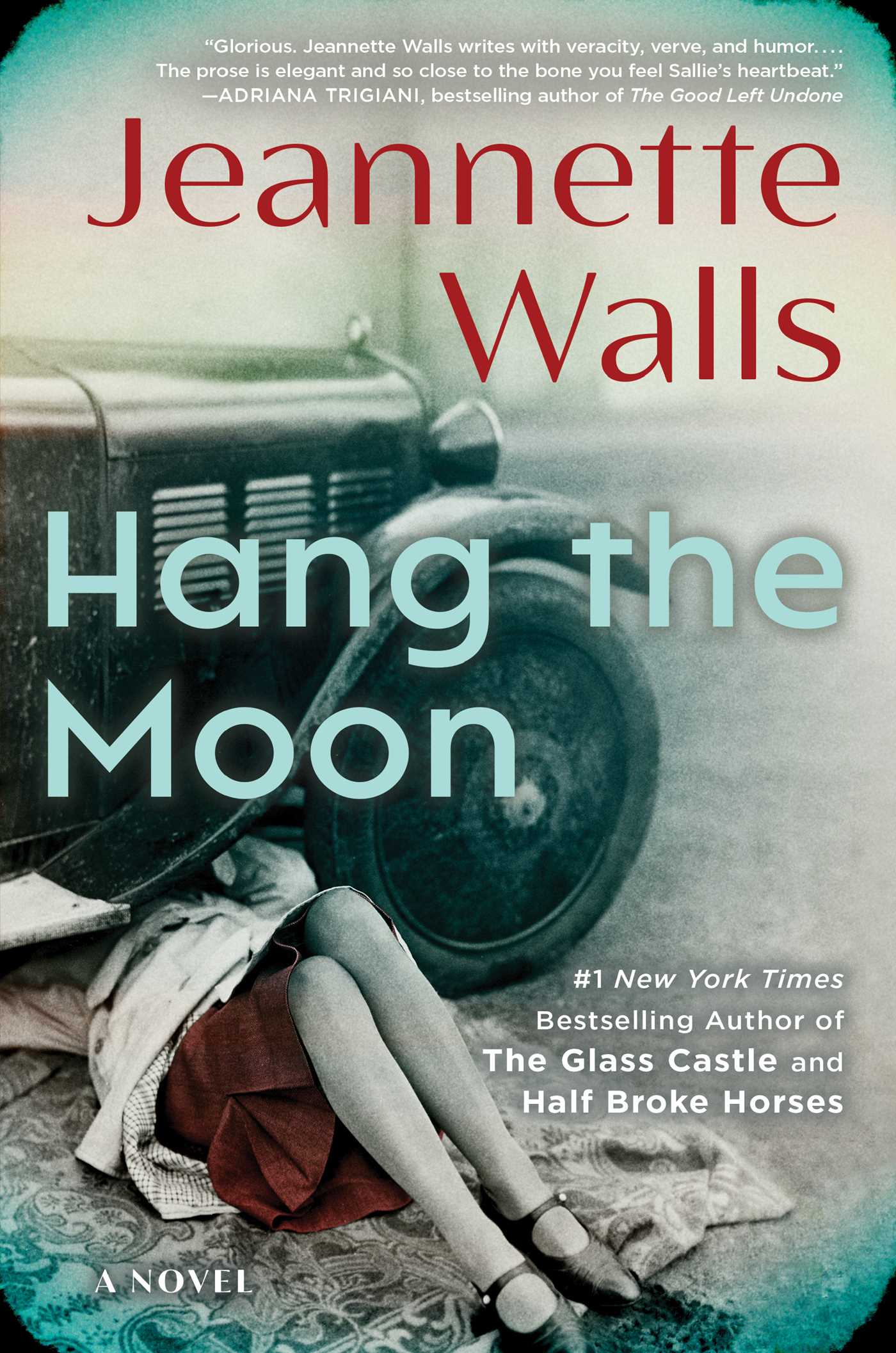
Hang the Moon – Jeannette Walls

I wouldn’t have read past page 10 if not for the fact that Hang the Moonwas this month’s book club read. Although I read and enjoyed Jeannette Walls’ memoir The Glass Castle years ago, this is the only other book I have read by her and I certainly won’t be reading anything else. In fact, since this is a Heather’s Pick – it will be going back to the bookstore for a refund.

Sallie Kincaid is the daughter of Duke Kincaid, a larger-than-life figure in a small town in the 1920s. Sallie admires her father even though, as it turns out, he’s not really worthy of that admiration. When she is eight, she causes an accident that injures her step-bother Eddie and she is sent away to live with her Aunt Faye. When she returns to the Big House, she is 17. Do we really know what happens during that time? How she is molded by this experience? How it shapes her opinion of her father and the other members of her family? Nope.

Back at the Big House, Duke gives Sallie a job collecting the rents from all the farmers who live on his land. She’s really good at it…because she just is. She can drive a car, and shoot a gun, and also talk to people. Sallie says “it is a horrible job, grueling and dusty, grimy and greasy, thankless and endless. And I love it.” Sallie is determined to carve her own way in the world, and to win her much-adored (but undeserving) father’s approval.

Despite the accolades this book received – including a starred review from Kirkus – I thought this book was just awful. I didn’t believe any of the characters. It was an eye-rolling, over-the-top series of “shocking” deaths and familial reveals that just strained credulity.

Save your time and money.