Before Laine Green even hears her mother answer the phone, she knows that Leah Greene is dead.
As I listen to her panicked voice, I feel the tiny bricks that have walled away certain memories continue to crumble….All I see behind my eyelids is Leah. Leah with her red-glossed lips. Leah standing above me. Leah telling our secret to a crowded room of strangers and my only friends in the world. Leah walking away, leaving me in the rubble of my ruined life.
Laine, the seventeen-year-old first person narrator of Jo Knowles’ YA novel Lessons From a Dead Girl, had willed Leah to die, had wanted it more than anything. And now that it is actually fait accompli, her feelings are complicated, an “overwhelming sense of guilt and fear.”
Once Lainey and Leah were best friends. Their older sisters were friends, and they’d decided that Leah and Laine should be pals, too. It’s an awkward relationship at first, for reasons that are obvious, at least to Laine.
Leah is popular and I’m not. Leah is also beautiful. Everyone wants to be Leah’s best friend. But me? Most people don’t even know who I am.
When the pair are children, the forced friendship soon morphs into something more genuine…and then seems to morph into something else again. The girls practice being husband and wife in Lainey’s “doll closet”, a game that makes Lainey both uncomfortable and “tingly.”
It is easy to see why Lainey is so conflicted. She’s not like the other girls. Her hair is “like a boy’s, short and brown and messy. My striped shirt is too small and has a grass stain on the front. Even my face is dirty. I look like a boy. An ugly boy. And I feel like one, too. Why would Leah be my friend?”
That question is at the root of this compelling novel and as the girls grow up and their relationship shifts and strains against the warped rules of adolescent girlhood, their bond frays and eventually breaks. Laine chafes against the secret she is keeping, but Leah has a few troubling secrets of her own.
Lessons From a Dead Girl is a very different book from See You at Harry’s. Knowles writes with authority no matter the topic, and Laine’s journey from innocence is powerful and compelling.
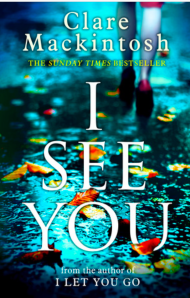
 Jessica Mayhew in Charlotte Williams’ novel The House on the Cliff.
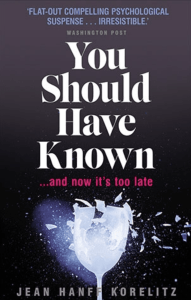 Grace Sachs, the protagonist in Jean Hanff Korelitz’s compelling domestic thriller You Should Have Known, is an outspoken marriage counsellor who believes that women know from the very beginning if their partners are duds.
 Joe Goldberg is crazy smart. Hmm, let me rephrase. Joe Goldberg is crazy. He works at a rare book store in New York City’s East Village and when Guinevere Beck aka Beck walks into the store one day, Joe is instantly smitten.
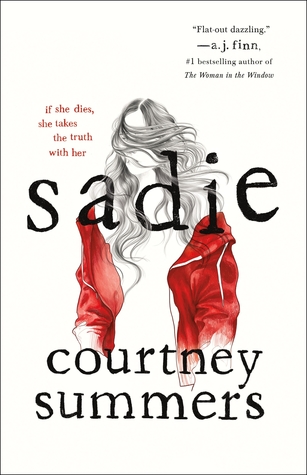 I thought if I waited a few days after finishing Courtney Summers’ latest book Sadie, I would have a better chance of articulating my feelings coherently. Sadly, I don’t think I am actually going to be able to adequately express all the ways I loved (and hated) this book.
 different worlds. Claudia lives with her stable and loving parents; Monday lives with her single mom and three siblings in Washington’s Ed Borough Complex, a part of town Claudia isn’t allowed to visit without an adult.
 Jam Gallahue just hasn’t been able to recover from the death of her boyfriend Reeve Maxfield. “I loved him,” she explains, “and then he died, and almost a year passed and no one knew what to do with me.” As a last resort, Jam’s parents send her to The Wooden Barn, “a boarding school for ’emotionally fragile, highly intelligent’ teenagers.”
 When I was a kid, I had pen pals. Lots of them. I think I started writing letters when I was about seven. We moved away from Winnipeg where we had been living for a couple years. I had to leave my best friend, Lynne, behind and we kept exchanging letters for many years – up until recently when my Christmas card to her was returned ‘address unknown.’
