
To Be Sung Underwater – Tom McNeal

Judith Toomey’s life “swerved” (her word) when she was forty-four. At the time she is a  Los Angeles film editor, married to a successful banker, Malcolm, and mother to a teenage daughter, Camille. Life is okay. Sometimes better than okay.underwater
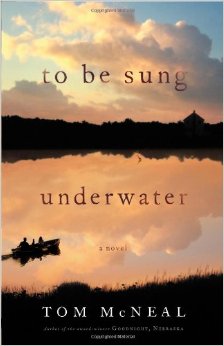
…there were  whole hours and even days when Judith was visited by a dull ace that in spite of its unspecific origin seemed symptomatic of yearning, but there were also whole hours and days of productivity, good cheer, and reasonable warm fellow-feeling that she presumed she should, to be fair about it, call happiness, or something within inches of it.

But then one day, the “bird’s-eye maple bedroom set, handed down to Judith’s father by his grandparents, and by Judith’s father to Judith, and by Judith to Camille” ends up in a heap by the pool, ready to be collected and disposed of, and something in Judith unfolds, “a slow blossoming of resentment.”

To Be Sung Underwater is the story of a woman who suddenly finds herself in a life she doesn’t understand anymore. It’s not that she doesn’t love Malcolm or Camille, it’s just that a choice she’d made twenty-seven years earlier is something she can no longer ignore. Instead of allowing the furniture to be taken to the dump, Judith rents a storage facility and recreates her teenage bedroom. The space becomes an oasis for Judith –  a place where she can dream and sleep and remember.

And what Judith remembers is her time living with her father in Nebraska. Judith’s parents are separated because, as her father says “Our marriage, like all marriages, was happy until it wasn’t.” Judith’s mother is a free-spirited woman and her lifestyle irks Judith, so she eventually joins her father, an English professor at a small college. They live a quiet existence, sharing music and literature and stories from her father’s past.

Then, when Judith is sixteen, she meets Willy Blunt. He calls her “dangerous” and “his eyes, reaching in, exerted on Judith what felt like a subtle but actual pull, which alarmed her.” A year later, when they meet again, there is no denying their connection.

To Be Sung Underwater resonated with me in ways I am not sure I will be able to articulate. Judith makes her living piecing frames of film together to make a coherent whole, but the pieces of her own life no longer make sense to her. She wants to go back, but as Thomas Wolfe famously said, “You can’t go home again.” She wants to see Willy, and we know from the prologue that she does.

It has been a long time since he has seen her, a very long time, but he would have known her in a second. A fraction of a second. For a moment he feels he might soon waken from a dream, but for once, at last and after all, it is not a dream.

Reading that again, after having spent a few hours with Judith and Willy, is deeply moving. I loved everything about Willy. I loved his wry sense of humour and his deep and abiding love for Judith. I loved Judith, too. She’s smart and thoughtful; she cares about the past. I loved how McNeal’s book  tapped into the everyday moments that make up a life: eating and reading and sleeping and falling in love.

To Be Sung Underwater magnificently captures that very human impulse to revisit what we have lost and to try, where possible, to make ourselves whole again. This is a beautiful novel and I highly recommend it.
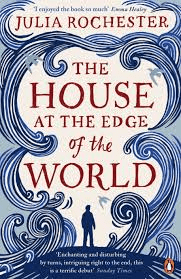
The House at the Edge of the World – Julia Rochester

Twins Morwenna and Corwin have grown up on the Devon coast with their unhappy parents, John and Valerie, and their paternal grandfather, Matthew. They are eighteen when the novel begins and their father has just fallen off a cliff to his death. Morwenna, the narrator of Julia Rochester’s compelling novel The House at the Edge of the World says “He was pissing into the brine at Brock Tor on his way home from the pub and fell headlong drunk into the spring tide with his flies open.”

house-edge-worldMorwenna draws us into a gothic landscape where people use language with scalpel-like precision and the characters are not particularly sympathetic.
Take Morwenna herself. I can’t remember the last time I read a book with a first-person narrator that I didn’t really like. Morwenna is prickly and often cruel. Her employer that eighteenth summer tells her she is “a bad-tempered, foul-mouthed little smartarse.” He’s not wrong. The only person she seems to even remotely care about is Corwin, her beautiful and enigmatic twin.

After the death of their father, Corwin leaves Thornton and heads to India where he says he is going to “move water.” Morwenna goes to London, first to school and then to a job as a book-binder. It’s incongruous to her personality — the care she takes to make these beautiful hand-crafted books with their embossed leather covers and beautiful end-papers.

Then Morwenna tells us “For seventeen years after my father’s death nothing much happened and then a pigeon flew through my window.” It’s a sign, surely. Corwin comes home and the siblings, again in each other’s orbit, start to pull at the thread of their family history.

Much of this history is captured in the map their grandfather, Matthew, has been painting for as long as they can remember. The map captures both the landscape and the history of their ancestral home and soon becomes an important clue in the mystery of Morwenna’s father’s life and death.

Even more intriguing to me is the relationship between Morwenna and her brother. To say it’s complicated would be the understatement of the year. His arrival back in England after a long absence offers Morwenna only “one last  lazy unspoiled afternoon” before Matthew’s map and their childhood home spills its secrets.

I really liked The House at the Edge of the World. The language is beautiful. There is an element of idioglossia between Morwenna and Corwin.  They are endlessly compelling even if you don’t particularly like them. The same is true for the rest of the characters. Only Valerie, when she finally moves away from Thornton, seems to manage a modicum of happiness.

I am not satisfied with the way I am talking about this novel. Gah! It’s probably because I don’t want to give anything away and I also have all these conflicting emotions about it. So let me just say this:

Highly recommended.


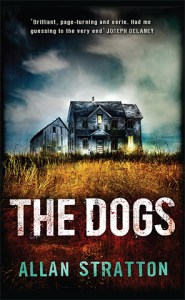
The Dogs – Allan Stratton

Cameron and his mom have been on the run for as long as Cameron can remember. the_dogs_uk_cover_med_frontCameron’s dad is dangerous and they’ve never been able to stay in one place for very long. This last move takes them to a farmhouse in the middle of nowhere, outside of a small town called Wolf Hollow.
“Whoa! Somebody! Put this place out of its misery.” That’s how Cameron describes the two-storey, ramshackle building he and his mom are going to call home. Mom notes the two staircases and says “It’s good to have more than one escape route…in case of fire.” Mr. Sinclair, the old farmer who owns the house, is secretive and slightly menacing.

But Cameron’s creepy father isn’t the only creepy thing going on in Allan Stratton’s YA novel The Dogs. Cameron discovers some drawings and a photograph in the coal room and the discovery connects him to a strange mystery that has haunted the farmhouse for decades. One of the drawings depicts “a pack of wild dogs ripping things apart.” Further investigation reveals that the previous owner, Mr. McTavish, was ripped apart by his dogs after his wife and son, Jacky, ran off with another man.

The clever things about The Dogs is that it operates on many different levels. As Cameron spends more and more time trying to figure out what really happened in the farmhouse all those years ago, he also begins to question his own memories of his father. Is his mother telling him the whole truth or is she leaving out essential details? Is his dad really as bad as his mother says?

Cameron’s traumatic childhood makes him especially suggestible and readers will share every spooky bump-in-the-night incident with him as he tries to reconcile his memories with what is happening in the house. Is he crazy, as his mother worries he might be, or are the things he sees and hears really happening?

“It’s not my fault I picture things, or talk to myself. If I try to keep all the stuff in my head inside, I’ll explode,” Cameron explains to his mother.

The Dogs is written in straight-forward prose, which will appeal to many young readers particularly reluctant readers. I think any reader will enjoy the book’s eeriness and honest portrayal of a teenage boy who despite his own difficulties shows tremendous resilience. I know I did.


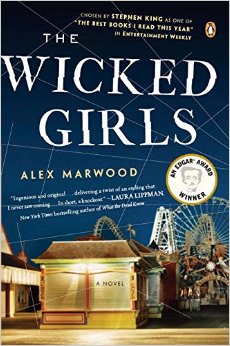
The Wicked Girls – Alex Marwood

wicked.jpgIt’s 1986 when eleven-year-olds Jade and Bel meet in the village store. Their paths weren’t likely to have crossed before because Jade is one of the notorious Walkers – a family from the far side of the tracks – and Bel lives in a fancy house with servants. This fateful meeting is to change the course of the girls’ lives forever because by the end of it another little girl will be dead and Jade and Bel will be arrested for the murder.
This isn’t the only thing happening in Alex Marwood’s novel The Wicked Girls, though.

There’s Amber, head cleaner of Funnland, a boardwalk amusement park in the seaside town of Whitmouth (I imagined Blackpool only smaller and seedier). She lives with Vic, a handsome but slightly passive-aggressive carny. Amber lives a quiet, tidy life. She takes pleasure in overseeing her crew of cleaners and helping them when she can. When Amber discovers a dead girl in the park’s  hall of mirrors, her life becomes significantly more complicated.

Then there’s Kirsty , a freelance journalist married to Jim, an out of work  IT guy, and mother to a couple children. When the body is found at Funnland, Kirsty finds herself on assignment and inevitably comes face-to-face with Amber, the last person she’d ever expected to see again.

The reason: after their release from prison,  Jade and Bel were given new identities and cautioned about ever making contact with each other again. Not that the girls were likely to meet; they barely knew each other to begin with.

Marwood balances the story of Jade and Bel, unspooling the narrative of what happened that long ago day with the present day  Amber and Kirsty, two women who have made a desperate attempt to reinvent their lives.

As if that weren’t enough, let’s not forget Martin, creepy Whitmouth resident. He’s been rebuffed by Jackie, one of the Funnland cleaners. He’s clearly deranged and

the rage of rejection crawls beneath his skin; invisible, unscratchable. All she needs to do is text him back. He doesn’t want to go out, but if she refuses to respond he’s going to have to. As his mother was always assuring him, persistence is the most important quality in life. And he knows he is the most persistent of all.

The seemingly disparate threads of Marwood’s novel do come together, but whether you find the ending satisfying or not will depend on how you like your mysteries. There were a few super tense moments in The Wicked Girls, but there were also moments I found really slow going – not superfluous exactly. I guess I just like a little more ass-kicking and a little less naval-gazing in my thrillers. That said, the characters were definitely nuanced and sympathetic and the writing was good, but over-all I would have to say  The Wicked Girls is more slow burn than page-turner. That’s not necessarily a bad thing, though.

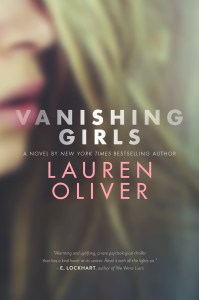
Vanishing Girls – Lauren Oliver

Now that I am back at school, it’s time to start reading YA fiction again. I give it a little  break in the summer so that I can tackle my own mammoth tbr pile. I started this year by reading Lauren Oliver’s highly praised book Vanishing Girls. It’s pretty un-put-down-vanishing-girls-jacketable, folks.

Nicole (Nick) and her younger sister, Dara, couldn’t really be more unalike. Nick is the responsible one; Dara is the wild child and for as long as Nick can remember, people have been comparing the sisters.

She’s not as pretty as her younger sister…shyer than her younger sister…not as popular as her younger sister.

But despite their differences, Nick and Dara are close. Dara recalls that they’d spent

practically our whole lives sneaking into each other’s rooms to sleep in the same bed, whisper about our crushes, watch moon patterns on the ceiling and try to pick out different shapes…cut our fingers and let them bleed together so we’d be bonded forever, so we’d be made not just of the same genes but of each other.

Parker is Nick’s best friend – the boy from the neighbourhood who has shared every single milestone in Nick’s life. Then he and Dara hook up and things get awkward. Dara goes off the rails – drinking and doing drugs – and then there’s the car accident.

Oliver has written a novel that is both an exciting page-turner (a young girl goes missing and then Dara disappears and Nick is convinced the two disappearances are somehow connected) and a moving family drama. Nick and Dara’s parents have separated and the accidents adds extra emotional weight to the already damaged family.

The narrative unfolds in dual first-person narratives, through diary entries and police reports and photographs and illustrations. Each sister has her own version of the truth of what happened on the night of the accident and the time-shifting narrative will yield important clues to careful readers, but the truth is that when all is revealed, you’ll probably still be scrambling to figure out how Oliver’s pulled it off.

Oliver is well-known in the YA world. She wrote the popular Delirium series and I have been looking forward to reading her adult novel, Rooms. After reading Vanishing Girls I think I’ll have to move Rooms up my reading list. That’s pretty much the highest praise I can give.

Bittersweet – Miranda Beverly-Whittemore

18339743Mabel Dagmar, the seventeen-year-old narrator of Miranda Beverly-Whittemore’s stunning novel Bittersweet is attending an upper-crust East Coast college on a scholarship. Her roommate, Genevra “Ev” Winslow is from an  influential blue blood family. The two girls couldn’t be any more different and yet somehow Mabel finds herself invited to spend the summer at Winloch, the Winslow family compound in Vermont. Mabel has no interest in returning home to Oregon for the summer, so she gratefully agrees even though she has to help Ev prepare Bittersweet, Ev’s personal cottage, for her father’s “inspection”.

“…if we don’t get that little hovel in shipshape in less than a week, I won’t inherit it,” Ev tells Mabel on the train to Vermont.

Winloch is a strange out-of-time place comprised of an assortment of cottages and a communal Dining Hall set around a beautiful lake,  inhabited by Ev’s immediate family including her parents, Birch and Tilde. It’s isolated and idyllic and Mabel is enchanted. This, she decides, is the life she wants.

Her visit to Birch and Tilde’s cottage only reaffirms her admiration:

Upon the honey-colored floor stood antique wood sideboards and a large mahogany table. An exquisite burgundy Oriental rug tied the furniture together, ending before a large fireplace sporting a brass fender and matching andirons. Canapes were arranged in colorful formations upon hand-painted porcelain platters: crab cakes and mini-lobster rolls and demitasses of chilled pea soup.

Even more impressive, the Winslow’s cottage boasts an impressive Van Gogh, “the most beautiful painting I’d ever seen.”

But there is also something slightly sinister about Winloch. For one thing, Ev installs bolts on the bathroom and bedroom door at Bittersweet. Then Mabel meets Indo, Birch’s sister, who enlists Mabel’s help in locating some important documents lost somewhere in the attic of the Dining Hall, claiming she’d been “looking for a friend like [Mabel] for a while.”

Mabel soon finds herself negotiating a landscape of shifting loyalties and strange tensions. It makes for compelling reading, that’s for sure; I couldn’t turn the pages quickly enough.

Although the bulk of Bittersweet takes place during that one summer, Mabel is actually remembering the events from a vantage point many years later. This will, in part,  help explain why Mabel seems older than seventeen. Her own personal history, revealed in tantalizing snippets, will also help the reader understand her motivations. Bittersweet is Shakespearean in its scope.

Highly recommended.

I Let You Go – Clare Mackintosh

There have been a lot of books in the suspense thriller vein of late and I love them, especialllet you goy in the summer when I just want to give my brain a break from school.  Publishers always want to draw comparisons to Gone Girl, which is the book that perhaps kick-started this newest craze, but I think it’s better to let a book stand on its own bookish merits.
Clare Mackintosh’s novel I Let You Go is definitely top of the thriller heap. I couldn’t put this book down and galloped through it in just a couple of sittings.

In the book’s opening pages, a mother is walking home in the pouring rain with her young son. Just at the road across the street from their home, he lets go of her hand and runs across the street. Out of nowhere, a car comes barreling down the street and hits the boy. From this point on, I Let You Go is a grab-you-by-the-throat suspense thriller that follows Jenna Gray as she goes to the Welsh coast to escape the tragic death and the police detectives, Ray and Kate, who are trying to find the driver behind the wheel.

Jenna’s grief is palpable. “Everything has changed,” she muses. “The instant the car slid across the wet tarmac, my whole life changed.” She stays until she can’t anymore and then, packing only what will fit into her holdall, including a box of treasures from her life, she runs away.

Unable to resist, I open the box and pick up the uppermost photo: a Polaroid taken by a soft-spoken midwife on the day he was born. He is a tiny scrap of pink, barely visible beneath the white hospital blanket.

As a mom, it’s hard to imagine how Jenna will ever survive this tragedy, but survive she must. She finally settles in a tiny tourist town called Penfach, somewhere outside of Swansea. There she rents an isolated, dilapidated cottage and begins the arduous process of overcoming her grief.

In the meantime, Ray and Kate sift through the non-existent evidence, hoping for a break in the case. Mackintosh spent twelve years as a police officer and so these sections are authentic, but don’t weigh the narrative down with unnecessary police jargon. In addition, Ray and Kate – especially Ray – are given interesting personal lives, which add another dimension to the story.

It doesn’t always work, but it does here – Mackintosh pushes the story along and months pass. Jenna starts to make a life for herself; Ray and Kate are taken off the hit and run case because they’ve done all they can do and then all hell breaks loose in a totally WTF fashion. You’ll know what I mean when you get there and from that moment on, it is a breathless race to the book’s conclusion.

LOVED IT!


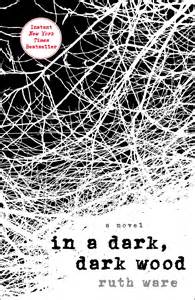
In a Dark, Dark Wood – Ruth Ware

Ruth Ware and I have lived parallel lives. I, too, have worked as a waitress, EAL teacher and  bookseller. Okay, I may have never been an official book publicist, but I could argue that I sell books all the time by talking about them here and in my classroom and on the radio. I have not, however, written a much-lauded “instant New York Times bestseller.” Crap.

Leonora (also known as Lee and Nora and Leo) is a reclusive and slightly odd mystery th9H5NVHJNwriter who lives in a small flat in London. One day she receives an email invitation to a weekend bridal shower (a “hen” night) for her once best friend, Clare. The invitation is puzzling to Nora because she hasn’t seen Clare in a decade and it seems as though they may have ended things on relatively awkward terms.
The invitation to the party starts Nora’s trip down memory lane, but it’s not a journey she takes willingly.

Clare had been my friend. My best friend, for a long time. And yet I’d run, without looking back, without even leaving a number. What kind of friend did that make me?

There’s only one other name Nora recognizes on the invite list: Nina da Souza. Nora reaches out and the two women make an “I’ll go if you go” pact. This is how they end up in the middle of the woods at a house that seems “as if it had been thrown down carelessly by a child tired of playing with some very minimalist bricks.” For someone used to living in close quarters in the middle of a huge city, Nora finds the location of Clare’s hen night “painfully exposed.” There’s a reason the place is called ‘The Glass House.’

The party’s host is Clare’s best friend from university, Flo. The other attendees are Melanie, a new mother and Tom, the token gay friend. When Nina and Nora arrive, Clare is not yet there. The whole event is awkward and fraught with tension.

Ware intersperses the hen night shenanigans with the aftermath of the weekend. Nora wakes up and “everything hurts. The light in my eyes, the pain in my head. There’s a stench of blood in my nostrils, and my hands are sticky with it.” There are police officers outside her hospital room door and someone is dead.

I enjoyed reading In a Dark, Dark Wood, but I sure wish people would stop comparing every psychological thriller/mystery to Gone Girl. This book is nothing like Gone Girl. That’s not a criticism, by the way. Ware doesn’t waste time with verbosity; this book moves along lickity split. Nora is a perfectly serviceable character, although not particularly endearing. There are plenty of creepy moments – as you’d expect in the fishbowl of a location.  The book has “blockbuster movie starring Reese Witherspoon (an early fan of the novel)” written all over it.


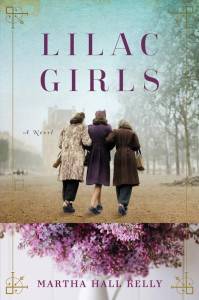
Lilac Girls – Martha Hall Kelly

Lilac Girls, the debut novel by Martha Hall Kelly,  is the first novel for my book club’s 2016-17 reading year. When it was chosen I can’t say that I was all that interested in reading it. We have all summer to read the book chosen for our first meeting of the new reading year, but I tend to like to read fast, snappy thrillers/mysteries in the summer – with the occasional YA or lit fic thrown into the mix. Also – not a tremendous fan of historical fiction. But I always read the book club selection because our get-togethers are a lot more fun when I’ve read the book. All this to say that I started this novel with a relatively negative attitude.

Lilac book jacketKelly’s novel tells the story of three very different women: New York socialite Caroline Ferriday, Polish teenager, Kasia Kuzmerick and German doctor Herta Oberheuser. It is 1939 and the one thing these women have in common is Adolf Hitler.
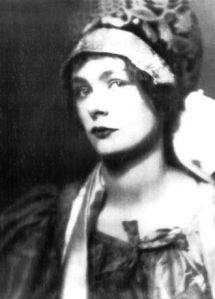
Caroline is 37 when the story opens. She’s a retired actress who volunteers at the French consulate. Kasia is just 16 when Germany invades Poland and changes her life forever. She is working as a courier for the underground resistance movement when she and her older sister, Zuzanna, and their mother are arrested and shipped off to Ravensbruck, a Nazi concentration camp for women. It is there that she encounters Herta, a young doctor who has taken a post at the camp because it is difficult for women in the medical field to find work.

The novel is told in three separate first person narratives and once the book gets going it’s almost impossible not to be carried along by the horrors of Ravensbruck and Kasia’s desperate attempts to survive. There’s also a little angsty love story between Caroline and famous French actor Paul Rodierre.  I read the first 200 pages in one sitting.

Caroline and Herta are real people, as Kelly explains in her notes. Kazia and her sister are

22907ea70de32fa19f35246c55131f05

Caroline Ferriday

“loosely based on Nina Iwanska and her physician sister, Krystyna, both operated on in the camps.”

It is almost impossible not to invest in these characters, and the sections concerning Kasia in Ravensbruck are particularly harrowing. There, she and her sister are among hundreds of women used as real-life guinea pigs (or “rabbits” as they are called) for the Ravensbruck doctors to experiment on. Herta’s participation in these horrific experiments,  crimes that are against every aspect of the Hippocratic oath, seal her fate as a villain.

The book is long and the ending seemed a little rushed to me and I could never figure out the title or the dumb book cover- which makes it seem like three girls are the best of friends. I also wasn’t fussy about Kasia and Herta’s showdown, but ultimately Lilac Girls was a good read.

Two books for summer school

Every year for the past seven, I’ve transitioned from regular school to teaching a month of summer school. Why, you might very well ask? Mostly for the money – although this summer my paychecks hardly seemed like incentive enough.Obviously I can’t cover a year’s worth of curriculum in three and a half weeks, so it’s mostly trying to teach grade nine and ten students reading and writing skills that will help them be successful next year. We read some short stories and poetry and this year we read Lois Lowry’s The Giver (Grade 10) and Todd Strasser’s The Wave. I’d never read either of them, but I knew they were accessible, high interest and short enough to get through in the limited time we had.

the_giver_1.jpg.CROP.promovar-medium2The Giver takes place in a community that values Sameness. On the surface it might even appear like a Utopia. Eleven-year-old Jonas lives in a family unit lives with his younger sister, Lily, and his mother and father. None of them are biologically connected.  His life is structured around school and volunteering and ceremonies that mark the important moments in the lives of the citizens. He is apprehensively waiting the next ceremony. His mother tries to calm Jonas’s nerves by telling him

“Well, it’s the last of the ceremonies, as you know. After Twelve, age isn’t important. Most of us even lose track of how old we are as time passes, though the information is in the Hall of Open Records, and we could go and look it up if we wanted to. What’s important is the preparation for adult life, and the training you’ll receive in your Assignment.”

Feeling apprehensive is unusual for members of this community. Their lives are not complicated by hunger,  disease or even bad weather. Everyone has productive work to do. They share their feelings as part of a nightly ritual. They apologize immediately if they say something even remotely offensive to another member of the community. They start taking a pill as soon as they acknowledge “stirrings” of a sexual nature. The Elders make all the decisions and “Rules were very hard to change.” The very old, the very weak and those who commit crimes are “released.”

At the Ceremony of the Twelves, Jonas gets his assignment. He is to be the Receiver, which means he will work with The Giver, the community’s most important citizen. He alone holds all the memories and he will transfer them to Jonas. Suddenly the only home Jonas knows seems less like Utopia and more like a nightmare.

The Giver is a great book – suitable for all readers and filled with lots of opportunities to talk about what it is to be human, free-will and the value and importance of memory. I really enjoyed it and would definitely use it in the classroom again.

Todd Strasser’s novelization The Wave is less literary, but offers lots of opportunities to51MDeY-2CjL._SX302_BO1,204,203,200_ talk, too.  The book is based on the true story of  California history teacher Ron Jones’ social experiment. (He’s been renamed Ben Ross in this book.) The year was 1969 and Ross had just shown his senior class a film about the Holocaust. When one of his students asked how the Germans could have just sat back and let the Nazis do what they did, Ross tried to think of a way he could illustrate the power of a fascist movement. He came up with “The Wave” and began to teach his students about discipline, community and action. Although the experiment was meant to be short-lived, it grew to include a salute, slogans and even a secret police force before it was finally dismantled due to complaints from parents and colleagues.

Virtually every one of my grade nine students really enjoyed reading The Wave. It was easy to read, so it’s perfect for struggling readers, plus it offered a lot of food for thought.