I didn’t get this book – at all. Everyone from the New York Times to Entertainment Weekly waxed poetic about its beauty and prose that “buzzes with wonder, fearlessness and ecstatic ignorance.” Um. I didn’t get it.
Translated from the Swedish, Popular Music from Vittula is a “novel” that actually seems more like a memoir – or a series of loosely connected short stories – because if there was a narrative thread here, I wasn’t seeing it.
The main character and narrator is Matti and we meet him as an adult “in a fix in the Thorong La Pass” (which is on Mount Annapurna, Nepal) where he finds himself 17, 765 feet above sea level, with his lips stuck to a Tibetan prayer plaque. I am sure what happens next is meant to be comical but, sadly, I didn’t laugh. And I didn’t laugh at any of the other crazy escapades Matti finds himself embroiled in from the age of five straight through to his teenage years.
Matti and his friend, Niila, meet at the neighbourhood playground and their friendship is cemented during a nose-picking session. The rest of this story traces their frienship, particularly their love for music, for the next decade or so. Their otherwise straightforward lives are touched by elements of magical realism. (Did these two five year olds really manage to get on a plane and fly all the way to Frankfurt?)
Matti’s story dips in and out of his life, giving the reader a chance to experience the first time he ever heard Elvis Presley sing (in his sister’s bedroom), the first time he goes to school, his first kiss. I wish I could say that the book was more than the sum of its parts, but for me I just didn’t get it.
Sara Zarr’s debut novel Story of a Girl kept me turning the pages far past my bedtime – a sure indicator of its quality. I read before bed and most nights I’m lucky if I manage a couple dozen pages, but last night I settled in early and once I started, I couldn’t stop.
Story of a Girl begins with sixteen-year-old Deanna Lambert’s admission that she “was thirteen when my dad caught me with Tommy Webber in the back of Tommy’s Buick, parked next to the old Chart House down in Montara at eleven o’clock on a Tuesday night. Tommy was seventeen and the supposed friend of my brother, Darren. I didn’t love him. I’m not even sure I liked him.”
Deanna had been parking with Tommy for a year before she’s finally caught, but her dad’s discovery of her in a compromising position casts the reality of her life in a harsh light. Now her dad can barely look at her. And when the novel opens, at the end of sophomore year (that’s grade ten here in Canada), it’s clear that the story of her tryst with Tommy is still the topic du jour in her small hometown of Pacifica, a sea-side suburb of San Francisco. At least pretty much everyone at Deanna’s high school knows about it – or some version of it. The only people who don’t care are her two best friends: Jason, a boy she’s known forever and Lee, a girl who moved to Pacifica after the incident.
Story of a Girl takes place during the summer between sophomore and junior year. Deanna’s strained relationship with her dad causes her to daydream about leaving home and living with her older brother Darren, his girlfriend, Stacy and their infant daughter, April. Currently they live in the basement. Stacy and Deanna’s dad don’t get along. In fact, Deanna’s household is pretty dysfunctional and so Deanna quickly finds work at a local pizza dive…where, it turns out, Tommy also works.
What I loved about this book was how realistic it seemed. Everyone judges Deanna for a decision she made when she was thirteen, but it isn’t until she comes into contact with Tommy again that she figures out why she always went off with him. And forgiving him – and herself – also allows her to empathize with her father.
…I imagined us through his eyes – his family, sitting in a pink kitchen: his tired wife, who never complained; his son who looked exactly like him; his daughter, who used to be the baby, his baby girl; and now April, his grand-daughter, who had a whole life in front of her, with no real mistakes in it yet. Could he look at us someday, I wondered, maybe today, and not be disappointed? Could he see us, and himself, for who we really were?
Story of a Girl is a beautiful book because, although it is Deanna’s story, no one’s life is lived in isolation. This is a book about family – the family given to us by biology and the family we choose. The path to adulthood is thorny and it’s good to have some people who are on your side. There are no villains in this book. Even Tommy, douche that he is, is probably trying to fill in the gaps in his own life. The thing is, we carry our mistakes with us and as Deanna’s boss at the pizza place, Michael, tells her: “…don’t mistake a new place for a new you.”
If my younger self had gotten her act together, I might have found a place in the publishing business. Nothing gives me more pleasure than reading and anyone who knows me, knows that I am really critical about what I read – just ask me what I think of Fifty Shades of Grey or Twilight. Or visit my Book Graveyard
By day, I am a high school English teacher and I really and truly feel that the most important part of my job is to put students on a path towards a lifetime of reading. During the 2012-13 academic year I had an astounding grade ten class. These kids were amazing – smart and funny and hard-working – and a true joy to spend time with. They also, for the most part, loved to read. So we did read, a lot.
I have a pretty good-sized classroom library…and it’s getting bigger. I have already asked our Mill & Cab teacher if he could get his students to build me a bigger and better bookshelf in my room in the fall because I am outgrowing all the bookcases I’ve purchased and scavanged over the past few years. I love having all those books in my room because it shows students I am a serious reader. It also allows me to have real conversations about books and gives me the ability to put a book into a kid’s hands and say “Read this.”
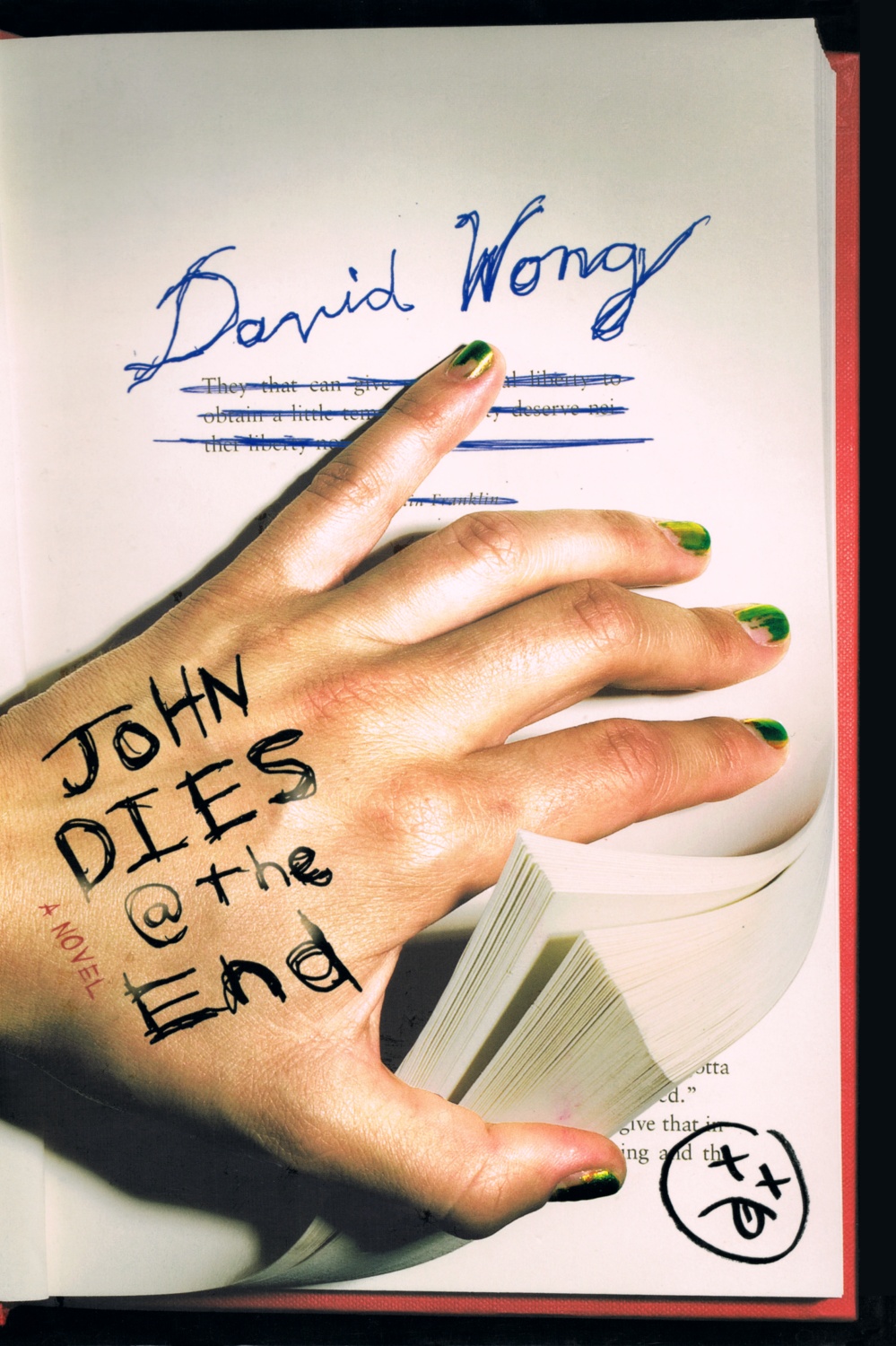
So, when a student turns the tables and puts a book in my hands, I feel obliged to read that book. In this case, the book was called John Dies @ the End by David Wong.
And I tried, guys; I really did. I got to page 142 and I just couldn’t go on. In a nutshell, John Dies @ the End is a crazy hybrid of horror and comedy about two friends, Dave and John, who appear to be some sort of supernatural investigators (think Sam and Dean from Supernatural) who come into contact with this mind-altering drug called ‘soy sauce’. Wackiness ensues.
Sadly, the wackiness just wasn’t interesting to me.
According to Cracked.com (where David Wong, a pseudonym for Jason Pargin, was an editor), John and Dave “find out the world is being attacked by a Lovecraftian god named Korrok, whose godhood has not saved him from being totally retarded. Dave must overcome Korrok’s dark and invisible army, while overcoming his own personal demons. His primary demon is the fact that he just doesn’t give a shit.”
John Dies @ the End had an interesting introduction to the world. The novel “has been published in no less than four formats: as an online serial, then through the print-on-demand service at CafePress, then via indie horror publisher Permuted Press, and now by huge megapublisher St. Martin’s.” It has also been made into a movie.
I can certainly see why the book would appeal to the two young men who recommended it to me. It’s over-the-top and ridiculous and, I suppose, creepy in parts. It’s like a cult film: Hobo With a Gun, say. Maybe if I had discovered this book 30 years ago, I would have enjoyed it more. But I doubt it.
So, this made me think about book recommendations. Something The Guardian also pondered in its article When book recommendations go wrong. I know how I feel when I fall in love with a book and want to share it and other readers aren’t quite as enamoured. It cuts like a knife, people.
Book Riot (an absolutely fabulous book-related site) had a great article about What To Do When Friends Give You a Book You Don’t Want to Read. I really felt obligated to read John Dies @ the End because how can I expect my students to accept my recommendations if I won’t accept theirs? The truth of the matter is that I have my own criteria for deciding whether or not I should keep on trucking through a book that doesn’t immediately grab me.
Jenny Hubbard, the author of Paper Covers Rock, was a high school and college English teacher for seventeen years and I am guessing she was a good one. Her debut novel is filled with references to poetry and literature and how they make us have “the feels” and allow us to connect with the world etc.
Sixteen-year-old Alex Stromm attends Birch Academy, a boarding school in North Carolina. He is, by his own admission, a good solid kid. When the story opens, Alex is writing in a journal his father had given him to write his impressions in when he’d started at Birch two years previously. Although the book has remained blank, now has something to write about: his friend Thomas is dead. He writes:
What I carry in my backpack down to the river, I carry not knowing that in less than an hour Thomas Broughton will be dead. That is not a knowledge I carry yet, but I will carry it soon – the knowledge of my darkest self – and I will carry it forever.
The reader learns about what happened that fateful day when Alex, Thomas, Clay and Glenn were at the rock by the river in fits and starts. Alex’s feelings of grief and guilt are only part of what compels him to scribble in his journal. He is also in love with his English teacher, Miss Dovecott, a recent Princeton graduate who is only a few years older than the boys she teaches. When she takes an interest in Alex’s writing he becomes even more conflicted about what happened that day on the rock.
Sounds sinister, eh? It’s not really, but I have to say that I did keep turning the pages and read the book in one sitting. Alex’s feelings for Miss Dovecott are complicated by his feelings of loyalty for Glenn. (Clay has taken the blame and left school; I’ll leave you to discover the reason why on your own.) Turns out that just after Thomas drowned, drawn by the screams, Miss Dovecott arrived on the scene and Glenn is convinced that she knows more than she is letting on. Oh what a tangled web.
And I have to say, the writing is stellar. The poetry Alex writes is lovely and it’s easy to see why Miss Dovecott takes an interest in him. Ms. Hubbard captures the male voices beautifully (not as crass as they might be now because, after all, the story is set in 1982) and also manages to make Alex both sympathetic and self-serving on his journey to manhood.
This book contains precisely zero Important Life Lessons, or Little-Known Facts About Love, or sappy tear-jerking Moments When We Knew We Had Left Our Childhood Behind For Good, or whatever. And, unlike most books in which a girl gets cancer, there are definitely no sugary paradoxical single-sentence paragraphs that you’re supposed to think are deep because they’re in italics.
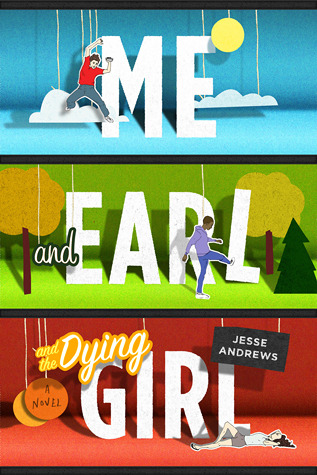
Meet Greg Gaines. He’s the seventeen-year-old narrator of Jesse Andrews’ debut novel Me and Earl and the Dying Girl. He lives with his parents, and two younger sisters in a Pittsburgh suburb. He’s a trash-talking, cynical, slacker who is just trying to make it through his final year of high school.
…you have to to start from the premise that high school sucks. Do you accept that premise? Of course you do. It is a universally acknowledged truth that high school sucks.
Greg goes through the days in a weird state of disconnect because he feels as though the only way to survive school is to stay on the periphery of all the various groups, rather than belonging to any one of them. He says, “I didn’t join any group outright, you understand. But I got access to all of them.” Of course, that makes having real relationships slightly problematic.
Greg’s only friend is Earl; well, as Greg puts it, they are more like co-workers. They’ve known each other since they were in kindergarten and discovered a shared love of movies. Since then they have made several films together.
So Greg goes through his days doing as little as possible, using his sense of humour to cover up the fact, I think, that he is insecure about his weight and his looks and his life (all totally relateable to anyone who has ever survived a difficult – or any – high school experience.) And then Rachel Kushner is re-introduced to his life.
Greg and Rachel had been sort-of friends when they were kids although Greg admits that he hadn’t been all that nice to her. Turns out Rachel has recently been diagnosed with leukemia and Greg’s mom calls in a favour – rally around Rachel.
Me and Earl and the Dying Girl is not a cancer book, though. It is a profane, often funny and honest look at a teenager on the cusp of adulthood who doesn’t get it…and then does. Despite a great family, Greg is sort of closed off to the world. He doesn’t know how to have authentic relationships even though he is clearly capable of them. He spends his time with Rachel making lame jokes, trying to divert the focus away from Rachel’s illness – not for her benefit, but for his own.
There is no way Greg is going to come away from spending time with “the dying girl” unscathed and he doesn’t. Mature readers won’t either.
I read this book as part of a program that lets teachers read books being considered for classrooms in New Brunswick. I do think this is a worthwhile and well-written book. My one caveat would be that there is a lot of swearing. A lot a lot. That said, as a high school teacher and a mom of teenagers I think we are fooling ourselves if we think kids don’t talk like this (not my kids, of course!). I think we do mature teens a disservice by leaving books like this off the shelf. I think some students will see themselves in Greg and Earl and it would be a shame not to give strong readers the opportunity to share time with them. I don’t believe in censorship anyway, but beyond that Me and Earl and the Dying Girl has real merit.
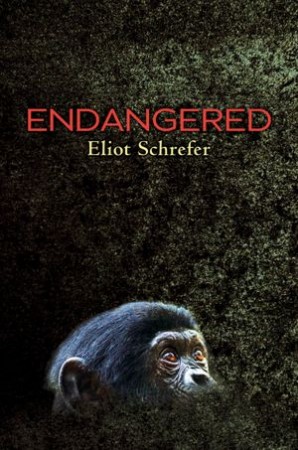
When my 14-year-old son saw that I was reading Eliot Schrefer’s novel Endangered he rolled his eyes and said, “Mom, our teacher tried to read us that book last year and no one liked it – not even her.” Connor is a voracious reader and we have often read and enjoyed the same books so I have to admit that I was skeptical as I started this book.
Fourteen-year-old Sophie is visiting her mother in the Democratic Republic of the Congo (DRC). Her parents are divorced and she has been living with her father in Miami since she was eight, but it’s the summer holidays and so she is visiting with her mom at the bonobo sanctuary her mother runs in Kinshasa. Bonobos are a member of the ape family and they are endangered. Bonobos, as it turns out, are our closest relatives, “sharing over 98.7 percent of our DNA.” Adult bonobos are often killed for food; babies are kidnapped and sold on the black market. It is just such an encounter that starts Sophie’s story.
The little ape sat down tiredly in the dirt and lowered his arms, wincing as his sore muscles relaxed. I kneeled and reached out to him. The bonobo glanced at his master before working up the energy to stand and toddle over to me. He leaned against my shin for a moment, then extended his arms to be picked up. I lifted him easily and he hugged himself to me, his fragile arms as light as a necklace.
Sophie’s mother is none-too-happy when her daughter arrives at the sanctuary with the bonobo. Not because Sophie rescued the bonobo, but because she didn’t follow the proper protocol and that could cause more trouble down the road. But Sophie has fallen in love with the little bonobo she names Otto and their relationship sustains them through the difficult times ahead.
In the beginning I found Endangered a little didactic. Admittedly, I knew nothing about bonobos and even less about the scary situation in the DRC, but the way the information was relayed to the reader – via Sophie – just didn’t feel organic. Thankfully, Schrefer didn’t spend a lot of time instructing us. When the Congo’s president is assassinated and rebels flood into the area Sophie’s peaceful existence at the sanctuary crumbles. That’s when things get really interesting.
Sophie is a remarkably resilient character. Despite the fact that she has been leading a relatively privileged life in the States for the past six years, she hasn’t forgotten where she came from. As she and Otto travel through the jungle and up the Congo river to find her mother (who had left just before the coup to take some bonobos to an island release site), my heart was really racing. I mean, this war (despite being fictional) is based on decades of bloody conflict and although Schrefer stays away from the truly graphic, one only has to use their imagination to imagine the atrocities Sophie and Otto encounter on their way.
And don’t even get me started on the subject of Sophie’s bond with Otto. If even half of what transpires between them is true, bonobos are beyond remarkable; they’re us.
Con, honey, I respectfully disagree with your assessment of this book.
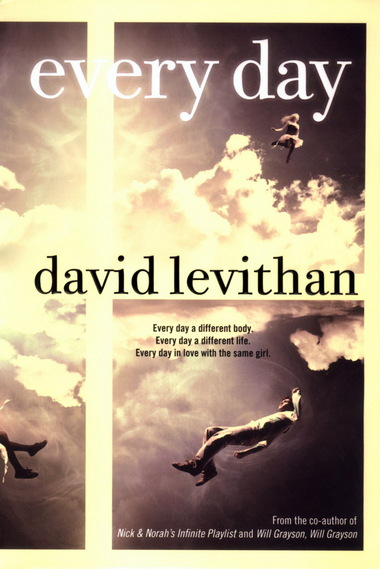
What if every day you woke up in someone else’s body? You are you, but also them; you have access to their memories, but also retain your own. This is A’s predicament in David Levithan’s clever and emotionally resonant YA novel, Every Day.
I don’t know how this works. Or why. I stopped trying to figure it out a long time ago. I’m never going to figure it out, any more than a normal person will figure out his or her own existance. After a while, you have to be at peace with the fact that you simply are. There is no way to know why.
Dispensing with the prickly question of how this works (or doesn’t) early on, Levithan dumps the reader into A’s life on Day 5994. He is 16. Today he is in Justin’s body. Justin’s not a particularly likeable guy and A figures that out pretty quickly. He admits: “I know I am not going to like today.”
A’s ability to access information from each person he inhabits allows him to live each day with relative ease, plus he always has an escape hatch because he knows that he will wake up as someone else the next day. Even if he wakes up in the body of an idiot, he knows it’s not forever. Justin is a bit of an idiot and that wouldn’t be such a big deal if it weren’t for Rhiannon. She’s Justin’s girlfriend.
…there’s something about her – the cities on her shoes, the flash of bravery, the unnecessary sadness – that makes me want to know what the word will be when it stops being a sound. I have spent years meeting people without ever knowing them, and on this morning, in this place, with this girl, I feel the faintest pull of wanting to know. And in a moment of either weakness or bravery on my own part, I decide to follow it. I decide to find out more.
Thus begins A’s relationship with Rhiannon. And as you might imagine, there’s nothing typical about it. There’s nothing typical about Every Day period.
A has spent his entire existence trying to keep himself separate from the person whose body he inhabits. His feelings for Rhiannon complicate his life in ways too numerous to mention; suffice it to say that every day becomes a challenge to see her, but first he somehow has to convince her of the truth of his strange reality.
In one sense, Every Day works as a terrific page-turner: will A and Rhiannon find a way to be together despite their terrific obstacles? After all one day A could be in the body of a hunky football player and the next he could be an overweight teenage girl. Will Rhiannon love him back despite his outward appearance? What is love anyway?
But I think this novel also works hard to be something more and in that way I think it will probably speak to teenagers everywhere. It allows us to inhabit the bodies of confident, beautiful teens and also depressed teens who wish themselves harm. We hang with straight teens and gay teens, teens with parents who smother them and parents who trust them. Each scenario allows Levithan the opportunity to show the reader his tremendous capacity for empathy. And it also allows us to see A – despite his lack of corpreal form – as the embodiment of what it means to be human.
My daughter was settled in at the foot of my bed playing on her iPhone and I was reading the last few pages of Patrick Ness’s remarkable novel, A Monster Calls.
And, yeah, I was crying. Hard by the end of it.
Damn you, Patrick Ness.
Siobhan Dowd is credited for the idea for A Monster Calls, but sadly Ms. Dowd died – at the age of 47 – before she ever had the chance to see her idea through to the end. As Ness acknowledges in his Author’s Note, “the thing about good ideas is that they grow other ideas. Almost before I could help it, Siobhan’s ideas were suggesting new ones to me, and I began to feel that itch that every writer longs for: the itch to start getting words down, the itch to tell a story.”
A Monster Calls is the story of thirteen-year-old Conor O’Malley who lives with his mom in a little house in a little town in England. His parents are divorced and his dad now lives in the States with his new wife and a baby daughter. Conor rarely sees him.
Conor’s mom is ill. Readers will figure out early on that she has cancer and that Conor is doing his level best to cope, with varying degrees of success. Then the monster shows up “just after midnight. As they do.”
Conor isn’t particularly afraid of this monster. Despite its “great and terrible face”, Conor tells the monster he’s “seen worse.” And even though he claims not to be frightened of the monster, the monster replies that he will be “before the end.”
The monster continues to visit at night with stories that make no sense to Conor. The monster also claims that there will come a time for the fourth tale – that is Conor’s story. Conor knows what the monster is talking about: a recurring nightmare which terrifies him and which he insists he will not be sharing. In the meantime, his mother grows weaker, his grandmother steps in to help out (much to Conor’s dismay) and his father visits from America – a sure sign of the Apocalypse.
The monster drives Conor to action, but also to irrefutable truths. The monster says, “Stories are important. They can be more important than anything. If they carry the truth.”
Conor’s truth is one that he is unwilling to face, but which comes barreling towards him anyway. And as a reader, I have to say, I was unprepared for its impact.
A Monster Calls reminded me a little bit of John Connolly’s brilliant novel The Book of Lost Things. Connolly’s story is also about a boy on a journey from innocence to experience. You should definitely check it out.
As for A Monster Calls – I cannot recommend it highly enough.
I always say Thomas H. Cook is a mystery writer and he is…but I think he is also so much more than that. Master of the Delta is my 8th outing with Cook and it didn’t disappoint, even though some of the themes were familiar. The novel has the propulsive energy of a mystery, a book with a thread of whodunit twined with a ribbon of ‘is this going to end like I think it’s going to end?’ And of course – nothing is ever quite what it seems. But Cook operates on another level and this is where I think he excels.
Master of the Delta is Jack Branch’s story. Branch is a twenty-three year old teacher who has returned to his hometown to teach at Lakeland High School. Branch has had a priviledged upbringing: he grew up at Great Oaks, one of the town’s massive plantation homes. It is 1954.
As a boy I’d sat with my father on just such a veranda, evenings that despite all that has happened since still hold a storied beauty for me. There was something calm and sure about them, and it would never have occurred to me that anything might shatter the sheer stability of it all, a father much admired, a son who seemed to please him, a family name everywhere revered and to which no act of dishonour had ever been ascribed.
Branch is a fussy young man – no, fussy isn’t the right word. He’s cocky. He believes his own hype. I don’t mean to say that he is without merit, but his youthful arrogance is partly to blame for events that haunt him for the rest of his life.
And that’s one of the cool things about Master of the Delta (and Cook’s novels in general). Cook always manages to weave past and present together seamlessly so Branch’s story is told as it unfolds, but also from the vantage point of Branch as a much older man – someone who is, from this vantage point at least, able to see his own character flaws.
Branch is teaching a course on evil through the ages and he discovers that one of his students, Eddie Miller, is the son of Luke Miller, the Coed Killer – a man who had killed a local girl and subsequently been killed in jail. Branch encourages Eddie to write a paper about his father. He feels it will help Eddie get out from under the weight of his awful heritage. So Eddie starts to research the father he barely remembers, but when this research reaches into his own life, Branch’s age and inexperience begin to show.
Really, Master of the Delta is a book about fathers and sons, about the part luck plays in how our lives turn out, about kindness and cruelty. It is a book that has something to say about teachers and books and as a teacher who loves books, I enjoyed that. I truly believe Cook is a masterful observor of human life – our weaknesses and our strengths. He might wrap it all up in a mystery, but I can’t think of anyone who does it better than he does.
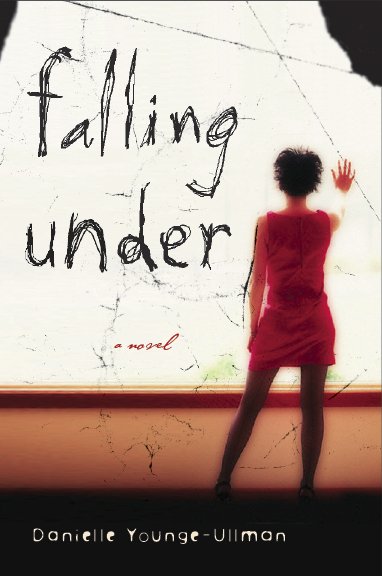
Mara, the twenty-something narrator of Danielle Younge-Ullman’s debut novel, Falling Under, is a hot mess. An artist who can barely leave the house except to have violent sex with a guy called Erik, Mara is clearly suffering from the cumulative effects of a troubled childhood, a stalled career, and a tragic love affair.
Love always starts out well. There’s the chemistry, the lust, the gushy, dizzy, cuddly, branch-eating phase, the wonder, the miracle of togetherness. And then familiarity creeps in, followed by disappointment, disillusionment, fear. Inevitably there is silence, screaming, betrayal, the wrenching ugly truth when you look at each other and know that your love has turned to disgust, despair, boredom, hate. All happiness gone, all rotten, all rotting.
Good times.
Younge-Ullman employs two narrative perspectives in the novel. When Mara is reliving her childhood, her parents’ messy divorce and its fallout, she speaks in the second person: “When you reach out to touch your shiny new bike, Mommy might start yelling at Daddy about how dare he spend their money and how you’re only five and what do you need a new bike for anyway?” The second person works really well here because Mara’s childhood, although not abusive per se, scars her emotionally and clearly hinders her ability to form healthy attachments to people as she grows up. The second person narration is both intensely personal and somehow distancing at the same time.
The rest of the novel is first person narration and Mara’s black humour, self-doubt, and neurosis is on full display. The reader will traipse though Mara’s life, often unwillingly, as she negotiates the thorny relationship with her mom, her co-dependent relationship with her dad and, miraculously, a new relationship with Hugo. But none of it is easy for Mara. She just doesn’t have the skills. She is sure, as was Chicken Little, that the sky is about to fall.
He would never understand how being happy makes you sad. How the happier you are the more you know the sky is about to explode into tiny, sparkling shards of glass that will pick up speed as they fall to the earth and slice right through you leaving your skin with little holes in it, leaving your heart bleeding.
Mara is, despite her quirks, a likable character. And Falling Under is a good book. But I can’t say that I finished it feeling wholly satisfied. Was it really necessary to make all the dangling and complicated threads of Mara’s life into a beautiful cat’s cradle in the end? Maybe — but given her problems, I wouldn’t have minded a little less happily-ever-after.
 I didn’t get this book – at all. Everyone from the New York Times to Entertainment Weekly waxed poetic about its beauty and prose that “buzzes with wonder, fearlessness and ecstatic ignorance.” Um. I didn’t get it.



 The Ludic Reader