In the Woods – Tana French

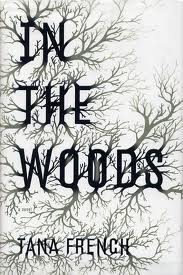
in the woodsWhen Tana French’s first novel In the Woods was published in 2007, critics and mystery lovers went wild. The book was an Edgar Award winner (no small feat for a debut novelist) and for a while everyone was talking about it. It’s been on my TBR list for ages…and I finally picked up a copy at the library book sale this year.

In the Woods is Rob Ryan’s story. Ryan is a Murder detective in Dublin, Ireland. He and his partner, the spunky Cassie Maddox, have been given the task of determining who killed twelve-year-old Katy Devlin and left her body in Knocknaree Woods. As with all good police procedurals, In the Woods offers readers plenty of red herrings and plot twists – all of it anchored by the relationship between Ryan and Maddox.

But there’s more.

In 1984, three other children went missing in Knocknaree. Two of the children were never found. Ryan was the third.

When I was found I was wearing blue denim shorts, a white cotton T-shirt, white cotton socks and white lace-up running shoes. The shoes were heavily bloodstained, the socks less heavily. Later analysis of the staining pattern showed that the blood had soaked through the shoes from the inside outwards; it had soaked through the socks, in lesser concentrations,  from the outside in. The implication was that the shoes had been removed and blood had spilled into them; some time later, when it had begun to coagulate, the shoes had been replaced on my feet, thus transferring blood to the socks. The T-shirt showed four parallel tears, between three and five inches in length, running diagonally across the back from the mid-left shoulder blade to the right back ribs.

Ryan doesn’t remember a thing. Nothing from the moment he left the house with the friends to go into the woods – where they had played all the time – until he was found and being examined in the hospital.

So when he has to return to Knocknaree, it opens the proverbial can of worms. Are there any parallels between the Devlin case and his own? Will he finally remember what happened all those years ago?

The Devlin case is interesting and as Maddox and Ryan knock on doors, ask questions and try to piece together who would have killed Katy, Ryan also wrestles with his own complicated past. All of it makes for page-turning goodness.

And the icing on the cake: Tana French can write. I mean, a great mystery doesn’t really depend on stellar writing to be entertaining and fun to read, but French gives you more bang for the buck: a compelling mystery times two, characters who are complicated and human, and writing which forces you to slow down.

As you know, I am a huge fan of Thomas H. Cook – a mystery writer who cares about the writing, too. I’d definitely stick French in that category and I look forward to reading more of her work.

The Greatcoat – Helen Dunmore

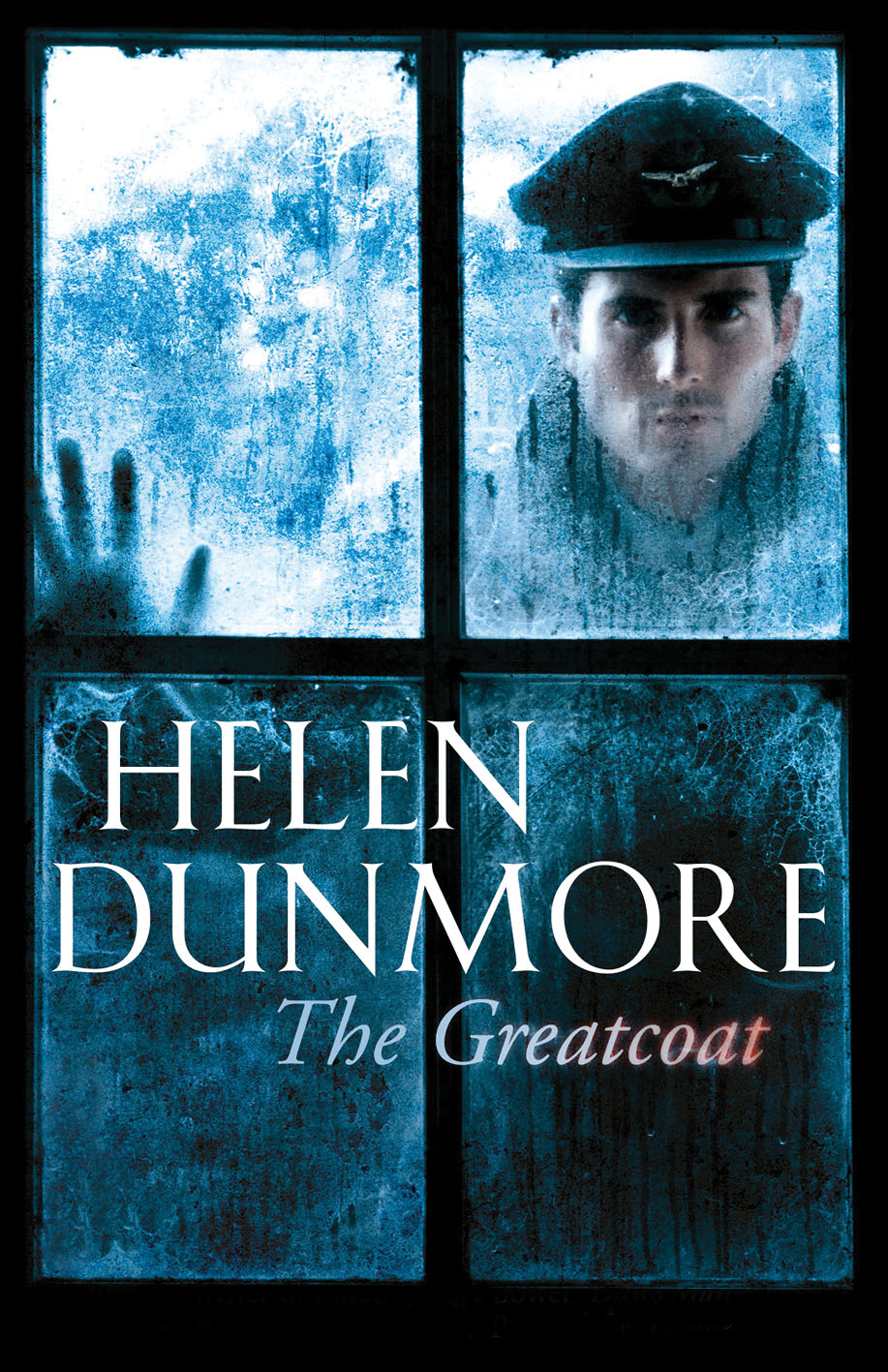
The-Greatcoat-Helen-DunmoreI am a Helen Dunmore fan, no doubt about it. Although her novels aren’t especially propulsive, I still find her work compulsively readable. She is particularly gifted when it comes to creating believable and sympathetic characters and her novels are moody and atmospheric. Her latest novel, The Greatcoat, caught my eye in the horror section – of all places.

Isabel Carey is a young bride who has moved to Yorkshire with her husband, Philip, a doctor.  They’ve been married just two months and this move to Kirby Minster is isolating: it’s a small town where they are clearly outsiders, Isabel is somewhat socially awkward and “bookish” and although she considers finding some work, Philip doesn’t think it would be acceptable for the wife of the town’s newest doctor to be employed. It is 1952. Although the war is over, both Isabel and Philip “had been children of wartime and all they asked of food was that it should fill them up.”  Good thing: Isabel is a terrible cook and food is still scarce and often unpalatable. Isabel is clearly out of her depth. She is “a little girl pretending to be her mother.”

Isabel and her husband take a flat in the home of Mrs. Atkinson, a woman Isabel dislikes on sight.  The flat is cold and grey and their landlady is constantly pacing the floor over their head. There is something decidedly menacing about her.

One particularly cold night, Isabel roots around in a closet looking for something extra to put on the bed and discovers an old greatcoat.

It was a coat. An RAF   officer’s greatcoat, she saw at once, recognising it with a thud of memory. There was the heavy, slatey grey-blue  wool, the buttons, the belt with its heavy brass buckle. It had been folded up a long time, she thought.

The coat does provide warmth, but it also brings a visitor. A man comes to her window:

She saw the pallor of his face first, as it seemed to bob against the glass, too high up to belong to a man who had his feet on the ground. The street lamp lit him from the side, throwing the sharp shadow of his cap over his face. He was too close, inside the railings that separated the house from the pavement. Of course, the level of the ground there was higher than the level of the floor inside. That was why he seemed to float in middair. A man in a greatcoat.

From this point in the novel, Dunmore elegantly weaves past and present as Isabel succombs to loneliness and the thrall of the past.

The Greatcoat was published under the Hammer banner (horror aficianados will recognize Hammer as the British production company behind  films like The Woman in Black and Let Me In.  They’ve entered the world of publishing in partnership with Arrow, a subsidiary of Random House. It’s nice to read a “horror” story that is less about blood and guts and more about the kind of chills which prickle your skin and send a shiver up your back. There are no mosters here, but The Greatcoat is deliciously creepy nonetheless.

Wild – Cheryl Strayed

WildTP_Books-330I am of the opinion that everyone has a story to tell – that doesn’t mean everyone should tell it, though. Cheryl Strayed’s memoir should have made for a compelling read, but ended up winning “Book I Enjoyed Reading the Least” at our final book club meeting. (Although in my mind, it was neck and neck with Death Comes to Pemberley for the position.)

When I teach memoir to students in my writing class, we talk a lot about the ‘why’? Why is this the story you are telling? What have you taken away from this experience? If you want to take a reader on the journey through your life, there has to be a pretty compelling reason.

Some memoirs are more successful than others. In order for a memoir to work — for me at least — it has to combine three elements: story, character, and writing. So, for example, Elizabeth Gilbert’s best selling memoir Eat, Pray, Love both worked and didn’t work for me. The writing was terrific; I loved the idea of her journey, but I didn’t like her very much. Let’s compare Eat, Pray, Love to another best-selling memoir, Julie & Julia. I loved the story, the writing, and Julie herself.

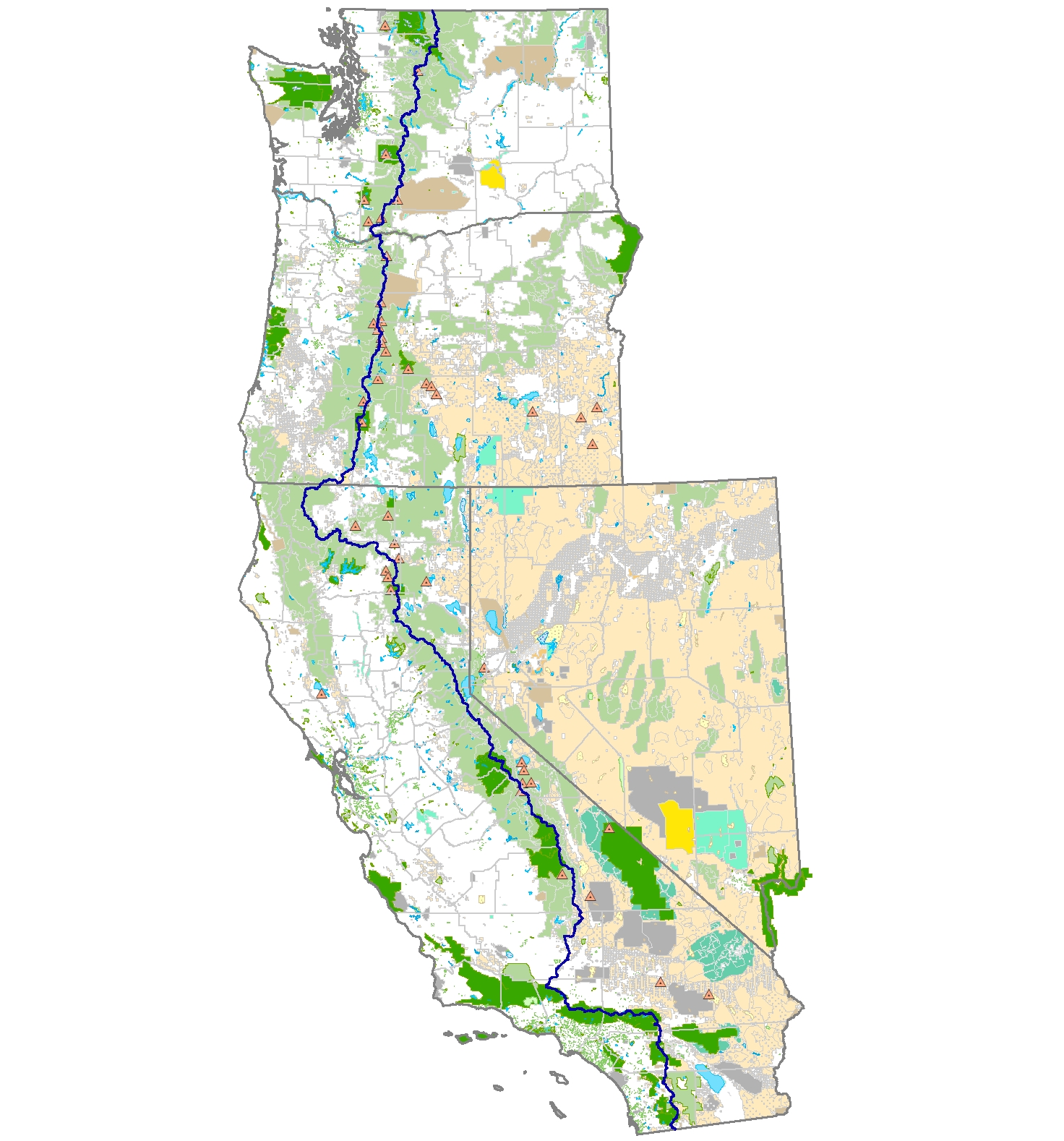
Then there’s Wild. At twenty-six Cheryl Strayed is still mourning the death of her mother, who died when she was 22,  the dissolution of her marriage, which ended soon after, and recovering from her addiction to a guy named Joe and their shared heroin habit. Good times. Impulsively, she decides to hike the Pacific Coast Trail. That’s 4268 km of therapy. With very little preparation (or at least it seemed that way to me — she bought a book and some ill-fitting hiking books and suddenly she was walking), Strayed embarks on a journey which she hopes will clear her head and/or mend her broken heart.

Pacific-Crest-TrailWhen the book opens, Cheryl has lost a boot over the edge of a mountain:

My boot was gone. Actually gone.

I clutched its mate to my chest like a baby, though of course it was futile. What is one boot without the other boot. It is nothing. It is useless, an orphan forevermore, and I could take no mercy on it. It was a big lug of a thing, of genuine heft, a brown leather Raichle boot with a red lace and metal fasts. I lifted it high and threw it with all my might and watched it fall into the lush trees and out of my life.                                         …

I looked south, to where I’d been, to the wild land that had schooled and scorched me, and considered my options. There was only one, I knew. There was always only one.

To keep walking.

I felt like Strayed’s journey had all sorts of potential. I mean, her life was a total mess and here was her opportunity to work out her issues and reset her course. But the more I read the less I cared. I can’t quite say what it was about her, but others in book club had the same sort of feeling: we just didn’t like Strayed.

Wild felt like a missed opportunity to me.  Regardless of whether your relationship is awesome or toxic, the death of a parent is a game-changer. Strayed’s brother and sister and her beloved step-father, Eddie, sort of scatter to the wind and it made me wonder why. When my parents died — first my mom and then a couple years later, my dad — my three younger brothers and I circled the wagons and became even closer. We understood that it was just us now and ‘us’ was important. Strayed’s brother doesn’t even visit his mother when she is dying in the hospital.

So, is Strayed ‘cured’ after her long walk.  I doubt it. While on the surface it would seem that her journey to the Bridge of the Gods (and oh, those heavy-handed metaphors!) delivers her back to herself, I’m not sold.

The Sky is Everywhere – Jandy Nelson

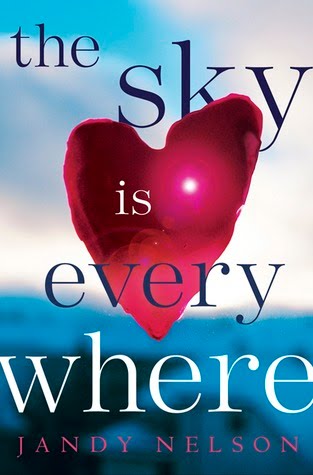
The Sky is EverywhereJandy Nelson has written a debut novel which will resonate with anyone who has ever lost someone they’ve truly loved.  The Sky is Everywhere is seventeen-year-old Lennie Walker’s journey through the grief of losing her nineteen-year-old sister.

My sister Bailey collapsed one month ago from a fatal arrhythmia while in rehearsal for a local production of Romeo & Juliet. It’s as if someone vacuumed up the horizon while we were looking the other way.

The loss of her sister isn’t the first significant loss of Lennie’s young life. She lives with her grandmother and her uncle ‘Big’ (yes, he is indeed) because her mother abandoned her and her sister when Lennie was only one. Despite the fact that Gram and Big are awesome, Lennie is finding it difficult to cope. Lucky for her, Bailey’s boyfriend, Toby, is on hand to share her grief.

“How will we do this? I say under my breath. “Day after day after day without her…”

“Oh, Len.” he turns to me, smooths the hair around my face with his hand.

I look into his sorrowful eyes and he into mine, and I think, He misses her as much as I do, and that’s when he kisses me –

There isn’t a thing I didn’t love about Lennie. She’s lived, thus far, in her sister’s shadow; Bailey was the outgoing, beautiful one.  Now, suddenly, Bailey is gone and Lennie is lost. Perhaps that’s what makes Toby so desirable. They can share their grief, but also their memories of someone they both loved.

But, then it gets complicated.

“Even in the stun of grief, my eyes roam from the black boots, up the miles of legs covered in denim, over the endless torso, and finally settle on a face so animated I wonder if I’ve interrupted a conversation between him and my music stand.

Meet Joe Fontaine, the “gypsy,” “rock star,” “pirate,” who arrived at school while Lennie was away. Suddenly Lennie finds herself in a precarious predicament: she is  impossibly drawn to Toby even as she crushes hard on Joe. Those feelings are compounded by her guilt because she’s supposed to be sad. And she is.

Make no mistake, The Sky is Everywhere is not a romantic comedy; it’s a beautifully written novel about loss, about being left behind and about what it means to be alive. All the characters are fully realized; even the adults have interior lives, a fact Lennie only begins to understand months after her sister’s death. She also comes to understand that grief is a living thing. Lennie thinks, “I don’t know how the heart withstands it.”

I’m not a fan of eReaders, but I can’t imagine reading this book on one would offer as satisfying an experience as reading the book the traditional way. The novel is filled with poetry written on scraps of paper and found in various places which are named on the back of the found object.  How they came to be collected is revealed at the end of the story. The poetry itself is beautiful (Nelson herself is a poet) and I loved its inclusion in the book.

This is a novel I will really look forward to passing on to and talking about with my students.

The Painted Girls – Cathy Marie Buchanan

paintedgirlsCathy Marie Buchanan has taken French Impressionist Edgar Degas’  famous statue, Little Dancer Aged Fourteen, and spun it into a piece of historical fiction that will probably really appeal to some people, but with which I had a love/hate relationship. The Painted Girls is the story of sisters Marie and Antoinette van Goethem, who live with their widowed, absinthe addicted mother and younger sister, Charlotte, in Paris in 1878.

The novel alternates between elder sister Antoinette’s story and Marie’s as they struggle to survive extreme poverty and a mother who just doesn’t seem capable of taking care of them. The only way out of their dire situation is if Marie makes it into the Paris Opera (Antoinette tried, but didn’t have the talent) as a ballet dancer.

With the news that Maman is sending us to the dance school, Charlotte threads her fingers together, knuckles whitening as she works to hide her joy. I keep my face still, my dismay to myself. The petit rats – the scrawny, hopeful girls, vying for the quickest feet, the lightest leap, the prettiest arms – are babies, like Charlotte, some as young as six. It puts my nerves jumping, the idea of me – a thirteen-year-old –  lost among them at the barre, rats who earn their name by scurrying along the Opera corridors, hungry and dirty and sniffing out crumbs of charity.

It is here that she comes to the attention of Mr. Degas, who hires her to model for him. Marie wants something more for her life and she is willing to do whatever it takes to achieve it. That is not to say that she consistently makes wise choices, only that the desire for a better life is what drives her.

Antoinette’s journey is slightly more bumpy. She has already been turned out of the ballet as she is too old and not talented enough. She understands Marie’s talents, though, and works to ensure she has the lessons she needs to progress and food in her belly. Then she meets Emile Abadie, a shifty boy who  “is not much to look at …with that scrub-brushy hair of his creeping low on his forehead and his black eyes sinking too deep beneath the weighty ridge of his brow and his jaw looking like the sort of those on dogs it is best to steer away from in the streets.” Emile is a charmer though and even when he abuses Antoinette, she stays by his side.

The Painted Girls evokes the Belle Époque  period in Paris, a period which is, ironically, characterized by optimism. Art, music, literature and scientific discoveries all flourished during the period and Buchanan makes the most of them including bringing Zola’s masterpiece L’Assommoir to the stage.

Despite the novel’s merits (and there are many) I found the book overwritten. Not badly written, the language is often quite beautiful, just over-written. The sisters’ journey was intriguing, I am a fan of both the ballet and Degas, but at times I have to admit that it was a bit of a slog.

You – Charles Benoit

youKyle Chase, the 15-year-old protagonist of Charles Benoit’s novel You, isn’t much different from a lot of boys his age. He doesn’t get along with his parents, he’s crazy about a girl who just thinks of him as a buddy and he has a habit of getting into trouble.

Every day you get up, go to school, fake your way through your classes, come home, get hounded about your homework, go online, fake your way through your homework, go to bed – and the next day you get to do it all over again.

This is Kyle’s life. He’s not a bad kid, really. He’s not particularly motivated, but he’s also not as dumb as he pretends to be. Still, his life isn’t really going anywhere…and then Zack arrives.

Zack is clever and charismatic and suddenly Kyle finds himself doing things he never imagined he’d be doing. In some ways, on the surface at least, it would seem that Zack is looking out for Kyle. It turns out, though, that there is nothing magnanimous about Zack at all. Kyle (you) moves through his days in a sort of  anesthetized daze, a sort of listless funk that will perhaps be familiar to teens. When Zack starts to shake things up, at first seemingly benignly, the reader might get the impression that Kyle will make something of himself. Zack is nobody’s friend, however.

Charles Benoit has chosen to write You in the second person, a point of view that will likely be unfamiliar to many young readers unless they are exceptionally well-read. Let’s face it, not many novels are written in the second person. It’s a distancing point of view, somehow, but it serves this story very well because it drops the reader into Kyle’s skin.

When Kyle’s association with Zack starts to spin out of control, the reader knows it will end badly because of the book’s opening line: “You’re surprised at all of the blood.”

You is an ALA Quick Pick for Reluctant Young Adult Readers and I suspect many readers would find the book enjoyable..

The Geography of Girlhood – Kirsten Smith

girlhoodTurns out The Geography of Girlhood was written by someone who knows a lot about teenage girls – at least in the movies. Kirsten Smith is the co-writer of some classic teen flicks including 10 Things I Hate About You, Ella Enchanted and one of my all-time, never-get-sick-of-it faves She’s the Man. (I can not stress how much I love She’s the Man. I’ve seen it many times and it still makes me laugh I love that I can share it with my students when we study Twelfth Night.)

When The Geography of Girlhood starts, Penny is just fourteen.  Having rowed herself out into the middle of the bay to contemplate her life she thinks: “One day, I’ll find my way away from here/ and go somewhere real/ and do something great/ and be someone wonderful.”

Of course, the problem with being a teenage girl is that there’s a whole lot of crap to wade through before you get that “someone wonderful.” Fourteen, Penny intones, “is like rotten candy.”

The novel, told in free verse form, follows Penny from the end of grade nine until just after her sixteenth birthday.

Penny is jealous of her  perfect, older sister, Tara, her “long torso,/ the breasts lodged high/ like tea cakes/ on her powdery skin.” She longs to experience “love” as she imagines it exists between Tara and Bobby, her sister’s boyfriend. “I look at her/ and memorize everything./ So when the time comes,/ and the boy’s eye glitters like a crime,/ I will know what to do.”  We learn about Penny’s complicated feelings for the mother who left her, who, in fact “always wanted to leave wherever she was.”

Readers will recognize themselves in Penny. While it’s true that fourteen was a L-O-N-G time ago for me, I can totally remember that feeling that  “you look good only once a week/ and it’s never on the day of the dance.”

Penny navigates the treacherous geography of  her girlhood, in language that is both  poignant and pointed.  She falls in and out of love in the way of all teenaged girls. She makes stupid choices and does stupid things, but she is also smart and resilient and open to all the possibilities life has to offer.

“If anyone tells you that life is predictable,/ DO NOT BELIEVE THEM,” she remarks.

I really enjoyed this book.


Our Daily Bread – Lauren B. Davis

ourdailybread

Picking a book for my book club  is serious business. The way our group works, we have one opportunity to pick and host per year and so you don’t want to choose a dud. The women in our group our merciless [cough] The White Iris [/cough] and it sucks to be on the receiving end of a book choice gone bad.  Usually I spend a lot of time choosing my book. This year I thought I would choose something from my own massive tbr  pile, but the problem was that every book I selected from my shelf was unavailable at local stores. In the end, I headed over to Indigo to peruse the shelves. The only criteria at that point was that there were enough copies on the shelf for the members of my club.

In the end, I chose a book I’d never heard of but which was plastered with accolades and a bright red sticker proclaiming that it had been longlisted for the Giller in 2012. Feeling confident of its pedigree, I brought home Lauren B. Davis’s novel Our Daily Bread.

Davis’s novel owes some of its gripping story to the real-life Golers from South Mountain, Nova Scotia. But Davis is quick to point out that Our Daily Bread is not ABOUT the Golers. While it’s true that Davis’s fictional Erskine family shares some similarities with the real-life family, that is only one small part of this mesmerizing and beautifully-written tale.

Albert Erskine is not like the rest of his violent, drug and alcohol addicted, sexually deviant family. He has already separated himself from the pack by building himself a small shack away from the main buildings on his family’s “compound”  on North Mountain.  His uncle Lloyd comments on Albert’s ‘otherness’ by saying: “You don’t act like the family at all now, do you? Don’t come visiting. Live in your little shack. Course maybe you have your own parties. That it? You have kids come to see you?”

It’s near impossible to trace the branches of  Albert’s family tree. Suffice it to say, there are a lot of younger kids with questionable DNA and Albert regards them with a mixture of annoyance and helplessness.  When ten-year-old Toots stops by his shack looking for food,  Albert ponders the sticky question: “What would she be like, if she’d been raised in some other place?” Albert often wonders how he might be different if his circumstances had been different. It’s a painful road for both Albert and the reader to travel.

Down in Gideon is another family with their own struggles: Tom and Patty Evans and their children Ivy and Bobby.  Tom is a good man. He grew up in Gideon and is well-liked and well-known. His wife, Patty, is another story. For starters, she’s from away. And although Tom seems desperately in love with her, she seems detached and unhappy. No matter what Tom does, it’s not good enough. As the tension in the household escalates, Ivy and Bobby seek shelter elsewhere. For Ivy, it is with the benign widow Dorothy Carlisle; Bobby’s new friend and confidant turns out to be  Albert Erskine. The intersection of these lives makes up the bulk of the narrative of Our Daily Bread.

I am guessing that some of the women in my group will have difficulty with the graphic (but never, imo, gratuitous) nature of the subject matter. As a mother, it’s certainly upsetting to see children in peril. The interesting thing about this book is that peril means different things to different people. Is Ivy’s falling-apart life any less horrible because she has a warm bed to sleep in? The impact Bobby and Albert have on each other’s lives is astounding and heart-breaking, too. Bobby is filled with a fifteen year old’s rage and angst and it isn’t until the novel’s powerful climax that he understands the value of his father’s love.

It truly is the mark of a great novel when you can empathize with so many of the characters. I loved Ivy’s resolute determination and Albert’s jaded hope and Dorothy’s refusal to bend to the will of small-town politics. And I loved Tom. A lot. As he copes with his unraveling marriage, as he asked himself the question, “How can I ever trust myself again?” I just saw so much of myself in him. But, ultimately, it all comes back to Albert. I so desperately wanted him to get in his truck and just go. I will be thinking about him for a long time.

Our Daily Breadisn’t ‘light’ reading, but this is a book that will stay with you long after the final page is turned.

As expected, our discussion of this book was lively and we were SO excited to be able to Tweet with Ms. Davis about her book. Here is some of our conversation:

Lauren B. Davis:  Oh, that’s wonderful, Christie!  If you have any questions, just send me a tweet! Thanks so much. #Ilovebookclubs

The Ludic Reader: Lively discussion about Our Daily Bread. @Laurenbdavis girls want to know if you think Albert ever contemplated a sexual advance towards Bobby?

Lauren B. Davis‏:  Not consciously, altho I do think the conditioned response of his childhood arose (pardon the pun) a few times, including that moment in the cabin the night Bobby came up to the compound with him.

@bitebymichelle wants to know where the wife went.

Lauren B. Davis‏: At the very end of the book?  Ah, who knows.  She is a lost soul, I fear.  I wonder if she’ll  ever come back and finally make that long walk up to the door.  What do you all think?

The Ludic Reader: Nobody is going to love her like Tom did, but we don’t think she’ll come back until her life is shit.

The Ludic Reader:  We all loved Albert so much – why did he have to die? (Altho we do know the answer.)

Lauren B. Davis‏: Can’t tell you how I tried not to kill him.  In the first draft he survived, but it just didn’t work.  I suppose it’s the symbolic sacrifice, but to be honest, I still grieve him. I found the final scene difficult to write.

The Ludic Reader: Some feel the trial was not necessary. Why did you decide to include it?

Lauren B. Davis:  It is rough, isn’t it?  But I felt readers would want to know what happened to the abusers, and since the courtroom  dialogue was taken from trial transcripts, I felt I was bearing witness to the children whose story inspired me. There was so much more of the Goler case which I did not include, because it was simply too horrible. But the response of the townspeople was important to the meaning of the book  I understand the squeamishness.  I felt I, too.  But yes, I think it’s important to be fearless in our gaze and to speak  truth to power even if our voice shakes.
Hawkes Harbor – S.E. Hinton

hawkes

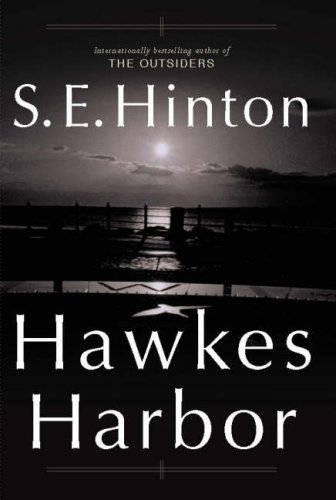
There was a time — perhaps not in recent memory, but in my memory at least — when the Teen section of a book store didn’t offer quite the selection that it does now. Books written specifically for a teen audience were not so readily available; I did most of my book buying from the Scholastic flyer and a great deal of my reading from the stacks of the local library. Perhaps the fact that there weren’t so many ‘teen’ books is the reason why so many people of my vintage have read many of the classics (and all of Trixie Beldon and Nancy Drew!)  But if you had to compile a list of YA fiction from the 70s (which is when I was a teen) S. E. Hinton would surely be at the top of the list. (I also have a very vivid memory of this romance that took place at the beach – an insecure, plain girl falls in love with this Greek Adonis, who just happens to have a prosthetic leg. Can’t remember the book or the author, though. Damn.)

Anyway.

S.E. Hinton is best known for her novel, The Outsiders. Seriously, is there a person on the planet who is not familiar with this book? Hinton was still a teenager when the book was published. (I love to tell my students she was just 16 when she wrote it, but I don’t know that for sure.) The Outsiders is pretty much the slam-dunk book to give to a student who claims he doesn’t like to read. Works for girls, too, by the way. But then I love to tell them that if they enjoyed Ponyboy and Johnny and the rest of the greasers, they’ll love That Was Then, This is Now, which is my favourite Hinton novel. Her characters feel authentic to me and I suspect that’s why teens still love them, even though some of the references feels dated.

Which brings me to Hawkes Harbor. Published in 2004, it was Hinton’s first novel in 15 years. It was also her first adult novel. It’s also really, really strange. And, truthfully, I don’t know if I mean that in a “don’t waste your time” way or in a “I couldn’t stop reading it even though it was really bizarre” way.

Jamie Sommers (not to be confused with the bionic woman) is orphaned at a very young age and sent to live with the nuns.  It is 1950…and that is all you get to know about that. When we catch up with him he’s a mental patient at Terrace View Asylum. Bad stuff has happened and Dr. McDevitt is trying to help him remember. McDevitt can’t decide if Jamie’s tales of derring-do are authentic or the fantasies of an addled brain. In any case, the reader learns that after a stint in the navy, Jamie hooked up with an Irishman named Kell and the two of them sailed around the world looking to make their fortune – mostly illegally. Eventually they ended up in Hawkes Harbor and that’s where things took a turn for the worse.

Um. This is where we meet the vampire. It’s not what I was expecting. At all. And I can’t say that I believed it because it was at this point that Hinton broke her contract with me. Really? A vampire? I just didn’t get it.

The writing is decent, albeit choppy, which might have something to do with the nature of the narrative  and the fact that the story jumps around. Jamie is compelling enough. This is a decidedly adult novel, so I won’t be recommending it to my students.  Sadly, I doubt I’d recommend it to anyone.

No matter. I still love you, Ms. Hinton.

All Unquiet Things – Anna Jarzab

allunquietthingsAnna Jarzab’s first novel All Unquiet Things is  mature and thoughtful. Kirkus called it “a sophisticated teen mystery.” It’s actually hard to believe that this book is written for young adult readers; its prose, while not exactly sophisticated, is a cut above many other books published for young readers.

It was the end of summer, when the hills were bone dry and brown; the sun beating down and shimmering off the pavement was enough to give you heatstroke. One winter came, Empire Valley would be compensated for months of hot misery with three months of torrential rain, the kind of downpours that make the freeways slick and send cars sliding into one another on ribbons of oil.

All Unquiet Things is the story of Carly, Neily and Audrey, students at Brighton Day School, a prestigious private school outside of San Francisco. Through a series of flashbacks – told from Neily and Audrey’s perspective – we learn about how Carly and Neily’s middle school friendship blossomed into something more, and how the arrival of Carly’s cousin Audrey changed the dynamics of their relationship.

These teenagers are smart, but they also have a lot of other issues including deadbeat or overly demanding parents. Neily’s parents are divorced and according to Neily his father “hadn’t really parented me since I was very young and I tended to get away with most things….” The girls have problems of their own.

So what’s the mystery? Well, Carly’s dead. (Don’t worry – her ghost doesn’t speak.)  Someone shot her four times and the circumstantial evidence points to Audrey’s alcoholic/drug addicted father Enzo, so he’s serving time in jail. Audrey is convinced that her father is innocent and even though her relationship with Neily has been strained by events, she seeks him out to help her try to figure out who really ended her cousin’s life.

Their investigation exposes the slimy underbelly of Brighton’s facade, but also allows the reader a glimpse into the messed up lives of students with too much money and not enough parental involvement. As Neily and Audrey try to figure out what really happened to Carly, they become friends, at first united in their search for the truth but then because they grow to genuinely care for each other.

You can’t really see whodunnit early on, which makes this a perfect read for students who like a page-turner. All Unquiet Things works on another level, too. Neily has to consider how he has been shaped by his love for Carly and how that love, no longer sustainable or attainable, is holding him back from living a fulfilling life. Audrey has to own up to her own part in Carly’s story and come to terms with the fact that her father might not be capable of all she hopes for him.

All in all, a terrific book.