Always Something There to Remind Me – Beth Harbison

alwaysI’m not a book snob. I like a good ‘chick lit’ book as well as the next gal. I know Beth Harbison is a much-loved, best-selling author of women’s fiction…but Always Something There to Remind Me will have the distinction of being both my first and last book by Ms. Harbison. Blech.

Erin Edwards is a beautiful, successful party planner in Washington D.C., where she lives with her precocious sixteen-year-old daughter, Camilla. She and Camilla’s father are no longer together…not that we know much about their relationship (and not that it matters anyway). Always Something There to Remind Me is Erin’s story to tell and we get the then (in third person) and now (in first person).

Then happened twenty years ago. Sixteen-year-old Erin has her heart set on eighteen-year-old Nate Lawson.

From the first time she’d seen him, his image had been emblazoned on her mind, and when he stepped into view it was as if her mind closed over it like a trap. She didn’t want to think about him, but she couldn’t stop.

His eyes met hers and something clicked.

Ahh. Young love.

Erin and Nate’s teenage romance has all the requisite twists and turns: silly fights, jealousy, sneaking around in the dead of night to have sex on basement floors. But even though Erin really, really, really loves Nate, she still can’t help doing childish things and eventually he dumps her, breaking her heart and leaving her to wallow (however secretly) for the next twenty years.

Fast forward twenty-odd years and she is in a relationship with smart and perfect and handsome Rick who has just asked her to marry him. Erin’s hesitating though because she can’t stop thinking about Nate…even though she hasn’t seen him in forever.

Until the day she’s visiting her mother in the old neighbourhood and she decides to take a walk which invariably leads her past Nate’s parents’ house and – as luck (or fate) would have it – there’s Nate.

I just watched the shock in his eyes as he took me in, and knew mine probably looked the same. Shocked, glad, scared…it was hard to read both what I saw and what I felt.

But I couldn’t look away. And when I saw him try, I realized he couldn’t either. He glanced down, a muscle in his jaw tensed, but then he looked back at me, still unspeaking.

People – you can see where this story is going from like a mile away and that would all be fine except that WHO CARES? Seriously. Erin is annoying as a teen and not even remotely self-aware as an adult. Her daughter, Cam, sounds like a therapist and the treacley ending made my teeth ache.

I bought this book because it sounded like it might have something significant to say about regret and love, but if you want a book that looks backwards at what you’ve left behind, read Losing the Moon instead.


Bookish lists – I want yours

I have a love/hate relationship with the end of the year. On one hand it means I have to reflect on all the ways I have flailed and failed, my squandered opportunities, that 10k I didn’t quite manage, the times I wasted worrying about things and people I can’t change. On the other hand, once 2013 slips into the past, I can start thinking about what I can accomplish in 2014. The places I’ll go, the people I’ll gather close, the ways I can improve my life, the books I’ll read. calendar

And that’s another reason I love this time of year – every book lover/organization on the planet shares their best books lists. I love lists. I love reading about the books that have risen to the top of the heap. I love it that there’s always disagreement and someone’s best book invariably ends up on someone else’s worst list.

It’s easy enough to find fantastic book lists online. Book Riot has a great selection of the Ten Best Top 100 Book Lists . And, of course, at this time of year everyone wants to weigh in on the best books of 2013. Here’s a small sampling.

Good Reads

Publisher’s Weekly

NPR

Huffington Post

Kirkus

Seabury Reads

I, too, always offer a top ten list. I’ll do that in the next few days because although I did meet my reading challenge of 60 books, I am hoping to read a couple more before year’s end and, who knows, perhaps one of those books will be worthy of a place on the list.

In the meantime, I’d love to feature your favourite books of 2013 here at The Ludic Reader. If you’ve posted a list at your blog, link me up. Otherwise, shoot me an email (ludicreader AT rogers.com) and I’ll let you have the floor in an upcoming post. Or leave a comment and tell me about the best or worst book you’ve read this year.

You Against Me – Jenny Downham

youagainstmeI read Jenny Downham’s first novel Before I Die a few years ago and I really like it a lot. I liked You Against Me, too. Downham certainly isn’t afraid to tackle the big stuff.

Eighteen-year-old Mikey McKenzie’s life is far from perfect. His mother is an alcoholic and he has two younger sisters, Karyn, 15, and Holly, 8, for whom he is responsible. He’s doing the best he can, but he’s all too aware that sometimes it’s just not good enough. Especially now. Karyn was recently raped while at a party and she now won’t leave the house. Mikey figures he can make everything right again if he beats the crap out of the guy who did it, Tom Parker. He and his best friend, Jacko, come up with a plan but everyone knows nothing ever goes to plan.

Sixteen-year-old Ellie Parker is every bit as anxious as her parents for her older brother Tom’s homecoming. He’s spent the last couple of weeks detained after having been accused of rape, but now he’s coming home to await the trial. Ellie’s her brother’s star witness; she was home the night Tom brought a bunch of friends back from the pub, Karyn included.  She’s already told the police that she didn’t hear or see anything much and her parents are convinced that Tom will be found not guilty.

And this might have been nothing more than a he said – she said YA novel except that Mikey and Ellie meet and discover…they like each other. Of course it’s more complicated than that, but once the wires are uncrossed and trust has been earned, Ellie and Mikey really do genuinely fall in love.

Downham does a good job of balancing the story of Ellie and Mikey  with everything else that’s going on including Ellie’s doubts about her brother’s innocence, Mikey’s concern for his sisters and frustration with his mother’s lack of responsibility. The novel moves pretty quickly, allowing the reader plenty of time with both Ellie and Mikey so we get a real sense of who they are and how they’re coping with their complicated circumstances. What started as one thing quickly becomes something else for both of them and as Mikey says to Jacko

When I first saw Ellie, I knew it was her – she was my fantasy. I didn’t want it to be true, but every time I met her it was obvious, and the funny thing was that she was better than the fantasy, like I got more stuff than I’d imagined.

You Against Me is about family and friendship and making choices that have far-reaching consequences. Downham offers careful readers lots to think about and has created two young people worth rooting for.


Cemetery Girl – David Bell

cemeteryI read the first 192 pages of David Bell’s novel Cemetery Girl lickety split. I couldn’t put the book down. I wondered – how come I’ve never heard of this book or this author? How come the only positive promotion is from other authors? Where has this author been all my life?

And then it all went to hell in a hand basket.

Cemetery Girl is the story of college professor Tom Stuart and his wife, Abby, and their daughter, Caitlin, who disappeared four years ago when she was twelve.  Now, Abby has decided it’s time to say goodbye to Caitlin and has organized a memorial service for her daughter. It’s caused something of a rift between Tom and Abby because Tom hasn’t given up hope that his daughter will come home to them because her body has never been found.  But Tom and Abby’s marriage is on the slippery slope anyway. Abby has found religion and is spending more and more time with Pastor Chris her new ‘best friend.’ Yeah, right.

For the first half of the book I was totally invested in Tom’s story and the novel’s attempt to make him a somewhat unreliable narrator. For example, he and his half-brother, Buster, have different takes on their childhood. Tom remembers his step-father, Paul, as a mean and abusive drunk; Buster claims it wasn’t like that at all.

There are a bunch of minor characters in the novel – Detective Ryan, the one and only cop still assigned to Caitlin’s case; Susan Goff, a volunteer with the police department (who is not a therapist or professional counsellor, just someone to talk to); Liann Stipes, a lawyer whose own daughter had been murdered and who has acted as an advisor to Tom; Tracy Fairlawn, a stripper who claims she saw Caitlin. Then there’s this mysterious blonde girl who keeps appearing near Caitlin’s tombstone or outside the Stuart house in the middle of the night.

Like I said, Bell kept me turning those pages for quite a long time. Then I just didn’t believe it anymore. I didn’t believe the way characters started to speak to each other. I didn’t believe the resolution of the book’s central mystery. I didn’t believe any of Tom’s interactions with anyone – they just all felt artificial. I’m a parent; I wouldn’t behave this way.

Cemetery Girl had a lot of potential, but a book like this depends on credibility and at the end of the day – it just didn’t have any.


Bellman & Black – Diane Setterfield

bellmanWe were all pretty excited when Marianne chose Bellman & Black as this month’s book club selection. We all loved Diane Setterfield’s first novel The Thirteenth Tale when we read it a few years back. Sadly, this novel lacked that book’s  — well, everything.

As I pointed out when we met last night: “Did you notice that all the praise on the back of the book was for The Thirteenth Tale.”  And true enough – there isn’t a single endorsement for this novel on its cover or inside its pages. Okay, maybe that doesn’t mean much in the whole scheme of things and I know I’m making it sound as though Bellman & Black is horrible and I guess I wouldn’t go so far as to say that, but it isn’t very good, either.

William Bellman is just a kid playing somewhere in the English countryside  when he decides to show off in front of his friends and uses a catapult to shoot a rook (similar to a crow) out of a tree.

It took a long time for the stone to fly along its preordained trajectory. Or so it seemed. Time enough for William to hope that the bird, flapping into life, would rise upwards from the branch. The stone would fall harmlessly to earth and the rook’s granite laughter would taunt them from the sky.

Instead, William hits and kills the bird and thus leaves innocence and childhood behind him and begins  the downward slope towards death. And yes, it’s really this heavy-handed.

Will’s life is marked with great successes and tremendous tragedies. We watch him turn his uncle’s mill into a financial success. We watch him fall in love and have a family. And we watch things start to fall apart. But the thing is — and it is a thing that we talked about last night — none of it mattered all that much because Will was a character we knew or cared little about. He was driven, sure, and haunted, certainly, but not by the rooks which made strange appearances (sort of like encyclopedia entries) throughout the book.

When William suffers a tragic personal loss, he makes a deal with a mysterious stranger, Mr. Black, and he suddenly finds himself building a one-stop funeral emporium. We’re talking Victorian England here, when people mourned for years and spent money (apparently) on all manner of funereal accoutrements. So, just as we watched him build Bellman Mill, we learn all the nooks and crannies of Bellman & Black, but none of it is interesting enough to sustain a 300 plus page narrative. And trust me, the stuff about the rooks doesn’t help.

At the end of the day, Setterfield’s book is a less schmaltzy take on, say, a book like Tuesday’s With Morrie. We’re meant to understand that life must have checks and balances, and that when we care too much about things that don’t matter (wealth, success) we miss out on those things that truly do.

Bellman & Black wasn’t hard to read, but I won’t be recommending it to anyone else.

The Absolutely True Story of a Part-Time Indian – Sherman Alexie

part time indianI can’t remember the last time I rooted for a character the way I rooted for Arnold ‘Junior’ Spirit, the fourteen-year-old narrator of Sherman Alexie’s YA novel, The Absolutely True Story of a Part-Time Indian.

Junior is a member of the Spokane Tribe and lives with his parents, grandmother and older sister on the Rez. Without a drop of self-pity, Junior tells the reader that his “head was so big that little Indian skulls orbited around it” and that “the bullies would pick me up, spin me in circles, put their finger down on my skull, and say, ‘I want to go there.'”

Skinny, born with ten extra teeth, and prone to seizures, Junior is also determined, smart, and really funny. He says, “With my big feet and pencil body, I looked like a capital L walking down the road.” He both stutters and lisps and so everyone calls him a retard. “Do you know what happens to retards on the rez?” he asks the reader. “We get beat up. Yep, I belong to the Black-Eye-of-the-Month-Club.”

As if Junior’s physical problems weren’t bad enough, Junior and his family are also very poor. They’re so poor, Junior often goes hungry. But, as he explains, “It’s not like my mother and father were born into wealth. It’s not like they gambled away their family fortunes. My parents came from poor people who came from poor people who came from poor people, all the way back to the very first poor people.”

His father is an alcoholic who often disappears on benders. His mother is slightly flakey, but also super smart. Junior is perfectly aware of the limitations that come from being an Indian on the rez.

…we reservation Indians don’t get to realize our dreams. We don’t get those chances. Or choices. We’re just poor. That’s all we are.

Strangely, none of this seems like whining coming from Junior’s mouth. It is what it is and he’s found ways to cope. For one thing, his best friend,  Rowdy, is the toughest kid on the reservation. For another thing, his parents are kind and loving and supportive. While it seems like there are too many obstacles in Junior’s way, the reader soon learns not to underestimate him.

An incident at school prompts a visit from one of his teachers and suddenly Junior has left the rez and is traveling 23 miles into a town to attend a white school where he has the chance to make something of himself. (But not without a lot of soul-searching about what it means to have to leave the rez behind and enter the white world.) But make something of himself, he does. I can’t imagine anyone reading this book and not getting a little va-klempt at Junior’s journey.

The back cover of my edition of The Absolutely True Story of a Part-Time Indian  says that the novel is inspired by Sherman Alexie’s own experiences growing up. The book has won numerous awards including the National Book Award. It’s most deserving of the praise.

This is a laugh-out-loud, tear-in-your-eye, 100% uplifting novel about the challenges of growing up and making your own way in the world. Everyone should read it.

Crazy Beautiful – Lauren Baratz-Logsted

crazyMy arm rises toward my face and the pincer touch of cold steel rubs against my jaw.

I chose hooks because they were cheaper.

I chose hooks because I wouldn’t outgrow them so quickly.

I chose hooks so that everyone would know I was different, so I would scare even myself.

That’s Lucius Wolfe. He’s 15 and the new kid at school. He and his younger sister, Misty, and his parents had to move because Lucius got in the middle of a bomb making experiment gone wrong and blew himself — and most of his house — up. Now he’s got hooks for hands. Why was Lucius making a bomb, one might ask? Ask away — you’re not going to get any real insight from Lucius other than a vague “I was practicing to do harm, somewhere, sometime, maybe.”

I hear the dog alarm go off in the same instant I become aware of the first morning light in my room. I like rising early, like sleeping with the blinds open, because I’m scared of the dark.

In the dark, almost anything can happen.

That’s Aurora Belle. She’s 15 and also the new kid at the school. She and her father moved because Aurora’s mom had recently died of cancer and her dad thought it was time to change the scenery. Aurora is beautiful and smart and perfect…and immediately popular at school.

On the bus on the first morning  (and what are the chances, eh?) Aurora and Lucius’s eyes meet and wowza. But it’s even more than that for Lucius; he decides to become Aurora’s Gallowglass. It means ‘foreign soldier’ but to Lucius it is “the greatest personal protection service you can think of all rolled into one person.”

Aurora doesn’t really strike me as the person who actually needs protecting. She’s absorbed almost immediately into the school’s who’s who and soon thereafter wins the lead in Grease (which, unbelievably, Lucius has never even heard of).

Still, there is Jessup Tristan (and by now the names are starting to be as irritating as the characters), school douche-bag, and a couple of superficial girls and Nick Greek, the security guard who frisks Lucius after he sets off the alarm going through the school’s metal detector. It’s an embarrassing moment for Nick, but then it’s all made well when the 15 year old boy and the 22 year old security guard become fast friends and Lucius actually helps Nick reconsider his career path. I kid you not.

If Lucius didn’t have hooks for hands and a slightly suspect psyche, Crazy Beautiful would be nothing more than an adequately written YA novel.  Take away those hooks and Lucius’s raison d’etre and you’ve got…nothing. Seriously. At a mere 193 pages there’s no time to really develop the characters or their relationships.

Boy sees girl on the bus and falls instantly in love.

Girl sees boy on the bus and “there was an instant connection.”

We’re on page 28.

And what are the chances, when the plot twist comes — separating these two ‘damaged kids’ — that Aurora knows exactly what Gallowglass is?

As it turns out, pretty damn good.

Give this one a miss.


I Am Scout – Charles J. Shields

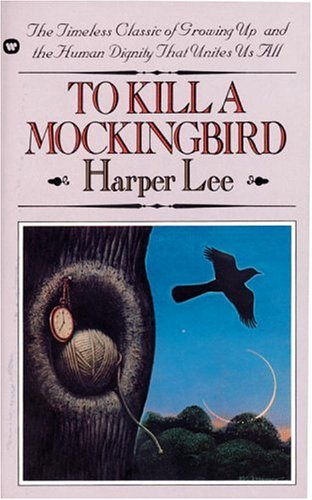
It’s pretty much a rite of passage that every teenager reads To Kill a Mockingbird at some point during their high school career. Published in 1960, Harper Lee’s only book won the Pulitzer Prize and was made into a movie starring Gregory Peck.  I love the book , but even I can see how today’s teens might struggle with it.

tkamIn case you’ve been living under a rock, To Kill a Mockingbird is the story of Jean Louise (Scout) and Jem Finch and their father, Atticus, a small-town lawyer. Narrated by Scout, the story takes place in Maycomb, Alabama in 1935. Although the action of the story takes place when Scout and her brother are children, the story is narrated from an adult’s vantage point which is how Scout is able to make some very worldly observations about society, childhood, prejudice and evil – all of which are themes in the book.

It’s an English teacher’s dream book, but it’s not without its problems – especially when you teach a generation of students who mostly read about sparkly vampires and cuddly werewolves. Still, I think it’s worthwhile.

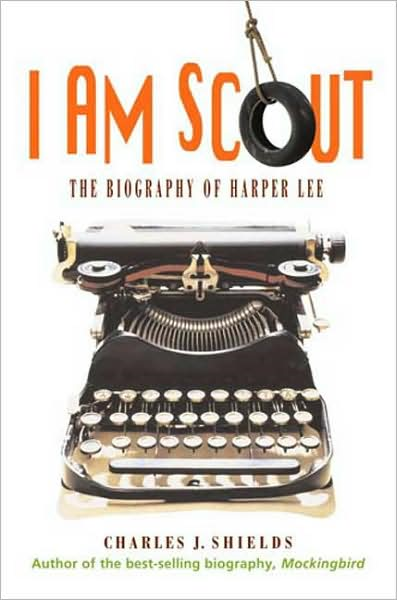
I started reading I Am Scout, Charles J. Shield’s student-friendly autobiography of Harper Lee  ( adapted by Shields from his book, Mockingbird: A Portrait of Harper Lee) just before my students and I began our discussion of To Kill a Mockingbird.  Even though I have probably read To Kill a Mockingbird a half dozen times or more, I’d never read anything about Lee’s life and I was interested.

If you ever wondered why Lee never published another book (and, really, who hasn’t wondered that?) this is the book for you. Shields traces Lee’s childhood, the youngest of four children growing up in Monroeville, Alabama. Almost from the beginning, it’s impossible not to see Scout when you read that Nelle (Ellen spelled backwards) Harper Lee:

had a reputation as a fearsome stomach-puncher, foot-stomper, and hair-puller, who “could talk mean like a boy.” Three boys had tried challenging her once. They came at her, one at a time, bravely galloping toward a dragon. Eithin minutes, each had landed face down, spitting gravel and crying “Uncle!”

Almost everything about Scout’s make-believe life is drawn from Lee’s childhood. Lee did call her father by his first name and he was a lawyer. Her childhood friend, Truman Capote, was the inspiration for the character of Dill. Lee’s mother was virtually absent from her life owing to issues with mental health. Several other characters in To Kill a Mockingbird were inspired by people in Lee’s life including Mrs. Dubose, a cranky morphine addict and Boo Radley, who is based on Alfred Boleware Jr., a Monroeville native who was rumoured to be  “a captive in his own home, tied to a bed frame by his father.”

Shields also tells how Lee helped Truman Capote research (and some say write) In Cold Blood, easily considered one of the quintessential pieces of true-crime writing of the last century. The relationship between Lee and Capote lasted thoughout their lives, but was not without its trials; Capote was, perhaps, jealous of Lee’s success –  even though he was certainly no slouch.

I am scoutSo, why didn’t Harper Lee ever write another novel?  According to Shields:

She reportedly had every intention of writing many novels, but never could have imagined the success To Kill a Mockingbird would enjoy. She became overwhelmed. Every waking hour seemed devoted to the promotion and publicity surrounding the book. Time passed, she said, and she retreated from the spotlight. She claimed to be inherently shy and was never comfortable with too much attention. Fame had never meant anything to her, and she was not prepared for what To Kill a Mockingbird achieved.

I felt after reading Shields’ biography that the reason Lee never wrote another novel was because this was the only story she had to tell. But that’s okay – if you only have one, it may as well be the one that wins the Pulitzer.

The Lost Boy – Greg Ruth

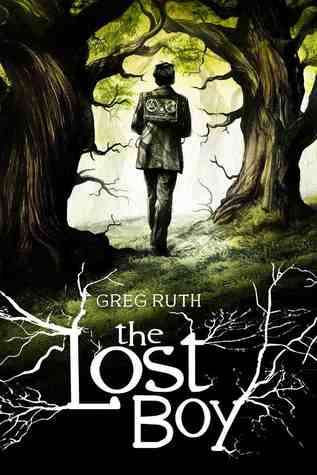
lostboyGreg Ruth has a successful career as a writer and comic book artist and has worked for Dark Horse Comics, DC/Vertigo and even illustrated Barack Obama’s picture book Our Enduring Spirit.

I saw The Lost Boy sitting on a shelf at Indigo and thought it looked and sounded interesting and as I am always on the hunt for graphic novels to add to my small but growing collection, I added it to my shopping bag.

The Lost Boy is the story of Nate who moves to a new town and a new house with his parents. His father tells him that he gets to choose any room he wants and upon a desultory inspection of the rooms upstairs Nate finds an old tape recorder under a loose floor board. Even more strange, there’s a note with his name on it which simply says: Find him.

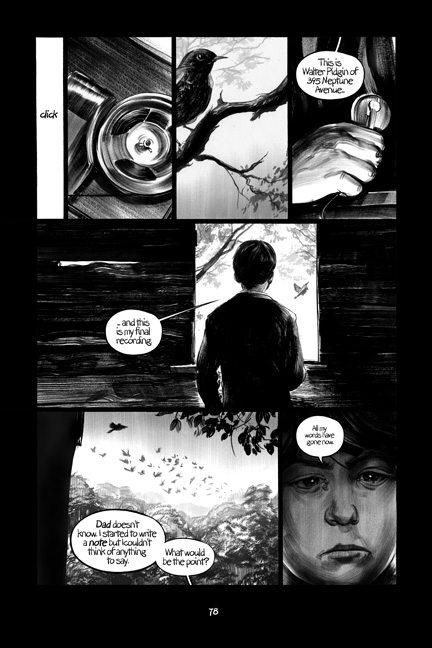
The tape recorder belongs to Walter Pidgin and when Nate presses play he hears the voice of Walter, a boy about the same age as Nate.

“These are the facts,” Walter’s voice says. “Six dogs and three cats have gone missing in the past ten weeks. The pattern is too deliberate to be coyotes.”

Walter tells his tape recorder that something ‘unnatural’ is at work in Crow’s Woods and it turns out he’s right.

lostboy2 When Nate meets Tabitha, a girl down the street, she’s able to tell him that Walter went missing many years before and when the ‘otherworld’ starts encroaching on the real worl, Nate and Tabitha decide that they need to go into the woods to find out just what happened to Walter.

I found myself getting confused by the players – and maybe that’s because there’s this complicated world which is unveiled by talking dolls and bugs. Cool, but a perhaps too convoluted for one reading. I liked the art in The Lost Boy better than I liked the story, actually – although the story had a lot of potential.

Nevertheless, a worthy and intriguing additiong to my classroom library.

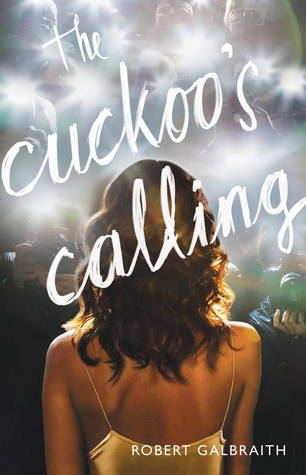
The Cuckoo’s Calling – Robert Galbraith

cuckooDespite the fact that my children, my daughter in particular, are over-the-top Harry Potter fans, I have only ever read the first book, Harry Potter and the Philosopher’s Stone. When my daughter was really little, say four or five, I had tried to read the book to her and I just couldn’t do it.  I did end up reading it out loud to a grade nine class a couple of years ago and they loved it; so did I.

That said, I wasn’t really looking forward to tackling J.K. Rowling’s massive post Potter novel, The Casual Vacancy, when it was one of last year’s book club selections. That book ended up being a really pleasant surprise, however,  and proved once and for all (as if being one of  the best-selling authors of all time wasn’t proof enough) that Ms. Rowling can write the hell out of a story.

My book club recently met to discuss Rowling’s mystery novel The Cuckoo’s Calling, which Rowling wrote using the pseudonym, Robert Galbraith. (There’s an interesting article about her decision to do so here. ) By the time we got to the book, though, the gig was up and we already knew Rowling had penned the book.

Cormoran Strike, the novel’s protagonist, is a former soldier who lost a leg below the knee to a land mine in Afghanistan. Now he lives in London where he works – although not very successfully – as a private investigator.  His relationship with Charlotte has just ended badly – again. He’s broke and living in his office. And then John Bristow arrives with a case for him.

Bristow is the brother of Strike’s childhood friend, Charlie, who had died when they were kids. He’s also the brother of Lula Landry, the most famous model on the planet. Landry recently committed suicide, but John believes something more sinister happened and wants Strike to investigate.

Of course, it’s really impossible to say much more about the story without giving away important plot points. Suffice it to say that as far as the ‘detective’ part of the novel goes – there’s lots to keep mystery-lovers in the game.

Rowling’s real strength as a writer is characterization. And as I tell the students in my writing class – character is the most important thing anyway; they are what drives your plot.

The Cuckoo’s Calling is chock-a-block with characters of all sorts, the most important of which is Cormoran Strike himself.

The reflection staring back at him was not handsome. Strike had the high, bulging forehead, broad nose and thick brows of a young Beethoven who had taken to boxing, an impression only heightened by the swelling and blackening eye. His thick curly hair, springy as carpet, had ensured that his many youthful nicknames had included “Pubehead.” He looked older than his thirty-five years.

Although the women at book club couldn’t agree on whether we found Strike attractive or not (trying to cast him in a movie version was hysterical), we all agreed that he was super-smart and that’s always the sexiest thing anyway.

Strike and his office temp, Robin (who is pretty smart herself) work their way through the list of Lula Landry associates, turning over rocks in an effort to understand the model and the world she inhabited. It makes for a pretty compelling tale.

The best endorsement I can offer for The Cuckoo’s Calling is this: I bet we’ll be seeing Cormoran again and since he’s a character I can’t seem to stop thinking about, I welcome the opportunity to join him on his next case.