A Family Secret – Eric Heuvel

family secretEric Heuvel is a Dutch comic book artist, so A Family Secret, a story which takes place in Amsterdam during the second world war, is perhaps a topic especially close to his heart.

Jeroen is looking for items to sell at a flea market held on Dutch Queen’s Day. He decides to head over to his grandmother’s house, hoping to score some good stuff without actually have to visit with his grandmother. Snooping through the attic, he comes across a scrapbook filled with items marking the German occupation of Holland.

“I”ll tell you why I started this scrapbook,” his grandmother tells him. Jeroen is thinking: I hope this doesn’t take long. It turns out, though, that her story is riveting.

When I was twelve or thirteen I read Anne Frank’s Diary of a Young Girl. It was one of those turning point books for me, as I am sure it was for many other young people. Here was a real teenager, coping with typical teenage problems but under extraordinary circumstances. Decades later, while visiting Amsterdam, I was priviledged to visit the house where she and her family were hidden away. I can’t begin to explain to you the feeling of stepping behind the hidden door and heading up the stairs to the annex where she spent just over two years of her short life.

A Family Secret tells another one of the, I suspect, hundreds of thousands of personal stories about that horrific time in history. Jeoren’s grandmother tells of her father, a Dutch police officer, forced to make choices she doesn’t understand until years later, about her brothers, one who joins the resistance and one who joins the Nazis and of her childhood friend, Esther, a  German Jew who fled with her parents to the safety of the Netherlands…only to discover there was no safe place for them.

The graphic novel format of this particular story makes it a perfect read for reluctant readers, but all readers should get something meaningful out of the personal choices the characters are forced to make in times of great distress.

These atrocities continue to be written about, as they should. We should never be allowed to forget.

Borderline – Allan Stratton

borderlineAllan Stratton’s YA novel Borderline wouldn’t necessarily be something I’d pick up on my own, but I am trying to read more ‘boy’ books, especially those that might appeal to reluctant readers. I’ve inherited a class this semester and the majority of them are boys and many of them wouldn’t exactly put reading at the top of their to-do lists. I always think the key to reading success is to find just one book that they like. Borderline could be that book for someone.

Sami Sabiri is almost sixteen. He’s a pretty average teenager; he lives in an American suburb, crosses swords with his strict father,  and tries to stay out of the way of bullies at the expensive private school he attends. He’s also Muslim.

At first, Borderline doesn’t seem like anything more than the pretty standard YA fare. Sami is likeable and relatable and his life is just ‘other’ enough to be intriguing. The fact that he is Iranian offers plenty of opportunities to discuss today’s headlines, too, because suddenly Sami finds himself in the middle of an FBI investigation.

The agents grill me to a crisp. Questions about Dad, his work, who he knows, what he does. I hardly hear a word….”We’re Americans,” I blurt out. “Mom and Dad – you can’t put them on a plane. You can’t send them off to be tortured.”

Sami’s journey to discover the truth about his father’s supposed terrorist activities is also a journey of self-discovery. Suddenly he has a reason to stand up and be counted. As his loyalty to his father wavers, he finds hidden reserves of strength and courage. If the resolution is, perhaps, a little too convenient, it won’t really matter to the majority of young readers. Sami is a character worth rooting for.

As to whether my reluctant readers would like this book – I think they would. The writing is accessible with a minimum of flowery prose. It’s pretty much straight-up plot and I think most of the boys in my current class would enjoy it.

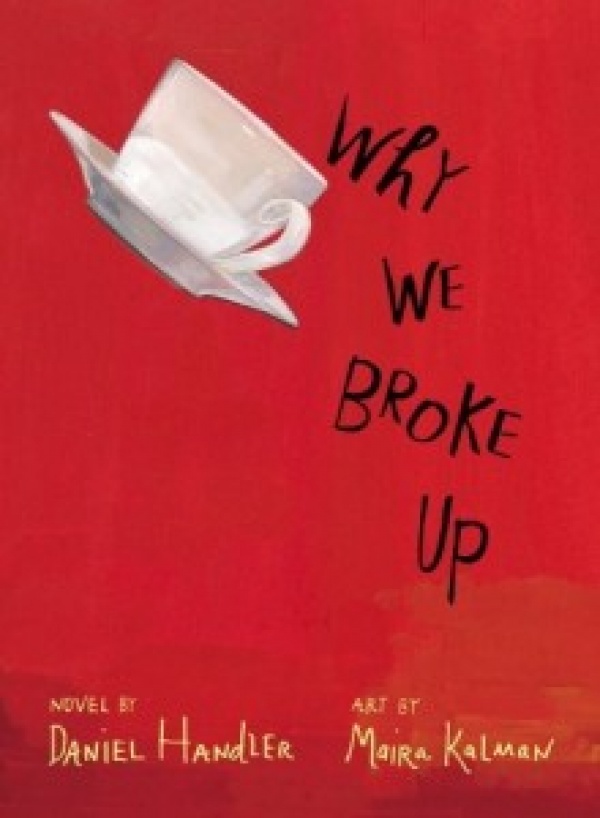
Why We Broke Up – Daniel Handler

whywebrokeup_cover-220x300__span

Daniel Handler has written a book that will resonate with just about anyone – young or old – who has ever had their heart stomped on. Which means YOU will love this book. Yes you.

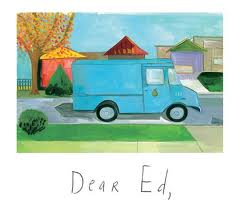
Why We Broke Up is Min Green’s farewell letter to Ed Slaterton, a boy she met at her best friend Al’s Bitter Sweet Sixteenth birthday. As she recounts her brief but meaningful relationship with Ed, hunky co-captain of the basketball team, she also returns to him all the detritus of that relationship.

I’m telling you why we broke up, Ed. I’m writing it in this letter, the whole truth of why it happened. And the truth is that I goddamn loved you so much.

You don’t have to be sixteen to appreciate what’s in Min’s box: the bottle caps and ticket stubs and note on a napkin. Every relationship has its stuff. Min’s relationship with Ed lasted only a few weeks, but as is often the case with the very young, they pronounced their feelings (Ed first) very early on.  They might have seemed, at first glance, totally mismatched. Min, the Jewish girl and movie aficionado and Ed the cool jock with a string of past-girlfriends. But, as Min says: “…the thing with your heart’s desire is that your heart doesn’t even know what it desires until it turns up.”

When I was in grade nine I was madly in love with a boy called Dana. I loved him as only an awkward fourteen-year-old girl can possibly love a much cooler fourteen-year-old boy: from afar. I still have a picture of us taken on our grade nine trip to Prince Edward Island. Me in my Indian cotton shirt and really unfortunate flared jeans, a Bay City Rollers haircut; him in the uniform of the day (and also, perhaps, a Bay City Rollers haircut. Come on, it was the 70s). Anyway. He drank from my coke bottle and I saved that bottle and the inch of pop left at the bottom for years! And I never even got a kiss.

Why We Broke Up is a good bye letter, but it’s also love letter. It’s quirky for sure. (Daniel Handler is perhaps better known as Lemony Snicket, author of the very popular Series of Unfortunate Events books. My 13 year old son is almost through the series and he is constantly reading me bits because he finds them so funny.) The book is illustrated by Maira Kalman and it’s a lovely book – glossy papered and heavy.  brokeupIt’s a clever way to tell an often told story – boy meets girl. Etc.

It’s hard not to feel for Min, though, as she sifts through the mementos, calling up the events associated with them. There’s a story for every artifact and even though she’s giving them all back, the reader understands that her heart will not easily be mended. That’s love for you.

Visit The Why We Broke Up Project


Gone Girl – Gillian Flynn

gonegirl

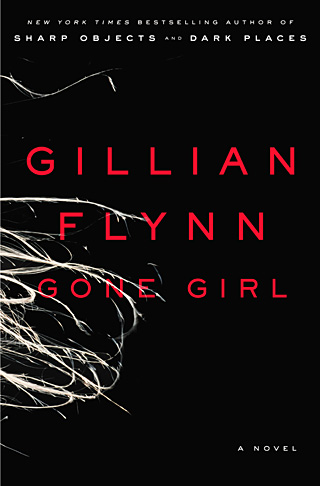
That I read Gone Girl so soon after finishing Dark Places is a tribute to Gillian Flynn’s talent. With so many books on my tbr shelf, I don’t generally read books by the same author back-to-back. Gone Girl had a few extra things going for it, though. Virtually everyone has been talking about it and I just couldn’t resist its lure any longer.

Nick Dunne and Amy Elliott Dunne are just about to celebrate their fifth wedding anniversary when Amy goes missing. There are signs of a struggle in their rented Missouri home and Nick can’t really account for his whereabouts that morning, so it doesn’t take too long for the police to start treating him like the prime suspect.

Flynn uses a dual narrative approach to tell the story of their courtship and life in New York where Nick was a magazine writer and Amy wrote quizzes for a variety of publications. Life was pretty good for them. They were beautiful, smart and rich. Well, Amy was rich because her parents – Rand and Mary Beth – had written a series of books called Amazing Amy which had, until recently, been a bit of a cash cow. Then Nick and Amy’s fortunes take a turn for the worse and suddenly they find themselves back in Nick’s hometown.

From the start we know that the golden lives of these two protagonists is slightly tarnished. On the morning of the anniversary, Nick’s reaction to his wife’s greeting of “Well, hello, handsome” is one of “bile and dread” inching up his throat. Then: Amy’s missing.

Gone Girl is a supremely entertaining game of cat and mouse. Their married lives had been marked with anniversary treasure hunts and this year is no different. Amy has left the first in a series of clues for her husband. The clues, and the letters which accompany them, seem to indicate Amy’s  awareness of her husband’s unhappiness and her own part in it. But Amy wants to patch things up. The treasure hunt also seems to point to Nick as the person responsible for Amy’s disappearance and slowly the media, Amy’s parents and even his twin sister, Go, start to regard him with suspicion.

But there is more to Gone Girl than a suspenseful mystery. There’s actually quite a damning indictment of the fakery of  relationships; the  potential for infidelity, boredom, entitlement. We want the fairy tale until we don’t. Marriage is hard work. Nick and Amy’s story is extreme, but recognizable nonetheless.

Flynn is a terrific writer. I mean – gifted. She inhabits Nick’s brain as easily as she inhabits Amy’s. They are sympathetic and reprehensible and downright scary in equal measure. To say much more about the plot would be to spoil the novel’s twists. Suffice to say, this is one married couple I wouldn’t be inviting over for dinner any time soon!

Bliss – Lauren Myracle

blissBliss Inthemorningdew (no, I’m not joking!) is new at Crestview Academy. It’s tough enough to be the new girl, but Bliss’s life is further complicated by her unusual last name and the fact that her parents are hippies. Bliss has spent her entire fourteen years living in unusual places: a tent, the basement of a college and, most recently, a commune. Now she lives with her very formal maternal grandmother in Atlanta, dumped there by her parents who have run off to Canada to protest the Vietnam War. Or Nixon. Something, anyway. They’re sort of non-entities, in a very strange way.

This is a situation neither Grandmother not I would have chosen, but Grandmother is nothing if not morally upright, which made it impossible for her to turn me away. She’s also uptight, and it seems that often the two go together.

Although life with her Grandmother is odd (at least in the beginning), Bliss is looking forward to having something she hasn’t ever had before: a friend. Soon is she is navigating the impossibly complicated world of teenage drama and it’s a world about which she knows very little.

Lauren Myracle’s novel Bliss isn’t really a coming-of-age story, though. It’s sort of part mystery, part ghost story, part thriller. On some levels it works very nicely; I had no trouble turning the pages as I raced along to the book’s conclusion. In other ways, the book is perhaps a bit bloated. There’s commentary on racism, mentions of the Klan and many of the characters in this book are concerned with Charles Manson and the now infamous murders which took place during the summer of 1969.  Myracle opens chapters with quotes from Manson and quotes from the Andy Griffith Show, perhaps as a way of balancing extreme good and extreme evil. For my money, Bliss might have benefited from a little judicious editing and more of a focus on what was really intriguing:  new girl tries to fit in and gets caught up in creepy hi-jinx.

Bliss is a likable character. I’m not sure I understand why her parents dumped her. She’s smart and kind and open-minded. It was easy to be with her and to fear for her safety. I’m certain teens will find lots to like about this book

Dark Places – Gillian Flynn

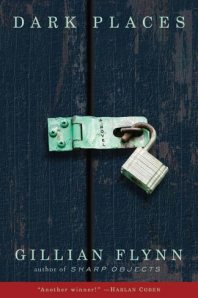
dark-places-book-coverLibby Day is a survivor. She’s survived a drunken, dead-beat father, Runner,  extreme poverty, and the horrific massacre of her mother, Patty, and two older sisters, Michelle and Debby. Well, maybe to call her a survivor is a stretch because Libby is reclusive and mean. She says it herself at the beginning of Gillian Flynn’s terrific novel, Dark Places.

I have a meaness inside me, real as an organ. Slit me at my belly and it might slide out, meaty and dark, drop on the floor so you can stomp on it. It’s the Day blood. Something’s wrong with it. I was never a good little girl, and I got worse after the murders.

Ah, yes, the murders. For the past 24 years Libby’s older brother, Ben, has languised in prison for the crime. He was 15 when he is alledged to have killed his mother and younger sisters. Libby has never once visited him partly, perhaps, because it was her testimony that sent him there. She was seven at the time.

Now, at 30, Libby is alone, broke and desperate. That’s how she comes to accept The Kill Club’s offer. Lyle, one of the Kill Club’s members, reaches out to Libby and makes her a propostion. If she’s willing to come to a meeting and talk about the case, they’ll pay her $500. That original deal morphs into something more and suddenly Libby is revisiting the night that changed her life forever.

gillian-flynnGillian Flynn (right) is a new-to-me writer although everyone and their dog has likely heard about her by now due to her recent novel, Gone Girl. She started her writing career as a journalist and was the TV critic for Entertainment Weekly for a decade before turning her hand to fiction. Look at her: she’s beautiful. And scary. And it just occurred to me that her writing reminds me of one of my all-time favourite writers, Lisa Reardon. Her writing is fearless…and fear-inducing.

Dark Places unspools the Day murders in two ways: as Libby digs for the truth and as the events of the day unravel. For this, we spend time with Patty and Ben. Patty is a sympathetic character, a mom who loves her children and tries to care for them, but whose dwindling emotional and financial resources make it nearly impossible. Ben, on the other hand, is a fifteen-year-old boy in a house full of women. He’s desperately searching for a place to belong and an outlet for the anger which bubbles inside him.

Flynn skilfully weaves the threads of this story together offering the reader equal measures of horror and heartbreak.  I couldn’t put the book down – that’s just about the highest praise I can give a book.

Reality Check – Peter Abrahams

realityI loved Peter Abraham’s novel End of Story. It was fast paced and well-written and had a right-out-of-left-field curve ball that was suspense-thriller awesome. His YA thriller Reality Check doesn’t have quite the same punch, but young readers, particularly boys, will likely find this story fast-moving and quite exciting.

Seventeen-year-old Cody has it pretty good. He’s captain of the football team and he’s dating Clea,  the prettiest (and smartest) girl at his Colorado high school. His life’s not perfect, though. His mom died of cancer and his father tends to drink a little too much. Then Clea’s father decides his daughter needs to go to boarding school in Vermont – separating the teenagers. Things go from bad to worse when Cody does some serious damage to his knee and Clea suddenly disappears. Cody does the only thing that makes sense: he quits school, hops in his car and drives to Vermont to join in the search.

That’s the basic premise of Reality Check.  It has the requisite twists and turns, the shady characters who aren’t quite what they seem and just enough character development to keep the average reader invested.

Cody is central to the story. The third person narrative is limited to his perspective and that’s a good thing because Cody is likable. He’s tenacious and fearless, too. Because he knows Clea intimately, he’s not willing to accept the party line – that she’d somehow fallen off a horse and had somehow gotten lost in the woods. He keeps digging, looking for clues and then answers.

I suspect that many teens won’t figure out the mystery too early and that they will root for Cody and Clea’s reunion as I did. There is some language in the book, so it’s perhaps not for younger teens, but it’s an enjoyable book for those who like fast-paced page-turners.

Chasing Boys – Karen Tayleur

Chasing Boys is the story of Ariel, El for short, who has moved from her swanky school and big house to a new school and an apartment with her older sister, Bella, and her mom. Dad – whereabouts unknown, but clearly he’s left a void in Ariel’s life which she is in desperate need of filling. So, there’s this boy. His name is Eric and he’s a star basketball player and practically the most perfect boy at school. Everyone has a crush on him, but he has a girlfriend. And not just any girlfriend, but the popular and pretty (and, as it turns out, decent and nice) Angelique.

So, is Karen Tayleur’s first YA novel anything more than your standard girl chases boy teen romance? Well, no and yes. For starters, El is a likeable character and the first person narration is swiftly paced and often quite funny. El is smart and attractive, but doesn’t really feel like she fits in anywhere other than with her two best friends, Desi and Margot. She’s also trying to work through abandonment issues and for that she meets with a therapist, Leonard, once a week. The thing is, she can’t actually talk to Leonard.  “If I was talking to Leonard,”  she muses, “which I am not, I would ask him a question.”

Eric isn’t the only boy orbiting El’s life. There’s also Dylan.

Dylan slumps in the seat and glances at me. I realize he’s the newest guy at school and I give him my catatonic stare – the one I use when I want the other person to look away. It’s usually pretty effective. He has a thin white scar, almost invisible, that travels from his bottom lip and disappears under his chin, and just for a moment I wonder how it got there. His lips curl into a sneer and I look straight ahead.

El tries to balance school and home and her crush on Eric and Dylan’s passive-aggressive interference in her life with varying degrees of success.  For the teen reader who is looking for a book that is entertaining and not particularly challenging, Chasing Boys will likely fit the bill.

Nevermore – @Kelly_Creagh

I’ve been trying to finish Kelly Creagh’s debut YA novel Nevermore for the past few nights. Kids in bed, kitchen clean,  email answered. Check, check, check. With my cat Lily curled beside me, I finally settle down to the book and read until my eyes are burning.  I actually finished it during my 4th period Writing class today. (We read for the first 30 minutes on Tues and Thurs!) I have SO much love for this book.

Isobel Lanley is a popular sixteen-year-old cheerleader. In many ways she is just what you’d imagine her to be; she’s pretty, dates a hunky football player and sits with the ‘in’ crowd at lunch. But Isobel’s world takes a flying leap from normal when she is paired  with Varen Nethers to do an English project.

He sat in the back row against the far corner, slumped in his seat and staring straight ahead through shreds of inky locks, his thin wrists lined in black leather bands specked with hostile silver studs.

Isobel can’t believe her crappy luck. Not only are they going to have to work together, but they are going to be researching Edgar Allan Poe. And Varen is clearly hostile towards her. A simple (although slightly unconventional) phone number exchange sets off a chain of events that isolates Isobel in ways she couldn’t ever imagine. And then things start to get really weird.

Kelly Creagh’s book is so much fun, I couldn’t wait to read it every day. Voya called it an “English teacher’s jewel box,” and it’s easy to see why. Although I am not an expert on Edgar Allan Poe (and I don’t mean to imply that you have to be in order to enjoy this book), I did catch many of the allusions. Nevermore is a well-written, intelligent, puzzle of a book that will appeal to any reader – young or old – who likes a novel with a little meat on its bones.

Although it’s likely that Nevermore will get stuck with the ‘paranormal romance’ tag, I think that label actually does the book a disservice. Yes, there is romance – but you wait for hundreds of pages before Isobel and Varen even kiss. Ratchet up the angst, why don’t you. (And, Ms. Creagh, was that some Buffy speak I caught in there?) There were moments in this book when I was seriously creeped out. One menacing character, Pinfeathers, is super-creepy. Reynolds is another character that is difficult to figure out. Is he good? Is he deceitful?

And, best of all, Isobel is a terrific character. She’s smart and brave and resourceful. And I can’t wait to see what happens to her  in Nevermore‘s sequel, Enshadowed.

I am really looking forward to passing this one on to students in my class.


The Year of Magical Thinking – Joan Didion

Joan Didion’s well-regarded memoir The Year of Magical Thinking recalls the year following the death of her husband and writing partner John Gregory Dunne. Didion and Dunne were married for 40 years and were literary royalty. They counted many other famous writers and celebrities among their friends. It would seem that theirs was a charmed life. John Gregory’s famous brother, Dominick, writes about his brother’s death here.

“Life changes fast. Life changes in an instant,” Didion writes. And while we certainly all know this is true, Didion experiences it first hand at a particularly trying point in her life.

She and her husband have just returned from the hospital where their only daughter Quintana is recovering from a particularly virulent flu. They’ve just sat down to dinner  when Didion looks up from her salad and sees him slumped over the table.

I have no idea what subject we were on, the Scotch or World War One, at the instant he stopped talking.

I only remember looking up. His left hand was raised and he was slumped motionless. At first I thought he was making a failed joke, an attempt to make the difficulty of the day seem manageable.

I remember saying Don’t do that.

As it turns out, Dunne had a bad heart and was living on borrowed time. None of that lessens the shock of his sudden passing for Didion. Although her prodigious skill with the written word is apparent in this memoir, her grief over the loss of her husband is as raw for her as for any of us. Death is the great equalizer. Didion is forced to come to terms with Dunne’s death even as she continues to deal with her daughter’s illness. (In a sad post script, Quintana died just a couple years later from the complications of her illness. There has also been some speculation that Quintanta died, ultimately, of acute pancreatitis caused by alcoholism. She was just 39.)

In the early days after Dunne’s death, Didion tries to keep it together. She keeps expecting Dunne to walk through the door; she continues to store information to share with her husband at a later date. She says: “Of course I knew John was dead…Yet I was myself in no way prepared to accept this news as final: there was a level on which I believed that what had happened remained reversible. That was why I needed to be alone…I needed to be alone so he could come back.”

The Year of Magical Thinking is not a romantic memoir. Didion, despite her sorrow, turns a clear, at times even dispassionate, eye on the nature of grief. She’s been trained to do that, of course. Does it lessen the impact of the story she has to tell? Not really. But was I as emotionally engaged as I thought I would be. Not really.