The Vanishing – Wendy Webb

The Shining is the scariest ‘haunted house’ novel I’ve ever read. King knows how to make things go bump in the night. Wendy Webb, not so much.

The Vanishing is the story of Julia Bishop. Her husband, Jeremy, has recently blown his brains out after being caught with his hand in other people’s cookie jars. Julia tells us several times that Jeremy is Chicago’s version of Bernie Madoff. Anyway, after her husband’s suicide, Julia is left penniless, friendless and possibly on her way to jail.

Enter Adrian Sinclair. He has a too-good-to-be-true offer. Come to Havenwood, an estate deep in the Wisconsin forest and be a companion to his mother, Amaris Sinclair, world-famous horror writer, who has been presumed dead for the past decade. If the gig doesn’t suit, Adrian will help Julia create a new identity and give her enough cash to start over.

Havenwood was massive, with turrets and parapets and stained glass windows and balconies and chimneys. The house was surrounded by outbuildings and delicately manicured gardens through which a river flowed. Not far from the house, I noticed a lake – not Lake Superior, but a smaller inland lake.

Desperate to escape her circumstances, Julia accepts Adrian’s offer and heads to the middle of nowhere, where things start to get immediately creepy. (Without the actually creepy part.)

Havenwood is so massive, Julia is constantly getting lost. Mrs. Sinclair, who often sports velour tracksuits and calls people “piglet”, hardly seems in need of a companion. Although her day is structured, Julia has a lot of free time. Then there’s Drew McCullough, handsome Scottish, I don’t know, ranch hand? In-house vet? The house is also host to a variety of ghosts because, you know, isolated mansion in the middle of the woods.

There’s a reason Julia has been selected for this cushy gig, but I won’t spoil it for you. Some might call this a slow burn; I’d just call it a bore.

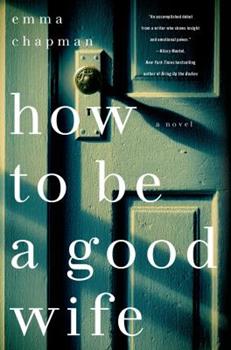
How To Be a Good Wife – Emma Chapman

In 1955, Housekeeping Monthly published an article called “The Good Wife’s Guide.” The article detailed all the ways a wife could keep her husband happy, including such gems as “Be a little gay and a little more interesting for him. His boring day may need a lift and one of your duties is to provide it” and “Listen to him. You may have a dozen important things to tell him, but the moment of his arrival is not the time. Let him talk first – remember, his topics of conversation are more important than yours.”

These are the tenets by which Marta Bjornstad, the narrator of Emma Chapman’s debut novel How to Be a Good Wife, lives. Married for many years to the much older, Hector, a school teacher, and mother of one adult son, Kylan, Marta’s life somewhere in a remote Scandinavian village is structured and isolated.

Twelve fifteen. By this time, I am usually working on something in the kitchen. I must prepare supper for this evening, the recipe book propped open on the stand that Hector bought me for an early wedding anniversary. I must make bread: mix the ingredients in a large bowl, knead it on the cold wooden worktop, watch it rise in the oven. Hector likes to have fresh bread in the mornings. Make your home a place of peace and order.

Things in Marta’s life are starting to unravel, though. For one thing, Marta has stopped taking the pills she has been taking for years. The last time she stopped, Kylan was twelve and Marta “wanted something to happen.” Back then, without the medication came “the heavy darkness”; this time is different. Marta starts seeing someone: a little blonde girl.

She stares without blinking, her grey eyes wide and glossy. Her hair is very messy: dirty, almost grey, though the broken ends are blonde. She is wearing grimy white pyjamas, her thin arms wrapped loosely around her bony knees.

There’s no question that something is off in the Bjornstad house and Chapman does a terrific job of unsettling the reader. Marta makes a compelling narrator because although she might seem unreliable, (is she a woman suffering from empty-nest syndrome, menopause, a mental break-down? These are all plausible scenarios.) as the mist lifts things take a decided turn in a horrifying direction.

I read How to Be a Good Wife in one sitting and thoroughly enjoyed it.

One of Us is Lying – Karen M. McManus

Nate and Bronwyn 4eva! Yeah, sure, there are other characters in Karen M. McManus’s super fun YA page-turner One of Us is Lying, but as we all know I am a sucker for a misunderstood bad boy. (At my age, I should really be over that. ) Okay, let’s not get off track here.

Bronwyn (super-smart), Nate (known drug dealer), Cooper (star athlete), Addy (beauty queen) and Simon (outcast) are all sent to detention for having phones in class. (Cue The Breakfast Club soundtrack.) Yes, these are the stereotypes you’d expect to find in a YA novel, but McManus manages to make each of these characters way more than they appear on paper.

Each character is given their opportunity to speak, so the narrative clicks along really quickly. (I read this novel in about one sitting – mostly because I couldn’t put it down.) Before detention is over, Simon is dead and the four remaining students find themselves prime suspects in his death. (Murder?)

Simon wasn’t actually a very nice guy. He ran a blog called About That which reported high school gossip and revealed dark secrets, secrets students would certainly rather not share. And it turns out that the four remaining teens all have something to hide. As Bronwyn says: “As a general rule, and especially lately, I try to give Simon as little information as possible.”

As some of these secrets come to light, suspicion shifts from one student to the other. And all the while, someone is still posting on Simon’s blog. So whodunnit is definitely a big part of the fun with this book.

Additionally, though, McManus makes you care about each of the four main characters. They are fully realized individuals, with back stories which will likely speak to many teen readers. There are a slew of equally compelling secondary characters and even the parents (who are often remote, shadowy creatures in YA) are not static.

The fun of this novel is not only trying to figure out who might have a motive to kill Simon (they all do), but how this supposed murder might have taken place. And that would have made for a great book all on its own. but McManus makes this novel about so much more than that. She tackles bullying, the weight of expectations, friendships, toxic relationships, the rumour mill and its devastating consequences, and trust without making any of it instructive.

I loved these characters and I had so much fun reading this book. Can’t wait to read the sequel.

Highly recommended.

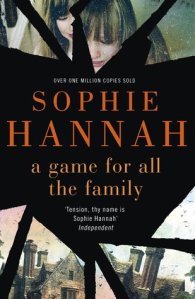
A Game For All the Family – Sophie Hannah

gameSophie Hannah’s novel A Game For All the Family belongs in the “WTF did I just read category?” Hannah is a well-known and much-lauded British writer of thrillers, but this is the first book I have read by her.  And I didn’t love it.

Justine Merrison has left her high powered job as a TV exec to move from London to a country house called Speedwell located in Devon. She will do “Nothing” with a capital ‘N’ except look after her fourteen-year-old daughter, Ellen, and her opera-singing-husband, Alex.

Life in Devon doesn’t turn out to be as blissful as Justine imagined though. Only a few months into the move, she starts to receive anonymous and increasingly threatening phone calls. Then Ellen starts to act strangely, and when Justine presses her Ellen admits that her best friend at school, George, has been expelled because of a stolen coat, which Ellen insists that she gave to him. When Justine goes to Ellen’s school, the headmistress assures Justine that no such pupil has been expelled. In fact, George doesn’t even exist.

Interspersed with this weirdness, is a story Ellen is writing for school. The story traces the strange history of the Ingrey family, also inhabitants of Speedwell House.

Perrine Ingrey dropped Malachy Dodd out of a window. She wanted to kill him and she succeeded. Later, no one believed her when she screamed ‘I didn’t do it!’

Eventually these two stories (Justine’s and Ellen’s made-up story – or is it? duhduhduh) merge. I was constantly adjusting my notion of what was true…if, in fact, the truth could be stranger than fiction, or the fiction  actually be the truth. Ellen says as much in her story:

But what about you, who are reading this story? Do you respect the truth? I haven’t told you what it is yet, have I? I could have done quite easily, but then you would have taken it for granted. I don’t want you to do that. I think you’ll appreciate the truth more if you struggle for a while to work it out.

I suppose that’s the ‘fun’ of any mystery/thriller: trying to work it out. There’s no question, Hannah is a capable writer and A Game For All the Family is a skillfully plotted story, it’s just that after I feverishly turned all 419 pages, I felt sort of disappointed in where I landed.

The Nickel Boys – Colson Whitehead

The Nickel Boys won Colson Whitehead his second Pulitzer Prize. (He also won for The nickelUnderground Railway in 2017.) And now I pause because I am afraid of this review.
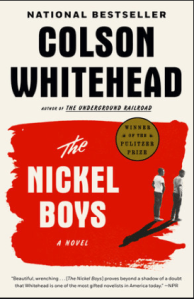
Anyone who reads my reviews will know that I generally don’t have any trouble sharing my feelings about books, but I am nervous about this one. Why? Is it because it won the Pulitzer. No. I had no trouble talking about Olive Kitteridge or The Goldfinch. Is it because it speaks very specifically about an experience that I can never truly understand as a white, middle-aged woman living in Canada? Um, no. I have no personal experience with the horrors of concentration camps (Lilac Girls) or  dealing with the supernatural (any Stephen King book ever).

I started reading, and I kept thinking, What if I don’t love it; what if I just think it’s okay; will people accuse me of being racist? But here’s the thing that my very smart newly adult children have taught me: I probably am racist in all sorts of little ways that I don’t even realize, ways that come from being born into the white middle class. Sure, as a woman, I have my own row to hoe, but my experiences as I’ve gone through this life have been mostly positive. Now comes the question of how those experiences inform my reading of Whitehead’s novel.

The Nickel Boys  is inspired by a real place, the Dozier School for Boys located in Marianna, Florida. The reform  school operated from 1900 until 2011, despite being investigated for allegations of abuse many times during its 111-year history. There are many excellent articles about the school online, including this one  published in The Washington Post in 2019.

In Whitehead’s fictionalized account, Elwood Curtis, a bright, scholarly young man ends up at the Nickel Academy because he just happened to be in the wrong place at the wrong time. Elwood is an idealist. He believes in the teachings of Martin Luther King, Jr. (whose words are sprinkled throughout the novel.) Elwood is going to change the world and the first step is getting an education. His life is upended when he is sent to Nickel and at first he is optimistic.

He got a look at the school and thought maybe Franklin was right – Nickel wasn’t that bad. He expected tall stone walls and barbed wire, but there were no walls at all. The campus was kept up meticulously, a bounty of lush green dotted with two – and three-story buildings of red brick. The cedar trees and beeches cut out portions of shade, tall and ancient. It was the nicest looking property Elwood had ever seen – a real school, a good one, not the forbidding reformatory he’d conjured the last few weeks.

Of course, Elwood’s optimism is misplaced. Nickel is a horror-show and it doesn’t take long for Elwood to find himself the target of abuse. It would be almost impossible for any reader not to read this book without a knot of dread in their stomach. And I did care about Elwood, but I also found that there was an element of didacticism in this novel which prevented me from wholly investing in Elwood’s awful journey.

I need the lesson. I need ALL the lessons because of my privileged position. I am becoming more and more aware of my blind spots and I think literature is a wonderful way for me to have experiences which are far removed from my own. I think of Angie Thomas’s YA novel The Hate U Give which made me think all sorts of thinky thoughts and also moved me to tears. I was wholly invested in Starr’s journey because it forced me to look at myself and also gave me a window into a life which is very much not my own.

I want to be a more thoughtful person, a more woke individual. It’s my duty as an educator and as a human being. I look to stories to help me on my journey, to help me see around those blind corners I know I have. I am not saying The Nickel Boys will not have a part to play. Three times as many black boys died at Dozier compared to white boys (Smithsonian Magazine) and you only need to look at what’s happening in the world to know that people of colour are mistreated in ways that are, frankly, shocking. We need to do better. If Whitehead’s novel helps push us forward because we read it and  start to understand the inequity that exists, then that’s a win.

But as a piece of ‘fiction’ I guess it was just okay for me. It seemed as though the book was more interested in telling the story rather than Elwood’s  story and maybe that was a deliberate choice. As a reader, though, I needed an emotional centre and although there is a little twist that I didn’t see coming, I finished the book feeling rather underwhelmed.

 

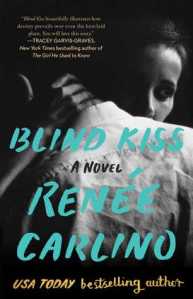
Blind Kiss – Renee Carlino

blindOh dear.

Renee Carlino is a USA Today bestselling author, whatever that means. It doesn’t mean much to me after reading Blind Kiss, which was an impulse buy for me and cringe-y on every level.

Penny is in her final year of college when she is railroaded into taking part in a psych experiment where she is blindfolded and made to kiss an absolute stranger.  This kiss made Penny feel as though she is going to “spontaneously combust” and that  even “If he was the ugliest guy in the world [she] would have still been attracted to him.” Of course, Gavin is not unattractive. “He was gorgeous, with warm green eyes and an angled jawline.”

Chemistry doesn’t lie and Penny and Gavin have chemistry up the wazoo, but Penny wants to focus on finishing her dance degree so she friend zones Gavin. Thus begins a ridiculous fourteen year “friendship” where Gavin dates a million other people and Penny marries the most boring dude on the planet. The best friends schtick is fooling no one, of course, but that doesn’t stop these two from denying their feelings over and over, and, quite frankly, acting like idiots for most of the book.

Look, I am all over a book where a couple –for whatever reasons including misplaced honour, or bad timing — can’t seem to get their shit together. Serve me up a heaping helping of angst and I will fall to my knees, but Blind Kiss didn’t have that.

These characters behave in ways that are wholly ridiculous. For example, in the present, when Gavin tells Penny he’s moving to France she “screamed at the top of [her] lungs and then made a guttural sound as [she] hunched over and held [her] stomach.” They’re in a bar. She’s 35. I mean, is this the behaviour of a married mother of a teenager? It was at that point (page 6) that I felt like this story, which I felt might have promise — which is why I bought the book — went off the rails. Every interaction between Gavin and Penny is so over-the-top histrionic that it was hard to take any of it seriously.

Which I didn’t.

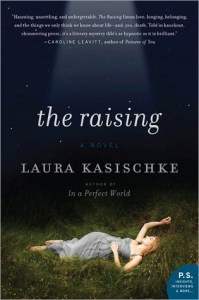
The Raising – Laura Kasischke

I have a soft spot for books that take place on college campuses. Maybe it’s the nostalgia. Maybe it’s a hangover from Donna Tartt’s masterpiece The Secret History. I don’t know. Laura Kasischke’s novel The Raising ticks a lot of those college campus narrative boxes for me, but I can’t say that it was a thoroughly satisfying read despite the fact that it is well-written and intriguing.

“The scene of the accident was bloodless, and beautiful” is how Kasischke begins thisraising story of students and faculty on a small (unnamed) campus. The accident in question kills Nicole Werner: beautiful, intelligent, desired-by-all freshman. Her boyfriend, Craig Clements-Rabbitts, was driving the car and he walks away from the accident unharmed, which makes him a sort of campus pariah.
The details of the accident are sketchy. First on the scene is Shelly Lockes. After the accident is reported in the paper, she calls the paper to tell them that the story is “full of inaccuracies […] and although the reporter to whom her call was forwarded assured her that he would “set the record straight on the details of the accident as reported in our paper right away,” no corrections ever appeared.”

Craig returns to college for his sophomore year and moves into an apartment with Perry, his first-year roomie, who also happens to be from Nicole’s hometown, Bad Axe. Everyone on the campus still seems to be shell shocked about Nicole’s death. And then people start seeing her around campus.

Perry decides to take matters into his own hands, seeking out Professor Mira Polson, who teaches a seminar called “Death, Dying and the Undead.” Although her personal life is spinning out of control (two-year-old twins at home; a bitter, unemployed husband) Mira is fascinated with Perry’s story and the two start looking into the rumours.

College is a time for trying to figure out who you are. I remember that, and I remember   — almost fondly now — all the mistakes I made on my path to adulthood. In some ways The Raising is this story, the one about how young adults stumble along trying to figure their stuff out,  as much as it is a ‘ghost’ story. (And whether it’s even a ghost story is up for debate.)

I was definitely invested in the story. I liked Perry a lot and felt sorry for other characters who had their own dramas (Mira’s flailing marriage; Shelly’s entanglement with a student). Perhaps the reason I wasn’t wholly satisfied is because …well, I was going to say that it’s because the mystery aspect of the story isn’t resolved, but that isn’t true. Maybe it’s just right book, wrong time, because truthfully it has everything I like in a novel.

It’s certainly worth your time.


Teach Me to Forget – Erica M. Chapman

High school junior Ellery has a plan. The plan involves a gun. Nothing is going to stop teachher. The money she’s saved for a trip to Paris will instead pay for her funeral. She’s already booked cleaners to come in the day after. This is the scenario in Erica M. Chapman’s YA novel Teach Me To Forget.
There are, she understands, a couple flaws in her plan. Her bestie Jackson is one of them.

Jackson will hurt. We’ve been best friends since he climbed my tree and broke his leg in second grade. He’ll get over it. He’ll find another friend. Someone who deserves him more than me.

Her mother is another one; “…there’s a sadness in her eyes” that Ellery feels responsible for. And then there’s Colter Sawyer, the high school senior who just happens to be working at the K-Mart when she tries to return the gun (which turns out to be defective).

Colter is in Ellery’s AP English class, but the two are not friends. He is immediately suspicious of Ellery telling her “There’s no way anyone sold that gun to you.” Colter recognizes in Ellery something he has seen before and he makes it his mission to “save” her.

I don’t really know how to feel about this book. On the one hand, it highlights the helplessness and hopelessness of a suicidal person. It also tries to illustrate the importance of having people in your life, connections that you can count on. There are moments of surprising humour and the relationship between Jackson and Ellery is lovely. Jackson was my favourite character, but as things heat up between Ellery and Colter, he seems to drop off the page.

There was also something sort of shrill about it the book, though. Ellery was constantly screaming and running away from situations. I get that she is unwell and I had a great deal of sympathy for her. I also wondered why her mother, a nurse of all things, didn’t notice that her daughter seemed to be going off the rails. Yeah, I know, she was dealing with her own grief, but still. Not even a little bit suspicious? And then there’s Colter, whose own backstory, while tragic, makes him wayyyy too patient with Ellery. Given his circumstances, and knowing what he knows, you’d think he’d be a little bit more aggressive with getting Ellery professional help. “I love you” doesn’t necessarily save the day.

I appreciated what the book was attempting to do. It worked on some levels, but some of the characterization was a miss for me.

Hello Goodbye – Emily Chenoweth

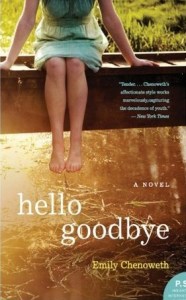
helloEmily Chenoweth’s debut novel Hello Goodbye was inspired by the author’s life. Her mother was diagnosed with a brain tumour when Chenoweth was in her first year of college. Instead of writing a memoir, though, the author decided to use her experiences as fodder for a work of fiction because she could “explore the feelings and experiences that I did remember, but I could also craft a story that had a different arc than my own.”
And what a story it is.

The novel begins with Helen Hansen returning from a run and collapsing on the kitchen floor. Fast forward a few months and Elliott, her husband,  has arranged a holiday armed with the knowledge that Helen, due to the “astrocytoma in her frontal lobe”  hasn’t much time left.  Eighteen-year-old Abby has accompanied her parents to The Presidential Hotel (think Dirty Dancing‘s Kellerman’s, complete with dance lessons and liveried staff) in New Hampshire.  Elliott wants to celebrate their twentieth wedding anniversary, but also invites the couples’ dearest friends as a farewell of sorts.

He’s made the decision not to tell Helen because he wants her to keep fighting but has also decided that this holiday will be his opportunity to break the news to his daughter and their oldest friends.

Abby is mildly annoyed by the whole affair, but she is also hoping that this change of scenery will do them all some good.

In a grand place like this, it seemed possible that everything might get a little bit better. She could imagine her father relaxing, her mother feeling stronger, and herself becoming kinder and more attentive,

She is also hoping that she might meet someone…anyone, really and when someone slips a note under her door Abby feels like “there might be something to look forward to.” She does meet two someones: Alex and Vic. Vic, by a strange twist of fate, is from her hometown back in Ohio. He was a student at the school where her father is headmaster, a delinquent plucked from the system by her mother, a counsellor. He also happens to be the first person Abby ever kissed, and it is a moment she remembers vividly.

Elliott is watching his daughter almost as closely as he is watching his wife. Abby is “unfamiliar to him in a new way.” He acknowledges that Abby has always been closer to her mother than she has been to him; “She looked just like her mother — everyone said so.”

Over the course of the week, each of the members of the family grapple with the future and Chenoweth manages to make every single moment ache with …well, life, really. Here are the Hansens remembering all the good times they had with their friends. Here is Helen regarding the body that is now failing her.

Why hadn’t she celebrated those big strong thighs instead of trying all the time to shrink them? Why hadn’t she found her feet beautiful, or her sturdy ankles. Why hadn’t she loved her coarse, graying hair? Why had she not praised every perfect square inch of herself? She feels an almost unbearable ache of longing for all that doesn’t belong to her anymore.

Here is Abby filled with a combination of dread and embarrassment and unarticulated love.  Here is Elliott traveling back and forth over the twenty  years he’s shared with Helen.

I can’t begin to express how moving this novel is. I don’t think it’s necessary to have lost someone in your life to appreciate the journey these characters are on. This is a glorious, beautifully written testament to family, friendship and the inherent joys and sorrows to be found in the minutia of a life. Just glorious.

Highly times a thousand recommended.


Freewill – Chris Lynch

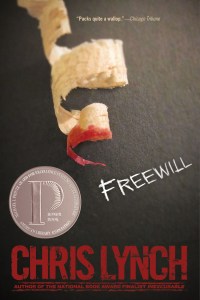
Will, the seventeen-year-old protagonist of Chris Lynch’s YA novel Freewill has suffered freewill-9781442482708_hra horrible tragedy. Now he lives with his grandparents who are “Kind people. They didn’t have to take you in. Or did they? Love? Is it love? Charity.”

That’s the first thing about Freewill: it’s written in the second person. Not many books are and I suspect that many YA readers will wonder what the heck is going on. Once Will’s circumstances reveal themselves, readers will likely be able to figure out why Lynch chose this point of view. At the very least, it would be an interesting conversation to have with students. But second person is a stylistic choice and not everyone grooves to it.

Will, as a character, is frustrating and sympathetic. He spends most of his time in woodshop, where he clearly has some talent. He makes furniture and carves little statues which start showing up in advance of the deaths of local students. He doesn’t have any friends until he meets Angela, another misfit in his woodworking class.

Has she spoken to you before? You know her name, though, don’t you? Haven’t bothered knowing any of the others. What’s the use, after all. But you haven’t been able to not know Angela.

The novel works as a sort of interior monologue as Will comes to grips with the facts of his life. He’s stuck in limbo. He tells his teacher “I’m supposed to be a pilot, Mr. Jacks. How did I wind up in woodshop?”

The how reveals itself – sort of – relatively quickly, but Will’s mental health is clearly in jeopardy and it will take a while before the whole thing plays out.

I didn’t love this book, but that doesn’t mean it’s without merit. Mature, patient reads will likely get something from the reading experience.